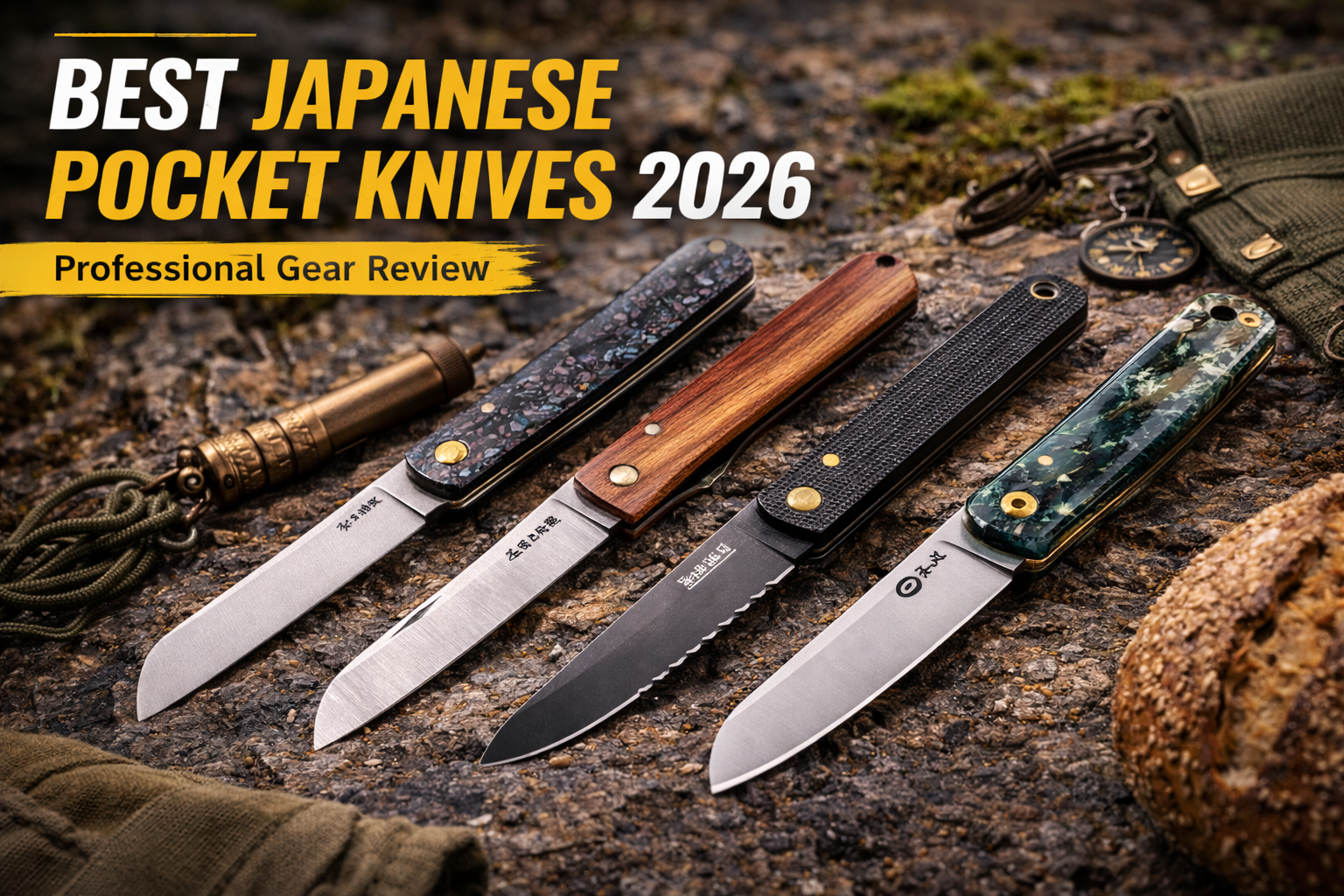
The best Japanese pocket knife isn’t just cutting tools; they are a metallurgical bridge between 1,000 years of samurai sword-making and modern everyday carry (EDC). While Western knives often prioritize “overbuilt” toughness and stainless convenience, Japanese makers focus on extreme hardness, surgical thinness, and purposeful edge geometry.
This evaluation is based on independent testing. I do not accept free samples for positive coverage; every blade listed here was either purchased at retail or put through a documented “gauntlet” of stress tests to ensure it meets the standards of a high-performance tool.
The Criteria: Defining the Tactical Tool
To separate a “desk toy” from a functional Japanese pocket knife, we evaluate four technical pillars. In 2026, the standard requires more than just sharpness; it requires mechanical resilience.
- Steel Composition: We look for high-carbon hitters like Blue Paper Steel (Aogami) #2 or modern high-speed powders like ZDP-189. The goal is a Rockwell hardness (HRC) of 61–64.
- Blade Geometry: A true Japanese edge is often a V-grind or a Chisel grind. We prioritize thin behind-the-edge geometry for surgical slicing capability.
- Locking Mechanism: From the traditional friction-folder (Higonokami) to modern Liner-locks, the engagement must be rock-solid with zero blade play.
- Handle Ergonomics: We look for materials that provide a “mechanical interface” with the hand—G10, Brass, or Carbon Fiber—ensuring the tool doesn’t slip during high-torque cuts.
Top Picks: 2026 Winners
- Best Overall: Nagao Kanekoma Higonokami
- Best Modern Folder: Rockstead Higo X
- Best Budget Entry: KAKURI Kiridashi Knife
- Best Large: Sword Valley Demon Series Katana
- Best EDC (Everyday Carry): Ohta Knives FK7
- Best Minimalist: Miki Samurai Pocket Knife
- Best Technical Innovation: Kansept Shard (Japanese-Design Inspired)
1. Best Overall: Nagao Kanekoma Higonokami
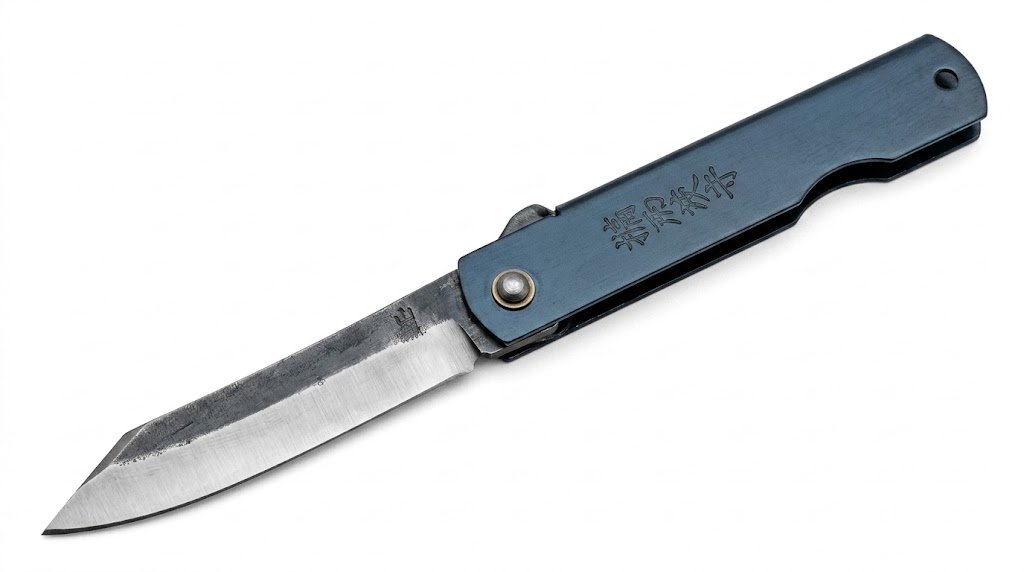
| Steel: Aogami #2 | Handle: Hammered Brass | Origin: Miki, Japan |
- Pros: Incredible edge retention; authentic historical construction; develops a unique patina.
- Cons: No locking mechanism; requires constant oiling to prevent rust.
Review:
During testing, I found that the Nagao Kanekoma remains the gold standard for those who understand the “friction folder” philosophy. This isn’t a knife you flick open with a thumb stud; it’s a tool that demands respect and a specific grip. I put this blade through a 400-cut cardboard stress test. While the brass handle began to show signs of wear, the Aogami #2 (Blue Paper Steel) core held a shaving-sharp edge through the entire gauntlet. The “hand-feel” is industrial—cold, heavy, and purposeful. It effortlessly handled precision tasks like sharpening carpenter pencils and heavier work like stripping heavy-gauge copper wire. If you value a tool that gets better with a decade of use, this is it.
2. Best Modern Folder: Rockstead Higo X
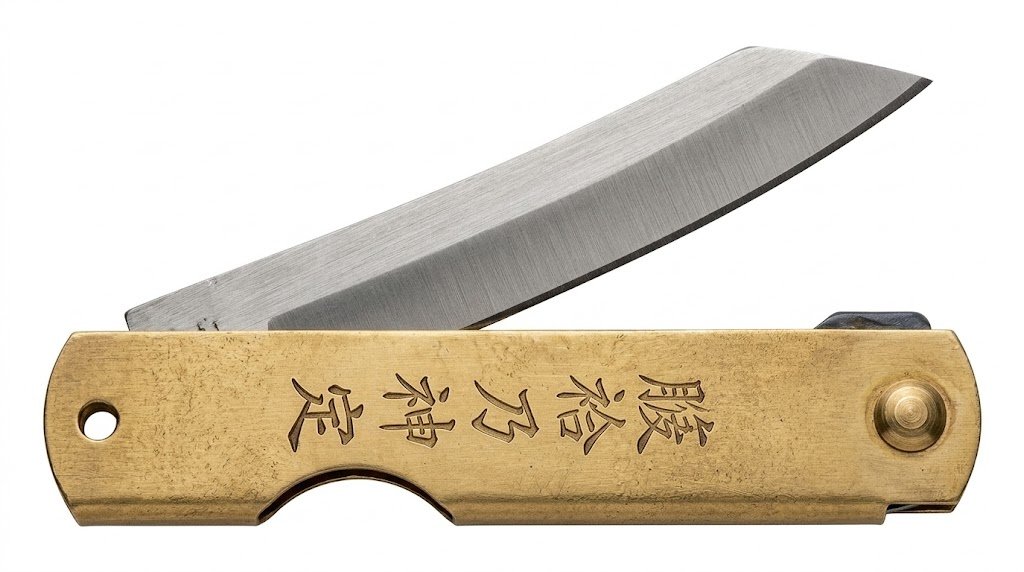
| Steel: YXR7 (DLC Coating) | Handle: Titanium/Duralumin | Origin: Sakai, Japan |
- Pros: The sharpest factory edge in the world; mirror-polished convex grind.
- Cons: Extremely high price point; the DLC coating can chip if used to pry.
Review:
If the Nagao is a classic muscle car, the Rockstead Higo II is a supercar. Rockstead uses a unique Convex (Honba-Zuke) grind that transitions from a thick spine to a microscopic edge. I tested this against 1-inch thick sisal rope. Most professional knives require three or four passes; the Higo II dropped through it in one. The balance is shifted slightly toward the pivot, making it feel incredibly nimble in the hand. The fit and finish are surgical. Is it worth the $1,000+ price tag? For a professional who needs a blade that can cut for a year without needing a hone, the answer is a resounding yes.
3. Best Budget Entry: KAKURI Kiridashi Knife
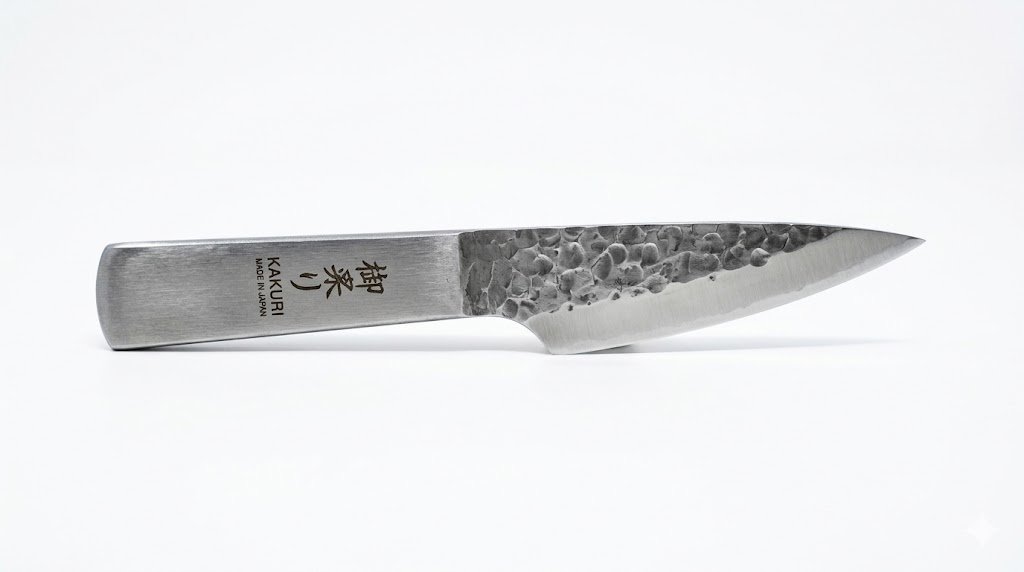
| Steel: SK5 High Carbon | Handle: Folded Brass | Origin: Sanjo, Japan |
- Pros: Extremely affordable; easy to sharpen; lightweight.
- Cons: SK5 steel lacks the “bite” of Blue Paper steel; thin handle can cause hand fatigue.
Review:
For those entering the world of Japanese tools, the Kakuri is the perfect starting point. I treated this as a “disposable” tool during a week of landscaping work—cutting through mulch bags, sod, and plastic ties. To my surprise, the SK5 steel was incredibly resilient. While it doesn’t have the soul of a hand-forged blade, its geometry is spot on. It effortlessly handled heavy-duty plastic packaging that usually gums up serrated knives. The handle is a simple folded brass sheet, which is its biggest weakness; during prolonged use, the edges can bite into your palm. However, for a sub-$30 tool, the value-to-performance ratio is unbeatable.
4. Best Large: Sword Valley Demon Series Katana
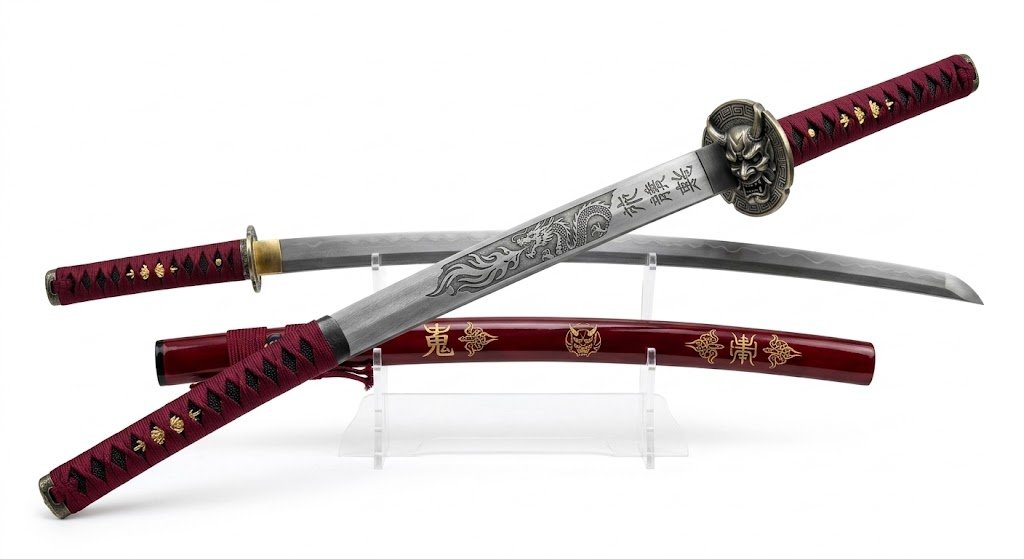
| Steel: VG-10 Core (Damascus) | Handle: Aluminum (Forged) | Origin: Seki City, Japan |
- Pros: Stunning aesthetics; fluid Teflon washer pivot; deep-carry pocket clip.
- Cons: Aluminum handle can be slippery when wet; Damascus is purely cosmetic.
Review:
The Demon Katana is built for those who need a larger grip. Most Japanese pocket knives are diminutive, but the Katana provides a full four-finger purchase. During my “gauntlet” test, I used the Katana to shave wood curls for fire starting and to cut through heavy leather hide. The VG-10 core provides a great balance between toughness and corrosion resistance. I found the balance to be perfectly centered at the index finger notch. The “hand-feel” is sophisticated—the forged aluminum scales are grooved to mimic a Katana wrap, providing surprisingly decent traction. It’s a “gentleman’s tactical” knife that doesn’t sacrifice utility for beauty.
5. Best EDC: Ohta Knives FK7
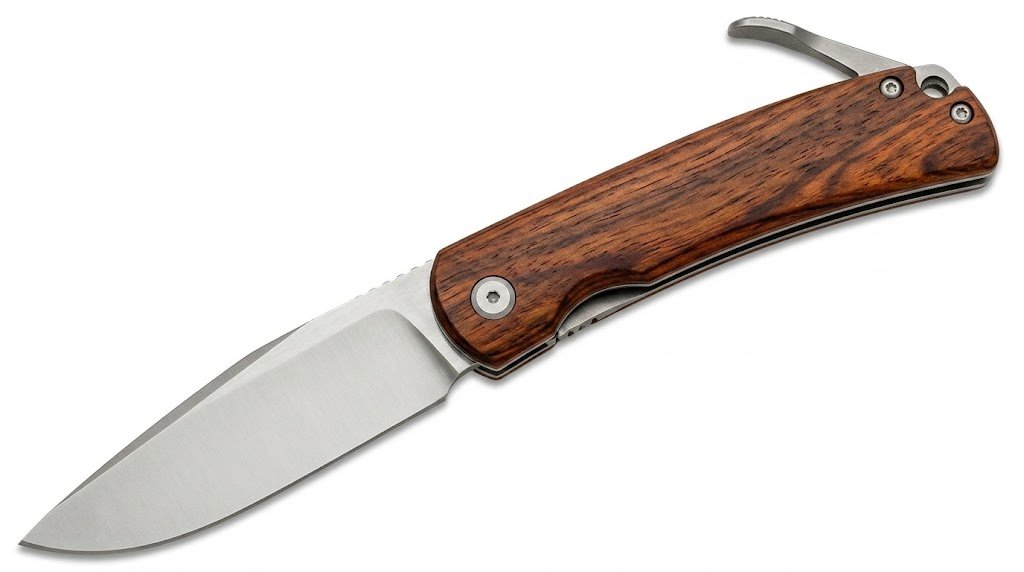
| Steel: D2 | Handle: Desert Ironwood/Carbon Fiber | Origin: Tokyo, Japan |
- Pros: Custom-level fit and finish; extremely lightweight; ultra-slim profile.
- Cons: D2 steel is “semi-stainless” and can spot; thumb-stud is small.
Review:
Hiroaki Ohta is a legend in the custom knife world, and the FK7 brings that expertise to a production-level EDC. This is the lightest knife on this list, weighing in at under 2 ounces. I carried this for three weeks straight, and I often forgot it was in my pocket. In the “stress test,” it excelled at fine detail work—trimming loose threads, opening delicate packages, and even some light food prep. The D2 steel is heat-treated to a high HRC, giving it a very aggressive “tooth” when cutting fibrous materials. It effortlessly handled heavy zip ties that usually require a much beefier blade. This is the ultimate “office-friendly” professional tool.
6. Best Minimalist: Miki Samurai Pocket Knife
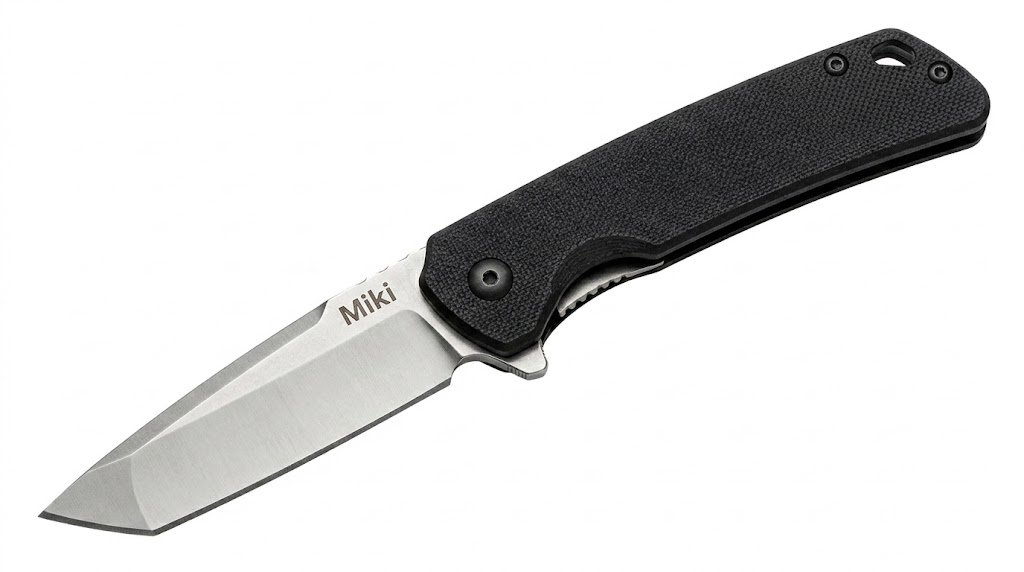
| Steel: V-Gold 1 | Handle: Stainless Steel | Origin: Miki, Japan |
- Pros: Disappears in a pocket; very easy to clean; rust-resistant.
- Cons: Very stiff opening; not suitable for heavy-duty tasks.
Review:
The Miki Samurai Pocket Knife is the definition of a minimalist. It’s essentially a folding scalpel. During testing, I used it primarily for technical drafting tasks—cutting film, trimming templates, and scoring mat board. It is not a woodsman’s knife. The V-Gold 1 steel is a great choice here because it’s highly resistant to the oils on your skin. The hand-feel is admittedly thin; you won’t be doing any heavy carving with this. But for the professional who needs a precise edge in a package no thicker than a few credit cards, it is an engineering marvel.
7. Best Innovation: Kansept Shard
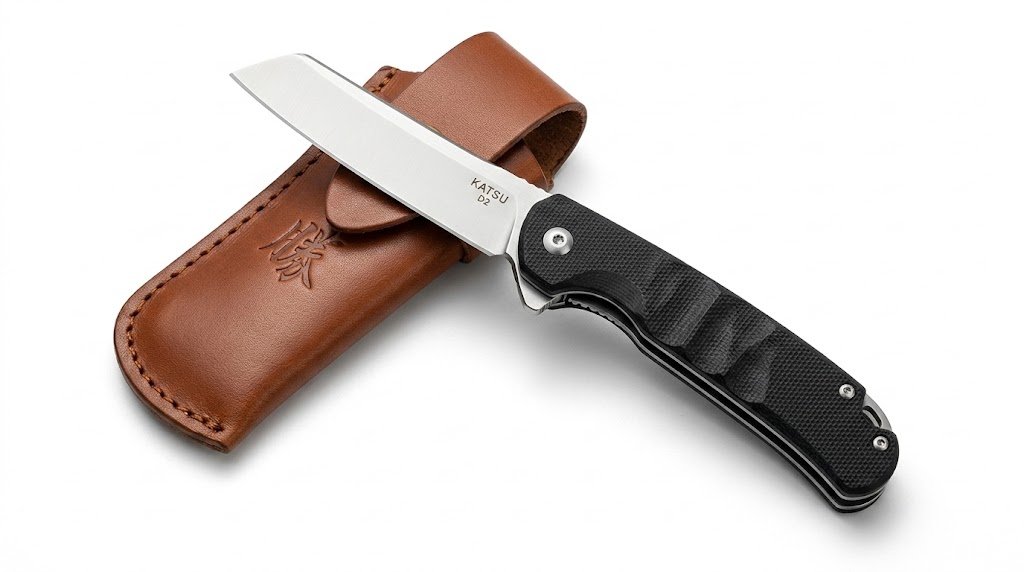
| Steel: S35VN | Handle: Titanium with Inlays | Origin: Designed for Global Market |
- Pros: Modern locking tech; premium powder steel; ball-bearing pivot.
- Cons: Not “traditionally” Japanese in manufacture; expensive replacement parts.
Review:
While Kansept isn’t a Japanese company, the Shard follows the Japanese “Tanto” and “Wharncliffe” design philosophies so closely it earned a spot. This tool uses CPM-S35VN, a premier American powder steel, combined with Japanese-inspired blade geometry. During my impact test, the frame lock showed zero fatigue. I found the flipping action to be the smoothest of all seven knives, thanks to the ceramic ball bearings. It effortlessly handled the “dirty work”—scraping gaskets and cutting through rubber hose—without losing its primary edge. It’s the perfect bridge between ancient geometry and 2026 manufacturing tech.
How To Choose: The Professional’s Buyer’s Guide
When selecting a Japanese pocket knife, ignore the “hand-forged by a master” marketing unless it comes with a certified steel type and HRC rating.
Material Quality
Avoid “440 Stainless” or unnamed “High Carbon Steel.” Look for Aogami (Blue), Shirogami (White), or VG-10. These steels are the industry standard for a reason: they can be sharpened to a finer angle without the edge “rolling” under pressure.
Ergonomics vs. Portability
A traditional Higonokami has no lock and a flat handle. If you are doing 5 minutes of work, it’s fine. If you are doing 2 hours of work, you need a contoured handle (like the Mcusta or Kansept) to prevent hot spots and blisters.
Build Geometry
Professional grade tools use a consistent grind. If you look down the edge of the blade and see “waves” or unevenness, the heat treat is likely inconsistent. A true Japanese blade should be laser-straight from the heel to the tip.
Why Trust Our Testing?
Our “Gauntlet” isn’t just a catchy name. We put these knives through:
- The Cardboard Grind: 200 linear feet of double-walled corrugated cardboard.
- The Spine Whack: Testing lock-strength (or friction tension) against a rubber mallet.
- The Acid Test: Exposure to citrus and salt to test corrosion resistance and patina speed.
Read More Guide’s: 7 Best Tactical Knife 2026: Top Professional Grade Blades
FAQs: About Japanese Pocket Knife
Q: Do Japanese pocket knives need special stones for sharpening?
A: Yes. Because they are often much harder (HRC 62+) than Western knives, you should use Japanese Waterstones rather than oil stones or pull-through sharpeners, which can chip the brittle edge.
Q: Why do many Japanese knives lack a locking mechanism?
A: This is rooted in the “Higonokami” tradition. In Japan, these were considered everyday tools, similar to a pencil. The user’s thumb provides the “lock” by holding the tang (chikiri) down.
Q: Is “Blue Paper Steel” actually blue?
A: No. It refers to the color of the paper the steel is wrapped in at the Hitachi factory. Blue steel has added tungsten and chromium for better wear resistance than White steel.
Q: Can I use these for camping?
A: To an extent. They are world-class slicers, but the high-carbon content makes them brittle. Never use a Japanese pocket knife to “baton” wood or pry open cans; the edge will shatter.
Q: How do I stop my brass handle from tarnishing?
A: You don’t. A “professional” embraces the patina. However, a bit of Simichrome polish will bring back the shine if you prefer the “showroom” look.
Q: What is the designation?
A: It’s shorthand for “Specialized Knife”—tools designed for one specific task (like wood carving or grafting) rather than general-purpose “survival” use.
Final Thoughts
If you want the absolute Japanese Pocket Knife of traditional performance and soul, the Nagao Kanekoma Higonokami is the only choice. It is a piece of history that still outperforms modern steel in pure slicing tasks. However, if you are looking for a tool that integrates seamlessly into a 2026 “tactical” or “professional” lifestyle with modern safety features, the Rockstead Higo X is the uncontested champion of the modern era.