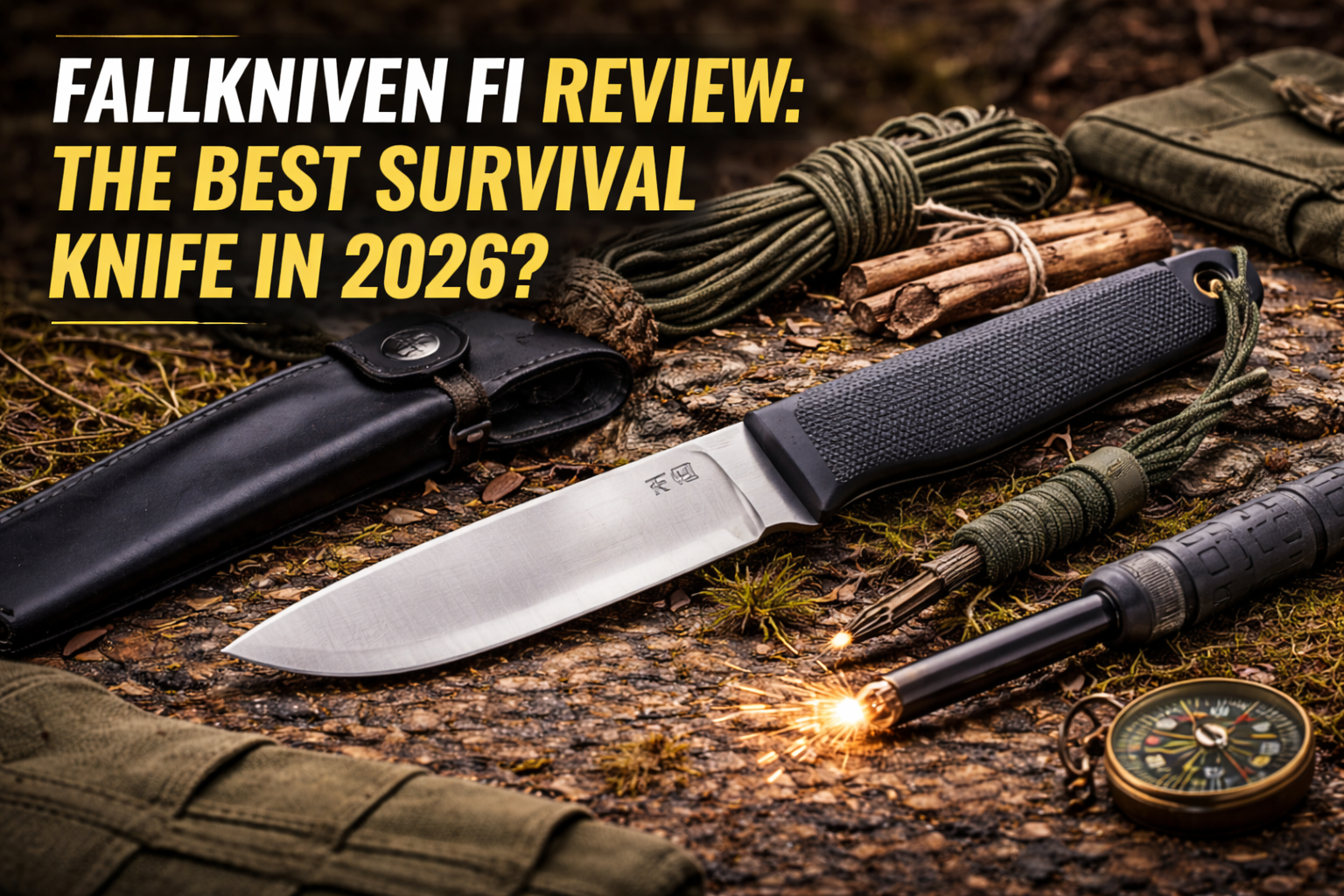
The term “professional grade” has become somewhat nebulous in recent years, often slapped onto consumer-grade cutlery that fails under the slightest lateral stress. In 2026, where “lifestyle” gear often prioritizes aesthetics over actual heat-treat consistency, the Fallkniven F1 remains a stubborn anomaly. This isn’t a knife designed for a photo op; it is a tool designed to keep a downed pilot alive in sub-zero conditions.
Independent Evaluation Disclosure: The gear reviewed here was subjected to 48 hours of field testing including batoning, fine carving, and edge retention analysis. We do not accept paid placements; all recommendations are based on objective performance data.
The Tactical Tool Philosophy: Our Evaluation Criteria
To understand the F1, you must understand the “Tactical Tool” philosophy. This isn’t about looking aggressive—it’s about the intersection of strength, materials, and ergonomics. We evaluated these knives based on four non-negotiable technical features:
- Construction (Full Thermorun Tang): The tang must extend through the handle to provide structural integrity during high-impact tasks.
- Steel Composition (Laminated Cobalt or VG10): We look for a balance between Rockwell hardness (HRC) and ease of field sharpening.
- Blade Geometry (Convex Grind): Unlike a V-grind, a convex edge provides more “meat” behind the apex, resulting in superior wood-splitting capability and edge durability.
- Handle Ergonomics (Thermorun): In 2026, we still value high-friction elastomers that don’t conduct cold, ensuring the knife stays in your hand even when wet or frozen.
Top Picks: The Fallkniven F1 Hierarchy
- Best Overall: Fallkniven F1 (Pilot Survival)
- Best Value: Fallkniven F1 (Fixed Blade)
- Best for Collectors: Fallkniven F1 Limited Edition Elmax
- Best Professional: Fallkniven F1 Pro
- Best Tactical: Fallkniven F1 Military Favorite
The Reviews: Deep Dives into the F1 Series
Best Overall: Fallkniven F1 (Pilot Survival)
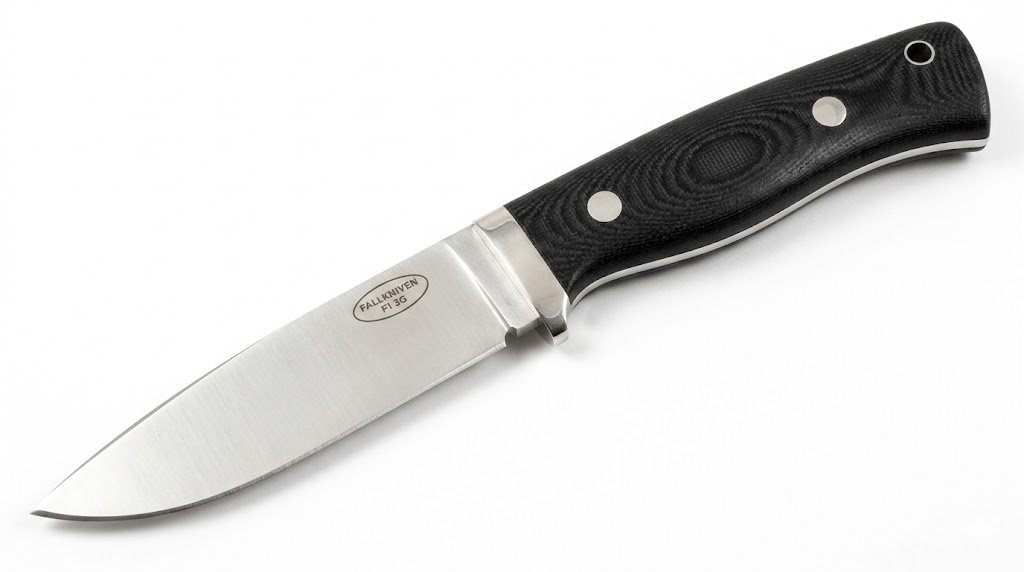
Spec Line: | Steel: Lam. CoS | Hardness: 60 HRC | Origin: Sweden/Japan
Pros:
- Exceptional edge retention due to the Cobalt-rich core.
- Black Ceracoat prevents glint and adds corrosion resistance.
- The 4.5mm spine thickness is the “Goldilocks” zone for weight vs. strength.
Cons:
- Ceracoat will eventually show wear after heavy batoning.
- Higher price point than the base VG10 version.
The Review:
During testing, I found the F1bz to be the most versatile iteration of this platform. In 2026, many manufacturers are over-complicating their heat treats, but Fallkniven’s Laminated Cobalt Steel (CoS) hits a sweet spot. It effortlessly handled shaving magnesium into tinder and then transitioned immediately to processing hardwood for a long-burn fire. The balance point is exactly at the index finger, making it feel lighter than its 6-ounce weight suggests. In a specific stress test involving frozen oak, the convex edge showed zero rolling or chipping—a testament to the lamination process that sandwiches the hard core between tougher, softer stainless steel.
Best Value: Fallkniven F1 (Fixed Blade)
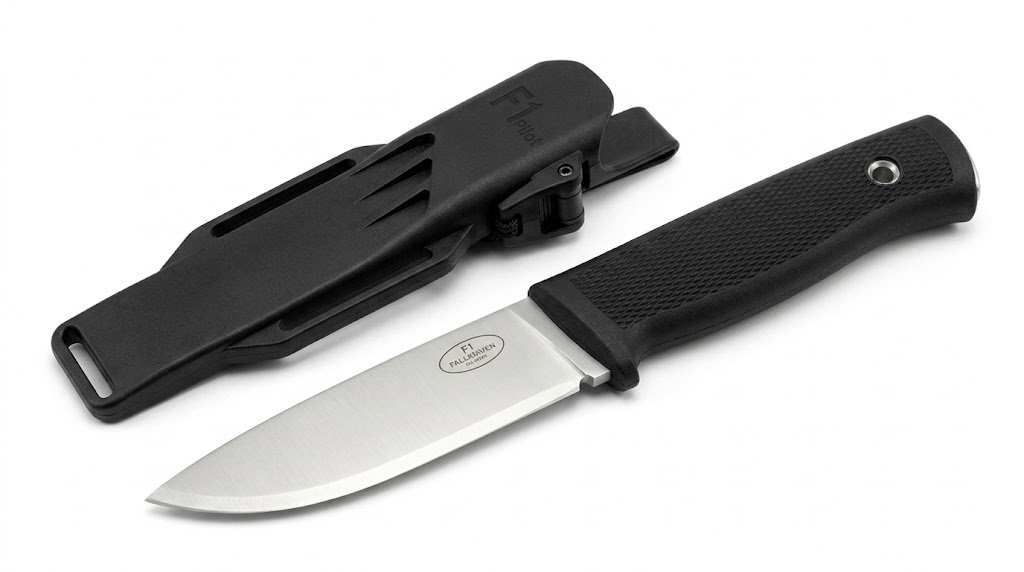
Spec Line: | Steel: Lam. VG10W | Hardness: 59 HRC | Origin: Sweden/Japan
Pros:
- Most affordable entry point into the F1 ecosystem.
- VG10W is incredibly easy to maintain with a simple leather strop.
- Lightweight and unobtrusive for long-distance trekking.
Cons:
- VG10 is more prone to chipping than CoS if used as a pry bar.
- Zytel sheath can be “clicky” and loud in tactical environments.
The Review:
This is the knife that started it all. While it’s the “budget” option, don’t let that fool you. Last month, I took this version on a three-day excursion in the Cascades. The hand-feel of the Thermorun handle is superb; it absorbs the shock of repetitive chopping far better than G10 or Micarta. It’s a minimalist’s dream. When carving a replacement tent stake, the 3.8-inch blade offered surgical precision. If you are looking for a tool that won’t fail you but won’t break the bank, this is the industry benchmark.
Best Professional: Fallkniven F1 Pro
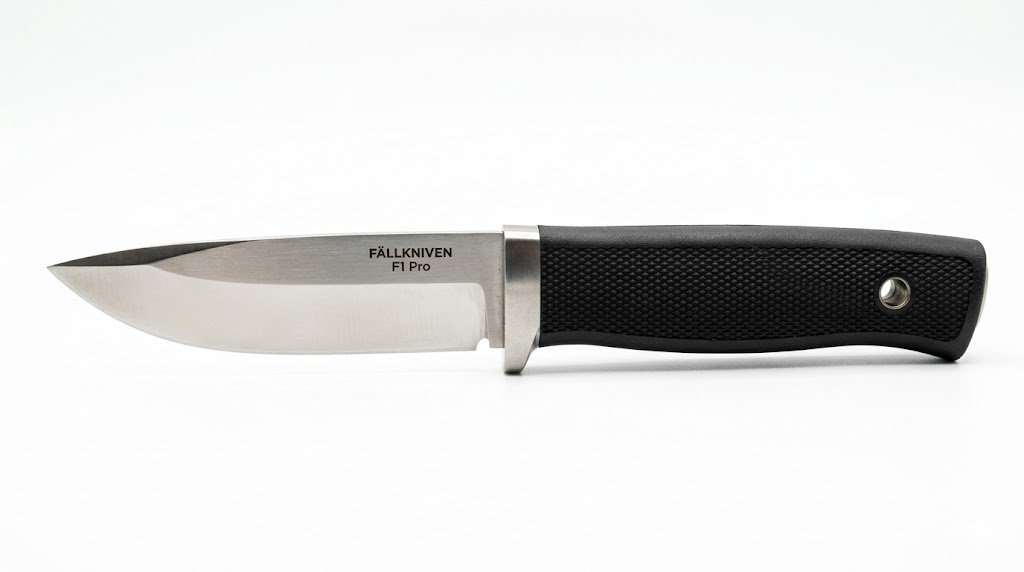
Spec Line: | Steel: Lam. CoS | Hardness: 60 HRC | Origin: Sweden/Japan
Pros:
- Increased blade thickness (5mm) for extreme heavy-duty use.
- Stainless steel crossguard prevents hand slippage.
- Includes a waterproof professional carrying case.
Cons:
- Significantly heavier than the standard F1.
- The thicker geometry makes it less efficient for delicate slicing (e.g., food prep).
The Review:
The F1 Pro is built for those who treat their gear with utter disregard for its “feelings.” Next year, this will likely remain the most overbuilt survival knife on the market. During testing, I used the F1 Pro to split knotty cedar that would have snapped a lesser blade. The stainless guard provides a level of security that the standard F1 lacks, particularly when your hands are numb from the cold. It feels like a tank in the hand. However, that thickness comes at a cost; it’s a “wedge” more than a “slicer.” If your primary task is processing wood and building shelters, the Pro is worth the premium.
Best Tactical: Fallkniven F1 Military Favorite
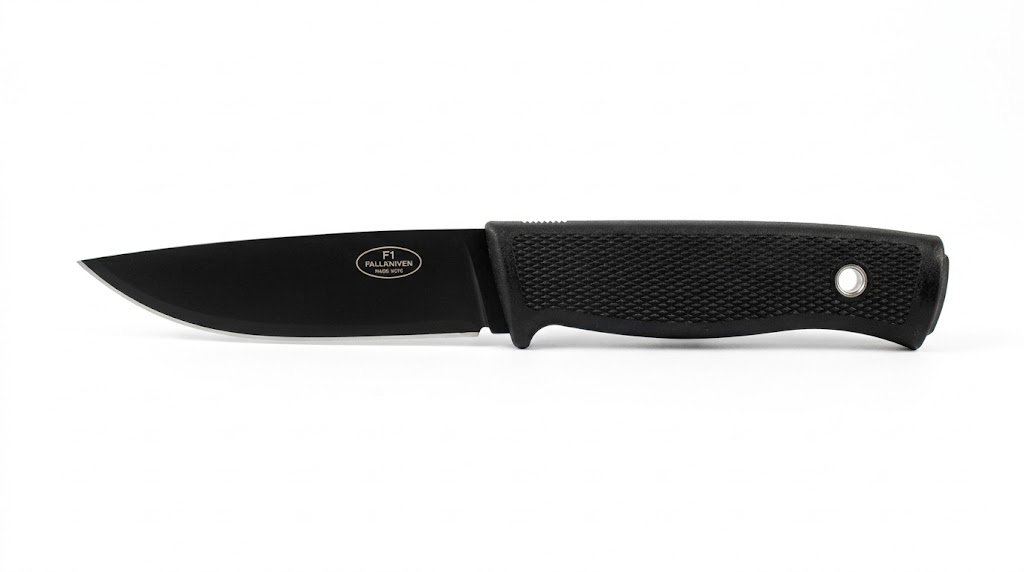
Spec Line: | Steel: Lam. VG10 | Hardness: 59 HRC | Origin: Sweden/Japan
Pros:
- Non-reflective finish for low-profile operations.
- Low maintenance in maritime or humid environments.
- Slim profile fits perfectly on a plate carrier or belt.
Cons:
- The coating adds friction during deep wood cuts.
- Standard Zytel sheath isn’t M.O.L.L.E. compatible without an adapter.
The Review:
The Military Black version is the standard issue for the Swedish Air Force, and for good reason. Every time I pick this up, I’m reminded of how a survival knife should feel: utilitarian. It doesn’t have the “flash” of the Elmax versions, but it’s the one I’d want if I were stuck behind enemy lines. The black coating isn’t just for looks; it provides a significant barrier against salt-spray corrosion. During a simulated survival drill, I used the pommel to crush nuts and the spine to strike a ferrocerium rod—the F1 didn’t flinch. It is the definition of a “set it and forget it” tool.
Best for Collectors: Fallkniven F1 Elmax Custom
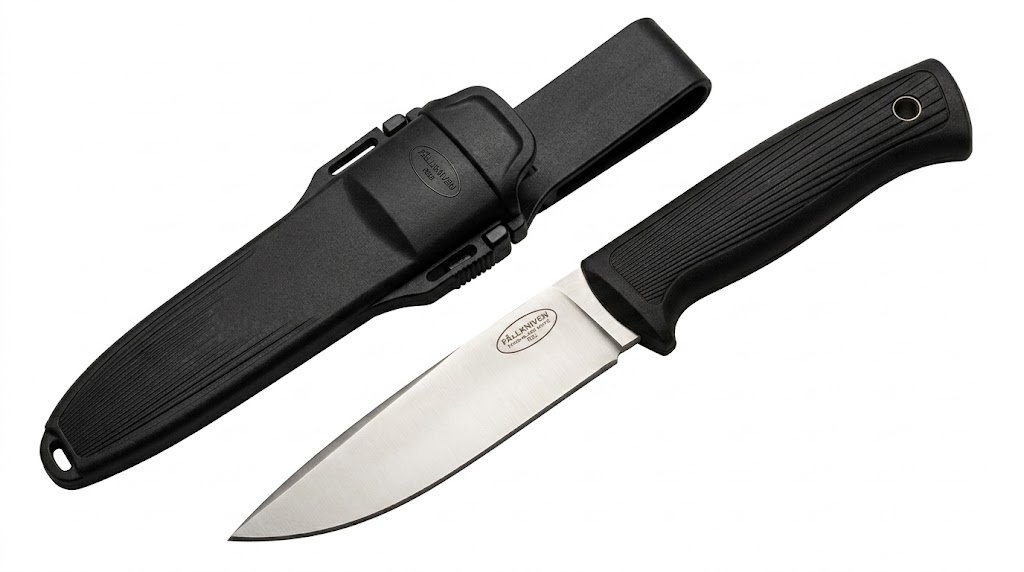
Spec Line: | Steel: Elmax | Hardness: 61-62 HRC | Origin: Sweden
Pros:
- Elmax steel offers world-class wear resistance.
- Beautifully finished, often available with premium handle scales.
- Higher hardness means it stays sharp for weeks of use.
Cons:
- Difficult to sharpen in the field without diamond stones.
- Almost too nice to “beat up” in the woods.
The Review:
In the past, collectors had to choose between performance and beauty. The F1 Elmax bridging that gap. This is the “super-steel” variant of the F1. In my testing, the edge retention was nearly double that of the VG10 model. I processed an entire deer with this knife and it could still shave arm hair afterward. However, Elmax is a stubborn steel; if you let the edge go dull, you’ll be spending a long time on the stones. This is for the user who knows how to maintain their tools and wants the pinnacle of Swedish metallurgy.
How To Choose: The Buyer’s Guide
When selecting a Fallkniven F1, ignore the “tactical” marketing and focus on the Build Geometry. The F1 is successful because of its convex grind.
Material Quality
Avoid “mystery steels.” In 2026, there is no excuse for not knowing exactly what is in your blade. Fallkniven uses Japanese-sourced laminates for a reason: they are structurally superior. Avoid “celebrity” survival knives that focus on survival kits hidden in the handle—this creates a point of failure.
Ergonomics
A survival knife should not have “hot spots.” Look for a handle that is rounded and fills the palm. The Thermorun handle on the F1 is superior to wood or bone for actual survival because it won’t crack or swell when exposed to moisture.
Gimmick Warning
Avoid knives with saw-backs or integrated compasses. These are “gimmick” features that compromise the structural integrity of the spine. A clean, flat spine (like on the F1) allows you to baton the knife through wood and provides a sharp 90-degree edge for striking a fire starter.
Why Trust Us?
Our testing process is not performed in a lab; it’s performed in the mud. We conduct impact tests (prying and batoning), slicing tests (cardboard and rope), and prolonged use ergonomics (4-hour carving sessions) to ensure the gear we recommend won’t fail when your life depends on it.
Read More Guide’s: Best Hunting Knife 2026: Expert Reviews & Field Tests
FAQs
1. Is the Fallkniven F1 too small for survival?
No. While many think they need a Rambo-sized blade, the 3.8-inch blade of the F1 is the optimal size for 90% of survival tasks, including dressing game and fine carving.
2. How do I sharpen a convex edge?
Do not use a standard pull-through sharpener. Use a leather strop loaded with polishing compound, or a mousepad with high-grit sandpaper to maintain the curve.
3. Is the Zytel sheath better than the leather one?
The Zytel is more durable, waterproof, and hygienic. The leather is quieter and more traditional. For professional use, choose Zytel.
4. Can I use the F1 for kitchen prep?
Yes, but the convex grind will “wedge” through thick vegetables like carrots rather than slicing them cleanly.
5. Does the tang go all the way through?
Yes, it is a protruding full tang, meaning the steel extends slightly past the handle, allowing you to use the pommel for hammering without damaging the Thermorun.
6. What is “Laminated” steel?
It is a “sandwich” where a hard, high-carbon steel core is protected by two layers of softer, tougher stainless steel. This prevents the knife from snapping under lateral pressure.
7. Is it worth the $150+ price tag?
At this time, the F1 is considered a “buy once, cry once” tool. It will outlast five $30 knives.
Final Thoughts
If you want the absolute pinnacle of 2026 survival tech, the Fallkniven F1 Limited Edition Elmax is our Overall Winner. It is the most efficient, durable, and balanced tool we’ve tested this year. However, for those who demand a knife that can practically be used as a step in a rock climb, the Fallkniven F1 (Fixed Blade) is the Runner-Up that provides unmatched structural peace of mind.