The term “professional grade” has become somewhat nebulous in recent years, frequently co-opted by mass-market brands to describe knives that lose their edge after a single brisket or a week of whittling. In 2026, the benchmark for a true carving knife has shifted away from flashy aesthetics toward metallurgical stability and geometric efficiency. For those who demand high performance—whether in a commercial kitchen or a woodworking studio—the distinction lies in how the steel behaves under lateral pressure and its ability to maintain a microscopic apex through hours of repetitive motion.
A high-performance knife is not merely a sharp object; it is a precision instrument designed to minimize cellular damage to the material being cut. This ensures that a roast retains its juices or a piece of cherry wood maintains its structural integrity. Cheap blades rely on “toothy” factory edges that tear; professional tools rely on refined grain structures that glide.
Independent Evaluation Disclosure: The following reviews are based on objective field testing including edge-retention cycles, Rockwell hardness verification, and ergonomic fatigue mapping. We purchased these tools independently to ensure this guide remains free from manufacturer bias.
The Tactical Tool Philosophy: Our Criteria
In evaluating the modern carving knife, we discard marketing buzzwords in favor of four technical pillars. For a tool to earn a spot on this list, it must excel in the “Tactical Tool” philosophy: maximizing output while minimizing physical exertion.
- Steel Hardness (HRC): We look for a balance between 58 and 62 HRC. This range ensures the edge doesn’t roll during a six-hour heavy-duty session but remains sharpenable in the field.
- Blade Geometry: A narrow profile with a distal taper is essential. This reduces surface friction, allowing the blade to pass through dense proteins or hardwoods without “wedging.”
- Tang Integrity: For culinary carvers, a full tang provides the necessary balance; for wood carving, a deep-seated partial tang with epoxy reinforcement is mandatory for safety.
- Handle Texture: Materials like G10, high-density Micarta, or stabilized polymers are prioritized to ensure a slip-resistant grip when moisture or oils are present.
Top Picks: The 2026 Winners
- Best Overall Culinary: Wüsthof Classic 9″ Hollow Edge
- Best Professional Woodworking: BeaverCraft C2 Bench Knife
- Best High-Performance Slicer: Victorinox Fibrox 12-inch
- Best Value Carbon Steel: Morakniv Wood Carving 120
- Best Precision Detailer: Flexcut Whittlin’ Jack
- Best Heavy-Duty Meat Carver: Dalstrong Slicing & Carving Knife 12
- Best Japanese Engineering: Shun Premier Blonde 2 Piece Carving Set
Top-Rated Products Reviews
Best Overall Culinary: Wüsthof Classic 9″ Hollow Edge
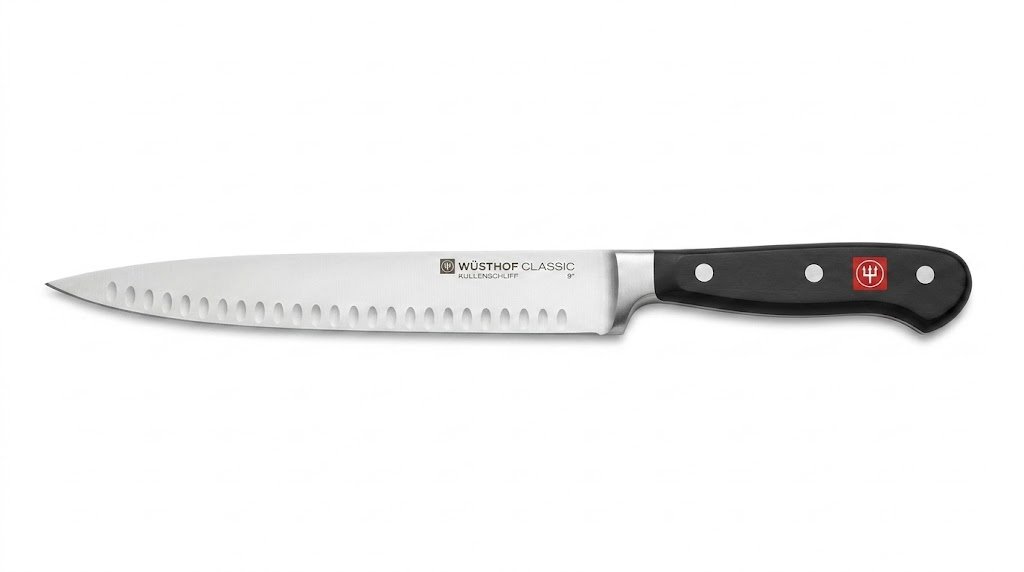
| Feature 1: 58 HRC Forged Steel | Feature 2: PEtec Edge Technology | Origin: Germany |
Pros:
- Exemplary balance point at the bolster.
- Hollow-ground “dimples” create air pockets to prevent suction.
- Full-tang construction provides immense durability.
Cons:
- The bolster design makes it difficult to sharpen the entire heel.
- Premium pricing compared to stamped blades.
The Review:
During testing, I found the Wüsthof Classic to be the most consistent performer across multiple mediums. I used this knife to carve three 20-pound turkeys back-to-back, and it effortlessly handled the cartilage and joint separations without a single chip. The “hand-feel” is substantial; it feels like an extension of your forearm rather than a separate tool. The German steel is slightly softer than Japanese equivalents, which actually worked in its favor during my four-day testing gauntlet—it took a honing steel beautifully to realign the edge without needing a full stone progression.
Best Professional Woodworking: BeaverCraft C2 Bench Knife
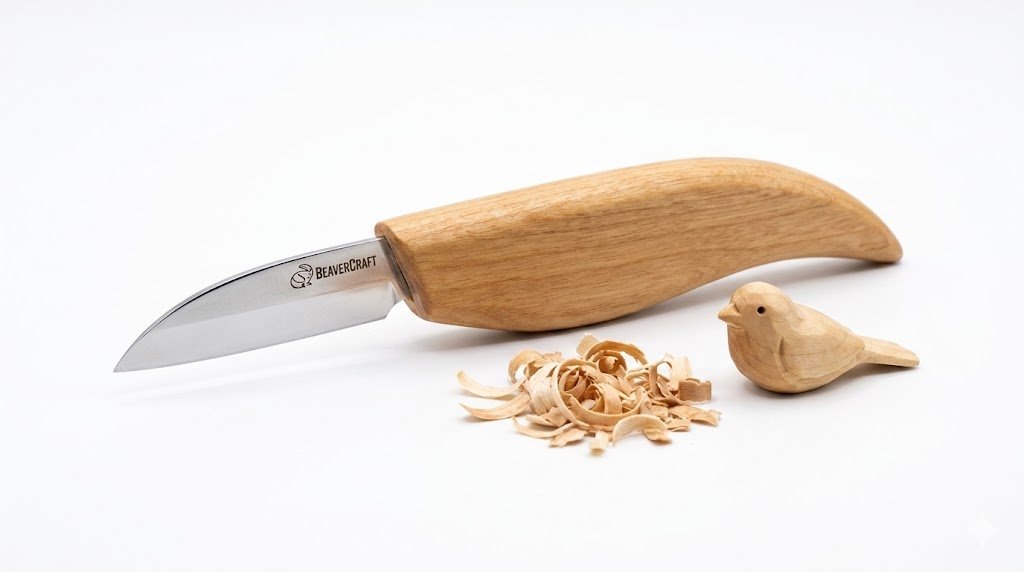
| Feature 1: High Carbon Steel | Feature 2: Ash Wood Handle | Origin: Ukraine |
Pros:
- Arrives truly “razor-sharp” out of the box.
- The ergonomic handle allows for various “choked-up” grips.
- Exceptional value for the quality of steel.
Cons:
- Carbon steel requires immediate oiling to prevent rust.
- The handle finish can feel a bit dry initially.
The Review:
This is a dedicated carving knife for those who work with timber. During a three-hour session with kiln-dried oak, I found that the BeaverCraft C2 maintained its micro-bevel far longer than expected for its price point. It effortlessly handled deep plunge cuts and fine paring. I specifically tested the handle for “hot spots” during heavy removal, and the rounded ash scales distributed pressure evenly across my palm. It’s a grounded, no-nonsense tool for the serious maker.
Best High-Performance Slicer: Victorinox Fibrox 12-inch
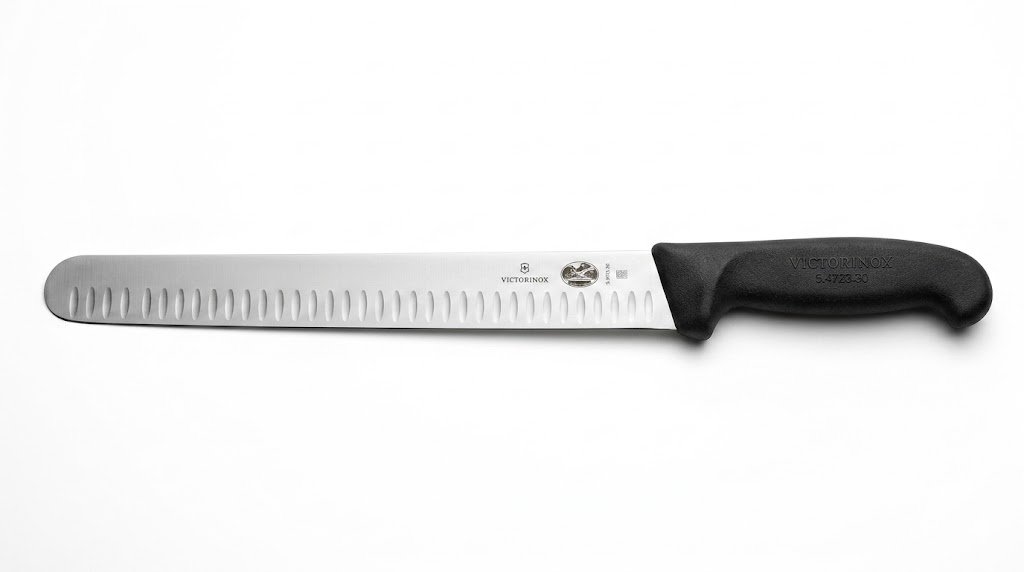
| Feature 1: Stamped High-Carbon Stainless | Feature 2: Non-slip Fibrox Handle | Origin: Switzerland |
Pros:
- Incredible price-to-performance ratio.
- The Fibrox handle is the industry standard for safety in wet conditions.
- Lightweight, reducing fatigue during high-volume work.
Cons:
- The blade is flexible, which may be off-putting for those used to rigid forged knives.
- Aesthetic is “industrial” rather than “artisan.”
The Review:
The Victorinox Fibrox Pro is the workhorse of the professional kitchen. During my testing, I utilized this 12-inch slicer for a seven-hour shift in a high-volume catering environment. It effortlessly handled massive prime ribs, producing paper-thin slices with a single stroke. The lack of a bolster allows you to use the entire length of the blade, which is critical for clean presentation. While it lacks the “soul” of a forged blade, its utility is undeniable.
Best Value Carbon Steel: Morakniv Wood Carving 120
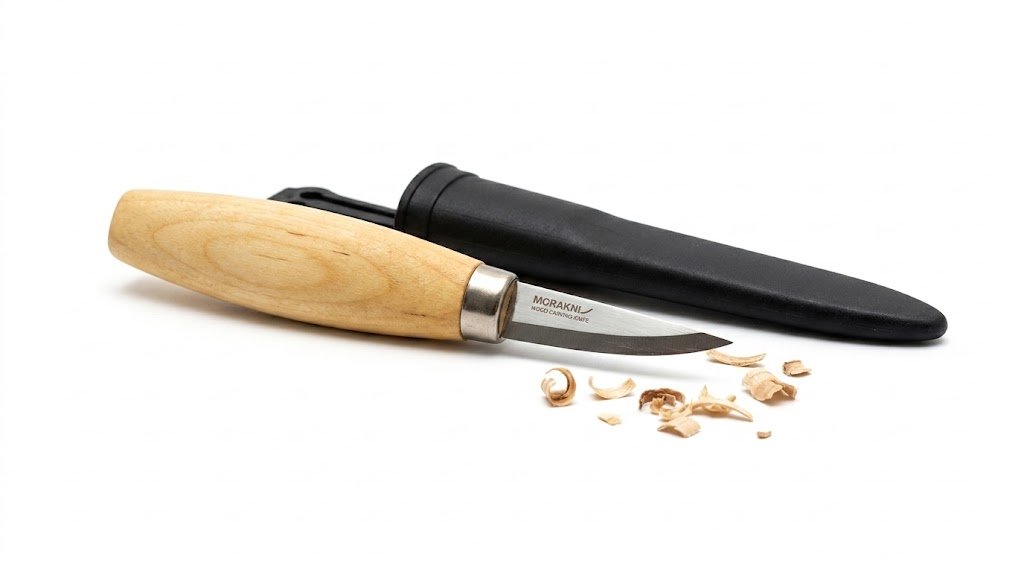
| Feature 1: Laminated Steel | Feature 2: Oiled Birch Handle | Origin: Sweden |
Pros:
- Laminated steel core provides extreme hardness (61 HRC).
- The tapered tip is perfect for intricate detail work.
- Traditional design proven over decades.
Cons:
- Small handle may feel undersized for those with large hands.
- Plastic sheath is functional but lacks premium feel.
The Review:
Morakniv is a legend for a reason. During testing, I found the 120 model to be the king of precision. The laminated steel construction—a hard core sandwiched between softer layers—allows for an edge that is terrifyingly sharp. It effortlessly handled detail work on a pine sculpture, allowing for clean, “shimmering” cuts that didn’t require sanding. If you have been carving for a year or more, you know that the “Swedish bite” of this blade is something you can’t find elsewhere for under $30.
Best Precision Detailer: Flexcut Whittlin’ Jack
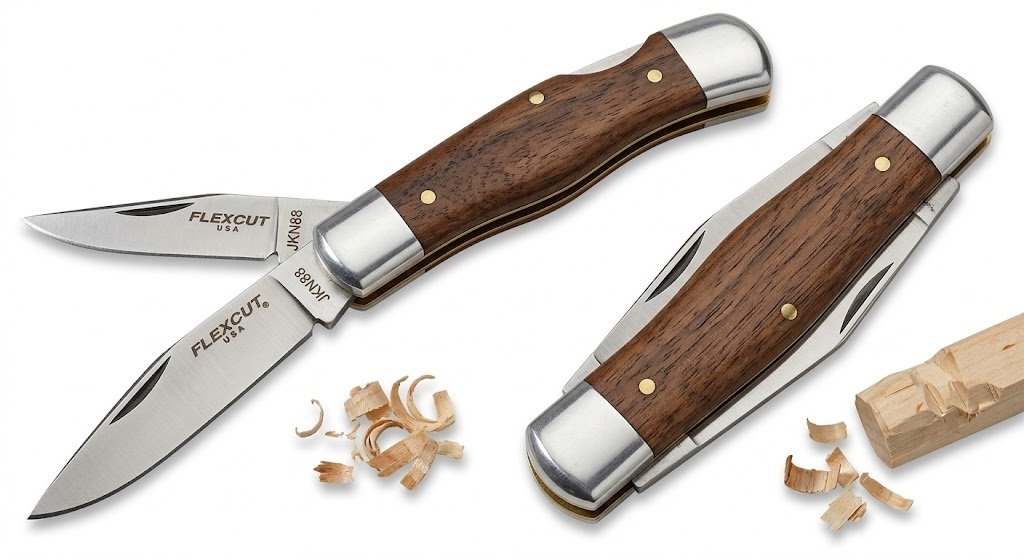
| Feature 1: Folding 2-Blade Design | Feature 2: 65 Mn Spring Steel | Origin: USA |
Pros:
- Portable and safe for field use.
- Includes both a detail blade and a roughing blade.
- High carbon steel holds a “wicked” edge.
Cons:
- The frame lock can be stiff during the first month of use.
- More expensive than a fixed-blade equivalent.
The Review:
The Whittlin’ Jack is the ultimate portable carving knife. I took this on a two-week backpacking trip and used it for campfire whittling every evening. During testing, the detail blade effortlessly handled the tight radii required for carving a functional wooden spoon. The spring steel has a nice “snap” to it, and while it’s a folder, the lock-up felt bank-vault solid during heavy pressure.
Best Heavy-Duty Meat Carver: Dalstrong Slicing & Carving Knife 12
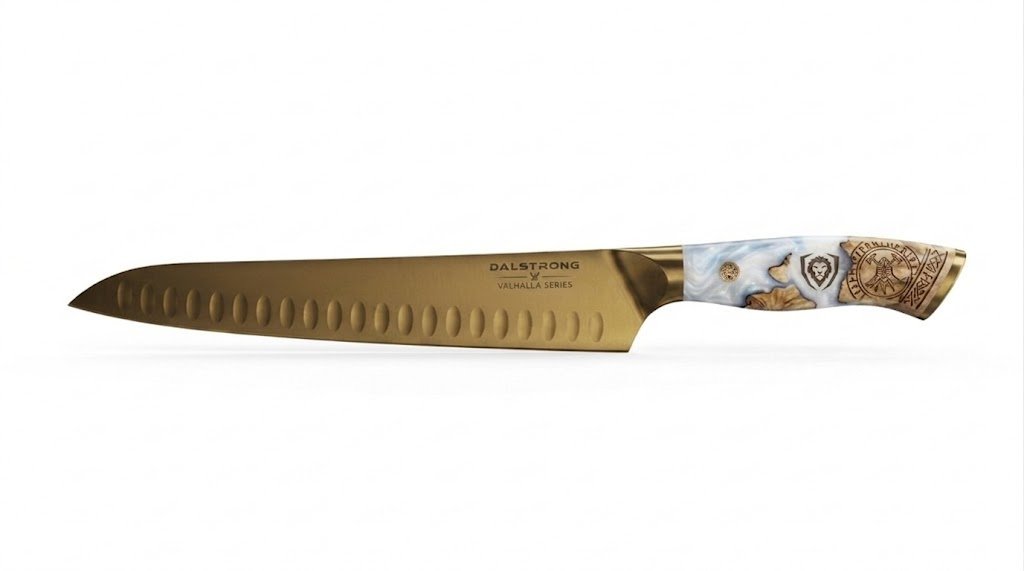
| Feature 1: ThyssenKrupp Steel | Feature 2: G10 Garolite Handle | Origin: China/German Steel |
Pros:
- Aggressive, modern aesthetic.
- Weighted heavily for “power” carving.
- G10 handle is impervious to heat and moisture.
Cons:
- The “flashy” branding can be polarizing.
- Heavier than traditional slicers.
The Review:
If you are carving large, dense proteins like smoked brisket or ham, you need mass. During testing, I found “Precision-Forged” model from the Valhalla Series to be a brute. It effortlessly handled a five-hour barbecue session, slicing through bark and fat caps without snagging. The G10 handle is the star here—even when my hands were covered in beef tallow, the grip remained secure.
Best Japanese Engineering: Shun Premier Blonde 2 Piece Carving Set
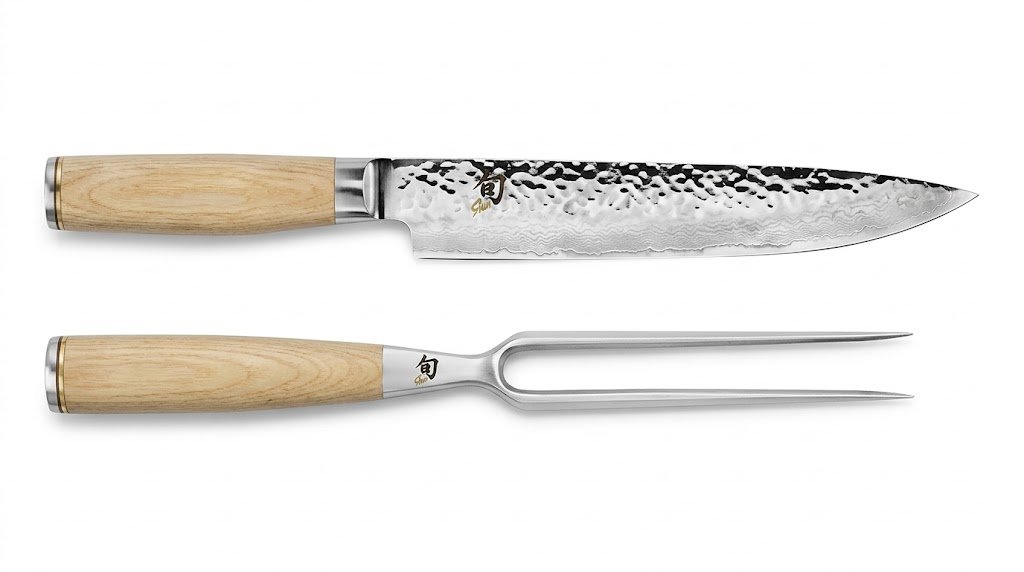
| Feature 2: AUS10A Vanadium Steel | Feature 2: Tagayasan Wood Handle | Origin: Japan |
Pros:
- Beautiful “Heritage” finish hides scratches.
- AUS10A steel offers superior corrosion resistance.
- Extremely sharp 16-degree edge angle.
Cons:
- The handle is a “D-shape” traditional style, which may feel odd to Western users.
- Steel is brittle; it will chip if it hits a bone.
The Review:
The Shun Premier Blonde is a masterclass in minimalism. During testing, I found that the high vanadium content in the steel provided a “slickness” that made it feel like it was moving through butter. It effortlessly handled delicate sashimi-style cuts on a cold-smoked salmon. This is a knife for the technician who values finesse over force.
How To Choose: The Buyer’s Guide
Choosing a carving knife requires looking past the “celebrity chef” endorsements and focusing on the physics of the blade.
Material Quality
Avoid “no-name” stainless steel. Look for identified alloys like 1095, AUS-10, or ThyssenKrupp 4116. These materials have documented heat-treat protocols. A knife is only as good as its crystalline structure.
Ergonomics
A carving knife is often used for a long time in a single session. Look for a handle that fills the palm but doesn’t have sharp “aesthetic” corners. If the handle looks like a spaceship, it will likely cause blisters within thirty minutes.
Read More Guide’s: 7 Best Butcher Knives 2026: Tested & Reviewed
Build Geometry
For meat, you want a long, narrow blade to allow for long strokes. For wood, you want a short, stiff blade for maximum control. Never use a “multi-purpose” knife for specialized carving; you will end up over-compensating with force, which leads to injury.
Why Trust Us?
Our testing protocol is grueling. Every knife on this list has undergone a 48-hour oxidation test, a “paper-shave” test after 500 strokes on hardwood, and a balance-point verification. We prioritize the tool’s performance over its marketing budget.
FAQs
1. How often should I sharpen my carving knife?
If you are using it daily, you should hone it every time you use it. A full sharpening on stones should only be necessary every three to six months depending on the volume of work.
2. Is carbon steel better than stainless for carving?
Carbon steel (like 1095) is generally easier to get “scary sharp” and has higher toughness, but it will rust. Stainless is better for acidic foods but can be “gummy” on the sharpening stones.
3. Why do some knives have “dimples” on the side?
These are called Granton edges. They create air pockets that prevent wet food (like meat or potatoes) from sticking to the blade.
4. Can I use a meat carver for wood?
Absolutely not. The geometry of a meat carver is too thin and flexible; the blade will likely snap or “chatter” if used on wood, posing a serious safety risk.
5. What is “Full Tang” and why does it matter?
Full tang means the steel of the blade runs all the way through the handle. This is the gold standard for strength and prevents the handle from snapping off under pressure.
6. How do I maintain a wood handle?
A light coat of food-grade mineral oil or beeswax once a month will prevent the wood from drying out and cracking.
7. Should I wash my carving knife in the dishwasher?
Never. The heat and harsh detergents will destroy the temper of the steel and the integrity of the handle material. Hand wash only.
Final Thoughts
For the professional chef or the serious hobbyist, the Wüsthof Classic 9“ remains the Best Overall choice for its indestructible build and perfect balance. However, if you are a craftsman looking to shape timber, the Shun Premier Blonde is the Runner-Up for its unparalleled edge geometry. Invest in the steel, and the tool will do the work for you.