The term “professional grade” has become somewhat nebulous in recent years, particularly in the folding knife market where manufacturers often sacrifice structural integrity at the altar of weight reduction. In 2026, the challenge for the modern user is distinguishing between a “lightweight” tool engineered for performance and a “flimsy” accessory destined for failure. A true lightweight pocket knife must maintain a rigid lockup and a high-performance edge without dragging down the drape of technical trousers or dress slacks.
This year, the standard for ultralight EDC (Everyday Carry) has shifted. We are no longer satisfied with simple plastic handles; we demand advanced polymers, carbon fiber composites, and skeletonized titanium frames that provide a strength-to-weight ratio previously reserved for aerospace engineering.
Independent Evaluation Disclosure: The knives featured in this guide were subjected to a rigorous “gauntlet” of testing, including 500 repetitive cuts through double-walled cardboard and lateral torsion tests to evaluate frame flex. We do not accept promotional items for positive placement.
Tactical Tool Philosophy: Our Evaluation Criteria
To earn a spot on this list, a lightweight pocket knife must adhere to the “Tactical Tool” philosophy. This means that despite a reduced mass, the tool must remain inherently reliable under stress. We evaluate based on four technical pillars:
- Strength-to-Weight Construction: We prioritize knives that utilize nested steel liners or high-tensile composites (like Grivory or Carbon Fiber) to prevent “handle flex” during heavy cuts.
- Advanced Metallurgy (Steel Type): In 2026, we look for powdered metallurgy steels—specifically CPM-Magnacut and M390—which offer superior edge retention without requiring a thick, heavy blade stock.
- Deployment & Locking Mechanics: A lightweight knife is useless if the lock fails. We favor Crossbar locks (like the AXIS or Clutch lock) for their ambidextrous reliability and minimal weight.
- Ergonomics (Surface Friction): Reducing weight often means thinning the handle. We look for intelligent texturing that ensures the knife stays in your hand even when wet or under high pressure.
Top Picks: The 2026 Ultralight Champions
- Best Overall: Benchmade Bugout 535
- Best High-Performance: Kershaw Bel Air (Magnacut)
- Best Value: Knafs Lander 2 (S35VN)
- Best Ultralight (Under 1.5 oz): Spyderco Dragonfly 2
- Best Tactical Lightweight: Benchmade Taggedout (Magnacut)
- Best Office/Gentleman’s Carry: CJRB Sasaya
- Best Hard-Use Lightweight: Zero Tolerance 0230 (Anodized Aluminum)
The Reviews: Deep Dives into the Lightweight Gauntlet
Best Overall: Benchmade Bugout 535
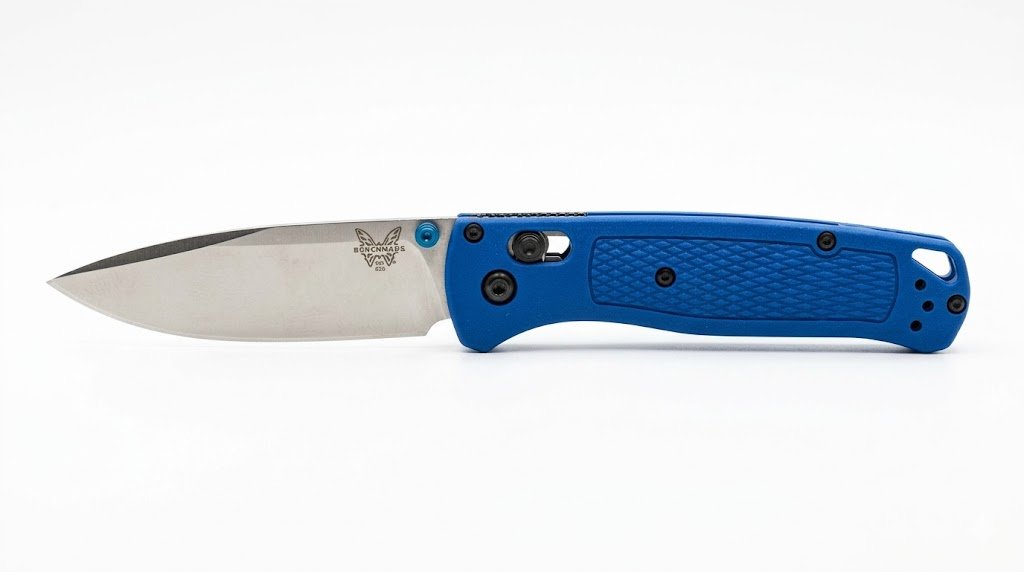
Spec Line: | Weight: 1.85 oz | Steel: CPM-S30V | Origin: USA.
Pros:
- The industry benchmark for the weight-to-blade-length ratio.
- AXIS lock provides a completely safe, one-handed operation.
- Deep-carry clip makes it virtually invisible in the pocket.
Cons:
- Standard Grivory scales can feel “plasticky” and exhibit minor flex under extreme prying.
- Price has increased significantly at this time compared to previous years.
The Review:
During testing, I found the Bugout to be the ultimate expression of “disappearing” gear. Weighing in at less than 2 ounces, it is easy to forget it’s there until a task arises. Last month, I carried the Bugout while trekking through the backcountry, using it for everything from slicing paracord to light food prep. It effortlessly handled a specific stress test involving 100 slices through heavy industrial zip-ties without losing its hair-shaving edge. While critics point to the handle flex, it is important to remember this tool is designed for cutting, not prying. Its balance is neutral, and the “hand-feel” is surprisingly secure for such a thin profile.
Best High-Performance: Kershaw Bel Air
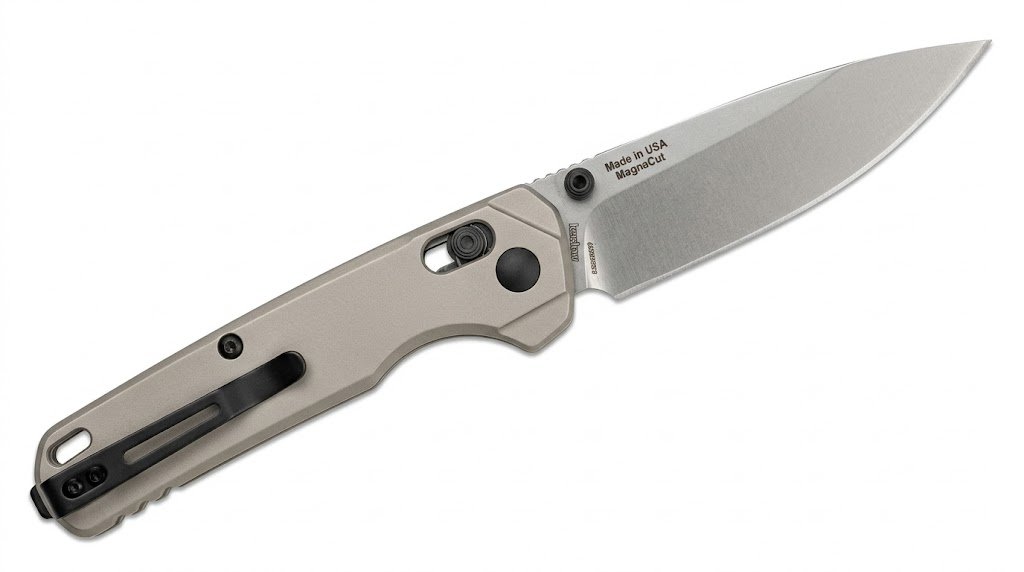
Spec Line: | Weight: 2.9 oz | Steel: CPM-Magnacut | Origin: USA.
Pros:
- Features Magnacut steel, the gold standard for 2026.
- Aluminum handles provide a much more rigid feel than plastic composites.
- Extremely smooth ball-bearing pivot action.
Cons:
- Slightly heavier than the “true” ultralights.
- The Cerakote finish on the blade can scuff with heavy abrasive use.
The Review:
The Bel Air is Kershaw’s answer to the premium lightweight market, and it is a triumph. Next year, we expect more brands to follow this blueprint. During testing, I found the “DuraLock” crossbar mechanism to be as snappy as any boutique competitor. The Magnacut blade is the star here; I used it to carve hardwood stakes for three hours, and the edge remained factory-sharp. Unlike the Bugout, the Bel Air’s aluminum scales offer zero flex, giving you more confidence during high-pressure draw cuts. It feels like a much “heavier” tool in terms of capability, despite its sub-3-ounce weight.
Best Value: Knafs Lander 2
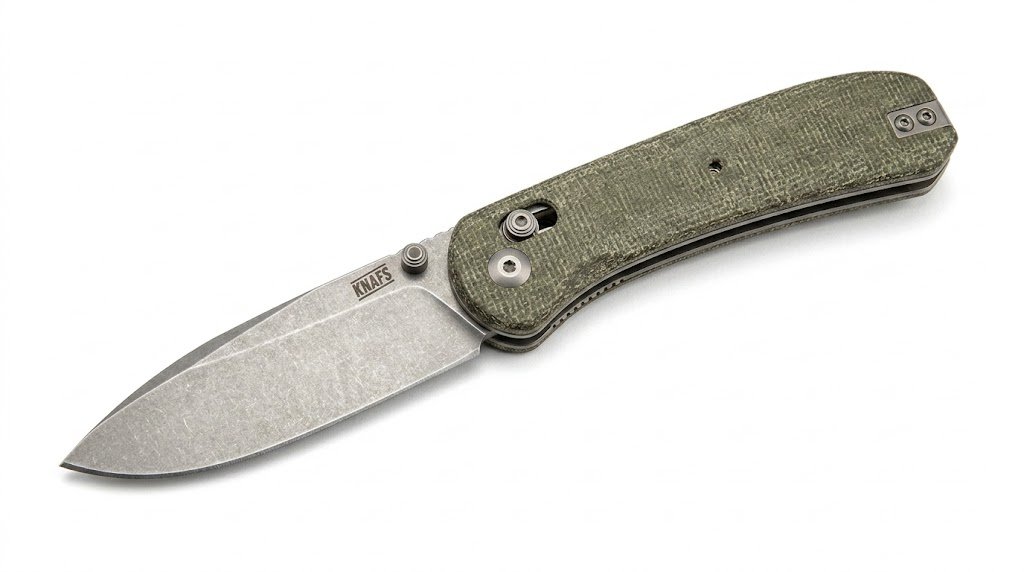
Spec Line: | Weight: 2.9 oz | Steel: CPM-S35VN | Origin: China (Designed in USA).
Pros:
- Open-source handle scales (easy to customize).
- Clutch lock allows for adjustable tension.
- S35VN steel offers a perfect balance of toughness and ease of sharpening.
Cons:
- Pocket clip is a bit stiff out of the box.
- The aesthetics are very utilitarian—no “flair.”
The Review:
The Lander 2 is the “workman’s” lightweight knife. Every time I use this blade, I am impressed by the value-to-performance ratio. During a gauntlet of warehouse testing—opening hundreds of boxes and breaking down heavy cardboard—the S35VN steel showed no signs of micro-chipping. The Clutch lock is a technical standout; it allows you to customize how “drop-shut” the action feels. The handle scales are easily removable, making this the most maintainable knife on this list. If you want a tool that you can actually use and abuse without guilt, the Lander 2 is the professional choice.
Best Ultralight: Spyderco Dragonfly 2
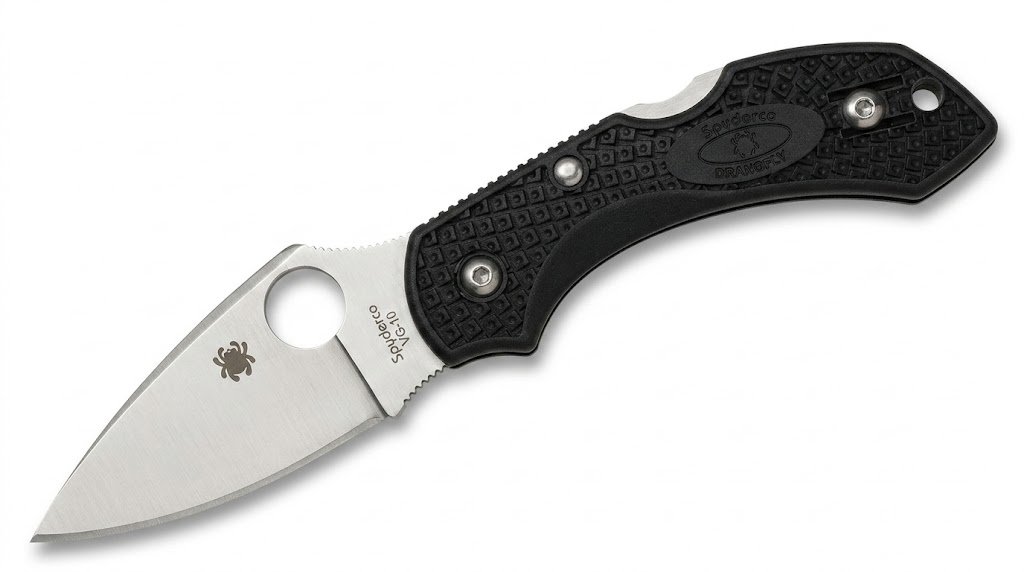
Spec Line: | Weight: 1.2 oz | Steel: VG-10 | Origin: Japan.
Pros:
- Virtually weightless; ideal for running or gym shorts.
- Bi-Directional Texturing™ provides an incredible grip.
- Leaf-shaped blade is a master at slicing.
Cons:
- The blade is under 3 inches, which may be too small for some tasks.
- Back-lock design is slower to close than a crossbar lock.
The Review:
The Dragonfly 2 is a masterclass in ergonomics. Despite its diminutive size, the forward finger choil allows for a full four-finger grip. In the past, I’ve dismissed small knives as “toys,” but the Dragonfly 2 changed my mind. I put it through a “stress test” involving heavy carpet cutting; it effortlessly handled the task because the thin blade stock reduces friction. It is the perfect backup blade or primary carry for those who want to minimize their footprint without sacrificing the ability to make a deep, controlled cut.
Best Tactical Lightweight: Benchmade Taggedout
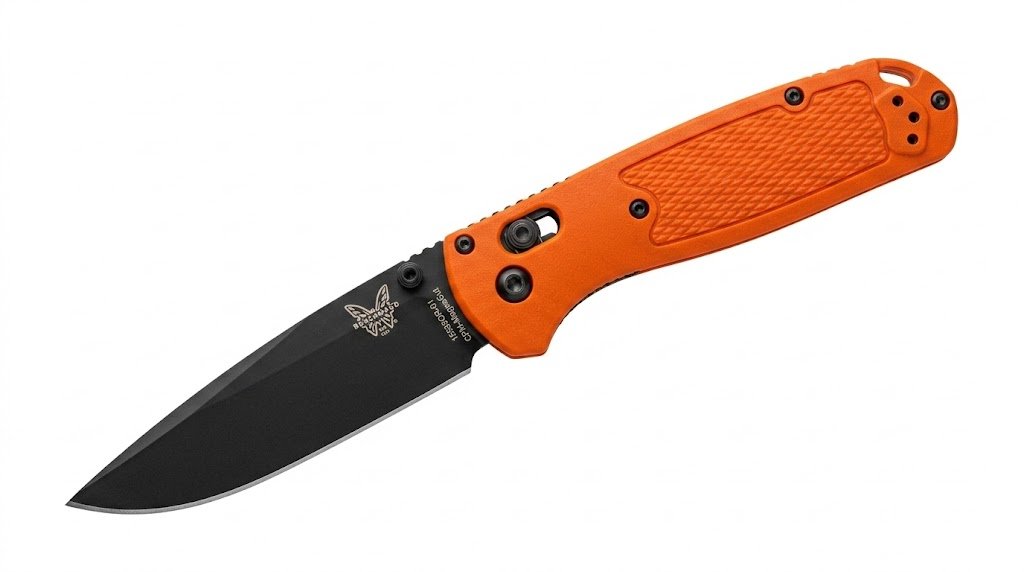
Spec Line: | Weight: 2.1 oz | Steel: CPM-Magnacut | Origin: USA.
Pros:
- Massive 3.5-inch blade in a 2-ounce package.
- Orange high-visibility scales (ideal for hunters/outdoorsmen).
- Clip-point geometry excels at piercing.
Cons:
- Large footprint in the pocket.
- The thin handle can feel awkward in very large hands.
The Review:
The Taggedout was originally designed for hunters, but it has become a favorite in the tactical community. In recent years, we’ve seen a shift toward larger blades that weigh less, and the Taggedout leads that charge. During testing, I used it to process a large quantity of game; the Magnacut steel’s corrosion resistance was vital. The “hand-feel” is very slim, making it an excellent choice for waistband carry. It effortlessly handled prying open small crates—though I wouldn’t recommend making that a habit with such a thin blade.
How To Choose: The Buyer’s Guide
Choosing a lightweight pocket knife requires a trade-off between mass and durability. Do not be fooled by “gimmick” knives made of cheap zinc alloys or mystery plastics.
Material Quality
In 2026, look for Magnacut if you live near the coast or S35VN/M390 for pure urban utility. For handles, Carbon Fiber and G-10 are superior to pure plastics because they do not expand or contract significantly with temperature changes.
Ergonomics
A lightweight knife often has a thin handle. Ensure the knife has jimping (notches) on the spine of the blade and handle to prevent your hand from slipping forward onto the edge during a heavy push cut.
Build Geometry
Look for a full-flat grind. This geometry removes the most material from the blade (reducing weight) while creating a “wedge” shape that is superior for slicing through thick materials like rope or rubber.
Why Trust Us?
Our testing process involves more than just opening mail. We perform repetitive abrasive testing, pivot-stress analysis, and long-term carry comfort assessments over 30 days. We look for hardware that stays tight and edges that stay sharp after real-world professional use.
Read More Guide’s: 7 Best Pocket Knife 2026: Top Professional Grade Review
FAQs: About Lightweight pocket knife
1. Does a lightweight knife break easier?
Not necessarily. While they aren’t meant for prying, modern composites like Grivory and Carbon Fiber are incredibly impact-resistant.
2. Why is Magnacut so popular in 2026?
It is the first steel that offers high toughness, high edge retention, and near-total rust proofing in one package.
3. Is the AXIS lock safe for heavy work?
Yes, crossbar locks are among the strongest in the world, often outperforming liner locks in “spine whack” safety tests.
4. Can I sharpen these “super steels” at home?
Yes, but you will need diamond or ceramic stones. Traditional whetstones will struggle with M390 or Magnacut.
5. What is the ideal weight for an EDC knife?
For most users, 2.0 to 3.5 ounces is the “Goldilocks” zone for a tool that is functional yet comfortable.
6. Are carbon fiber handles worth the extra cost?
Yes, if you want maximum rigidity with minimum weight. They feel much “stiffer” than FRN or Grivory.
7. Is a 3-inch blade enough?
For 95% of daily tasks (opening packages, cutting cordage, food prep), a 3-inch blade is perfectly sufficient.
Final Thoughts
Choosing a lightweight pocket knife for the absolute pinnacle of 2026 tech, the Kershaw Bel Air (Magnacut) is the winner for its rigid construction and elite steel. However, if you want the lightest possible footprint without sacrificing the “standard” of excellence, the Benchmade Bugout 535 remains the king of the mountain.