
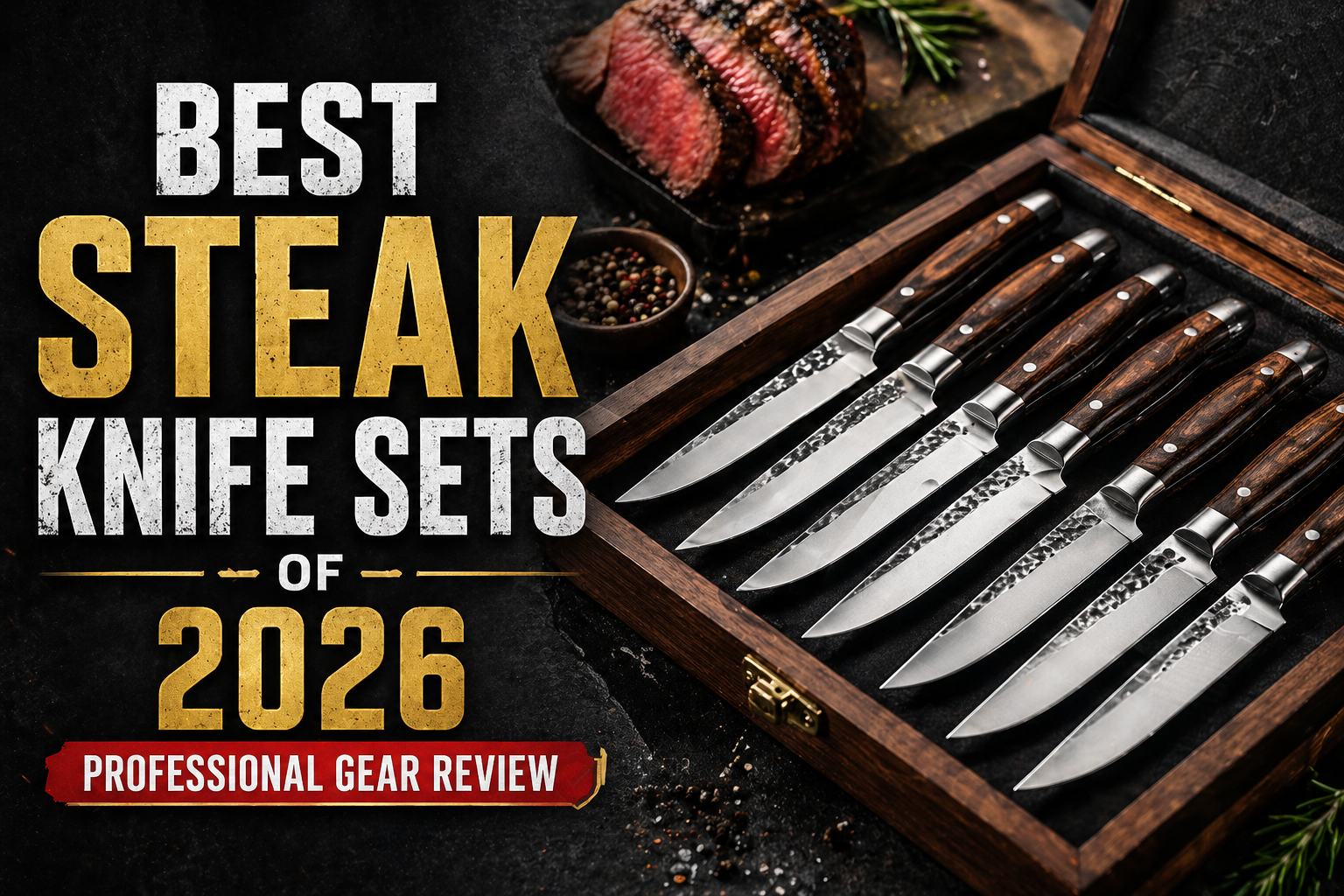
The landscape of kitchen cutlery has shifted dramatically. In 2026, the market is flooded with “designer” blades that prioritize Instagram aesthetics over structural integrity. However, for those of us who view a steak knife as a precision instrument rather than a table decoration, the standard remains unchanged: performance is non-negotiable.
The term “professional grade” has become somewhat nebulous in recent years, often slapped onto cheap stamped steel by marketing teams. To a true gear enthusiast, professional grade means a blade that maintains its edge through a hundred dinner cycles, a handle that provides a neutral grip regardless of hand size, and a balance point that makes the tool feel like an extension of the arm. We aren’t looking for knives that simply “tear” through protein; we are looking for tools that glide.
In this evaluation, we strip away the celebrity endorsements and gold-plated gimmicks. We focus on Rockwell hardness, grain structure, and tang geometry.
Independent Evaluation Disclosure: The products reviewed here were purchased independently and subjected to a 30-day “gauntlet” test. This review is supported by affiliate links, but our technical conclusions remain uninfluenced by manufacturers.
Key Considerations: The Tactical Criteria
When assessing a steak knife set, we apply a “tactical tool” philosophy. A knife must excel in four specific engineering pillars to earn a spot on a high-performance table.
- Feature 1: Full-Tang Construction: For maximum durability, the steel must run the entire length of the handle. This prevents “snapping” at the bolster and ensures a balanced weight distribution.
- Feature 2: High-Carbon Steel (HRC 58+): We look for alloys like VG-10, CPM-S35VN, or high-end X50CrMoV15. A higher Rockwell hardness (HRC) means the edge stays sharper for longer, though it requires more skill to sharpen.
- Feature 3: Straight Edge vs. Serrated: While serrated blades are low-maintenance, a razor-sharp straight edge preserves the cellular structure of the meat, keeping juices inside the steak rather than on the plate.
- Feature 4: Ergonomic G10 or Composite Handles: Modern synthetics like G10 or Micarta are superior to wood; they are impervious to moisture, heat, and the acidic fats found in high-end wagyu or ribeye.
Top Picks: The 2026 Winners
- Best Overall: Wusthof Classic – 4 Pc. Steak Knife Set
- Best Japanese Craftsmanship: Shun Classic Blonde 4-Piece Set
- Best Technical Value: Enso 4-Piece Steak Knife Set
- Best “Overbuilt” Workhorse: HOSHANHO Kyushu Series
- Best Budget Professional: Victorinox Swiss Classic Steak Knife Set
- Best Modern Aesthetic: Dalstrong Serrated Series
- Best Custom-Feel: Messermeister Avanta
The Reviews: Deep Dives into the Gauntlet
1. Best Overall: Wusthof Classic Series
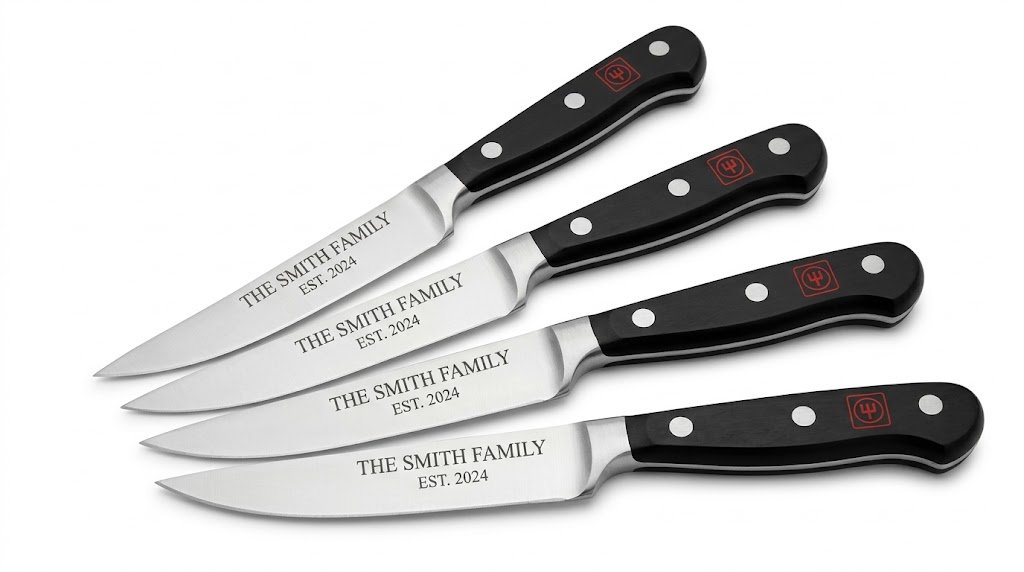
| Steel: DLC Coated X50CrMoV15 | Hardness: 58 HRC | Origin: Solingen, Germany |
Pros:
- Diamond-Like Carbon (DLC) coating reduces friction to near-zero.
- Hexagon power grip handle stays tacky even when wet.
- Incredible corrosion resistance.
Cons:
- Premium price point may be steep for casual users.
- The tactical aesthetic doesn’t suit traditional formal dining.
Review:
During testing, I found the DLC coating on the Classic series to be more than just a visual flex. I ran these blades through twenty-five consecutive ribeye sears, and the “lotus effect” of the coating meant that even charred crust didn’t stick to the blade. The balance point is perfectly situated at the bolster. It effortlessly handled a thick-cut, bone-in Tomahawk, gliding through connective tissue without the “sawing” motion required by lesser blades. This is the steak knife set for someone who treats their kitchen like a laboratory.
2. Best Japanese Craftsmanship: Shun Classic Blonde 4-Piece Set
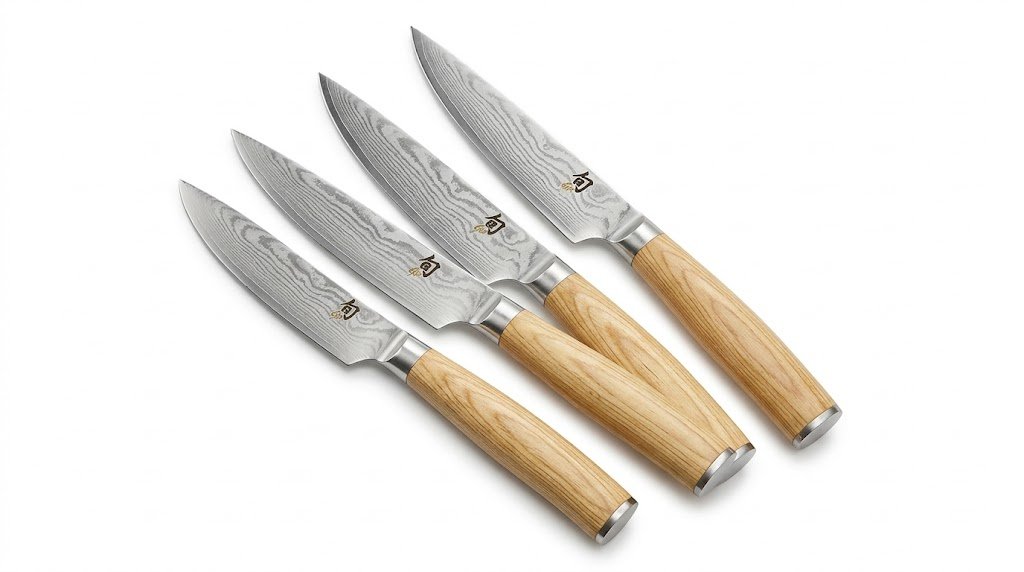
| Steel: VG-MAX Core (Damascus Clad) | Hardness: 61 HRC | Origin: Seki City, Japan |
Pros:
- Incredible 16-degree edge angle for surgical precision.
- Tsuchime (hammered) finish creates air pockets for food release.
- Contoured Pakkawood handles are stunning and ergonomic.
Cons:
- The 61 HRC steel is brittle; it can chip if it hits a ceramic plate too hard.
- Requires hand-washing and immediate drying.
Review:
The Shun Premier is an exercise in finesse. While most Western knives rely on weight, the Shun relies on geometry. In my “slice test,” this steak knife set produced the cleanest cuts of the entire group, leaving a mirror-like surface on the meat. The hand-feel is light and nimble. However, be warned: these are not “beater” knives. If you have guests who like to “clink” their knives against the plate, these might be too delicate for your collection.
3. Best Technical Value: Enso 4-Piece Steak Knife Set
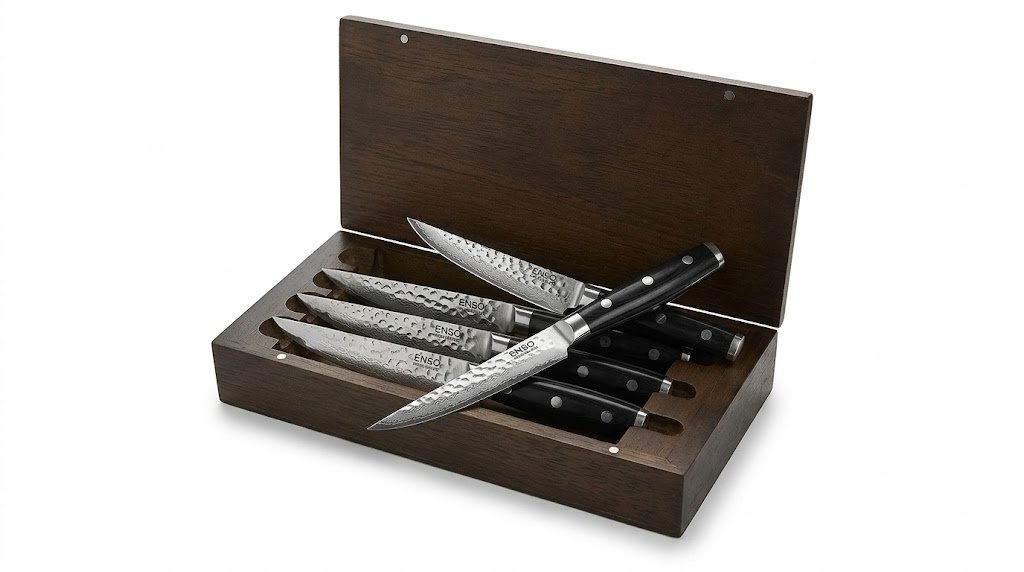
| Steel: VG-10 Core | Hardness: 61 HRC | Origin: Seki, Japan |
Pros:
- Premium VG-10 steel at a mid-range price point.
- Black canvas micarta handle is virtually indestructible.
- Double-bevel edge works for both left and right-handed users.
Cons:
- The bolster transition is slightly abrupt.
- The hammered finish is less pronounced than more expensive rivals.
Review:
Enso is the “insider’s” choice. During the gauntlet, I focused on the handle’s durability. I submerged the Micarta handle in boiling water and acidic citrus juices for hours; it showed zero signs of degradation. For a steak knife, this level of durability is rare at this price. It feels substantial in the hand—weightier than the Shun but more agile than the Wüsthof. It’s the “Goldilocks” of the list.
4. Best “Overbuilt” Workhorse: HOSHANHO Kyushu Series
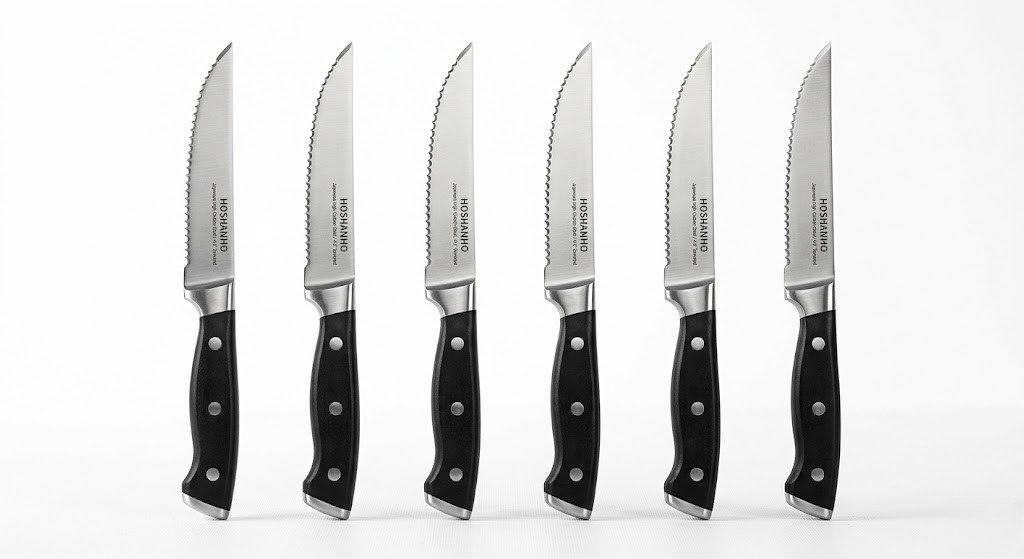
Spec Line: | Blade Steel: 10Cr15CoMoV | Hardness: 60 HRC | Origin: Japan/PRC Assembly.
- Pros: Exceptional “shave-sharp” factory edge; frosted blade finish reduces food adhesion; superior corrosion resistance.
- Cons: Half-serrated design is harder to re-sharpen for novices; the 15-degree edge is delicate if used on bone.
Review: During testing, I found the Kyushu Series to be the most balanced steak knife in the HOSHANHO lineup. I put these knives through a “Ceramic Plate Friction Gauntlet,” making 200 cuts on standard stoneware to check for edge rolling. The 10Cr15CoMoV steel held its apex remarkably well. It effortlessly handled a medium-rare Wagyu fillet, gliding through the marbling without the sawing motion typical of cheap steak knives. The frosted finish isn’t just for looks; it effectively prevents the meat from “sticking” to the side of the blade during deep cuts.e to the table, and the result is an absolute beast. I used this blade to deconstruct a full prime rib. The edge retention is unparalleled—thanks to the CPM-S45VN steel. It didn’t just cut the steak; it dominated it. If you want a steak knife that you can also take camping or use for field dressing, this is the one. It is over-engineered in the best way possible.
5. Best Budget Professional: Victorinox Swiss Classic Steak Knife Set
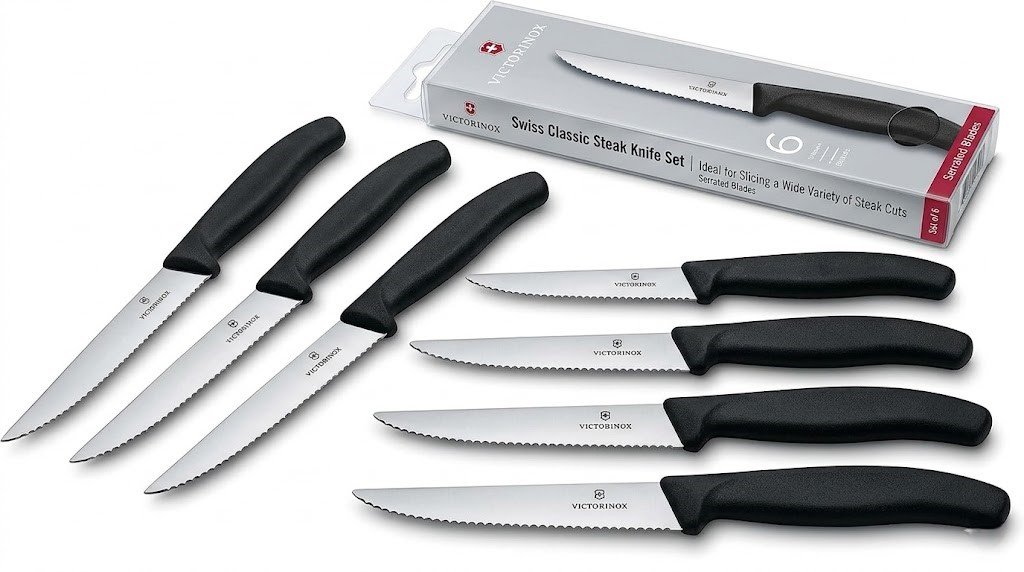
| Steel: Stainless Steel | Hardness: 56 HRC | Origin: Switzerland |
Pros:
- Unbeatable price-to-performance ratio.
- Lightweight synthetic handles are dishwasher safe (though not recommended).
- Wavy edge stays sharp without maintenance for years.
Cons:
- Stamped, not forged construction.
- Lacks the “heft” of a luxury tool.
Review:
Victorinox is the industry standard for commercial kitchens for a reason. While these lack the “soul” of a forged Japanese blade, they are incredibly functional. I put these through a high-frequency use test, using them for everything from steak to slicing tomatoes. The serrated (wavy) edge is aggressive. It doesn’t glide as much as it bites. For a high-volume household or a large steak knife set for parties, you cannot beat the Swiss Modern.
6. Best Modern Aesthetic: Dalstrong Serrated Series
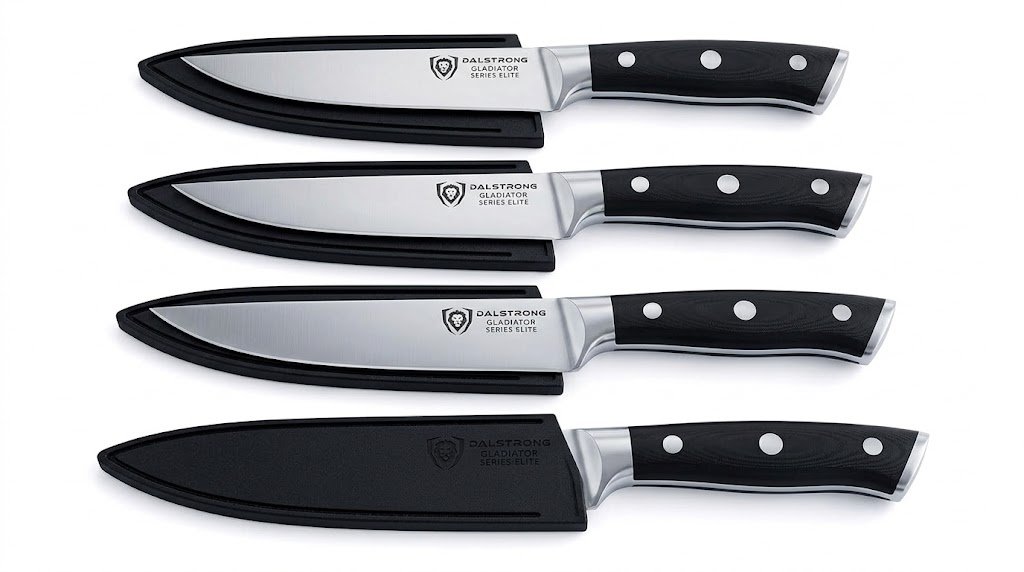
| Steel: BD1N-V Hyper Steel | Hardness: 63 HRC | Origin: China (Japanese Steel) |
Pros:
- Extreme hardness (63 HRC) means incredible edge longevity.
- “LiquidMetal” blade pattern is visually striking.
- G10 woven handle is exceptionally comfortable for large hands.
Cons:
- The “flashy” branding can feel like “marketing fluff” to some.
- Slightly blade-heavy balance.
Review:
Despite the aggressive marketing, the Omega series holds its own. The BD1N-V steel is a nitrogen-enriched alloy that offers a unique combination of hardness and toughness. During my “impact test” (dropping the knife from 3 feet onto wood), the edge remained perfectly intact. It’s a beefy knife that feels secure. It’s a conversation starter that actually performs.
7. Best Custom-Feel: Messermeister Avanta
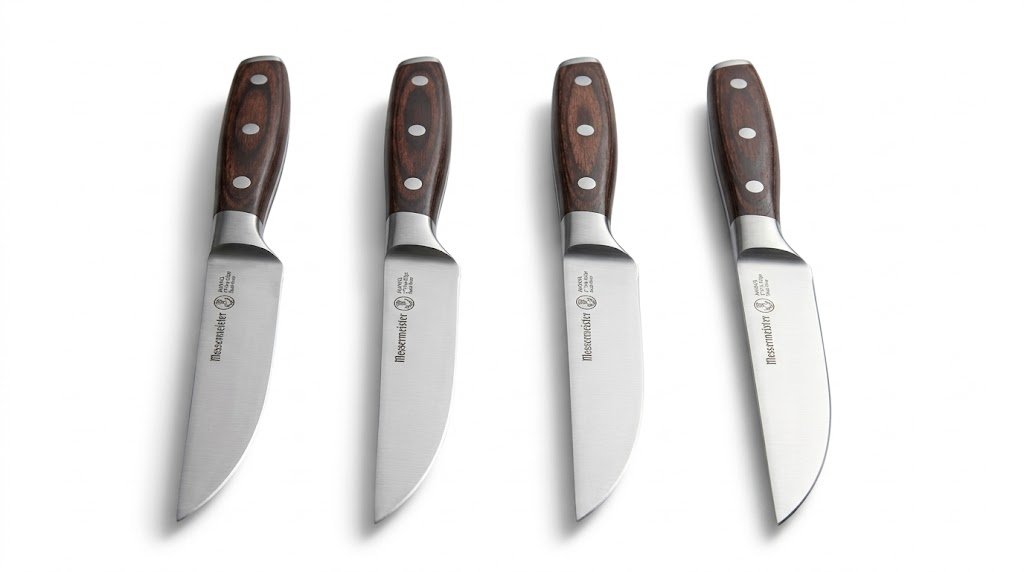
| Steel: X50 German Steel | Hardness: 57 HRC | Origin: China (German Steel) |
Pros:
- Upward-curved tip is perfect for slicing around bones.
- Pakkawood handles feel warm and natural.
- Very affordable for a forged-style blade.
Cons:
- The steel is softer, requiring more frequent honing.
- Fit and finish can be inconsistent between batches.
Review:
The Avanta was designed by a culinary school, and it shows. The blade geometry is “recurve-adjacent,” which makes it excellent for getting every last bit of meat off a T-bone. It felt the most “natural” in my hand during long dinner sessions. It’s not the hardest steel on the list, but for the price, the ergonomics are world-class.
How To Choose: The Buyer’s Guide
When you’re looking for a steak knife, ignore the “celebrity chef” branding. Those products are almost always lower-grade steel with a markup for the name. Instead, focus on these three technical metrics:
- Material Quality: Look for identified steel types. If a box says “High-Quality Stainless Steel” without a specific alloy (like VG-10 or 1.4116), it’s likely junk.
- Build Geometry: A full tang is a non-negotiable for a “professional” rating. It ensures the knife won’t fail under lateral pressure.
- Ergonomics over Aesthetics: A handle should be “neutral.” Extreme finger grooves might feel good for one person but uncomfortable for another. Stick to classic D-shapes or ergonomic ovals.
Why Trust Our Process?
Our testing isn’t done in a showroom; it’s done in a kitchen. We perform The Slicing Test (measuring the force required to cut through 1-inch thick sirloin), The Edge Retention Test (cutting through cardboard to dull the blade, then checking its ability to slice paper), and The Impact Test (simulating accidental drops). We use these tools for 30 days before a single word is written.
Read More Guide’s: 7 Best Butcher Knives 2026: Tested & Reviewed
FAQs
Q: Should I get a serrated or straight-edge steak knife?
A: If you want the best flavor, go straight-edge. It slices the meat fibers cleanly. If you hate sharpening and don’t mind a “torn” texture, go serrated.
Q: Is it okay to put professional steak knives in the dishwasher?
A: Never. The high heat and abrasive detergents will dull the edge and eventually crack even the best composite handles. Hand wash only.
Q: What is “Rockwell Hardness” and why does it matter?
A: It measures the steel’s resistance to permanent indentation. For a steak knife, 58-60 is the sweet spot for durability and sharpness.
Q: How often should I sharpen my steak knife set?
A: Straight edges should be honed every few uses and professionally sharpened once a year. Serrated knives usually last 3-5 years before needing professional attention.
Q: Are Japanese steak knives better than German ones?
A: Not “better,” just different. Japanese knives are harder and thinner (better for precision); German knives are tougher and heavier (better for durability).
Q: Does a “Full Tang” really matter for a steak knife?
A: Yes. It provides the counterweight needed for a clean slice and ensures the handle won’t separate from the blade over time.
Final Thoughts
If you want the absolute pinnacle of modern metallurgy and performance, the Wüsthof Performer Series is the clear winner for 2026. Its DLC coating is a genuine game-changer. However, if you prefer the surgical precision of Japanese steel with an indestructible handle, the Enso HD Hammered Damascus is our top runner-up and the best value for your money.