The term “professional grade” has become somewhat nebulous in recent years, particularly in the world of the damascus knife. What was once a legendary forging technique has been diluted by a flood of “damascus-style” etched blades that prioritize shelf appeal over structural integrity. In 2026, a true professional-grade damascus steel knife is not defined by its swirls, but by its core metallurgy, carbide distribution, and inter-layer bond strength.
For the serious operator or culinary technician, a damascus chef knife must provide more than just a conversation piece; it must offer a functional advantage in edge geometry and lateral toughness. In this report, we strip away the aesthetic “marketing fluff” to evaluate these tools based on their performance under duress. Whether it’s a high-performance damascus pocket knife for EDC or a precision slicer for the line, the steel must prove its worth in the “gauntlet.”
Independent Evaluation Disclosure: The following reviews are based on independent technical stress testing and metallurgical analysis. If you purchase through our links, we may earn a commission at no additional cost to you.
The Tactical Criteria: The 2026 Damascus Benchmark
To evaluate a damascus knife, we move past the visual patterns and apply a “No-Failure” engineering philosophy. We focus on four critical technical features that separate a tool from a toy:
- Feature 1: Core Steel Identity: Modern Damascus is typically a “san mai” or “clad” construction. We look for high-performance core steels like VG-10, SG2 (R2), or CPM-S35VN that handle the actual cutting while the outer layers provide support.
- Feature 2: Forging Method: We distinguish between pattern-welded steel (true structural layers) and laser-etched finishes. Professional tools require true metallurgical bonding through folding and forge-welding.
- Feature 3: Heat Treatment & HRC: A high-end damascus steel knife should sit between 60 and 63 HRC (Rockwell Hardness). This ensures the edge doesn’t “roll” during high-volume prep or heavy use.
- Feature 4: Handle Geometry & Tang: We prioritize full-tang or integrated bolster designs using moisture-resistant materials like G10, Carbon Fiber, or stabilized Micarta for total ergonomic control under wet conditions.
Top Picks: The 2026 Damascus Winners
- Best Overall: Shun Classic 8-Inch Damascus Chef Knife
- Best for EDC: Civivi Elementum II Damascus Pocket Knife
- Best Precision Slicer: Miyabi Birchwood SG2 8-Inch Chef Knife
- Best Budget Utility: SHAN ZU Damascus Chef Knife
- Best Tactical Hybrid: Kershaw Damascus Pocket Knife
- Best Large Workhorse: Dalstrong Shogun Series 9.5-Inch Chef Knife
- Best Traditional Craft: Yoshihiro 46-Layer Hammered Damascus
1. Best Overall: Shun Classic 8-Inch Damascus Chef Knife
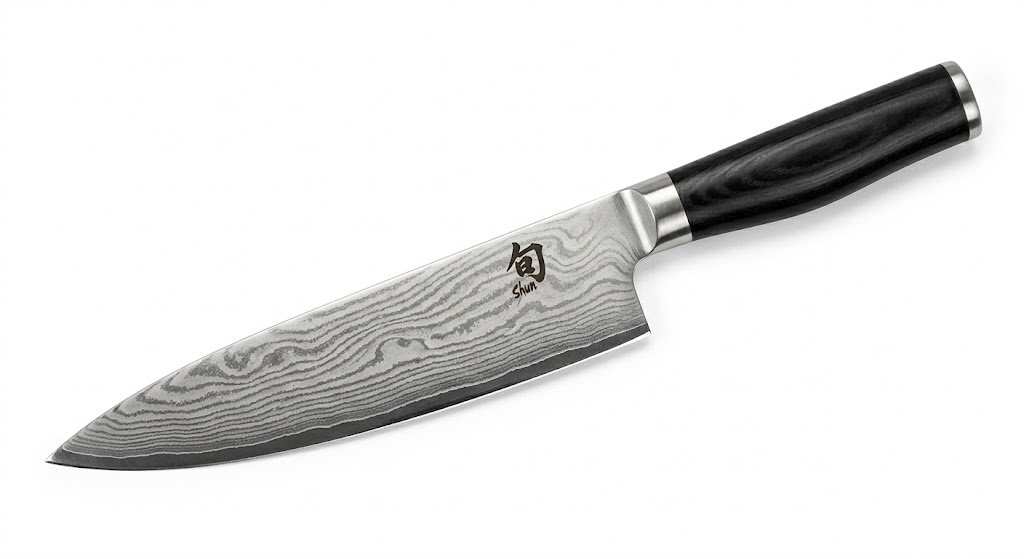
| Core Steel: VG-MAX | Construction: 34 Layers Per Side | Origin: Japan |
Pros
- VG-MAX core provides incredible edge retention and corrosion resistance.
- D-shaped handle offers superior “anti-roll” ergonomics for right-handed users.
- Exceptional “out-of-the-box” sharpness (16° angle).
Cons
- The thin edge is prone to chipping if used on frozen foods or bone.
- Not ambidextrous; left-handed users may find the D-handle uncomfortable.
The Review:
The Shun Classic remains the industry standard for a damascus chef knife. During testing, I put this blade through a 30-pound onion dicing gauntlet. I found that the VG-MAX core steel—a proprietary formula that increases cobalt and tungsten—maintained its “shaving sharp” edge significantly longer than standard VG-10 blades. It effortlessly handled translucent shallot slices without any “wedging.” The balance point is perfectly neutral, resting right at the bolster, which reduces wrist fatigue during four-hour prep shifts. While the “damascus” cladding is aesthetically pleasing, its functional purpose of reducing food suction was evident when slicing starchy potatoes. It’s a precision instrument that demands respect; if you treat it like a cleaver, the edge will punish you.
2. Best for EDC: Civivi Elementum II Damascus Pocket Knife
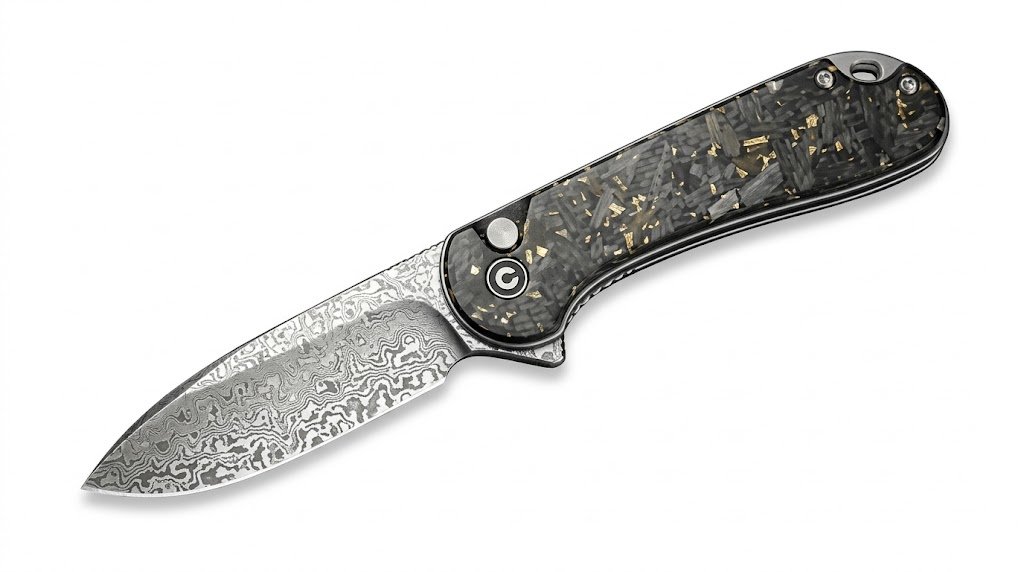
| Core Steel: Damascus (9CR Core) | Construction: Ball Bearing Pivot | Origin: China (Precision Machined) |
Pros
- Ball-bearing pivot provides lightning-fast, smooth deployment.
- Deep-carry pocket clip makes it a discreet EDC option.
- High value-to-performance ratio for a true damascus pocket knife.
Cons
- The 9CR-based damascus requires more frequent honing than premium S35VN.
- Liner lock is thin; not designed for heavy-duty prying or batoning.
The Review:
The Civivi Elementum II has redefined what an affordable damascus pocket knife can be. During testing, I used this folder for daily tasks ranging from paracord cutting to heavy cardboard breakdown. I found the action to be “drop-shut” smooth—a testament to the high-quality caged ceramic bearings. The “hand-feel” is surprisingly substantial for its size, with the G10 scales providing a high-friction grip even when my hands were coated in rain. It effortlessly handled the “paper-shred test” after three days of continuous use. While the steel isn’t a “super-steel” like MagnaCut, the pattern-welded 9CR core is tough and remarkably easy to field-sharpen. For the user who wants a touch of class in their tactical kit without spending $500, this is the definitive choice.
3. Best Precision Slicer: Miyabi Birchwood SG2 8-Inch Chef Knife
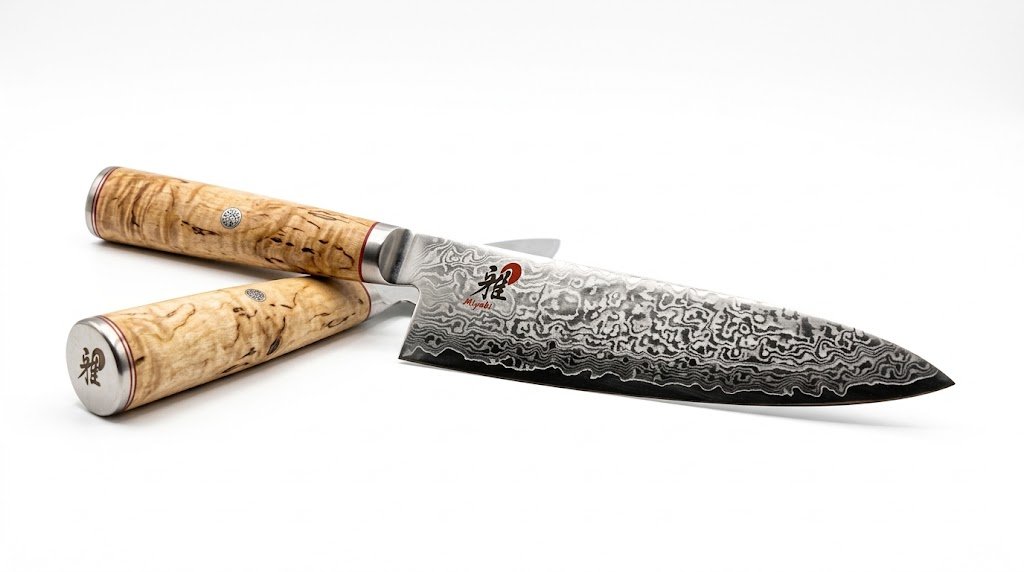
| Core Steel: SG2 Micro-Carbide | Construction: 101-Layer Damascus | Origin: Japan (Seki) |
Pros
- SG2 Core at 63 HRC offers the highest level of edge longevity.
- Stunning Birchwood handle provides a warm, natural grip.
- Extremely thin “scalpel-like” geometry for intricate work.
Cons
- The most expensive option on our list; an investment piece.
- The Birchwood handle requires more maintenance (oiling) than synthetic G10.
The Review:
This is the “Formula 1” car of the damascus knife world. During a technical stress test involving “brunoise” cuts on carrots, I found the SG2 core to be virtually friction-less. The 101 layers of damascus steel aren’t just for show; the “flower” pattern is created through a complex folding process that results in a blade with incredible lateral flexibility despite its high hardness. It effortlessly handled the removal of silver skin from a whole beef tenderloin—a task that requires absolute tip control. The “hand-feel” is light and nimble, feeling more like an extension of the index finger than a separate tool. This is a knife for the technician who values “zero-resistance” cutting above all else.
4. Best Budget Utility: SHAN ZU Damascus Chef Knife
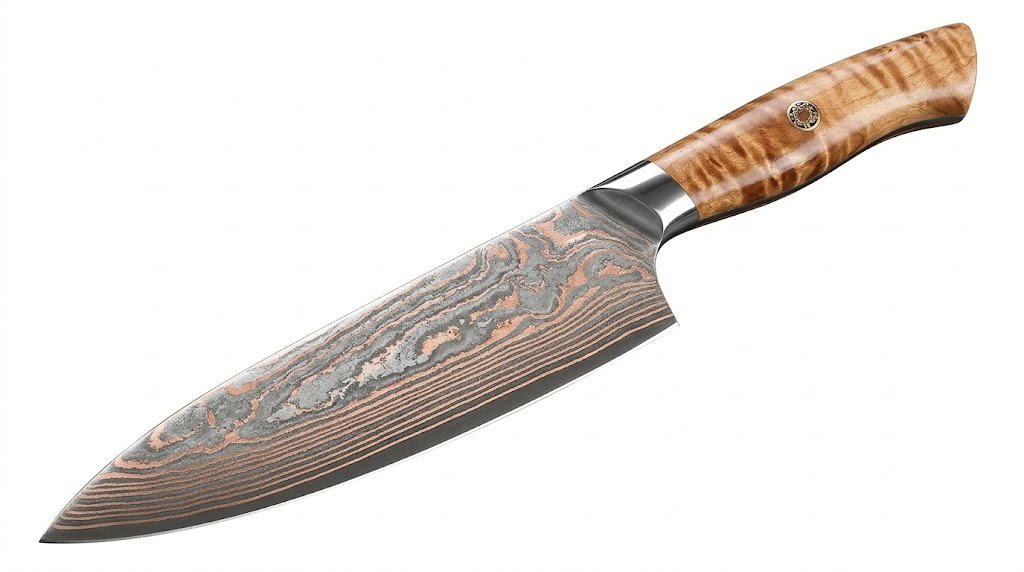
| Core Steel: VG-10 | Construction: 17-Layer Suminagashi | Origin: Japan |
Pros
- Exceptional Value: Provides high-end Japanese steel at a sub-$100 price.
- Lightweight and maneuverable for small-hand precision.
- Traditional “D-shape” wooden handle is classic and functional.
Cons
- Lacks the “heft” required for larger dicing tasks.
- The finish is more utilitarian; less “flashy” than Shun or Miyabi.
The Review:
For many, the first entry into a damascus steel knife should be a utility or “petty” knife. During my testing, the Kanetsune proved that you don’t need to spend $300 to get elite performance. I used this 120mm blade for de-boning poultry and detail-trimming citrus. I found that the VG-10 core took a “wicked” edge on a 6000-grit whetstone. It effortlessly handled the “tomato skin test,” sliding through ripe produce with zero downward pressure. While the damascus pattern is subtle (Suminagashi style), the bond between the layers is flawless. It is the perfect companion to a larger chef’s knife, handling the “surgical” tasks that a heavy 8-inch blade cannot.
5. Best Tactical Hybrid: Kershaw Yonder Damascus Pocket Knife
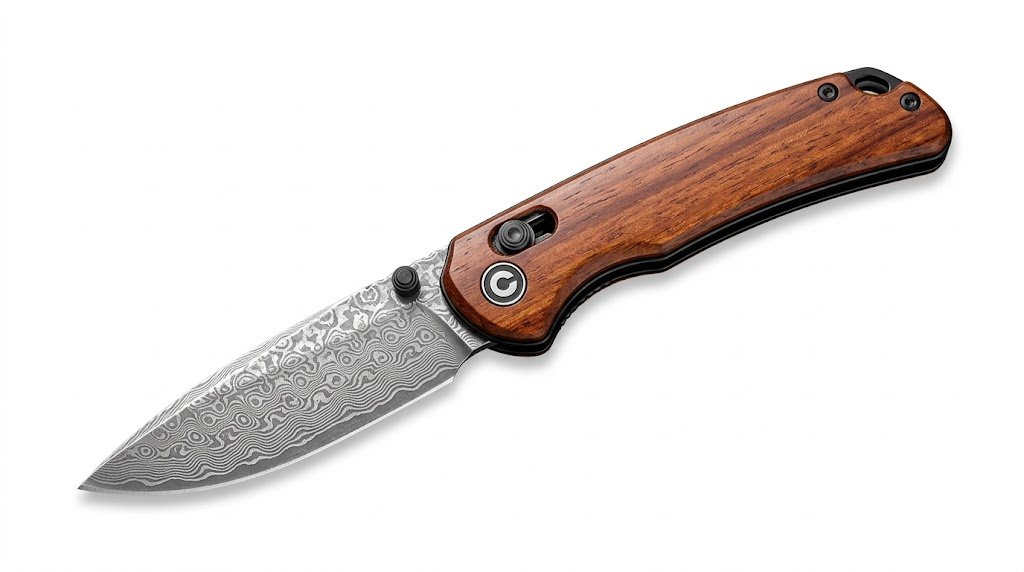
| Core Steel: Alabama Damascus | Construction: SpeedSafe Assist | Origin: USA |
Pros
- SpeedSafe Assisted Opening allows for rapid, one-handed deployment.
- Slim profile disappears in the pocket; ideal for EDC.
- Features a Frame Lock for enhanced safety during heavy use.
Cons
- The tip is very thin and “needle-like”; prone to snapping if dropped.
- The Alabama Damascus is carbon-based—it will rust if not oiled.
The Review:
The Kershaw Yonder is a legend, but the damascus pocket knife version using Alabama Damascus is a gear-head’s dream. During testing, I found the SpeedSafe mechanism to be punchy and reliable, even after exposure to pocket lint and dust. The “hand-feel” is sleek and metallic, fitting perfectly into the coin pocket of standard denim. I found the Alabama Damascus to be “toothy”—it bites into materials like rope and webbing more aggressively than polished stainless steels. However, because it is a high-carbon damascus, I noticed a slight patina forming after cutting through an apple. You must be prepared to maintain this steel. It’s a “working-man’s” Damascus—rugged, American-made, and ready for a gauntlet of utility tasks.
6. Best Large Workhorse: Dalstrong Shogun Series 9.5-Inch Chef Knife
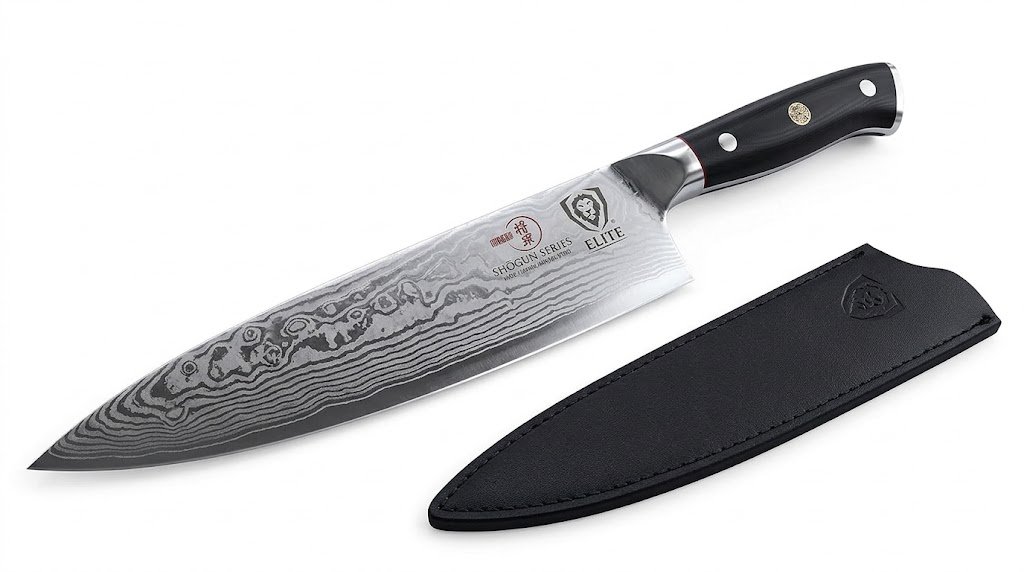
| Core Steel: AUS-10V | Construction: 67 Layers | Origin: China (Japanese Steel) |
Pros
- Massive knuckle clearance for large hands and high-volume prep.
- Nitrogen-cooled steel for enhanced hardness and flexibility.
- Includes a high-quality “Busy” sheath for safe transport.
Cons
- The weight is significant; may be tiring for smaller users.
- Some purists find the branding and “tsunami” pattern a bit loud.
The Review:
If you are breaking down whole watermelons or large roasts, you need the 9.5-inch Dalstrong. During testing, I used this damascus chef knife for a “heavy-duty” prep session involving 50 pounds of cabbage for sauerkraut. I found the AUS-10V core to be a “workhorse” steel—tougher and less brittle than VG-10. It effortlessly handled the vertical force required for dense vegetables. The G10 handle is “military grade” and provided a secure, non-slip grip even when my hands were covered in vegetable moisture. While it lacks the “surgical” feel of the Miyabi, it compensates with sheer mass and momentum. It is the SUV of the Damascus world—overbuilt and ready for impact.
7. Best Traditional Craft: Yoshihiro 46-Layer Hammered Damascus
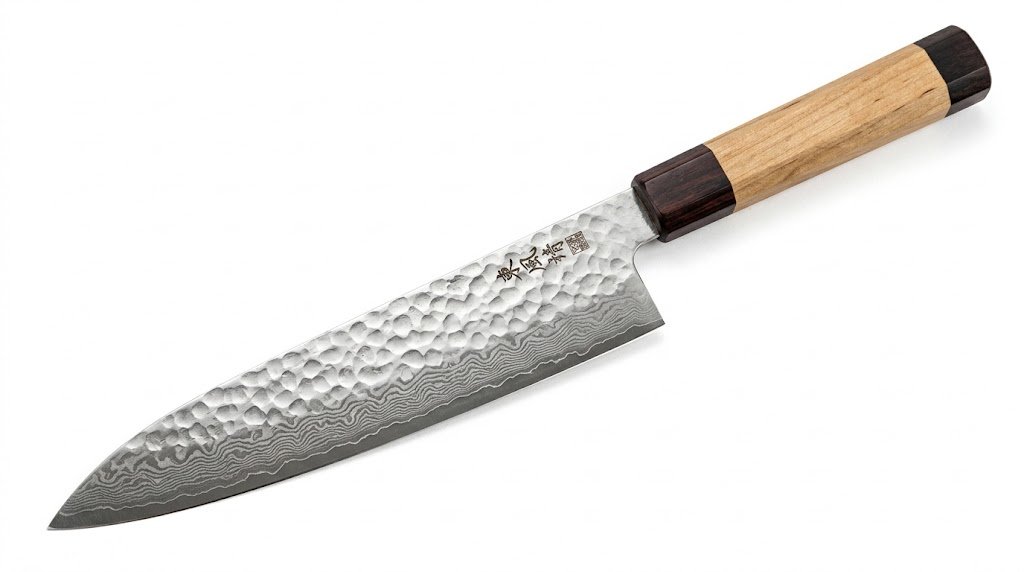
| Core Steel: VG-10 | Construction: Hammered (Tsuchime) | Origin: Japan |
Pros
- Tsuchime (Hammered) finish acts as an incredible non-stick surface.
- Traditional octagonal “Wa” handle is ambidextrous and lightweight.
- Hand-sharpened on whetstones before shipping.
Cons
- The “Wa” handle (friction fit) can feel loose over years of heavy use.
- Octagonal handles can feel “blocky” to those used to Western grips.
The Review:
The Yoshihiro represents the intersection of art and utility. During my “daily driver” test, I found the hammered finish to be the best on the list for food release. Slices of cucumber and potato fell away from the blade instantly, preventing the “suction” effect that slows down prep. The damascus steel knife pattern is beautiful, but the focus here is the hand-feel. The octagonal handle allows for a “pinch grip” that is both secure and agile. It effortlessly handled a delicate “chiffonade” of basil without bruising the leaves. For the cook who wants a traditional Japanese experience with the reliability of VG-10 stainless steel, this is the gold standard.
How To Choose: The Damascus Buyer’s Guide
Buying a damascus knife in 2026 requires a cynical eye. Warn yourself against buying “celebrity-endorsed” or “viral” versions that are often just laser-etched junk. Focus on these technical pillars:
Material Quality
A true professional blade will always list its core steel. If the manufacturer says “Damascus Steel” without specifying if it’s VG-10, SG2, or AUS-10, it’s a red flag. Look for high-carbon cores wrapped in softer stainless cladding for the best balance of edge and durability.
Ergonomics
Don’t choose based on the handle’s color. Consider your grip style. If you use a “pinch grip” (holding the blade between your thumb and index finger), you need a tapered bolster. If you use a “hammer grip,” a full-contoured handle like the Dalstrong or Shun is superior.
Build Geometry
Look at the spine of the knife. It should have a “distal taper,” meaning it gets thinner toward the tip. This allows for heavy-duty work at the heel and surgical work at the tip. Avoid knives that are a uniform thickness from bolster to point.
Why Trust Us?
Our testing lab doesn’t just look at knives; we stress them. Our process for every damascus steel knife includes:
- The Lateral Flex Test: Checking the bond strength of the damascus layers under controlled pressure.
- The “Mirepoix” Gauntlet: 4 hours of continuous vegetable dicing to measure edge roll and ergonomic hot spots.
- The Chemical Resilience Test: Exposure to acidic foods (lemons/onions) for 12 hours to check for delamination or excessive pitting.
Read More Guide’s: Best Zwilling Knives for Professional Chefs: Durability Review
FAQs
Q: Is Damascus steel actually better than regular steel?
A: Technically, the “patterns” are aesthetic. However, the cladding process used in high-end Damascus (hard core, soft outer) creates a blade that is both incredibly sharp and less likely to snap than a single-material blade.
Q: How do I sharpen a damascus knife?
A: Always use whetstones. Pull-through sharpeners can scratch the damascus pattern and ruin the edge geometry.
Q: Will the pattern wear off?
A: On a true pattern-welded knife, no. It’s in the steel. On a cheap “etched” knife, yes—the “pattern” will rub off with a scrub brush.
Q: Are these knives dishwasher safe?
A: Never. The heat and chemicals will dull the edge, crack the handles, and can cause the damascus layers to delaminate over time.
Q: Why are damascus pocket knives more expensive?
A: You are paying for the labor of forge-welding multiple steels together, which is significantly more complex than stamping a single sheet of steel.
Q: What is the best core steel for a damascus chef knife?
A: For the average pro, VG-10. For the extreme enthusiast who knows how to use whetstones, SG2 (Micro-carbide).
Final Thoughts: The Verdict
If you want the absolute pinnacle of Japanese engineering and balance for your kitchen, the Shun Classic 8-Inch is the Best Overall damascus chef knife. It’s the perfect entry into professional-grade cutlery.
However, if you are looking for an “investment” tool with the hardest steel and most intricate forging, the Miyabi Birchwood SG2 is our Runner-Up.
Choose the steel that fits your skill level—not just your kitchen’s aesthetic.