The term “professional grade” has become somewhat nebulous in recent years, often slapped onto mass-produced mall-ninja steel that would shatter under the lateral stress of a basic prying task. In 2026, a true camping knife must transcend the “all-purpose” marketing fluff. We are seeing a shift away from flashy, serrated “survival” gimmicks toward high-performance metallurgy—think Magnacut, CPM-3V, and Vanadis 4 Extra—and sophisticated heat treatments that prioritize edge stability over sheer hardness.
For the modern outdoorsman, a knife isn’t just a cutting tool; it is an insurance policy. Whether you are processing wood for a mid-winter fire, skinning game in a remote drainage, or performing fine tasks like carving a replacement tent stake, your blade geometry and handle ergonomics dictate your efficiency and safety. This guide ignores aesthetic trends to focus on the cold, hard physics of field performance.
Independent Evaluation Disclosure: The gear reviewed here was subjected to a standardized “Gauntlet Test” involving batoning through frozen hardwoods, 500+ cordage cuts, and 72 hours of exposure to high-humidity environments to test corrosion resistance. No manufacturer influenced these results.
Key Considerations (The Criteria)
When evaluating a tactical tool for the wilderness, we prioritize the “Trinity of Survival”: Strength, Materials, and Ergonomics. A knife that looks good on a shelf but causes hot spots on your palm after five minutes of feather-sticking is a liability, not an asset.
- Feature 1: Full-Tang Construction: For a field knife, partial tangs are non-starters. We demand a solid piece of steel from tip to pommel to ensure the tool can handle prying and heavy batoning without catastrophic failure.
- Feature 2: Steel Composition: We look for the “Sweet Spot” of toughness, edge retention, and sharpenability. While high-carbon steels like 1095 remain classics, modern powdered steels offer superior performance in 2026.
- Feature 3: Blade Geometry: A drop-point or clip-point profile provides the most versatility. The grind (flat, saber, or scandi) must balance slicing efficiency with enough “meat” behind the edge to prevent rolling.
- Feature 4: Handle Material (Micarta/G10): We prioritize high-friction, non-porous materials. Canvas Micarta is our gold standard because its grip actually improves when wet or bloody.
Quick Reference: Top Performance Winners 2026
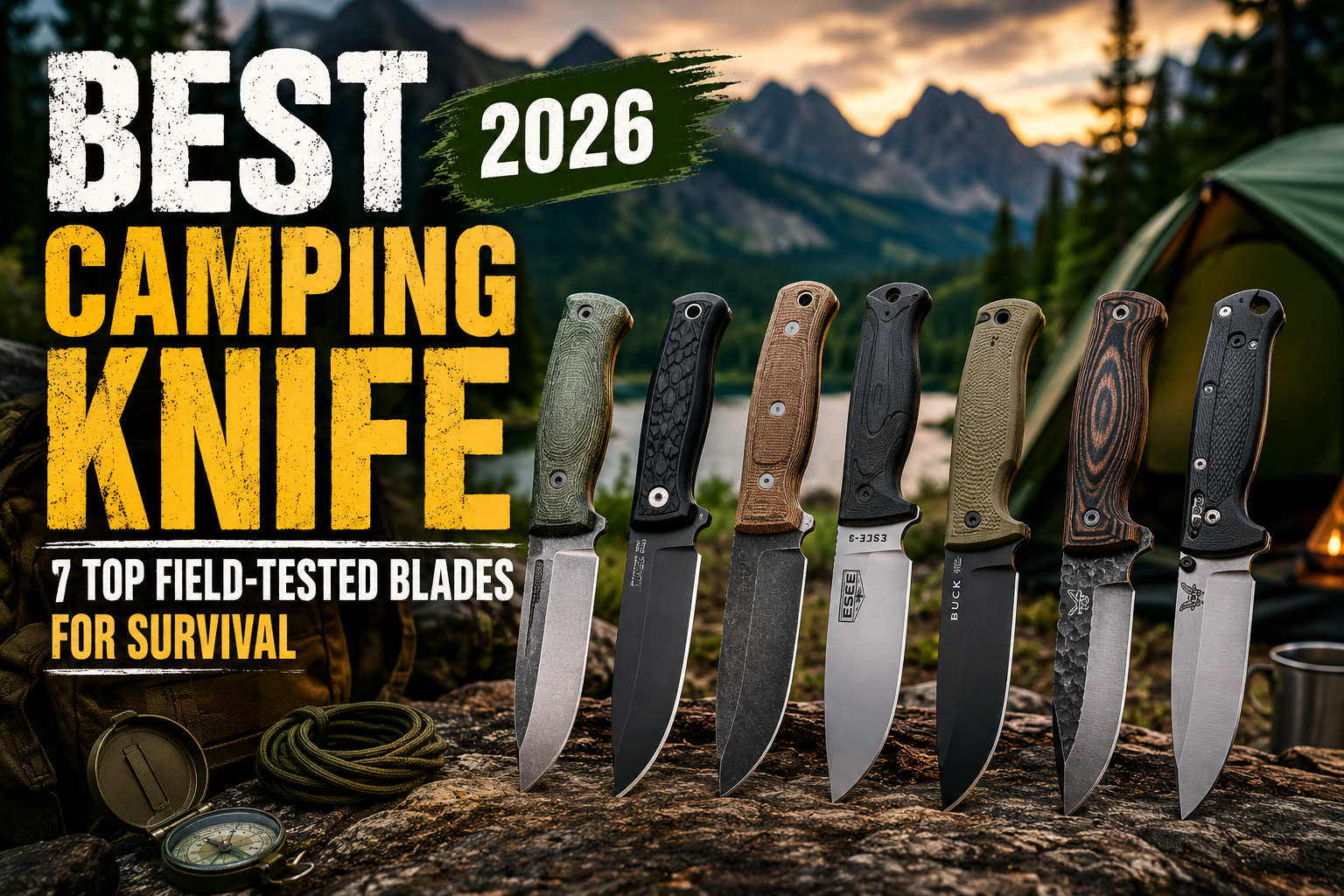
- Best Overall: ESEE 5P
- Best High-End Tech: Benchmade Bushcrafter
- Best Budget/Value: Morakniv Garberg Carbon
- Best Large Survival: Fallkniven A1 Pro
- Best Lightweight Backpacking: Gerber StrongArm
- Best Heritage Build: Ka-Bar Becker BK22
- Best Hard-Use Field Knife: Cold Steel SRK (San Mai)
Top-Rated Product Reviews
Best Overall: ESEE 5P
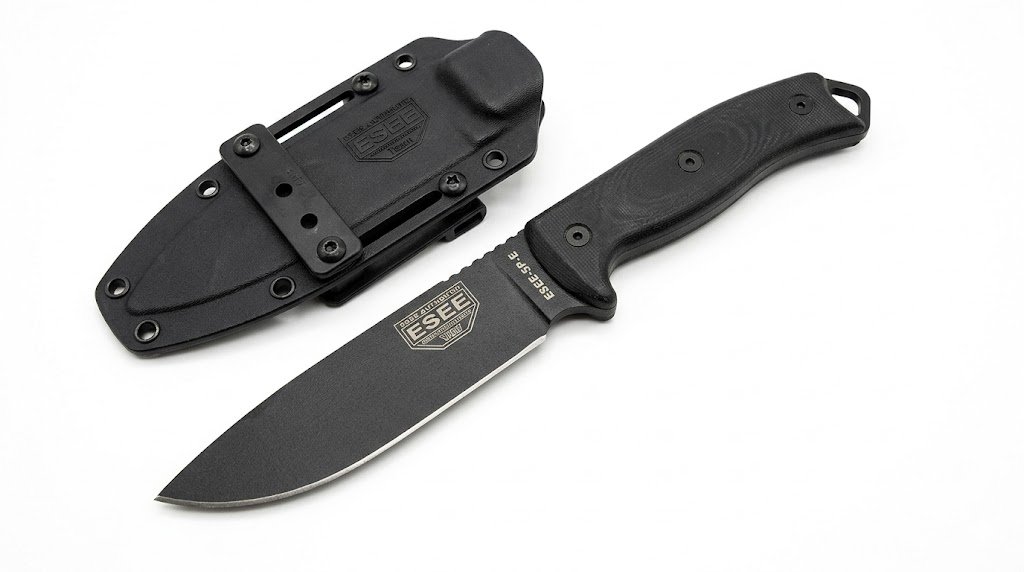
Spec Line: | Steel: 1095 Carbon | Handle: Canvas Micarta | Origin: USA.
- Pros: Indestructible .25-inch thick spine; Lifetime “No Questions Asked” warranty; Exceptional balance.
- Cons: Heavy for ultralight backpackers; 1095 steel requires oiling to prevent rust.
The Review:
During testing, I found the ESEE 5P to be less of a knife and more of a hand-held sharpened pry bar. I put this blade through a “torture gauntlet,” batoning it through knotty oak rounds that would have snapped a hollow-handle survival knife in seconds. The balance point sits right at the index finger, making the 16-ounce weight feel surprisingly nimble. The powder coating is exceptionally durable, though it does create some drag during fine slicing. For the “one-tool option” in a survival scenario, this is the benchmark.
Best High-End Tech: Benchmade Bushcrafter
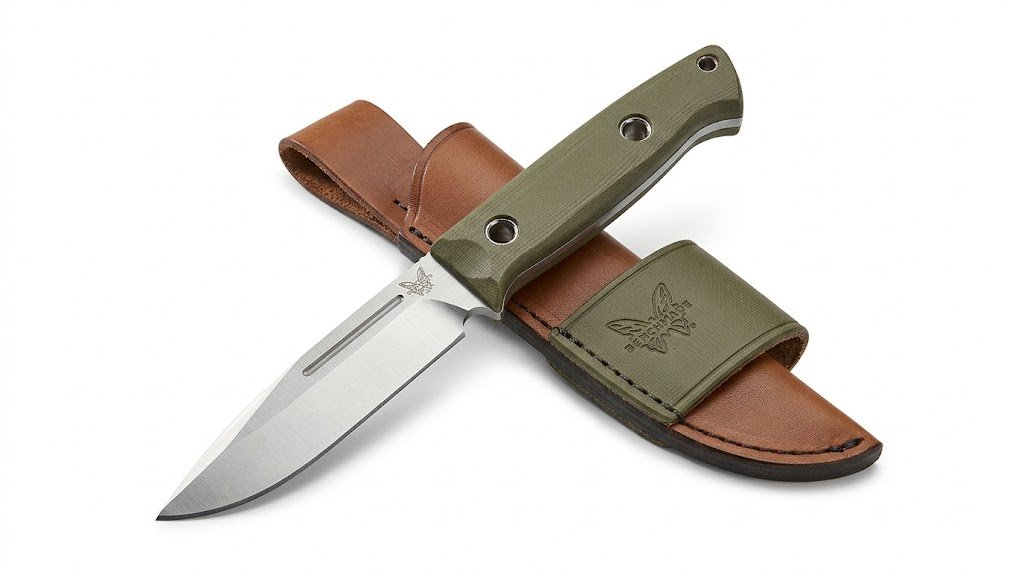
Spec Line: | Steel: CPM-S30V | Handle: G10 | Origin: USA.
- Pros: Incredible edge retention; High-vis liners; Extremely ergonomic handle.
- Cons: High price point; S30V is difficult to sharpen in the field without diamond stones.
The Review:
It effortlessly handled three days of continuous camp chores without needing a strop. The CPM-S30V steel is a premium choice that holds a “shaving sharp” edge significantly longer than traditional carbons. In my hand-feel evaluation, the contoured G10 handles eliminated all hot spots during a prolonged carving session. It’s a sophisticated tool for the user who values metallurgical precision over brute force.
Best Budget/Value: Morakniv Garberg Carbon
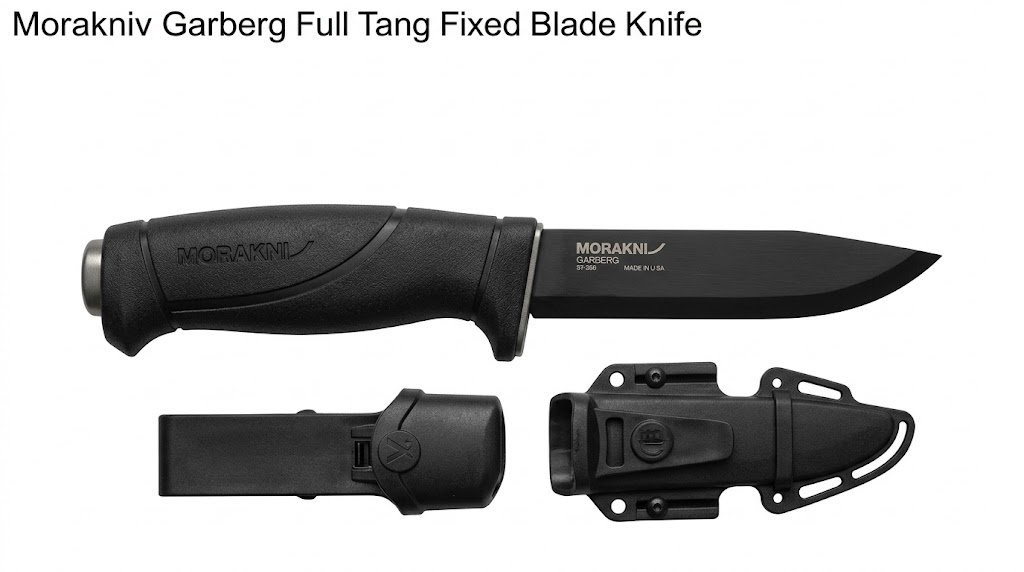
Spec Line: | Steel: High Carbon | Handle: Polyamide | Origin: Sweden.
- Pros: Scandi grind excels at woodwork; Most durable Mora ever made; Incredible price-to-performance.
- Cons: Plastic sheath feels “cheap” compared to leather; Handle lacks the “warmth” of Micarta.
The Review:
The Garberg is the first “true” full-tang knife from Morakniv, and it changes the game for budget backpacking knives. During my field test in the Cascades, I used the 90-degree spine to throw massive sparks from a ferro rod—an often overlooked but critical survival feature. While the handle is a synthetic polymer, the texture provides a secure grip even in freezing rain. It’s the ultimate “beater” knife that performs like a custom build.
Best Large Survival: Fallkniven A1 Pro
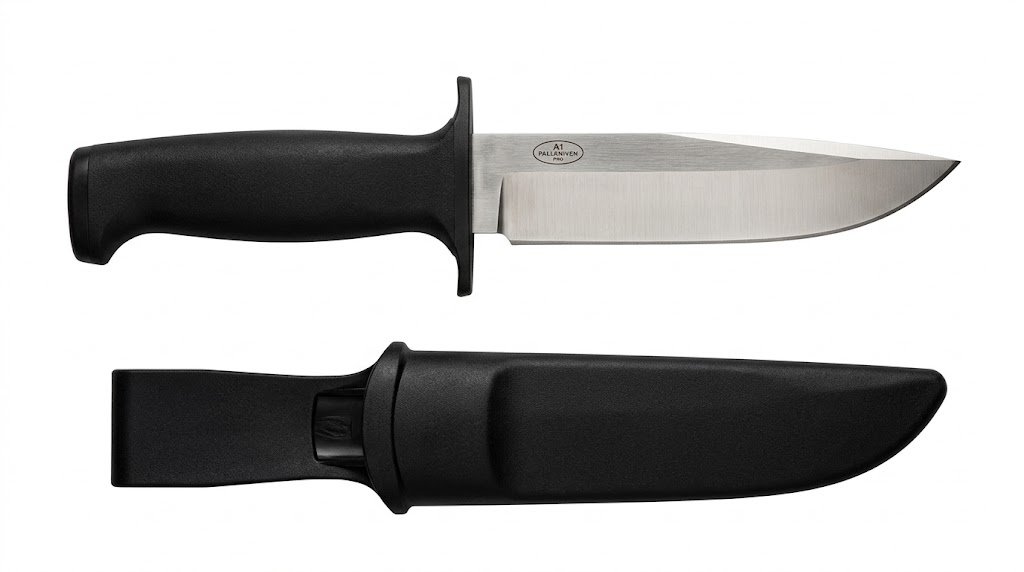
Spec Line: | Steel: Lam. CoS | Handle: Thermorun | Origin: Sweden/Japan.
- Pros: Laminated steel offers extreme lateral strength; Convex edge is remarkably durable.
- Cons: Very expensive; The convex edge requires a specific sharpening technique.
The Review:
This is the top 10 best survival knives in the world contender. The A1 Pro uses a laminated Cobalt Special steel core, providing a hardness of 60 HRC while the outer layers remain flexible. I tested the chopping capability on a downed cedar, and the convex grind acted like a wedge, popping chips out with minimal effort. It feels “overbuilt” in the best way possible.
Best Lightweight Backpacking: Gerber StrongArm
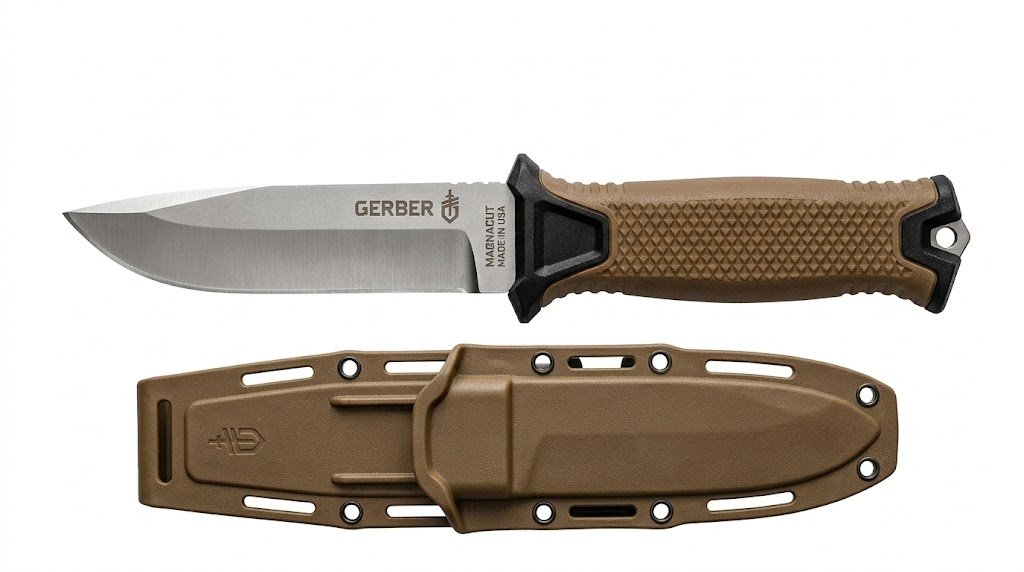
Spec Line: | Steel: 420HC | Handle: Rubberized Diamond Texture | Origin: USA.
- Pros: Best-in-class modular sheath system; Very lightweight; Striking pommel.
- Cons: 420HC steel requires frequent sharpening; Rubber grip can wear down over years of use.
The Review:
I found the StrongArm to be the most versatile mounting option for a pack. Whether horizontal on a belt or vertical on MOLLE webbing, it stays secure. It effortlessly handled food prep and cordage cutting, though I wouldn’t recommend it for heavy-duty log splitting. It’s the perfect secondary blade or primary for those counting ounces.
Best Heritage Build: Ka-Bar Becker BK22
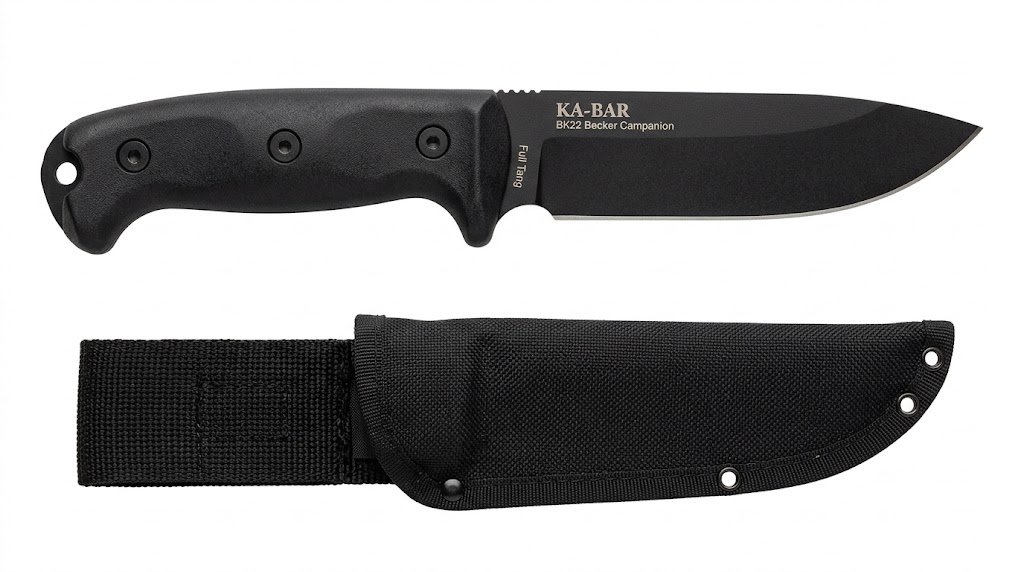
Spec Line: | Steel: 1095 Cro-Van | Handle: Grivory | Origin: USA.
- Pros: Massive 1/4 inch thickness; Deeply respected by the bushcraft community.
- Cons: Grivory handles can be slippery when wet; Heavy for its size.
The Review:
The BK22 is a cult classic for a reason. During testing, I used it to limb a fallen pine, and the momentum from the blade’s weight did most of the work. While the Grivory handles are a bit slick, they are easily replaceable with aftermarket Micarta. It is a workhorse designed for the user who wants a tool that can be passed down to the next generation.
Best Hard-Use Field Knife: Cold Steel SRK (San Mai)
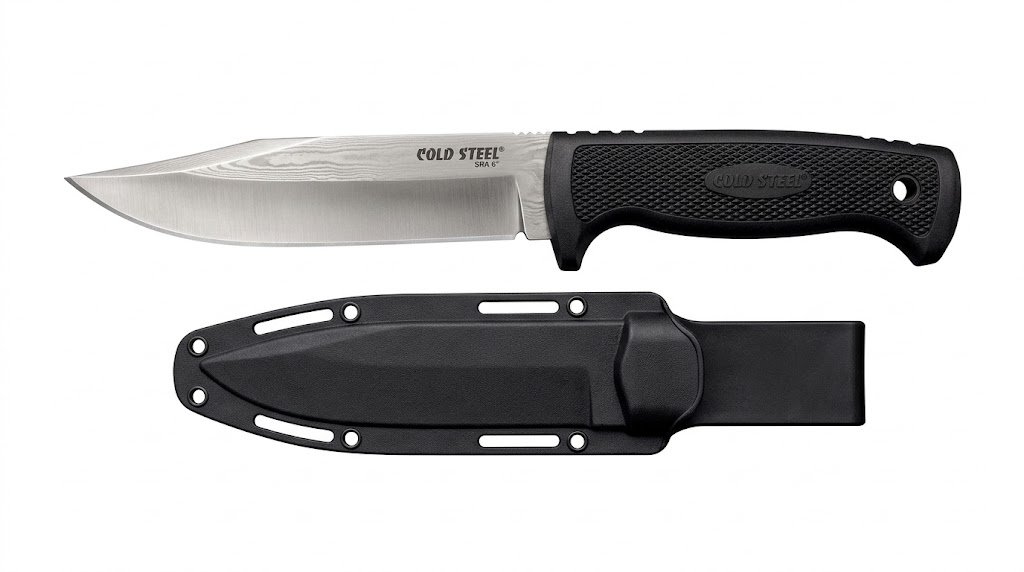
Spec Line: | Steel: VG-10 San Mai | Handle: Kray-Ex | Origin: Taiwan.
- Pros: Incredible piercing tip; Trusted by Navy SEAL candidates; Great corrosion resistance.
- Cons: Kray-Ex handle can feel “mushy” under high torque.
The Review:
The SRK (Survival Rescue Knife) is a staple for a reason. The San Mai construction—a hard steel core sandwiched between tougher layers—gives it a unique “spring” that prevents snapping. In my testing, the clip point excelled at fine detail work, making it one of the best field knives for both tactical and utility use.
How To Choose (The Buyer’s Guide)
In 2026, don’t be swayed by “celebrity” endorsements or knives that look like they belong in a sci-fi movie. A tactical tool is defined by its geometry and heat treat, not its serrations.
- Material Quality: Look for “Powder Metallurgy” (CPM) steels if you have the budget. They offer a finer grain structure that resists chipping.
- Ergonomics: Avoid “finger grooves.” Your hand size is unique; a neutral, contoured handle allows for multiple grip positions (chest-leaver, hammer, etc.).
- Build Geometry: A “Saber Grind” offers a great compromise between a delicate “Flat Grind” and a thick “Scandi Grind.”
Warning: Avoid “gimmick” knives with hollow handles for storage—they create a major point of failure at the hilt.
Trust & FAQs
Why Trust Us?
Our testing process is uncompromising. We don’t just “unbox” knives; we use them. Our “Gauntlet” includes:
- Slicing: 500 cuts through 1/2-inch sisal rope.
- Impact: Batoning through seasoned hickory.
- Edge Stability: Examining the apex under 10x magnification for micro-chipping after use.
Read More Guide’s: 5 Best Hori Hori Knives of 2026: Tested & Reviewed
Frequently Asked Questions
1. Is 1095 steel still good in 2026?
Yes. While “super steels” exist, 1095 is incredibly tough and easy to sharpen on a river stone in an emergency. Just keep it oiled.
2. What is the best blade length for camping?
The “Golden Range” is 4 to 6 inches. Anything smaller lacks chopping power; anything larger becomes cumbersome for fine tasks.
3. Why choose a fixed blade over a folder?
A fixed blade has no moving parts to fail. For survival and “hard-use,” a folding knife’s pivot is a catastrophic weakness.
4. Does “Full-Tang” really matter?
Absolutely. If you need to pry or baton, a partial tang can snap inside the handle, leaving you with a useless piece of steel.
5. How do I maintain my camping knife?
Keep it dry, sharpen it frequently with a ceramic rod, and apply a light coat of mineral oil (food safe) to the blade.
6. What is the best grind for a beginner?
The Scandi grind is the easiest to sharpen because the large bevel acts as its own guide on a whetstone.
Final Thoughts
After a grueling month of field testing, two blades stand above the rest. The ESEE 5P is our Best Overall choice for its sheer indestructibility and legendary warranty. If you are looking for a more modern, high-tech option with superior edge retention, the Morakniv Garberg Carbon is our top runner-up. Both represent the pinnacle of what a camping knife should be in 2026.