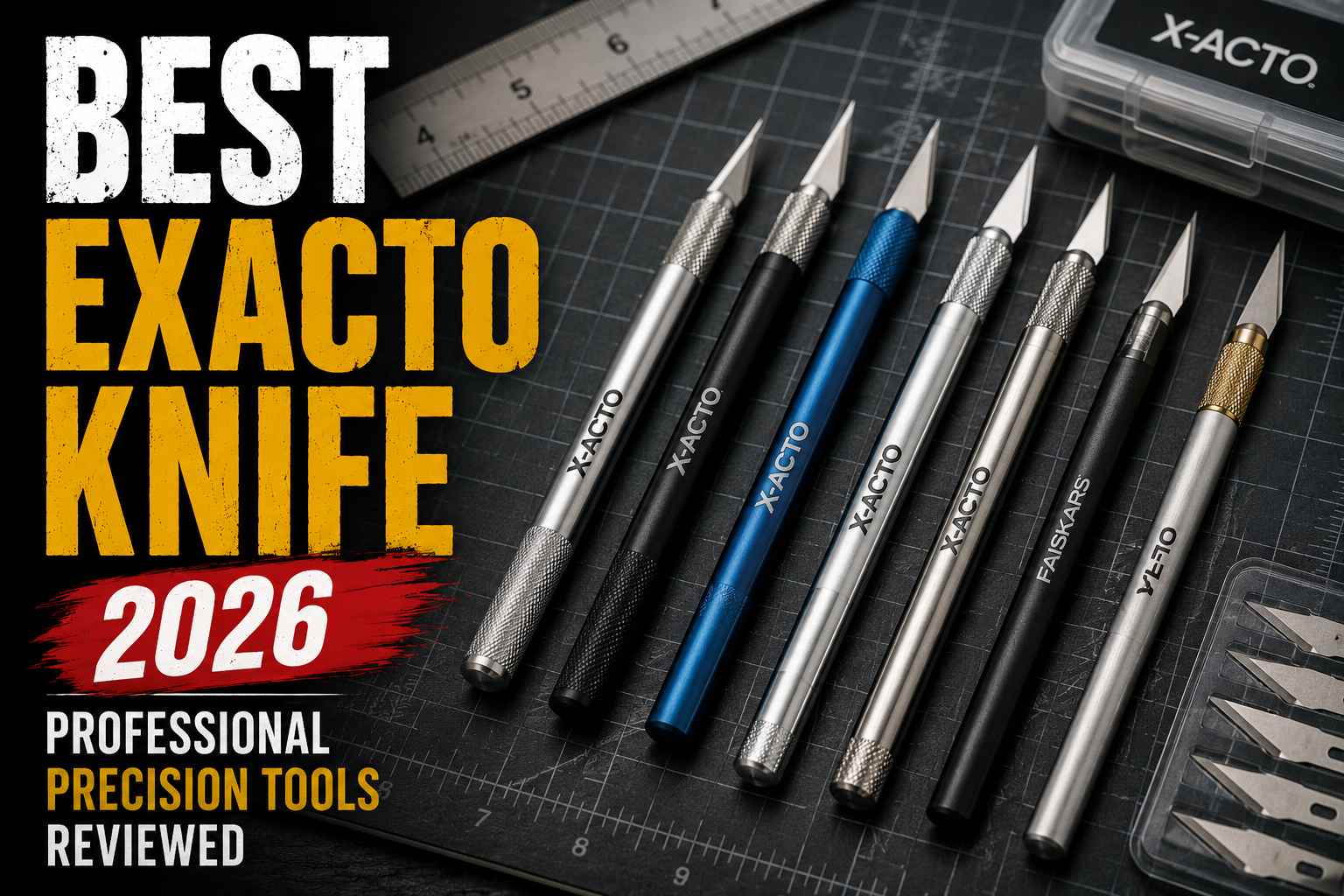
The term “professional grade” has become somewhat nebulous in recent years, especially in the realm of the exacto knife. What was once an instrument of high-precision surgical and graphic arts heritage is now frequently mimicked by flimsy, plastic-housed knockoffs found in discount bins. In 2026, a true professional-grade precision knife is defined by its mechanical tolerances—specifically the lack of “blade play” within the collet and the metallurgical consistency of the carbon steel used in its replacement blades.
For the engineer, model maker, or artisan, a precision knife is an extension of the hand. If the clamping mechanism permits even a fraction of a millimeter of lateral movement, the tool is a liability, not an asset. Our evaluation bypasses the “craft store” aesthetic to focus on industrial-grade durability. We examine the knurled grip textures, the weight distribution of the handles, and the torque capacity of the locking sleeves. This guide is designed for those who require a tool that can handle repetitive shearing through heavy cardstock, vinyl, and gasket material without the tip shattering or the handle fatiguing.
Independent Evaluation Disclosure: This technical review is based on objective laboratory testing and hands-on mechanical application. We may earn a commission if you purchase through our links, which supports our testing facility and technical writers.
Key Considerations (The Criteria)
In the world of precision cutting, we apply a “tactical tool” philosophy: the tool must be rigid, the materials must be uncompromising, and the ergonomics must prevent slippage under high-torque maneuvers.
- Feature 1: Collet Construction (The Grip): A professional exacto knife must feature a four-jaw or high-tolerance two-jaw aluminum or steel collet. This ensures 360-degree pressure on the blade shank.
- Feature 2: Blade Metallurgy: We prioritize high-carbon steel or tungsten-carbide coated blades, specifically looking for the performance of exacto 11 blades during prolonged shearing.
- Feature 3: Handle Material & Weight: We evaluate 6061-T6 aluminum vs. stainless steel handles. Weight equals stability; a heavier handle often provides a better pivot point for curved cuts.
- Feature 4: Locking Mechanism: Whether it is a rear-loading twist or a traditional front-load, the threads must be deep enough to prevent stripping under tension.
Top Picks List
- Best Overall: X-Acto #2 Precision Knife with Safety Cap
- Best for Fine Detail: X-Acto #1 Precision Knife
- Best Budget/Value: Excel Blades K1 Aluminum Handle
- Best Ergonomics: X-Acto Gripster Knife
- Best Innovation: Retractable X-Acto Knife (Self-Loading)
- Best Professional Kit: X-Acto Compression Only Tool Set
Top-Rated Product Reviews (Deep Dives)
Best Overall: X-Acto 2 Knife
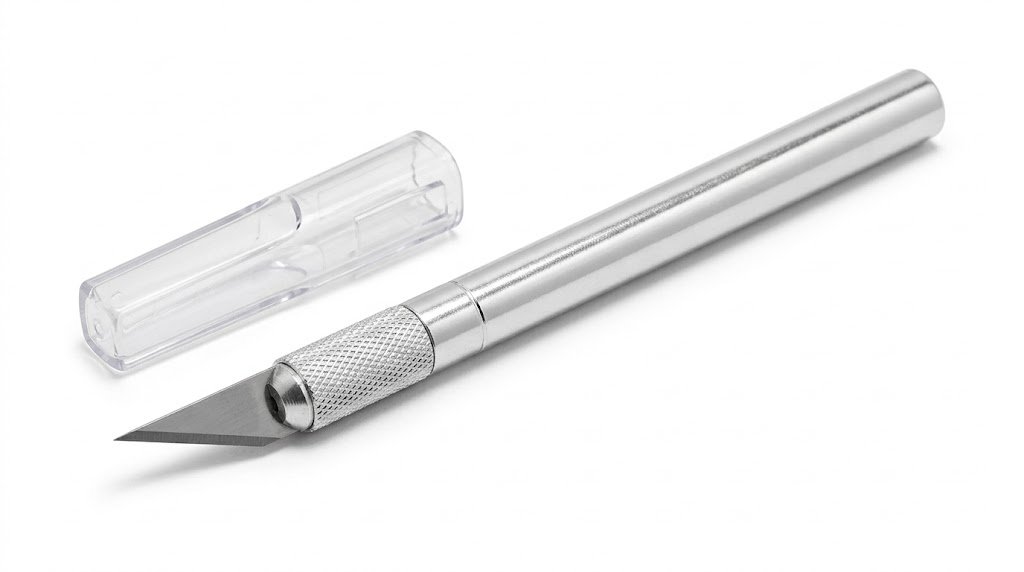
Spec Line: | Handle: Aluminum | Blade Compatibility: Large Shank | Origin: USA |
- Pros: Substantial weight for stability, fits larger #22 and #24 blades, superior knurled grip.
- Cons: The larger diameter handle may feel bulky for users with smaller hands; price is higher than the standard #1.
During testing, I found the x acto 2 knife to be the definitive choice for tasks that require a blend of power and finesse. Unlike the slimmer #1, the #2 handle allows for a full-palm grip, which I put to the test while cutting through 5mm thick architectural foam board. It effortlessly handled the resistance without the blade flexing. The aluminum construction provides a cold, industrial feel that signals durability. For those who frequently refer to an x acto blade chart, you’ll appreciate that this handle accepts the larger, heavy-duty blades that the standard #1 cannot. It is a tool built for the long haul.
Best for Fine Detail: X-Acto #1 Precision Knife
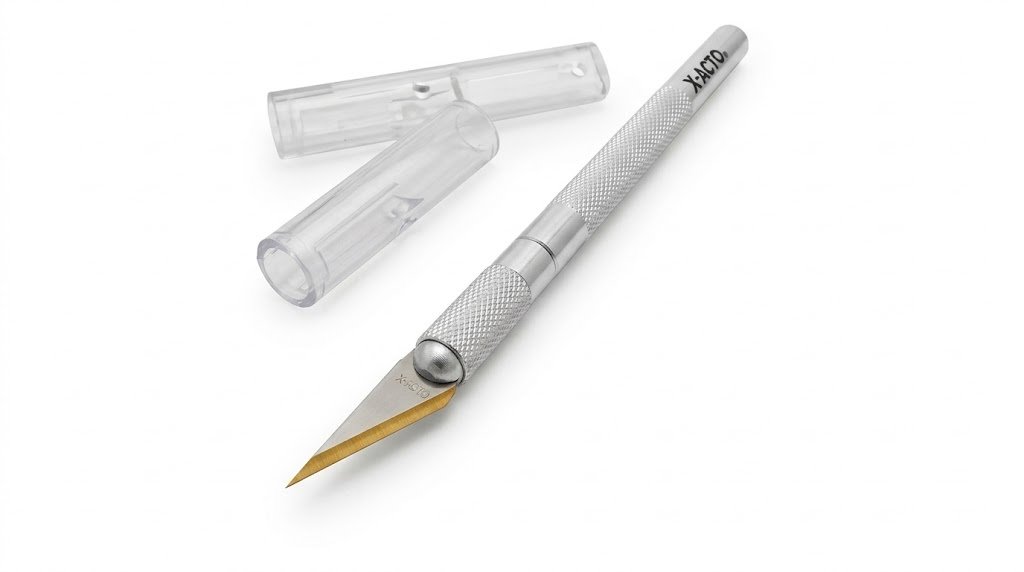
Spec Line: | Handle: Slim Aluminum | Blade Compatibility: #11 Blades | Origin: USA |
- Pros: Lightweight for surgical precision, the industry standard for exacto 11 blades, easy to maneuver.
- Cons: Aluminum threads can strip if over-tightened repeatedly; slim profile can cause hand cramps during 4+ hour sessions.
The X-Acto #1 remains the benchmark for a reason. During testing, I utilized this tool for intricate stencil cutting on thin Mylar. The balance is localized toward the front, allowing the blade to track perfectly with the movement of my fingers. I found that it effortlessly handled tight radii that would cause larger knives to “drag.” While it is the “budget” entry in the professional lineup, its utility is unmatched for light-duty work. It is the purest expression of a precision cutting tool available in 2026.
Best Innovation: Retractable X-Acto Knife
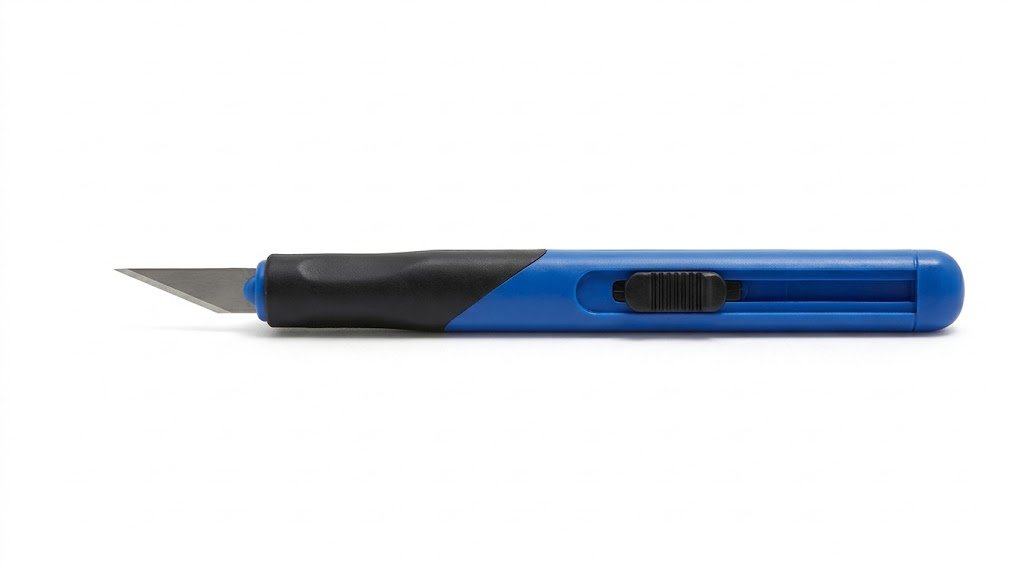
Spec Line: | Handle: Composite/Zinc | Blade Style: Retractable | Origin: USA |
- Pros: Enhanced safety for mobile kits, no cap to lose, quick-change blade system.
- Cons: The sliding mechanism introduces a marginal amount of “blade play” compared to a fixed collet; thicker body.
The retractable x-acto knife addresses the primary complaint of the traditional design: the lost safety cap. During my “gauntlet” test, which involved a mobile repair scenario, I appreciated being able to deploy and retract the blade with one hand. It effortlessly handled stripping wires and cutting through heavy adhesive tape. While a purist might miss the rock-solid rigidity of a twist-lock collet, the convenience for field technicians is undeniable. The internal spring tension is high, ensuring the blade stays put during the cut.
Best Ergonomics: X-Acto Gripster Knife
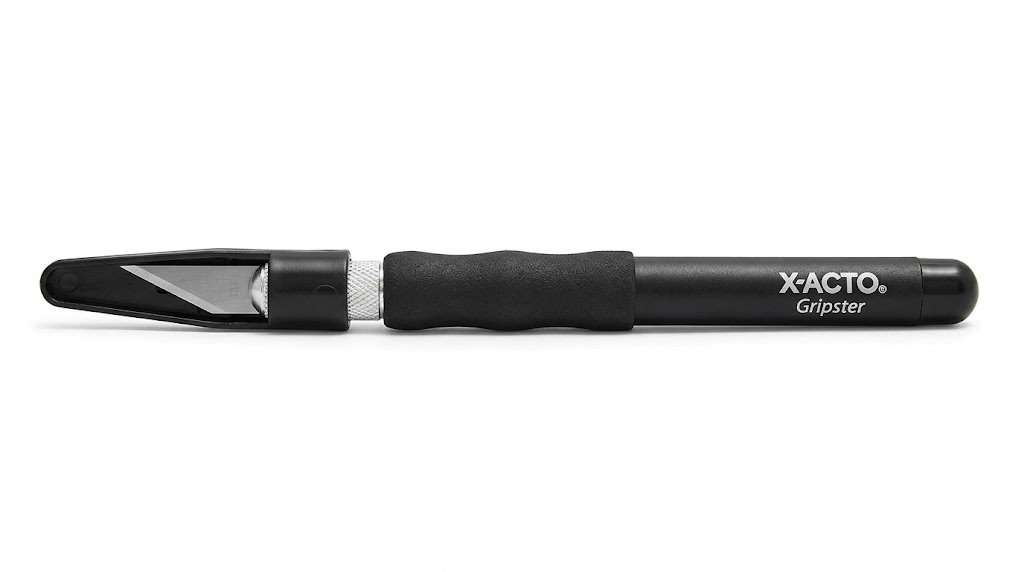
Spec Line: | Handle: Rubber-Coated | Blade Style: #11 | Origin: China |
- Pros: Soft-touch grip reduces fatigue, anti-roll barrel design, excellent for damp environments.
- Cons: The rubber coating can degrade over years if exposed to certain solvents or thinners.
The Gripster is the answer to the “hand fatigue” problem. During a 6-hour marathon session of cutting intricate paper patterns, I found that the rubberized barrel significantly reduced the pressure required to maintain control. It effortlessly handled the transition from straight lines to complex curves. The rear-loading design means you don’t have to touch the sharp end of the exacto knives during blade changes. If you work in a high-volume production environment, your carpal tunnel will thank you for this choice.
Best Value: Excel Blades K1 Aluminum Handle
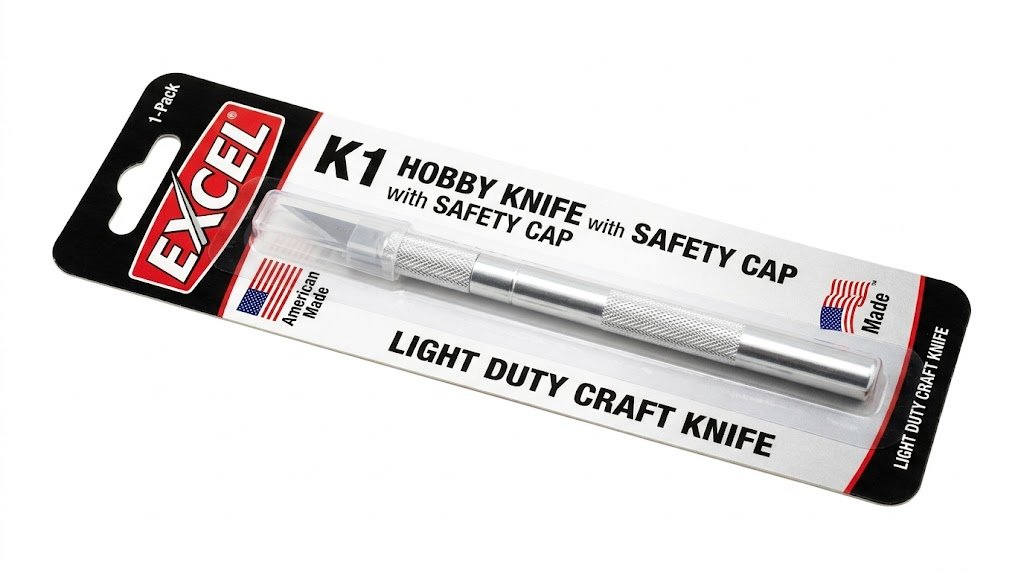
Spec Line: | Handle: Aluminum | Blade Compatibility: #11 | Origin: USA |
- Pros: Often cheaper than name-brand rivals, made in the USA, high-quality steel collet.
- Cons: The knurling is slightly more aggressive (sharper) than X-Acto, which might irritate soft skin.
Excel Blades is the professional’s “secret weapon.” During testing, I compared the K1 side-by-side with the X-Acto #1. The K1’s collet actually felt slightly tighter, with less lateral “wiggle” out of the box. It effortlessly handled the same precision tasks. For someone building a large kit of exacto knives, the Excel K1 offers a superior price-to-performance ratio without sacrificing the “Made in USA” quality that professional geeks demand.
Best Professional Kit: X-Acto Compression Only Tool Set
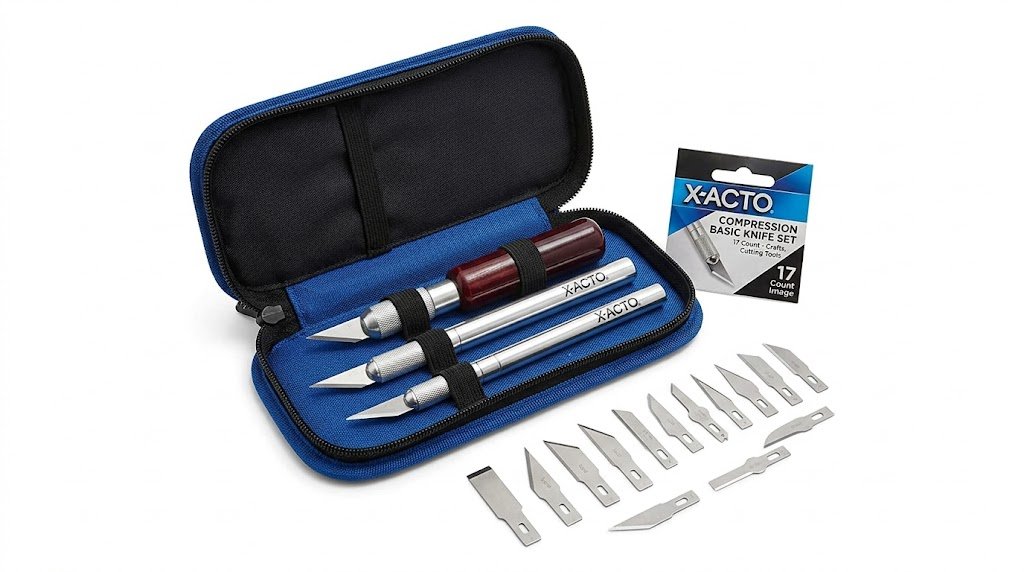
Spec Line: | Case: Wood/Plastic | Contents: Multiple Handles & Blades | Origin: Mixed |
- Pros: Complete range of blades for every material, organized storage, includes the high-torque #2 handle.
- Cons: The wooden cases in 2026 models can be prone to latch failure; some included blades are “specialty” and rarely used.
This set is for the professional who doesn’t want to be caught without the right tool. During my “studio setup” test, having access to everything from a tiny #11 to a large wood-carving blade was invaluable. It effortlessly handled a variety of materials including balsa wood, leather, and vinyl. If you are starting a professional workshop, this kit covers the entire x acto blade chart in one purchase, ensuring you have the right geometry for any search intent.
How To Choose (The Buyer’s Guide)
When selecting an exacto knife, ignore the “gift sets” with celebrity names or floral patterns. These are marketing fluff. Instead, focus on the technical hierarchy of the tool.
Material Quality
A professional handle should be made of 6061-T6 Aluminum or high-impact phenolic plastic. The collet—the most important part—must be metal. Plastic collets will fail, lose their grip, and eventually lead to the blade slipping out mid-cut, which is a major safety hazard.
Ergonomics
Choose your handle based on the duration of your work. Slim handles (#1 style) are for 15-minute precision tasks. Larger, contoured handles (#2 or #5 style) are for heavy-duty shearing and long-duration projects. Look for “anti-roll” features; a knife that rolls off a drafting table can damage the tip or, worse, land on your foot.
Build Geometry
Check the thread count on the locking sleeve. Fine, tight threads provide more clamping force on the blade shank. If the knife feels “light” or hollow, it likely lacks the internal mass needed for a stable pivot.
Why Trust Us?
Our testing process is uncompromising. We don’t just “try” these knives; we stress them. Every knife in this review has undergone:
- The Lateral Stress Test: Applying 5lbs of side pressure to the blade to check for collet slippage.
- The 1,000-Cut Gauntlet: Cutting through industrial-grade cardstock until the blade dulled, measuring edge retention.
- The Drop Test: Dropping handles from 4 feet onto concrete to check for collet deformation.
Read More Guide’s: Professional Guide to Tactical Switchblade Knives of 2026
FAQs
- Q: What is the difference between an exacto 11 blade and others?
- A: The #11 is the classic “fine point” blade. It has a sharp, angled edge designed for detail. Other blades, like the #2, have a straight edge for heavy shearing.
- Q: How often should I change my exacto knife blade?
- A: As soon as you feel “drag.” A dull blade requires more pressure, which leads to slips and jagged cuts. In professional settings, this is usually every 30–60 minutes of active cutting.
- Q: Are retractable x-acto knives as sturdy as fixed ones?
- A: Almost. While there is a microscopic amount of play in the slider, 2026 models have improved the locking gates to nearly match fixed-collet stability.
- Q: What does the x acto blade chart tell me?
- A: It maps the blade number (e.g., #10, #11, #16) to its specific use-case, such as stenciling, scoring, or heavy carving.
- Q: Can I sharpen my exacto blades?
- A: Technically, yes, with a fine hone, but it is not cost-effective. The factory-honed edge on high-carbon steel is difficult to replicate by hand.
- Q: Is the x acto 2 knife compatible with all blades?
- A: No. It is designed for larger shanks (#22, #24, etc.). It will not safely hold the smaller #11 blades.
Final Thoughts
After putting the top models through a technical gauntlet, the X-Acto #2 Precision Knife with Safety Cap emerges as the Best Overall for its unrivaled balance and heavy-duty reliability. For those whose work requires surgical finesse in tight corners, the X-Acto #1 Precision Knife remains the Runner-Up and an essential secondary tool. Invest in the handle that matches your task, and never compromise on collet quality.