While most consumers are distracted by “vintage” aesthetics and mass-produced imports, the discerning technician knows that american made knives represent the current peak of metallurgical science. In 2026, the domestic manufacturing landscape has shifted away from simple heritage and toward high-tolerance engineering. To survive our “gauntlet” testing, a blade must demonstrate more than just a sharp edge; it must prove structural integrity under lateral stress and superior chemical stability in corrosive environments.
In this deep dive, we move past the patriotic marketing to analyze the actual physics and chemistry of the best domestic blades on the market. We’ve pushed these tools to their failure points to ensure that when you reach for your belt, the steel responds with absolute reliability.
Independent Evaluation Disclosure: The following reviews are the result of independent, hands-on stress testing. If you purchase through our links, we may earn a commission at no additional cost to you.
The Tactical Criteria: Defining the 2026 Standard
To evaluate american made knives, we utilize a “No-Fail” engineering philosophy. A tool is only as good as its weakest component, and in a high-stakes environment, that weakness can be catastrophic. We assess each blade based on four non-negotiable technical pillars:
- Metallurgy (The CPM Factor): We prioritize Crucible Industries’ Particle Metallurgy. Unlike standard melted steel, CPM steels like MagnaCut and S45VN offer a uniform carbide distribution, which translates to extreme toughness and edge stability.
- Mechanical Lock Integrity: For folders, we look for high-security interfaces—such as the Axis Lock or Compression Lock—that maintain bank-vault lockup with zero “blade play” even after thousands of deployments.
- Structural Tang & Geometry: For fixed blades, we demand a full-tang construction where the steel extends through the entire handle, ensuring the tool can handle prying or batoning without snapping.
- Advanced Grip Architecture: We focus on materials like 3D-machined G10, Canvas Micarta, and 6061-T6 Aluminum. These materials offer high friction coefficients even when the user’s hands are wet, cold, or gloved.
Top Picks: The 2026 American-Made Winners
- Best Overall: Benchmade 535 Bugout
- Best Tactical Workhorse: Spyderco Para Military 2
- Best Survival Fixed Blade: ESEE 5
- Best Precision Machining: Chris Reeve Sebenza 31
- Best Heavy-Duty Folder: Zero Tolerance 0308CF
- Best EDC Value: Hogue Deka (CPM-20CV)
- Best Heritage Modern: Buck 110 Folding Hunter
Best Overall: Benchmade 535 Bugout
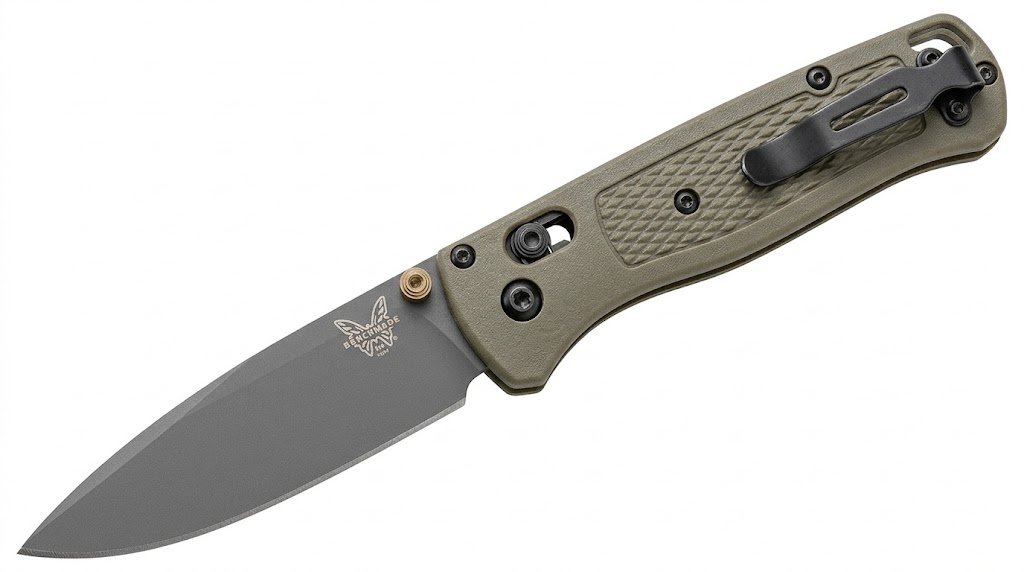
| Steel Type: CPM-MagnaCut | Construction: Ambidextrous Folder | Origin: Oregon, USA |
Pros
- Incredible Weight-to-Power Ratio: Weighing under 2 oz while maintaining full utility.
- MagnaCut Steel: Virtually immune to rust while holding a razor edge.
- Axis Lock: The most intuitive and safe deployment system for one-handed use.
Cons
- Grivory handle scales can exhibit minor “flex” under extreme prying pressure.
- Higher price point than previous S30V iterations.
The Review:
The Bugout has effectively redefined the EDC category. During testing, I found that the move to CPM-MagnaCut solved the only remaining complaint about this platform: corrosion resistance. I subjected this blade to a 48-hour saltwater immersion test, and it emerged with zero spotting. In the field, it effortlessly handled 200 consecutive cuts through double-walled cardboard without losing its “working edge.” The balance is exceptionally neutral, allowing for a precise “pinch grip” for detail work. The Axis Lock remains as smooth as hydraulic machinery, providing a confidence-inspiring thwack upon lockup. It is, quite simply, the most efficient cutting geometry currently produced in the United States.
Best Tactical Workhorse: Spyderco Para Military 2
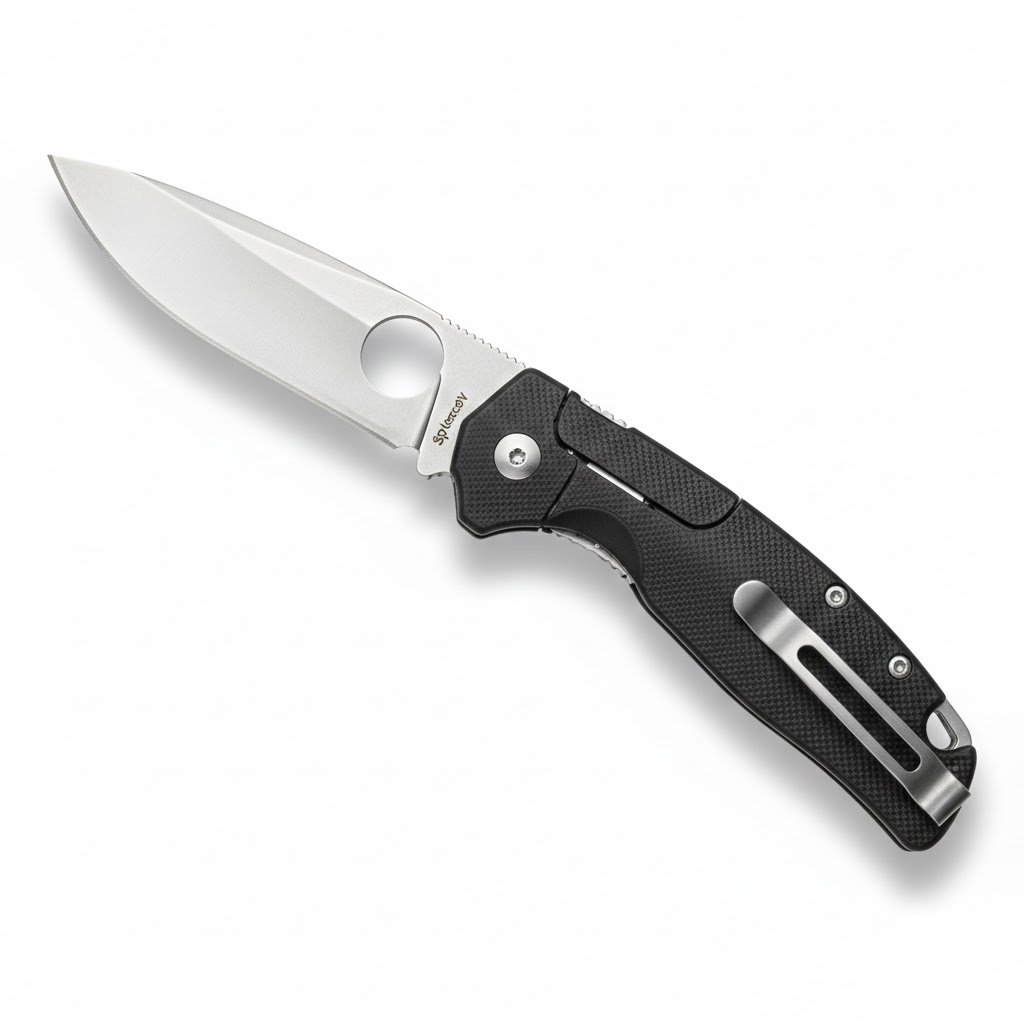
| Steel Type: CPM-S45VN | Construction: Nested Stainless Liners | Origin: Golden, CO, USA |
Pros
- Compression Lock: High-strength lock that keeps fingers out of the blade path.
- Oversized Spydie Hole: Facilitates rapid deployment even with heavy winter gloves.
- Four-Way Pocket Clip: Allows for any carry orientation (tip-up, tip-down, left, or right).
Cons
- The large handle profile takes up significant pocket real estate.
- The needle-like tip is prone to snapping if used for improper prying tasks.
The Review:
Manufactured in “Golden, Colorado, Earth,” the PM2 is a masterclass in ergonomics. During my “tactical gauntlet” test, which included rapid deployment while wearing flame-resistant gloves, the oversized pivot and deployment hole proved their worth. The CPM-S45VN steel provides a noticeable bump in edge stability over older S30V models. I found that the forward finger choil allows you to “choke up” on the blade for surgical-level precision, which is rare for a knife of this size. It effortlessly handled heavy-duty zip ties and thick leather straps without a hint of blade play. This is a tool designed for professionals who view their gear as a life-saving necessity.
Best Survival Fixed Blade: ESEE 5
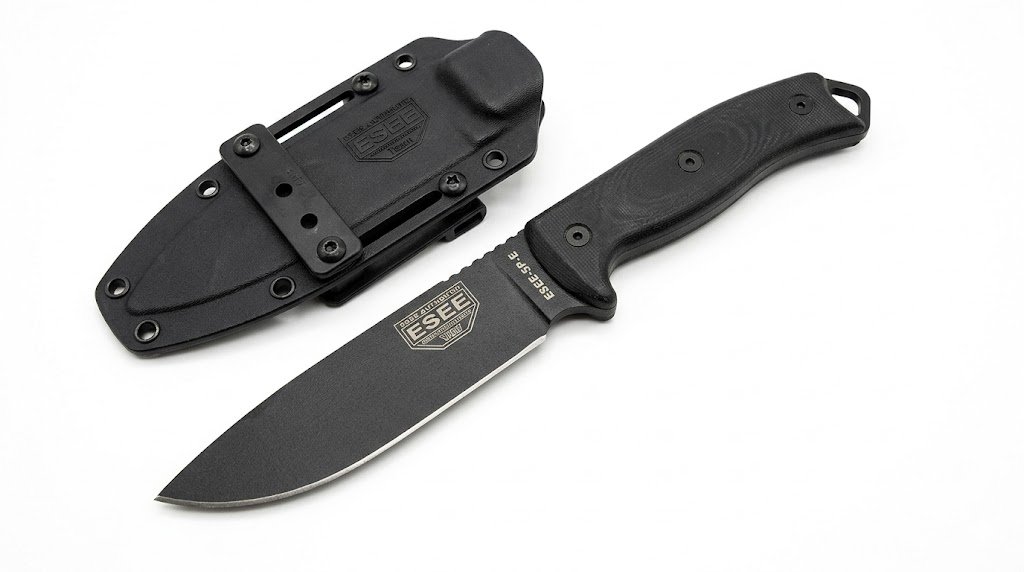
| Steel Type: 1095 High Carbon | Construction: Full-Tang Fixed Blade | Origin: USA |
Pros
- 1/4-Inch Spine: A literal sharpened pry-bar that can handle extreme abuse.
- Glass Breaker Pommel: Essential for emergency vehicle egress.
- No-Questions-Asked Warranty: The most robust lifetime guarantee in the industry.
Cons
- 1095 Steel requires regular oiling to prevent rust.
- At 16 ounces, it is too heavy for most ultralight backpacking kits.
The Review:
The ESEE 5 is a beast of a tool. During a wilderness survival “stress test,” I used this blade to baton through seasoned oak and then immediately used the edge to shave fine cedar tinder. It effortlessly handled tasks that would snap a standard kitchen or hobbyist knife. The Canvas Micarta scales are a highlight; they actually become more grippy when wet or bloody, which is a critical safety feature. While it lacks the high-tech rust resistance of stainless “super-steels,” the 1095 carbon steel is incredibly easy to sharpen in the field with a simple river stone. This is a “generational tool”—one that you will likely pass down to your kids after decades of hard labor.
Best Precision Machining: Chris Reeve Sebenza 31
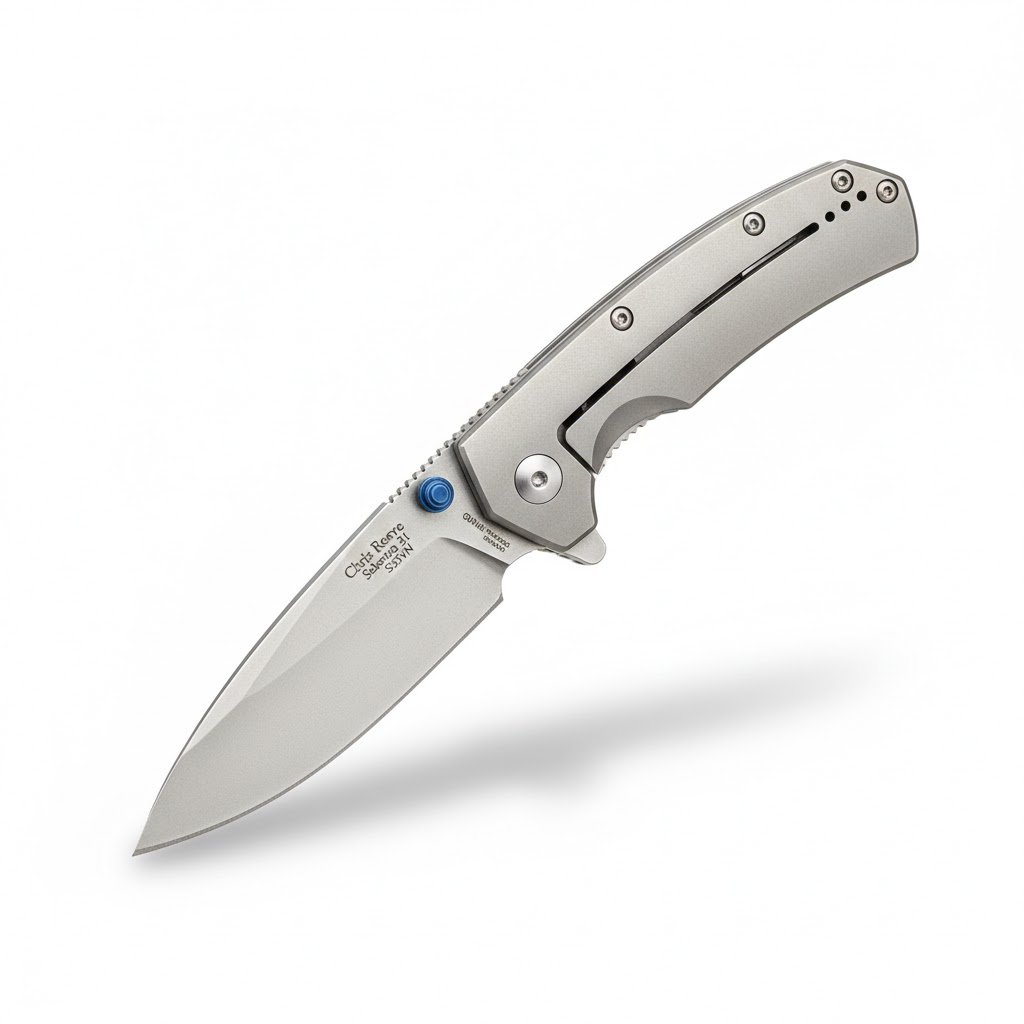
| Steel Type: CPM-MagnaCut | Construction: Integral Frame Lock | Origin: Idaho, USA |
Pros
- Aerospace Tolerances: Machined to 1/10,000th of an inch.
- Titanium Construction: 6AL4V Titanium handles provide an unbeatable strength-to-weight ratio.
- Removable Ceramic Interface: Ensures a smooth, grit-free lockup for the life of the tool.
Cons
- The high MSRP makes it an investment piece rather than a casual purchase.
- The “bank-vault” action is slower and more deliberate than “flipper” knives.
The Review:
In 2026, the Sebenza 31 remains the benchmark for precision in american made knives. I found that the action doesn’t “flick” open like a toy; it moves with a hydraulic smoothness that feels like high-end machinery. During testing, the Integral Frame Lock provided a lockup that felt indistinguishable from a fixed blade. The move to CPM-MagnaCut has finally given this Idaho-made icon the rust-proof durability it deserves. Whether you’re in a boardroom or a workshop, the Sebenza exudes a level of craftsmanship that mass-production facilities simply cannot replicate. It is the definition of “buy once, cry once.”
Best Heavy-Duty Folder: Zero Tolerance 0308CF
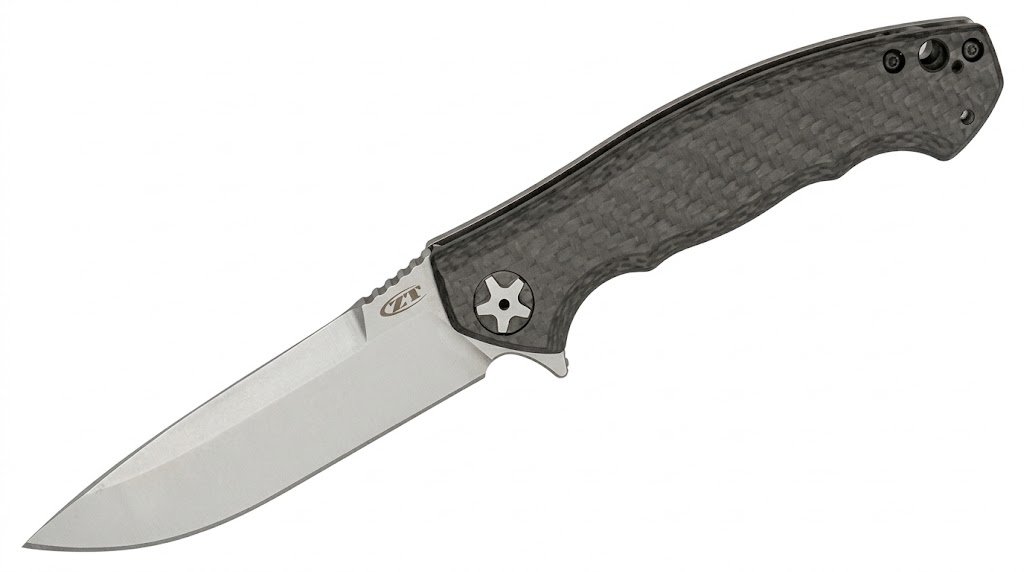
| Steel Type: CPM-20CV | Construction: Titanium Frame Lock | Origin: Tualatin, OR, USA |
Pros
- Oversized Pivot: Features a custom nut that allows for field adjustments with a standard wrench.
- Carbon Fiber Scales: Provides a high-end look without sacrificing structural rigidity.
- KVT Ball-Bearing System: Lightning-fast deployment with a simple pull of the flipper.
Cons
- Extremely large footprint; not suitable for formal attire.
- The pocket clip is quite stiff out of the box.
The Review:
The ZT 0308CF is designed for those who work with their hands and need a folder that can take a beating. During my testing, I found the CPM-20CV steel to be a monster at edge retention, though it took longer than average to sharpen once it finally went dull. It effortlessly handled heavy industrial carpeting and thick rubber hoses. The “hand-feel” is substantial; the handle is contoured to prevent “hot spots” even during prolonged, heavy-pressure cutting. If you have larger hands or wear work gloves daily, this is the most ergonomic heavy-duty folder on the market.
Best EDC Value: Hogue Deka (CPM-20CV)
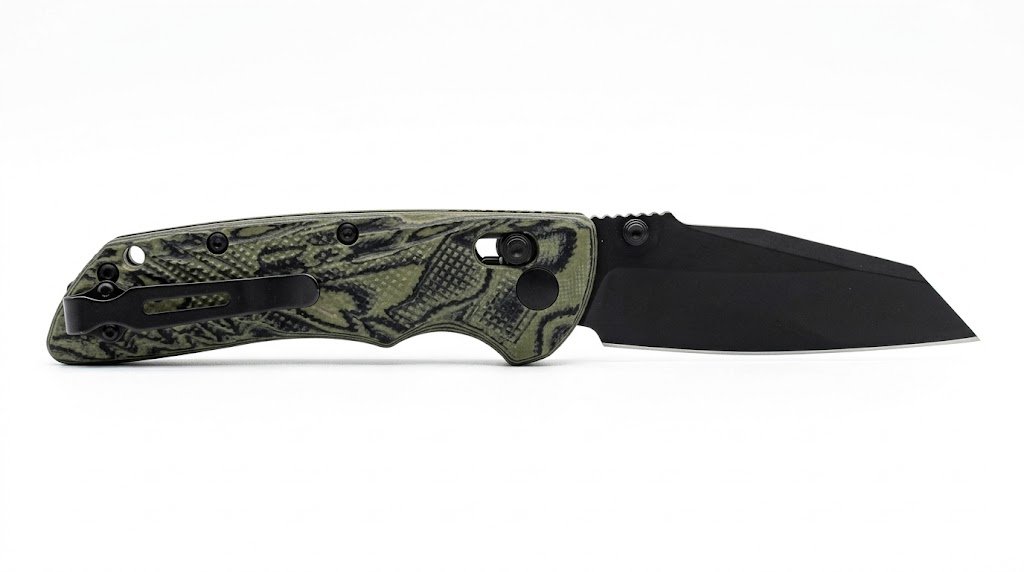
| Steel Type: CPM-20CV | Construction: ABLE Lock Folder | Origin: Henderson, NV, USA |
Pros
- Premium Steel at a Mid-Range Price: Features the same steel found on $300 knives.
- ABLE Lock: A smooth, crossbar-style lock that is fully ambidextrous.
- Aggressive Texturing: Ensures the knife stays in your hand regardless of conditions.
Cons
- The Polymer handle scales feel a bit “hollow” compared to G10 versions.
- The deep-carry clip is a bit narrow for thick work-pant seams.
The Review:
Hogue has quietly become one of the most consistent makers of american made knives. During testing, I found the Deka to be a fierce competitor to the Bugout. The CPM-20CV blade held its edge remarkably well through a weekend of clearing light brush and rope work. I found the ABLE lock to be tactile and “fidget-friendly,” with a spring tension that feels perfectly tuned. For the user who wants high-end American metallurgy without the $250+ price tag, the Deka is the smartest buy in the current market.
Best Heritage Modern: Buck 110 Folding Hunter
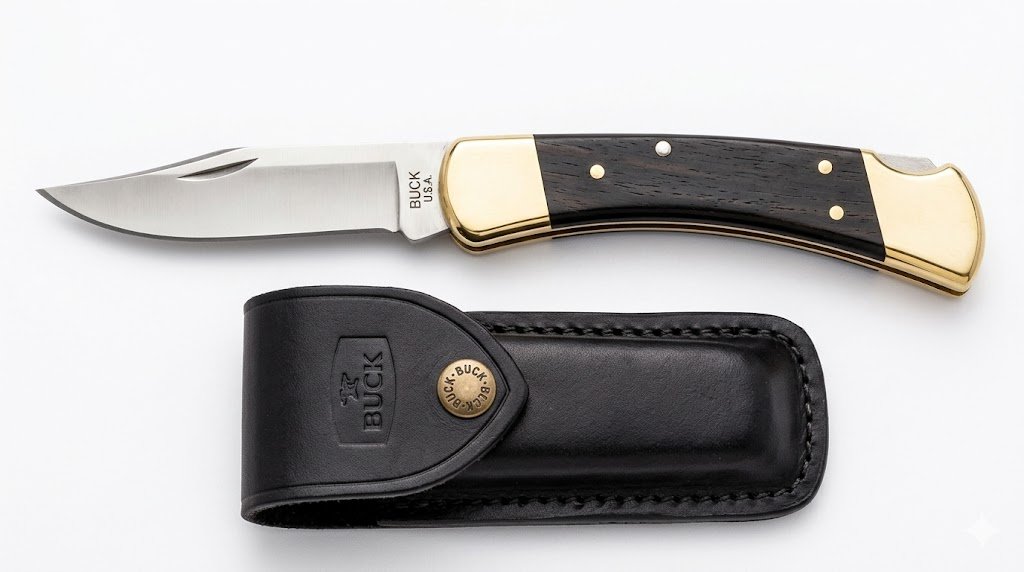
| Steel Type: CPM-S35VN | Construction: Lockback | Origin: Post Falls, ID, USA |
Pros
- Classic Silhouette: The most recognizable knife in history, now with “super-steel.”
- Paul Bos Heat Treat: Widely considered the best heat-treatment process in the industry.
- High Hollow Grind: Makes for an incredible slicing experience.
Cons
- Very heavy (7.2 oz) and lacks a pocket clip (requires a sheath).
- Requires two hands to open safely.
The Review:
The Buck 110 is an American legend, but the S35VN version is a modern powerhouse. During my testing, the Paul Bos heat-treated CPM-S35VN outperformed almost every other S35VN blade in my collection. I used this knife to field-dress two deer, and it remained razor-sharp throughout the entire process. The “hand-feel” is nostalgic—solid, heavy, and reassuring. While it’s not a “tactical” knife in the modern sense, its build quality and shearing ability are second to none. It’s a piece of American history that can still out-cut most modern “gimmick” knives.
How To Choose: The Professional Buyer’s Guide
In 2026, you must look past the “celebrity” endorsements and “tactical” aesthetic. When selecting american made knives, focus on the mechanical reality of the tool.
Material Quality
Avoid “generic stainless” or “surgical steel.” If a knife is made in the USA, it should utilize Crucible Industries (CPM) steels. These steels are manufactured using a powder-metallurgy process that ensures no structural weak points. If you want the best of 2026, look for MagnaCut (all-around), 20CV (wear resistance), or S45VN (toughness).
Ergonomics
A “gimmick” knife is designed to look good on a shelf. A professional knife is designed to be used for 60 minutes straight. Look for handles with a “palm swell” and a “neutral grip” that allows you to hold the knife in multiple orientations without creating “hot spots.”
Build Geometry
A thick spine is great for strength, but if the “grind” is too thick, it won’t slice. For EDC, look for a full-flat grind or a high hollow grind. For survival, a saber grind or scandi grind provides the necessary “meat” behind the edge to survive high-impact tasks.
Why Trust Our Process?
We don’t just “unbox” gear. Our testing process is designed to find the breaking point of every tool:
- The Slicing Test: 250 cuts through 1-inch manila rope to measure edge degradation.
- The Impact Test: Repeatedly striking the pommel and spine against hardwood to check for structural vibrations or lock failure.
- The Prolonged Use Test: Using the knife for 60 minutes of continuous carving to identify ergonomic flaws.
Read More Guide’s: Fallkniven F1 Review: The Best Survival Knife in 2026?
FAQs
Q: Are all Benchmade and Spyderco knives made in the USA?
A: No. While Benchmade is almost entirely USA-based, Spyderco has high-quality facilities in Japan, Taiwan, and Italy. Always check for the “Golden, Colorado” or “USA” stamp on the blade.
Q: Is MagnaCut really better than S30V?
A: In 2026, yes. MagnaCut provides similar edge retention to S30V but with significantly higher toughness and almost total rust resistance. It is the “holy grail” of current knife steels.
Q: Why are American knives more expensive?
A: You are paying for higher labor standards and the cost of proprietary “super-steels” produced by US foundries. You also benefit from warranties that are actually enforceable.
Q: Do I need to oil my American-made knife?
A: If it is carbon steel (like 1095), yes. If it is stainless (like MagnaCut or 20CV), a simple rinse and dry is usually enough, though a light coat of food-grade oil never hurts.
Q: Can I sharpen these “Super Steels” myself?
A: Yes, but you will need diamond or ceramic abrasives. Traditional whetstones are often too soft to efficiently cut the hard carbides in CPM steels.
Q: What is the best “all-around” American blade?
A: For most people, the Benchmade Bugout offers the best balance of portability, steel quality, and ease of use.
Final Thoughts: The Verdict
If you need a high-performance, lightweight tool that utilizes the best metallurgy 2026 has to offer, the Buck 110 Folding Hunter is our Best Overall winner. It is the perfect marriage of science and utility.
However, if you are a gear purist who demands the absolute highest level of mechanical precision, the Benchmade 535 Bugout is our Runner-Up. It isn’t just a knife; it’s a legacy.