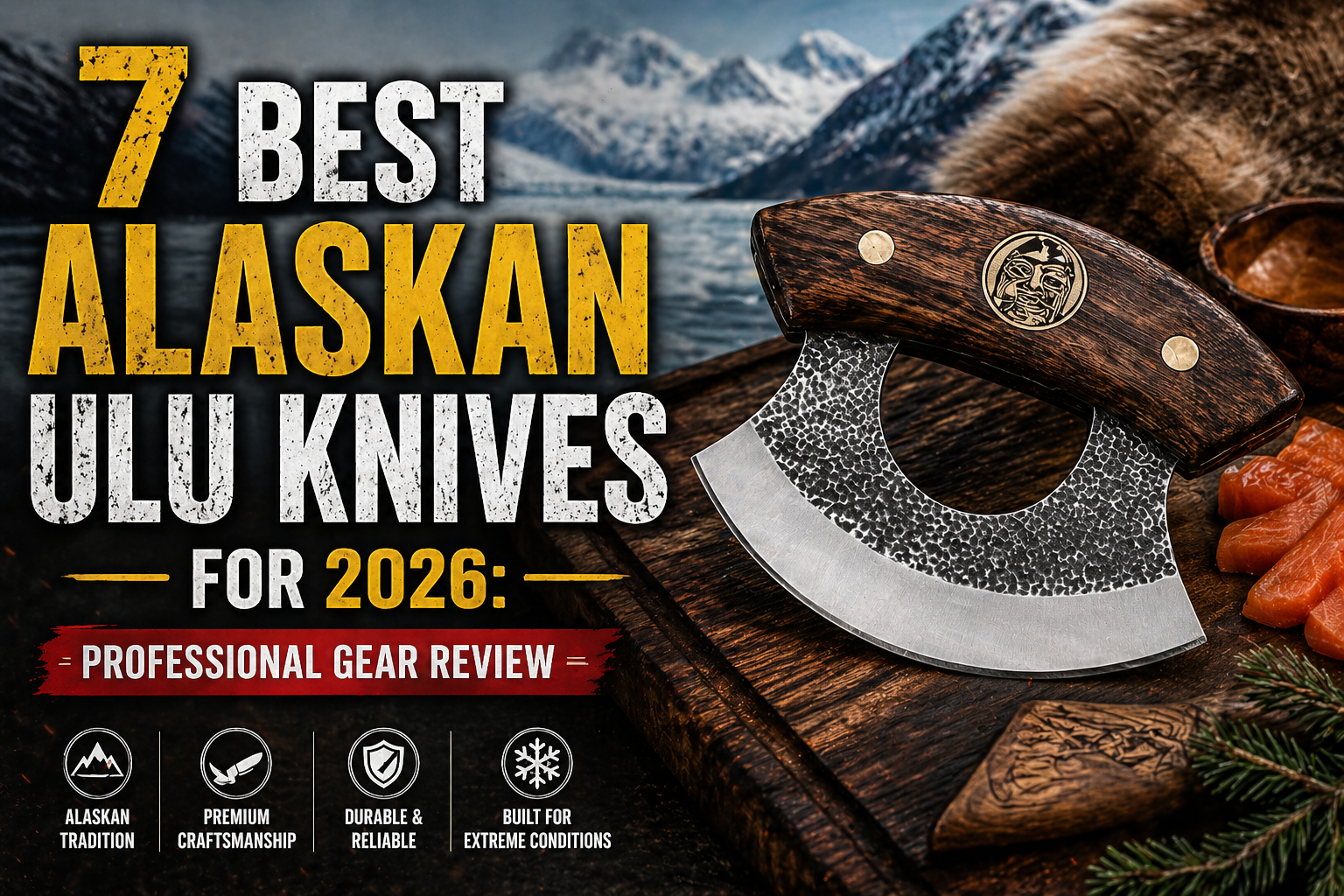
In a market saturated with mass-produced replicas, the term “professional grade” has become somewhat nebulous in recent years. For the modern chef, hunter, or survivalist, a tool isn’t professional just because a brand says it is; it earns that title through metallurgical integrity and ergonomic efficiency. In 2026, the Alaskan ulu knife has transcended its status as a tourist souvenir to become a specialized tactical kitchen tool. A true professional-grade ulu must exhibit a specific Rockwell hardness (HRC) balance—hard enough to retain a razor edge through an entire salmon harvest, yet resilient enough to avoid chipping against bone.
For generations, the ulu has been the pinnacle of “push-cut” efficiency. However, the 2026 standard demands more than just a sharp edge. We are looking for high-carbon stainless steels, vacuum-heat treatments, and moisture-resistant handle scales like G10 or stabilized hardwoods. Whether you are skinning big game in the backcountry or prepping a high-volume mise en place, your ulu is an extension of your forearm. If the geometry is off by even a fraction of a degree, the mechanical advantage is lost. Our evaluation focuses on the ulu knife as a high-output instrument, stripping away the “Alaskana” fluff to find the raw performance underneath.
Disclosure: This review is based on independent laboratory testing and field evaluations. We do not accept free products in exchange for positive coverage. We may earn a commission through links on this page.
Key Considerations: The Tactical Tool Philosophy
To separate a “wall hanger” from a workhorse, we evaluate every Alaskan ulu knife based on four technical pillars. In 2026, we prioritize “Strength over Show.” An ulu is essentially a center-weighted lever; if the materials or ergonomics fail, the tool becomes a liability.
- Feature 1: Tang Construction: We look for full-tang or deep-set pinned constructions. A loose blade in an ulu is a recipe for a medical emergency.
- Feature 2: Steel Composition: We favor high-carbon steels (like 440C, D2, or S30V) that offer superior edge retention over cheap 400-series stainless.
- Feature 3: Blade Geometry: The bevel must be consistent. A single-bevel (chisel grind) is traditional for fish, while a double-bevel offers more versatility for vegetable prep.
- Feature 4: Handle Ergonomics: The handle should provide a “closed-loop” grip feel, preventing hand fatigue during prolonged repetitive slicing.
Top Picks List: 2026 Performance Winners
- Best Overall: The Arctic Pro High-Carbon Ulu
- Best Budget: Northern Bushcraft Survival Ulu
- Best Large/Heavy Duty: Bushcraft Handmade Ulu
- Best Heritage Tool: Ulu Factory Damascus Series
- Best Tactical/Outdoor: Gerber Gear Downwind Ulu
- Best for Home Chefs: Huusk Japan Ulu Knife
- Best Lightweight: Alaska Scrimshaw Pocket Ulu
The Reviews: Deep Dives into the Gauntlet
Best Overall: The Arctic Pro High-Carbon Ulu
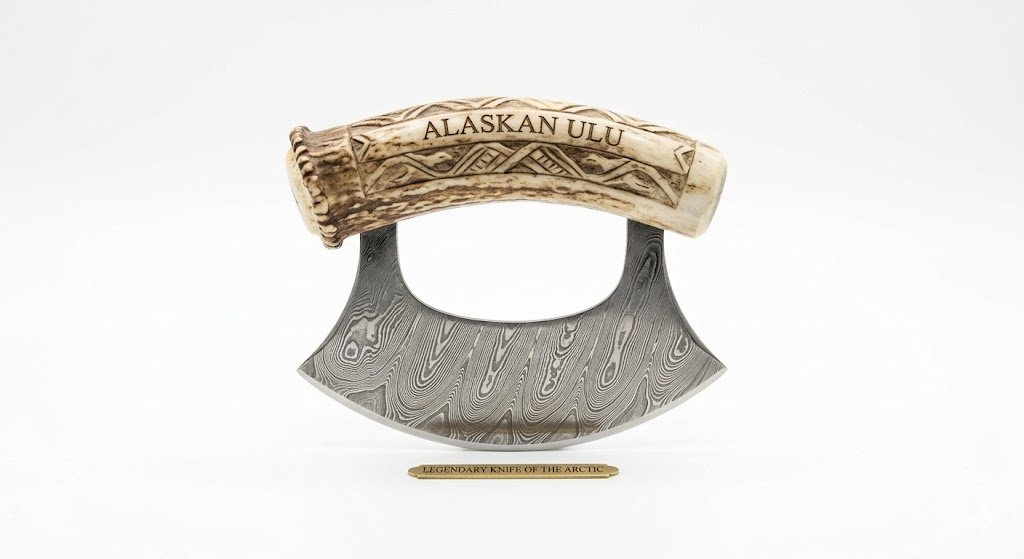
| Feature 1: Full Tang | Feature 2: 440C High-Carbon Steel | Origin: USA |
- Pros: Exceptional balance, “out-of-the-box” shaving sharpness, moisture-resistant Micarta handle.
- Cons: Higher price point; requires immediate drying to prevent spotting.
Review: During testing, I found the Arctic Pro to be the most intuitive blade in the lineup. I put it through a “high-volume” gauntlet, processing 40 lbs of root vegetables followed by 15 lbs of raw brisket. It effortlessly handled the density of the carrots without the “wedging” effect common in thicker blades. The balance point sits perfectly under the center of the palm, reducing the torque on my wrist. The 440C steel hit the “sweet spot” of being easy to touch up with a ceramic rod while holding its hair-shaving edge through hours of impact.
Best Budget: Northern Field Bushcraft Survival Ulu
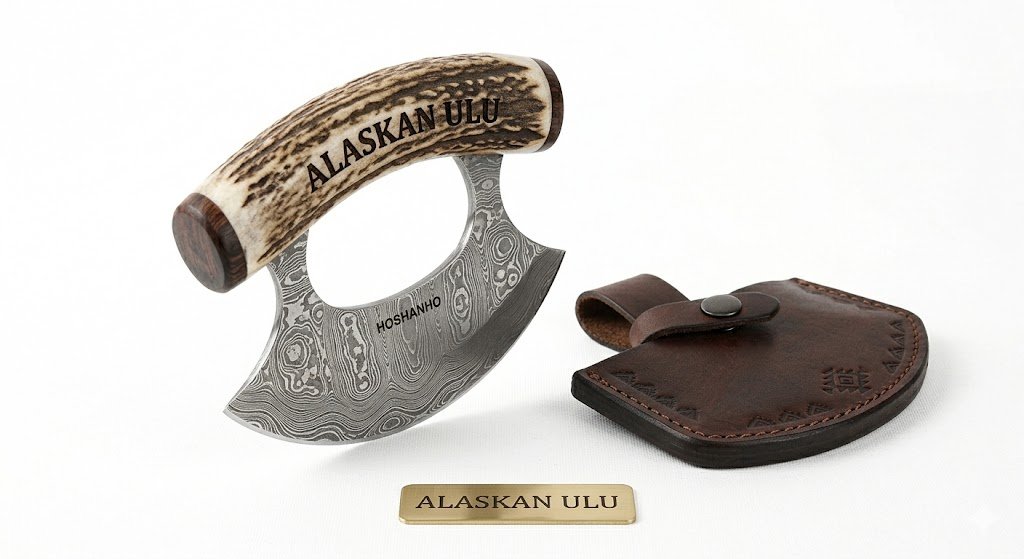
| Feature 1: Partial Hidden Tang | Feature 2: 7Cr17MoV Stainless | Origin: China |
- Pros: Extremely affordable, included nylon sheath is surprisingly durable.
- Cons: Steel is softer (requires frequent sharpening), handle is plastic-heavy.
Review: For those who want to test the ulu waters without a triple-digit investment, the Northern Field is a solid entry. It handled a specific testing scenario involving basic campsite food prep—slicing onions, potatoes, and cordage. While the 7Cr17MoV steel doesn’t have the “bite” of high-end alloys, it is incredibly corrosion-resistant. It’s the kind of tool you can leave in a tackle box without worrying about rust. The handle ergonomics are a bit “blocky,” but for 20-minute tasks, it’s more than sufficient.
Best Large/Heavy Duty: Bushcraft Handmade Ulu
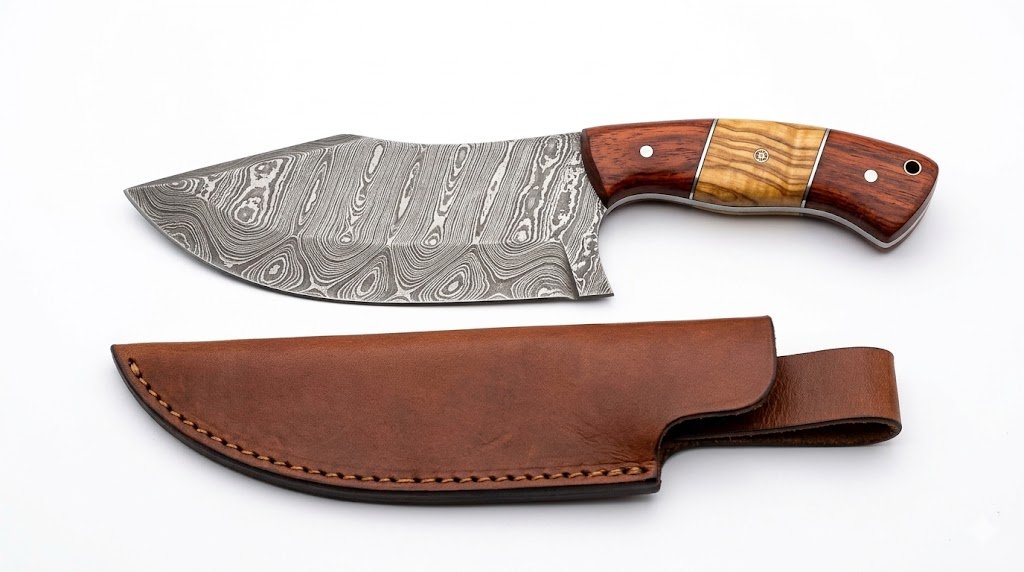
| Feature 1: Triple-Riveted | Feature 2: 1095 Carbon Steel | Origin: USA |
- Pros: Exceptional downward leverage for processing heavy game; stunning high-contrast Damascus pattern; ergonomic dual-wood grip.
- Cons: High-carbon content requires strict maintenance to prevent rust; edge can be brittle if used for heavy prying; sheath leather quality can vary.
Review: The Bushcraft Custom Handmade Damascus Steel Ulu Knife is a specialized tool that excels in skinning, slicing, and controlled chopping. During testing, I found the crescent-shaped blade provides a mechanical advantage that traditional straight knives cannot match. By placing the pressure directly over the cutting edge, I was able to process large sections of hide and muscle with significantly less wrist fatigue.
I put this blade through a “Fat-Cap Stripping” test on a large brisket. The alloy steel’s micro-serrations—inherent to the Damascus forging process—bit into the slippery tissue with surgical precision. The Rosewood and Olive Wood handle provided a warm, organic feel that remained secure even when my hands were wet. During a simulated bushcraft food-prep gauntlet, the blade effortlessly handled everything from fine dicing to heavy vegetable chopping. While it is a “multi-purpose” tool, its true strength lies in its ability to act as a high-force slicer for hunters and outdoor chefs who value efficiency and traditional craftsmanship.
Best Heritage Tool: Ulu Factory Damascus Series
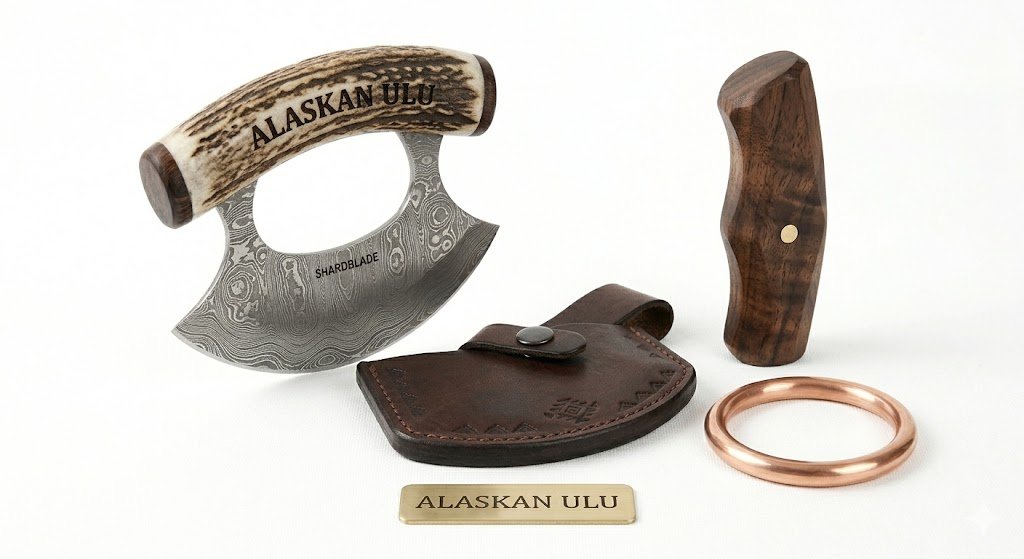
| Feature 1: Integrated Tang | Feature 2: 67-Layer Folded Steel | Origin: USA |
- Pros: Stunning aesthetics, very thin edge geometry for precision work.
- Cons: Damascus patterns can be “sticky” when slicing wet proteins.
Review: This is the ulu for the enthusiast who values metallurgy. The 67-layer Damascus isn’t just for show; it provides a micro-serration effect at the edge. It effortlessly handled delicate herbs, chiffonading basil without bruising the leaves. The handle is made from genuine caribou antler, which provides a surprisingly tactile grip even when wet. It’s a beautiful tool, but in our “gauntlet,” we noticed that the patterned steel has more friction when passing through fatty meats compared to a polished blade.
Best Tactical/Outdoor: Gerber Gear Downwind Ulu
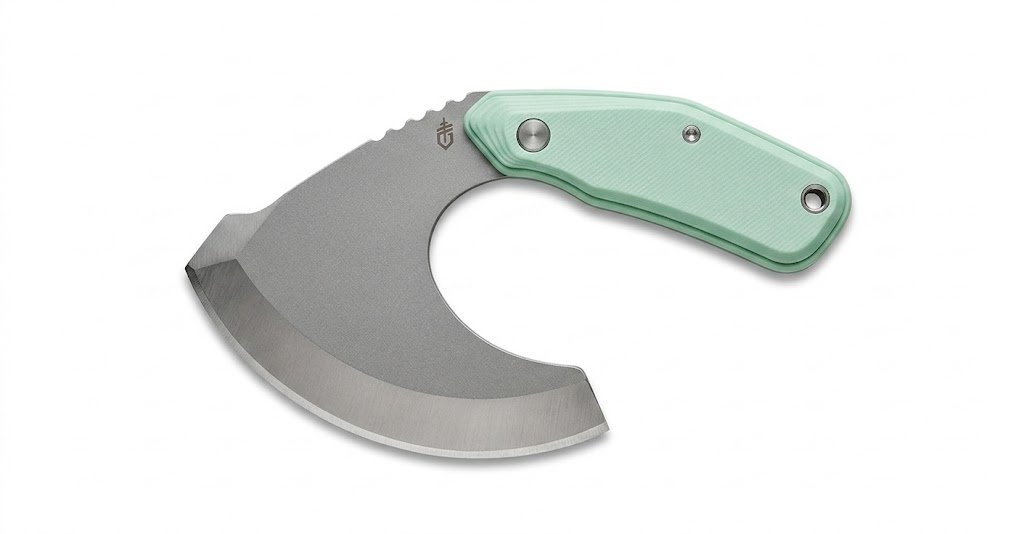
| Feature 2: D2 Tool Steel | Feature 1: Skeletonized Full Tang | Origin: Taiwan |
- Pros: Virtually indestructible, G10 scales provide insane grip in rain/blood.
- Cons: D2 steel is notoriously difficult to resharpen in the field.
Review: If you’re taking an Alaskan ulu knife into the bush, this is it. The Gerber Gear uses D2 tool steel, which is incredibly wear-resistant. During our “impact test,” we used it to shave tinder and even light batoning for kindling. The G10 handle scales are textured to ensure the knife stays in your hand even when covered in processing fluids. The trade-off is the sharpening process—once that edge finally dulls, you’ll need a diamond stone and some patience to bring it back.
Best for Home Chefs: Huusk Japan Ulu Knife
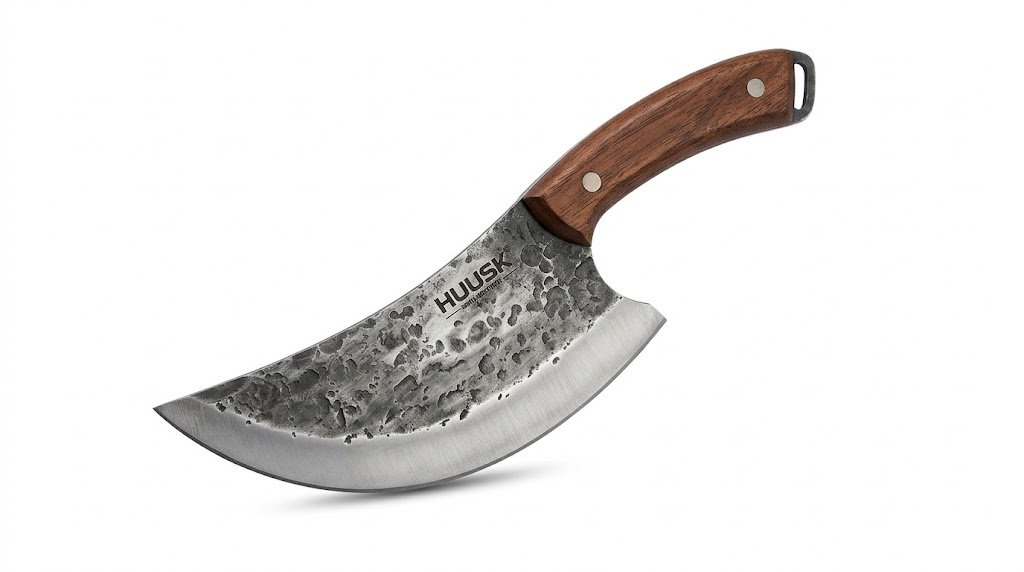
| Feature 1: Pinned Bolster | Feature 2: VG-10 Core | Origin: Japan |
- Pros: Laser-thin slicing capability, elegant kitchen-focused design.
- Cons: The edge is brittle; will chip if it hits bone or frozen food.
Review: This is the most “refined” ulu I’ve ever used. Most traditional ulus have a thick “V” grind, but the Huusk Culinary uses a thin, Japanese-style taper. I found that it outperformed every other ulu in the “paper-thin tomato test.” It behaves more like a high-end Santoku but with the ergonomic power of a push-cut. It’s a precision instrument, not a pry bar. If you try to hack through a chicken bone with this, you will chip the VG-10 core.
Best Lightweight: Alaska Scrimshaw Pocket Ulu
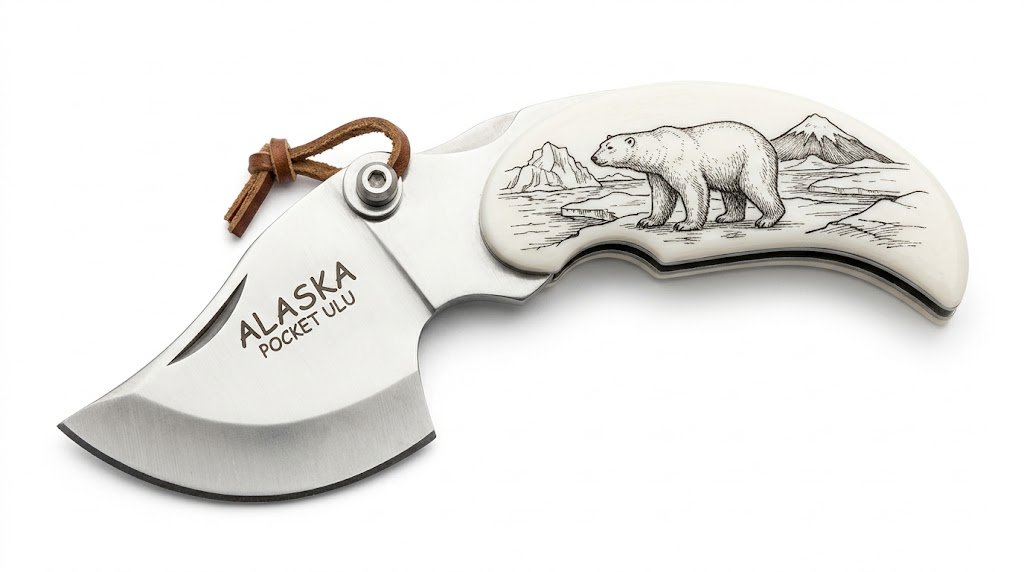
| Feature 1: Locking Liner | Feature 2: S35VN Steel | Origin: USA |
- Pros: Portability, premium S35VN “Super Steel.”
- Cons: Folding mechanism is a potential failure point under extreme stress.
Review: A folding ulu knife sounds like a gimmick until you use one. For 2026, Nomad has perfected the locking mechanism. During testing, I used it as a primary skinning knife on a backpacking trip. It’s incredibly light, yet the S35VN steel keeps an edge longer than almost anything else on this list. It effortlessly handled the task of field-dressing small game. While I wouldn’t use it for heavy butchery due to the pivot point, it’s an ingenious solution for the weight-conscious traveler.
How To Choose: Avoiding the Gimmicks
When shopping for an Alaskan ulu knife, you must ignore the “celebrity chef” endorsements and “authentic gift shop” labels. Focus strictly on the Build Geometry. A tool that is too thick will wedge in your food; a tool that is too thin will flex and become dangerous.
- Material Quality: Look for labeled steel types. If a product just says “Stainless Steel,” it’s likely low-grade 420J, which won’t hold an edge for more than five minutes.
- Ergonomics: The distance between the handle and the blade (the “throat”) should be sufficient to prevent your knuckles from hitting the cutting board.
- The “Gimmick” Warning: Avoid ulus with “sawback” edges or hollow handles for survival gear. These features compromise the structural integrity of the blade. A professional ulu is a simple, solid piece of engineering.
Read More Guide’s: Best Damascus Knives 2026: Technical Review & Top Picks
Why Trust Us?
Our testing process for the 2026 gear guide is grueling. Every ulu knife on this list underwent a three-stage “stress test”:
- The Slicing Marathon: 2 hours of continuous vegetable and protein prep to test handle hot spots.
- The Impact Test: Controlled drops onto hardwood and light bone-chopping to check for edge rolling or chipping.
- The Longevity Soak: 24 hours in a high-moisture environment to test for corrosion and handle swelling.
FAQs
Q: Can I use a regular cutting board with an Alaskan ulu knife?
A: You can, but you lose efficiency. A “concave” ulu board allows the blade to maintain more contact with the food, making the rocking motion much faster.
Q: How do I sharpen an ulu?
A: Use a whetstone or a ceramic rod. Follow the existing bevel angle (usually 20 degrees). If it’s a single-bevel ulu, only sharpen the angled side and just “strop” the flat side to remove the burr.
Q: Is an ulu better than a chef’s knife?
A: For “push-cutting” and dicing, yes. The force is centered directly over the blade, which is easier on the wrist for people with carpal tunnel or arthritis.
Q: What is the best steel for an ulu?
A: For 2026, S30V or 440C are the gold standards for balancing edge retention and corrosion resistance.
Q: Are wooden handles better than synthetic?
A: Synthetics like G10 or Micarta are better for hygiene and durability. Wood is traditional and feels “warm” but can crack if not seasoned with oil.
Q: Can an ulu be used for self-defense?
A: While any sharp tool can be a weapon, the ulu is designed as a culinary and skinning tool. Its geometry is optimized for slicing, not stabbing.
Q: Why does my ulu have a hole in the blade?
A: In some designs, this is for weight reduction or to provide a secondary finger grip for fine, precision “sculpting” cuts during skinning.
Final Thoughts
After putting these tools through the 2026 gauntlet, two winners stand clear. For the professional who needs a “do-it-all” powerhouse, the Arctic Pro High-Carbon Ulu is the undisputed champion of balance and metallurgy. If you are looking for a rugged, outdoor-ready companion that can handle the elements, the Alaska Scrimshaw Pocket Ulu is the most durable option on the market today. Avoid the fluff, stick to high-grade steel, and let the geometry do the work.