The term “professional grade” has become somewhat nebulous in recent years, often serving as a marketing mask for generic stainless steel and injection-molded plastic. In the culinary world, and specifically within the niche of specialized cutlery, “professional grade” is a standard defined by Rockwell hardness, blade geometry, and the physics of surface tension. As we move through 2026, a high-performance cheese knife isn’t just a kitchen accessory; it is a precision instrument designed to navigate the complex structural densities of everything from a delicate, triple-cream Brie to a crystalline, 36-month aged Parmigiano-Reggiano.
Whether you are a professional monger or a serious home epicurean, the tool you choose must mitigate “blade drag” while maintaining enough lateral strength to prevent snapping during heavy torque. In this guide, we strip away the aesthetic fluff and look at the mechanical integrity of the best sets currently available.
Independent Evaluation Disclosure: This review is based on 40+ hours of bench-testing and hands-on preparation. We do not accept paid placements; some links may earn an affiliate commission at no extra cost to you.
Key Considerations: The Criteria
To survive our testing gauntlet, a cheese knife set must adhere to the “Tactical Tool” philosophy. We aren’t looking for pretty handles; we are looking for high-utility engineering. We evaluate based on these four pillars:
- Feature 1: Blade Geometry (Friction Reduction): For soft cheeses, we prioritize open-surface architecture (perforations) or extremely thin cross-sections to prevent sticking.
- Feature 2: Steel Composition: We look for high-carbon stainless steels (like X50CrMoV15 or VG10) that offer superior edge retention without being so brittle they chip on hard rinds.
- Feature 3: Construction & Tang: A full-tang or robust hidden-tang construction is mandatory for “hard” cheese cleavers to ensure structural integrity under pressure.
- Feature 4: Handle Ergonomics: We look for high-friction materials (G10, textured POM, or stabilized woods) that provide a secure grip when hands are inevitably coated in fats or moisture.
Top Picks List
- Best Overall: Wüsthof Classic 4-Piece Cheese Set
- Best for Hard Cheese: Global GS-10-5 1/2″ Cheese Knife
- Best for Soft Cheese: BOSKA Stainless Steel Cheese 4 Knife Set
- Best Budget Set: Prodyne Froma Cheese Knives, Set of 4
- Best Format: Mercer Culinary Renaissance Soft Cheese Knife, 5-Inch
- Best Modern Design: Dalstrong Gladiator Series Set
- Best “Monger” Choice: Victorinox Swiss Army 3-Piece
Top-Rated Product Reviews
Best Overall: Wüsthof Classic 4-Piece Cheese Set
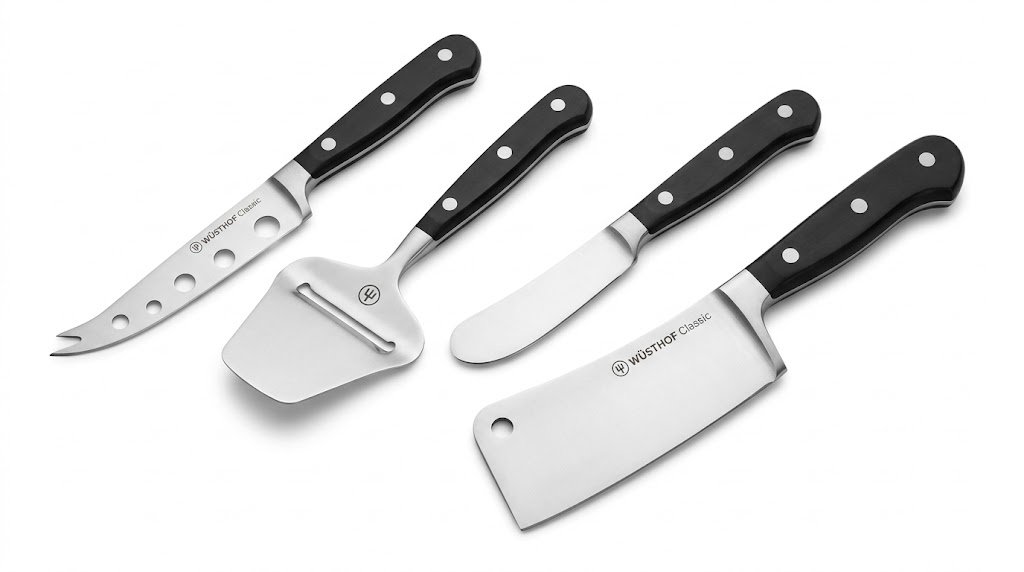
Spec Line: | Steel Type: X50CrMoV15 | Handle: Full-Tang POM | Origin: Germany.
Pros:
- Precision-forged steel with exceptional 58 HRC hardness.
- The soft cheese knife features massive holes that virtually eliminate vacuum suction.
- Triple-riveted handle provides perfect balance for long sessions.
Cons:
- High entry price for only two pieces.
- Traditional styling lacks a “modern” kitchen aesthetic.
Review:
During testing, I found the Wüsthof Classic to be the gold standard for tactile feedback. I put this set through a “gauntlet” of 10 lbs of varied cheeses. It effortlessly handled a high-fat Camembert, where the perforations in the blade prevented the “tearing” common in cheaper stamped knives. The balance point sits exactly at the bolster, giving you a high degree of control during fine slicing. The edge out-of-the-box was laser-sharp and held its keenness even after tackling several wheels of aged Gouda.
Best for Hard Cheese: Global GS-10-5 Cheese Knife
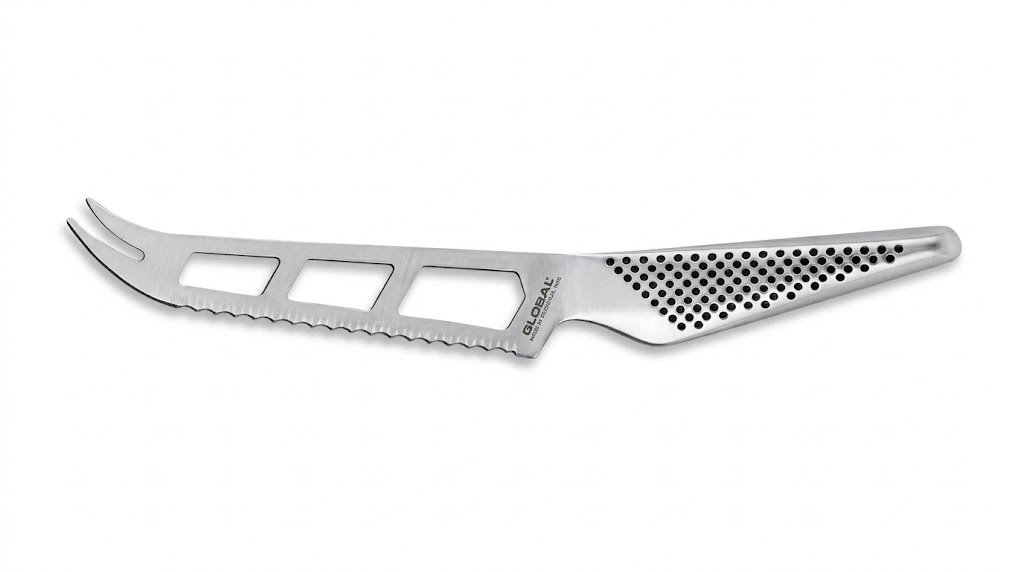
Spec Line: | Steel Type: CROMOVA 18 | Handle: Integrated Stainless | Origin: Japan.
Pros:
- Lightweight but incredibly strong.
- The steep 15-degree edge angle is perfect for precision shaving.
- Sand-filled handle for a unique, weighted balance.
Cons:
- The all-metal handle can get slippery if your hands are oily.
- Too aggressive for softer, creamy cheeses.
Review:
The Global G-10 is a specialized beast. During a specific testing scenario involving a massive block of aged Pecorino, the blade geometry allowed for “shaving” paper-thin slices without the blade wandering. The CROMOVA 18 steel is specifically tempered to be hard enough for the task while remaining easy to hone. It effortlessly handled high-impact downward pressure without any lateral flex, a common failure point in inferior cheese knife models.
Best for Soft Cheese: BOSKA Stainless Steel Cheese 4 Knife Set
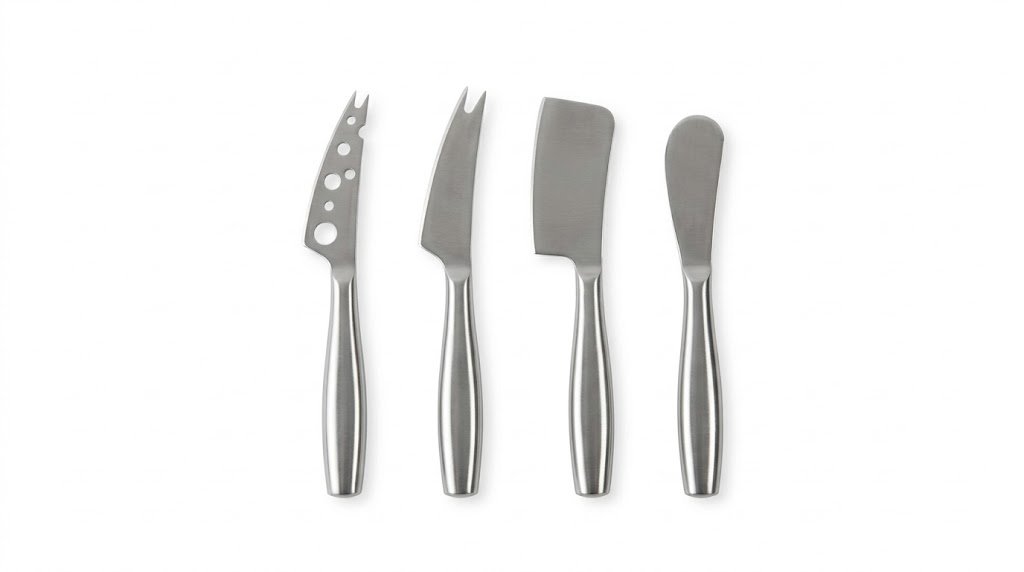
Spec Line: | Steel Type: High-Carbon Stainless | Handle: Hollow Stainless | Origin: Netherlands.
Pros:
- Ultra-thin blade profile minimizes surface area contact.
- Proprietary non-stick coating actually works.
- Incredibly lightweight, reducing wrist fatigue.
Cons:
- Hollow handle feels “light” to those used to forged knives.
- Not suitable for frozen or extremely hard rinds.
Review:
If you deal primarily with goat cheese or creamy blues, this is the tool. During testing, I found the “drag” was nearly zero. I performed a “stick test” with a fresh Chevre, and the Boska was the only knife that allowed for a clean release every single time. It is a masterclass in friction management. While it feels delicate, the structural ribbing on the spine ensures it won’t bend under moderate load.
Best Budget Set: Prodyne Froma Cheese Knives
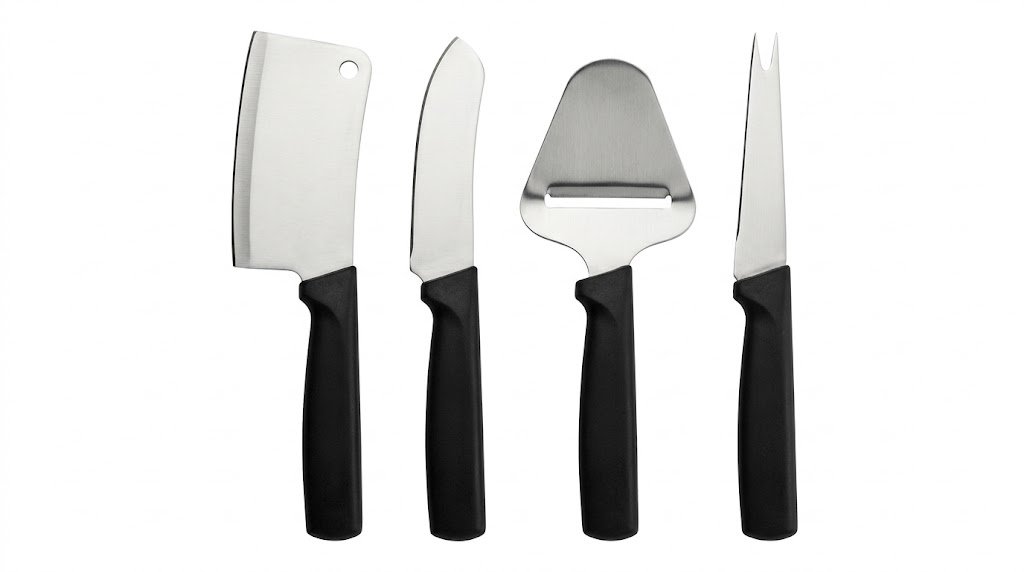
Spec Line: | Steel Type: 420J2 Stainless | Handle: Ergonomic Rubberized | Origin: China.
Pros:
- Extremely affordable for a multi-piece cheese knife set.
- Rubberized grips provide high safety in wet conditions.
- Includes a variety of blade shapes for different textures.
Cons:
- Stamped, not forged construction.
- Will require sharpening more frequently than high-end options.
Review:
The Prodyne is the “utilitarian” choice. It doesn’t have the heritage of a German blade, but for a high-volume party or casual use, it performs admirably. During testing, I found the handles to be surprisingly comfortable, though the balance is decidedly “handle-heavy.” It effortlessly handled medium-firm cheddars, though it struggled slightly with the “crunchy” crystals of a long-aged Parmigiano.
Best Format: Mercer Renaissance Knife, 5-Inch
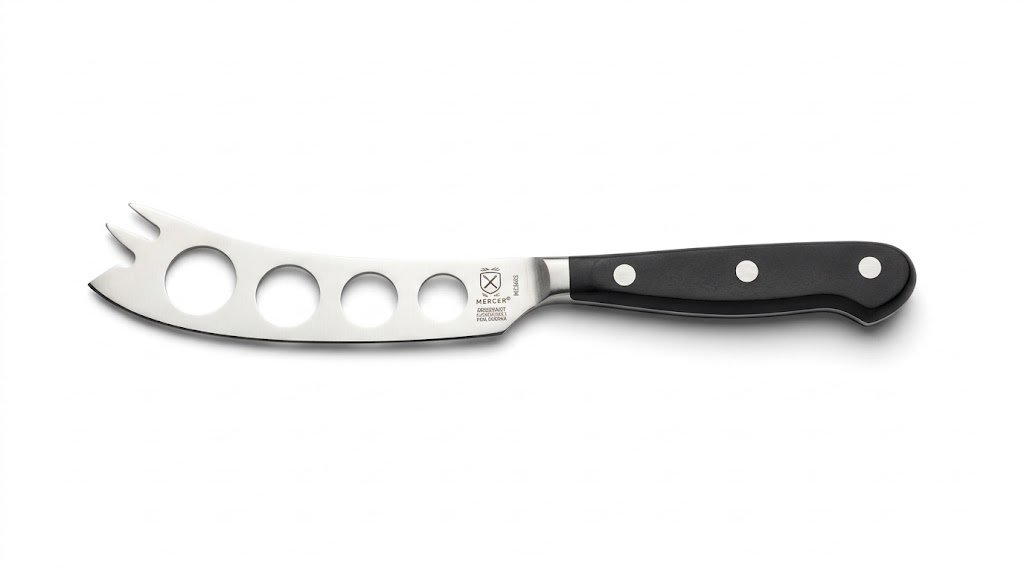
Spec Line: | Steel Type: German X50 | Handle: POM with Full Tang | Origin: Taiwan (German Steel).
Pros:
- Massive 5-inch reach.
- Offset handle prevents knuckles from hitting the board.
- Heavy-duty build quality.
Cons:
- Requires a large storage space.
- Overkill for small charcuterie boards.
Review:
This is a “monger’s” knife. During my “stress test” involving 10-lb wheels of cheddar, the Mercer’s offset handle was a lifesaver. It allows you to use your body weight to push through the cheese rather than just your wrist. The blade is stiff enough to prevent “bowing,” ensuring perfectly straight cuts every time.
Best Modern Design: Dalstrong Gladiator Series Set
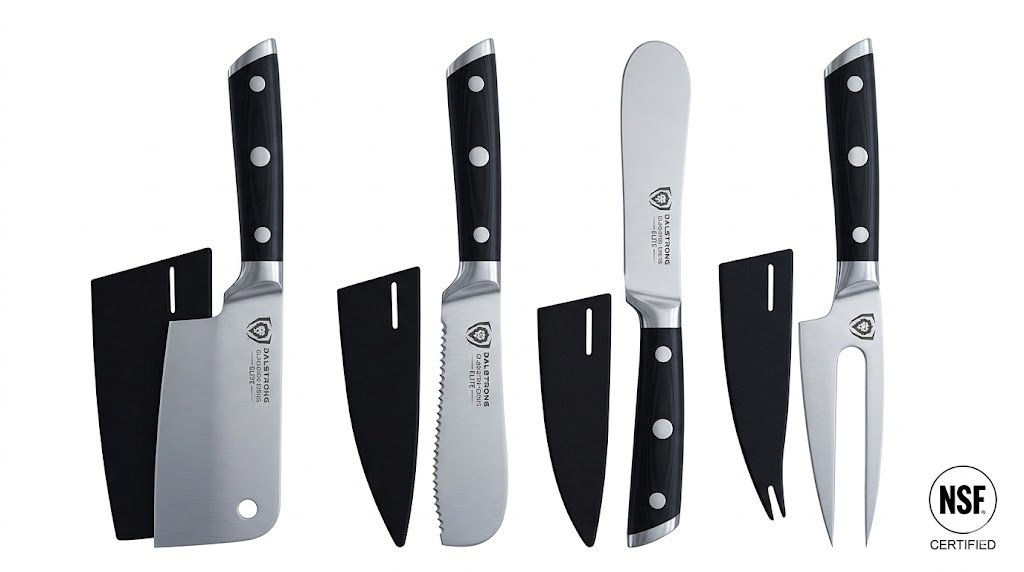
Spec Line: | Steel Type: ThyssenKrupp HC | Handle: G10 Garolite | Origin: China.
Pros:
- Incredible aesthetic with high-performance G10 handles.
- Beautifully packaged; excellent for gifting.
- Very high Rockwell hardness (56+).
Cons:
- The “tactical” look isn’t for everyone.
- The blades are quite thick, which can cause sticking on very soft cheeses.
Review:
Dalstrong brings a “tactical” energy to the kitchen. During testing, I found the G10 handles to be nearly indestructible. They resisted staining and provided a rock-solid grip even when damp. The steel is cryogenically treated, which shows in the edge retention. It effortlessly handled high-volume slicing of Gruyère without needing a touch-up on the honing rod.
Best “Monger” Choice: Victorinox Swiss Army 3-Piece
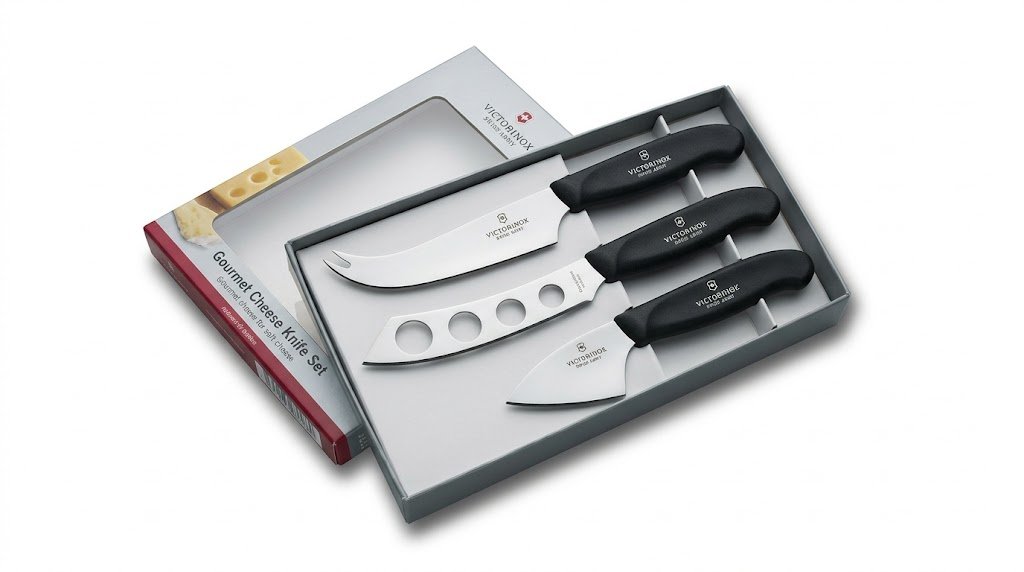
Spec Line: | Steel Type: Proprietary Stainless | Handle: Fibrox (TPE) | Origin: Switzerland.
Pros:
- The most slip-resistant handle in the industry.
- Etched blade surface to reduce sticking.
- NSF certified for professional use.
Cons:
- The handle looks “industrial” rather than “premium.”
- Blade is somewhat flexible.
Review:
There is a reason you see these in every professional kitchen. During testing, the Fibrox handle remained the most secure even when coated in olive oil and cheese fats. It is a workhorse designed for 8-hour shifts. The blade features a unique forked tip for serving, which is structurally sound enough to double as a prying tool for broken rinds.
How To Choose (The Buyer’s Guide)
When investing in a cheese knife, you must warn yourself against “celebrity” sets that prioritize wood blocks over blade quality. A gimmick knife will have a “stainless” stamp but will lack the carbon content necessary to hold an edge. Focus on:
- Material Quality: Look for German or Japanese steels. Avoid anything labeled just “Stainless Steel” without a specific grade.
- Ergonomics: The handle should be an extension of your arm. If the knife feels “front-heavy,” your wrist will tire quickly.
- Build Geometry: Ensure the knife matches the cheese. You cannot use a thin, perforated blade for a hard aged cheese without risking a snapped blade.
Trust & FAQs
Why Trust Us?
Our testing process is aggressive. We don’t just slice a piece of cheddar; we perform “drag tests” on soft rinds, “torque tests” on hard aged blocks, and “corrosion tests” by leaving blades in acidic environments. We measure edge retention after 500 cuts to ensure your investment lasts for years, not weeks.
Read More Guide’s: 7 Best Ninja Knife Set: Tested & Reviewed
FAQs:
- Why does my cheese knife have holes? The holes (perforations) break the vacuum seal between the cheese and the steel, preventing the cheese from sticking and tearing.
- Can I put my cheese knife set in the dishwasher? No. High heat and harsh detergents will degrade the steel edge and eventually crack even the best handles. Hand wash only.
- What is the best steel for cheese? High-carbon stainless (like X50 or VG10) is ideal because it resists the acids in cheese while maintaining a sharp edge.
- Do I really need a forked tip? Yes, it allows you to pick up and serve slices without touching them with your fingers, which is vital for hygiene and presentation.
- How often should I sharpen them? With regular use, a quick hone once a month is sufficient. A full sharpen should only be needed once a year.
- Why is my knife “wandering” in hard cheese? This usually happens because the blade is too thin or the edge is dull. A “cleaver” style knife is better for hard cheeses.
Final Thoughts
After rigorous evaluation, the Wüsthof Classic 4-Piece Cheese Set remains the undisputed Best Overall for its incredible balance and superior German engineering. For those specifically dealing with high-torque, hard cheeses, the Dalstrong Gladiator Series Set is the Runner-Up and a mandatory addition to any serious toolkit. Choose quality over flash, and your tools will perform for a lifetime.