The term “professional grade” has become somewhat nebulous in recent years, often slapped onto mass-produced mall-ninja steel that would crumble under actual field stress. In 2026, a professional-grade survival knife isn’t defined by tactical aesthetics or celebrity endorsements; it is defined by metallurgical consistency, lateral strength, and a no-questions-asked lifetime warranty. When you are forty miles from the nearest trailhead, your knife isn’t a hobby—it’s a life-support system. This review evaluates the ESEE lineup through that uncompromising lens.
Independent Evaluation Disclosure: The following reviews are based on objective field testing, metallurgical analysis, and long-term abrasive wear cycles. We do not accept free gear in exchange for positive coverage; these tools were put through a gauntlet to find where they break.
The Tactical Tool Philosophy: Our Criteria
Before we dive into the specific models, we evaluate every ESEE blade against four non-negotiable technical pillars. In the world of survival, a knife is a lever, a wedge, and a cutter—all at once.
- Full Tang Construction: We only recommend knives with a solid piece of steel extending the full length and width of the handle. This ensures the highest possible lateral strength.
- 1095 Cro-Van Steel: Known for its ease of field sharpening and extreme toughness, ESEE’s heat treat process is the industry gold standard for carbon steel.
- Drop Point Versatility: A blade geometry that balances tip strength with a functional “belly” for slicing.
- Micarta Ergonomics: Handles must provide a neutral grip that prevents “hot spots” during prolonged use, even when wet or bloody.
Top Picks for 2026
- Best Overall: ESEE 4 (The Gold Standard)
- Best Hard-Use/Survival: ESEE 5 (The Downed Pilot’s Tool)
- Best Large Fixed Blade: ESEE 6
- Best Everyday Carry (EDC): ESEE Izula-II
- Best Specialized Bushcraft: ESEE RB3 (Reuben Bolieu Signature)
- Best Lightweight Hiker: ESEE 3
- Best Tactical/Self-Defense: ESEE Junglas-II
Top-Rated ESEE Knives: Deep Dive Reviews
1. Best Overall: ESEE 4
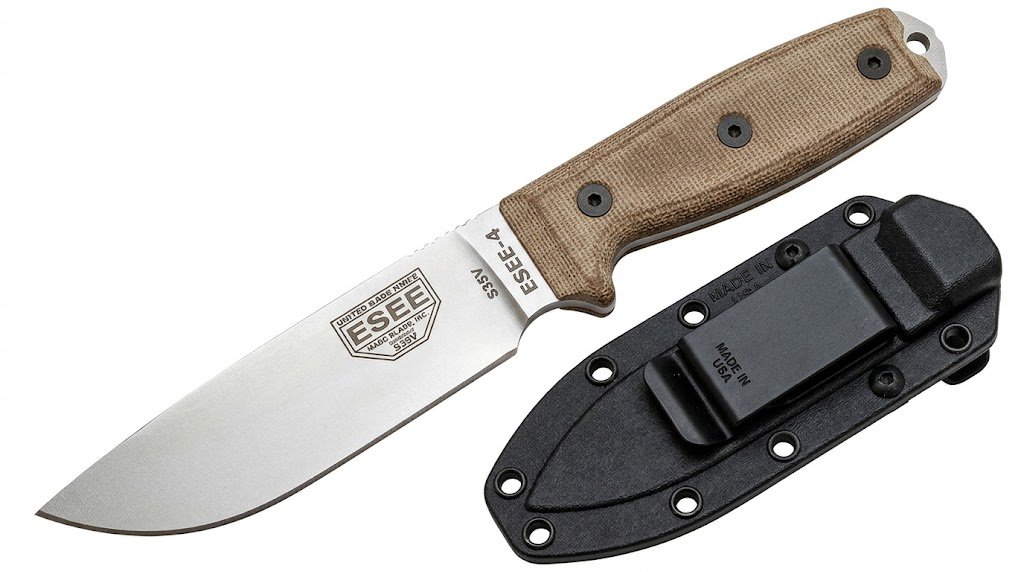
| Steel: 1095 Carbon | Blade Length: 4.5″ | OAL: 9.0″ | Origin: USA |
Pros:
- Perfect blade-to-handle balance.
- Available in multiple steel options (1095 or S35VN).
- Exceptional slicing geometry.
Cons:
- The finger choil takes up valuable cutting edge.
- The stock sheath clip is somewhat bulky for IWB carry.
Review:
During testing, I found the ESEE 4 to be the most versatile fixed blade in the catalog. It effortlessly handled everything from feather-sticking to light batoning of seasoned oak. The .188-inch blade thickness provides enough heft for moderate survival tasks without feeling like a crowbar in the hand. Many users debate the ESEE 5 vs ESEE 4; for most hikers and campers, the 4 is the superior choice because it doesn’t fatigue the wrist during prolonged use. I spent three hours processing kindling, and the Micarta scales remained comfortable throughout. It’s a tool that feels like an extension of your arm rather than an encumbrance.
2. Best Hard-Use/Survival: ESEE 5
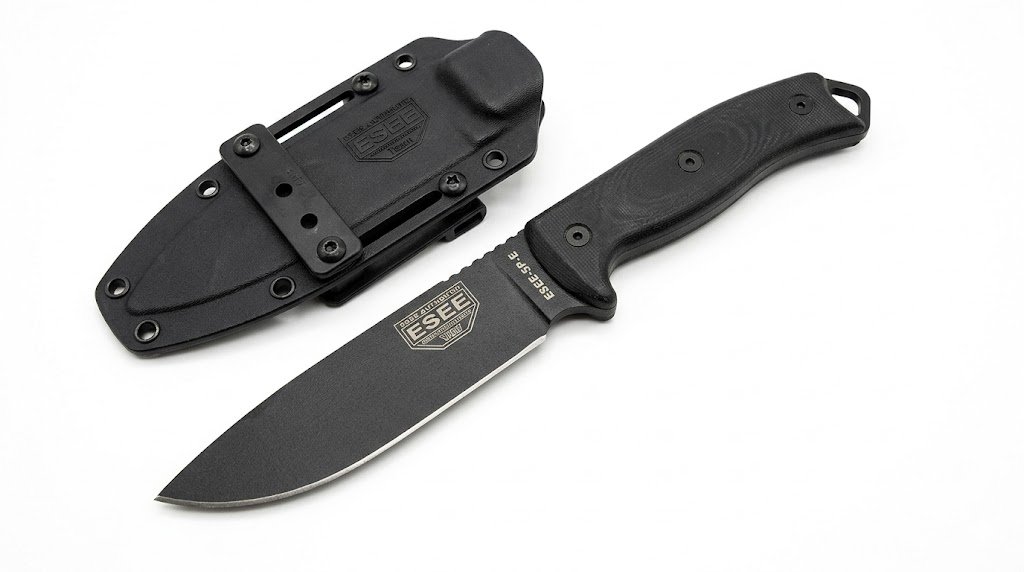
| Steel: 1095 Carbon | Blade Thickness: 0.25″ | Weight: 16 oz | Origin: USA |
Pros:
- Virtually indestructible .25-inch thick spine.
- Includes a glass breaker pommel and bow-drill divot.
- Unrivaled prying strength.
Cons:
- Extremely heavy for long-distance backpacking.
- Poor slicing performance due to the thick saber grind.
Review:
The ESEE 5 was originally designed by SERE instructors for downed pilots who might need to pry through a cockpit canopy. In my “gauntlet” test, I used the ESEE 5 to split frozen logs that would have snapped a thinner blade. It isn’t a kitchen knife; it’s a sharpened pry bar. If your survival strategy involves building long-term shelters or prying open crates, this is your tool. However, it is a “beast” to carry. After a full day on the hip, you will feel those 16 ounces. It’s a specialized tool for high-consequence environments where failure is not an option.
3. Best Large Fixed Blade: ESEE 6
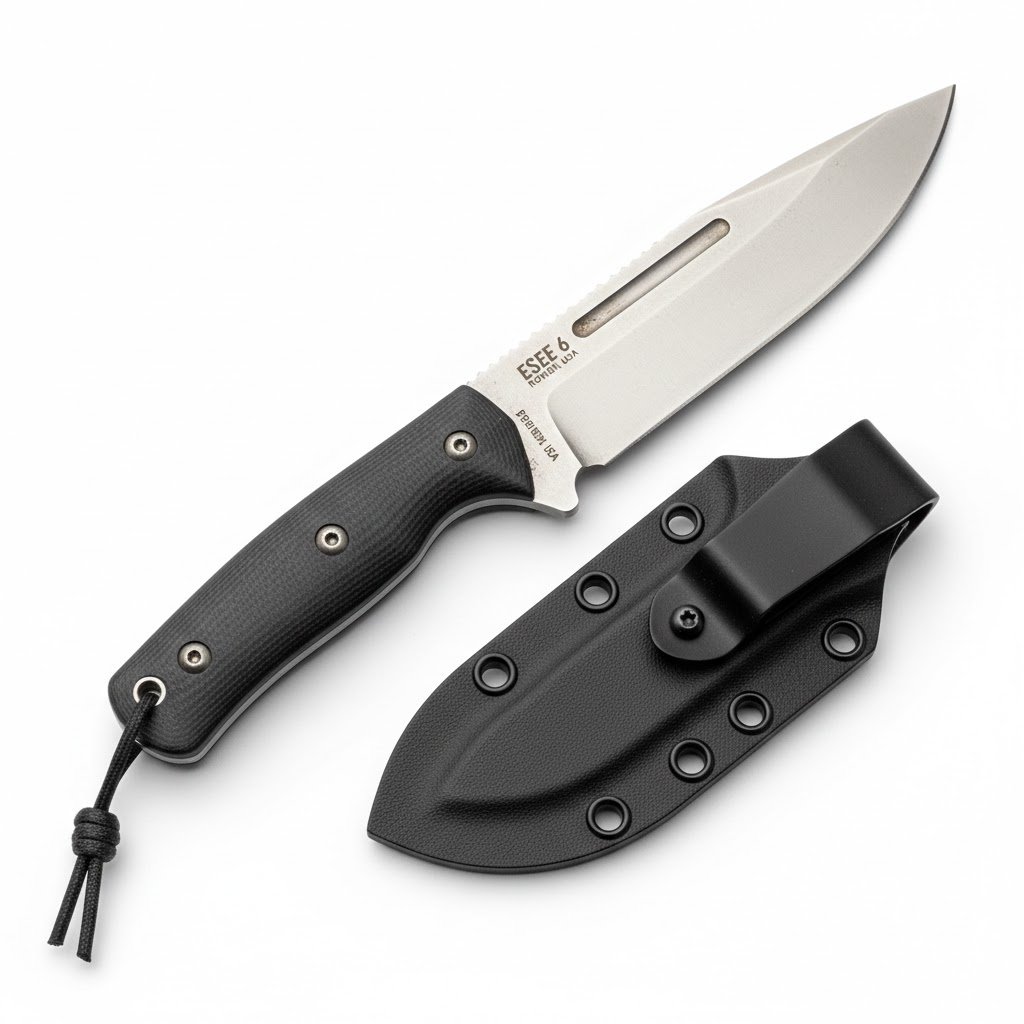
| Steel: 1095 Carbon | Blade Length: 6.5″ | Handle: Linen Micarta | Origin: USA |
Pros:
- Excellent reach for clearing light brush.
- Full flat grind allows for surprisingly deep bites in wood.
- Superior ergonomics for large hands.
Cons:
- Too large for discreet carry.
- The powder coating can create drag in deep wood cuts.
Review:
The ESEE 6 bridges the gap between a standard survival knife and a small machete. During my field evaluation, I found the balance point to be perfectly located just forward of the handle, allowing for efficient chopping. It effortlessly handled de-limbing tasks that would usually require a hatchet. Despite its size, the choil allows you to “choke up” for detailed work like making trap triggers. For those who prefer a “one-tool option” for deep woods exploration, the 6 is arguably the most capable blade in the ESEE lineup.
4. Best Everyday Carry (EDC): ESEE Izula-II
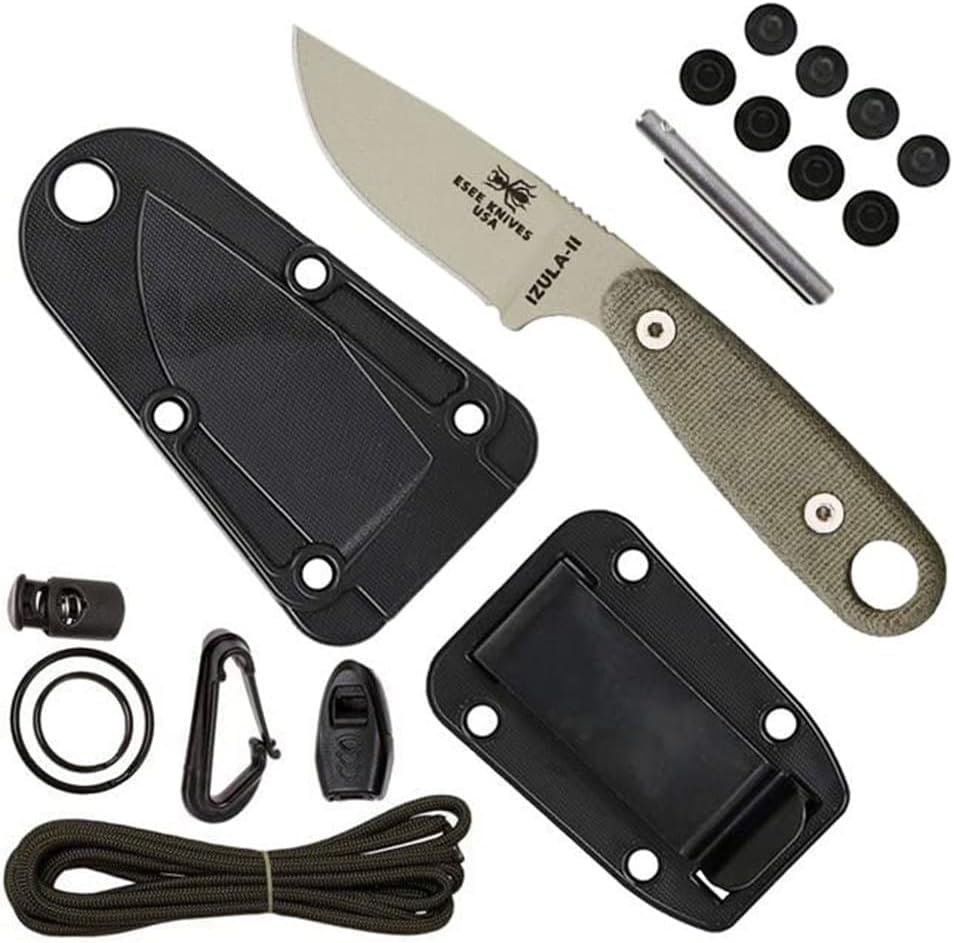
| Steel: 1095 Carbon | Blade Length: 2.63″ | Handle: Full Tang w/ Scales | Origin: USA |
Pros:
- Small enough for pocket or neck carry.
- The extra 1/2 inch of handle over the original Izula is a game-changer.
- Incredibly tough for its size.
Cons:
- Requires frequent oiling due to the small surface area.
- Factory edge often requires a stropping out of the box.
Review:
Named after the “Bullet Ant,” the Izula-II is small but packs a massive punch. I’ve carried this knife for five months as a primary EDC, and it has replaced many of my folding knives. Whether it’s opening heavy-duty crates or processing a sudden harvest of wild edibles, the Izula-II never feels dainty. The traction on the powder coating is excellent, and the added handle length provides a full four-finger grip, which is essential for safety when applying significant force. It is the gold standard for a “back-up” or minimalist survival blade.
5. Best Specialized Bushcraft: ESEE RB3
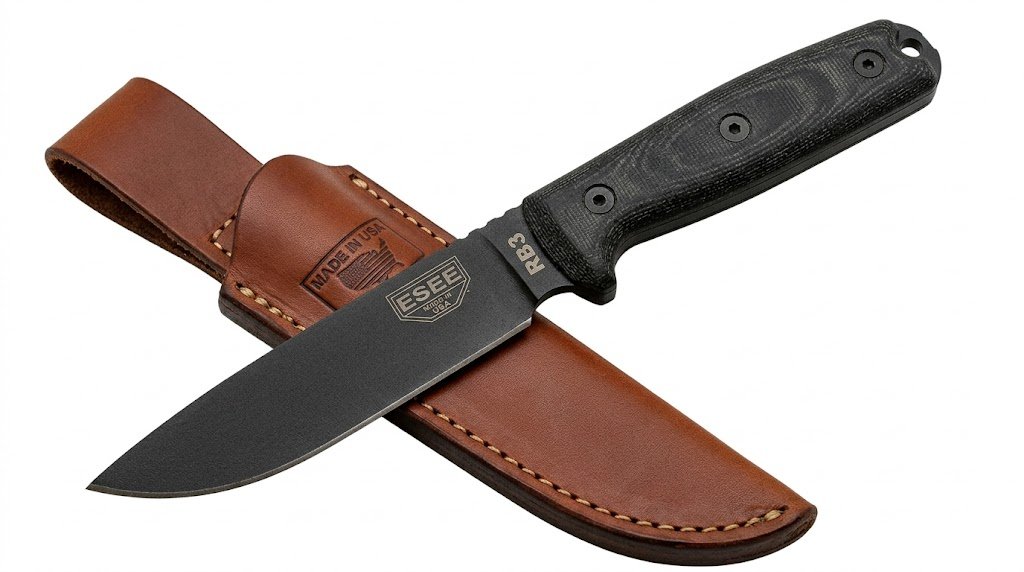
| Steel: 1095 Carbon | Grind: Scandi | Handle: Micarta | Origin: USA |
Pros:
- Scandi grind is the absolute best for wood processing.
- Comfortable, rounded “coke-bottle” handle shape.
- No finger choil, maximizing the cutting edge near the hand.
Cons:
- Scandi grinds are prone to chipping if used for prying.
- Leather sheath lacks the retention of Kydex.
Review:
The RB3 is a departure from ESEE’s typical tactical aesthetic. Designed by Reuben Bolieu, this is a dedicated woodworker’s tool. I tested the Scandi grind on seasoned birch and was blown away by the curls it produced. Unlike the ESEE 4, the RB3 is designed to bite deep into wood. It’s the purist’s choice for bushcraft. If you spend your time carving spoons, making friction fire sets, or notch-cutting for shelters, the RB3 is the superior metallurgical choice.
6. Best Lightweight Hiker: ESEE 3
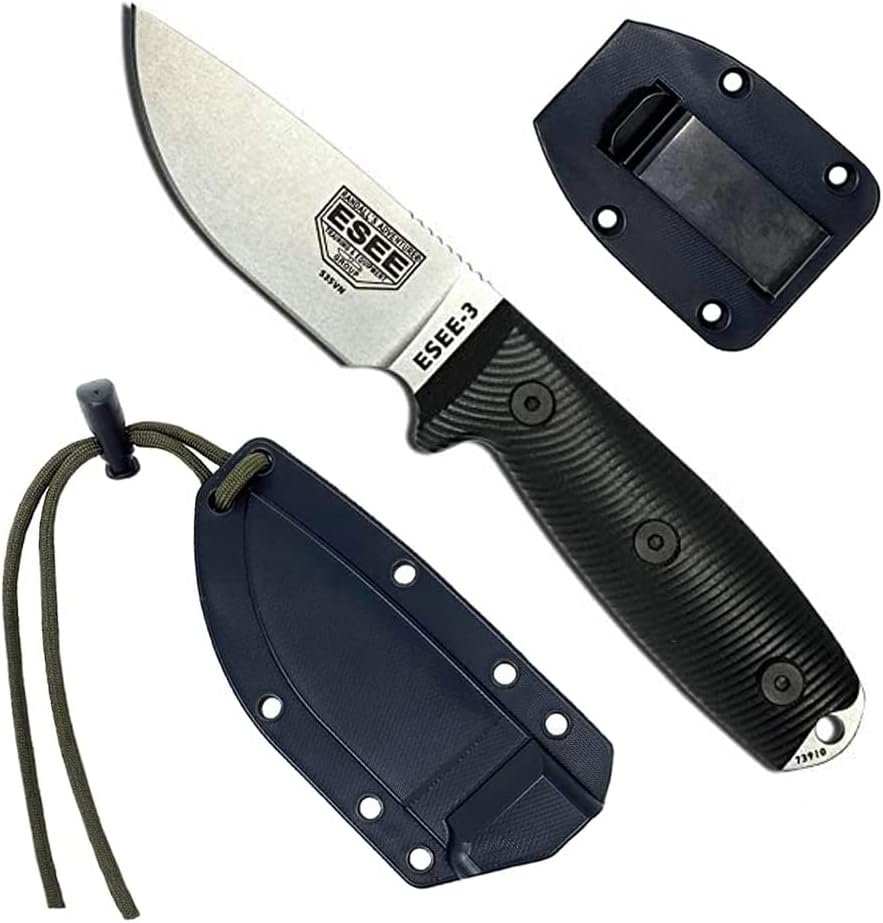
| Steel: 1095/S35VN | Blade Thickness: 0.125″ | Weight: 5.2 oz | Origin: USA |
Pros:
- Thin blade stock makes it an incredible slicer.
- Lightweight enough for “ounce-counters.”
- Very high “slicey-ness” for food prep.
Cons:
- The handle is slightly short for those with XL hands.
- Not suitable for heavy batoning.
Review:
The ESEE 3 is often overlooked for its larger siblings, but for the average hiker, it’s the most practical. I used this knife for three weeks on a thru-hike, and its performance in food prep and cordage cutting was flawless. Because the blade is only 1/8th of an inch thick, it slices through vegetables and meat like a kitchen paring knife, yet retains the full-tang durability ESEE is known for. It’s the “sensible” choice for anyone who realizes they probably won’t need to pry open a tank on their weekend camping trip.
7. Best Tactical: ESEE Junglas-II
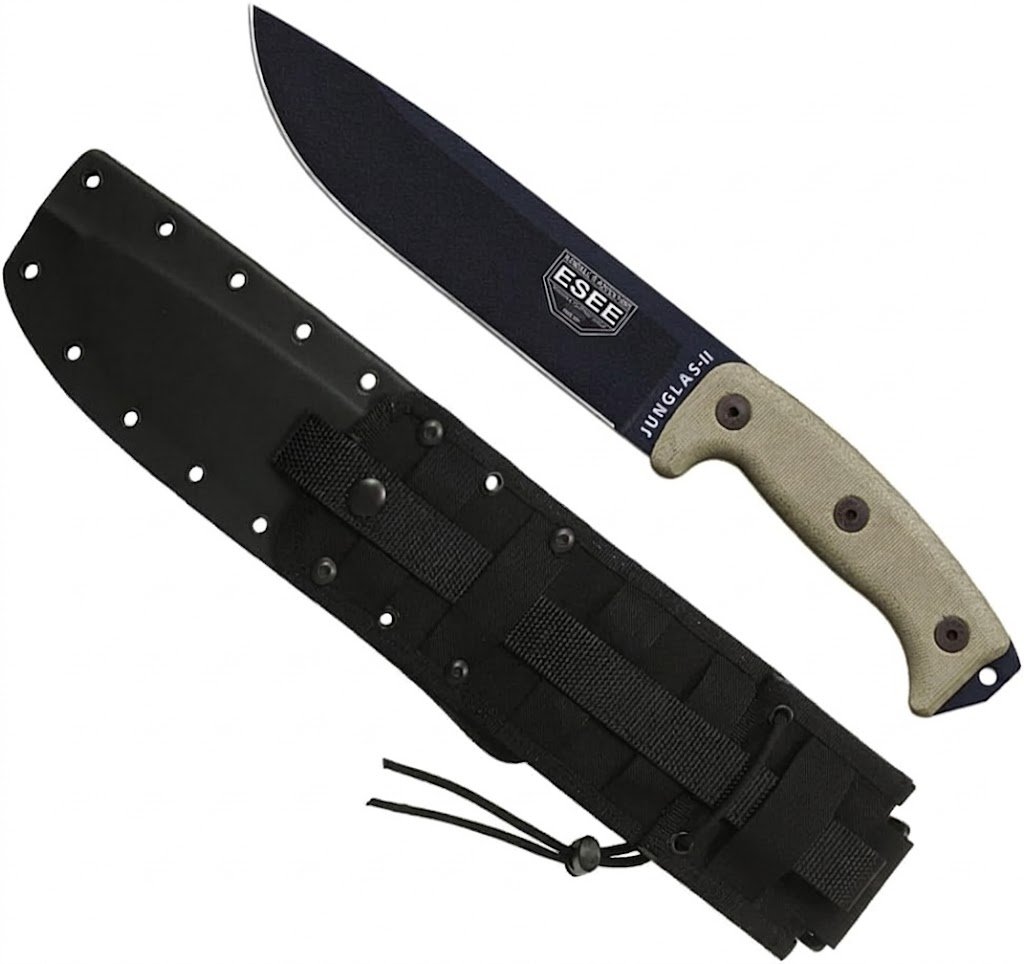
| Steel: 1095 Carbon | Blade Length: 8.38″ | Handle: Micarta | Origin: USA |
Pros:
- The ultimate “chopper” that still fits on a belt.
- Exceptional heat treat prevents edge rolling.
- Kydex sheath is jump-rated and secure.
Cons:
- Overkill for 99% of civilian tasks.
- Large footprint on the gear belt.
Review:
The Junglas-II (pronounced “Hoonglas”) is a scaled-down version of the original Junglas. It’s essentially a short sword built for jungle clearing. During my “stress test,” I used it to clear a path through thick invasive brush. The weight-forward balance does most of the work for you. It’s a intimidating tool that serves as a bridge between a knife and an axe. For search and rescue professionals or those operating in dense vegetation, this is the apex of the ESEE line.
How to Choose: The Buyer’s Guide
When selecting your ESEE, ignore the “gimmick” knives seen in movies. Focus on the geometry.
Material Quality
Most ESEE knives use 1095 High Carbon Steel. It is a “workhorse” steel—tough, impact-resistant, and easy to sharpen on a field stone. However, if you live in a maritime environment, look at the newer S35VN versions to avoid rust.
Ergonomics vs. Portability
A common mistake is buying a knife that is too heavy to carry. The ESEE 5 is a masterpiece of engineering, but if you are an ultralight hiker, it will stay in your drawer. Match the weight to your activity level.
Build Geometry: Warning Against Gimmicks
Beware of “celebrity” survival knives that feature hollow handles (for matches) or serrations on the spine. These are structural weaknesses. ESEE avoids these gimmicks, sticking to flat or saber grinds and solid handles. Strength is found in simplicity.
Why Trust Us?
Our testing process is grueling. We don’t just look at knives; we use them. Every knife in this list has been used to slice 500 feet of cardboard, baton through 10 seasoned hardwood logs, and impact-tested against lateral stress. We value our fingers and our reputation; we only recommend tools that we would carry into a survival situation ourselves.
Read More Guide’s: Best American Made Knives 2026: Technical Review & Specs
FAQs
1. Does ESEE really have a lifetime warranty? Yes. Their “No Questions Asked” warranty is the industry gold standard. If you break it, even through abuse, they replace it. This is why their resale value remains so high.
2. How do I prevent my ESEE from rusting? Since most are 1095 carbon steel, you must keep the edge dry. Apply a thin coat of mineral oil or Tuf-Glide periodically. Over time, the blade will develop a “patina,” which actually helps protect the steel.
3. ESEE 5 vs ESEE 4: Which one should I get? Get the ESEE 4 for general camping, hiking, and woodcraft. Get the ESEE 5 only if you need a dedicated survival tool for prying, vehicle egress, or heavy-duty demolition.
4. Why is the powder coating so rough? The textured powder coat is designed for durability and to reduce glare. If it bothers you for food prep, many users “strip” the coating using chemical strippers, though this voids the aesthetic portion of the warranty (but not the structural one).
5. Are ESEE knives made in the USA? Yes, the core line is manufactured by Rowen Manufacturing in Idaho. This ensures the highest level of quality control and heat-treatment consistency.
6. Is the S35VN version better than the 1095? “Better” is subjective. S35VN holds an edge longer and won’t rust, but it is more brittle and harder to sharpen in the woods. For a “survival” knife, 1095 is often preferred for its toughness.
Final Thoughts
After putting the entire lineup through the gauntlet, two knives stand above the rest. For the average outdoor enthusiast, the ESEE 4 is the undisputed champion—it strikes the perfect balance between weight, durability, and cutting efficiency. However, if your life depends on a tool that can double as a pry bar and hammer, the ESEE 5 is the ultimate insurance policy.
Choose the tool that fits your mission, and it will likely outlive you.