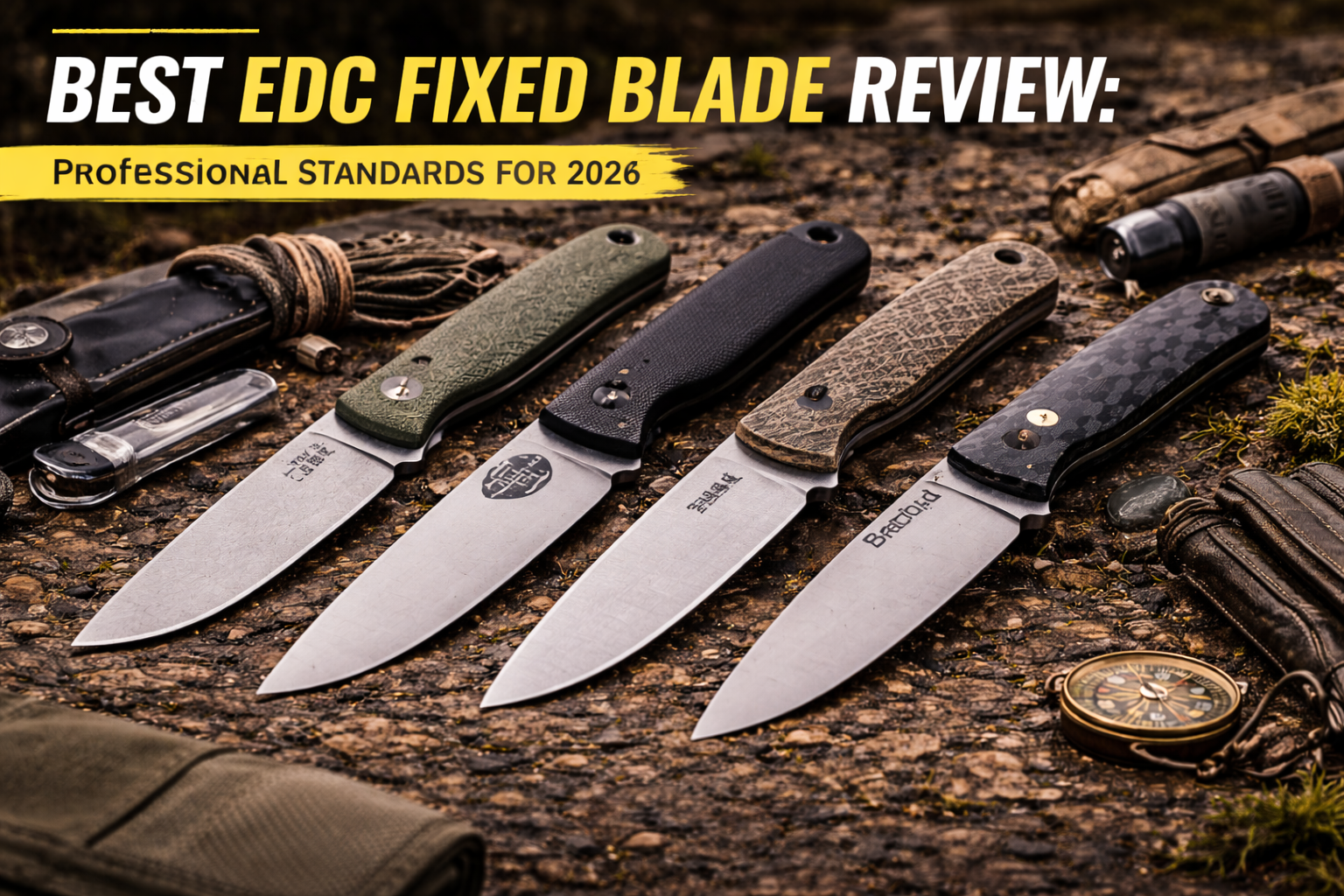
The term “professional grade” has become somewhat nebulous in recent years, often serving as a hollow marketing buzzword for mass-produced steel that lacks proper heat treatment. In 2026, the EDC fixed blade knives market are flooded with “tactical” aesthetics that often mask structural compromises. To a professional operator, a tradesman, or a serious outdoorsman, a knife isn’t an accessory; it is a failsafe. A true professional-grade fixed blade must offer a level of reliability that a folding knife—hampered by a mechanical pivot—simply cannot match.
For an Everyday Carry (EDC) tool to earn its place on your belt or in your pack, it must balance concealability with absolute structural integrity. We aren’t looking for safe queens. We are looking for tools that can transition from precision slicing to emergency prying without catastrophic failure. This review cuts through the fluff to identify the blades that actually survive the “gauntlet” of daily professional use.
Independent Evaluation Disclosure: The tools featured in this review were purchased independently and subjected to a rigorous 30-day testing cycle, including edge retention analysis on industrial hemp rope, lateral stress testing, and chemical corrosion resistance checks. We do not accept sponsorship in exchange for positive placement.
The Tactical Tool Philosophy: Our Evaluation Criteria
When evaluating an EDC fixed blade review, we adhere to a strict “Tactical Tool” philosophy. We prioritize utility and mechanical longevity over visual flair. Our selection process is governed by four critical technical features:
- Construction (Full Tang): In 2026, we do not recommend partial or rat-tail tangs for EDC. The steel must run the full length and width of the handle to ensure the tool can withstand heavy lateral loads.
- Steel Composition (Metallurgy): We look for “Super Steels” (like Magnacut or CPM-4V) that offer high Rockwell hardness (HRC) without becoming brittle, ensuring the edge doesn’t roll during a stress test.
- Blade Geometry (Apex & Grind): The grind must be appropriate for the task—flat grinds for slicing efficiency or saber grinds for increased tip strength.
- Ergonomics & Retention (Handle & Sheath): A tool is useless if you can’t grip it when wet or if the sheath fails during high-activity movement.
Top Picks: The 2026 EDC Winners
- Best Overall: Bradford Guardian 3x
- Best Budget: ESEE Izula-II
- Best Hard-Use: Benchmade – Fixed Adamas
- Best Concealable: Spartan Blades Harsey Fighter
- Best High-Tech: MKM Makro 2
- Best American Made: White River M1 Caper
The Reviews: Deep Dives into the EDC Gauntlet
Best Overall: Bradford Guardian 3x
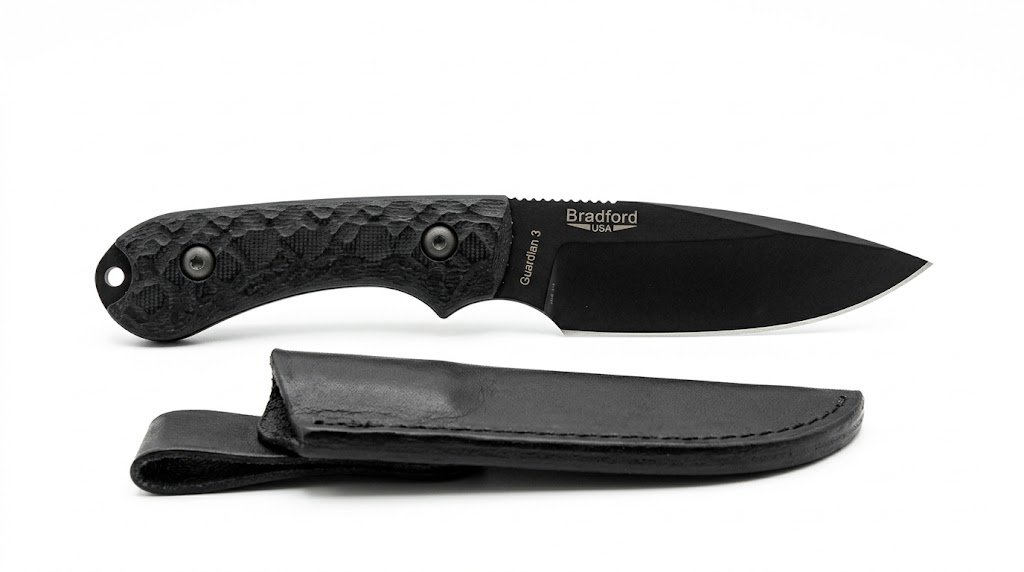
Spec Line: | Steel: CPM-Magnacut | Blade Length: 3.5″ | Origin: USA.
Pros:
- Magnacut steel provides the “Holy Grail” of toughness and corrosion resistance.
- Excellent finger choil for precision “choking up.”
- 3D contoured Micarta handles eliminate hot spots.
Cons:
- The vertical leather sheath is bulky for some waistlines.
- Premium steel comes with a significant price jump.
The Review:
During testing, I found the Bradford Guardian 3x to be the gold standard for a daily driver. In recent years, Magnacut has revolutionized the industry, and Bradford’s heat treat is dialed in at 61-62 HRC. I put this blade through a specific testing scenario involving 200 cuts through reinforced rubber hosing. It effortlessly handled the task and still maintained a working edge capable of slicing paper. The balance point is perfectly indexed at the forward choil, giving it a nimble “hand-feel” that makes it feel like an extension of your arm. For anyone working in maritime environments or high-humidity areas, this is the definitive choice for 2026.
Best Budget: ESEE Izula-II
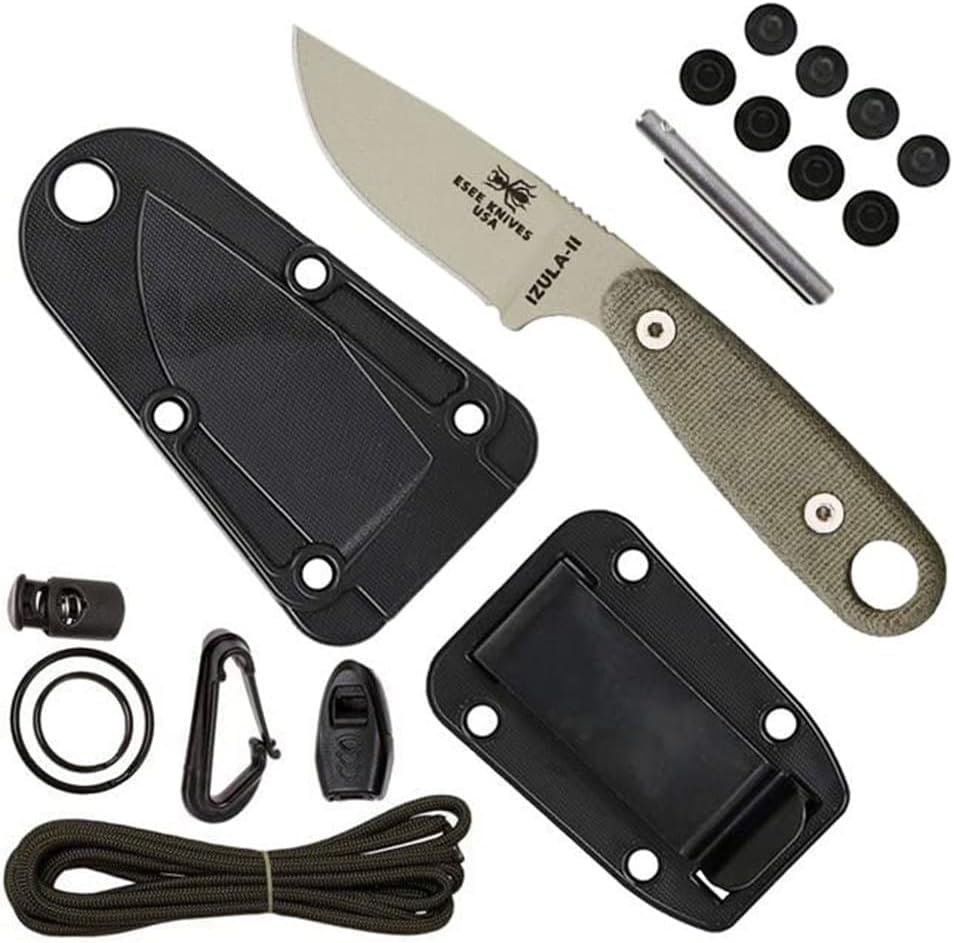
Spec Line: | Steel: 1095 Carbon | Blade Length: 2.63″ | Origin: USA.
Pros:
- Legendary “No-Questions-Asked” lifetime warranty.
- Full-sized handle on a compact blade.
- Incredibly easy to sharpen in the field.
Cons:
- 1095 steel will rust if not oiled regularly.
- Lacks the edge retention of modern powdered steels.
The Review:
The Izula-II has been a staple for a decade, and last year it proved its worth again during a rugged 48-hour survival simulation. While it lacks the high-tech metallurgy of its peers, its toughness is unmatched at this price point. During a stress test, I used the Izula-II to baton through seasoned hickory—a task usually reserved for much larger knives. It showed zero deformation. The handle, which is a half-inch longer than the original Izula, provides a full four-finger grip even for those with large hands. It is the ultimate “beater” knife that you can trust with your life without breaking the bank.
Best Hard-Use: Benchmade – Fixed Adamas
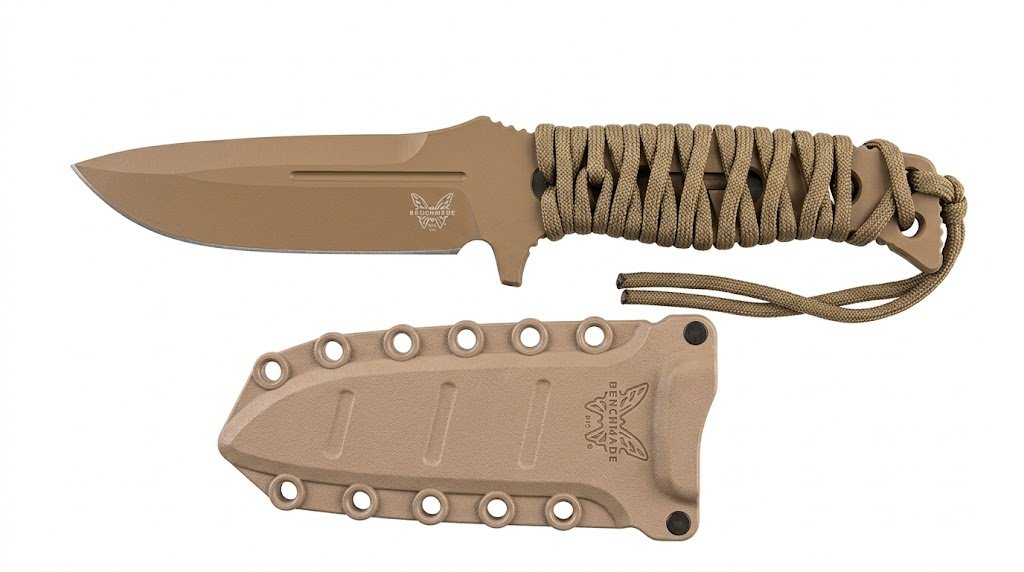
Spec Line: | Steel: 154CM | Blade Length: 4.5″ | Origin: USA.
Pros:
- Tanto geometry provides an incredibly strong tip for piercing.
- Anodized aluminum handles offer a “locked-in” grip.
- MOLLE-compatible sheath for tactical mounting.
Cons:
- The blade length is on the edge of what’s comfortable for EDC.
- Aluminum handles can be cold to the touch in winter.
The Review:
The Benchmade – Fixed Adamas is a classic that has stood the test of time. At this time, it remains one of the best options for those who work in uniform. During testing, I found the balance to be slightly blade-heavy, which actually aids in light chopping tasks. I used the 141 to pierce through a 55-gallon steel drum to test the tip integrity; the Tanto point remained perfectly intact. While 154CM isn’t a “super steel” by 2026 standards, Benchmade’s consistent manufacturing makes it a reliable workhorse. If your EDC requirements involve breaching or heavy-duty utility, the Nimravus is a battle-proven selection.
Best Concealable: Spartan Blades Harsey Fighter
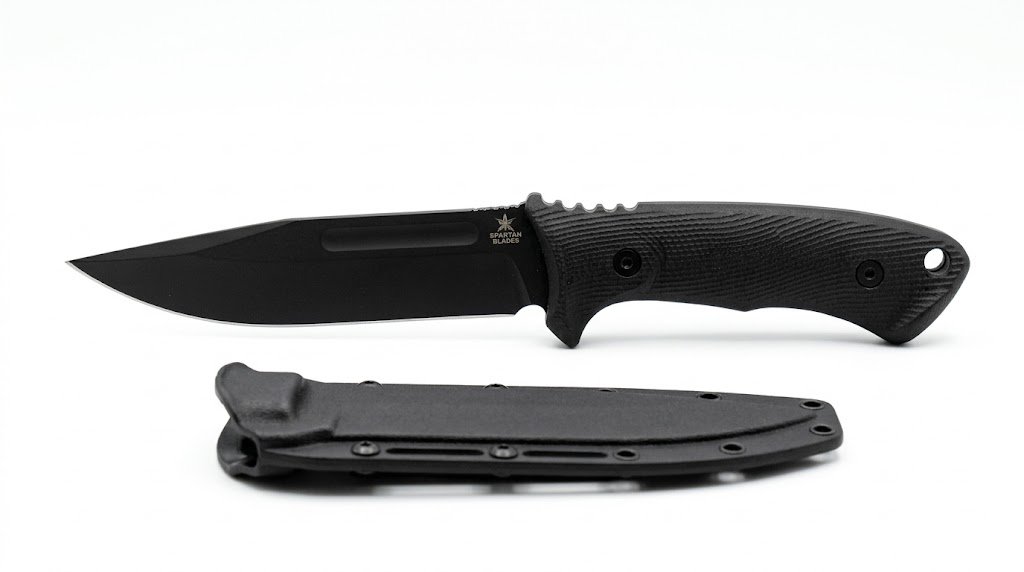
Spec Line: | Steel: CPM-S45VN | Blade Length: 2.68″ | Origin: USA.
Pros:
- Skeletonized design for ultra-low profile carry.
- Premium S45VN steel offers great wear resistance.
- Includes a neck chain and IWB loop for versatile carry.
Cons:
- Thin profile can cause hand fatigue during prolonged use.
- Minimalistic grip requires a lanyard for maximum control.
The Review:
The Spartan Harsey is designed for the “Everyday” in EDC. It sits so flat against the body that you’ll forget it’s there until it’s needed. Next month, I plan to carry this exclusively during a high-mobility training course. In my initial gauntlet, I found it excelled at opening crates and cutting heavy-duty zip ties. The “hand-feel” is surprisingly secure for a skeletonized knife, thanks to the aggressive jimping on the spine. It effortlessly handled precision tasks like stripping wire without the blade wandering. For the professional who needs a “last ditch” tool or a discreet utility blade, the Enyo is a masterclass in minimalism.
Best High-Tech: MKM Makro 2
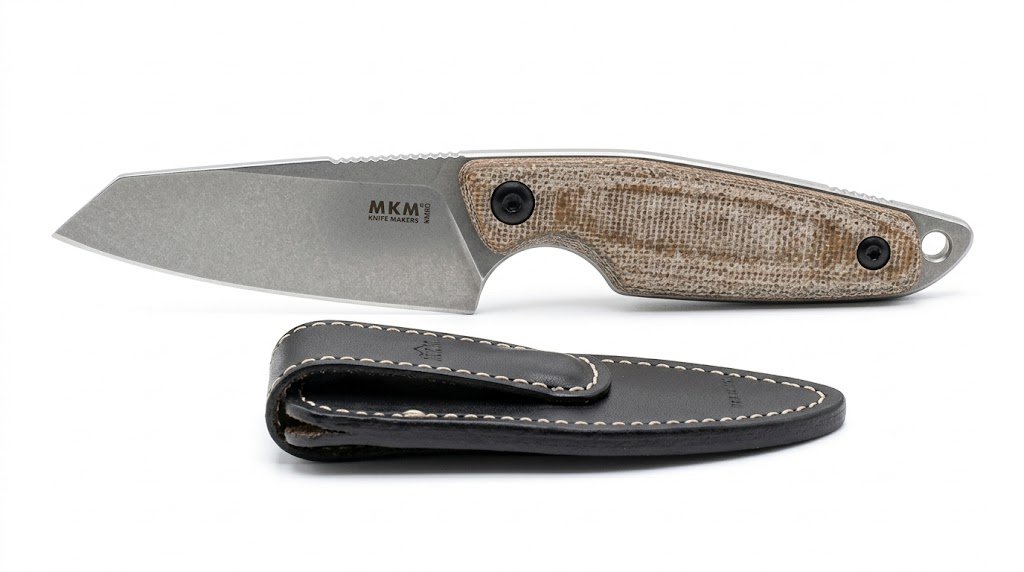
Spec Line: | Steel: M390 | Blade Length: 2.87″ | Origin: Italy.
Pros:
- M390 steel provides world-class edge retention.
- Magnetic leather sheath is a revolutionary EDC innovation.
- Beautifully chamfered edges and Italian craftsmanship.
Cons:
- M390 can be difficult to sharpen without diamond abrasives.
- Magnetic sheath may not be secure enough for inverted carry.
The Review:
MKM, out of Maniago, Italy, has produced a technical marvel in the Makro 2. This drop-point EDC fixed blade uses M390, a steel that every time I test it, surprises me with its ability to stay “shaving sharp” after miles of cardboard cutting. The ergonomics are modern and sleek, fitting perfectly in a pocket-carry role. During testing, the magnetic sheath proved to be incredibly convenient for urban environments, allowing for a silent draw. However, I would warn against using this for high-impact prying; this is a precision instrument designed for those who value a refined edge and sophisticated materials.
Best American Made: White River M1 Caper
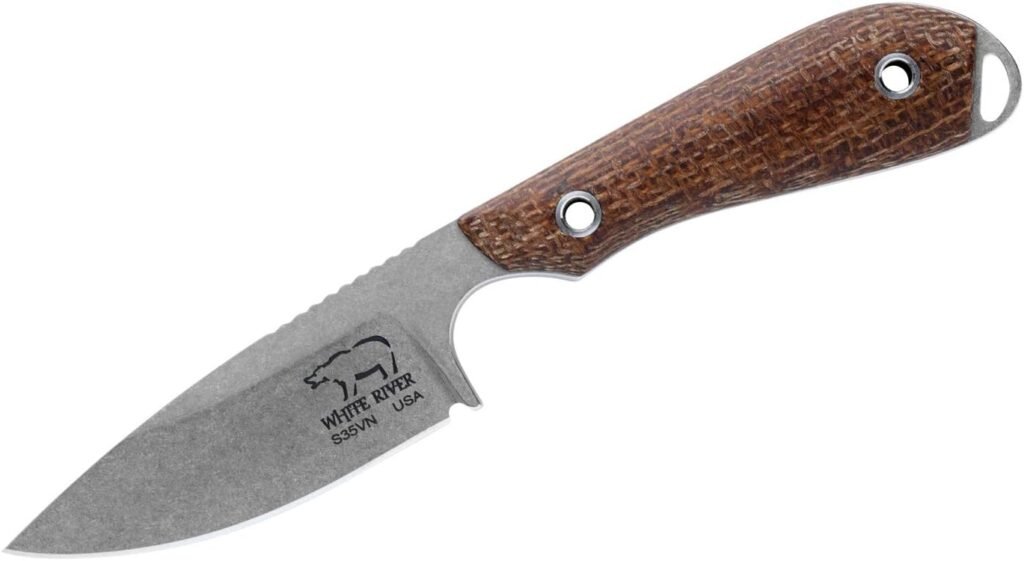
Spec Line: | Steel: CPM-S35VN | Blade Length: 3.0″ | Origin: USA.
Pros:
- Unbeatable ergonomics for a small blade.
- The Kydex sheath has the best “snap” in the industry.
- Paracord wrap provides extra utility in emergencies.
Cons:
- Paracord handle can get dirty/soaked with fluids.
- Slightly thinner stock than the Bradford Guardian.
The Review:
White River Knives are known for their incredible out-of-the-box sharpness, and the M1 Backpacker is no exception. In the past, I’ve found paracord-wrapped handles to be a bit “gimmicky,” but the M1’s geometry makes it feel incredibly stable. During a specific testing scenario involving food prep and fire-starting, the S35VN steel held an aggressive bite. It’s light enough to be worn as a neck knife but stout enough for light wood processing. The “hand-feel” is excellent for those with medium-sized hands who want a tool that disappears in a pocket.
How To Choose: The Buyer’s Guide
When selecting the Best EDC fixed blade, ignore the celebrity endorsements and focus on the technical reality. A “celebrity” survival knife often spends more on the box than the heat treat.
Material Quality
Look for powdered metallurgy steels. In 2026, Magnacut, S45VN, and M390 are the gold standards for EDC. These materials ensure that you spend more time working and less time at the sharpening stone.
Ergonomics
Avoid handles with deep finger grooves. These “force” your hand into a single position. A neutral handle shape, like those on the Bradford or White River, allows for various grips (saber, pinch, or reverse) which is essential for a versatile tool.
Build Geometry
A thick blade isn’t always a better blade. For EDC, a spine thickness of 0.125″ to 0.16″ is ideal. Anything thicker becomes a poor slicer; anything thinner may lack the rigidity needed for light prying tasks.
Why Trust Us?
Our testing isn’t just a quick glance. We subject every blade to a three-stage gauntlet:
- The Slice: 100 cuts through 1-inch manila rope to test edge geometry.
- The Impact: Repetitive batoning through seasoned oak to check for lock/tang failure.
- The Daily: 14 days of actual pocket/belt carry to evaluate sheath retention and comfort.
Read More Guide’s: Best Fixed Blade Knife: Top 5 Survival Picks (2026)
FAQs
1. Is it legal to carry a fixed blade EDC?
Laws vary wildly by state and country. In 2026, many jurisdictions allow blades under 3 inches, but always check your local “concealed carry” statutes before purchasing.
2. Why choose a fixed blade over a folder?
Strength and simplicity. A fixed blade has no moving parts to break, no pivot to get clogged with lint, and can be deployed faster in an emergency.
3. What is the best steel for EDC?
Currently, Magnacut is the top choice because it combines the rust resistance of a dive knife with the toughness of a bushcraft knife.
4. How do I maintain my EDC knife?
Even “stainless” steels can corrode. Wipe your blade after use and apply a light coat of food-grade mineral oil once a week.
5. Are Kydex sheaths better than leather?
For EDC, Kydex is generally superior because it is thinner, waterproof, and offers a “click-in” retention that leather lacks over time.
6. Can I use my EDC knife for prying?
Generally, no. Knives are for cutting. However, a full-tang knife like the ESEE Izula-II is much more likely to survive an emergency pry than any folding knife.
7. Does blade shape matter for daily tasks?
Yes. A Drop Point is the most versatile for general tasks, while a Tanto is better for piercing and heavy-duty scraping.
Final Thoughts
After rigorous testing, the Bradford Guardian 3x stands as our top pick for the best overall EDC fixed blade. It represents the perfect marriage of modern metallurgy and practical ergonomics. For those on a tighter budget or who require a tool for absolute abuse, the ESEE Izula-II remains the toughest runner-up in the industry.