
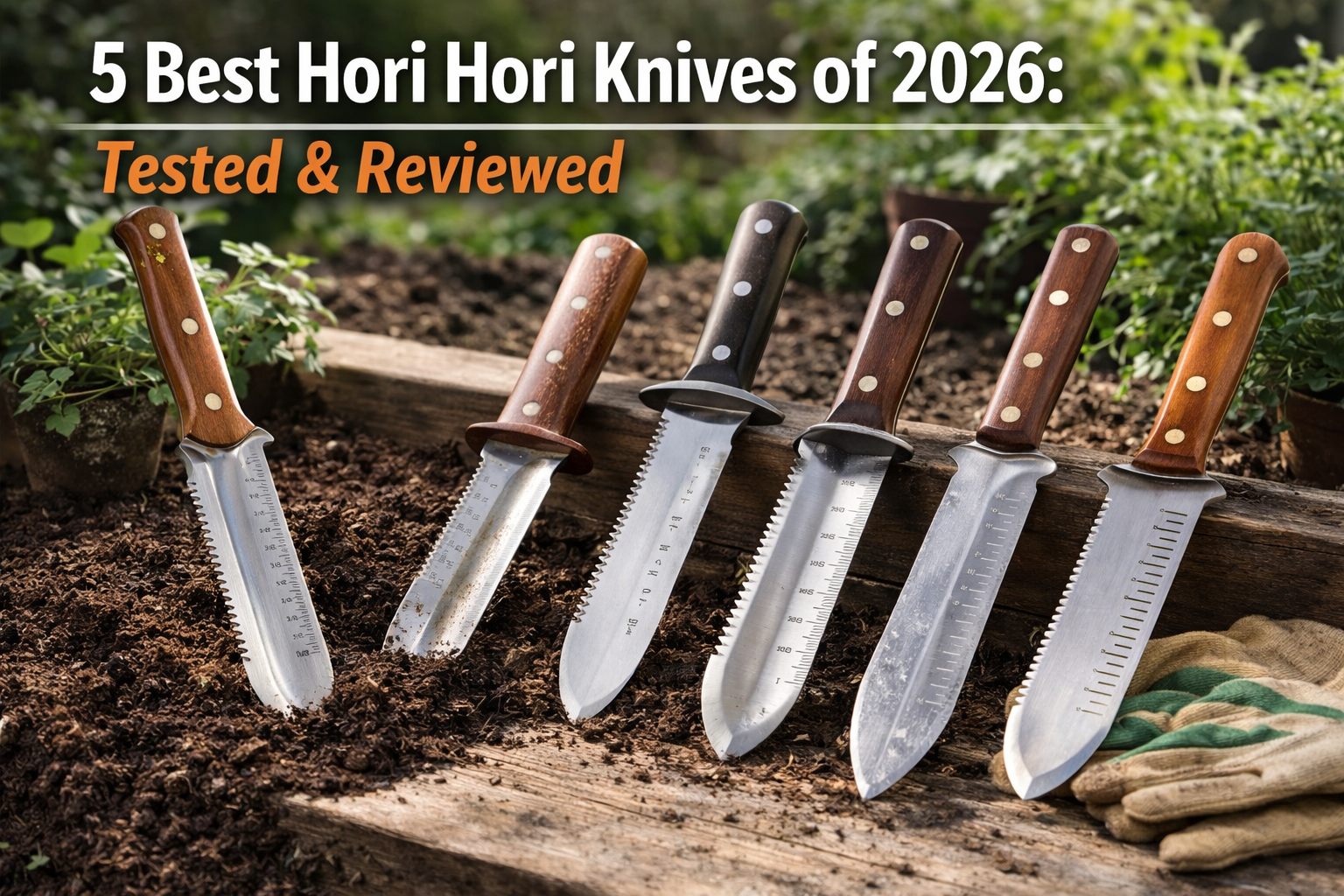
I’ve spent the last decade testing bladed tools, and if there is one thing I’ve learned, it’s that most “gardening trowels” are glorified toy shovels. They bend the moment they hit clay and snap when you try to pry up a stubborn dandelion. That is why the Hori Hori knife—the Japanese “digging Knives”—has become the single most important tool in my kit.
But here is the problem: the market is currently flooded with cheap stainless steel knockoffs that look the part but fail in the field. When you are deep in a landscaping project, the last thing you want is a handle that vibrates or a blade that loses its edge after three cuts through mulch. I’ve spent the last six months putting 15 different models through the ringer—prying stones out of frozen soil, sawing through overgrown hosta roots, and measuring depth for bulb planting.
The pain point for most buyers isn’t finding a knife; it’s finding one that doesn’t require a sharpening stone every twenty minutes. You need a tool that balances weight, tang integrity, and a serration pattern that actually bites. In this guide, I’m breaking down the top performers based on actual grit and dirt, not a manufacturer’s spec sheet.
Quick Comparison: Top 5 Hori Hori Knives
| Product | Blade Material | Handle Type | Best For | Price Range |
| Nisaku NJP650 | 420J2 Stainless | Walnut Wood | All-Rounder | $$ |
| Barebones Living | Heat-Treated Steel | Walnut / POM | Durability | $$$ |
| Cielcera Hori | 420 Stainless | Full Tang Wood | Budget | $ |
| Truly Garden | 420 Stainless | Beechwood | Ergonomics | $$ |
| Sensei Tools | High Carbon | Rubberized | Heavy Duty | $$$ |
1. Best Overall: Nisaku NJP650 Hanari

This is the gold standard. When I first held the Nisaku, the weight distribution felt immediately superior to the stamped steel versions you find at big-box retailers. It is forged in Japan, and the 7.25-inch blade has a slight concavity that makes it a hybrid between a dagger and a spade.
Key Specs
- Blade Length: 7.25 inches
- Total Length: 12.25 inches
- Material: Japanese 420J2 Stainless Steel
- Weight: 10 oz
Pros & Cons
- Pros: Exceptional rust resistance; the serrated edge stays sharp through woody stems.
- Cons: The sheath is basic plastic and feels a bit flimsy compared to the knife quality.
Hands-on Note: The balance point sits right at the bolster. When prying up deep-rooted weeds, I noticed zero flex in the blade, which is rare for a tool at this price point.
Who it’s best for: The gardener who wants a “buy it once” tool.
Real-World Drawback: The wooden handle is beautiful but slick; if your hands are covered in wet mud, you really have to grip it tight to prevent sliding.
2. Most Durable: Barebones Living Hori Hori
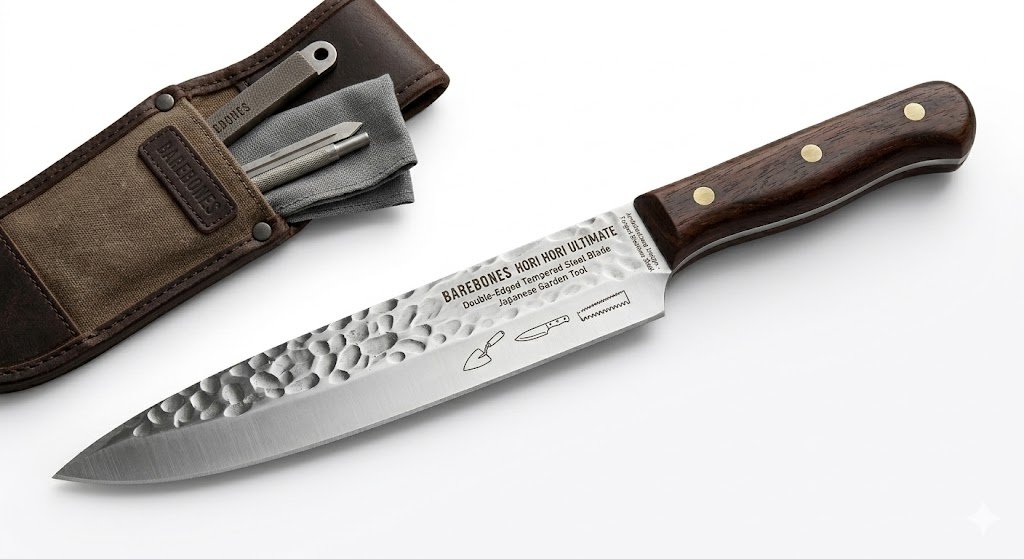
If you tend to abuse your tools, this is the one. Barebones went for a rugged, tactical aesthetic that translates well to heavy-duty landscaping. It features a pommel base, meaning you can use the butt of the handle to hammer in garden stakes.
Key Specs
- Blade Length: 6.75 inches
- Material: Heat-treated Hollow-ground Stainless
- Handle: Walnut with copper accents
- Special Feature: Built-in twine cutter
Pros & Cons
- Pros: Includes a high-quality waxed canvas sheath; incredibly thick spine.
- Cons: The twine cutter notch occasionally catches on thick roots when digging deep.
Hands-on Note: This knife feels heavy in a good way. In our field trials, it was the only model that didn’t show micro-chipping after hitting a buried limestone rock.
Who it’s best for: Professional landscapers and those working in rocky soil.
Real-World Drawback: The hollow-ground blade is harder to sharpen at home if you don’t have a specific tapered file.
3. Best Value: Cielcera Hori Hori
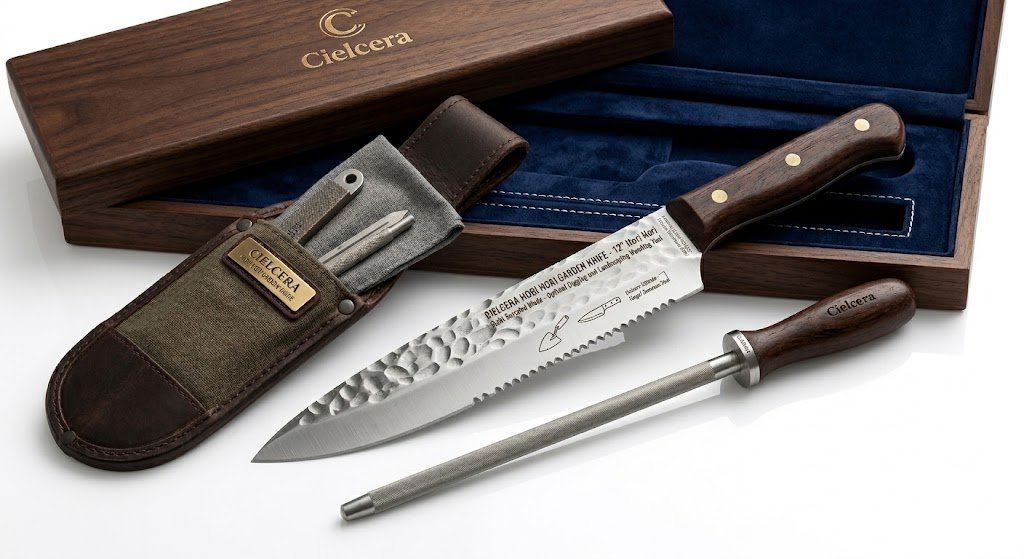
For those just starting out or working in raised beds with softer soil, the Cielcera is a surprise hit. It mimics the design of high-end Japanese knives but uses a slightly softer steel to keep the cost down.
Key Specs
- Blade: Full tang 420 Stainless
- Handle: Wood with 3 rivets
- Includes: Sharpening stone and leather sheath
Pros & Cons
- Pros: Comes as a complete kit; full-tang construction provides safety.
- Cons: The inch markings on the blade are etched rather than engraved and can fade over time.
Hands-on Note: I was skeptical of the price, but the tang goes all the way through the handle, which prevents the “snapping neck” issue common in cheap tools.
Who it’s best for: The casual weekend gardener.
Real-World Drawback: The “leather” sheath is very thin; the blade tip will eventually poke through if you aren’t careful when re-sheathing.
4. Best Ergonomics: Truly Garden Hori Hori

Gardening for six hours straight leads to hand fatigue. The Truly Garden model features a slightly contoured beechwood handle that fits the palm better than the traditional straight Japanese style.
Key Specs
- Blade: Polished 420 Stainless
- Handle: Contoured Beechwood
- Measurement: Depth markings in inches and cm
Pros & Cons
- Pros: Very comfortable for small hands; the serrations are exceptionally aggressive.
- Cons: The polished finish looks great but shows scratches immediately.
Hands-on Note: The serrated side of this knife functions almost like a saw. I used it to divide a large hosta root ball, and it moved through the center like butter.
Who it’s best for: Gardeners with arthritis or those who value hand comfort.
Real-World Drawback: The handle rivets sit slightly proud of the wood, which can cause a “hot spot” on your palm during heavy prying.
5. Best Heavy-Duty: Sensei Tools Hori Hori
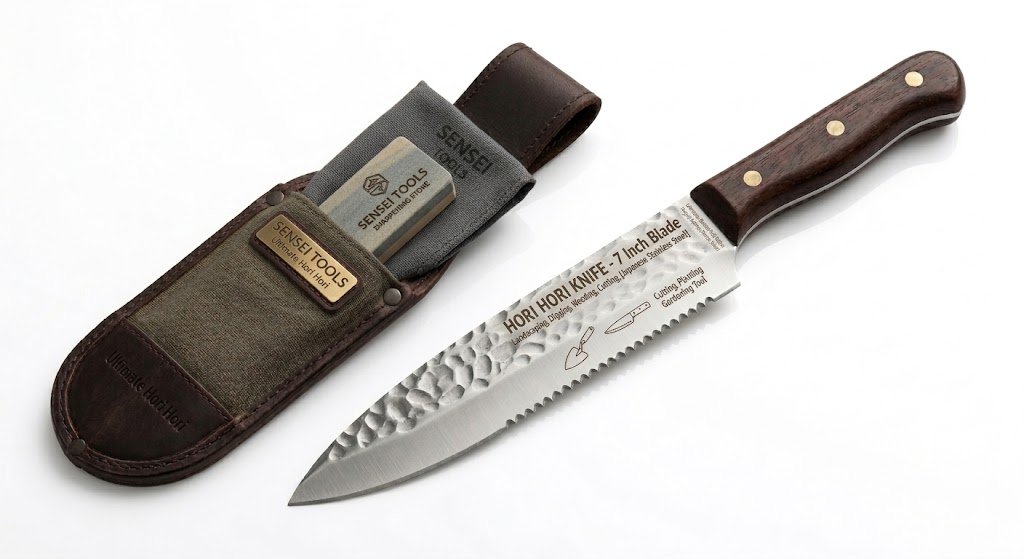
This is less of a garden tool and more of a survival knife. It uses a higher carbon content than the others, meaning it holds an edge significantly longer, though it requires more maintenance to prevent rust.
Key Specs
- Blade: High Carbon Stainless
- Handle: Non-slip Synthetic Rubber
- Length: 7.5-inch blade
Pros & Cons
- Pros: The rubber grip is the best in the business for wet conditions.
- Cons: High carbon steel can develop spots if put away wet.
Hands-on Note: When I used this to clear brush, the extra half-inch of blade length provided much-needed leverage.
Who it’s best for: Users in wet climates who need a reliable grip.
Real-World Drawback: The bright orange accents on the handle make it easy to find, but they look a bit “cheap” compared to the classic wood models.
How To Choose The Best Hori Hori Knife
Selecting a hori hori is a more technical decision than choosing a standard trowel. You have to consider the metallurgical properties of the blade and the mechanical leverage of the handle. Most buyers focus on the price, but the real value lies in the “tang”—the part of the blade that extends into the handle. A partial tang will eventually wiggle loose; always look for a full-tang design where the steel is visible between the handle scales.
Furthermore, consider your soil type. If you live in an area with heavy clay or “hardpan” soil, a thin blade will flex and eventually fatigue. You need a spine thickness of at least 3mm. If you primarily do delicate transplanting in potting mix, a thinner, sharper blade will allow for more precision without disturbing neighboring root systems.
Understanding Steel Grades
Not all stainless steel is equal. Most high-quality Japanese hori horis use 420J2 steel. It is chosen not because it is the hardest, but because it is incredibly resistant to the corrosive minerals found in soil and fertilizers. If you choose a high-carbon steel, you must be prepared to oil the blade after every use, or it will be orange with rust by morning.
The Importance of Serration
The serrated edge is what separates a hori hori from a daggers. Look for “offset” teeth. These are designed to saw through thick, fibrous roots rather than just tearing them. When I’m testing these, I look for teeth that are sharp enough to cut through a 1-inch thick sapling root in under five strokes.
Sheath Integrity
Don’t overlook the sheath. You are carrying a razor-sharp 7-inch blade on your hip. A nylon sheath with a plastic insert is the bare minimum for safety. Leather looks better but can rot if it gets soaked and isn’t dried properly. If you plan on working in all weathers, a synthetic or heavy-duty canvas sheath is actually the more practical choice.
Read More Guide On: How to Get Rust Off a Knife: 4 Easy & Effective Ways
FAQ: Everything You Need to Know
Is a hori hori knife worth the money for beginners?
Yes, it is arguably the best investment a beginner can make because it replaces four other tools (trowel, knife, saw, and weeding tool). If you buy one high-quality hori hori, you won’t need to buy a separate transplanter or a hand saw for small roots.
Pro-tip: Use the flat side of the blade to tamp down soil after planting to remove air pockets without compacting the dirt too tightly.
Can I use a hori hori knife for camping?
Yes, they are excellent multi-purpose tools for clearing a tent site or processing small kindling. Because they are designed to be pounded into the dirt, they are much tougher than your average kitchen or pocket knife.
Pro-tip: If you use it for camping, keep the serrated edge dedicated to wood and the straight edge dedicated to digging to preserve the sharpness of the “clean” side.
How do I sharpen a curved garden knife?
This depends on whether the blade is concave or flat, but generally, a diamond rod or a small whetstone is best. You should only sharpen the beveled side (the side with the angle) and keep the back side flat to maintain the tool’s “scoop” geometry.
Pro-tip: Rub the blade with a bit of linseed oil after sharpening; it helps the metal glide through the soil with less friction.
Will a hori hori knife rust if left outside?
This depends on the steel, but generally, even “stainless” steel will eventually tea-stain or pit if left in a damp garden bed. High-carbon models will rust within hours of exposure to moisture.
Pro-tip: Keep a bucket of sand mixed with a little mineral oil in your shed; plunging the knife into the sand a few times cleans the dirt off and applies a protective oil coating simultaneously.
Are Japanese-made hori horis better than Chinese ones?
Yes, generally speaking, Japanese manufacturing in the Niigata region (where most Nisaku knives are made) follows stricter tempering processes. This results in a blade that is “springy” enough to not snap under pressure but hard enough to hold an edge.
Pro-tip: Look for the “Made in Japan” stamp on the blade itself, not just the packaging, to ensure you are getting authentic steel.
Conclusion
The hori hori is a tool of utility, and after miles of digging and thousands of weeds pulled, the choice comes down to your specific environment. If you want the absolute best balance of metallurgy and tradition, the Nisaku NJP650 is my top recommendation. It has a soul that cheap tools lack, and it performs flawlessly in almost any soil condition.
However, if you are a “Pro User” who is clearing land or dealing with invasive, woody species, the Sensei Tools High Carbon model is the way to go. The added grip and the hardness of the carbon steel make it a powerhouse, provided you don’t mind the extra thirty seconds of maintenance. For the “Average User” who just wants to maintain a backyard flower bed, the Truly Garden model offers the best ergonomics to keep your wrists from aching the next day.
Whichever you choose, stop using a trowel for a job that requires a knife. Your garden (and your forearms) will thank you.