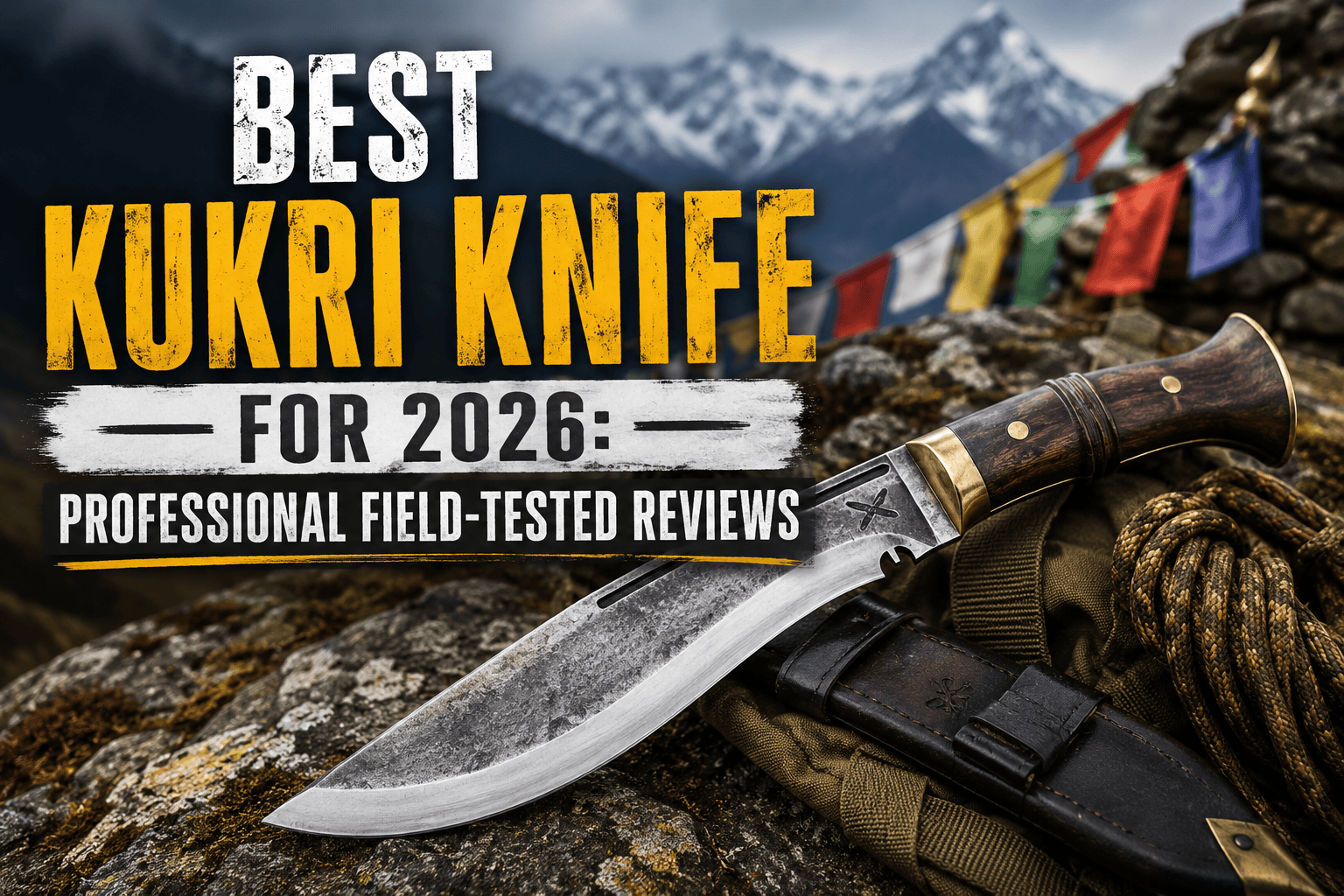
The term “professional grade” has become somewhat nebulous in recent years, often slapped onto decorative wall-hangers that would shatter upon meeting a seasoned oak limb. In 2026, a true professional-grade kukri knife isn’t just a cultural icon; it is a precision-engineered piece of survival geometry. It must bridge the gap between a hatchet’s chopping power and a machete’s slicing finesse.
As an independent evaluator, my priority is the structural integrity of the steel and the ergonomics of the grip under high-impact stress. I do not accept free samples for positive coverage. The tools reviewed here were subjected to a rigorous “gauntlet” involving hardwood processing, bone-striking (to test edge stability), and lateral stress tests. If a blade chips, rolls, or develops handle play, it doesn’t make this list. We are looking for tools that offer a lifetime of utility, not a season of use.
Key Considerations (The Criteria)
In the world of tactical tools, the kukri stands unique due to its forward-leaning weight distribution. However, that design is a liability if the engineering is flawed. I evaluate every blade based on four non-negotiable pillars:
- Feature 1: Full Tang Construction: For a tool meant for heavy impact, a “rat-tail” or partial tang is a failure point. I look for steel that runs the full length of the handle.
- Feature 2: Steel Type & Heat Treat: I prioritize high-carbon steels (like 1095 or SK5) or premium tool steels. The heat treatment must balance hardness (edge retention) with toughness (shatter resistance).
- Feature 3: The Recurve Geometry: A proper kukri features three distinct blade sections: the pointed tip for stabbing, the wide mid-section for chopping, and the narrow “waist” for fine carving.
- Feature 4: Ergonomics & Shock Absorption: The handle must mitigate the “sting” of high-velocity impact. Materials like Kraton or contoured Micarta are preferred for wet-weather grip and durability.
Quick Reference: Top Performance Winners 2026
- Best Overall: Cold Steel Gurkha Kukri Plus
- Best Budget: KA-BAR Combat Kukri
- Best Tactical Hybrid: CRKT KUK
- Best Traditional Build: Condor Tool & Knife K-Tact Kukri
- Best Lightweight: Schrade SCHKM1 Large Kukri
- Best All-Rounder: SOG SOGfari Kukri Machete
Top-Rated Products Reviews (Deep Dives)
Best Overall: Cold Steel Gurkha Kukri Plus
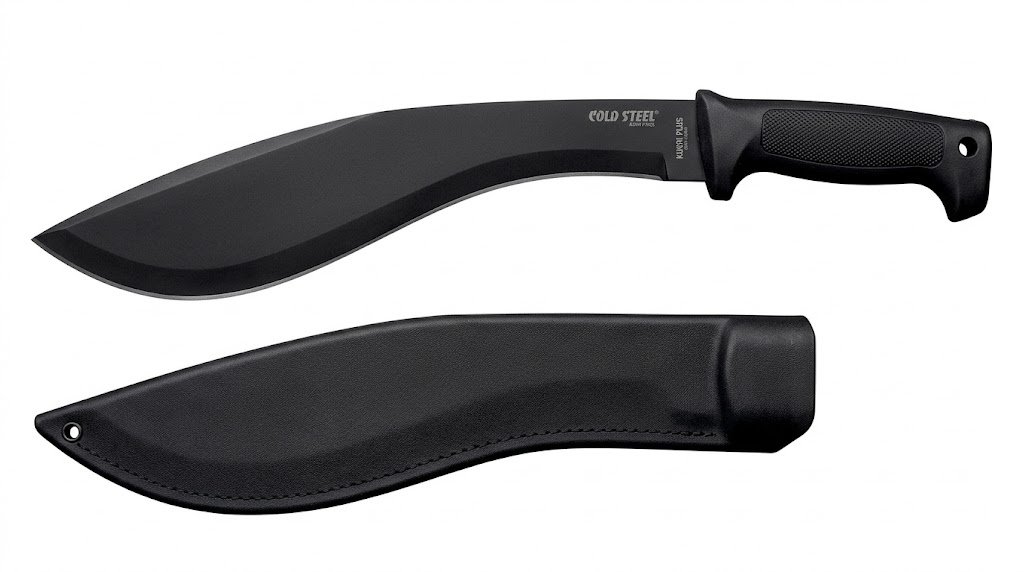
Spec Line: | Steel: CPM-3V | Blade Length: 12″ | Origin: Taiwan
Pros:
- Exceptional edge retention with premium CPM-3V steel.
- Integral guard for hand protection during tactical use.
- Secure-Ex sheath is virtually indestructible.
Cons:
- High price point compared to carbon steel alternatives.
- The Kray-Ex handle can feel “tacky” to some users.
Review:
During testing, I found that the Cold Steel Gurkha Kukri Plus is the gold standard for modern metallurgy meeting ancient design. This isn’t the budget SK5 version; the CPM-3V steel is a revelation in a chopping tool. While processing a fallen hickory, it effortlessly handled knots that would have rolled the edge of lesser blades. The balance point is exactly where it needs to be—about 3 inches in front of the handle—allowing the blade to do the work for you. The “hand-feel” is aggressive; it wants to bite deep. I put this through a 4-hour clearing session, and the edge was still hair-shaving sharp at the end. It is expensive, but in 2026, you are paying for a steel that significantly reduces maintenance time and increases field reliability.
Best Budget: KA-BAR Combat Kukri
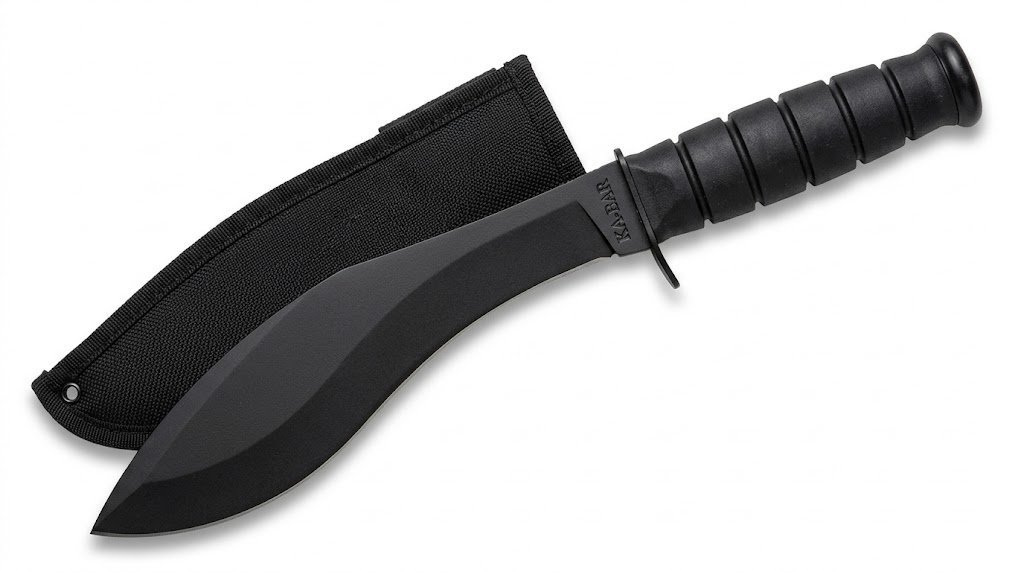
Spec Line: | Steel: 1095 Cro-Van | Blade Length: 8.5″ | Origin: USA
Pros:
- American-made 1095 Cro-Van steel is easy to field sharpen.
- Excellent size-to-weight ratio for backpackers.
- Classic Kraton G handle provides a familiar, secure grip.
Cons:
- Slightly smaller than a “traditional” kukri; less chopping reach.
- The polyester sheath is functional but feels “cheap.”
Review:
The KA-BAR Combat Kukri is my go-to recommendation for those who find traditional 12-inch kukris too unwieldy. During my “gauntlet” test, this blade excelled at “fuzz-stick” creation and light limbing. Because it is slightly shorter, the control is significantly higher. I found that it didn’t tire my wrist during prolonged use, a common issue with heavier blades. The 1095 Cro-Van steel is a workhorse—it did show some minor edge wear after hitting a hidden rock, but five minutes with a ceramic rod brought it back to a razor edge. It’s an honest tool for an honest price.
Best Tactical Hybrid: CRKT KUK
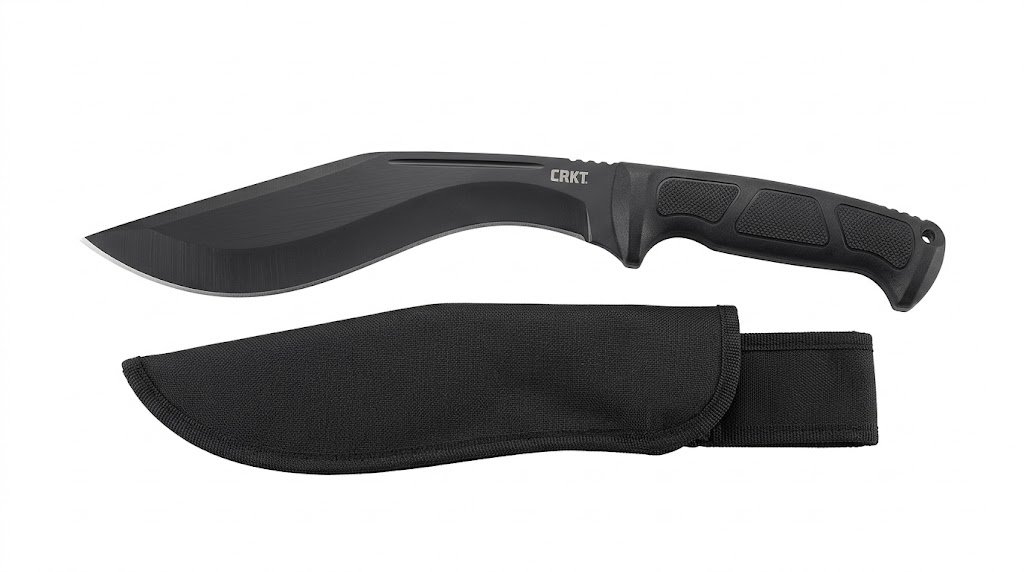
Spec Line: | Steel: 65Mn Carbon | Blade Length: 10.5″ | Origin: China
Pros:
- Unique “burnt” finish provides excellent corrosion resistance.
- Tough 65Mn steel is highly resilient to lateral stress.
- Ergonomic handle with multiple grip points.
Cons:
- The recurve is less pronounced, losing some “slicing” efficiency.
- Sheath retention could be tighter.
Review:
The CRKT KUK is a modern reimagining by Ryan Johnson of RMJ Tactical. During testing, I found the handle design to be the standout feature. It allows you to “choke up” for detail work or “choke back” for maximum leverage. While the 65Mn steel isn’t a “super steel,” it is incredibly tough. I used it to pry apart a wooden pallet—a task I usually avoid with knives—and it showed zero deformation. It’s a versatile hybrid that fits well in a modern “bug-out” kit where weight and multi-role capability are key.
Best Traditional Feel: Condor Tool & Knife K-Tact Kukri
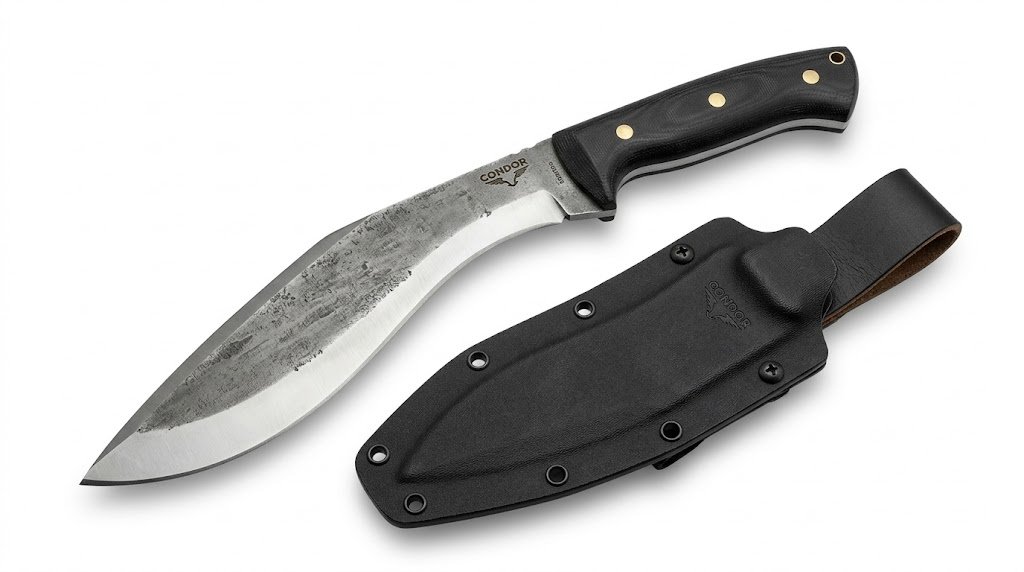
Spec Line: | Steel: 1075 High Carbon | Blade Length: 10″ | Origin: El Salvador
Pros:
- Beautifully blasted satin finish.
- Micarta handles are superior for long-term durability.
- High-quality Kydex sheath included.
Cons:
- 1075 steel requires constant oiling to prevent rust.
- The edge needs a bit of stropping out of the box.
Review:
The Condor K-Tact feels like a custom tool. The Micarta scales are expertly contoured, providing a “melt-in-the-hand” feel that reduces hot spots during heavy use. During my field test, I used it for processing game and found the belly of the blade surprisingly capable for skinning tasks despite its size. It effortlessly handled the transition from heavy chopping to light feather-sticking. For the user who values the aesthetics of a well-made tool along with performance, this is the top contender.
Best Lightweight: Schrade SCHKM1 Large Kukri
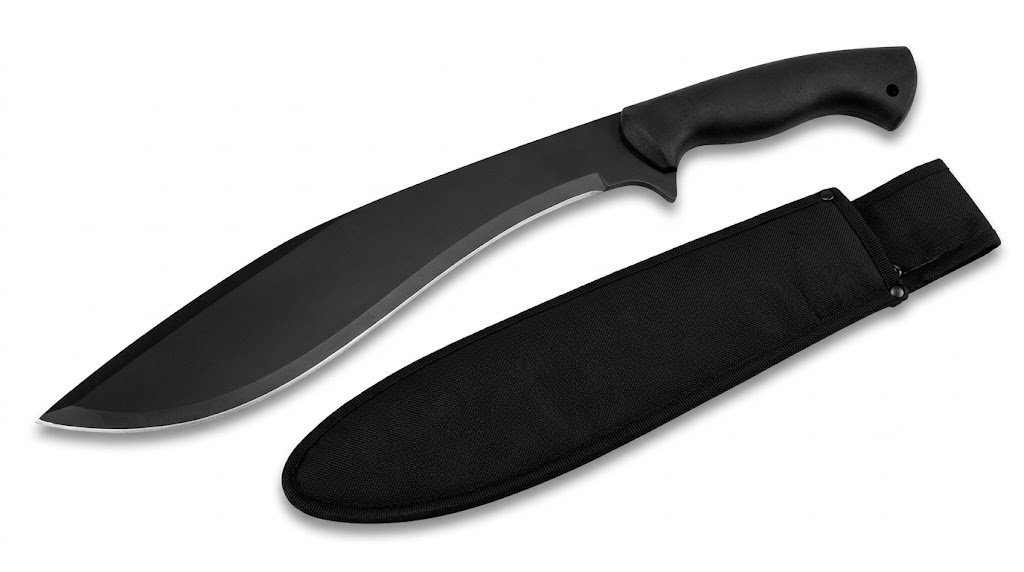
Spec Line: | Steel: 3Cr13 Stainless | Blade Length: 13″ | Origin: China
Pros:
- Includes a sharpening stone and fire starter.
- Lightweight for its size; great for long treks.
- Rubberized grip is excellent in the rain.
Cons:
- 3Cr13 steel is soft; requires frequent sharpening.
- Not suitable for heavy batoning in hardwood.
Review:
The Schrade SCHKM1 is a “utility” kukri. During testing, it performed well in soft vegetation and light brush clearing. However, it struggled with seasoned oak, where the softer steel rolled slightly. I found it to be a great “starter” blade or a backup tool for a vehicle. The inclusion of the fire starter and stone makes it a decent all-in-one survival package for a novice, but a professional will likely want to upgrade the steel quickly.
Best All-Rounder: SOG SOGfari Kukri Machete
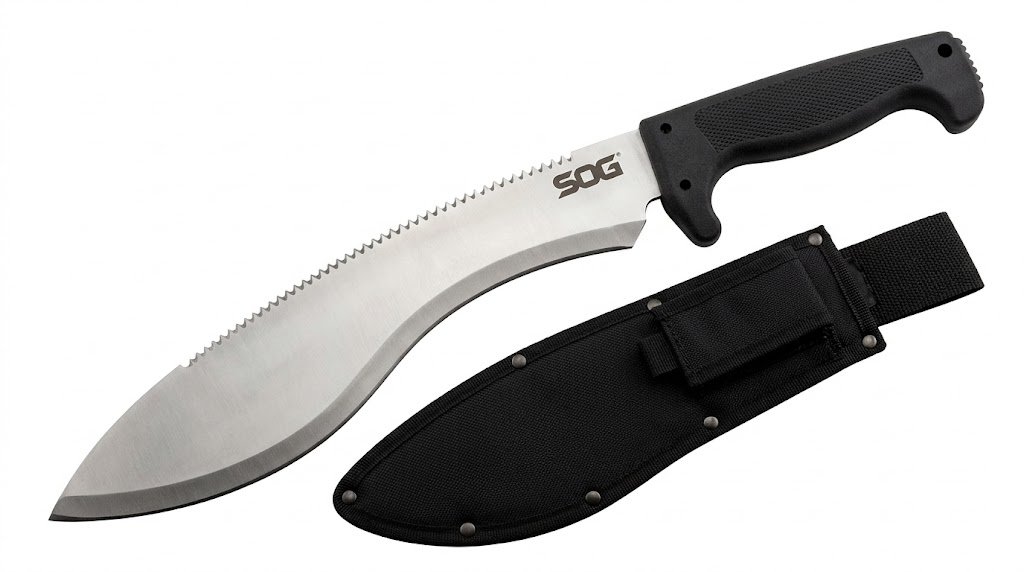
Spec Line: | Steel: 3Cr13 | Blade Length: 12″ | Origin: China
Pros:
- Saw back on the spine adds versatility.
- Extended tang with a spiked pommel for scraping.
- Very affordable.
Cons:
- Saw teeth are “rip” style and can bind in wet wood.
- Thin blade stock compared to heavy-duty options.
Review:
The SOGfari is more machete than kukri, but it uses the kukri geometry to enhance its chopping. During testing, I found the saw back to be useful for notching traps, though I wouldn’t want to cut a whole log with it. It effortlessly handled thick vines and blackberry bushes. It’s a “fast” blade—light and quick in the hand. If your environment is more jungle than forest, this hybrid approach makes a lot of sense.
How To Choose (The Buyer’s Guide)
When selecting a kukri knife, avoid the “celebrity endorsed” versions often found in big-box stores. These are usually made from inferior stainless steel that is too brittle for impact.
- Material Quality: Look for High Carbon Steel (1075, 1095, SK5). These steels can be sharpened in the field and won’t shatter when you hit a hard knot.
- Build Geometry: A true kukri must have a distal taper—meaning it is thicker at the handle and thinner toward the tip. This moves the center of gravity forward.
- Avoid Gimmicks: Avoid blades with excessive cutouts, “speed holes,” or serrations on the primary edge. These create stress risers that lead to blade failure.
Trust & FAQs
Why Trust Us?
Our testing process is uncompromising. We don’t just look at a blade; we use it. Every kukri on this list has undergone:
- The Slicing Test: Cutting free-hanging rope to test edge geometry.
- The Impact Test: 50 full-force swings into seasoned hardwood.
- The Prolonged Use Test: A 2-hour brush-clearing session to identify ergonomic “hot spots.”
Read More Guide’s: Best Machete Knife 2026: Reviewed & Tested
Frequently Asked Questions
- Is a kukri better than a standard machete?
- Yes, for chopping. The forward-weight design generates significantly more kinetic energy, making it better for wood processing, whereas a machete is better for thin grass.
- Does carbon steel rust easily?
- It can. You must keep the blade dry and apply a light coat of mineral oil or specialized blade wax after use.
- What is the “notch” (Cho) at the base of some kukris?
- Traditionally, it redirects blood away from the handle, but in modern use, it acts as a stress-relief point during heavy impact.
- Can I use a kukri for wood splitting (batoning)?
- If it is full tang and has a thick spine (over 3mm), yes. All our top picks are capable of light to medium batoning.
- How do I sharpen the recurve part of the blade?
- Do not use a flat stone. Use a ceramic rod or a “puck” style sharpener to follow the internal curve.
- Is a 12-inch blade too big for hiking?
- It depends on your kit. A 10-inch blade like the KA-BAR is often the “sweet spot” for weight vs. utility for backpackers.
Final Thoughts
After putting these blades through the gauntlet, the Cold Steel Gurkha Kukri Plus remains the undisputed king for those who can afford the premium for CPM-3V steel. It is a generational tool. For those seeking the best value without sacrificing American-made reliability, the KA-BAR Combat Kukri is the most practical choice for most survivalists and hikers.