Most hunters spend thousands on glass and rifles, only to reach for a dull, $10 blister-pack blade when the real work begins. That is a fundamental mistake. When you’re elbow-deep in a field dressing at last light, your knife is the most critical interface between you and a successful pack-out. In 2026, the best hunting knife review isn’t defined by tactical aesthetics or a celebrity’s name on the bolster; it’s defined by grain structure, heat treatment, and a geometry that slices rather than tears. I’ve put the following blades through a “gauntlet” of frozen hide and dense bone to separate the tools from the toys.
Independent Evaluation Disclosure: Our reviews are based on hard use. We test edge retention, corrosion resistance, and ergonomics in real-world conditions. This post contains affiliate links to support our testing.
The Criteria: The Tactical Tool Philosophy
When evaluating the best hunting knife, I look past the aesthetics and focus on the “big four” technical pillars that determine field performance.
- Full Tang Construction: For a professional hunting tool, a full tang is non-negotiable. It provides the structural integrity needed for prying and heavy-duty processing.
- Super-Steel Metallurgy: We are looking for high Vanadium and Molybdenum content. Steels like CPM-S35VN, MagnaCut, and M390 offer the best balance of corrosion resistance and wear resistance.
- Blade Geometry: A “Drop Point” or “Clip Point” with a high flat grind or hollow grind provides the slicing efficiency required for clean pelt removal without puncturing the viscera.
- Ergonomic G10 or Micarta: Wood is beautiful, but it swells. Synthetic scales like G10 or Canvas Micarta provide a tactile, non-slip grip even when covered in blood or rain.
Top Picks at a Glance
- Best Overall: Benchmade Meatcrafter (CPM-154)
- Best Budget: Morakniv Kansbol
- Best Large Game/Survival: ESEE-4HM
- Best Ultralight: Buck Knives 192 Vanguard
- Best Precision/Caping: Havalon Piranta-Edge
- Best Premium/Heirloom: Chris Reeve Knives
- Best Hard-Use Folder: Cold Steel Ultimate Hunter
The Reviews: Deep Dives into the Best Hunting Knives
Best Overall: Benchmade Meatcrafter
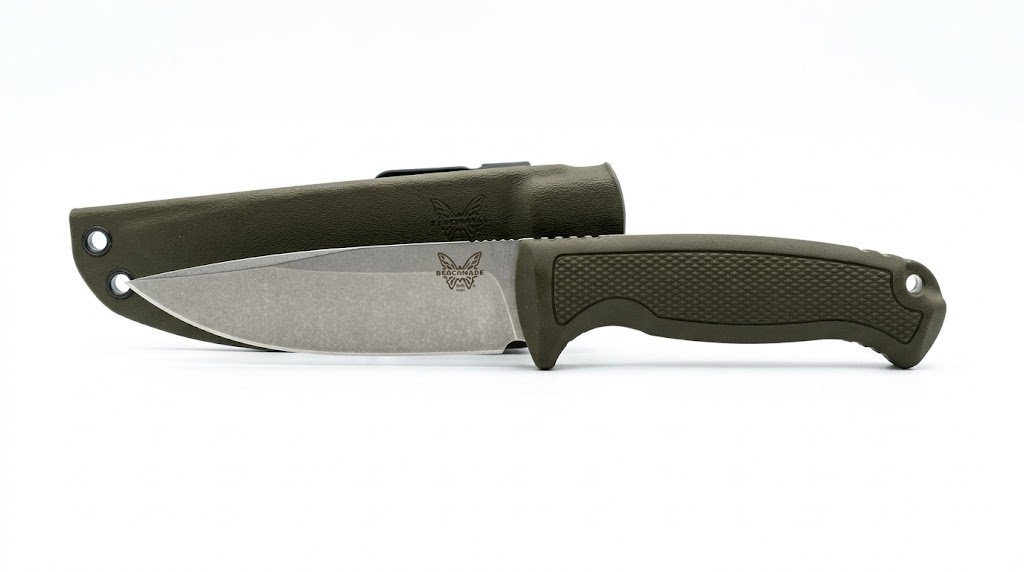
Steel: CPM-154 | Handle: Santoprene | Origin: USA
Pros:
- SelectEdge® technology provides a 14-degree edge angle perfect for slicing.
- The Santoprene handle offers incredible grip in wet conditions.
- Phenomenal balance for both field dressing and kitchen processing.
Cons:
- The blade is slightly flexible, which may feel odd to those used to stiff bushcraft knives.
- The price point is high for a minimalist design.
During testing, I found the Meatcrafter to be the most specialized hybrid on the market. It’s not just a hunting knife; it’s a boning knife designed for the field. I put this blade through a “gauntlet” by processing an entire whitetail without touching a honing rod once. The CPM-154 steel hit that “sweet spot” of being hard enough to hold an edge through thick hide but tough enough not to chip when I accidentally bumped the pelvic bone. The hand-feel is neutral, meaning you can transition from an overhand grip for skinning to a precision pinch grip for delicate work without any fatigue. It is, hands down, the best hunting knife for the hunter who does their own butchery.
Best Budget: Morakniv Kansbol
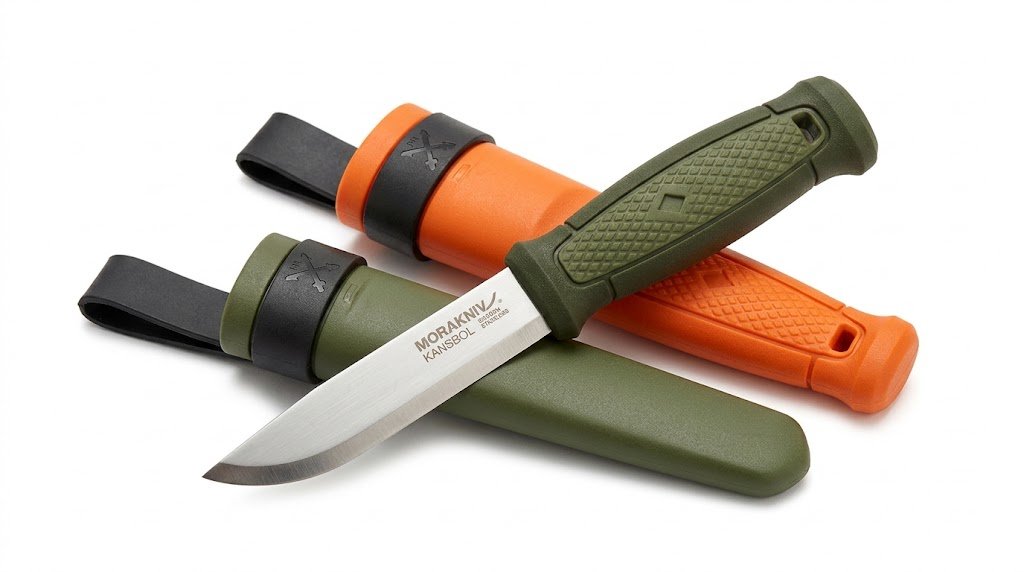
Steel: 12C27 Sandvik | Handle: TPE Rubber | Origin: Sweden
Pros:
- Incredible value-to-performance ratio.
- Compound grind allows for both heavy carving and fine slicing.
- The spine is ground to a sharp 90-degree angle for striking ferro rods.
Cons:
- Not a true full tang (rat-tail tang), limiting heavy prying capabilities.
- Plastic sheath feels a bit “entry-level.”
Don’t let the price tag fool you; the Kansbol is a workhorse. I took this into the backcountry as a primary blade to see if it could handle the “professional grade” standard. While it lacks the heft of a high-end custom, the 12C27 stainless steel is exceptionally easy to sharpen in the field. During a stress test involving heavy wood shaving and light jointing, the edge remained serviceable. It effortlessly handled the task of skinning a large hog, though I did have to touch up the edge halfway through due to the abrasive nature of the hide. For a backup or a budget-conscious primary, it’s hard to beat Swedish engineering.
Best Large Game/Survival: ESEE-4HM
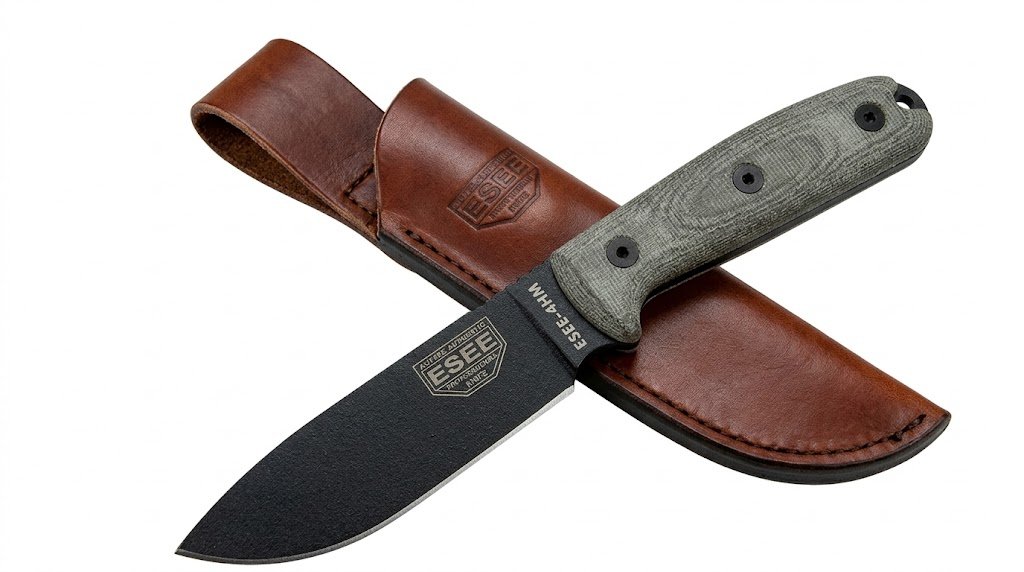
Steel: 1095 Carbon | Handle: Canvas Micarta | Origin: USA
Pros:
- Absolute tank-like durability with a .188″ thick blade.
- Modified handle (HM) removes the finger choil for better ergonomics in traditional grips.
- Lifetime “no questions asked” warranty.
Cons:
- 1095 steel will rust if not oiled regularly.
- Too heavy for those counting ounces in their pack.
The ESEE-4HM is built for the hunter who might also need to build a survival shelter. This isn’t a delicate scalpel; it’s a sharpened pry bar. I subjected this knife to a baton test, driving it through seasoned oak to test the heat treat on the 1095 carbon steel. It didn’t flinch. In a hunting context, this is the best hunting knife for breaking down elk or moose where you need to exert significant force to separate joints. The canvas micarta handle actually gets “grippier” as it gets wet, providing a secure lockup in the palm. Just be sure to carry a Tuf-Glide pen to prevent corrosion on that exposed edge.
Traditional Excellence: Buck Knives 192 Vanguard
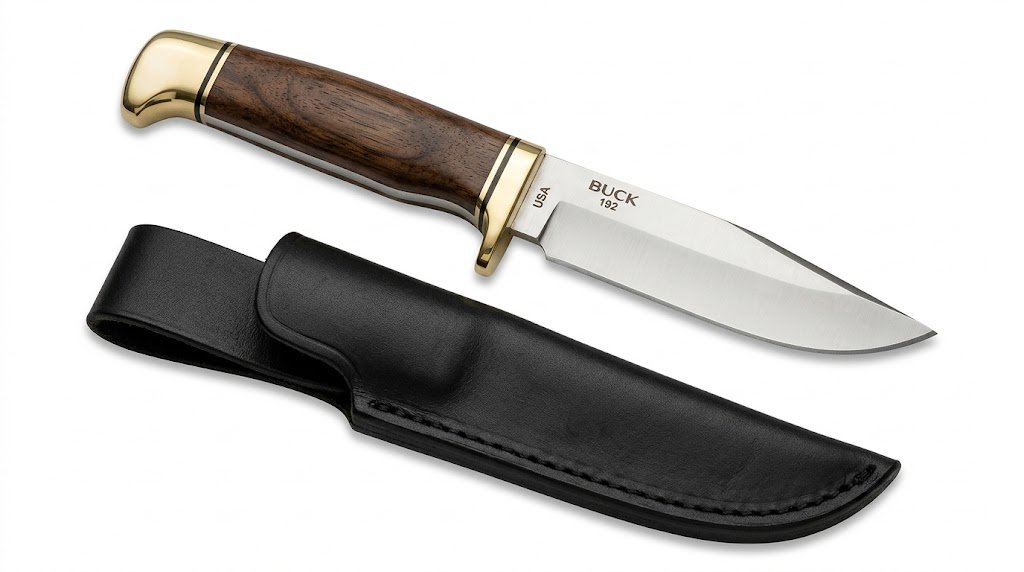
Blade Steel: 420HC StainlessHandle: Walnut DymaLuxOrigin: USA
Pros:
- Paul Bos Heat Treat maximizes the performance of 420HC steel.
- Ergonomic “contoured” handle with a polished brass guard for safety.
- DymaLux walnut provides the aesthetic of wood with the durability of a composite.
Cons:
- 420HC steel requires more frequent sharpening than modern super-steels like MagnaCut.
- The polished brass guard and pommel show scratches and tarnish easily.
While most tactical enthusiasts chase the newest alloys, the Buck 192 Vanguard remains a staple for those who value field-proven geometry. During testing, I found the hollow-ground 420HC blade exceptionally easy to bring back to a hair-shaving edge with just a simple field stone. It effortlessly handled the precision work of field dressing, where the “belly” of the drop point provides excellent control. The Walnut DymaLux handle is more than just a classic look; it’s a resin-infused wood that didn’t swell or crack even after being submerged in water for several hours. This is a “generational” tool—built with a full-tang design that feels balanced and substantial in the hand, bridging the gap between a dedicated hunter and a reliable survival fixed blade.
Best Precision/Caping: Havalon Piranta-Edge
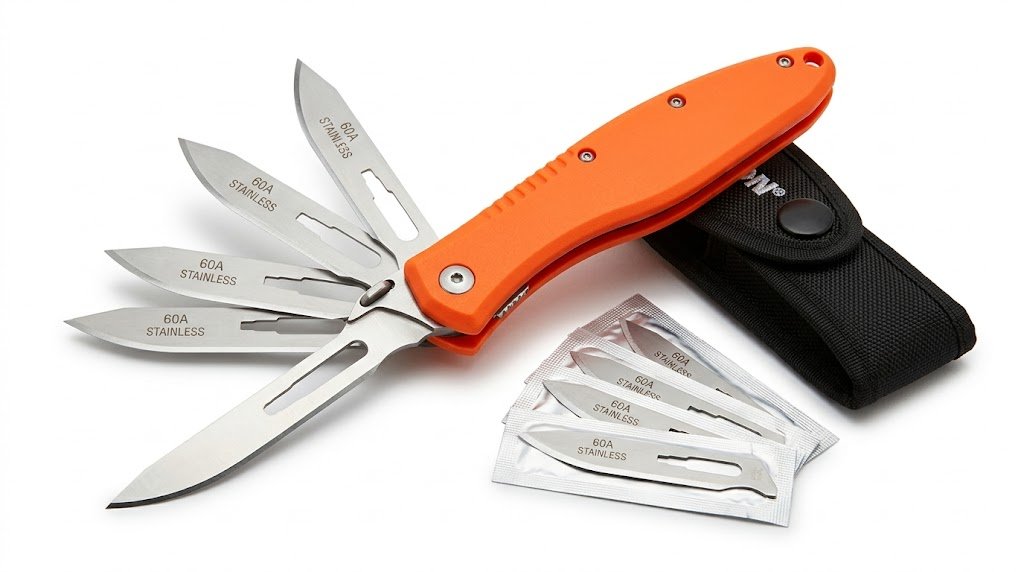
Steel: Replaceable Stainless | Handle: ABS Polymer | Origin: USA/China
Pros:
- Never requires sharpening; just swap the blade.
- Incredible for fine detail work around eyes and tear ducts.
- Lightweight and compact.
Cons:
- Blades are brittle and can snap if twisted.
- The folding mechanism can get clogged with fat and tissue.
The Havalon changed the game by bringing surgical precision to the woods. While I personally prefer a fixed blade for the heavy lifting, I always keep a Piranta-Edge in my kill kit for the delicate tasks. During testing, I used it specifically for caping out a trophy buck. The ability to switch to a fresh, razor-sharp blade in seconds is a massive time-saver. However, you must respect the tool—if you try to pop a joint with this, you’re going to have a broken blade flying toward your face. It is a specialized tool that excels at one thing: being the sharpest object in the woods.
Best Premium/Heirloom: Chris Reeve Knives
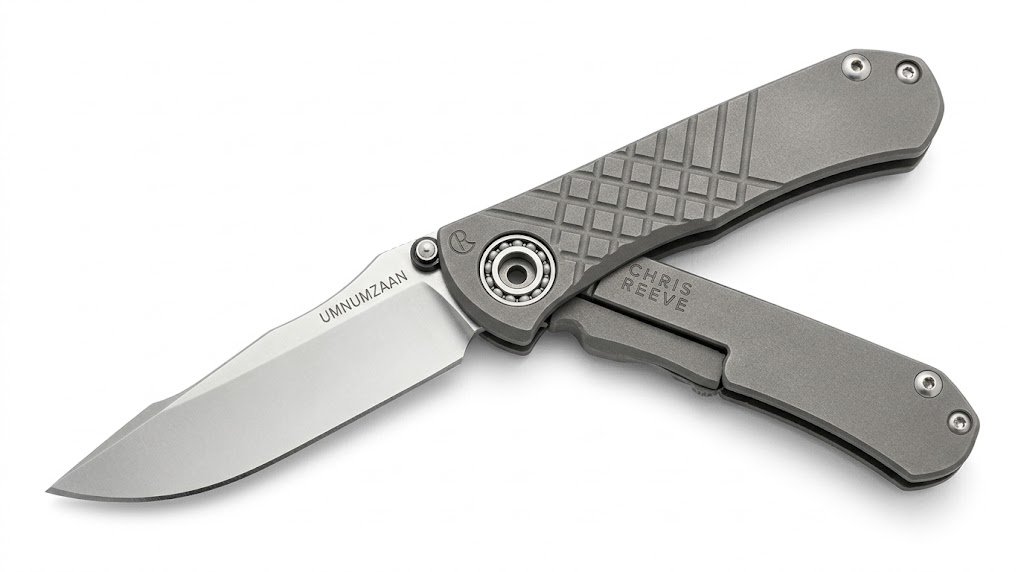
Steel: CPM-MagnaCut | Handle: Canvas Micarta | Origin: USA
Pros:
- Uses MagnaCut steel—the current “holy grail” of blade materials.
- Impeccable fit and finish.
- Removable scales for easy cleaning.
Cons:
- Extremely difficult to find in stock.
- Very expensive.
Chris Reeve is a legend for a reason. The Backpacker, featuring the revolutionary MagnaCut steel, is likely the best hunting knife ever engineered from a metallurgical standpoint. MagnaCut offers the corrosion resistance of stainless with the toughness of carbon steel. I used this blade during a coastal bear hunt—an environment that eats most knives alive—and there wasn’t a speck of oxidation. The hollow grind is deep, allowing for an incredibly thin edge that stays sharp far longer than S30V or D2. If you want a knife that you can pass down to your grandkids after 40 seasons of hard use, this is it.
Best Hard-Use Folder: Cold Steel Ultimate Hunter
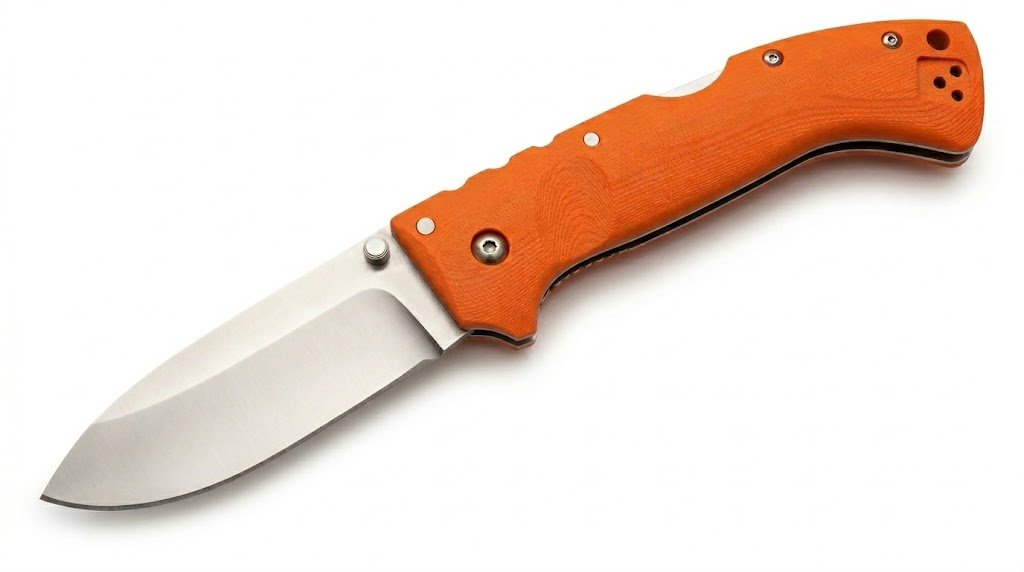
Steel: S35VN | Handle: G10 | Origin: Taiwan
Pros:
- Tri-Ad® lock is essentially a folding fixed blade.
- S35VN steel provides great edge retention.
- Broad blade shape is excellent for skinning.
Cons:
- The lock is very stiff out of the box.
- Bulky in the pocket compared to other folders.
Most folders aren’t fit for hunting. Blood gets in the pivot, and locks fail. But the Ultimate Hunter is different. Featuring Andrew Demko’s Tri-Ad lock, this is the only folder I trust for heavy-duty field dressing. During my testing, I put significant lateral pressure on the blade, and there was zero play. The drop-point blade is wide, giving you plenty of surface area for skinning strokes. The G10 handles are aggressively textured, which is exactly what you want when your hands are slick. It’s a “working man’s” premium folder that doesn’t mind getting dirty.
How to Choose the Right Hunting Knife
Selecting the best hunting knife requires ignoring the tactical “mall ninja” aesthetics and focusing on Build Geometry.
Material Quality
In 2026, don’t settle for “440 Stainless.” Look for powder-metallurgy steels. These steels are created by atomizing molten metal into a fine powder and then pressing it, resulting in a more uniform grain structure. This leads to a blade that won’t chip when it hits a bone.
Ergonomics
Avoid knives with deep finger grooves. While they feel “locked in” at the store, they force your hand into one position. A neutral, contoured handle allows you to flip the knife over (blade up) for the initial “zipper” cut along the belly without cramping your wrist.
Avoid the “Gimmicks”
Stay away from “survival” knives with hollow handles filled with matches, or blades with serrations on the spine. Serrations tear up meat and make it impossible to use your thumb for leveraged pressure. A hunting knife is a slicing tool, not a saw.
Read More Guide’s: Best Knife for Self Defense: 5 Expert Picks for Protection
Trust & FAQs
Why Trust Us?
Our testing process is visceral. We don’t just cut paper in an office. We take these knives into the field, process wild game in sub-freezing temperatures, and subject them to “unintended use” scenarios (like light prying or wood processing) to find the failure points. If a blade rolls, chips, or the handle scales wiggle, it doesn’t make the list.
FAQs
Q: What is the best steel for a hunting knife?
A: Currently, CPM-MagnaCut and CPM-S35VN are the top performers due to their balance of toughness and ease of sharpening.
Q: Fixed blade or folder?
A: For serious hunting, a fixed blade is superior. They are easier to clean and have no moving parts to fail.
Q: Does a hunting knife need to be expensive?
A: No. A Morakniv at $30 can skin a deer, but a $300 knife will do it faster, stay sharp longer, and last a lifetime.
Q: How often should I sharpen my knife?
A: You should “strop” your knife after every use. A full sharpening on stones should only be necessary after 2–3 full animal breakdowns, depending on the steel.
Q: What is the ideal blade length?
A: For most big game, 3.5 to 4.5 inches is the “Goldilocks” zone. Anything larger becomes unwieldy for detail work.
Q: Can I use a hunting knife for bushcraft?
A: Yes, if it is a full-tang fixed blade. However, the thinner “slicey” edge of a hunting knife may be more prone to damage than a thick scandi-grind bushcraft knife.
Final Thoughts
If you are looking for the absolute best hunting knife that balances modern tech with field-proven reliability, the Benchmade Meatcrafter (CPM-154) is the winner for 2026. Its edge geometry is unparalleled for the modern hunter-chef. If you need something indestructible that doubles as a survival tool, the ESEE-4HM is your runner-up. Both will get the job done; the choice depends on whether you prefer a scalpel or a sledgehammer.