
We independently evaluate all recommended products and services. Any products or services put forward appear in no particular order. If you click on links we provide, we may receive compensation.
The term “professional grade” has become somewhat nebulous in recent years. In practice, most people use the term to refer to gear found in high-end culinary catalogs. Although some products intend to have a “pro-chef” look for a specific audience, other companies produce high-quality gear. Much of this gear is legitimate for high-volume commercial kitchens, catering, and serious home culinary use.
Considering the varying definitions of “professional,” we set out to find the best kitchen knife sets available today. After all, this style of tool makes for an incredibly practical and helpful asset in the home. If it looks cool on your magnetic strip while doing it, that’s the icing on the cake.
Key Considerations
Before going any further, we don’t recommend buying a massive 20-piece set for the sake of kitchen defense. Most chefs agree that knives are tools of precision, not bulk. Any sort of cluttered block is dangerous for the blades involved. Subsequently, even the best kitchen knife set should consist of the tools you actually use, rather than filler. We wanted to recommend knives that had some real practicality.
That is why we had some rather specific criteria for the best professional kitchen knife sets. We wanted knives that could excel in slicing many materials, including proteins, fibrous vegetables, delicate fruits, and crusty bread. Ideally, the features that could do that include:
- Tang: With any professional knife, we are looking for strength. That is why we considered only knives with a full tang in the handle. This strengthens the entire knife and allows it to perform demanding tasks—like breaking down a squash—that would snap or wobble other knives.
- Edge Type: We looked mainly for knives with a plain, flat ground edge. This edge is usually the most versatile for the rocking and push-cutting motions used in professional kitchens. Most chefs prefer knives without serrations on the primary chef’s blade because they are not practical for clean dicing.
- Blade Style: We looked mainly for sets that featured the three most practical blade shapes currently in production: the cheftoku knife, the Chef’s Knife, the Paring Knife, and the Serrated Knife. We slightly preferred sets that offered a balanced utility or “sandwich” knife for EDC (Every Day Cooking) practicality.
- Handles: Tactical-level kitchen knives need a solid, multi-purpose grip that delivers on ergonomics. We looked mainly for knives with an aggressive texture or anatomical shape that was easy to grip, even when hands are wet or greasy.
Top Picks
- Best Overall: Wüsthof Classic Ikon 7-Piece Set
- Best Budget: Victorinox Swiss Army Fibrox Set
- Most Precision: Shun Classic 5-Piece Network
- Most Versatile: Global Ikasu 7-Piece Block
- Best Hybrid: Henckels 20-Piece Forged Premio
- Best Large: Zwilling Pro 19-Piece Professional
- Best Small: Misen Essentials 4-Piece
The Best Kitchen Knife Sets Reviewed
Best Overall: Wüsthof Classic Ikon 7-Piece Set
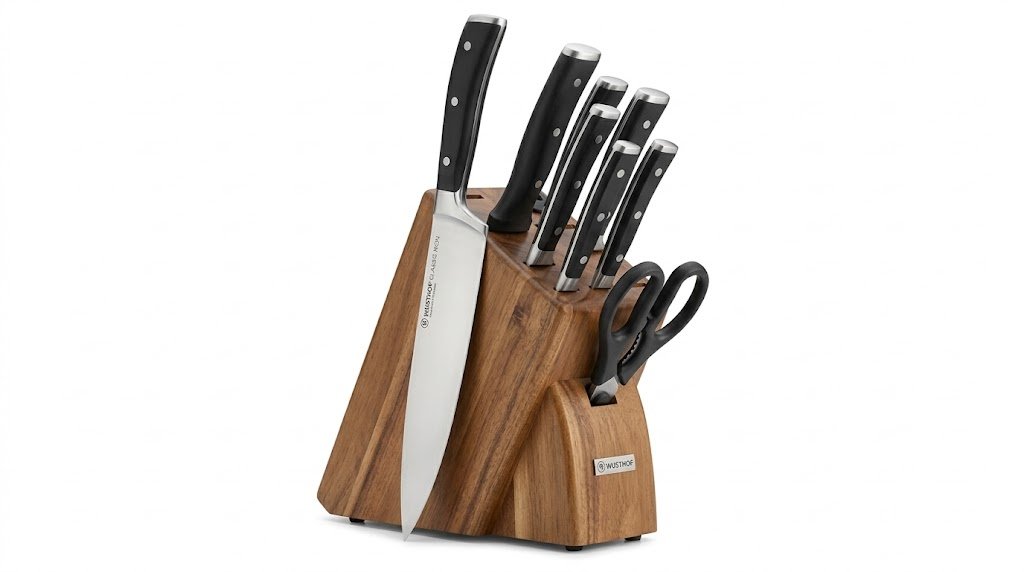
Blade Type: Forged | Blade Material: X50CrMoV15 | Blade Length: 8 in (Chef) | Origin: Germany
PROS:
- Incredible double-bolster balance
- Indestructible POM handle
- Professional-grade stain resistance
CONS:
- Premium price tag
- Heavier than Japanese alternatives
Wüsthof keeps producing incredible knives, and the Classic Ikon is no exception. The company uses a high-carbon stainless steel that holds a terrific factory edge. During testing, it effortlessly sliced everything from translucent tomato skins to heavy root vegetables. The ergonomics of this knife are excellent. The double-bolster design acts as a counterweight, making the knife feel like a natural extension of the hand. Like a custom tactical blade, this set is expertly balanced and built to last several lifetimes.
Best Budget: Victorinox Swiss Army Fibrox Set
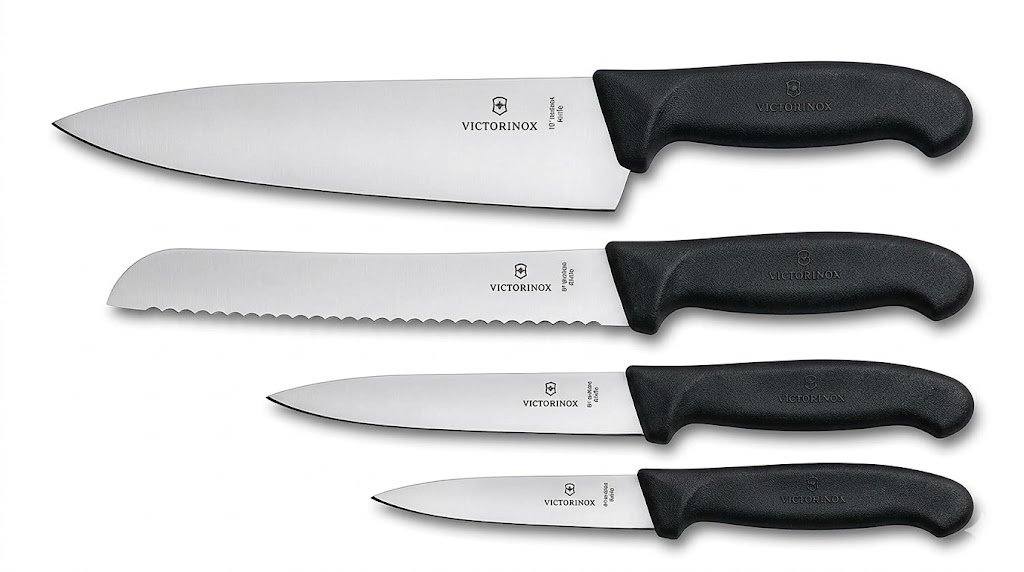
Blade Type: Stamped | Blade Material: High-Carbon Stainless | Origin: Switzerland
PROS:
- Unbeatable non-slip grip
- Lightweight for high-volume prep
- Amazing value for the price
CONS:
- Not the most “luxurious” look
- Requires more frequent honing
The Fibrox is a simple full-tang knife functional for both home use and professional butchery. It is not a “typical” tactical-looking knife, but it has excellent survival capabilities in a busy kitchen. This knife most impressed me with its handle—a rubberized texture that imparts excellent control even in wet conditions. While the steel is softer than the Wüsthof, it sharpens quickly with a honing rod. Once I had an edge on it, the blade fared much better during our “heavy-vegetable” splitting tests.
Most Precision: Shun Classic 5-Piece Network
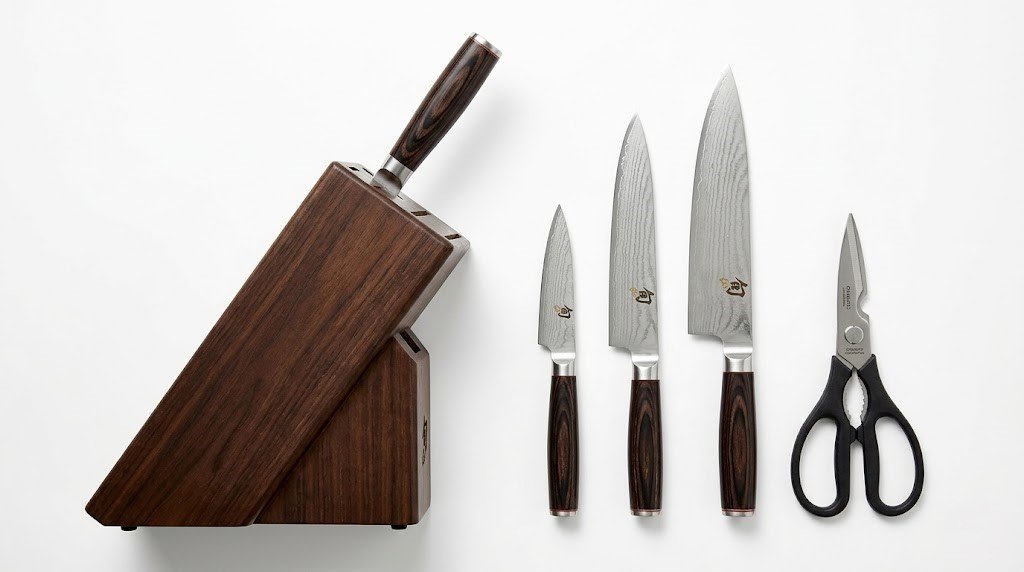
Blade Type: Damascus Clad | Blade Material: VG-MAX | Origin: Japan
PROS:
- Razor-sharp 16-degree edge
- Beautiful Tsuchime-style finish
- Excellent for detail work
CONS:
- Steel is brittle (prone to chipping)
- D-shaped handle is right-hand specific
The Shun Classic has an incredible “cool factor” thanks to its double-edge, Damascus-style design. During my testing, I found the knife to be exceptional at precision piercing and thin dicing. Despite being made of harder, high-grade steel, it handles abrasive materials like citrus and herbs without losing its bite. This knife was designed primarily as a surgical tool for the kitchen. If you want a robust but thin backup to your heavy German blades, this is the one.
Most Versatile: Global Ikasu 7-Piece Block
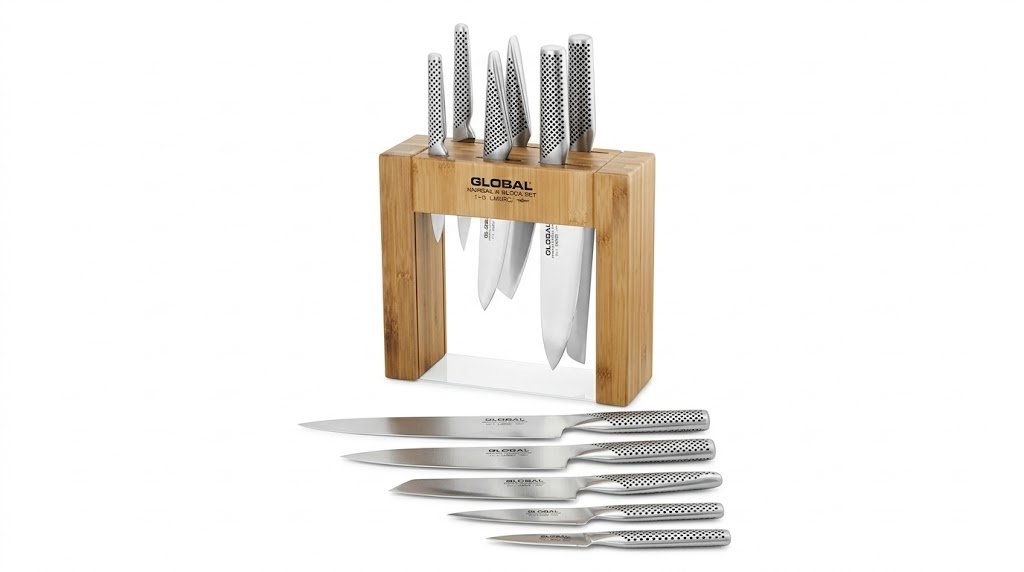
Blade Type: Stamped/Welded | Blade Material: CROMOVA 18 | Origin: Japan
PROS:
- Incredibly lightweight
- Hygienic all-metal design
- Excellent edge retention
CONS:
- Metal handles can feel cold
- Polarizing “dotted” grip
Global has long been known for its unique combat-style aesthetics. I’ve been impressed with this set in the years that I’ve owned it. I’ve subjected these knives to much abuse, including heavy catering tasks. Maintenance has been minimal thanks to the CROMOVA 18 steel’s excellent edge retention. The sand-filled handles provide surprising ergonomics, though some may find them too slim for larger hands. This knife is an excellent value for those who want a modern, fast-moving blade.
Best Hybrid: Henckels 20-Piece Forged Premio
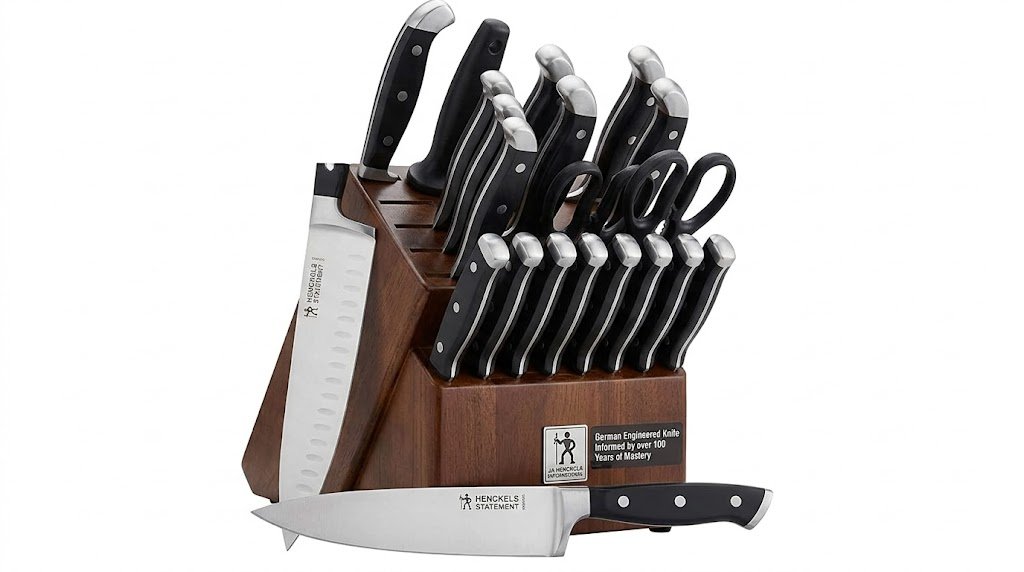
Blade Type: Forged | Blade Material: Stainless Steel | Origin: Germany/China
PROS:
- Classic forged bolster
- Affordable “Pro” feel
- Strong full-tang construction
CONS:
- Steel quality is mid-tier
- Handle can feel blocky
The Forged Premio offers a comfortable grip and a blade strong enough for “batoning” through heavy poultry. This knife passed all my cutting tests with flying colors, though it needed a touch-up after the first week of heavy use. The drop-point style chef knife does an excellent job of carving and notching, making it a solid choice for home enthusiasts who want the look of a $500 set for half the price.
Best Large: Zwilling Pro 19-Piece Professional
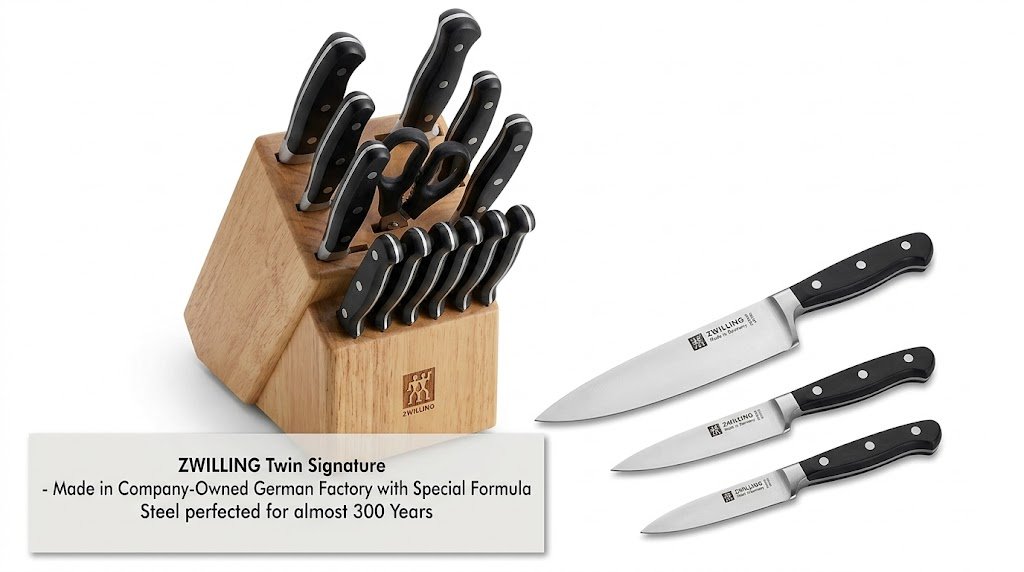
Blade Type: Forged | Blade Material: Friodur Ice-Hardened | Origin: Germany
PROS:
- Innovative curved bolster for pinch grip
- Heavyweight durability
- Comprehensive set for serious prep
CONS:
- Takes up a lot of counter space
- Very heavy
This knife is a beefy beast of a tool. Seriously, at nearly a pound for the chef’s blade, it can take all the punishment of a heavy-duty kitchen task. The ice-hardened steel splitting test did nothing to harm the factory edge; it was still razor-sharp after dicing ten pounds of carrots. The downside is its size—it’s not an “EDC” knife for a quick sandwich and best suits users taking on hardcore meal prep or large-scale holiday cooking scenarios.
Best Small: Misen Essentials 4-Piece
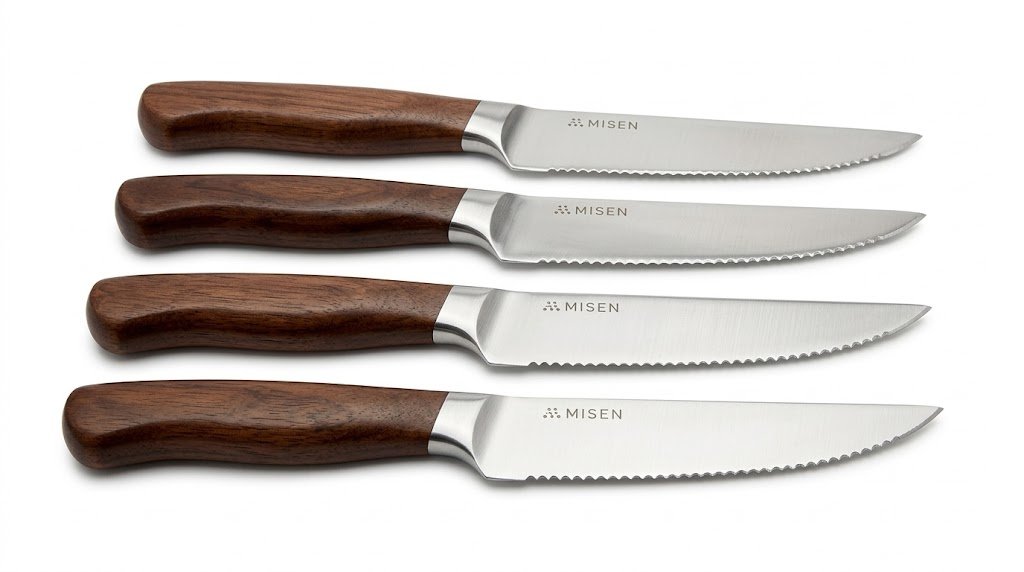
Blade Type: Hybrid | Blade Material: AICHI AUS-10 | Origin: USA/China
PROS:
- Premium AUS-10 steel
- Slim, compact profile
- High customization in colors
CONS:
- Only three knives (no block)
- Smaller handles
I’ve sung the praises of the Misen line many times because it’s such a cool, versatile knife. The slim profile makes it easy to store in a small apartment or a professional knife roll. The AUS-10 steel holds an excellent edge, requiring only minor touch-ups. Given the excellent price point, this is a very functional starter option for anyone who wants high-end steel without the bloated piece count.
How To Choose The Best Kitchen Knife Set
Avoid buying a set solely because it looks cool in the box. Many “celebrity” sets are designed for looks rather than function. The approach to buying a kitchen set should be the same as purchasing a tactical tool: strength and quality components.
- Steel Quality: Knives that don’t state the steel type are usually made of low-grade steels. Look for terms like X50CrMoV15, VG-MAX, or AUS-10. Steels like these offer the best edge retention but require a quality honing rod to maintain.
- Ergonomics: Since you’ll use these daily, buy for hand-feel. Consider knives with a tapered bolster and handles with a texture or rubberized grip to avoid slips in wet conditions.
- Blade Grind: Flat grinds are the most common and versatile. For those planning on lots of heavy slicing, consider a hollow-ground edge (Granton edge) which prevents food from sticking.
- Serrations: Many cheap sets come with serrated edges to hide poor steel. Remember that serrations are notoriously difficult to sharpen—limit them to your bread knife only.
Why Trust Us
We’ve tested a ton of knives this year. These blades were subjected to rigorous cutting tests, including breaking down proteins, mincing fibrous aromatics, and prolonged slicing on wooden boards. I also leaned on my experience writing professionally about cutlery to find the best tactical-grade kitchen options.
Read More Guide’s: Best Fixed Blade Knife: Top 5 Survival Picks (2026)
FAQs
Q: How often should I sharpen my knife set?
A: You should hone your knives with a steel rod every few uses to keep the edge aligned. Actual sharpening should occur once or twice a year, depending on use.
Q: Can I put professional knives in the dishwasher?
A: Absolutely not. The heat and chemicals will ruin the temper of the steel and crack the handles. Hand wash and dry immediately.
Q: What is the most important knife in the set?
A: The Chef’s Knife. It handles about 90% of all kitchen tasks. If you can only afford one high-quality blade, make it that one.
Q: Is a heavier knife better?
A: Not necessarily. German knives (Wüsthof/Zwilling) are heavier and rely on gravity to help cut. Japanese knives (Shun/Global) are lighter and rely on speed and sharpness. It’s a matter of personal preference.
Q: What does “Full Tang” actually mean?
A: It means the steel of the blade runs the entire length and width of the handle. It’s the hallmark of a durable, well-balanced knife.
Q: Why do my knives get spots on them?
A: Even “stainless” steel can rust if left wet. Carbon in the steel provides the edge, but it’s susceptible to oxidation. Always dry your knives after washing.
Q: Do I really need a bread knife?
A: Yes. A straight edge will crush a soft loaf of bread; a serrated edge “saws” through the crust without deforming the interior.
Final Thoughts
We went a bit unconventional with our Kitchen Knife Sets picks, offering practical options rather than gimmick blades. Wüsthof continues to impress us with its commitment to quality, while the Zwilling Pro remains the runner-up for its incredible strength and innovative bolster design. Choose the set that feels like an extension of your hand, and your kitchen prep will never be the same.