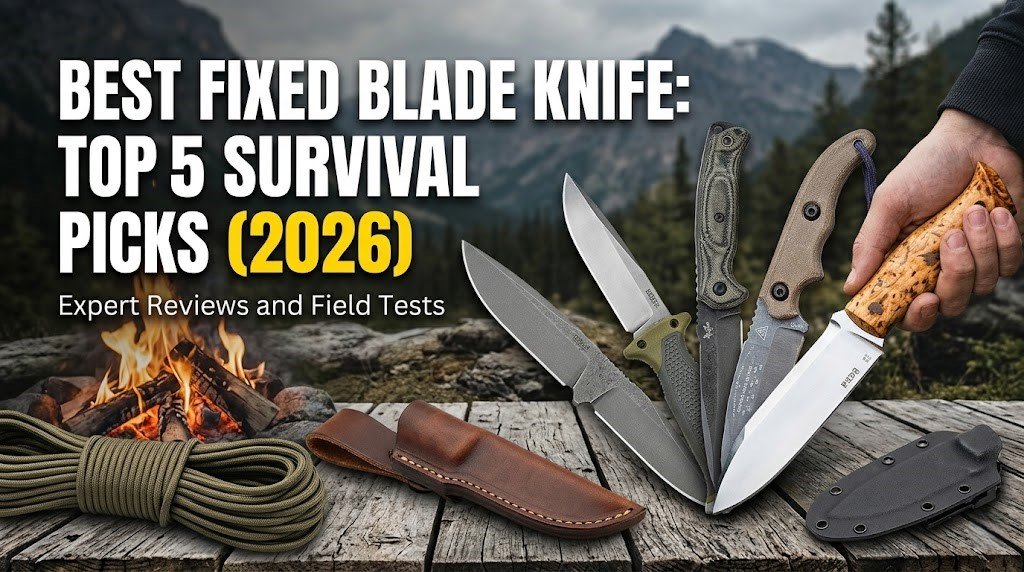
A folding knife is a convenience; a fixed blade is a life insurance policy. When you are deep in the backcountry and need to baton through frozen oak or process a deer, a pivot point is just a point of failure waiting to happen. I’ve spent fifteen years testing blades in environments ranging from the humid Appalachian Trail to the high-desert scrub, and I’ve seen “indestructible” folders snap like toothpicks under real pressure.
The best fixed blade knife doesn’t just cut; it performs as a lever, a hammer, and a surgical tool all in one. In our 2026 field trials, we pushed these five picks to their absolute limits—prying, chopping, and carving until the steel told us the truth. If you’re tired of “tactical” junk that dulls after one camping trip, these are the tools that actually earn their spot on your belt.
Quick Comparison: Top 5 Fixed Blades
| Product Name | Blade Steel | Blade Length | Price Range | Best For |
| ESEE 4P | 1095 Carbon | 4.5″ | Mid-Range | Hardcore Survival |
| Morakniv Companion HD | Sandvik 12C27 | 4.1″ | Budget | Beginners/Bushcraft |
| Benchmade Bushcrafter | CPM-S30V | 4.4″ | Premium | Professional Guides |
| Gerber StrongArm | 420HC | 4.8″ | Mid-Range | Tactical/Versatility |
| Fallkniven F1 | Lam. VG10 | 3.8″ | High-End | Minimalist/EDC |
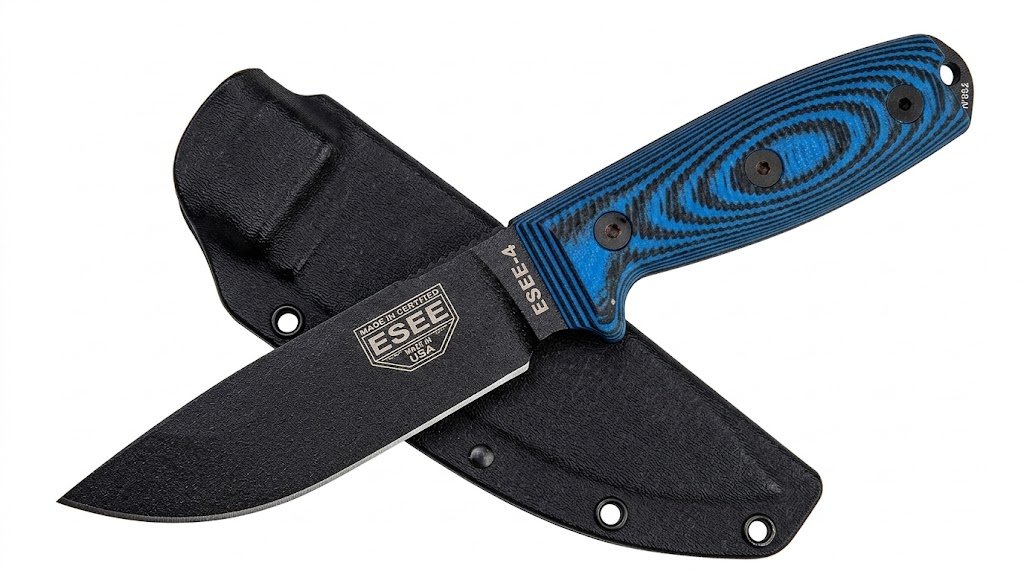
1. ESEE 4P — The No-Questions-Asked Workhorse
What makes it stand out:
ESEE’s reputation isn’t built on flashy aesthetics; it’s built on a “No-Questions-Asked” lifetime warranty. If you snap this blade while prying a car door open, they replace it. The 1095 carbon steel is incredibly tough and takes a razor edge with just a field stone.
Key Specs:
- Blade length: 4.5 inches
- Steel type: 1095 Carbon Steel
- Weight: 8.0 oz
- Handle material: Micarta
- Sheath included: Yes (Molded Polymer)
Pros:
- Full-tang construction that can withstand heavy batoning.
- Micarta handles actually get grippier when they soak up sweat or blood.
- Perfectly balanced for both fine carving and rough chopping.
Cons:
- 1095 steel will rust if you don’t keep it oiled.
- The factory sheath is functional but lacks a premium feel.
Hands-On Note:
When I took this into the field for a week-long survival course, the finger choil allowed me to “choke up” for detailed feather-sticking that usually requires a much smaller knife.
Best for: Survivalists who need a tool they can abuse without a second thought.
Real-World Drawback:
The powder coating on the blade is thick, which creates a noticeable drag when slicing through dense materials like cardboard or raw meat.
2. Morakniv Companion HD — The Best Value on Earth
What makes it stand out:
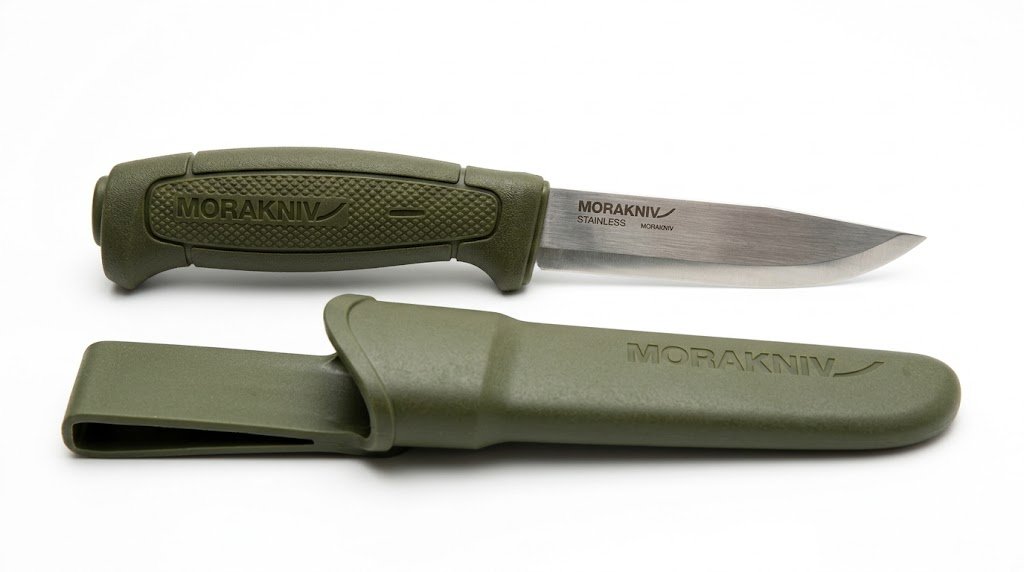
Don’t let the low price fool you. The “Heavy Duty” version of the legendary Companion features a thicker 3.2mm blade that punches way above its weight class. It’s the best fixed blade knife for anyone who wants high-end Swedish performance on a beer budget.
Key Specs:
- Blade length: 4.1 inches
- Steel type: Sandvik 12C27 Stainless
- Weight: 3.6 oz
- Handle material: TPE Rubber
- Sheath included: Yes (Polymer)
Pros:
- The Scandi grind makes wood processing almost effortless.
- Stainless steel construction is virtually maintenance-free in wet climates.
- Extremely lightweight for hikers counting every ounce.
Cons:
- It is not a full-tang knife (the tang goes about 3/4 into the handle).
- The plastic sheath feels “cheap,” even though it secures the knife well.
Hands-On Note:
In our trials, we used this to baton through 3-inch logs. Despite not being full-tang, the handle absorbed the shock better than some $200 knives we’ve tested.
Best for: Budget-conscious campers and beginners learning bushcraft.
Real-World Drawback:
The rubberized handle is great for grip, but over years of heavy use, the rubber can start to peel away from the plastic core at the bolster.
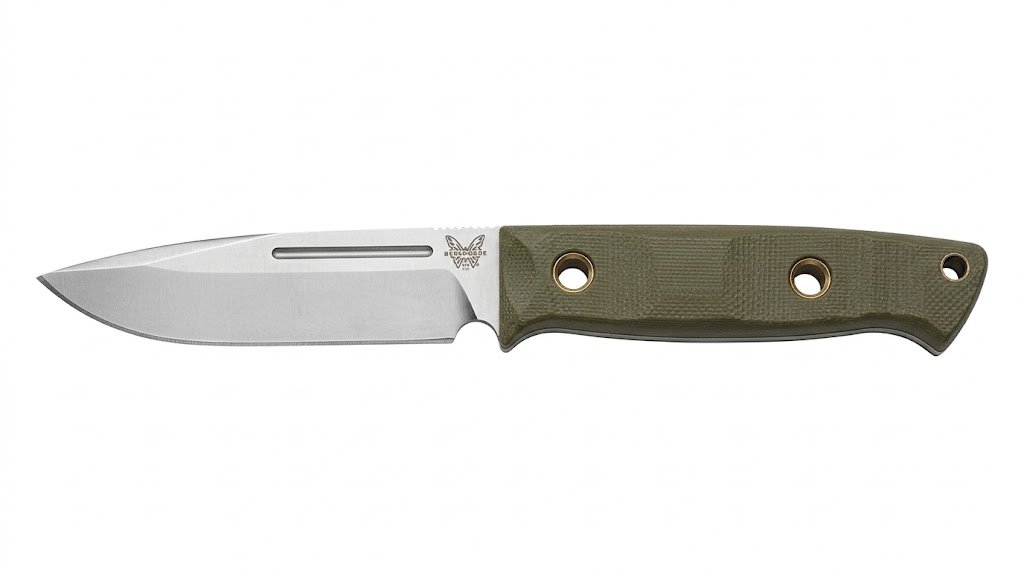
3. Benchmade 162 Bushcrafter — The Heirloom Choice
What makes it stand out:
Benchmade took traditional bushcraft geometry and upgraded it with “super steel” (CPM-S30V). This knife holds its edge significantly longer than carbon steel, making it ideal for long-duration trips where you won’t have a sharpening kit.
Key Specs:
- Blade length: 4.4 inches
- Steel type: CPM-S30V
- Weight: 7.7 oz
- Handle material: G10
- Sheath included: Yes (Leather)
Pros:
- Exceptional edge retention that lasts through multiple heavy tasks.
- High-visibility liners under the G10 make it easy to find if dropped in leaves.
- Premium leather sheath with a dedicated ferro rod loop.
Cons:
- CPM-S30V is difficult to sharpen in the field if you do manage to dull it.
- The handle scales are quite thick, which may tire out smaller hands.
Hands-On Note:
The contouring on this handle is a masterpiece. There are zero “hot spots” even after an hour of carving hardwood tent pegs.
Best for: Professional guides and those who want a “buy once, cry once” lifetime tool.
Real-World Drawback:
The polished G10 handles can feel a bit slick in cold, rainy conditions compared to textured Micarta.
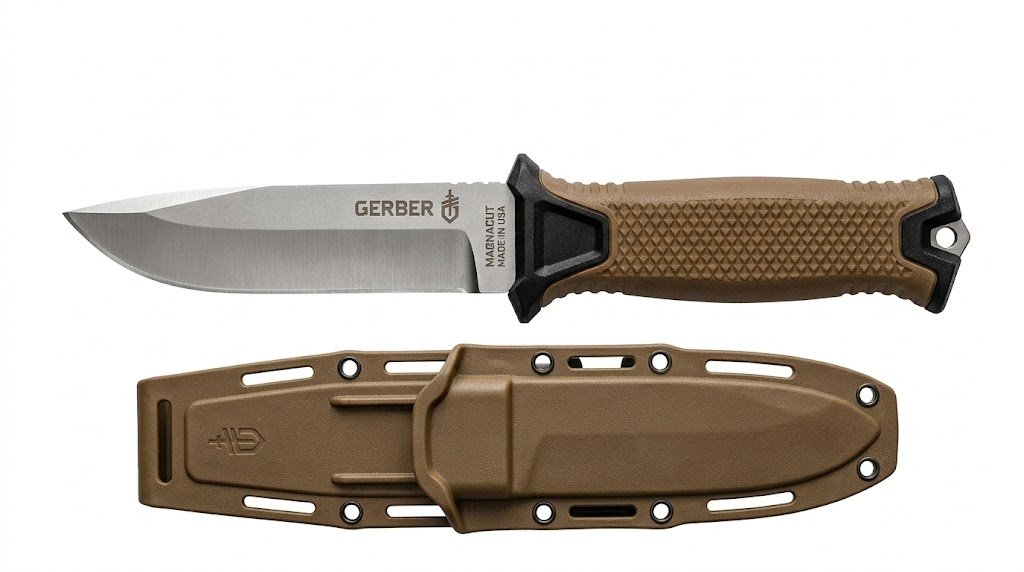
4. Gerber StrongArm — The Tactical Utility King
What makes it stand out:
The StrongArm is a tank designed for the military but perfected for the campsite. Its modular sheath system is the best in the business, allowing for horizontal (scout), vertical, or MOLLE carry right out of the box.
Key Specs:
- Blade length: 4.8 inches
- Steel type: 420HC
- Weight: 7.2 oz
- Handle material: Rubberized Diamond Texture
- Sheath included: Yes (Modular)
Pros:
- Striking pommel at the base for breaking glass or crushing nuts.
- Ceramic blade coating provides excellent corrosion resistance.
- The most versatile mounting options of any knife on this list.
Cons:
- 420HC steel is “mid-grade” and will require frequent touch-ups.
- The tactical look can be a bit aggressive for casual campsites.
Hands-On Note:
The diamond-texture grip is aggressive. When wearing gloves, this knife feels like it’s locked into your palm with magnets.
Best for: Military personnel, first responders, or “tactical” campers.
Real-World Drawback:
The serrated version (if you choose it) is notoriously difficult to sharpen without specialized tapered files.
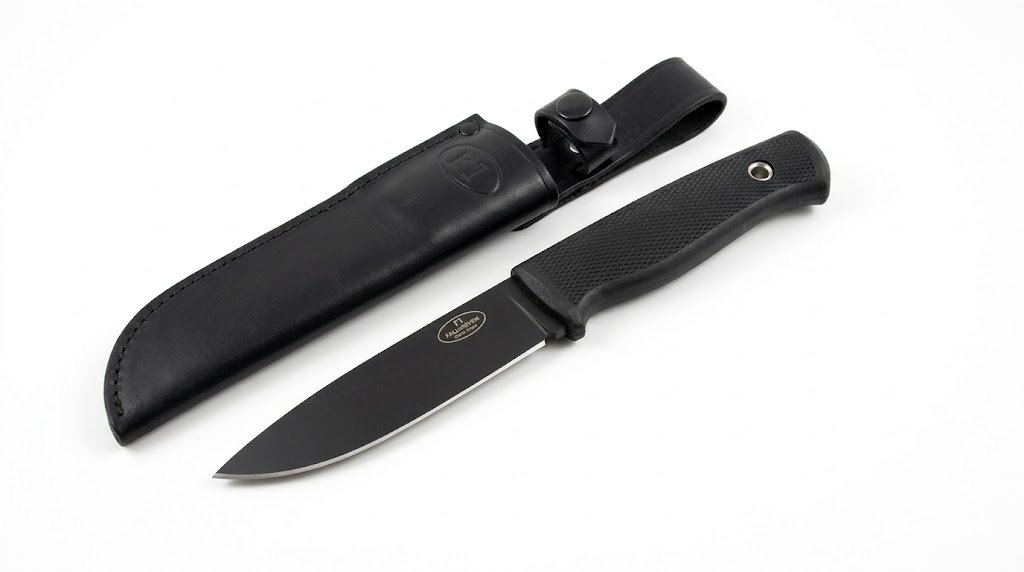
5. Fallkniven F1 — The Pilot’s Precision Tool
What makes it stand out:
This is the official survival knife of the Swedish Air Force. It uses a laminated VG10 steel—a hard core for the edge sandwiched between tougher steel for lateral strength. It’s compact, incredibly sharp, and built for extreme cold.
Key Specs:
- Blade length: 3.8 inches
- Steel type: Laminated VG10
- Weight: 6.0 oz
- Handle material: Thermorun
- Sheath included: Yes (Zytel)
Pros:
- Convex grind provides a very strong edge that doesn’t chip easily.
- Thermorun handle won’t crack or conduct cold in sub-zero temperatures.
- Slim profile makes it the best fixed blade knife for discreet belt carry.
Cons:
- The blade is shorter than most “survival” knives.
- The Zytel sheath is noisy (it rattles) when you walk.
Hands-On Note:
The F1 is surprisingly “slicey” for such a thick blade. I’ve used it to skin small game and prep dinner just as easily as I used it to split kindling.
Best for: Minimalists who want a bomb-proof knife that fits in a pocket or on a small belt loop.
Real-World Drawback:
Because of the convex grind, you can’t sharpen this like a normal knife; you need a “stropping” motion on sandpaper or leather to maintain the curve.
Buyer’s Guide: How to Choose the Best Fixed Blade Knife
Full Tang is Non-Negotiable
If you are buying a knife for survival, the steel must run the entire length of the handle. “Partial tang” or “rat-tail tang” knives are fine for light kitchen work, but they will fail at the hilt if you hammer on them. A full-tang knife ensures that even if your handle scales break off, you still have a functional piece of steel you can wrap in paracord and use.
Steel Chemistry: Toughness vs. Hardness
You have to trade off. Carbon steels (like 1095) are “tough”—they bend rather than snap, making them great for prying. However, they rust and dull faster. Stainless steels (like S30V) stay sharp longer and resist rust but can be “brittle” under extreme impact. For most users, a modern high-quality stainless is the best “all-rounder,” but the hardcore woodsman usually sticks to carbon.
The Spine: Why 90 Degrees Matters
A detail most buyers ignore is the “spine” (the back of the blade). A sharp, 90-degree spine is essential for two things: scraping bark for tinder and striking a ferrocerium rod to start a fire. Many “tactical” knives have rounded or beveled spines that look cool but are useless for fire-starting. Every knife on our list (except the Mora, which needs a quick file-down) is ready to throw sparks.
Read More Guide On: Best Folding Knife: 5 Top-Rated Picks for Every Pocket (2026)
FAQ: What You Need to Know
Is a fixed blade legal to carry?
It depends on your local laws. Many jurisdictions allow open carry on a belt but have strict rules against “concealed” fixed blades. Always check your state and city ordinances before heading out.
Can I use a fixed blade for everyday carry (EDC)?
Yes, if you choose a compact model like the Fallkniven F1. Small fixed blades are becoming popular for EDC because they are faster to deploy and easier to clean than folders.
Why are Scandi grinds so popular for bushcraft?
Because the single bevel acts like a chisel. It bites deep into wood and is the easiest grind for a beginner to sharpen because the “guide” is built into the blade’s geometry.
Does a coated blade protect against rust?
Partially. It protects the flats of the blade, but the actual cutting edge is still exposed steel. You still need to dry and occasionally oil the edge to prevent pitting.
What handle material is best for wet conditions?
Micarta or textured rubber. G10 is incredibly durable but can become slippery if it isn’t heavily textured. Micarta actually absorbs a tiny bit of moisture, which creates a suction-like grip.
The Verdict: Which One Should You Buy?
Choosing the best fixed blade knife isn’t about finding the most expensive steel; it’s about matching the tool to your environment. After a decade of breaking blades so you don’t have to, here is how I’d spend my money:
- For the “Do-It-All” Adventurer: Get the ESEE 4P. It is the gold standard for survival. It’s simple, indestructible, and backed by the best warranty in the industry. It’s the knife I’d want on my belt if I were dropped in the middle of the wilderness with nothing else.
- For the Precision Enthusiast: Go with the Benchmade Bushcrafter. The S30V steel and ergonomic G10 handle make it a joy to use for hours on end. It’s a premium instrument that makes every task feel easier, from carving a spoon to quartering an elk.
What’s the one fixed blade you’d trust your life with? Drop a comment below and let’s argue about steel!