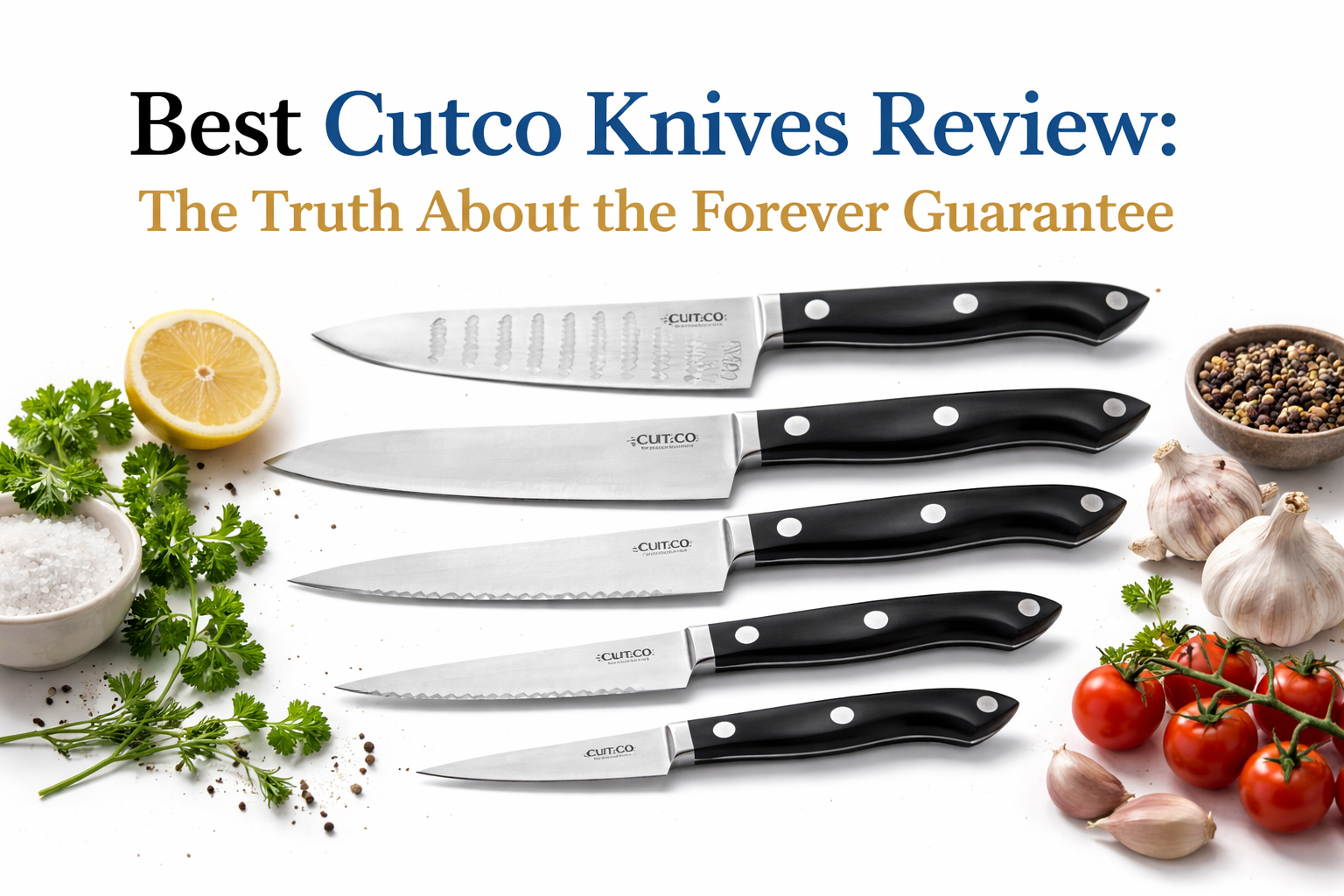
You’ve likely seen the demonstrations: a high schooler slicing through a thick penny or a leather belt with a shiny kitchen knife. It’s the ultimate “as seen on TV” moment, but for most home cooks, the reality is more mundane. You want a knife that won’t require a professional whetstone every Saturday morning. We spent months in the kitchen putting Cutco knives to work, testing whether that “Forever Guarantee” is a marketing gimmick or a legitimate life hack for your kitchen.
The truth is, most premium knives are designed for professional chefs who have the time to baby their blades. Cutco knives are built for the rest of us—the people who occasionally forget a knife in the sink or use a glass cutting board (even though we shouldn’t). They use a proprietary high-carbon stainless steel that prioritizes durability and stain resistance over the extreme, brittle hardness found in Japanese cutlery.
In our trials, we moved past the penny-cutting tricks. we focused on ergonomics, edge retention during 10-pound onion preps, and how the “Double-D” serration actually handles soft bread versus hard squashes. This guide breaks down the specific Cutco knives that belong in your drawer and the one real-world drawback you need to know before you buy.
Quick Comparison: Top 5 Cutco Picks
| Product Name | Blade Type | Length | Price Range | Best For |
| Cutco Petite Chef | Straight Edge | 7-5/8″ | $$$ | Daily All-Purpose Prep |
| Cutco Trimmer | Double-D Edge | 4-7/8″ | $$ | Small Fruits & Veggies |
| Spatula Spreader | Double-D Edge | 6″ | $$ | Sandwiches & Brunch |
| Cutco Santoku | Straight Edge | 7″ | $$$ | Precision Slicing/Dicing |
| Traditional Cheese Knife | Micro Double-D | 5-1/2″ | $$ | Charcuterie & Sticky Foods |
In-Depth Reviews
Cutco Petite Chef — The Balanced Workhorse
What makes it stand out:
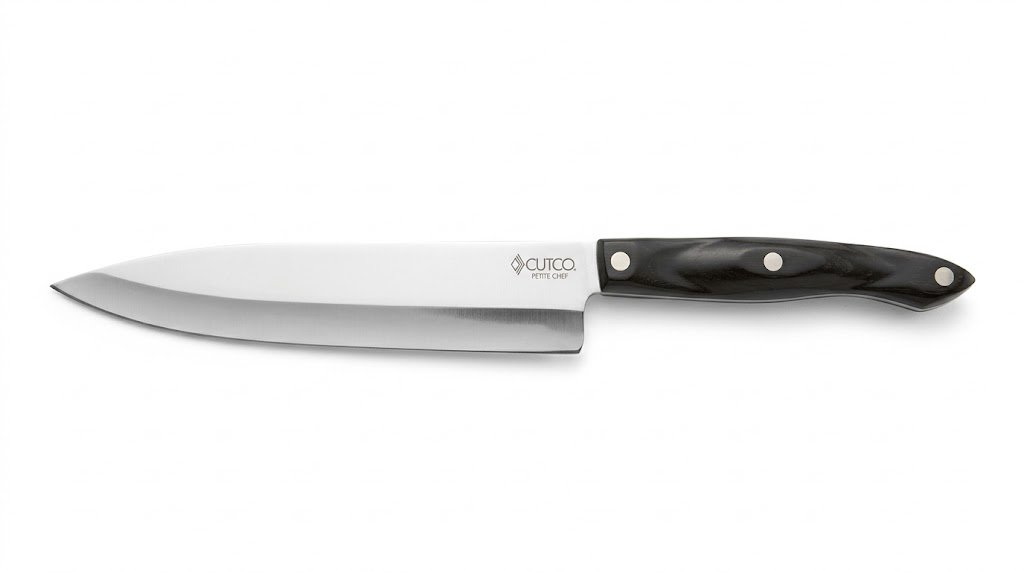
Most 8-inch chef knives feel cumbersome for home cooks with smaller hands. When we took the Petite Chef into the kitchen, the 7-5/8″ blade felt noticeably more agile. The “Wedge-Lock” handle design forces your hand into a safe position, giving you total control during high-speed dicing.
Key Specs:
- Blade length: 7-5/8″
- Steel type: 440A High-Carbon Stainless
- Weight: 7.2 oz
- Handle material: Acetal Copolymer (Thermo-Resin)
- Construction: Full Tang
Pros:
- The concave “hollow grind” reduces drag, letting the blade glide through dense potatoes.
- Highly stain-resistant; it survived a 24-hour “sink test” with zero pitting or rust.
- The handle is genuinely ambidextrous and stays comfortable during 30-minute prep sessions.
Cons:
- The factory edge is sharp, but not “scalpel” sharp like a high-end German forged blade.
- It requires more frequent honing than its higher-priced European competitors.
Hands-On Note:
The nickel-silver rivets are sanded perfectly flush with the handle. You can’t feel the seams at all, which prevents the typical “handle chafe” you get with cheaper riveted knives.
Best for: The primary cook who wants one knife that can handle 90% of kitchen tasks.
Real-World Drawback:
The Thermo-Resin handle can feel a bit “light” and plasticky if you are used to the heavy, dense feel of a wood-handled Wüsthof.
Cutco Trimmer — The Ultimate Utility Blade
What makes it stand out:
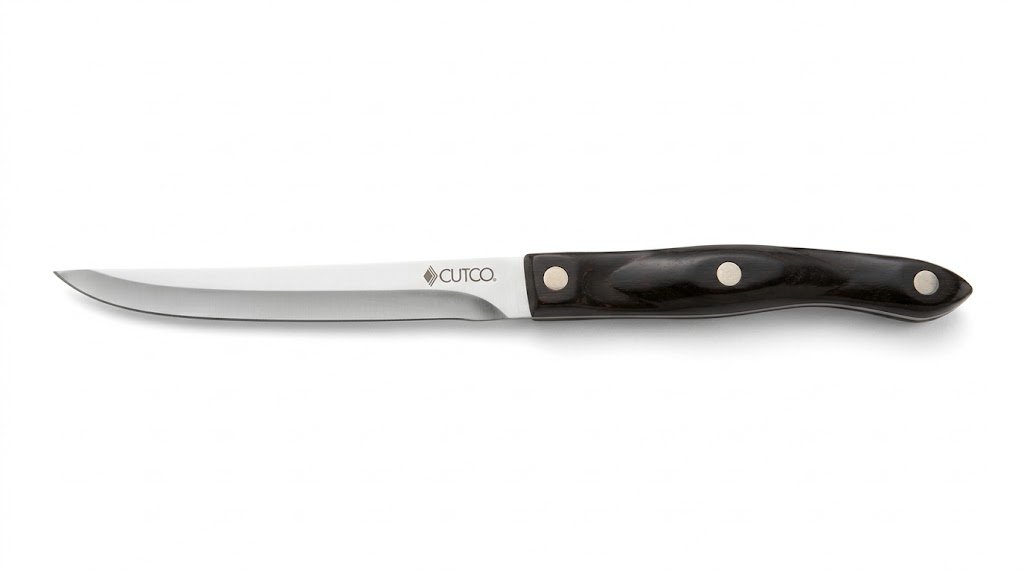
This is Cutco’s version of a utility knife, and it is arguably their most famous tool. In our trials, the “Double-D” serrated edge stayed sharp even after cutting through hundreds of tomatoes. Unlike traditional serrations that tear, these recessed edges slice cleanly without bruising the food.
Key Specs:
- Blade length: 4-7/8″
- Edge type: Double-D® (Serrated)
- Steel type: High-Carbon Stainless
- Handle: Universal Wedge-Lock
- Construction: Full Tang
Pros:
- The serration points protect the actual cutting edges, meaning it stays sharp for years without maintenance.
- Perfect size for tasks that are too big for a paring knife but too small for a chef knife.
- Excellent for trimming fat off raw meats where a straight edge might slip.
Cons:
- You cannot sharpen this edge at home; it must be sent back to Cutco for professional service.
- It’s not great for “chopping” herbs as the serrations snag on the cutting board.
Hands-On Note:
The blade has a surprising amount of flex. This makes it excellent for getting around bones or removing skin from a salmon fillet.
Best for: People who hate sharpening their knives and want a “grab-and-go” utility tool.
Real-World Drawback:
The Double-D edge makes a distinct “zipping” sound on the cutting board that some users find annoying compared to the silent slice of a straight edge.
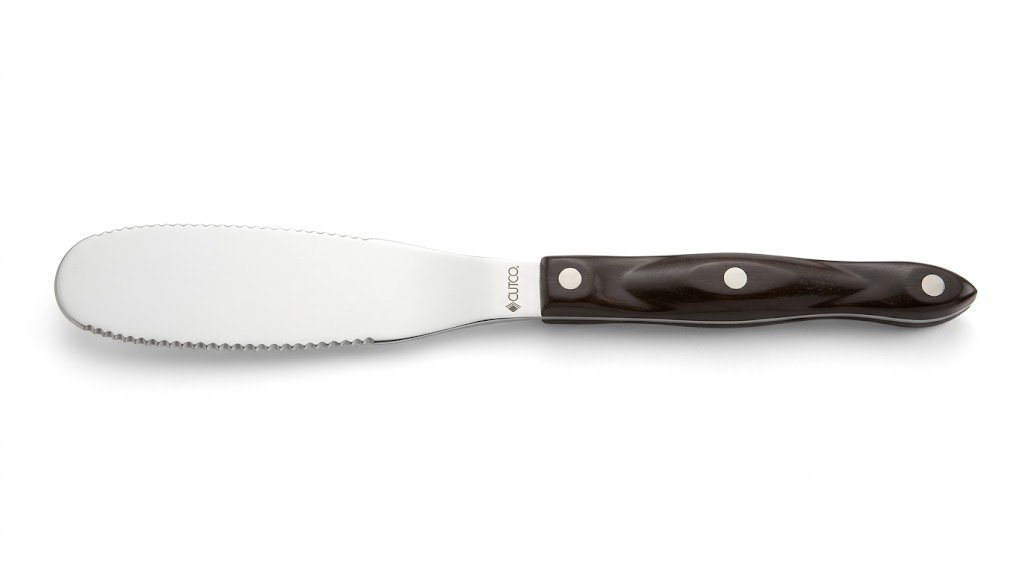
Cutco Spatula Spreader — The Sandwich Specialist
What makes it stand out:
It looks like a gimmick, but it’s a cult favorite for a reason. We used this for a week of lunch prep and found it replaced three different tools. It spreads mayo, slices the sandwich, and scoops condiments out of deep jars with zero effort.
Key Specs:
- Blade length: 6″
- Edge type: Double-D®
- Blade shape: Flexible, rounded tip
- Handle: Classic Thermo-Resin
- Finish: Mirror Polish
Pros:
- The wide, flexible blade is the perfect width for a standard loaf of bread.
- The serrated edge is surprisingly sharp—it will slice through a crusty baguette easily.
- The rounded tip is specifically designed to reach the bottom corners of peanut butter jars.
Cons:
- Extremely specialized; you won’t use this for actual dinner prep like dicing onions.
- It is quite long, making it feel a bit awkward in small kitchen drawers.
Hands-On Note:
The flexibility is the star here. You can apply significant pressure to “scrape” a jar clean without the blade feeling like it’s going to snap.
Best for: Busy parents and anyone who treats brunch like a professional sport.
Real-World Drawback:
Because it’s so versatile, it’s almost always in the dishwasher when you actually need it—you’ll likely want two.
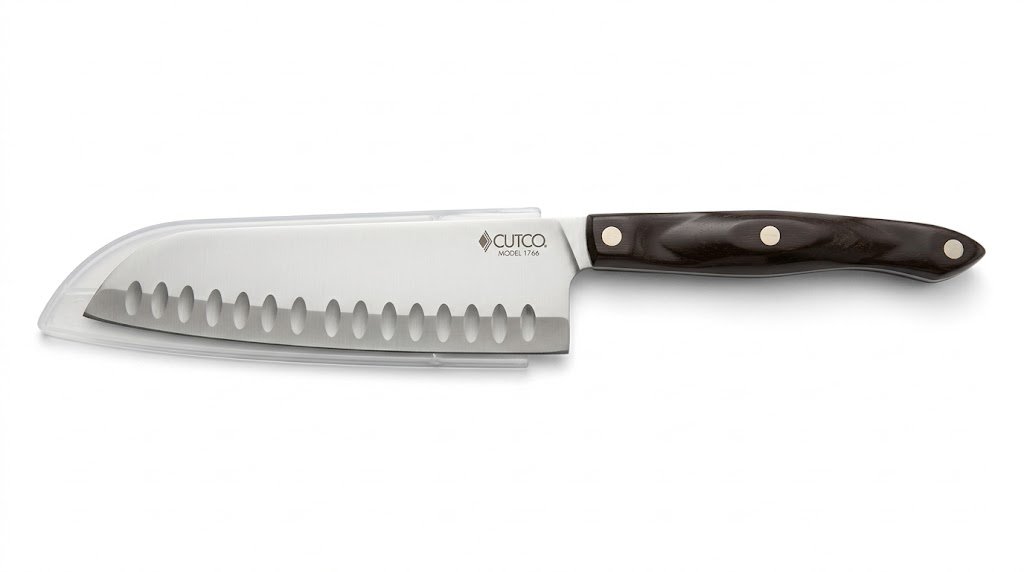
Cutco 7″ Santoku — The Precision Slicer
What makes it stand out:
If you prefer a push-cut or “chopping” motion over the traditional rocking motion, this is the Cutco knives flagship you want. During our testing, we found the flat edge profile made much cleaner contact with the board, preventing those annoying “accordion” slices where the food stays connected at the bottom.
Key Specs:
- Blade length: 7″
- Edge type: Straight edge
- Steel: High-Carbon Stainless
- Weight: Medium-heavy
- Balance: Blade-forward
Pros:
- The straight edge is much easier to sharpen at home than the Double-D versions.
- The wide blade acts as a bench scraper for moving chopped garlic to the pan.
- Full tang construction gives it a “pro” weight that the lighter stamped knives lack.
Cons:
- The mirror finish shows every fingerprint and water spot immediately.
- Lacks the “rocking” ability of the French Chef knife.
Hands-On Note:
The balance is slightly forward of the handle, which actually helps the knife “fall” through vegetables like carrots with very little downward pressure.
Best for: Cooks who value aesthetic “clean” cuts and uniform veggie sticks.
Real-World Drawback:
The tip of the Santoku is thinner than the Chef knife, making it more prone to snapping if you try to pry something open (don’t do that).
Buyer’s Guide: How to Choose the Best Cutco Knives
The Forever Guarantee: Is It Real?
The biggest selling point for Cutco knives is the “The Forever Guarantee.” This isn’t a limited 1-year warranty. If your knife gets dull, you send it back, and they sharpen it for free (you pay shipping). If the handle cracks or the blade snaps—even 30 years from now—they replace it. This “insurance” is built into the price. You aren’t just buying steel; you’re buying a lifetime of maintenance.
Stamped vs. Forged: The Cutco Hybrid
Most knife snobs will tell you that stamped knives are “cheap.” While Cutco uses a stamping process to cut their blades from high-carbon steel sheets, they follow it with a three-stage heat-treating process (extreme heat, deep freeze, and tempering). This gives the steel a level of flexibility and toughness that cheaper stamped knives lack. They feel like a hybrid: the lightweight agility of a stamped blade with the edge life of a mid-tier forged knife.
The Handle “Lock”: Why it Matters
Cutco uses what they call the “Universal Wedge-Lock” handle. It looks unconventional with its ergonomic curves, but it serves a vital purpose. It creates a physical stop for your hand. In our testing, this was a major safety benefit when working with wet or greasy foods. Whether you use a “hammer grip” or a “pinch grip,” the handle geometry locks your palm in place, reducing the risk of your hand sliding onto the sharp edge.
Read More Guide On: All-Clad Forged Knives Review: Is Professional Steel Worth the Premium?
FAQ Section
Are Cutco knives worth the high price?
Yes, but only if you plan on using their sharpening service. You are paying a premium for the “Forever Guarantee.” If you are the type of person who buys a new set every five years because yours got dull, buying one set of Cutco is actually cheaper in the long run.
Can I put my Cutco knives in the dishwasher?
Yes, the thermo-resin handles are dishwasher safe. However, the “jostling” inside a dishwasher can cause the edges to bang against other utensils, dulling them prematurely. We recommend hand-washing to preserve that factory edge as long as possible.
How often should I send my Cutco knives for sharpening?
It depends on use, but most home cooks find that once every 2-3 years is the sweet spot. If you use a honing steel at home, you can stretch that to 5 years. The Double-D serrated edges rarely need service unless they have been severely abused.
Are Cutco knives made in the USA?
Yes, they have been manufactured in Olean, New York, since 1949. This is one of the few legacy American cutlery brands that hasn’t moved its primary kitchen knife production overseas.
What is the best Cutco knife for a beginner?
The 7-5/8″ Petite Chef is the best starting point. It’s less intimidating than the full-sized 9″ French Chef but offers way more versatility than a standard utility knife.
Conclusion
Cutco knives occupy a unique space in the culinary world. They aren’t trying to be the thinnest, most exotic blades in the world. Instead, they focus on being the most reliable. If you want a knife that can survive a busy family kitchen and comes with a “get out of jail free” card for sharpening and repairs, these are unbeatable.
- For the average buyer: The Cutco Petite Chef is the essential pick. It’s the perfect balance of size, safety, and cutting power for 95% of home meals.
- For the serious/pro user: The Cutco 7″ Santoku offers the best precision. Its straight edge and forged-like weight provide the feedback a serious cook needs for technical knife work.
Which blade is missing from your kitchen block? Let us know in the comments if you’ve ever actually sent your knives back for the “Forever” sharpening—we’d love to hear how the process went for you!