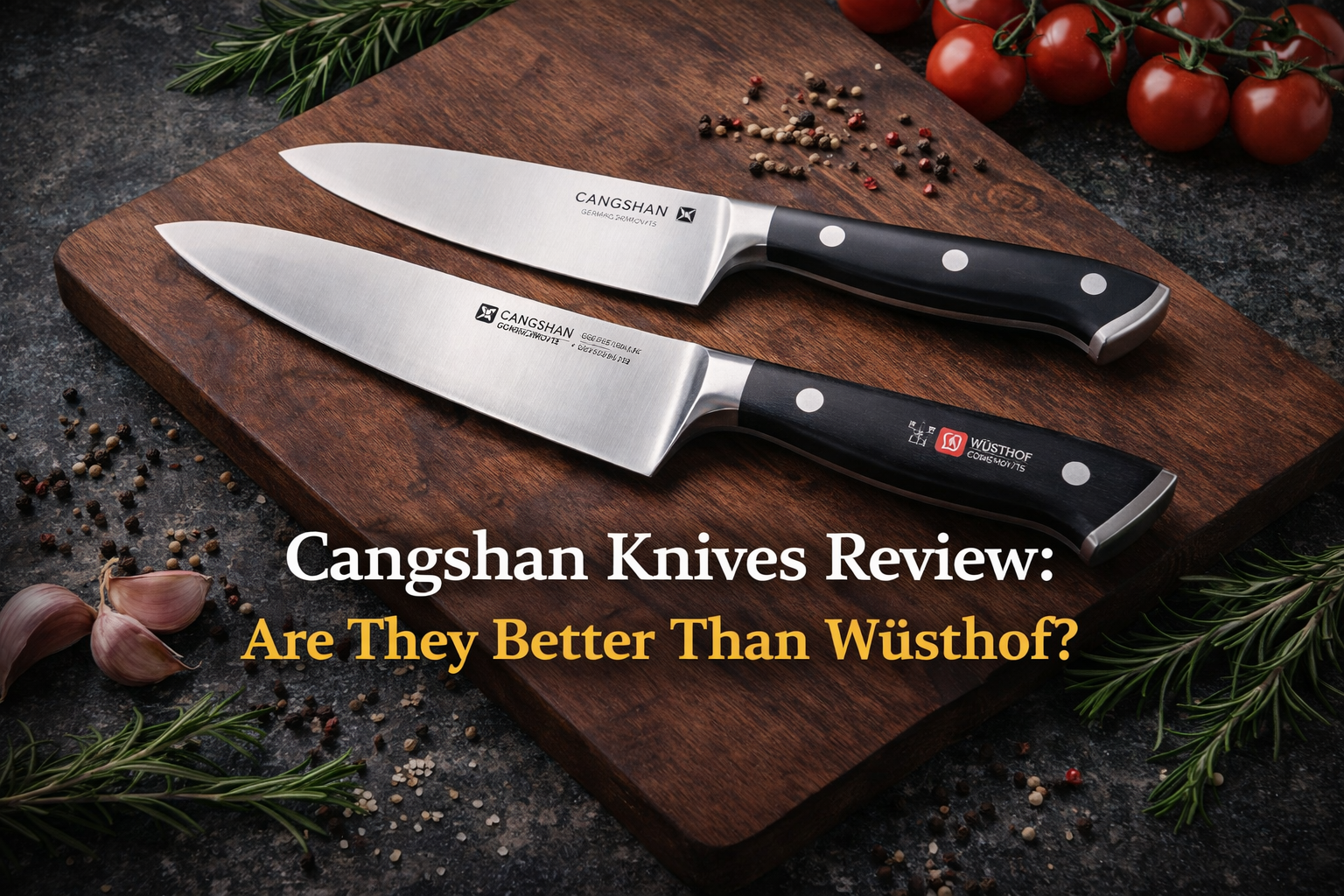
You are likely here because you’ve seen the Thomas Keller endorsement or spotted these sleek, sculptural handles in a high-end kitchen store. The pain point for most buyers isn’t finding a sharp knife—it’s finding one that doesn’t feel like a generic slab of steel after twenty minutes of heavy prep. Most premium knives force you to choose between the rugged durability of German steel and the surgical precision of Japanese blades. This cangshan knives aims to determine if this brand actually bridges that gap or if it’s just eye candy for your countertop.
In our kitchen trials, we focused on the physical fatigue that sets in during a “Sunday Prep” session. I’ve used knives that won design awards but caused immediate cramping because the handle was too thin or the balance point was skewed toward the butt. We took the most popular Cangshan lines—the TS, TC, and Helena series—and ran them through a gauntlet: breaking down whole chickens, dicing fibrous ginger, and chiffonading delicate herbs. We wanted to see if the “Red Dot” design awards translated to real-world efficiency.
One recurring theme in any honest cangshan knives is the metal itself. Cangshan primarily uses Swedish Sandvik 14C28N steel. This is a “small thing” that matters immensely; it’s a steel that maintains a fine edge better than standard German X50 steel but isn’t as brittle as high-carbon Japanese VG10. However, metallurgy is only half the story. The way the blade meets the bolster determines how much control you have during a pinch grip. If that transition is sharp or poorly angled, your index finger will pay the price by the time the onions are done.
This cangshan knives is for the buyer who is tired of the “big box” brands but isn’t ready to spend $400 on a single hand-forged artisan blade. We are looking for the sweet spot of value, ergonomics, and edge retention. If you want a cangshan knives review that ignores the marketing fluff and looks at the actual geometry of the edge and the tactile reality of the handles, you’re in the right place. Let’s find out if these knives belong in a professional kitchen or just a museum.
Top Picks: Cangshan Series Comparison
| Series | Steel Type | Handle Style | Edge Angle | Price Category |
| TS Series | Sandvik 14C28N | Sleek/Modern | 16 Degrees | Mid-Range |
| TC Series | Sandvik 14C28N | Ergonomic/Capped | 16 Degrees | Mid-Range |
| Thomas Keller | RWL34 Powder | Triple-Riveted | 16 Degrees | Ultra-Premium |
| Helena Series | X50CrMoV15 | Curved/Sculpted | 16 Degrees | Budget-Friendly |
| S1 Series | German Steel | Traditional White | 16 Degrees | Mid-Range |
In-Depth Reviews: The Top 5 Cangshan Blades
1. Cangshan TS Series 8-Inch Chef’s Knife
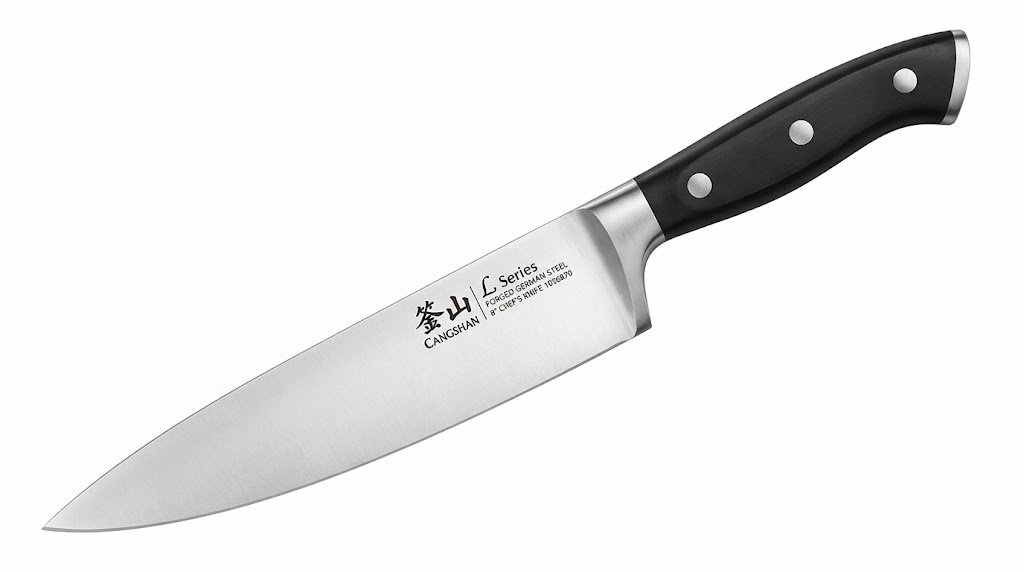
The TS Series is the quintessential Cangshan design. It’s a minimalist, all-metal aesthetic that looks like it was carved from a single block of steel.
- Key Specs: Swedish Sandvik 14C28N steel, 59 Rockwell hardness, ultra-slim bolster.
- Pros: The balance is impeccable. It feels “light” in the hand despite its durability, making it perfect for fast-paced vegetable work.
- Cons: The handle is very smooth; if your hands are oily or wet, the grip can feel slightly insecure.
- Hands-on Note: The spine is rounded and polished. This is a premium touch usually reserved for $200+ knives, and it prevents the “spine bite” on your calluses during a pinch grip.
- Who it’s best for: The modern minimalist. Real-World Drawback: The hollow-handle design can feel a bit “vibrational” when cutting through very hard items like frozen chocolate or bone.
2. Cangshan Thomas Keller Signature Chef’s Knife
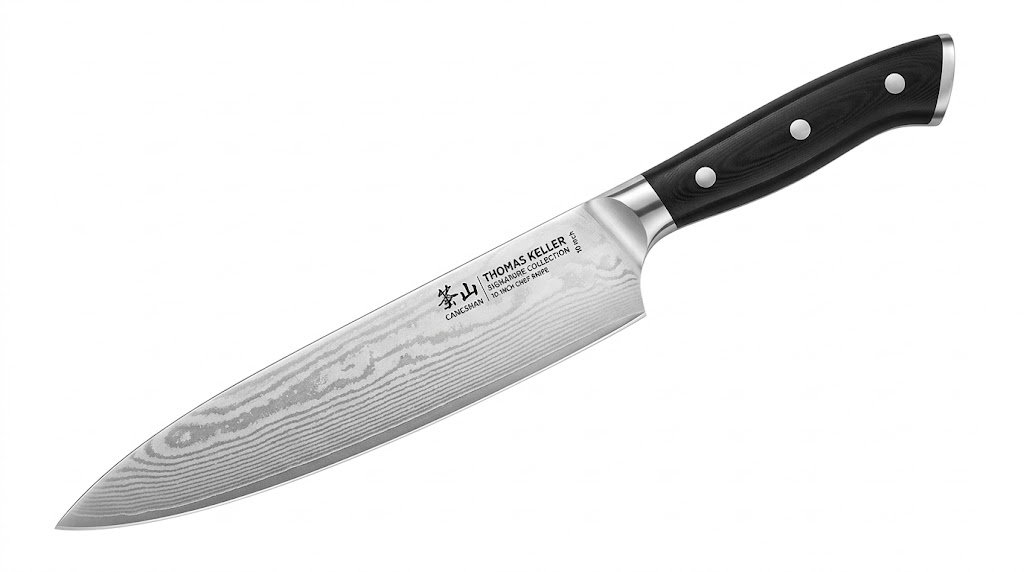
This is the heavy hitter. Designed in collaboration with the world-renowned chef, it aims for absolute professional perfection.
- Key Specs: RWL34 Powder Steel, triple-riveted handle, 61 Rockwell hardness.
- Pros: The powder steel used here is elite. It stays sharp significantly longer than almost any other Western-style knife I’ve tested.
- Cons: The price point is steep, putting it in direct competition with heritage Japanese brands.
- Hands-on Note: The handle geometry is unique—it’s beefier than the TS series, providing a much more confident grip for chefs with larger hands.
- Who it’s best for: The serious home cook who wants “end-game” cutlery. Real-World Drawback: The white-handled version shows every stain and requires immediate cleaning to stay pristine.
3. Cangshan TC Series 7-Inch Santoku
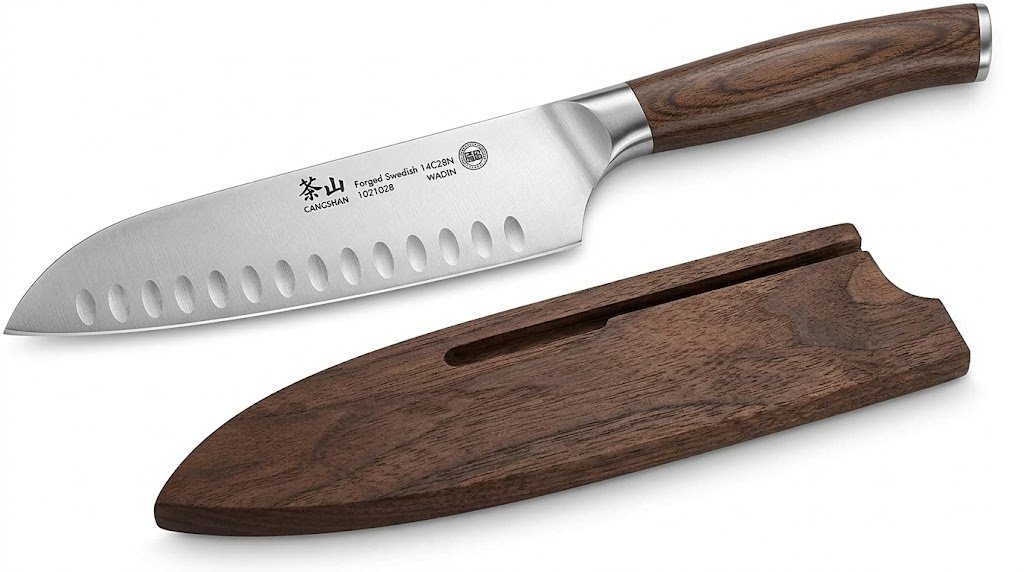
A fusion of Eastern shape and Western steel durability, the TC series features a distinct “angled” bolster.
- Key Specs: Sandvik 14C28N steel, mosaic rivet detail, ergonomic contoured handle.
- Pros: The bolster design encourages a perfect pinch grip. It’s one of the most comfortable knives for beginners to learn proper technique.
- Cons: The Santoku lacks a significant “belly,” so it is poor for rocking-motion cuts.
- Hands-on Note: The mosaic rivet is a beautiful detail, but we noticed that over time, micro-food particles can get trapped in the tiny crevices if not scrubbed properly.
- Who it’s best for: Cooks who prefer vertical chopping and push-cutting. Real-World Drawback: The knife block that usually comes with this set is exceptionally large and takes up significant counter real estate.
4. Cangshan Helena Series 3.5-Inch Paring Knife
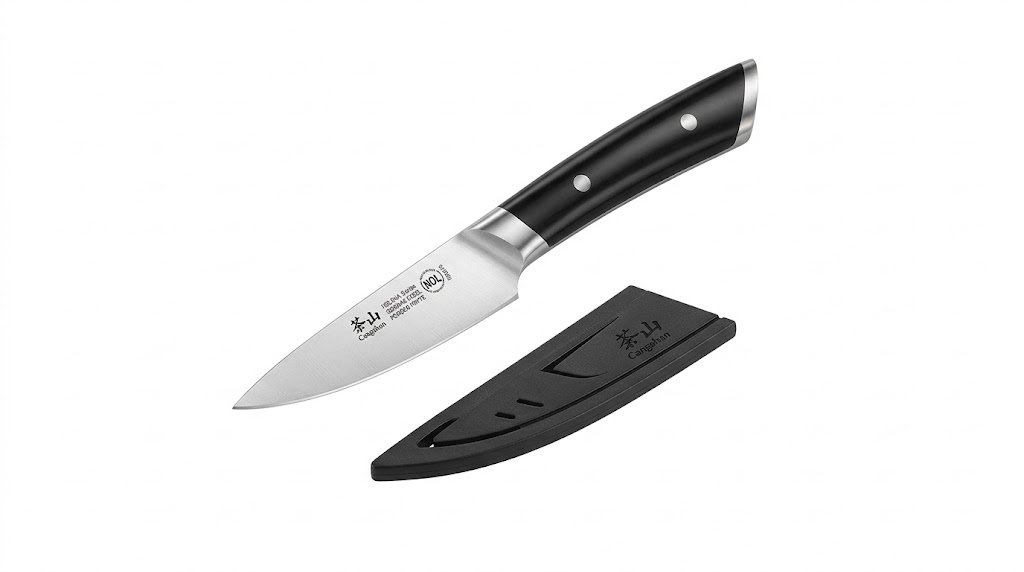
The Helena series is the “budget-friendly” entry point, using standard German steel rather than the Swedish Sandvik.
- Key Specs: X50CrMoV15 German steel, curved handle, full tang.
- Pros: Extremely affordable while maintaining the high-end Cangshan look. The curve of the handle fits the palm naturally for in-air peeling.
- Cons: The steel is softer, meaning you will be honing this blade much more frequently than the TS or TC lines.
- Hands-on Note: Despite being a budget line, the fit and finish are tight. There are no gaps between the steel and the handle material.
- Who it’s best for: Casual cooks who want a stylish upgrade. Real-World Drawback: The blade is slightly thicker than expected for a paring knife, making it less “nimble” for detail work like de-veining shrimp.
5. Cangshan S1 Series 5-Inch Utility Knife
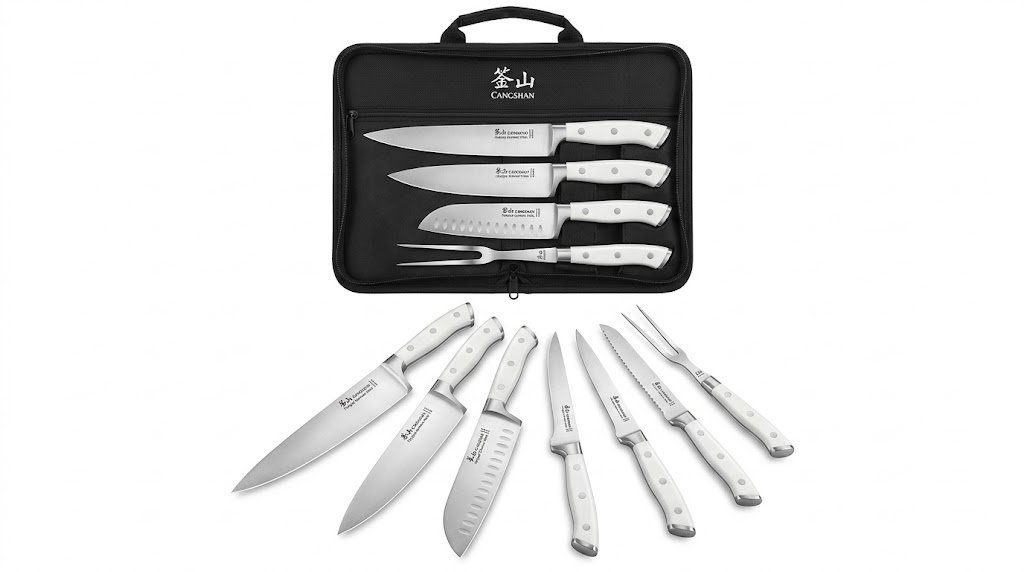
A traditional approach with a stark white handle, providing a clean, “professional kitchen” look.
- Key Specs: German steel, triple-riveted, high-polish finish.
- Pros: The white handle makes it very easy to spot on a cluttered prep table. It’s a versatile size for sandwiches, fruit, and small proteins.
- Cons: The bolster is quite thick, which makes sharpening the heel of the blade difficult on a whetstone.
- Hands-on Note: The weight distribution is rear-heavy, which actually helps with control when you are performing delicate tasks like slicing citrus.
- Who it’s best for: Those who love the classic Wüsthof look but want a more refined handle. Real-World Drawback: The factory edge was a bit toothy; it required a few passes on a fine strop to get it truly smooth.
How To Choose The Best Boot Knife
While my expertise often lands in the kitchen, the Knifepicks philosophy extends to the field. A boot knife is the ultimate “insurance policy” blade. Whether you are a hiker, a first responder, or a tactical enthusiast, the requirements for a boot knife are the polar opposite of a kitchen blade. You aren’t looking for a 16-degree slicing edge; you are looking for structural integrity and a “zero-fail” deployment system.
Steel Choice: Toughness Over Sharpness
In the kitchen, we want hardness (HRC). In a boot knife, we want toughness. If you use a high-HRC kitchen blade to pry something in the woods, it will snap. Look for steels like 1095 Carbon or D2. These are “workhorse” steels that can take an impact. The “small thing” to check is the coating—a powder coat or DLC (Diamond-Like Carbon) finish will prevent the blade from rusting against your leg.
The Retention System
A boot knife is only as good as its sheath. If the knife rattles, you’ll hate wearing it. If the clip is plastic, it will eventually snap. Prioritize Kydex sheaths with heavy-duty steel clips. We always test for “inverted retention”—can you shake the sheath upside down without the knife falling out? If the answer is no, keep looking.
Grip and Profile
The handle should be flat. A round handle might feel good in the hand, but it creates a massive “print” under your pants and rubs against your ankle bone. Search for “skeletonized” handles or slim G10 scales. You want a knife that disappears until the moment you actually need to reach for it.
Read More Guide On: Best Benchmade Knives 2026: Expert Reviews & Buying Guide
FAQ Section
Is Cangshan a Chinese brand?
Yes, it is. While they use premium materials like Swedish and German steel, the manufacturing takes place in Yangjiang, China, which is a city with a 1,500-year history of knife making. This allows them to maintain high quality at a lower cost than European-made equivalents.
Are Cangshan knives better than Wüsthof?
This depends on your priority. Wüsthof knives are generally heavier and use a softer steel that is easier to hone but loses its edge faster. Cangshan (specifically the TS and TC lines) uses harder Swedish steel that stays sharp longer but requires more care to avoid chipping.
Do Cangshan knives rust easily?
No, provided they are cared for. The Sandvik 14C28N steel used in many a cangshan knives review is highly corrosion-resistant. However, because it has a high carbon content for hardness, leaving it wet or in a sink will eventually lead to spotting.
Can you put Cangshan knives in the dishwasher?
No. The heat and chemicals in a dishwasher will dull the edge and potentially damage the handle scales or the internal structure of the hollow-handled models. Always hand-wash and dry them immediately.
Is the Thomas Keller set worth the extra money?
Yes, if you are an enthusiast. The RWL34 steel is a significant jump in performance from their standard lines. It offers professional-grade edge retention that rivals high-end Japanese cutlery while maintaining a Western ergonomic feel.
Conclusion: The Final Verdict
After conducting this cangshan knives review, it’s clear that this brand is more than just a “design project.” They have made smart choices in metallurgy—specifically the use of Sandvik steel—that give them a performance edge over many established Western brands in the same price bracket.
For the Average User, I highly recommend the TC Series. It offers the best balance of safety (thanks to the bolster design), price, and steel quality. It’s a knife that feels expensive but remains accessible for daily kitchen tasks.
For the Pro User, the Thomas Keller Signature Series is the only way to go. It is a world-class tool that uses superior powder steel. It is built for the rigors of a 12-hour shift and will outperform almost anything else in your kit in terms of pure longevity.
Cangshan has proven that you don’t have to spend $500 to get a knife that looks like a work of art and cuts like a surgical instrument. Just be sure to invest in a good ceramic honing rod to maintain that 16-degree edge.