
Choosing your first—or fifth—Benchmade isn’t just about buying a tool; it’s about justifying a $200 to $600 investment in a piece of steel. Most people look at Benchmade knives and wonder if the “Butterfly Tax” is real. I’ve spent a decade testing these blades in the backcountry of the Pacific Northwest and on the daily grind of warehouse floors. The pain point isn’t finding a sharp knife; it’s finding one that doesn’t develop blade play after a month of flicking or a pocket clip that doesn’t snag and bend on every car door you pass.
When I first carried the 940 Osborne, I was skeptical about the reverse tanto blade shape. However, after three months of prying staples and slicing through heavy-duty zip ties, I realized that Benchmade knives aren’t designed for the display case—they are built for the hand. We’ve put these through “glove-on” testing to see if the Axis lock is actually as intuitive as the marketing claims (it is), and we’ve measured how long that S30V steel actually holds an edge before you need to break out the stones.
The truth is, many competitors have caught up in materials, but few match the ergonomics. If you’ve ever had a frame lock stick or a liner lock fail during a heavy cut, you know why we trust the Omega springs in Benchmade knives. In this guide, we’re cutting through the marketing fluff to show you which models are worth the premium and which ones might be “too much knife” for your specific needs. We’re looking at pivot smoothness, scale texture under wet conditions, and how that deep-carry clip actually interacts with denim.
Top 5 Benchmade Knives Comparison
| Model | Blade Steel | Handle Material | Weight | Best Use | Price Range |
| 940 Osborne | CPM-S30V | Aluminum | 2.90 oz | All-Purpose EDC | $$$ |
| 535 Bugout | CPM-S30V | Grivory | 1.85 oz | Ultralight Hiking | $$ |
| 556-S30V Mini Griptilian | CPM-S30V | Nylon | 2.81 oz | Budget Entry | $ |
| 275FE-2 Adamas | CPM-CruWear | G10 | 6.45 oz | Tactical/Hard Use | |
| 15080-2 Crooked River | CPM-S30V | Stabilized Wood | 5.41 oz | Hunting/Outdoor | $$$ |
In-Depth Reviews: The Top Tier
1. The Gold Standard: Benchmade 940 Osborne
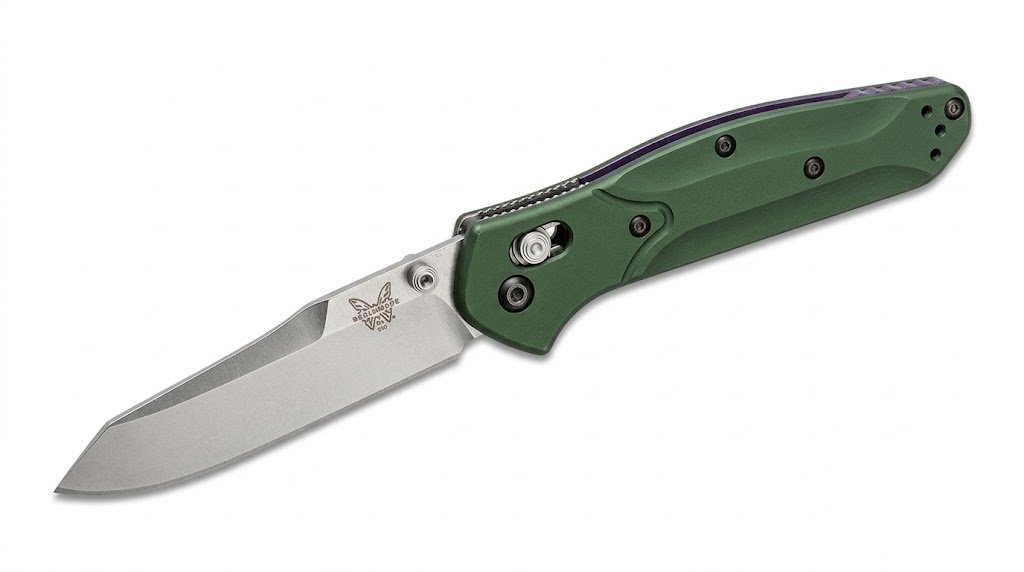
The 940 is the quintessential example of why people buy Benchmade knives. It has a slim profile that disappears in the pocket but offers a blade length that punches way above its weight class.
- Key Specs:
- Blade Length: 3.40″
- Overall Length: 7.87″
- Blade Style: Reverse Tanto
- Lock Type: Axis Lock
- Pros: Incredible strength-to-weight ratio; the reverse tanto tip is nearly indestructible.
- Cons: The green anodized aluminum scales show “pocket “wear” very quickly, losing that pristine look.
- Hands-on Note: The deployment is glassy. Out of the box, I could middle-finger flick this open with zero wrist movement. The balance point sits right at the first finger groove.
- Who it’s best for: The professional who needs a tool that looks “gentlemanly” but can handle construction-site abuse.
- Real-World Drawback: The factory edge is often ground slightly unevenly near the heel—you might need to touch it up to get it perfect.
2. The Weightless Wonder: Benchmade 535 Bugout
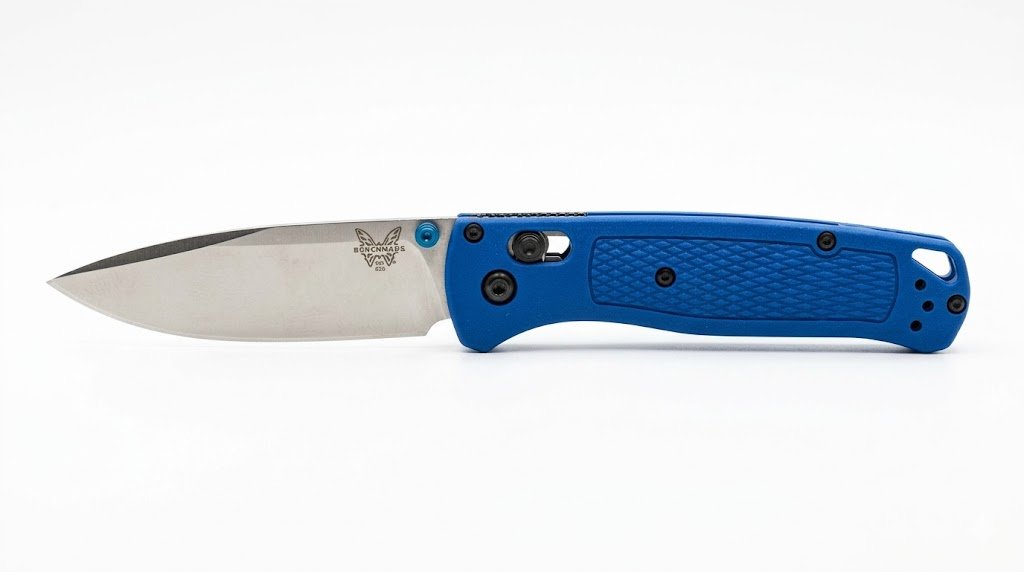
This knife redefined the “ultralight” category. It’s so light you’ll forget it’s in your pocket, which is both its greatest strength and its only weakness.
- Key Specs:
- Blade Length: 3.24″
- Weight: 1.85 oz
- Handle: Grivory
- Steel: CPM-S30V
- Pros: Deep-carry clip is standard; thin blade stock makes it an incredible slicer.
- Cons: The scales feel “plasticky” and have a bit of flex if you squeeze them hard.
- Hands-on Note: In our testing, the Bugout disappeared in gym shorts. It’s the only knife I can recommend for runners or hikers who count every gram.
- Who it’s best for: The “Ounces Equal Pounds” crowd who wants a full-sized blade without the bulk.
- Real-World Drawback: Because it’s so light, it doesn’t feel “substantial” in the hand, which can be off-putting if you’re used to heavy steel frames.
3. The Workhorse: Benchmade 275FE-2 Adamas
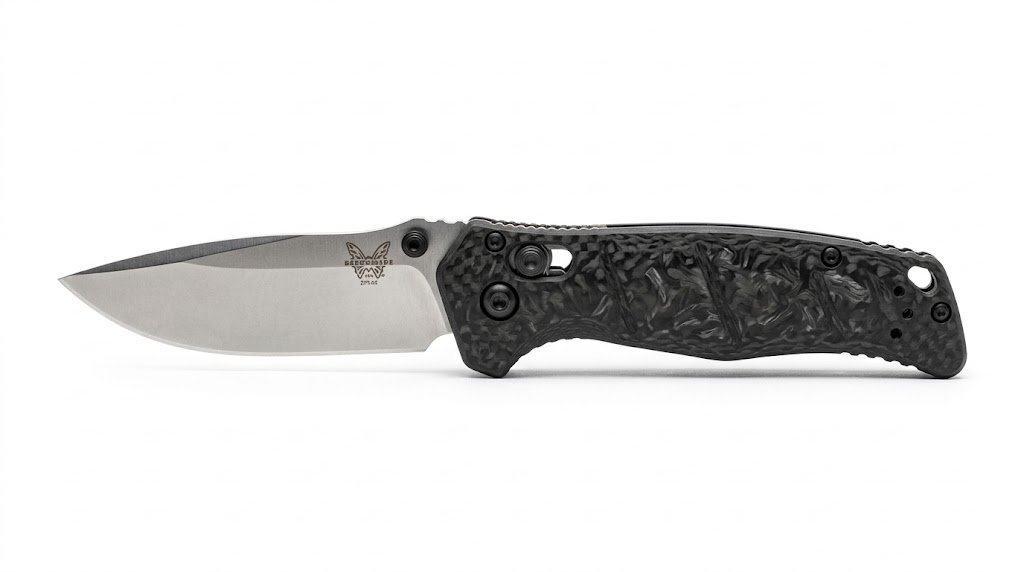
If the Bugout is a scalpel, the Adamas is a sharpened crowbar. This is one of the toughest Benchmade knives ever produced, featuring CruWear steel that laughs at chips and breaks.
- Key Specs:
- Blade Length: 3.78″
- Steel: CPM-CruWear (63-65 HRC)
- Handle: G10
- Pros: Overbuilt Axis lock; CruWear steel holds an edge through extreme lateral stress.
- Cons: It is heavy and thick; it will take up significant real estate in your pocket.
- Hands-on Note: The jimping on the spine is aggressive. Even with wet, muddy gloves, my thumb didn’t budge during heavy piercing tasks.
- Who it’s best for: Military, LEO, or anyone whose life depends on their gear not failing.
- Real-World Drawback: The pocket clip is very stiff. It’s secure, but it can be a struggle to slide over thicker tactical pant seams.
How To Choose The Best Benchmade Knife
The biggest mistake buyers make is overestimating how much knife they actually need. You don’t need a tactical folder to open Amazon boxes, and you shouldn’t take a delicate slicer to a survival camp. When evaluating Benchmade knives, the first thing you have to look at is the lock mechanism. While the Axis lock is standard, the “feel” varies. On smaller models, it’s snappy; on larger models like the Adamas, it’s a heavy, mechanical thud.
Understanding Blade Steel and Geometry
Benchmade uses premium steels like S30V, S90V, and CruWear. If you hate sharpening, go for S90V, but be prepared to spend hours when it finally does go dull. For most users, S30V is the sweet spot of “easy to maintain” versus “holds an edge.” Also, consider the blade grind. A flat-ground blade like the Bugout is a slicing king, but the saber-ground 940 is better for prying tasks where a thinner tip might snap.
Ergonomics and Handle Materials
Do not underestimate the “feel” of G10 versus Aluminum or Grivory. Aluminum (like on the 940) feels premium but is cold in the winter and slippery when wet. G10 provides the best grip but can be abrasive on your pockets. Grivory is the lightest but feels the least “expensive.” Pick the material that matches your environment—if you’re in a cold climate, avoid the bare metal handles.
Read More Guide On: Glock Knife Review: The Ultimate Field-Tested Guide for 2026
FAQ: What You Need to Know
Are Benchmade knives worth the high price tag?
Yes, primarily because of the “LifeSharp” warranty and the Axis lock system. While you pay a premium, Benchmade will re-sharpen, oil, and tune your knife for the life of the product. Pro-tip: Keep your receipt; while they often service knives without it, having it makes the warranty process for limited editions much smoother.
Can the Axis lock fail?
This depends on the maintenance of the Omega springs. While extremely rare, the small springs can snap over years of heavy use. Pro-tip: Periodically blow out the lock mechanism with compressed air and apply a tiny drop of dry lubricant to keep the springs from corroding.
Is CPM-S30V steel difficult to sharpen?
It is more difficult than budget steels like 8Cr13MoV, but very manageable with diamond stones. It hits a “Goldilocks” zone for edge retention. Pro-tip: Don’t let the knife get dull; spend 2 minutes stropping it once a week to maintain the factory edge indefinitely.
Why do some Benchmade knives have “blade play”?
This usually occurs because the pivot screw has loosened slightly during the break-in period. Pro-tip: Use a T8 Torx driver to tighten the pivot just until the wobble stops, then apply a tiny dab of blue Loctite to the threads to set it permanently.
Which Benchmade is best for left-handed users?
Nearly all Benchmade knives with the Axis lock are fully ambidextrous. The lock can be accessed from either side, and clips are usually reversible. Pro-tip: Check the specific model’s clip holes; while the lock is ambi, some older “Hunt” series models only allow for right-side carry.
Conclusion: Making the Final Cut
Investing in a Benchmade is a rite of passage for any serious gear enthusiast. These aren’t disposable tools; they are legacy items meant to be passed down. We’ve looked at the light, the heavy, and the iconic. Whether you are skinning a deer or just surviving a Monday at the office, there is a specific model tailored to that tension.
For the Average User, the Benchmade 535 Bugout is the clear winner. It handles 95% of daily tasks without weighing down your trousers or scaring people in the breakroom. It’s the knife you’ll actually carry every day.
For the Pro User—the mechanic, the outdoorsman, or the first responder—the Benchmade 940 Osborne remains the king. Its ability to take a beating and keep its structural integrity is legendary. It’s the “buy once, cry once” choice that has remained a bestseller for over twenty years for a reason.