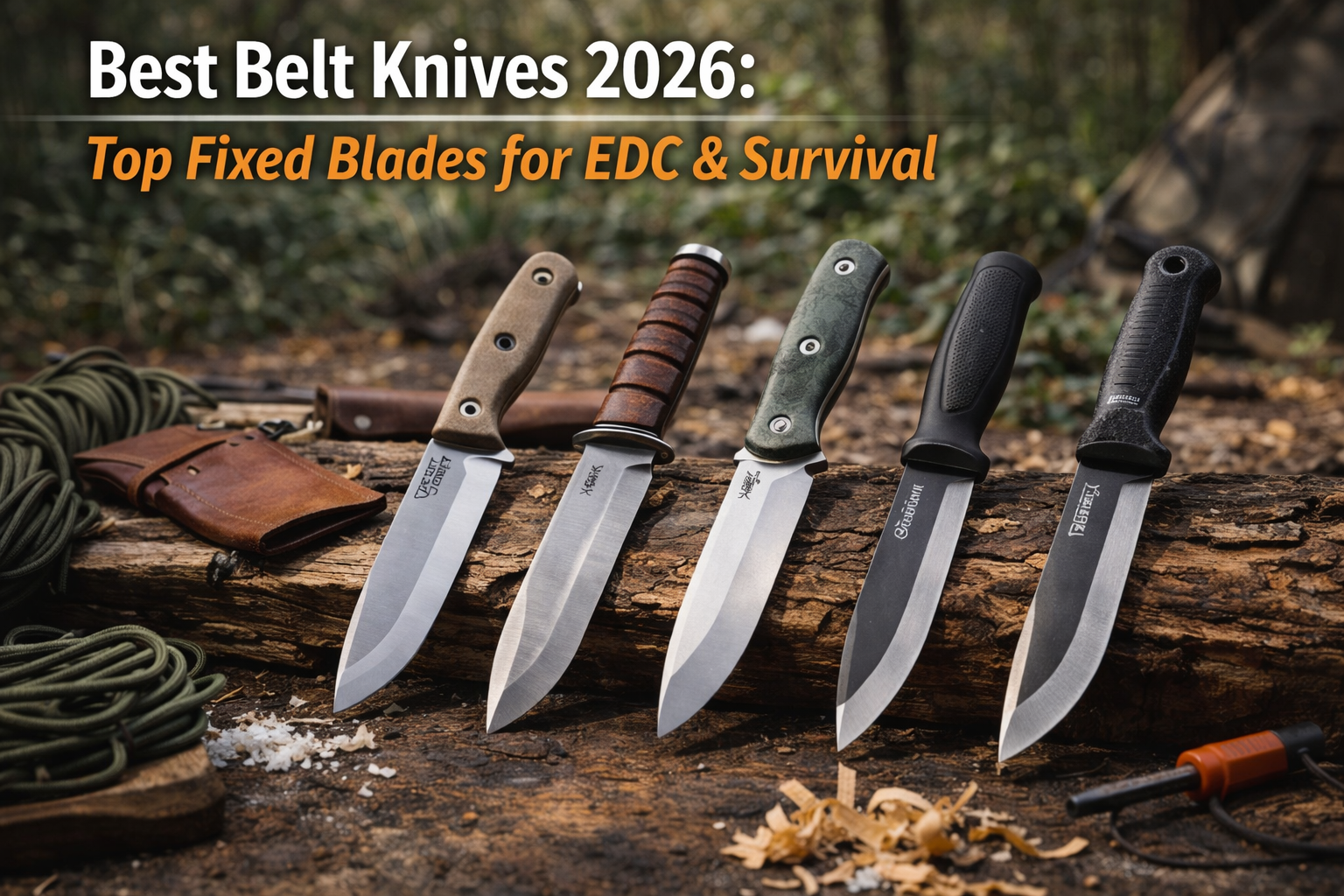
The most frustrating thing about buying a belt knife isn’t finding a sharp blade—it’s finding one that doesn’t become a literal pain in the side after two hours of hiking. Most “expert” reviews focus on steel hardness and blade geometry, but they ignore the reality of daily carry: the way a kydex sheath bites into your hip when you sit in a truck, or how a “tactical” handle texture shreds your favorite shirt. I’ve spent a decade testing blades in the backcountry and on the job site, and I’ve learned that a knife is only as good as its carry system.
When you’re looking for a belt knife, you’re looking for a tool that balances accessibility with security. You need something that stays put through thick brush but clears the sheath instantly when you need it. In this guide, we move past the marketing jargon to look at the ergonomics of the draw, the durability of the belt clips, and how these blades actually perform when your hands are cold, wet, or tired.
Top 5 Belt Knives Comparison
| Product | Blade Material | Carry Style | Price Category |
| ESEE 4P | 1095 Carbon | Vertical/MOLLE | Mid-Range |
| Benchmade Anonimus | CPM-CruWear | Low-Profile Belt | Premium |
| Gerber Gear | Sandvik 14C28N | Multi-Mount | Budget-Friendly |
| Bradford Guardian 3 | M390 | Horizontal Scout | Premium |
| Gerber StrongArm | 420HC | Modular/Combat | Value |
In-Depth Reviews
1. The All-Rounder: ESEE 4P
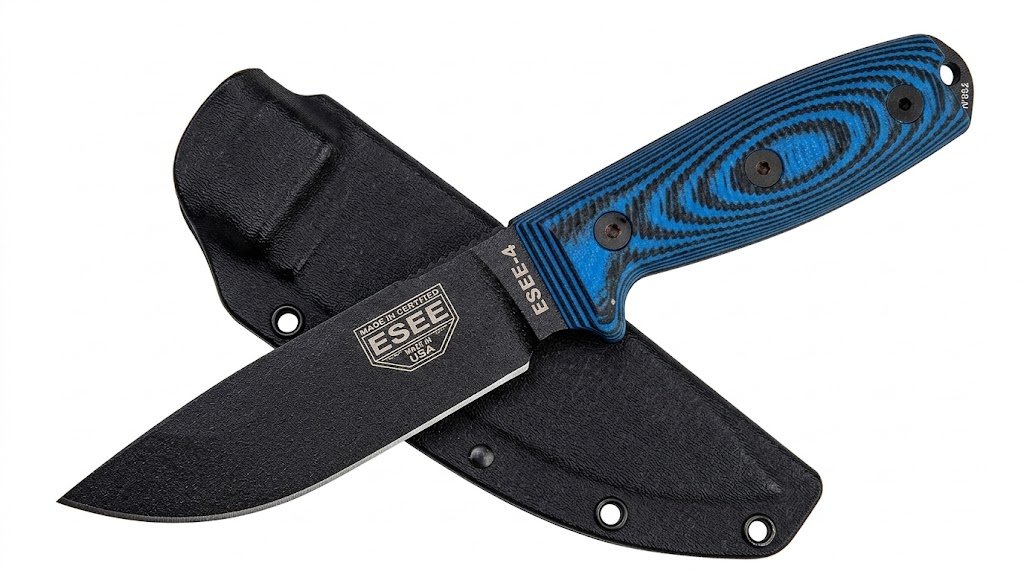
The ESEE 4P is the gold standard for a reason. It isn’t flashy, but it is virtually indestructible. After years of batoning wood and prepping camp meals, the 1095 carbon steel remains easy to sharpen in the field with just a pocket stone.
- Key Specs:
- Blade Length: 4.5 inches
- Steel: 1095 High Carbon
- Handle: Micarta scales
- Sheath: Molded polymer
- Pros: Iconic ergonomics; “No-Questions-Asked” lifetime warranty.
- Cons: 1095 steel will rust if you don’t oil it regularly.
- Hands-on Note: The Micarta handle actually gets grippier when it’s wet or bloody, which is a massive safety plus during field dressing.
- Who it’s best for: The “buy once, cry once” user. Real-World Drawback: The powder coating on the blade creates significant drag when slicing through thick cardboard or dense wood.
2. The Modern Woodsman: Benchmade Anonimus
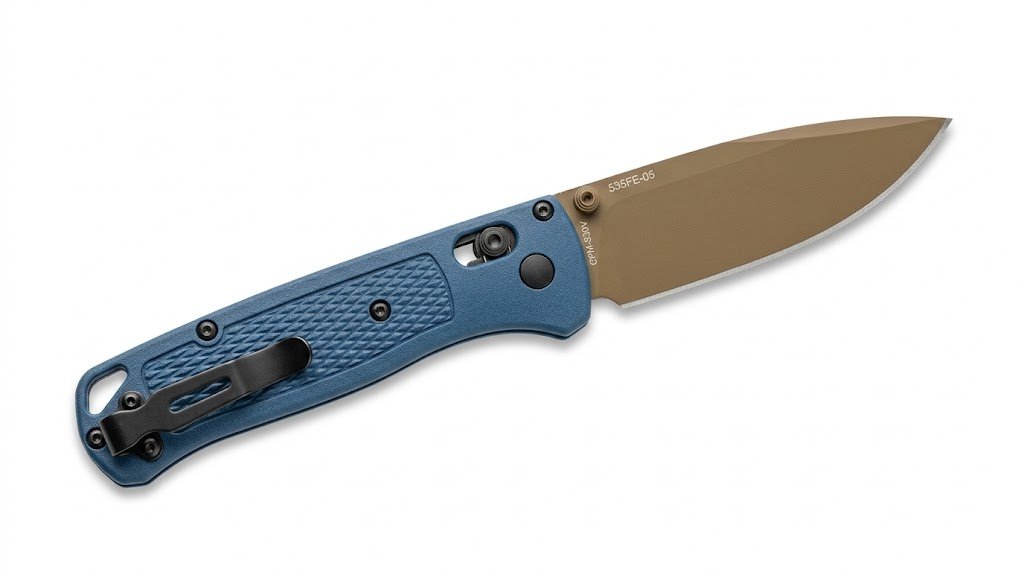
If you want high-end performance without the weight, this is it. Using CruWear steel, Benchmade created a blade that stays sharp significantly longer than traditional carbon steels while remaining tough enough for heavy impact.
- Key Specs:
- Blade Length: 5.0 inches
- Steel: CPM-CruWear (63-65 HRC)
- Handle: G10
- Sheath: Boltaron
- Pros: Incredible edge retention; built-in fire steel loop on the sheath.
- Cons: The price point is steep for a dedicated work tool.
- Hands-on Note: The finger guard is deep and secure, but it can feel restrictive if you prefer a “pinch grip” for fine carving.
- Who it’s best for: The backcountry specialist. Real-World Drawback: The sheath’s retention is so tight out of the box that it can actually pull your belt up your waist before the knife releases.
3. The Scout Carry King: Bradford Guardian 3
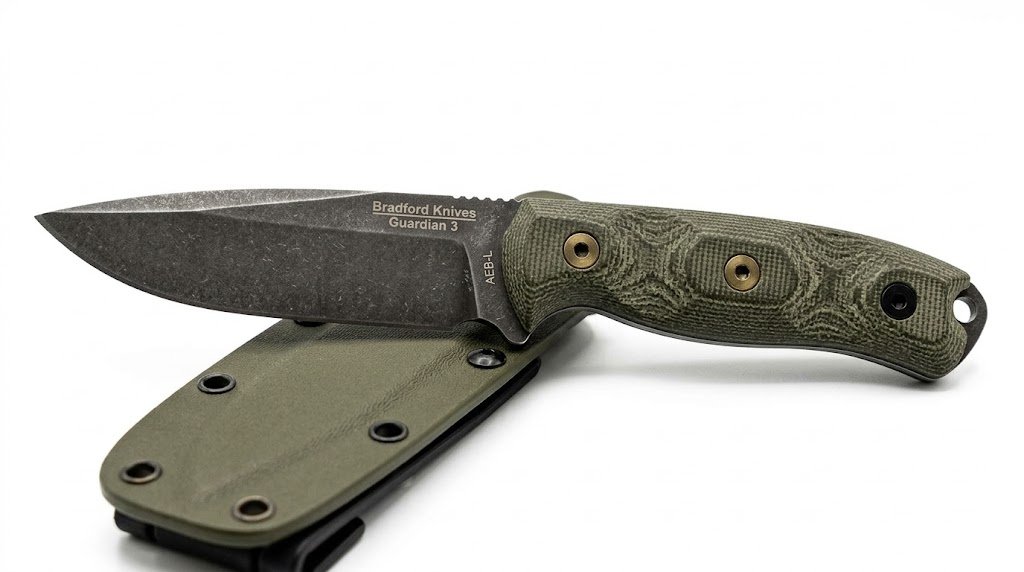
Most belt knives are vertical, but the Guardian 3 is designed for “scout carry” (horizontal on the small of your back). This makes it nearly invisible under a t-shirt and much more comfortable for seated tasks or driving.
- Key Specs:
- Blade Length: 3.0 inches
- Steel: M390 (Super Steel)
- Handle: 3D Contoured G10
- Sheath: Italian Leather
- Pros: Extremely discreet; premium M390 steel holds a razor edge.
- Cons: Too small for heavy chopping or splitting large logs.
- Hands-on Note: The forward finger choil allows you to choke up on the blade for surgical precision.
- Who it’s best for: EDC (Every Day Carry) enthusiasts. Real-World Drawback: The leather sheath stretches over time, meaning the knife may eventually rattle if you don’t wet-mold it back to shape.
4. The Value Workhorse: Gerber Gear Knife
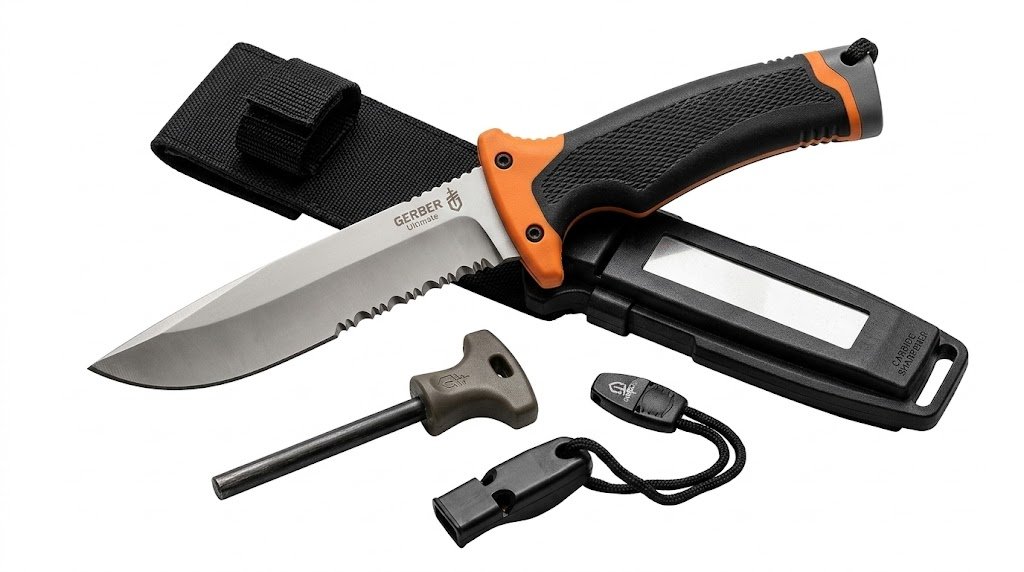
The Garberg is the first full-tang knife from Mora, and it’s a beast. It’s a utilitarian tool that doesn’t care if it gets dirty, dropped, or used as a pry bar.
- Key Specs:
- Blade Length: 4.3 inches
- Steel: Sandvik 14C28N Stainless
- Handle: Polyamide
- Sheath: Multi-mount system
- Pros: Excellent corrosion resistance; the 90-degree spine throws sparks from a ferro rod like a torch.
- Cons: The handle is functional but feels “plasticky” compared to G10 or Micarta.
- Hands-on Note: The Scandi-grind is the easiest edge geometry to maintain, making this perfect for beginners learning to sharpen.
- Who it’s best for: The budget-conscious survivalist. Real-World Drawback: The handle is quite round; in total darkness, it’s hard to tell which way the edge is facing just by feel.
5. The Tactical Standard: Gerber StrongArm
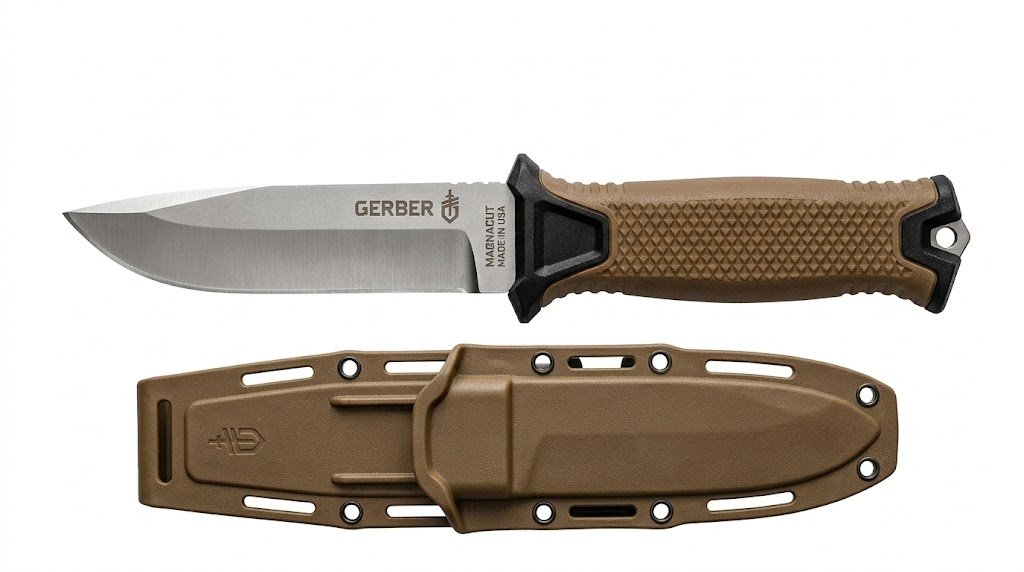
The StrongArm features a modular sheath system that allows for vertical, horizontal, or MOLLE mounting. It’s built for impact and features a striking pommel at the base of the handle.
- Key Specs:
- Blade Length: 4.8 inches
- Steel: 420HC
- Handle: Glass-filled nylon with rubber overmold
- Sheath: Multi-mount polymer
- Pros: The rubberized grip is nearly impossible to slip from; very affordable.
- Cons: The steel is “softer” than others on this list and requires more frequent touch-ups.
- Hands-on Note: The ceramic blade coating is durable, but it will show scratches the very first time you use it to batone wood.
- Who it’s best for: Military personnel or heavy-duty workers. Real-World Drawback: The snap-closure on the sheath is loud and requires two hands to re-secure properly.
How to Choose the Best Belt Knife
Understanding Tang and Strength
A “full tang” construction—where the steel of the blade runs the entire length and width of the handle—is non-negotiable for a belt knife. If you’re using your knife for anything beyond opening mail, such as prying or light chopping, a partial tang is a failure point waiting to happen. We look for blades that sandwich the steel between handle scales or overmold it completely. This ensures that even if your handle scales break, you still have a functional tool in your hand.
Steel Chemistry vs. Field Maintenance
There is a constant battle between “Super Steels” like M390 and “User Steels” like 1095. While a super steel will stay sharp for months, it is incredibly difficult to sharpen once it finally dulls. Conversely, 1095 carbon steel might dull after a weekend of heavy use, but you can bring it back to a shaving edge with a simple river stone or a ceramic rod in minutes. Think about your environment: if you’re near salt water, go stainless. If you’re in the deep woods, toughness and ease of sharpening win every time.
The Sheath is 50% of the Knife
You will carry your knife for 1,000 hours for every 1 hour you actually use it. Therefore, the sheath is arguably more important than the blade. We look for “click-fit” retention, where the knife is held by tension rather than just a floppy leather strap. Kydex and Boltaron are the industry favorites because they don’t hold moisture against the blade and allow for modular clips that can be adjusted for height and angle.
Read More Guide On: Best Meat Cleaver Knife of 2026: Real-World Testing & Reviews
FAQ: Expert Insights
Is a belt knife legal to carry in most states?
This depends on your local municipal codes and the length of the blade. In many jurisdictions, a fixed-blade knife carried openly on the belt is legal, while “concealed” fixed blades (under a jacket) are restricted. Pro-Tip: Always measure from the tip to the furthest point of the handle/guard to ensure you are compliant with local “blade length” definitions, which vary wildly.
Do I need a stainless or carbon steel blade?
This depends on your willingness to perform maintenance. Carbon steel (like 1095) is tougher and easier to sharpen but will rust overnight in humid conditions. Stainless (like 14C28N) is rust-resistant but slightly more prone to chipping. Pro-Tip: If you choose carbon steel, a light wipe with mineral oil (or even lip balm in a pinch) will create a temporary moisture barrier.
What is the best position to wear a belt knife?
It depends on your activity; “3 o’clock” (on your hip) is best for quick access, while “scout carry” (horizontal on the back) is best if you spend a lot of time sitting or wearing a backpack with a hip belt. Pro-Tip: Try “cross-draw” (10 o’clock for a right-hander) if you frequently wear a heavy winter coat, as it’s easier to reach under the hem.
Can I use a belt knife for kitchen tasks at camp?
Yes, but the blade thickness matters. A “survival” knife with a 1/4-inch thick spine will wedge and crack an onion rather than slice it. Pro-Tip: Choose a knife with a “flat grind” if you plan on doing a mix of wood processing and food prep, as it provides the best slicing geometry.
How do I keep my knife from falling out of the sheath?
This depends on the sheath material; if you have a Kydex sheath that has become loose, you can gently heat it with a hair dryer and pinch the “mouth” of the sheath to tighten the tension. Pro-Tip: Test your retention by holding the sheathed knife upside down over a bed and shaking it—if it falls out, it’s not safe for the field.
Conclusion
Choosing the right belt knife is a deeply personal decision that balances comfort, utility, and law. After years of testing, it’s clear that the “perfect” knife doesn’t exist—only the perfect knife for your specific environment. Whether you are clearing brush, preparing a campfire, or simply wanting the peace of mind that comes with a fixed blade, your priority should always be a secure carry system and a handle that won’t give you blisters after ten minutes of use.
For the Average User who wants a tool that works for camping, hiking, and general chores without breaking the bank, the Gerber Gear knife is the unbeatable choice. It is durable, stainless, and requires very little “babying.”
For the Pro User or the dedicated woodsman who demands the highest level of edge retention and doesn’t mind paying for it, the Benchmade Anonimus in CruWear steel is the peak of modern knife engineering.