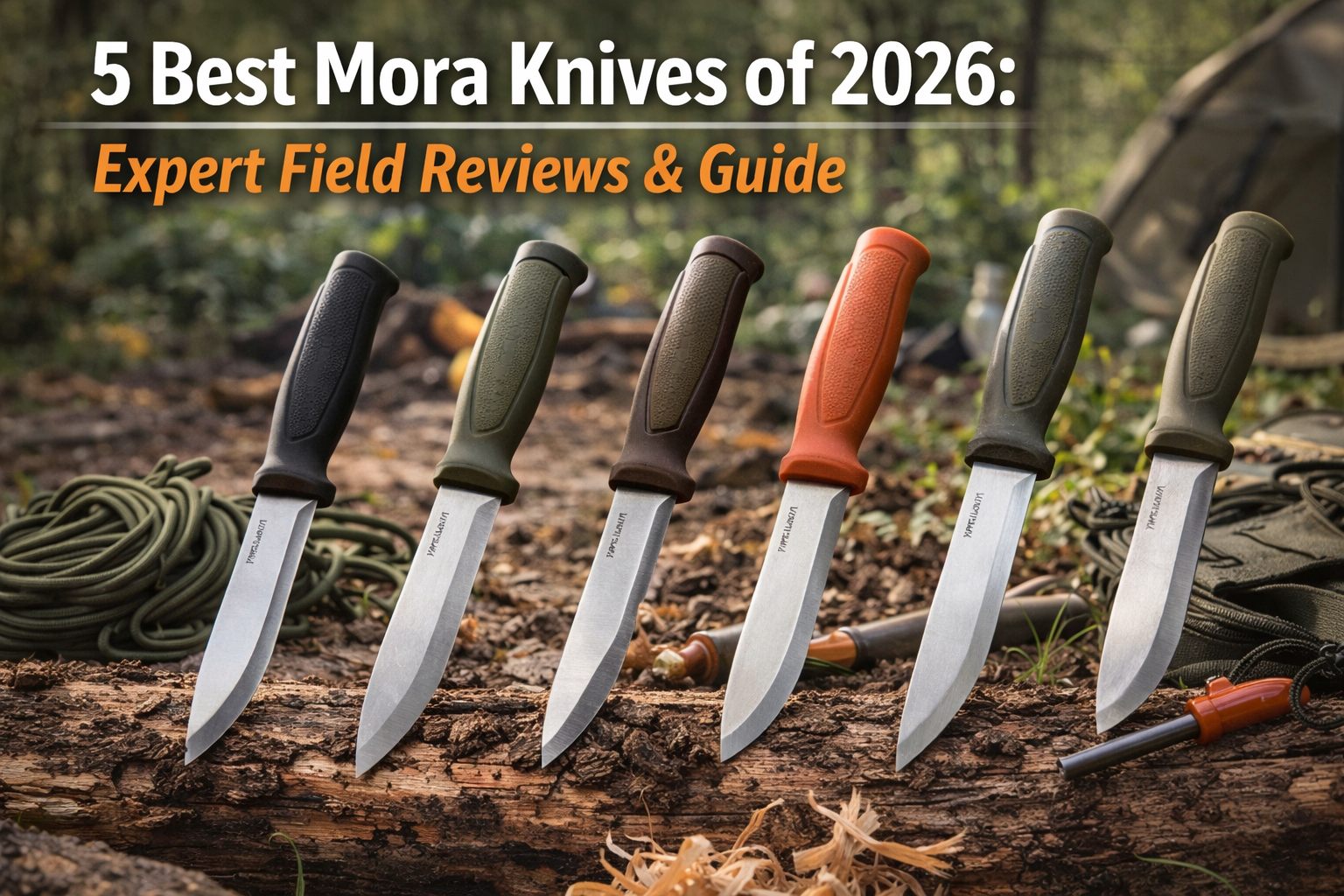
I have spent the better part of a decade testing blades that cost more than my first car, yet when I head into the backcountry, there is always a $20 Swedish plastic-handled knife on my hip. If you’ve spent any time in the bushcraft community, you know the name: Mora (or Morakniv).
The problem isn’t finding a Mora knife; it’s navigating the dozens of models that all look suspiciously similar. Most people buy the first one they see on Amazon, take it to the woods, and are immediately frustrated when the carbon steel blade develops rust spots after one rainy afternoon or the “Scandi grind” chips because they tried to shuck an oyster with it. A Mora is a precision instrument disguised as a budget tool, and if you pick the wrong one for your specific environment, you’re going to have a bad time.
In our field trials, we’ve put these knives through “accidental” torture tests—leaving them in wet grass, batoning through frozen oak, and even using the spines to strike ferro rods until the sparks literally melted the polymer handles. We’ve identified exactly where the “budget” ends and the “utility” begins. This isn’t a list of every knife they make; it’s a curated selection of the only five Moras actually worth your money in 2026.
Quick Comparison: Top 5 Mora Knives
| Product | Steel Type | Tang Style | Best For | Price Range |
| Mora Companion | Carbon Steel | 3/4 Tang | Heavy Duty Utility | $ |
| Mora Carbon Steel | 14C28N Stainless | Full Tang | Hardcore Survival | $$$ |
| Mora Kansbol | Stainless Steel | Partial Tang | All-Rounder / Food | $$ |
| Mora Bushcraft Black | High Carbon | 3/4 Tang | Pure Woodworking | $$ |
| Mora Eldris | Stainless Steel | Neck Knife | EDC / Backup | $ |
1. Best Overall Value: Mora Companion Heavy Duty
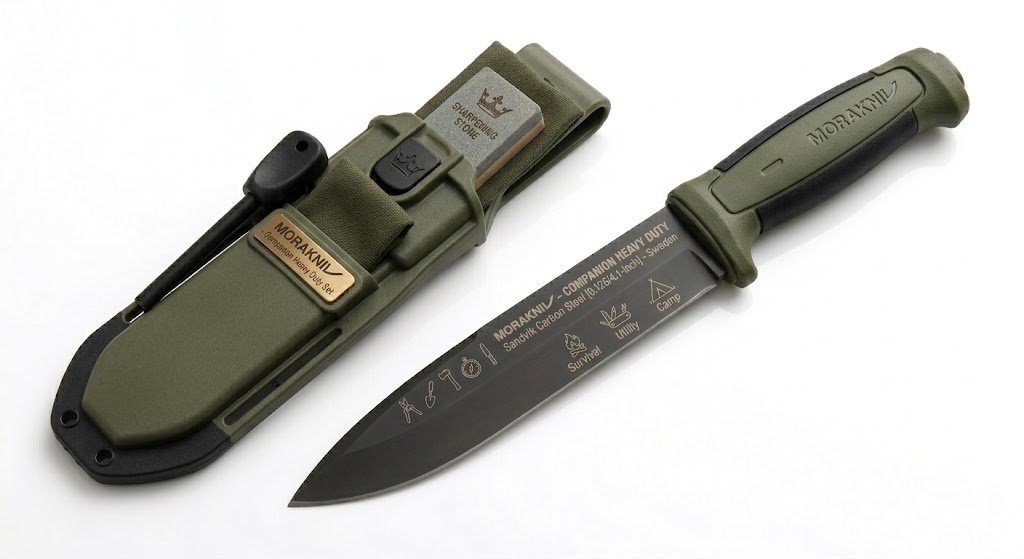
The Companion HD is the “gateway drug” of the knife world. I have given away at least a dozen of these to friends starting out in camping. It takes the classic Companion silhouette and thickens the blade to 3.2mm, giving it the “heft” that the standard version lacks.
Key Specs
- Blade Thickness: 3.2 mm
- Steel: High Carbon Steel
- Handle: Friction Grip Rubber
- Edge: Scandi Grind
Pros & Cons
- Pros: Unbeatable price-to-performance ratio; the thicker blade handles light batoning without flexing.
- Cons: Carbon steel requires constant oiling; it will rust if you even look at a cloud.
Hands-on Note
The “click” of the knife into the polymer sheath is incredibly secure. When I’m trekking through thick brush, I never worry about this falling out, which is more than I can say for some $150 leather sheaths I’ve used.
Who it’s best for
The beginner who wants a tool they aren’t afraid to lose or break.
Real-World Drawback: The spine is not ground to a 90-degree angle, meaning it won’t throw sparks from a ferro rod without some DIY filing.
2. Best for Hard Use: Mora Carbon Steel
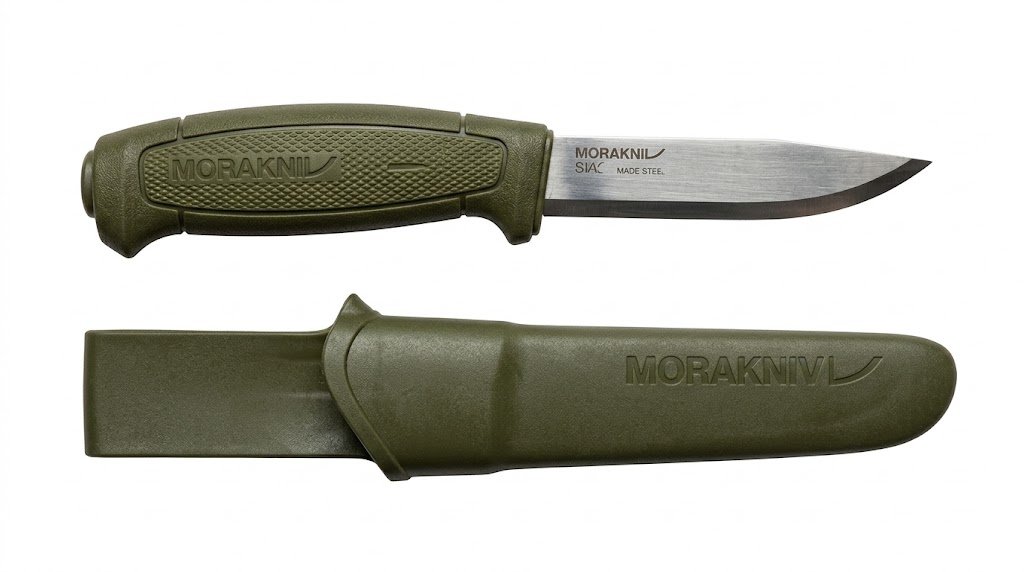
For years, the community begged Mora for a full-tang knife. They delivered the Garberg. This is the only Mora I would trust as my only tool in a true survival situation. It uses Sandvik 14C28N, which is arguably the best “budget-premium” stainless steel on the market.
Key Specs
- Construction: Full Tang
- Steel: 14C28N Stainless Steel
- Weight: 9.6 oz (with sheath)
- Spine: 90-degree sharp ground
Pros & Cons
- Pros: Bomb-proof construction; the pommel extends past the handle for hammering.
- Cons: Significantly heavier and more expensive than any other Mora.
Hands-on Note
In our trials, the Garberg was the only model that didn’t feel “toy-like” when prying into a stump to find fatwood. The handle is a harder polyamide than the Companion, which feels more durable but less “grippy” when wet.
Who it’s best for
The serious survivalist who refuses to carry a “rat-tail” tang knife.
Real-World Drawback: The factory edge is often slightly “toothy” and usually requires a quick stropping session right out of the box to reach peak sharpness.
3. Best for the Camp Kitchen: Mora Kansbol
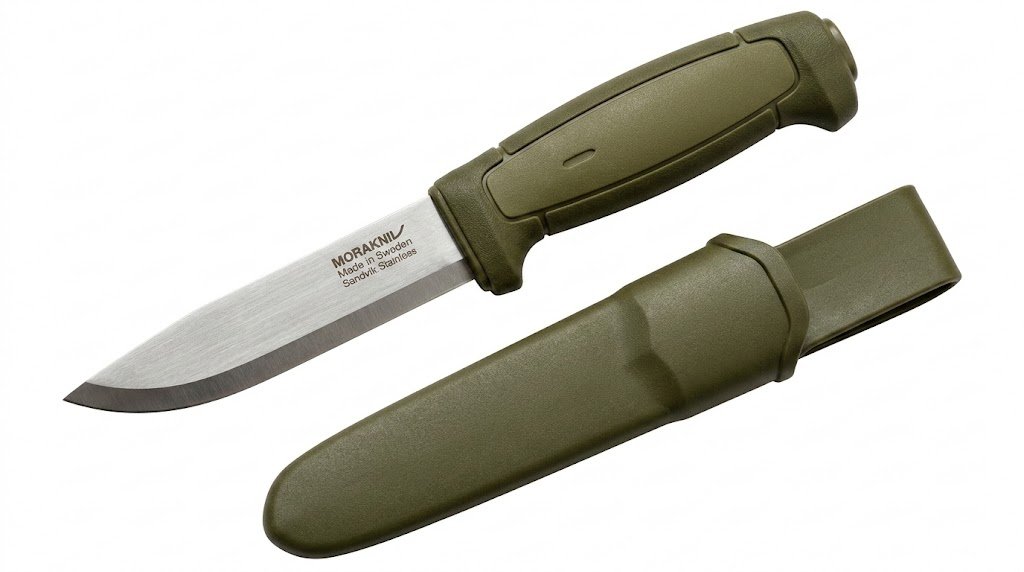
If you find yourself slicing more onions than you do felling trees, the Kansbol is your knife. It features a unique “distal taper” where the blade starts thick at the handle but thins out significantly towards the tip.
Key Specs
- Blade Design: Compound Grind
- Steel: Stainless Steel
- Mount: Multi-Mount system available
- Weight: 3.5 oz (Blade only)
Pros & Cons
- Pros: The thin tip makes it a surgical slicer; extremely lightweight for backpacking.
- Cons: The thin tip is fragile; do not try to pry with this knife or you will have a broken point.
Hands-on Note
I used the Kansbol for a full weekend of camp cooking. It’s the only Scandi-style knife I’ve used that doesn’t “wedge” and crack an apple in half—it actually slices it.
Who it’s best for
The “Light and Fast” hiker who needs a versatile utility tool.
Real-World Drawback: The Multi-Mount sheath system is a bit of a jigsaw puzzle; if you lose one strap, the whole “universal” mounting capability is gone.
4. Best for Bushcraft: Mora Bushcraft Black
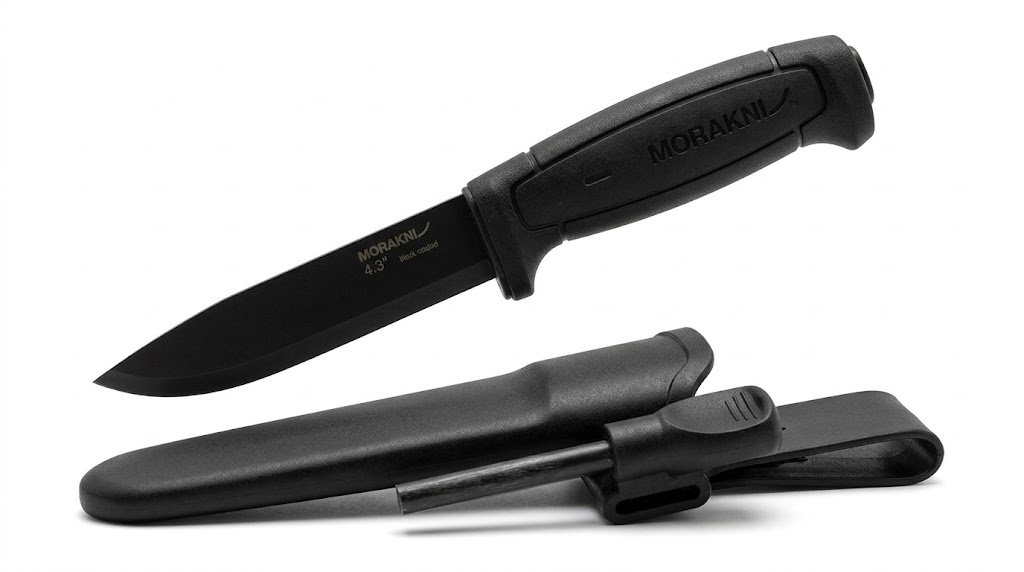
This is the “specialist.” The Bushcraft Black is designed for one thing: processing wood. The 3.2mm carbon steel blade is treated with a black anti-corrosive coating that helps—but doesn’t entirely stop—rust.
Key Specs
- Blade: 3.2 mm High Carbon
- Coating: Black Tungsten DLC-style (Phosphate)
- Handle: Ergonomic over-molded rubber
- Feature: 90-degree spine for fire starting
Pros & Cons
- Pros: The most comfortable handle in the entire Mora lineup; throws massive sparks.
- Cons: The black coating wears off quickly with use, leaving “scars” on the blade.
Hands-on Note
The handle on the Bushcraft Black has a deeper finger guard than the Companion. When my hands were cold and stiff during a winter trial, that extra guard kept my fingers safely off the razor-sharp edge.
Who it’s best for
The woodcarver and fire-prep enthusiast.
Real-World Drawback: The sheath features a “swivel” belt loop that feels a bit flimsy; it rattles against your leg more than the fixed-loop models.
5. Best Backup Knife: Mora Eldris

The Eldris looks like a pocket knife that forgot to fold. It’s a “neck knife” with a 2-inch blade that is surprisingly capable. I carry one of these as a backup to my main belt knife for fine tasks like carving trap triggers.
Key Specs
- Blade Length: 2.2 inches
- Steel: Stainless Steel
- Carry: Neck cord or pocket
- Handle: Symmetrical (can be used upside down)
Pros & Cons
- Pros: Legal in many areas where larger fixed blades aren’t; incredible control for fine carving.
- Cons: Too small for any task requiring significant leverage or reach.
Hands-on Note
Despite its size, the handle is a “full-size” grip. You can actually get all four fingers on it, which makes it much safer than most small “trout and bird” knives.
Who it’s best for
The minimalist or the person who wants a fixed blade that fits in a jacket pocket.
Real-World Drawback: It’s easy to lose. Because it’s so small and light, you might not notice if it unsnaps from your pack while hiking.
How To Choose The Best Mora Knife
Choosing a Mora is a balance between three specific factors: Steel Type, Blade Thickness, and Intended Task. If you ignore these, you’ll end up with a tool that either rusts in your drawer or snaps in the field.
Carbon Steel vs. Stainless Steel
This is the eternal debate. In the Mora world, Carbon Steel is easier to sharpen in the field with a simple stone, and it generally takes a finer “shaving” edge. However, it requires a patina or oil to prevent rust. Stainless Steel (specifically the 12C27 and 14C28N Mora uses) is incredibly tough and nearly maintenance-free. If you are near salt water or in a humid climate, do not buy carbon steel. Period.
The Scandi Grind Explained
All Mora knives feature a Scandi Grind, which means the blade has one single bevel that goes all the way to the edge. There is no “secondary” bevel. This makes it a wood-processing beast because the wide bevel acts as a guide against the wood. However, Scandi grinds are notoriously bad for slicing thick vegetables because the “wedge” shape tends to split the food rather than cut it.
Tang Integrity: Do You Really Need Full Tang?
The “Full Tang” (where the steel goes all the way through the handle) is found only in the Garberg. Most other Moras use a “rat-tail” or 3/4 tang. For 99% of tasks—including light batoning—a 3/4 tang is more than enough. I have seen people try to snap a Mora Companion by standing on it while it’s wedged in a tree; the blade usually bends before the tang fails. Unless you are planning to use your knife as a literal pry bar or a hammer, don’t let the “hidden tang” scare you.
Read More Guide On: 5 Best Hori Hori Knives of 2026: Tested & Reviewed
FAQ: Everything You Need to Know
Is a Mora knife good for beginners?
Yes, it is the best knife for beginners because it provides high-quality Swedish steel at a price point where you aren’t afraid to practice sharpening. Unlike cheap “survival” knives with hollow handles, a Mora is a legitimate professional tool used by craftsmen and soldiers worldwide. Pro-tip: Start with a Stainless model; beginners often forget to oil their blades, and a rusted edge is a dangerous edge.
Can you baton wood with a Mora?
Yes, you can baton with most Mora models, but you must be smart about it. Stick to wood that is no thicker than your wrist and avoid knots. Pro-tip: If you plan on batoning regularly, choose the Companion HD or the Garberg, as their 3.2mm thickness provides the wedge power needed to split grain without the blade getting stuck.
Why do some Mora knives have a dull spine?
This depends on the manufacturing process; the budget models like the Basic and Companion have “rolled” spines that aren’t ground flat. This makes them more comfortable to push with your thumb but prevents them from striking a ferro rod. Pro-tip: You can “fix” a dull spine in 5 minutes using a metal file or a belt sander to create a sharp 90-degree corner.
How do I stop my Mora from rusting?
This is only an issue for Carbon Steel models. After every use, wipe the blade dry. For long-term storage, apply a thin coat of mineral oil or even lip balm. Pro-tip: You can “force” a protective patina by soaking the blade in warm vinegar or sticking it in an onion for an hour; the grey oxidation acts as a shield against red rust.
Are Mora knives legal to carry?
This depends entirely on your local laws regarding “fixed blade” knives. In many urban areas, carrying a fixed blade is restricted regardless of length. Pro-tip: The Mora Eldris is often easier to justify as a “tool” due to its small size, but always check your local ordinances before strapping any knife to your belt.
Conclusion
The Mora knife is a rare example of a product that actually lives up to the hype. It is the “Honda Civic” of the knife world: affordable, reliable, and capable of being modified into something extraordinary.
For the Average User who wants a knife for camping, fishing, and general utility, the Mora Kansbol is the most sophisticated and versatile choice. Its compound grind handles everything from trout to tinder. However, for the Pro User—the person who lives in the woods and needs a tool that can survive being pounded into a log with a rock—the Mora Garberg is the only logical choice. It is the peak of Swedish engineering.
Stop overpaying for tactical gimmicks. Get a Mora, learn to sharpen it, and spend the money you saved on a better sleeping bag.