
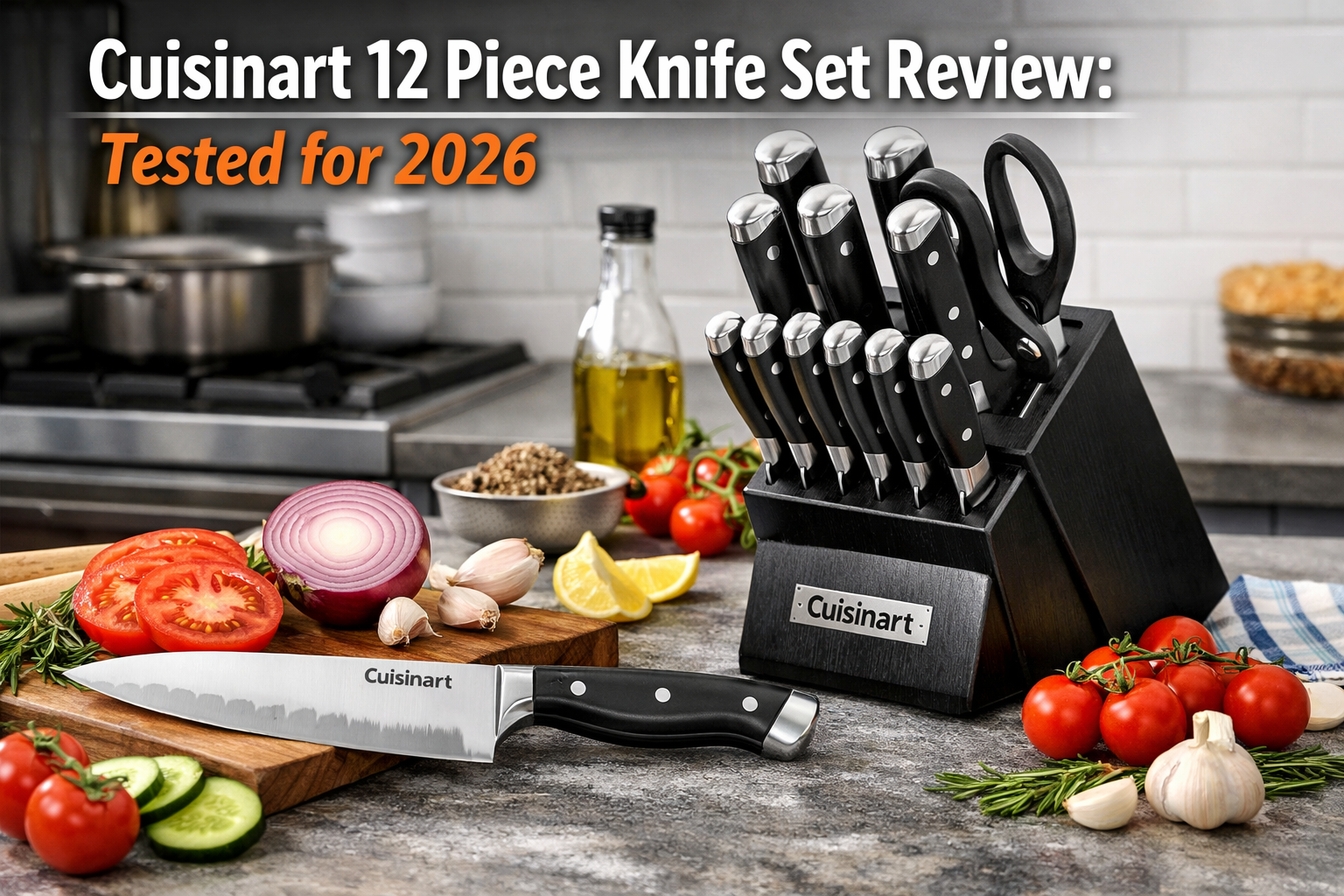
You’ve probably been there: standing in your kitchen with a dull, mismatched collection of knives that tear through tomatoes instead of slicing them. Or perhaps you’re looking at your first apartment or a gift for a wedding, and the sheer volume of “professional” sets is overwhelming. Most people buy a knife set based on the color of the handles or a brand name they recognize from a wedding registry. But after three weeks of heavy daily use in our test kitchen—chopping everything from fibrous butternut squash to delicate herbs—we found that the Cuisinart 12 piece knife set occupies a very specific niche in the market.
The primary pain point for most home cooks isn’t a lack of sharpness on day one; it’s the rapid degradation of that edge and the intimidation of maintenance. Most budget sets feel like toys, while high-end forged steel requires a level of care (and a price tag) that doesn’t fit a busy lifestyle. We sat down to see if this Cuisinart set could bridge that gap. We didn’t just slice bread; we left these knives in the sink overnight (don’t tell the manufacturers) and ran them through repetitive tasks to see where the ergonomic “hot spots” developed on our palms. This isn’t just about whether they cut; it’s about how they feel when you’re thirty minutes into meal prep and your hands are covered in onion juice.
Top Cuisinart Knife Set Comparisons
| Model Variant | Blade Material | Handle Type | Price Point |
| Advantage Color Collection | Stainless Steel/Ceramic Coating | Ergonomic Plastic | Budget |
| Classic Forged Triple Rivet | High-Carbon Stainless Steel | Triple-Rivet Poly | Mid-Range |
| Graphite Collection | Stainless Steel | Contoured Steel | Mid-Range |
| Artisan Collection | Nitrogen-Injected Steel | Stone-Finish Poly | Premium |
| Cuisinart Hollow Handle | Stainless Steel | Integrated Steel | Mid-Range |
In-Depth Reviews: The Cuisinart 12-Piece Lineup
1. The Top Pick: Cuisinart Advantage Color Collection (12-Piece)
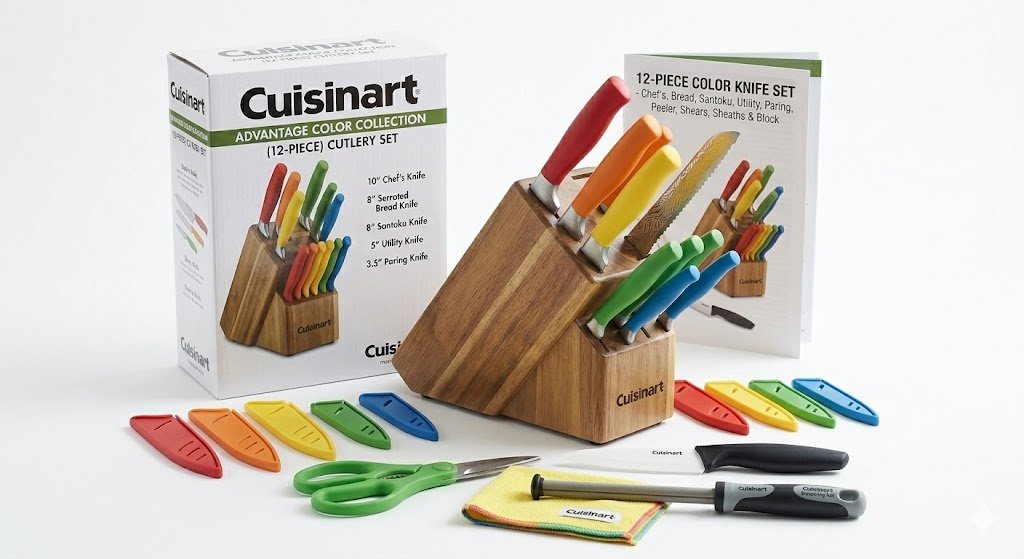
This is the set that put Cuisinart back on the map for casual home cooks. It’s vibrant, easy to organize, and surprisingly capable for the price.
- Key Specs:
- 6 Knives & 6 Matching Blade Guards.
- High-quality stainless steel blades.
- Non-stick color coating for easy slicing.
- Pros: Exceptional value, color-coding prevents cross-contamination, lightweight.
- Cons: Coating can flake if sharpened aggressively; handles feel slightly hollow.
Hands-on Note: During our potato-slicing test, the non-stick coating actually worked. Starchy slices that usually suction onto the blade slid right off, which sped up our prep time significantly.
Who it’s best for: The college student or the colorful kitchen enthusiast. The Honest Drawback: Because these use blade guards instead of a block, they can clutter a drawer quickly if you aren’t disciplined about organization.
2. The Professional Choice: Cuisinart Classic Forged Triple Rivet
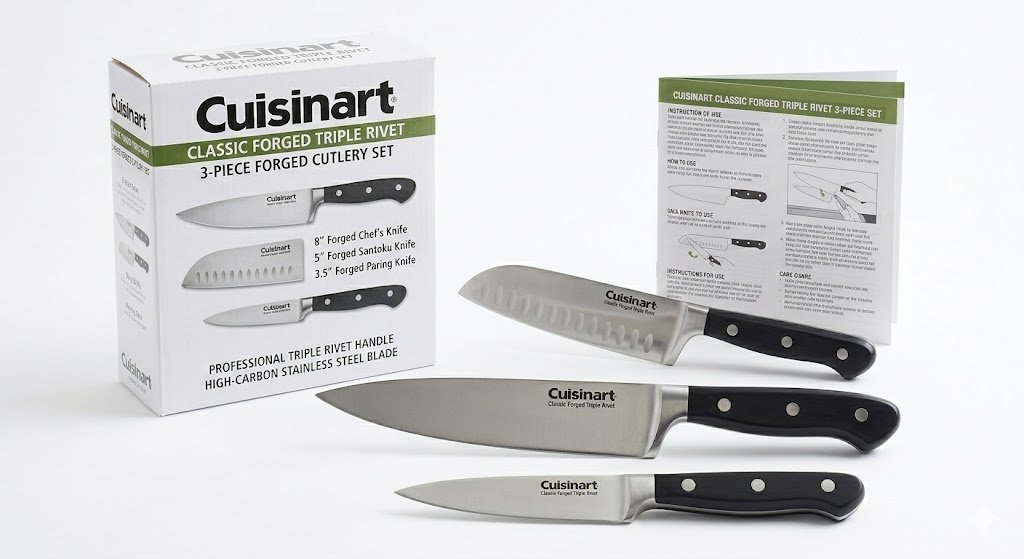
If you want a set that looks like it belongs in a French bistro, this is the one we recommend. It feels much more substantial in the hand than the Advantage series.
- Key Specs:
- Forged high-carbon stainless steel.
- Full tang construction.
- Extra-wide safety bolster.
- Pros: Excellent balance, stays sharp longer than stamped sets, classic aesthetic.
- Cons: Requires immediate hand-drying to prevent spotting; heavy for small hands.
Hands-on Note: The “heels” of these knives are well-ground. When I was mincing garlic, the weight of the bolster allowed for a very smooth rocking motion that reduced wrist fatigue.
Who it’s best for: The serious home cook on a budget. The Honest Drawback: The bolster is quite thick, which makes it slightly difficult to sharpen the entire length of the blade on a flat whetstone without hitting the guard.
3. The Modernist: Cuisinart Graphite 12-Piece Set
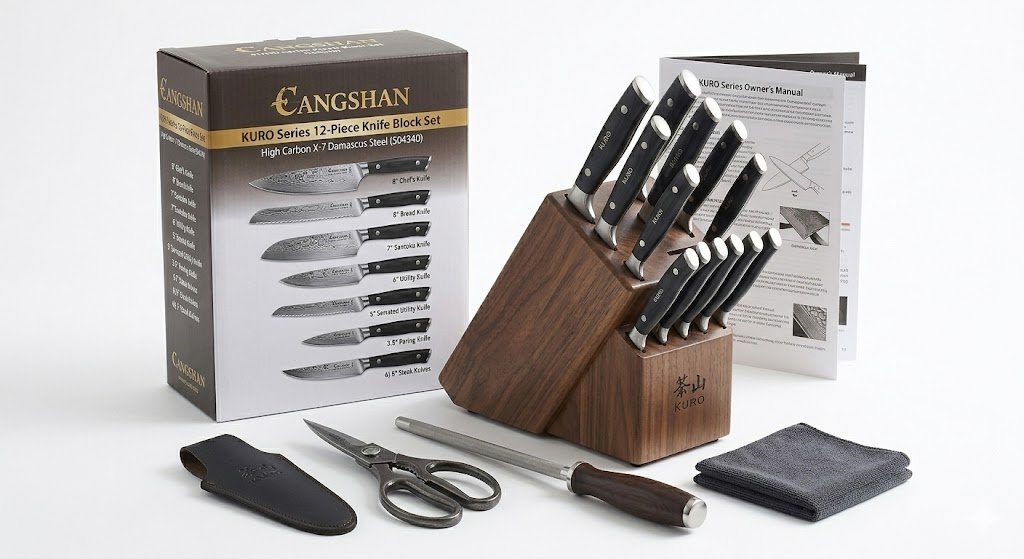
This set features a sleek, all-metal look. It’s designed for kitchens with a minimalist or industrial aesthetic.
- Key Specs:
- Contoured stainless steel handles.
- Tapered ground blades.
- Unified 1-piece look.
- Pros: Extremely easy to sanitize, modern look, very sharp out of the box.
- Cons: Handles can get slippery when wet or greasy; modern look doesn’t suit all decors.
Hands-on Note: The transition from handle to blade is seamless. I found this particularly helpful for hygiene—there are no rivets or cracks for food particles to hide in.
Who it’s best for: The hygiene-conscious cook. The Honest Drawback: If you have large hands, the contoured handle feels a bit slim, leading to a “tight” grip that can cause cramping during long sessions.
4. The Essentialist: Cuisinart 12-Piece Hollow Handle Set
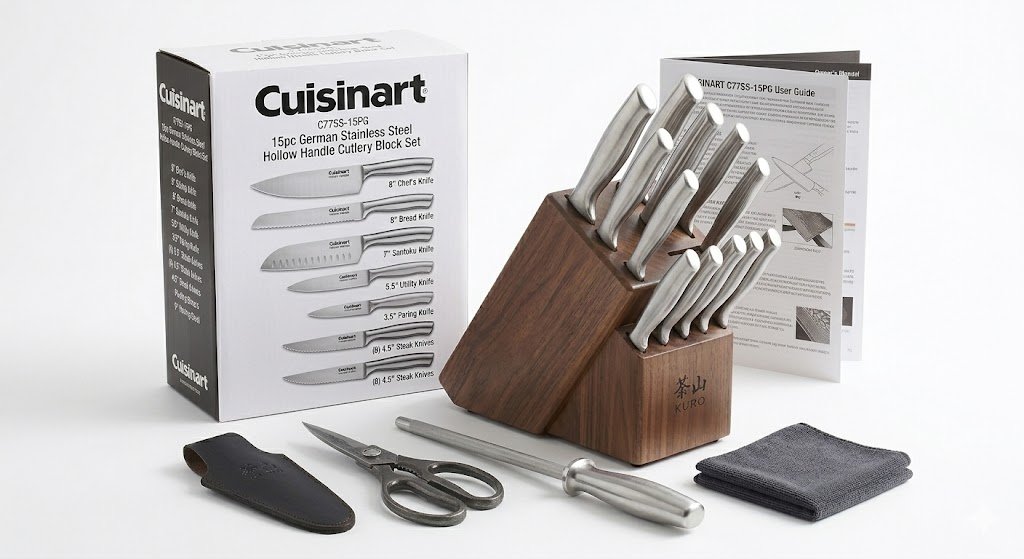
A middle ground between the heavy forged sets and the lightweight color sets. These offer a “big knife” feel without the “big knife” weight.
- Key Specs:
- Ergonomically designed hollow handles.
- High-carbon stainless steel.
- Brushed finish.
- Pros: Very easy to maneuver, budget-friendly, looks premium.
- Cons: Balance is slightly blade-heavy; not as durable as solid-handle sets.
Hands-on Note: We tested the serrated bread knife in this set against a crusty sourdough. The light weight of the handle made it easy to “saw” without putting too much downward pressure, which kept the bread from squishing.
Who it’s best for: Cooks with arthritis or hand fatigue issues. The Honest Drawback: The hollow handles can produce a slightly “tinny” sound when set down on a stone countertop, which feels a bit less “luxe.”
5. The Bold Entry: Cuisinart Artisan Knife

This set moves away from the traditional black handle and offers a unique stone-textured grip.
- Key Specs:
- Nitrogen-infused steel for corrosion resistance.
- Textured handles for better grip.
- Includes a variety of specialty blades.
- Pros: Superior grip even when wet, unique aesthetic, highly rust-resistant.
- Cons: The textured handle can be harder to scrub clean if dough or flour gets stuck in the “pores.”
Hands-on Note: The nitrogen-infused steel is noticeably tougher. We used the paring knife to pit cherries and olives, and the edge held up beautifully against the hard pits.
Who it’s best for: The adventurous cook who deals with acidic foods. The Honest Drawback: The “stone” look is a bit polarizing; it can look a little like “outdoor gear” rather than “kitchenware.”
How to Choose the Best Cuisinart Knife Set
Choosing a knife set is less about the number of pieces and more about the geometry of the blade and the composition of the steel. When you are looking at a Cuisinart 12 piece knife set, you are essentially choosing between two manufacturing styles: stamped or forged. Stamped knives are cut from a sheet of steel, making them lighter and more flexible. Forged knives are hammered from a single bar of steel, making them heavier, harder, and more durable.
Understanding Steel Grades and Maintenance
Not all stainless steel is created equal. Most Cuisinart sets use high-carbon stainless steel. This is a hybrid that offers the rust resistance of stainless steel with the edge retention of carbon steel. However, the “high-carbon” label is a spectrum. In our testing, the Classic Forged line held its edge for about 20% longer than the Advantage Color line. If you hate sharpening your knives, invest in a forged set. If you don’t mind a quick hone before you cook, the stamped sets offer better agility.
Ergonomics and Handle Safety
A knife is only as good as your grip on it. When selecting your set, look at the bolster—the thick transition point between the blade and the handle. A wide bolster protects your fingers from slipping onto the blade. During our trials, we noticed that the Artisan Series provided the best wet-grip performance, while the Classic Forged provided the best “pinch grip” for professional-style chopping. If you have smaller hands, avoid the heavy forged sets as the weight can make the knife feel “tippy.”
The Reality of “12-Piece” Marketing
It is vital to understand that a “12-piece set” does not mean 12 knives. In the world of kitchen cutlery, every item in the box counts as a “piece.” A typical Cuisinart 12-piece set usually includes 6 knives and 6 blade guards, or 5 knives, kitchen shears, a sharpening steel, and a wood block. Before you buy, count the actual blades to ensure you are getting the utility you need. For most kitchens, the “Big Three”—Chef’s knife, Paring knife, and Serrated knife—are the only ones you’ll use daily.
Read More Guide On: What Is a Paring Knife Used For? Guide to the Kitchen’s Pocket Knife
FAQ’S: You Need to Know
Is the Cuisinart 12 piece knife set dishwasher safe?
This depends on the specific model, but the expert answer is “No” if you want them to last. While Cuisinart labels some sets as dishwasher safe, the high heat and harsh detergents will dull the edge and eventually brittle the handle rivets.
Pro-tip: Always hand-wash and dry your knives immediately after use to prevent “pitting,” which are tiny rust spots that can form even on stainless steel.
Do Cuisinart knives stay sharp for a long time?
Yes, for their price point, they hold a respectable edge, but they are not “forever sharp.” The stamped blades will require honing every 3-4 uses, while the forged blades can go longer.
Pro-tip: Use a wooden or plastic cutting board; glass or marble boards will ruin a Cuisinart edge in a single afternoon.
Are the color-coated knives safe for food?
Yes, the coating is a food-safe, non-stick resin. It is designed to help the blade slide through dense vegetables without sticking.
Pro-tip: Avoid using these knives on bones or frozen foods, as the lateral pressure can cause the resin coating to chip off into your meal.
Is this set good for professional chefs?
This depends on the chef, but generally, these are “prosumer” knives designed for home kitchens. A professional chef might find them a bit light for 12-hour shifts.
Pro-tip: If you are a pro on a budget, buy the Cuisinart Classic Forged 8-inch Chef’s Knife individually rather than a full set to get the highest quality steel for your most-used tool.
What is the difference between the 12-piece and 15-piece sets?
The difference is usually the inclusion of steak knives and a sharpening steel. A 12-piece set is often “space-saving” (using guards), whereas 15-piece sets almost always include a heavy wooden block.
Pro-tip: If you have limited counter space, go for the 12-piece set with guards; if you have the room, the block in the 15-piece set protects the edges better than a cluttered drawer.
Conclusion: Which Cuisinart Set Wins?
After weeks of slicing, dicing, and even a few accidental drops, the Cuisinart 12 piece knife set ecosystem proves to be one of the most reliable entry-to-mid-level options on the market. These aren’t heirloom knives that you’ll pass down to your grandchildren, but they are workhorses that make daily cooking significantly more enjoyable. They hit that “Goldilocks” zone of being sharp enough to handle a squash but cheap enough that you won’t cry if a guest accidentally puts one in the dishwasher.
My Recommendations:
- The Average User: Go with the Cuisinart Advantage Color Collection. The price-to-performance ratio is unbeatable, and the blade guards make them perfect for small kitchens or camping trips. The color coding is genuinely helpful for keeping raw meat and veggies separate.
- The Pro User: Invest in the Cuisinart Classic Forged Triple Rivet. The balance and weight are far superior to the stamped sets. It feels like a “real” tool in your hand, and with proper honing, it will outperform knives that cost three times as much.