
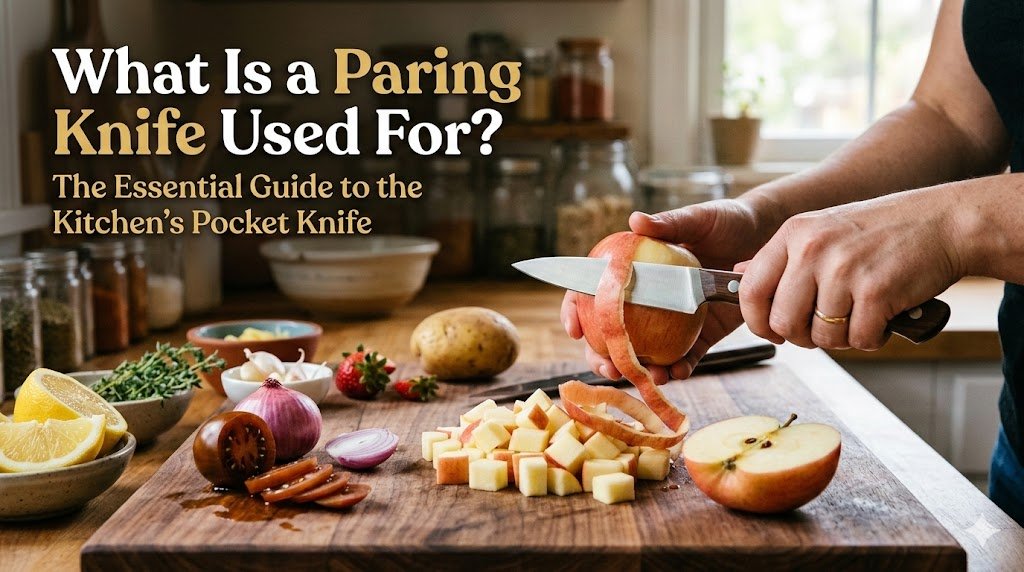
While the chef’s knife often gets the spotlight as the “king” of the kitchen, the humble paring knife is the indispensable “ace up the sleeve.” If a chef’s knife is a broadsword, a paring knife is a surgeon’s scalpel. It is small, nimble, and designed for the intricate tasks that larger blades simply cannot handle safely or efficiently.
Understanding what is a paring knife used for is a prerequisite for any home cook looking to improve their knife skills and prep speed. In this guide, we will explore the versatility of this small-but-mighty tool, the different styles available, and why it is the one knife you should never be without.
Anatomy of a Paring Knife
A standard paring knife typically features a blade between 2.5 and 4 inches long. Its small size allows you to choke up on the handle or even hold the blade itself, providing a level of control and leverage that is impossible with a 10-inch chef’s knife.
Small Blade, Big Control
The primary characteristic of a paring knife is its maneuverability. Unlike other knives used primarily on a cutting board, the paring knife is often used off the board (in the air), making it an extension of your hand.
Common Blade Shapes
- Spear Point: The most versatile, classic shape with a slight curve.
- Bird’s Foot (Tourné): A curved blade designed specifically for peeling rounded fruits.
- Sheep’s Foot: A flat edge that is perfect for precise vertical cuts (like julienning garlic).
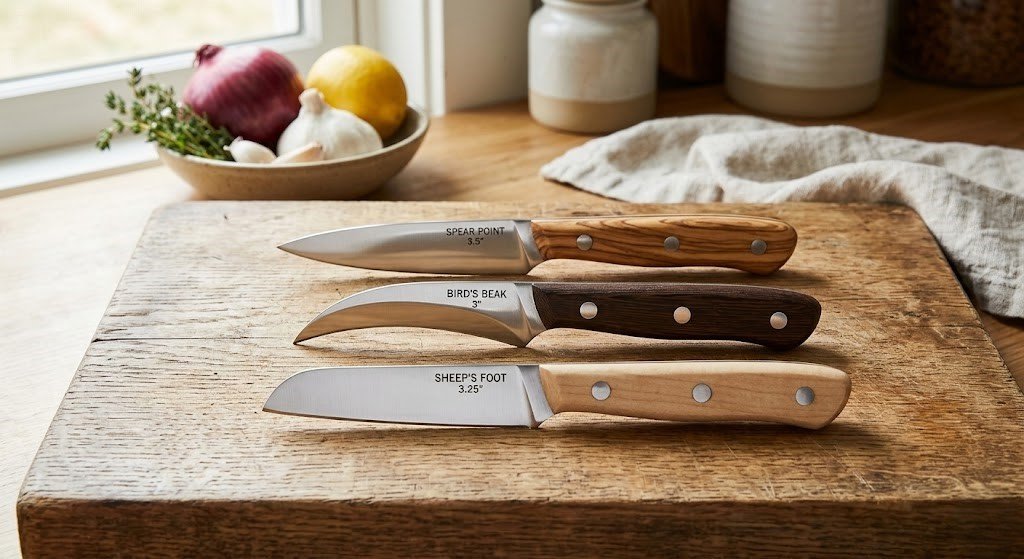
Choosing the right shape: The spear point is best for general tasks, while the bird’s foot excels at peeling.
What Is a Paring Knife Used For? 5 Essential Tasks
The versatility of this blade goes far beyond just “cutting small things.” Here are the specific scenarios where the paring knife truly shines.
1. Peeling Fruits and Vegetables
Whether you are peeling an apple, a potato, or a stubborn peach, the paring knife is the ultimate tool. Because of its short blade, you can use your thumb as a guide to control the depth of the cut, ensuring you remove the skin without wasting the flesh of the produce.
2. Intricate Trimming and Seeding
Have you ever tried to remove the ribs and seeds from a jalapeño with a large knife? It’s clumsy and dangerous. A paring knife allows you to get inside the vegetable with surgical precision. It is also the go-to tool for deveining shrimp or trimming silver skin off a small tenderloin.
3. Hulling and Coring
Removing the green tops from strawberries (hulling) or the cores from tomatoes is a breeze with a paring knife. The pointed tip can be inserted into the fruit and rotated easily, a task that would be impossible with a larger, wider blade.
4. Slicing Small Aromatics
When a recipe calls for a single clove of minced garlic or a few slices of shallot, pulling out a heavy chef’s knife and a large cutting board feels like overkill. A paring knife allows for quick, light prep directly over a pan or on a small board.
5. Decorative Garnishing
If you’ve ever seen a radish carved into a rose or a citrus peel twisted into a beautiful “flamed” garnish for a cocktail, you’re looking at the work of a paring knife. Its ability to make tiny, curved cuts makes it the artist’s tool of the culinary world.
Safety First: How to Grip a Paring Knife
Because the paring knife is often used in the air, safety is paramount.
- The Paring Grip: Hold the handle in your palm with your three bottom fingers. Place your index finger and thumb on either side of the blade (near the bolster). This provides maximum stability.
- Cutting Toward the Thumb: When peeling in the air, you often cut toward your thumb. Always use light pressure and ensure your thumb is positioned safely to the side or protected by the skin of the fruit.
Comparison: Paring Knife vs. Petty Knife
| Feature | Paring Knife | Petty (Utility) Knife |
| Blade Length | 2.5″ – 4″ | 5″ – 6″ |
| Primary Use | Off-board tasks, peeling, coring | Small board-work, slicing meats |
| Control | Maximum (Hand-held) | Moderate (Board-based) |
| Best For | Strawberries, garlic, shrimp | Small citrus, sandwiches, herbs |
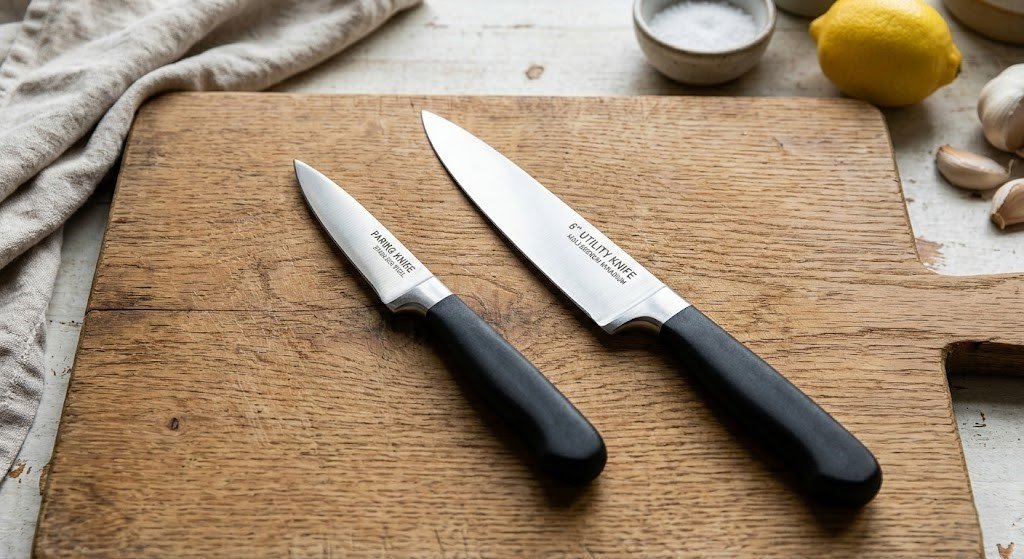
While they look similar, the paring knife is specialized for detail work, whereas the utility knife is better for mid-sized slicing.
Maintenance Tips for Your Paring Knife
Because paring knives are used for acidic foods (like citrus and tomatoes), they require specific care to stay sharp:
- Avoid the Dishwasher: The harsh chemicals and high heat will dull the fine edge of a paring knife instantly.
- Hone Frequently: Because the edge is so fine, it can “roll” easily. Use a ceramic honing rod to keep it centered.
- Store Safely: Don’t toss it in a drawer where the edge can bang against other metal. Use a blade guard or a magnetic strip.
Staying prepared is about more than just having the right tools; it’s about knowing how to use them effectively when it matters most. From your kitchen to your outdoor gear, keeping your equipment in top shape is a hallmark of true craftsmanship.
Read More Guide on: How to Sharpen a Serrated Knife: Restore the Saw-Like Edge
Frequently Asked Questions
Can I use a paring knife to cut meat?
You can use it for very small trimming tasks (like removing fat from a chicken breast), but it is not designed for slicing through steaks or roasts. The blade is too short to make a clean, single-stroke cut.
Is a serrated paring knife better?
A serrated paring knife is excellent for slick-skinned fruits like tomatoes or plums. However, for peeling and coring, a straight-edge paring knife is far superior because it creates a smoother surface.
Why is it called a “paring” knife?
The name comes from the verb “to pare,” which means to trim something by cutting away its outer edges.
How often should I sharpen it?
Since paring knives do less “board work” (striking a hard surface), they stay sharp longer than chef’s knives. Sharpening every 4 to 6 months is usually sufficient for most home cooks.
Do I need more than one paring knife?
Most chefs recommend having two: a classic spear point for general tasks and a serrated version for small citrus and tomatoes.
Conclusion
When asking what is a paring knife used for, the answer is simple: it is the tool for everything that requires a delicate touch. It bridges the gap between raw ingredients and refined culinary presentation. While it may not be the most intimidating knife in your block, it is undoubtedly one of the most frequently used.
By mastering the use of this nimble blade, you reduce waste, increase your safety, and open up a world of decorative and technical cooking possibilities. Every kitchen needs a workhorse, but every cook needs a scalpel.