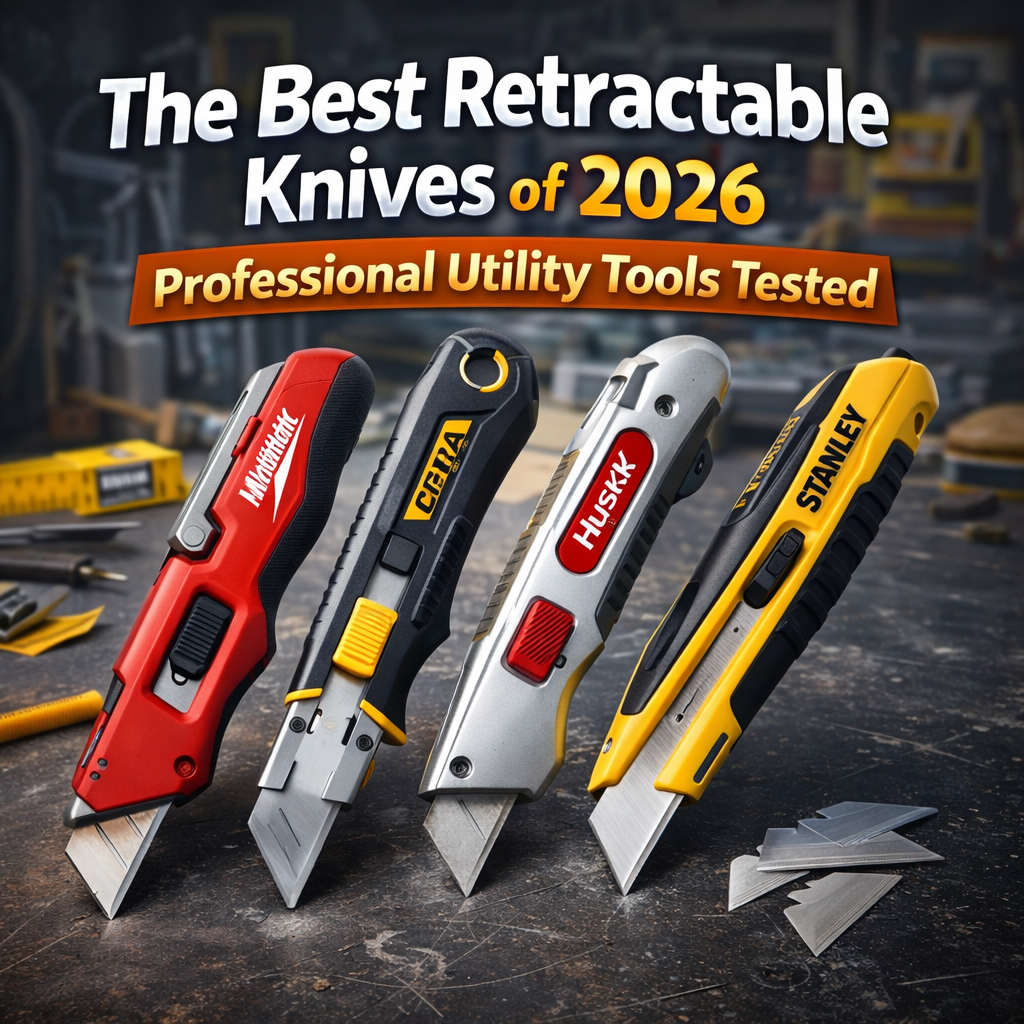
There is a specific, sharp frustration that occurs when you are halfway through a sheet of drywall or breaking down a mountain of recycling and your blade starts to “walk.” You feel that slight, mechanical wiggle inside the housing—a sign that the tolerances of your utility knife are failing. Most people think a retractable knife is a disposable commodity. They pick up whatever is sitting in the bin at the hardware store checkout, only to find that the slider sticks after three days of dust exposure or the blade storage rattles like a tin of pennies.
In my decade of testing edge tools for Knife Picks, I’ve learned that the “small things” are actually the big things. It’s about how the zinc-alloy body feels against your palm when you’re sweating. It’s about whether you can change a dull blade with gloves on without needing a secondary tool to pry the casing open. A utility knife is the most used tool in any kit, yet it is often the most poorly designed.
This guide focuses on the mechanical reality of these tools. We look for the “slop” in the slide, the grit in the thumb-stud, and the security of the blade-lock. If you are tired of thumb-studs that tear up your skin or “quick-change” systems that jam the moment a bit of drywall dust enters the track, you are in the right place. We’ve filtered out the junk to find the five retractable knives that actually earn their spot in your pocket or tool belt.
Top Picks Comparison
| Product | Body Material | Blade Storage | Price Category | Best For |
| Milwaukee Fastback | Impact Polymer | 5 Blades | Mid-Range | EDC & Versatility |
| Stanley Classic 99 | Die-Cast Zinc | 10 Blades | Budget | Long-Term Durability |
| DeWalt Premium Retractable | Metal / Rubber | 5 Blades | Mid-Range | Heavy Construction |
| Irwin FK250 | Aluminum | 3 Blades | Mid-Range | Precision Cutting |
| Olva XH-1 | Steel / Elastomer | 5 Blades | Premium | Detailed Trade Work |
In-Depth Reviews
1. The Industry Standard: Milwaukee Fastback (48-22-1502)
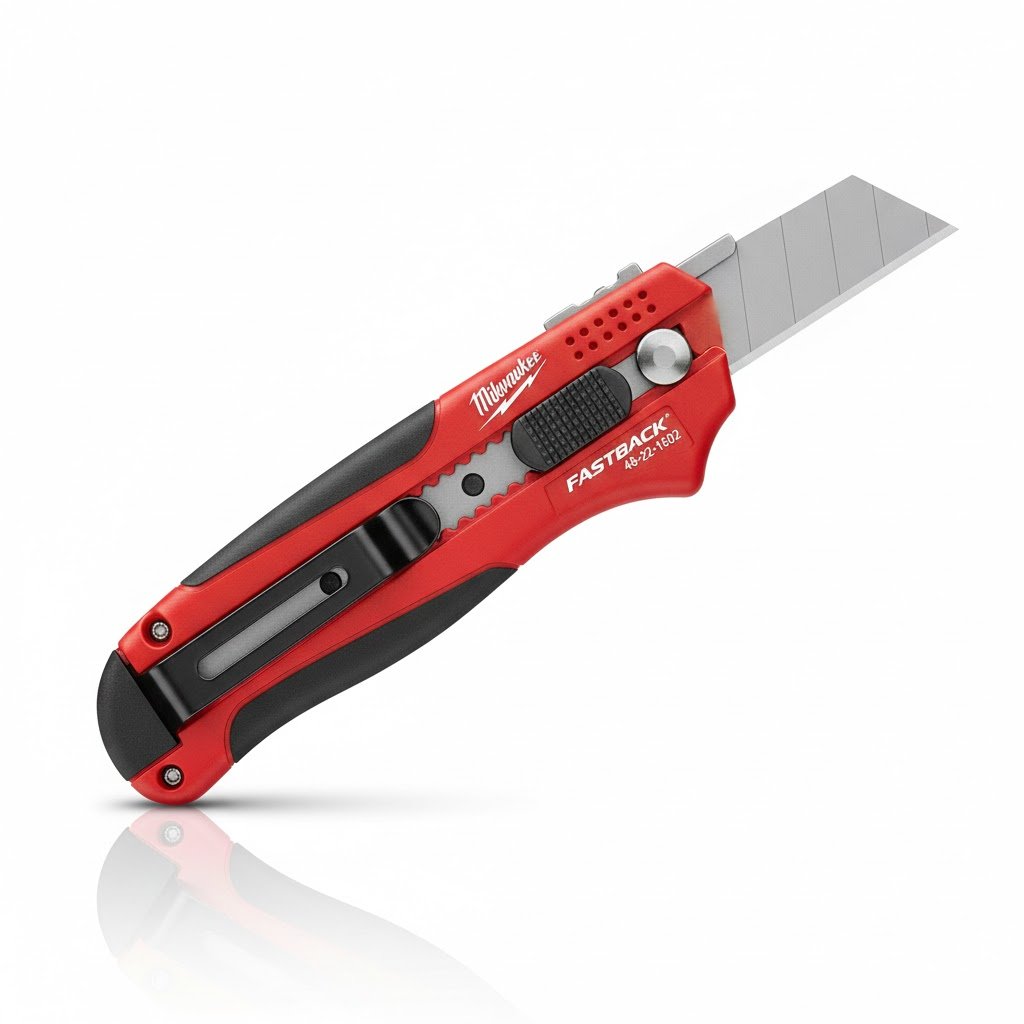
This tool changed the expectations for what a utility knife should be. It combines the speed of a folding knife with the safety of a retractable slider.
- Key Specs:
- Mechanism: Press-and-flip with slider
- Body: Reinforced Polymer
- Features: Integrated gut hook and wire stripper
- Weight: 4.5 oz
- Pros: One-handed operation is flawless; the wire-form belt clip doesn’t tear your pants.
- Cons: The gut hook feature is a magnet for pocket lint and debris.
Hands-on Note: The button lock has a very positive “click” that hasn’t weakened after 5,000 cycles. There is zero vertical play in the blade when fully extended.
Who it’s best for: Professionals who need to switch between tasks rapidly. Real-World Drawback: The blade storage compartment can be finicky to close if the spare blades aren’t stacked perfectly flat.
2. The Unbreakable Classic: Stanley Classic 99
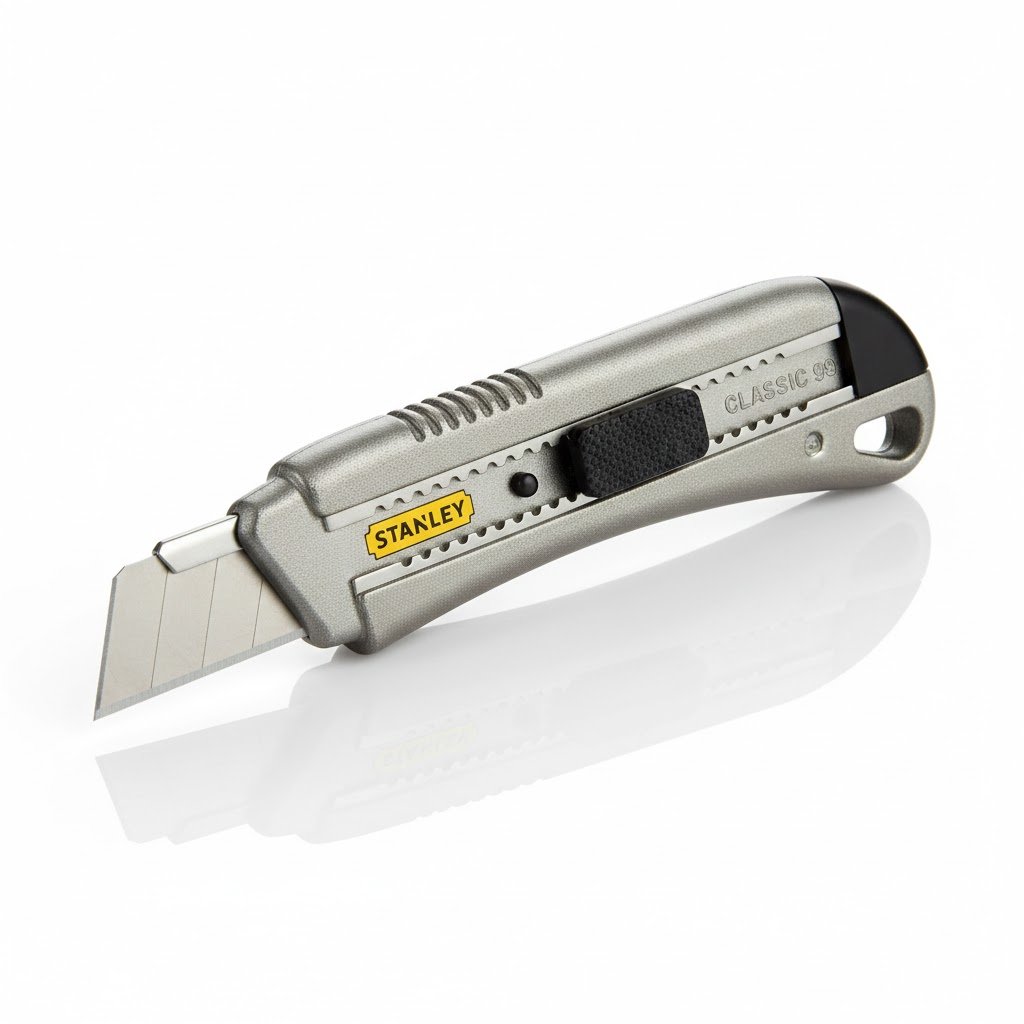
There is a reason this design hasn’t changed in decades. It is a simple, interlocking nose design made of die-cast zinc that refuses to die.
- Key Specs:
- Mechanism: Multi-position slider
- Body: Die-cast Zinc
- Storage: High-capacity handle
- Weight: 4.2 oz
- Pros: Virtually indestructible; fits the hand better than most modern ergonomic designs.
- Cons: You need a screwdriver to change the blade or access storage.
Hands-on Note: The overlap of the two metal halves at the nose provides the best lateral stability in the business. It won’t bend even when prying.
Who it’s best for: The “buy it once” consumer. Real-World Drawback: The grey paint chips off almost immediately, and the screw can vibrate loose over years of heavy vibration.
3. The Grip King: DeWalt Premium Retractable Utility Knife
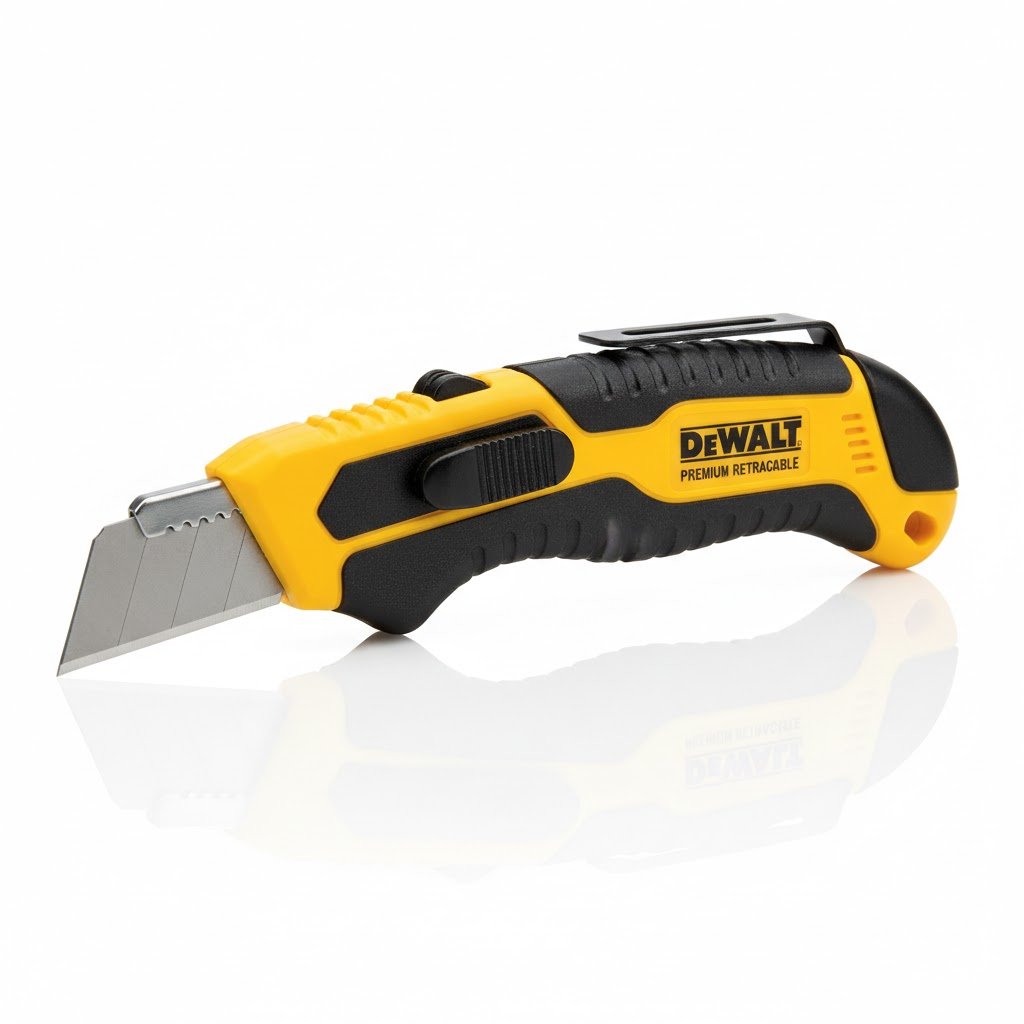
DeWalt focused heavily on the contact points here. If you work in cold or wet conditions, this is the handle you want.
- Key Specs:
- Mechanism: Rapid-load slider
- Body: Metal with rubber over-mold
- Storage: 5 Blades
- Weight: 6.4 oz
- Pros: Massive ergonomic handle; excellent vibration dampening during heavy cuts.
- Cons: It is significantly bulkier than its competitors; feels heavy in a pocket.
Hands-on Note: The nose has a specialized “debris cleaner” that wipes the blade as you retract it—a small feature that actually works to prevent jams.
Who it’s best for: Demo crews and drywallers. Real-World Drawback: The rubber grip can start to peel or turn “gummy” if it comes into contact with certain motor oils or solvents.
4. The Precision Specialist: Irwin FK250
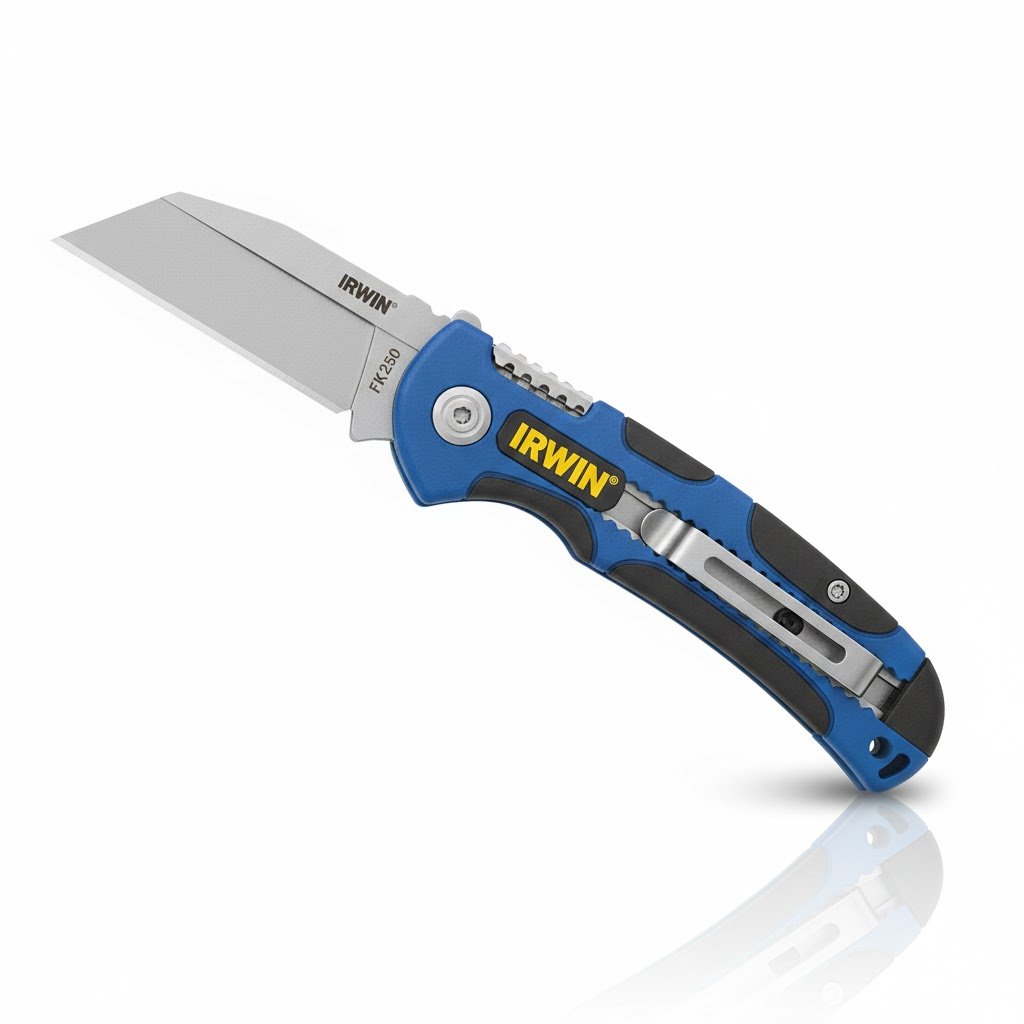
The FK250 features a slim profile and a proprietary “BladeLock” technology designed to keep the blade from being pulled out of the tool.
- Key Specs:
- Mechanism: Folding retractable
- Body: High-grade Aluminum
- Storage: 3 Blades
- Weight: 3.8 oz
- Pros: Very slim in the pocket; the screw-driver bit fold-out is actually sturdy enough to use.
- Cons: The blade storage door feels a bit flimsy compared to the rest of the metal body.
Hands-on Note: The trigger-grip design allows your middle finger to lock the tool into your palm, giving you incredible control for curved cuts.
Who it’s best for: HVAC techs and electricians. Real-World Drawback: The “quick-release” button is very sensitive; I’ve accidentally ejected the blade while snagging it on a tool pouch.
5. The Professional’s Secret: Olfa XH-1
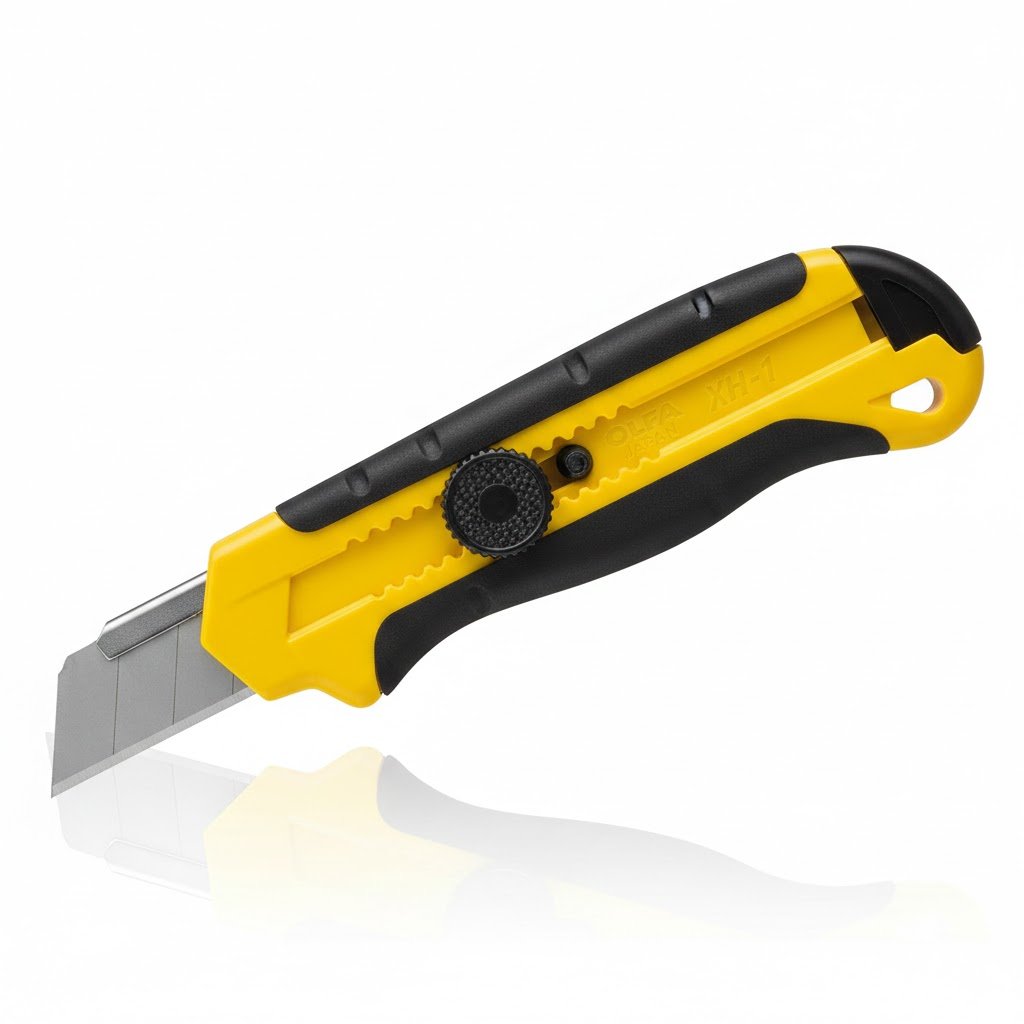
Olfa is the gold standard for sharpness. While they are known for snap-offs, this heavy-duty retractable model uses their ultra-sharp black blades.
- Key Specs:
- Mechanism: Auto-lock slider
- Body: Elastomer grip / Acid-resistant
- Storage: None
- Weight: 3.2 oz
- Pros: The most comfortable grip for long-duration use; fits into narrow gaps easily.
- Cons: No onboard blade storage means you must carry a separate dispenser.
Hands-on Note: The auto-lock mechanism is rated for significantly more pressure than standard plastic sliders. It feels like a fixed blade.
Who it’s best for: Flooring installers and craftspeople. Real-World Drawback: The lack of a pocket clip means it often ends up at the very bottom of your tool bag.
How To Choose The Best Retractable Knife
Mechanical Tolerances and “Blade Play”
When choosing a knife, extend the blade and try to wiggle it with your fingers (carefully). A high-quality retractable knife should have less than 1mm of lateral movement. If the blade wobbles, your cuts will be jagged, and you’ll find yourself breaking more tips when cutting hard materials like heavy rubber or thick carpet.
The Trade-off: Quick-Change vs. Fixed-Screw
“Quick-change” mechanisms are convenient, but they introduce more moving parts that can fail. If your work involves a lot of grit, sand, or drywall dust, a traditional screw-closure (like the Stanley 99) is actually superior. It seals the internals from debris. However, if you are strictly cutting cardboard or plastic wrap, the convenience of a button-release change is worth the trade-off.
Handle Volume and Fatigue
Ergonomics isn’t just about “soft touch” plastic. It’s about the volume of the handle. For heavy-duty tasks that require leaning your body weight into the cut, a thicker, wider handle (like the DeWalt) distributes that pressure across your palm, preventing the “hot spots” that cause blisters after an hour of use. Slimmer knives are better for precision but worse for power.
Read More Guides: Best Field Dressing Knives of 2026: Field-Tested & Ranked
FAQS
Is a retractable knife safer than a folding utility knife?
Yes, in most high-paced work environments, a retractable knife is safer. Because the blade can be instantly pulled back into the housing with a thumb flick, the risk of leaving an exposed edge on a workbench is minimized.
Pro-tip: Look for “auto-retracting” models if you work in a warehouse setting; these pull the blade back the moment it loses contact with the cutting surface.
Why do my utility blades keep snapping?
This depends on the lateral pressure you are applying and the carbon content of the blade. Most blades are designed for vertical slicing, not prying or twisting.
Pro-tip: If you find yourself snapping tips frequently, switch to “Bi-Metal” blades; they have a spring-steel spine that allows the blade to bend significantly without shattering.
Can I use these knives for self-defense?
No, retractable utility knives are designed for static cutting tasks and make poor defensive tools. The blade length is insufficient, and the retraction mechanism is a failure point under high-impact stress.
Pro-tip: Keep your utility knife for its intended purpose—opening boxes and cutting materials—and carry a dedicated tactical folder if personal protection is your concern.
How do I stop the slider from sticking?
This depends on the type of debris, but usually, a dry lubricant is the answer. Never use thick grease or WD-40, as these attract dust and create a “sludge” that jams the mechanism.
Pro-tip: Use a puff of graphite powder or a “dry” silicone spray inside the track to keep the slider moving smoothly without attracting sawdust.
Are “Black” blades actually better than standard silver ones?
Yes, black blades are typically honed at a more acute angle and undergo double-honing. They provide a significantly sharper initial edge but can be more brittle than standard silver blades.
Pro-tip: Use black blades for precision work like wallpaper or vinyl flooring, and stick to standard silver blades for “dirty” work like cutting through old shingles or debris-filled carpet.
Conclusion
The “perfect” retractable knife is a myth; the “right” one depends entirely on your daily environment. If you are constantly on the move and need a tool that handles everything from opening boxes to stripping wire, the Milwaukee Fastback is the most versatile choice on the market today. Its one-handed operation is the gold standard for efficiency.
However, for the Pro User who spends eight hours a day in the trenches of a construction site, the DeWalt Premium Retractable or the Stanley Classic 99 are the only logical choices. They prioritize structural integrity over “gadget” features, ensuring that when you apply thirty pounds of pressure to a cut, the tool doesn’t flex or fail.
Invest in the tool that fits your hand and your specific task. A cheap knife is a constant annoyance; a great one is a tool you’ll stop thinking about because it just works.