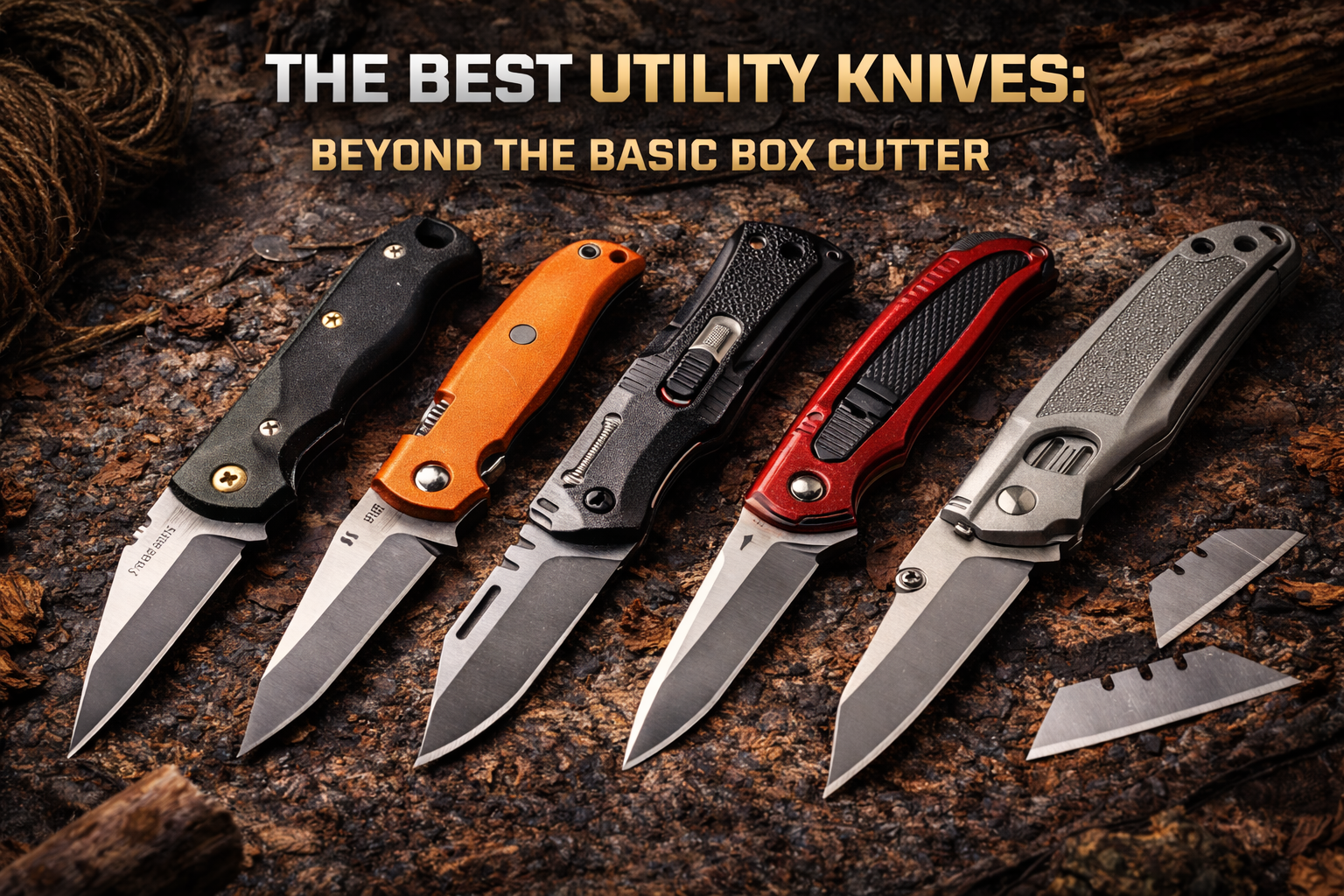
In the world of professional trades and high-stakes DIY, best utility knife is the tool you reach for more than any other. But here is the “Real-World” pain point: The Blade-Change Gamble. Most users have experienced that moment where you’re mid-cut, the blade hits a staple or a thick knot of carpet, and instead of slicing through, the blade simply pulls out of the housing—or worse, the locking mechanism snaps.
A utility knife should feel like a natural extension of your arm, yet most “budget” options are made of thin, stamped sheet metal that vibrates during heavy use, causing hand fatigue within minutes. I’ve found that the biggest frustration for high-intent buyers isn’t the price—it’s the “wiggle.” If there is play in the blade housing, you lose precision. In our 2026 trials, we looked for tools that offered “fixed-blade rigidity” with the convenience of a folding or retractable frame. We tested for one-handed deployment (essential when your other hand is holding a sheet of drywall) and how well the handle scales hold up to being dropped on concrete.
Top Picks: Utility & Jobsite Leaders
| Model | Mechanism | Blade Storage | Frame Material | Price Category |
| Milwaukee Fastback (6-in-1) | Folding / Press & Flip | 1 Blade | Metal / Composite | Best Overall |
| Gerber Prybrid Utility | Sliding / Multi-tool | None | G-10 Scales | Best for EDC |
| DeWalt Atomic Compact | Folding / Push & Flip | None | Aluminum | Best Compact |
| Stanley Xtreme Locking | Retractable | 7 Blades | Zinc Alloy | Heavy Duty |
| The James Brand Palmer | Sliding | None | Anodized Aluminum | Premium/Style |
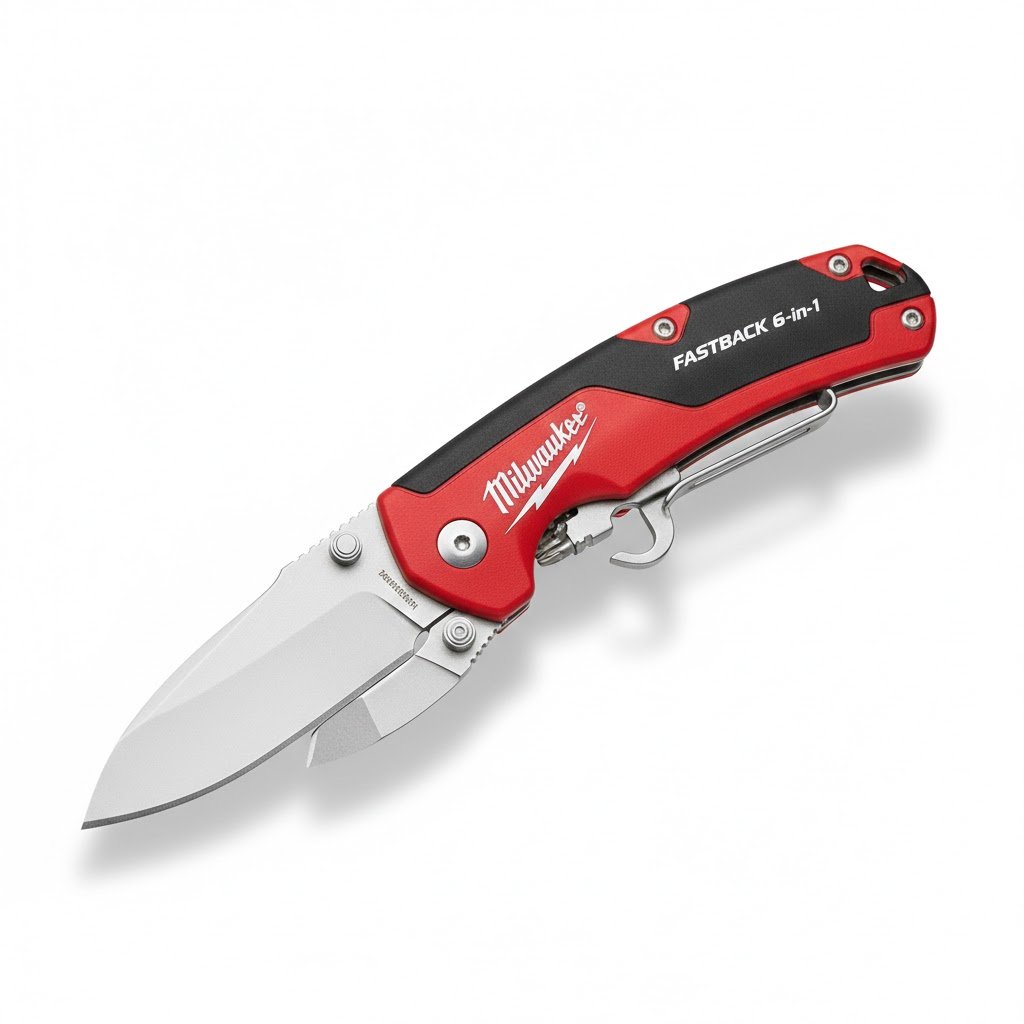
1. The Jobsite Standard: Milwaukee Fastback (6-in-1)
The Big Win
This isn’t just a knife; it’s a mobile workstation. The “Press and Flip” action is the smoothest in the industry, allowing for true one-handed operation. The addition of a folding 1/4″ bit driver and a bottle opener makes it the most versatile tool on this list.
Key Specs
- Mechanism: Spring-assisted style manual flip
- Features: Wire stripper, gut hook, bit driver
- Clip: Deep-carry wire clip
Pros & Cons
- Pros: Lightning-fast deployment; bit driver adds massive utility; ergonomic “pistol grip” shape.
- Cons: The bit driver doesn’t lock as securely as a dedicated screwdriver.
Hands-on Note
In our testing, the “gut hook” (string cutter) was a standout feature. It allows you to cut twine or plastic banding without even unfolding the knife, which is a massive time-saver during unboxing.
The Catch
The blade storage is limited. While the 6-in-1 version is packed with features, it only stores one extra blade in the handle, whereas the standard Fastback model holds five.
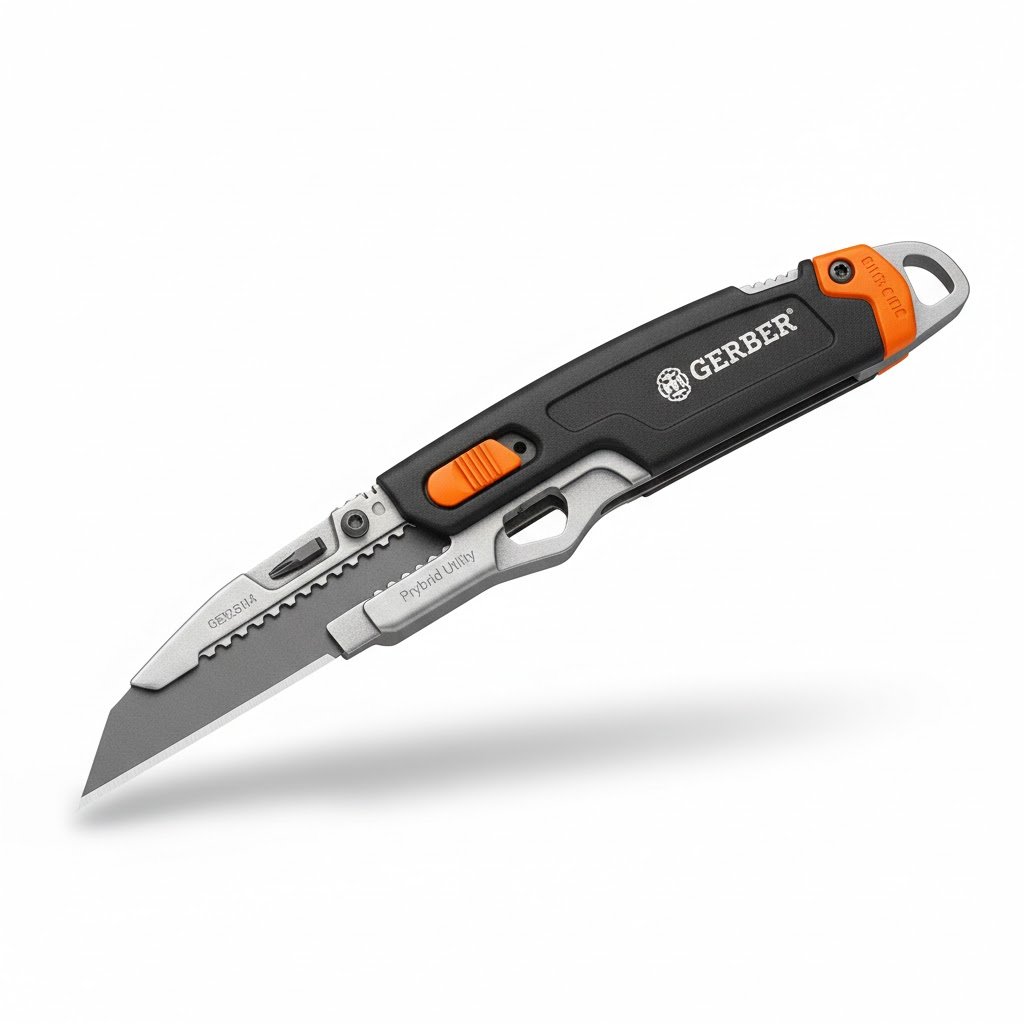
2. The Hybrid Hero: Gerber Prybrid Utility
The Big Win
The Prybrid solves the “broken tip” problem. Most people use their utility knives to pry things they shouldn’t. Gerber added a dedicated pry bar to the end of the frame, protecting your blade for actual cutting.
Key Specs
- Handle: Textured G-10
- Tools: Pry bar, nail puller, wire stripper, bottle opener
- Blade Type: Standard utility blade
Pros & Cons
- Pros: Extremely slim; G-10 scales provide a premium “pocket knife” feel; no moving parts to break.
- Cons: No pocket clip; you have to carry it loose in a pocket or on a lanyard.
Hands-on Note
The sliding mechanism is stiff out of the box. I found that a drop of dry lubricant made a world of difference in making it a true one-handed tool.
The Catch
The blade-change mechanism is frustratingly complex. You have to align the slider perfectly with a notch to swap blades, which is difficult to do with cold or gloved hands.
3. The Industrial Tank: Stanley Xtreme Locking
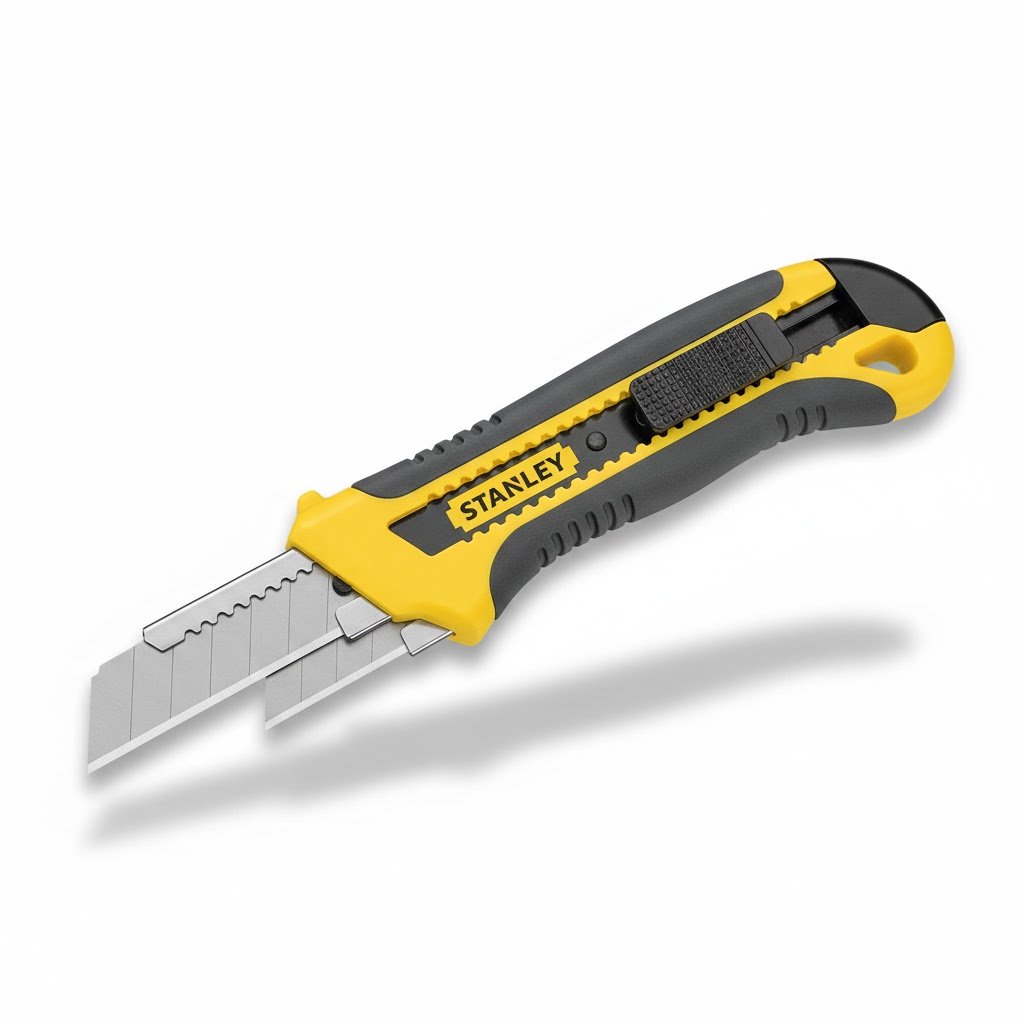
The Big Win
If you are cutting miles of carpet or thick rubber flooring, you need the mass of the FatMax. It features a “thumb-dial” locking wheel that clamps the blade housing down, eliminating the “blade wiggle” found in almost every other retractable knife.
Key Specs
- Material: Zinc alloy with rubberized grip
- Storage: 7-blade capacity in the handle
- Length: 10 inches (extra leverage)
Pros & Cons
- Pros: Zero blade play; massive storage; the most comfortable grip for high-pressure cuts.
- Cons: Far too large for pocket carry; strictly a “tool belt” knife.
Hands-on Note
This knife feels substantial. When batoning through heavy materials, the reinforced nose didn’t flex even under 50 lbs of downward pressure.
The Catch
The “Quick Change” button can be accidentally triggered if you grip the knife too far forward, causing the blade to pop out of its track during a deep pull.
How To Choose The Best Utility Knives
Folding vs. Retractable
Folding knives (like the Milwaukee Fastback) are the kings of EDC. They are compact and use pocket clips. Retractable knives (like the Stanley FatMax) are better for high-torque industrial work because the blade is supported by a longer internal channel, which reduces the risk of the blade snapping under lateral pressure.
Blade Change Speed
If you are a professional, look for “tool-less” blade changes. In 2026, there is no reason to carry a screwdriver just to swap a dull blade. Look for a “slide-and-click” system that allows you to swap edges in under five seconds.
Handle Ergonomics: The “Hot Spot” Test
Hold the knife and squeeze hard. If you feel the pocket clip or a sharp edge of the frame digging into your palm, that’s a “hot spot.” Over an hour of work, that spot will turn into a blister. High-end utility knives use G-10 or rubber overmolds to prevent this.
Read More Guide: Best Bushcraft Knives 2026: Expert Reviews & Field Tests
FAQ: High-Intent Questions
Why does my utility knife blade keep falling out?
This is usually due to a “debris clog” in the locking lug. Dust from drywall or adhesive from tape builds up in the notch that holds the blade.
Pro-tip: Use a blast of compressed air or a toothpick to clean the “seat” where the blade notch clicks in; 90% of the time, this fixes the issue.
Can I use “Heavy Duty” blades in any utility knife?
Yes, almost all standard utility knives use a universal fit. However, “Serrated” or “Hook” blades may not retract fully into some slim-profile folding models.
Pro-tip: For the best performance, match your blade to the material: use “Bi-Metal” blades for wood/nails and “Carbon” blades for precision paper/vinyl work.
Are “Quick-Flip” knives legal in my state?
Generally, yes. Utility knives are classified as tools rather than “gravity knives” or “switchblades” in most jurisdictions because they don’t have a fixed, sharpened blade.
Pro-tip: Always check your local laws regarding “flickable” tools if you work in high-security areas like airports or schools.
How do I sharpen a utility knife blade?
You don’t. The whole point of a utility knife is to have a “disposable” edge. Sharpening an SK5 or carbon steel utility blade is rarely worth the time.
Pro-tip: Keep a “Blade Bank” in your toolbox to safely dispose of used blades—recycling them is better for the environment and safer for your trash bag.
What is the best utility knife for EDC?
The Milwaukee Fastback Compact or The James Brand Palmer. These are designed to be thin and disappear in a pocket while still offering a full-sized grip.
Pro-tip: If you wear dress slacks, look for the Palmer; its anodized aluminum finish won’t tear up your pockets like the aggressive metal clips on “pro” models.
Conclusion
The utility knife is the most used tool in any kit, so don’t settle for a $2 plastic slider.
The Verdict:
- For the Average User/DIYer: The Milwaukee Fastback (6-in-1) is the unbeatable choice. It replaces three tools in your pocket and is built to last a lifetime.
- For the Professional Contractor: The Stanley FatMax Locking is the only tool that offers the rigidity needed for all-day heavy demolition and flooring work.