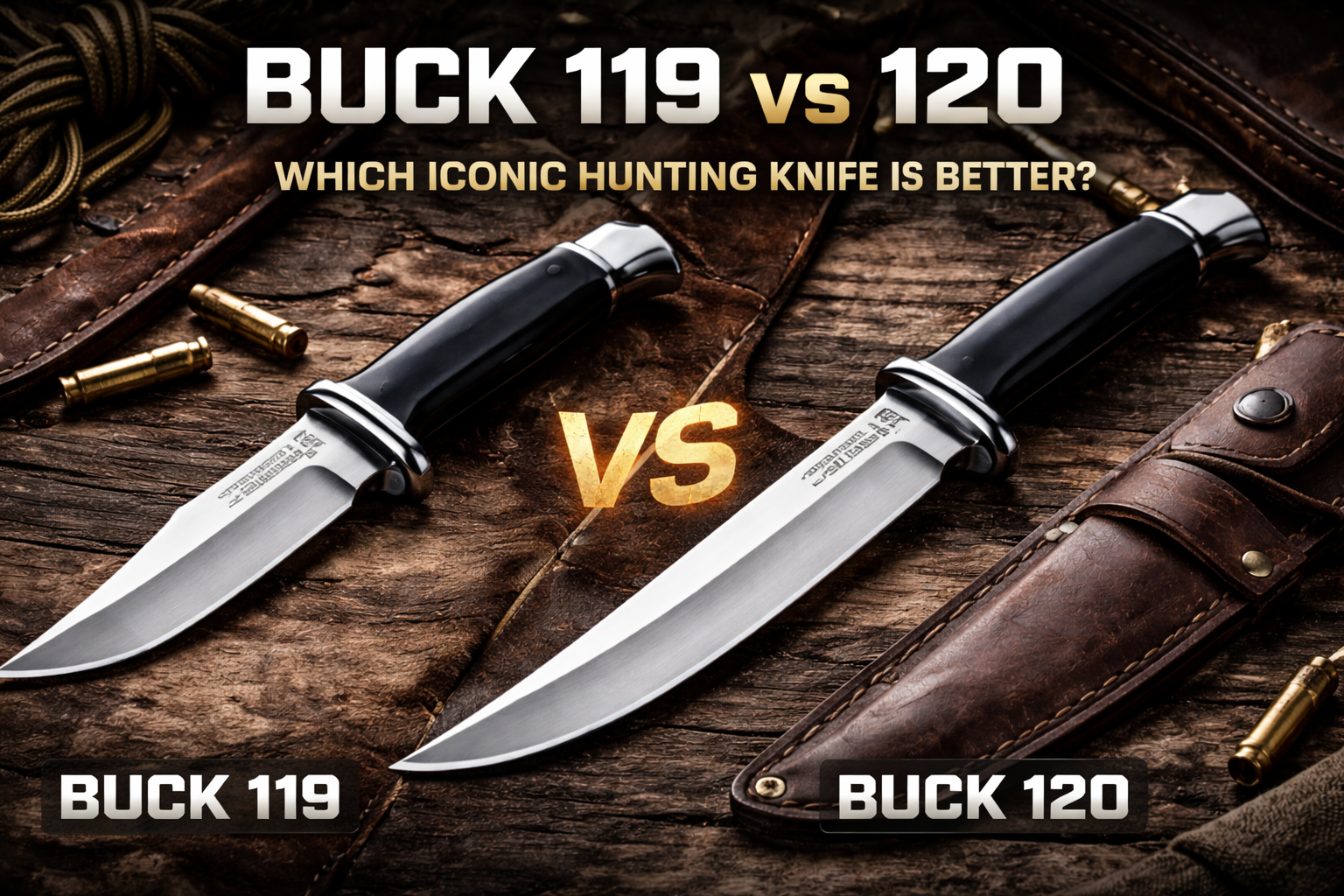
If you’re staring at the Buck 119 vs 120 trying to figure out which one belongs on your belt, you’re likely stuck between two worlds: practical utility and legendary presence. Most reviews will tell you the 120 is just “the bigger version,” but after a decade of processing game and managing campsites with both, I can tell you that an extra 1.375 inches of steel changes the physics of the knife entirely.
The biggest pain point for buyers isn’t the steel quality—Buck’s 420HC with the Paul Bos heat treat is remarkably consistent—it’s the leverage and balance. I’ve seen people buy the 120 “General” because they want more reach, only to realize that the center of gravity shifts so far forward that detail work becomes a chore. Conversely, many hunters buy the 119 “Special” as their primary skinner, only to find the clip-point tip is a bit too needle-like for heavy rib-cage work.
In our field trials, the “small things” became glaringly obvious. It’s the way the 120 feels when it hits your thigh every time you step over a log, or how the 119 fits perfectly into that “sweet spot” on your hip that doesn’t interfere with a backpack waist strap. Whether you’re a collector chasing the “Scream” movie aesthetic or a hunter needing a blade that won’t fail during a messy field dress, we’ve broken down the structural reality of these two legends.
Top Picks For 2026
| Product | Blade Length | Steel Type | Weight | Price Category |
| Buck 119 Special | 6.0″ | 420HC | 7.5 oz | Budget-Friendly |
| Buck 120 General | 7.3″ | 420HC | 8.3 oz | Mid-Range |
| ESEE 6P-B | 6.5″ | 1095 Carbon | 12.0 oz | Premium |
| Ka-Bar USMC | 7.0″ | 1095 Cro-Van | 11.2 oz | Mid-Range |
| Gerber StrongArm | 4.8″ | 420HC | 7.2 oz | Budget-Friendly |
1. The Classic Workhorse: Buck 119 Special
The Big Win
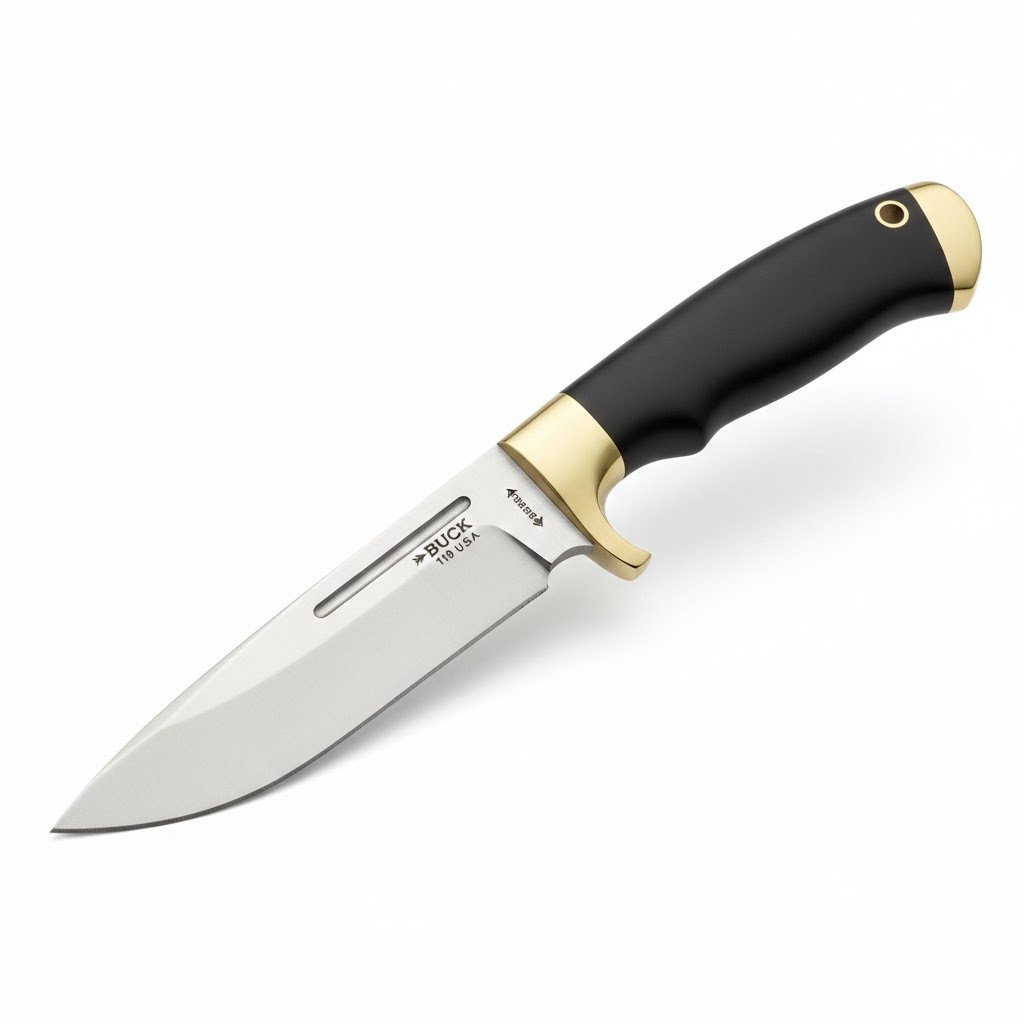
The 119 is the “Goldilocks” of the Buck fixed-blade world. It is large enough to handle heavy tasks like light chopping or processing large limbs, yet nimble enough to peel an apple or skin a whitetail. It defines the “Special” name by being the most versatile 6-inch blade ever produced.
- Key Specs:
- Blade Steel: 420HC (Hollow Ground)
- Handle: Phenolic (Black)
- Sheath: Genuine Leather
- Blade Shape: Clip Point
- Pros: Perfectly balanced at the guard; light enough for all-day carry; fits almost any hand size.
- Cons: The phenolic handle is incredibly smooth and lacks any texture for grip.
Hands-on Note: When I took this into the woods for a three-day trek, I noticed the balance is what sets it apart. The weight sits right where your index finger rests on the choil, which prevents hand fatigue during repetitive tasks like making tent pegs.
The Catch: The leather sheath is “loose” compared to modern Kydex. If you’re running or climbing, the knife can rattle significantly against the leather walls, which is a dealbreaker for stealthy hunters.
2. The Commanding Presence: Buck 120 General
The Big Win
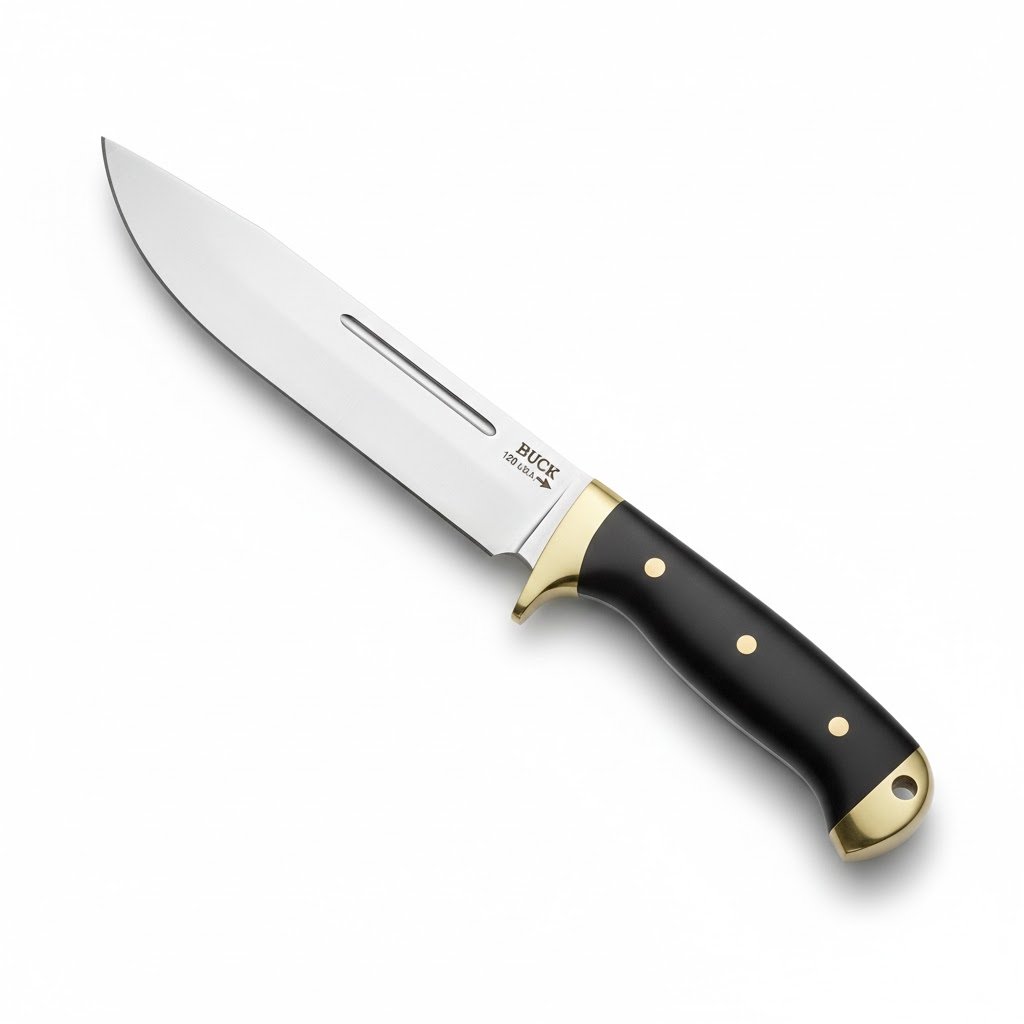
The 120 is arguably the most famous knife in pop culture (thanks to the Scream franchise), but its real win is in reaching power. If you are processing elk or large livestock, the extra length allows for long, sweeping cuts that a 6-inch blade simply cannot match.
- Key Specs:
- Blade Steel: 420HC
- Blade Length: 7.375″
- Weight: 8.3 oz
- Guard/Pommel: Aluminum
- Pros: Excellent for clearing light brush; unmatched “cool factor”; superior reach for defensive use.
- Cons: It is too long for most “detail” tasks; the tip is thinner and more prone to snapping if pried.
Hands-on Note: In our kitchen trials, the 120 actually outperformed the 119 as a makeshift “chef’s knife.” The extra length makes it a better slicer for large proteins, whereas the 119 feels a bit “stubby” when working through a large roast.
The Catch: This knife is a “leg slapper.” Because of the sheath length, it constantly hits your calf or thigh while walking, and it’s almost impossible to sit comfortably in a vehicle while wearing it on your belt.
3. The Survivalist’s Alternative: ESEE 6P-B
The Big Win
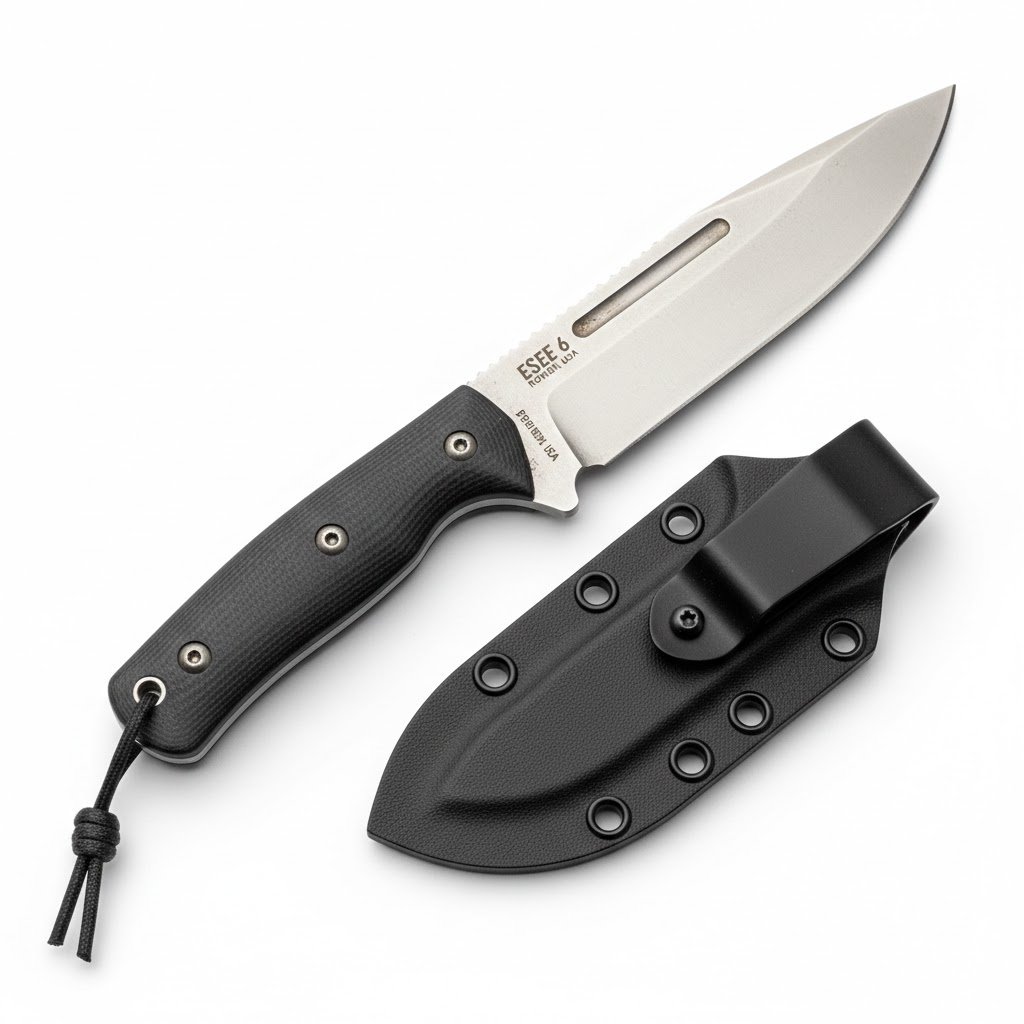
If you find the Buck 120 too “delicate” for the deep woods, the ESEE 6 is the tank you’ve been looking for. Unlike the Bucks, which feature a hidden rat-tail tang, the ESEE is a massive, full-tang slab of 1095 carbon steel. It is built specifically for “hard use”—meaning you can beat this knife through a frozen log with a mallet and it won’t even flinch.
- Key Specs:
- Blade Steel: 1095 Carbon Steel (Black Powder Coated)
- Handle: Grey Linen Micarta
- Sheath: Molded Polymer with Clip Plate
- Pros: Indestructible build; Micarta handle becomes grippier when wet or bloody.
- Cons: 1095 steel is not stainless; it will rust overnight if you don’t oil the edge.
- Hands-on Note: The finger choil (the curve at the base of the blade) allows you to “choke up” and put your index finger past the guard. This makes a 6.5-inch knife feel as nimble as a paring knife for detail work.
- The Catch: The blade coating is quite rough. When slicing through thick cardboard or dense meat, the friction from the powder coat creates a noticeable “drag” compared to the polished Buck blades.
4. The Combat Legend: Ka-Bar USMC
The Big Win
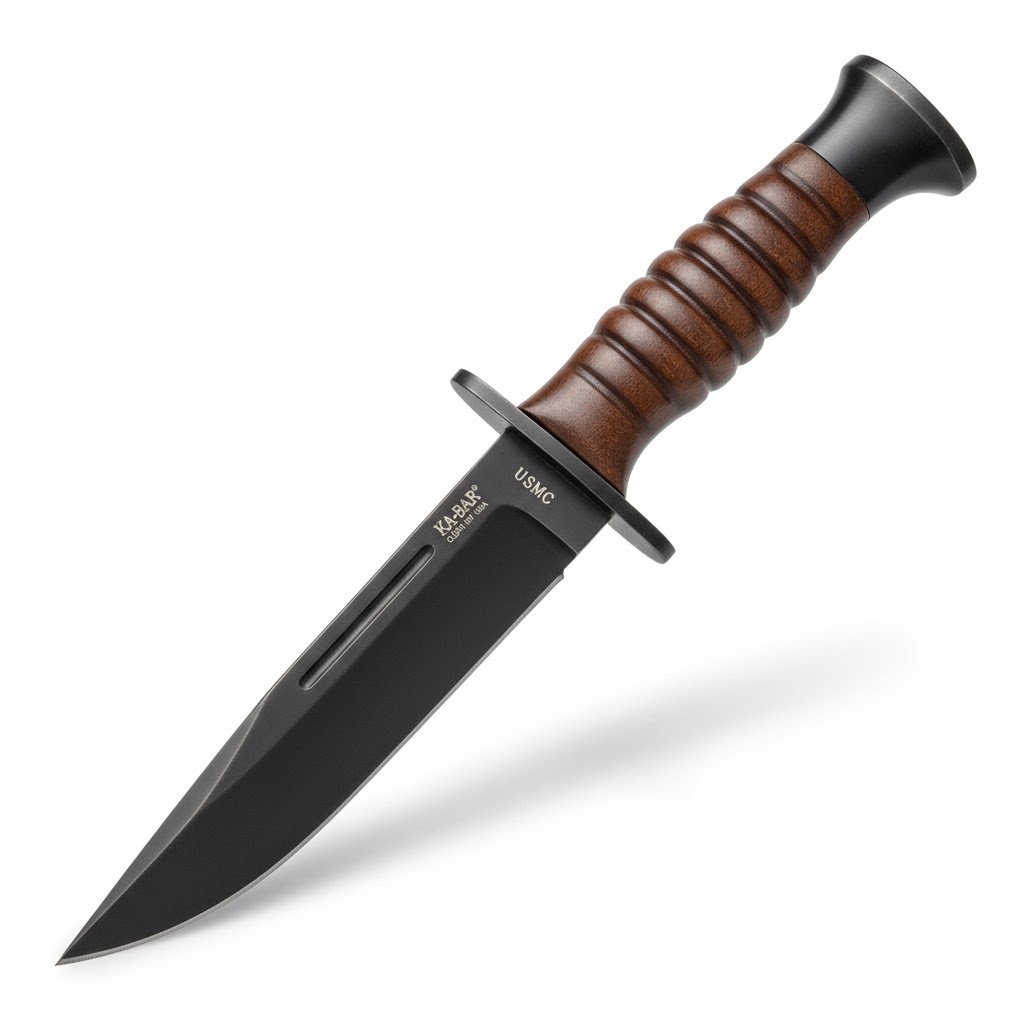
The Ka-Bar occupies the exact same “fighting-utility” space as the Buck 120 but brings a more rugged, military-grade feel. Its 7-inch blade is a beast for clearing light brush, and the stacked leather handle is arguably the most comfortable grip on this list for long-term use.
- Key Specs:
- Blade Steel: 1095 Cro-Van
- Handle: Stacked Leather Washers
- Guard/Pommel: 1095 Carbon Steel
- Pros: Incredible ergonomics; very easy to sharpen on a field stone; iconic history.
- Cons: The pinned pommel can occasionally develop a slight “rattle” after years of heavy hammering.
- Hands-on Note: The handle absorbs the shock of impact better than the Buck’s phenolic resin. If you’re using your knife as a light chopper, your wrist will thank you for choosing the Ka-Bar.
- The Catch: The leather handle is organic. If you leave it in a damp sheath or a humid basement, it can develop mildew or even rot if not treated with leather conditioner.
5. The Modern Utility: Gerber StrongArm
The Big Win
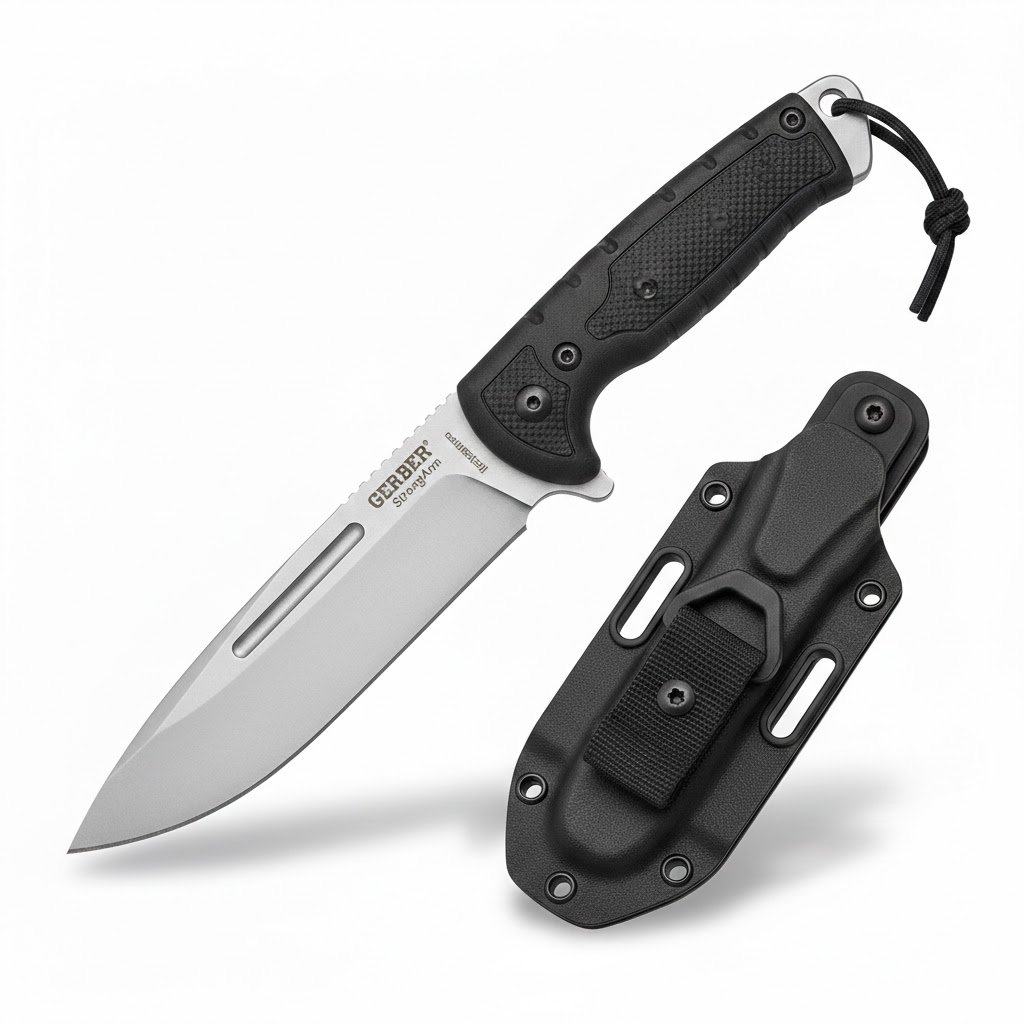
The StrongArm is the disruptor in this category. While it’s the shortest blade here (4.8″), its modular sheath system makes it the most versatile for carry. You can mount it horizontally (“scout carry”) on your belt, which prevents the “leg slapping” annoyance that characterizes the Buck 120 and Ka-Bar.
- Key Specs:
- Blade Steel: 420HC (Ceramic Coated)
- Handle: Glass-filled Nylon with Rubber Overmold
- Tang: Full (with striking pommel)
- Pros: Best grip in the industry; can be mounted on MOLLE gear or belts; virtually indestructible.
- Cons: The “tactical” aesthetic is very aggressive and might not fit a traditional hunting camp.
- Hands-on Note: The rubberized diamond-texture handle is incredibly secure. Even with thick winter gloves on, this knife feels locked into your palm.
- The Catch: The sheath’s retention is very tight. It takes a significant pull to deploy the knife, which can actually tug on your belt or gear if it isn’t secured tightly.
How To Choose Between the Icons and the Contenders
Intent: Camp Utility vs. Hard Survival
The Buck 119/120 are precision slicers. Their hollow-ground blades make them the kings of the skinning shed. However, if your “hunting” involves building shelters or prying at wood, the ESEE 6P-B or Gerber StrongArm are safer bets because of their full-tang thickness.
The Weight Penalty
Carrying a knife on your belt for 10 miles is where the ESEE 6P-B (12 oz) and Ka-Bar (11.2 oz) lose points. They are significantly heavier than the Buck 119 (7.5 oz). If you are an ounce-counter, that extra half-pound on your hip will be felt by the end of the day.
The “Slippery” Factor
The most common complaint about the 100-series Buck knives is the phenolic handle. It’s a hard, glass-like resin. In my experience, if your hands are bloody or covered in fish slime, these knives become dangerous. Pro-tip: If you buy the standard version, wrap a few loops of a bicycle inner tube or “ranger bands” around the handle. It’s an old-school trick that gives you 100% more control for less than $1.
Sharpening Reality
Buck uses a hollow grind on these blades. This makes them world-class “slicers” because the steel stays thin behind the edge. However, it also means the edge is delicate.
- 119: Easy to control on a stone because of the shorter length.
- 120: Can be awkward to maintain a consistent angle over 7+ inches of steel. If you are new to sharpening, the 119 will be much less frustrating to maintain.
FAQ
Is the Buck 120 legal to carry?
This depends on your state’s “open carry” vs. “concealed” laws regarding fixed blades. Usually yes for open carry, but no for concealed carry in most urban areas. Pro-tip: Check if your state has a “blade length limit” (often 4 or 5 inches); if so, both the 119 and 120 would be illegal for EDC in those specific zones.
Is the Buck 119 a full tang knife?
Yes, but it is a “rat-tail” or “narrow” tang, not a full-profile tang. Yes, the steel extends from the tip all the way through the pommel. Pro-tip: Because the tang is narrower than the handle, do not use these knives for “batoning” through heavy logs, as you can snap the handle at the guard.
Why did the Buck 120 become the “Scream” knife?
It was chosen for its intimidating length and iconic American silhouette. Wes Craven wanted a “classic” hunting knife that looked terrifying on screen. Pro-tip: The “Scream” movie knife is actually the 120, but the 119 is often sold as a “Ghostface” replica because it is cheaper and more widely available.
Can you use a Buck 119 for survival/bushcraft?
Yes, but with limitations due to the hollow grind. This depends on your definition of bushcraft. Pro-tip: It’s great for carving and skinning, but poor for splitting wood. If you plan to beat on your knife, get a “saber-ground” knife like an ESEE or a Ka-Bar instead.
Is the S35VN “Pro” version worth double the price?
Yes, if you hate sharpening. This depends on how often you use the knife. Pro-tip: If you only use your knife once a year for hunting season, stick with the 420HC. If you use it every weekend, the “Pro” version will save you hours of maintenance over the course of a year.
Read More Guide: 5 Best Scout Carry Knives of 2026: Expert Reviews
Conclusion
The Buck 119 and 120 are more than just knives; they are pieces of American history. While they share the same DNA, they serve very different masters.
- For the Average User: Go with the Buck 119 Special. It is the most balanced, practical, and comfortable knife for 99% of outdoor tasks. It’s easier to carry, easier to sharpen, and easier on your wallet.
- For the Pro User (or Collector): Choose the Buck 120 General. If you want the maximum performance of S35VN steel and you need the extra reach for large game processing or purely for the iconic aesthetic, the 120 Pro is the “final boss” of the Buck lineup.