If you are looking to make the switch from a folder to a fixed blade for daily carry, or you are just tired of the “rib jab,” this is the guide for you. We are going to break down the best horizontal carry knives to help you find the tool that fits your life.
You know the feeling. You hop into the truck to run to the hardware store, or maybe you settle onto the riding mower to tackle the back lot. Suddenly, you feel it. That sharp dig in your ribs or that awkward pressure against your hip bone. It’s your knife handle, jamming into you because standard vertical belt carry just doesn’t agree with sitting down.
I spent years dealing with this. I love my folding knives—my Spyderco Paramilitary 2 is a permanent fixture in my pocket—but there are days out in the woods or on the job site where I need the reliability of a fixed blade. The problem has never been the blade; it’s been the carry method. A six-inch sheath hanging off your belt loop is fine when you are standing, but it becomes a nuisance the second you need to crouch, sit, or drive.
That is where horizontal carry, often called “scout carry,” changed the game for me. It rotates the tool ninety degrees, tucking it along the belt line usually at the small of the back or cross draw in the front. It disappears under a shirt, it doesn’t snag on seatbelts, and it stays out of the way until you need it.
The Philosophy of the “Scout Carry”
To understand why horizontal carry is taking over the EDC (Every Day Carry) world, we have to look at how we actually move throughout the day. Traditional vertical carry was designed for people who spent most of their time on horseback or standing. In 2026, most of us spend our time sitting—in cars, in office chairs, or on heavy machinery.
The Physics of Comfort
When a knife hangs vertically, the tip of the sheath points toward your thigh and the handle points toward your armpit. When you sit, the thigh pushes the sheath up, which pushes the handle into your side.
Horizontal carry solves this by using the horizontal plane of your waist. By mounting the knife parallel to your belt, you utilize a space that doesn’t compress when you bend your legs. Whether you are squatting to check a tire or sitting in a bucket seat, the knife stays in a “dead zone” where it won’t interfere with your body’s mechanics.
The “Grey Man” Advantage: Concealability
Fixed blades are often viewed as “aggressive” or “tactical” by the general public. A vertical sheath hanging below your shirt line draws eyes. Horizontal carry allows a 3.5-inch fixed blade to sit entirely above the belt line. Under a simple untucked T-shirt or a flannel, a horizontal knife is virtually invisible. It provides the strength of a fixed blade with the discretion of a pocket knife.
What to Look For in a Horizontal Carry Knife
Not every knife is a candidate for this style. If you try to scout-carry a 10-inch survival knife, you’ll end up with a “tail” sticking out of your side. Here is the criteria I use to judge a horizontal tool.
1. The Sheath: The Heart of the System
In horizontal carry, gravity is working to pull your knife out of the sheath every second you are moving.
- Positive Retention: You need a “click.” Most Kydex sheaths use a friction fit around the finger guard. You should be able to shake the sheath upside down without the knife falling out.
- The “Mouth” Design: The opening of the sheath needs to be flared slightly so you can guide the knife back in without looking.
2. Handle-to-Blade Ratio & Weight Distribution
If a knife is “handle-heavy,” it will want to rotate. Imagine your belt as a pivot point. If the handle weighs twice as much as the blade, the handle will sag toward the ground, making the knife uncomfortable and difficult to draw. We look for neutral balance.
3. Flatness (The “Print” Factor)
We want to avoid “printing”—where the shape of the knife is visible through your clothes.
- Scales: Flat G10 or Micarta scales are superior to rounded, ergonomic “coke-bottle” handles.
- Hardware: Look for slim belt loops or “Pull-the-Dot” soft loops. Bulky plastic clips can add half an inch of thickness to the setup, defeating the purpose of a low-profile carry.
The Top Picks for Horizontal Carry
I have pulled these options based on years of field testing. I’ve used these for everything from skinning deer to cutting open bags of concrete.
The Best All Rounder: Bradford Guardian 3
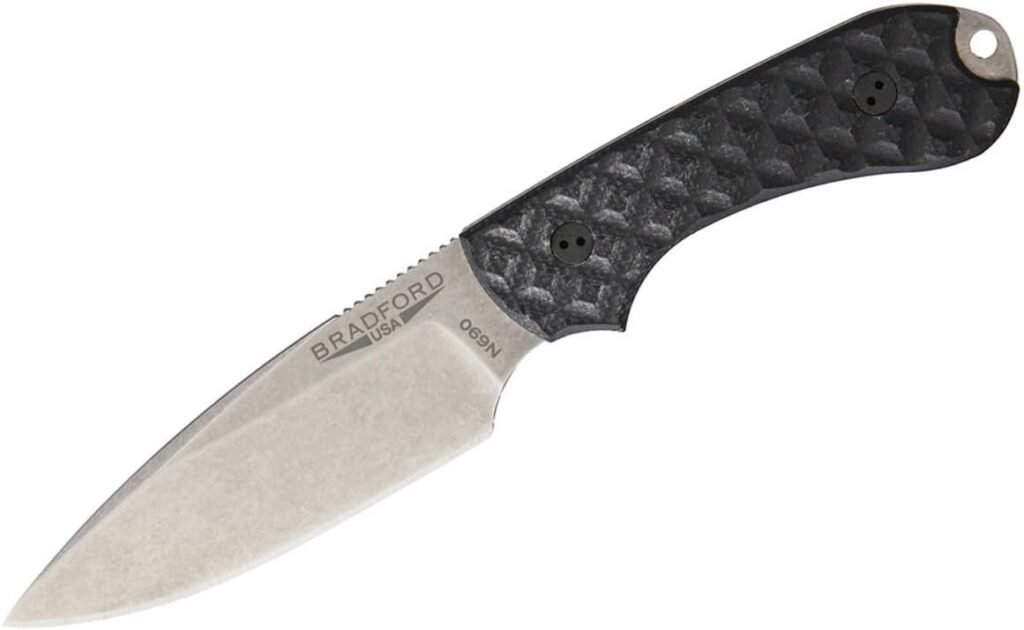
When I first got my hands on a Bradford Guardian 3, I immediately understood the hype. It feels like a surgical tool that’s been built for a construction site.
The Design:
The Guardian 3 features a 3.5-inch blade. You can find it in N690 (great budget stainless), M390 (the edge retention king), or Magnacut (the new industry standard for 2026). The finger choil is the star of the show here. It allows you to choke up on the blade for tasks like whittling or opening delicate packages.
Why it Works Horizontally:
The leather sheath that comes with the Guardian 3 is a masterclass in utility. It is a “scout” design that puts the knife at a 45-to-90-degree angle. It rides tight and follows the contour of your back.
The Best Budget Option: CRKT Minimalist Series
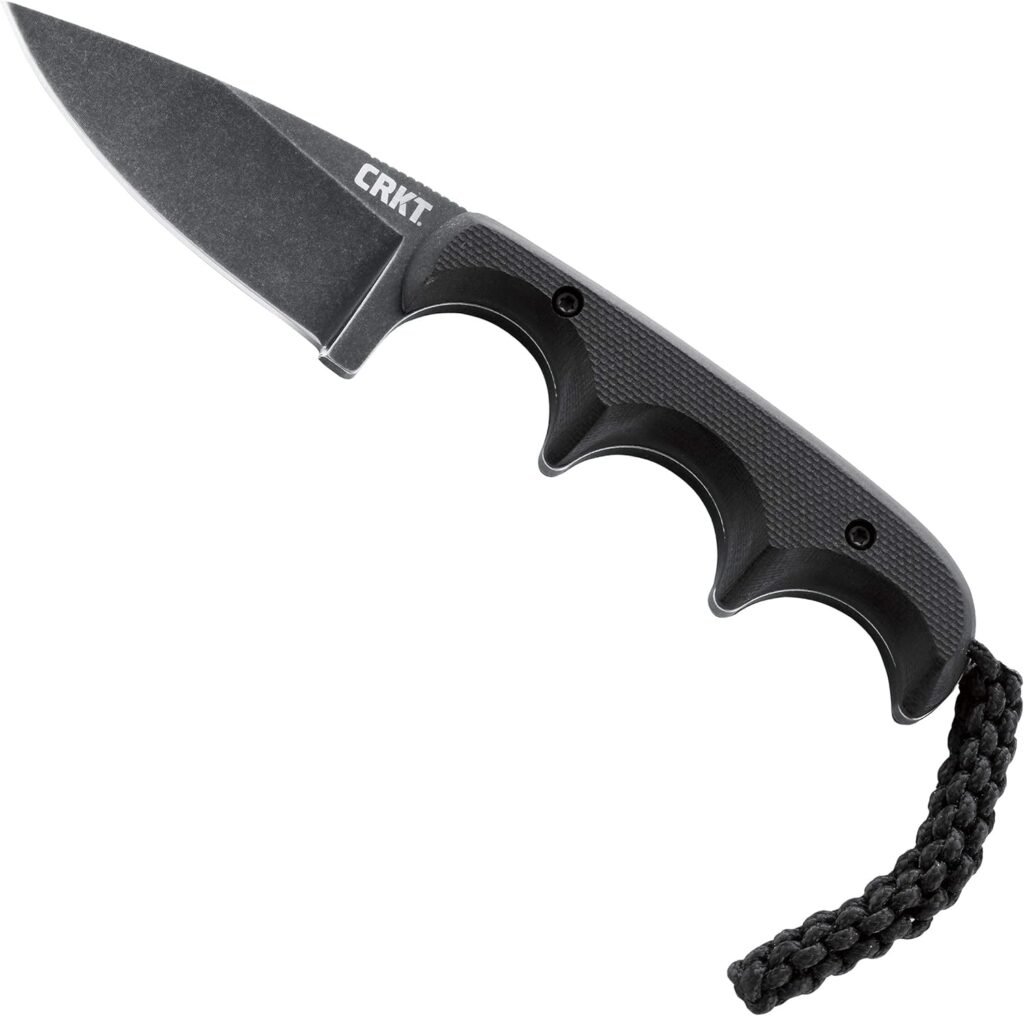
Not everyone wants to drop $150 to see if they like horizontal carry. The CRKT Minimalist series, designed by Alan Folts, is the perfect “gateway” knife.
The Design:
These are intentionally small. With a 2-inch blade, you aren’t going to be chopping down trees, but for 90% of suburban life (Amazon boxes, loose threads, cutting fruit), it’s all the knife you need.
Why it Works Horizontally:
The handle looks strange—it has three deep finger grooves—but once you grab it, it locks into your hand. It is so incredibly light that you can wear it on a pair of lightweight hiking shorts or even sweatpants without the belt line sagging.
The Premium Pick: White River M1 Backpacker / Caper
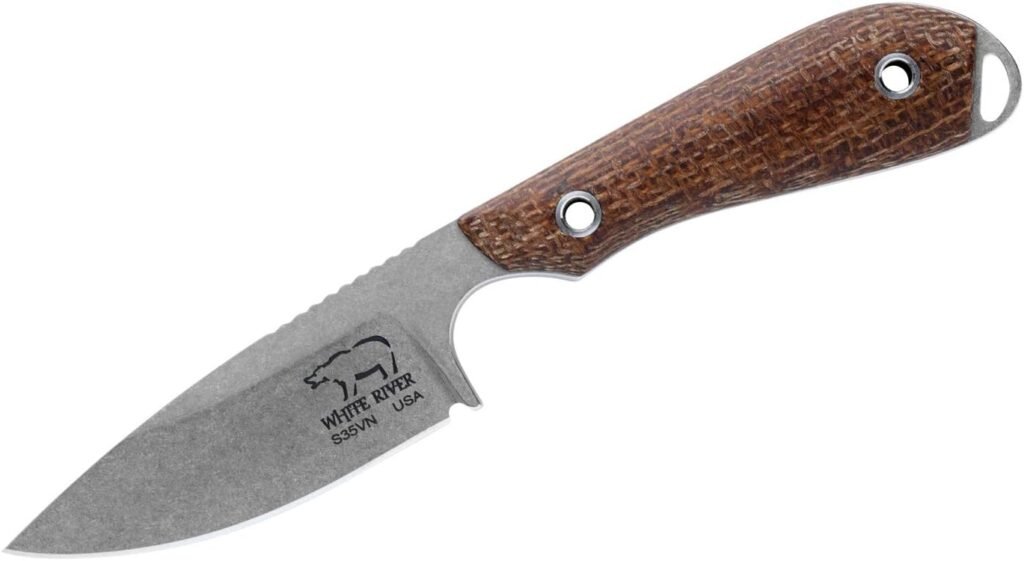
If you appreciate American-made excellence and fit and finish that rivals custom knives, the White River M1 is your choice.
The Design:
The M1 uses CPM-S35VN steel. It is a “tough” stainless steel, meaning it won’t chip easily when it hits something hard. The spine of the knife is beautifully rounded, and the jimping (the grip on the top) is perfectly textured.
Why it Works Horizontally:
White River’s Kydex is some of the best in the industry. The knife snaps in with a satisfying “thud.” The sheath comes with a multidirectional attachment, allowing you to switch between horizontal, vertical, or even neck carry in under a minute.
The Heavy Duty Pick: ESEE 3 (With Armatus Sheath)
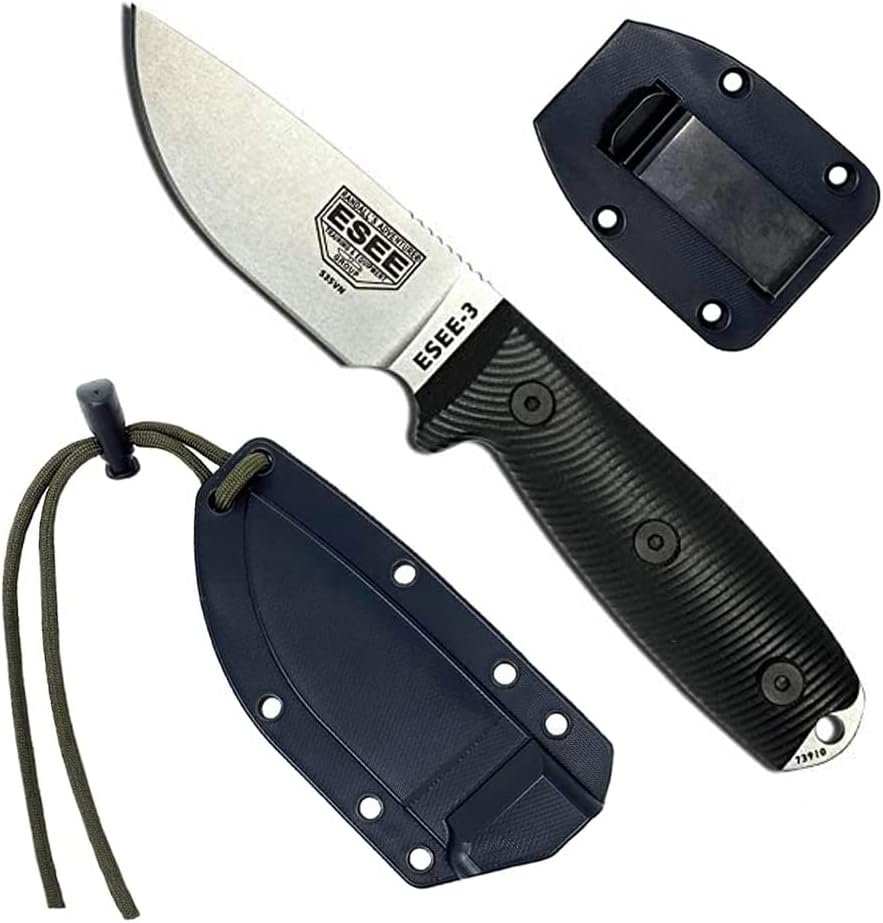
The ESEE 3 is a legend in the survival community. It is a “no-frills” tool designed to keep you alive in the woods.
The Design:
Made from 1095 carbon steel, this knife is easy to sharpen in the field. If you dull it on a camping trip, you can bring the edge back with a simple ceramic rod or even the bottom of a coffee mug. The micarta scales get grippier when they get wet or bloody.
Why it Works Horizontally:
The ESEE 3 is a bit longer than the others. To carry it horizontally, I highly recommend getting an Armatus Carry Architect Sheath. This aftermarket upgrade slims down the profile significantly and holds the knife closer to your body than the factory plastic.
Steel Education for the Horizontal Buyer
When buying a horizontal knife, the steel matters more than with a folder. Why? Because the knife is held against your body, where it is exposed to heat, moisture, and salt (sweat).
Stainless vs. Carbon in 2026
- Magnacut: If you can afford it, get Magnacut. It is the first steel that offers high-end toughness and extreme corrosion resistance. It is perfect for scout carry because sweat won’t touch it.
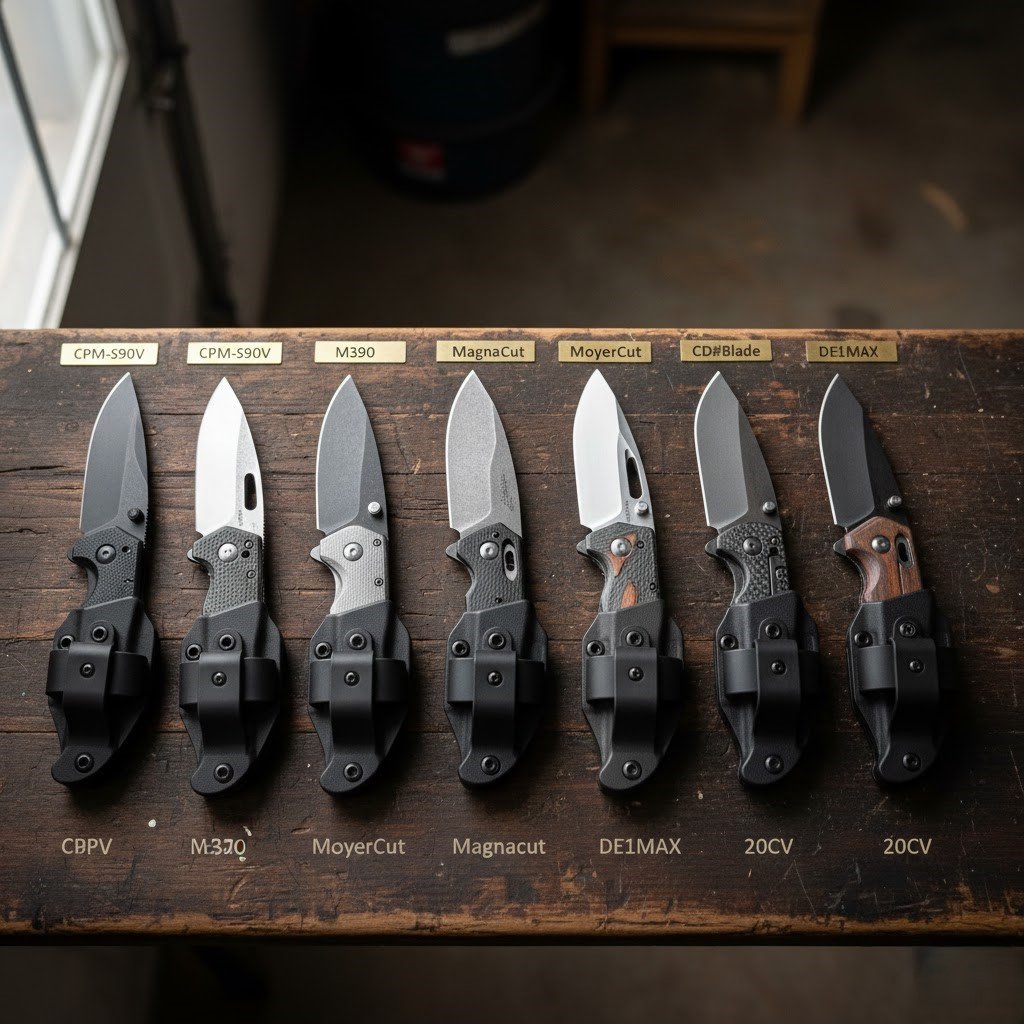
- M390 / 20CV: These are “Super Steels” known for edge retention. If you hate sharpening your knife, choose these. They will stay razor-sharp for months of light use.
- 1095 Carbon: This is for the “user.” It will rust if you don’t oil it, but it is virtually unbreakable. If your knife is a tool first and an accessory second, 1095 is your friend.
Safety and the “Blind Draw”
We need to talk about the “Elephant in the room.” When you carry a knife horizontally at the small of your back, you are often sheathing it blindly.
The Safety Protocol
- Clear the Garment: Use your non-dominant hand to lift your shirt completely out of the way.
- Find the Mouth: Use your thumb on the spine of the knife to “feel” for the edge of the sheath before inserting the tip.
- The Click: Never assume the knife is in. Push until you feel the mechanical engagement of the Kydex or the snap of the leather.
- Practice: Do this 100 times with a dull trainer or a taped blade before you head out into the world.
Legal Considerations for Horizontal Carry
Knife laws are a patchwork of confusion. In many jurisdictions, a “fixed blade” is treated differently than a “folding knife.”
- Concealment: In some states, if your shirt covers your horizontal knife, it is legally a “concealed weapon.”
- Blade Length: Many cities have a 2.5 or 3-inch limit for carry. Always check your local ordinances before strapping on a 4-inch ESEE.
- Intent: Horizontal carry often looks “tactical.” If you are in a highly urban, non-knife-friendly area, a smaller knife like the CRKT Minimalist is less likely to cause issues than a larger ESEE or TOPS.
Maintenance for Your Scout Carry System
Because your knife lives on your belt, it collects lint, dust, and moisture.
- Blow out the Sheath: Once a month, use compressed air to blow out the inside of your Kydex sheath. Small grains of sand can get trapped inside and scratch your blade every time you draw it.
- Oil the Pivot (Wait, there isn’t one!): That’s the beauty of fixed blades. However, you should rub a light coat of mineral oil on the blade to protect it from sweat-induced corrosion.
- Leather Care: If you use the Bradford leather sheath, use a bit of beeswax or leather conditioner once a year to keep the leather from drying out and cracking.
Read More Guide: Best Knife Steels 2026: Finding the Right Steel for Your Pocket
Conclusion: Why You’ll Never Go Back
Switching to horizontal carry is a “lightbulb moment” for most knife users. Once you realize you can carry a full-strength fixed blade without it digging into your ribs, snagging on your seatbelt, or drawing unwanted attention, you’ll find your folding knives staying in the drawer more often.
Choosing the best horizontal carry knife is about finding that perfect balance between size, weight, and your specific daily tasks. Whether you grab the budget-friendly CRKT or the “buy-it-for-life” Bradford Guardian 3, you are making an investment in your daily comfort and preparedness.