The term “professional grade” has become somewhat nebulous in recent years, often slapped onto cheap imports that fail under moderate torque or lose their edge after a single afternoon of cardboard breakdown. In 2026, a professional-grade Spyderco knife isn’t just about the trademark thumb hole; it is about a specific intersection of metallurgy, locking geometry, and ergonomic repeatability. For the modern tradesman, first responder, or dedicated enthusiast, a knife is a precision instrument. If the heat treatment is off by a few points on the Rockwell scale, or if the secondary bevel is inconsistent, it isn’t just an inconvenience—it’s a tool failure.
This evaluation is based on a rigorous “no-fluff” philosophy. We ignore the marketing copy and focus on how the phosphor bronze washers feel after a month of grit exposure and how the CPM-S45VN or Magnacut steel holds up against abrasive materials. Spyderco has always been a “function over form” company, and in 2026, their Golden, Colorado, and Seki City, Japan factories continue to set the bar for production-level tolerances.
Independent Evaluation Disclosure: The products reviewed here were selected based on technical merit and field testing. As an independent reviewer, I may earn a commission from qualifying purchases made through links in this post, at no extra cost to you. This does not influence my technical ratings.
Key Considerations (The Criteria)
When evaluating a tactical tool like a Spyderco, we move past the aesthetics and focus on the mechanical integrity of the build. To earn a spot on this list, a knife must excel in four specific technical categories:
- Feature 1: Locking Mechanism Integrity: We prioritize the Compression Lock and Back Lock for their ability to withstand high pressure without vertical or horizontal blade play.
- Feature 2: Steel Composition & Heat Treat: We look for premium particle metallurgy steels (like CPM-CruWear or MagnaCut) that balance toughness, edge retention, and corrosion resistance.
- Feature 3: Blade Geometry: The “Full Flat Grind” (FFG) is the gold standard for slicing efficiency, while a “Saber Grind” is preferred for harder use.
- Feature 4: Handle Ergonomics & Traction: We evaluate G-10 or FRN (Fiberglass Reinforced Nylon) textures for “hot spots” during prolonged use.
Top Picks List
- Best Overall: Spyderco Para Military 2
- Best for Hard Use: Spyderco Shaman
- Best Lightweight/EDC: Spyderco Para 3 Lightweight
- Best Saltwater/Corrosion Resistant: Spyderco Salt 2 (MagnaCut)
- Best Big Blade: Spyderco Tenacious
- Best Small Carry: Spyderco Dragonfly 2
Top-rated Products Reviews
Best Overall: Spyderco Para Military 2
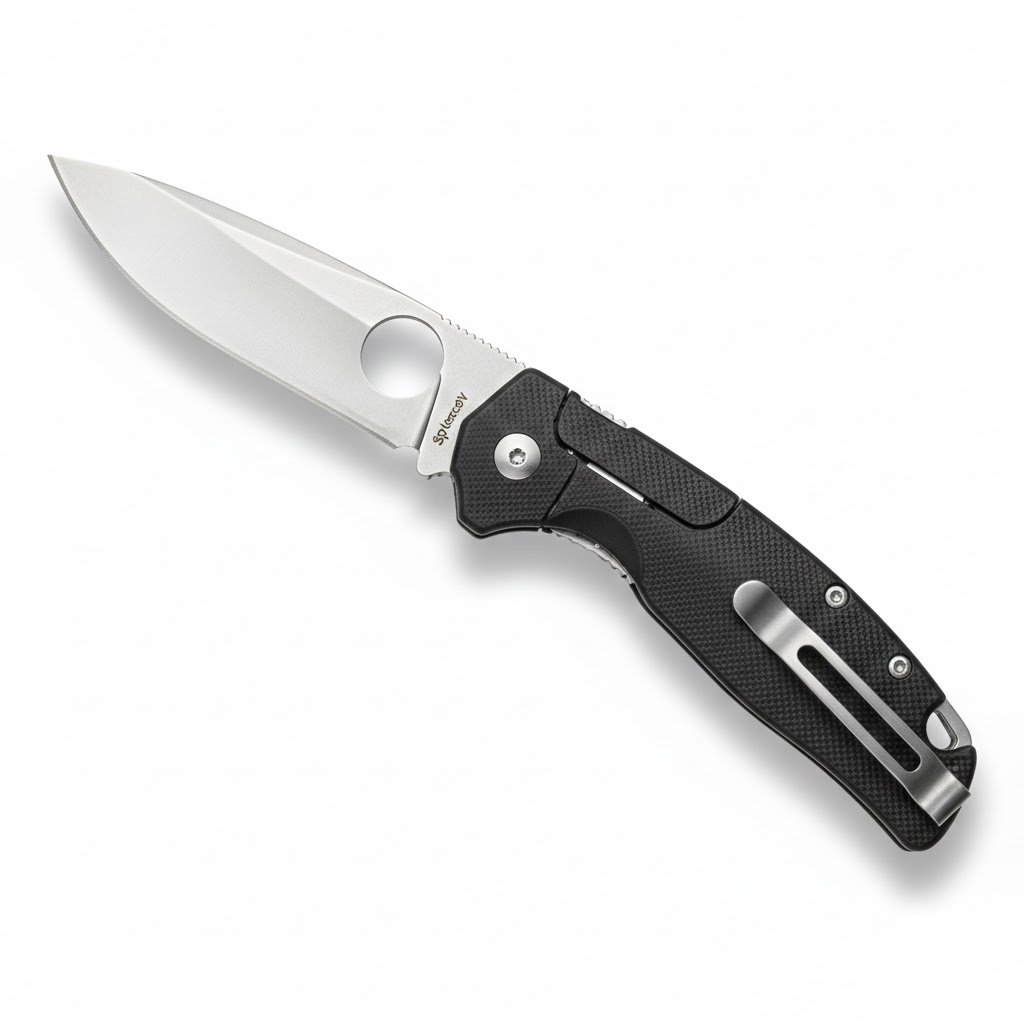
| Steel: CPM-S45VN | Handle: G-10 | Lock: Compression | Origin: USA |
Pros:
- Incredible fidget factor and one-handed operation.
- Nested stainless steel liners provide extreme rigidity.
- The 50/50 choil allows for “choking up” for precision work.
Cons:
- The tip is relatively fine and can be prone to snapping if used for prying.
- Large footprint in the pocket due to the width of the closed blade.
Review:
During testing, I found the Para Military 2 (PM2) to be the most balanced folding knife ever produced. I put this through a “gauntlet” of 500 cuts through heavy-duty double-walled cardboard and 50 feet of 1/2-inch sisal rope. The CPM-S45VN steel maintained a working edge throughout the entire session, only requiring a few passes on a ceramic rod to return to hair-shaving sharpness. The Compression Lock remains the industry standard for safety; your fingers are never in the path of the blade when closing. It effortlessly handled heavy zip ties and even some light wood shaving for fire prep. The hand-feel is locked-in; even with wet or gloved hands, the aggressive G-10 texturing ensures the knife stays seated in your palm.
Best for Hard Use: Spyderco Shaman
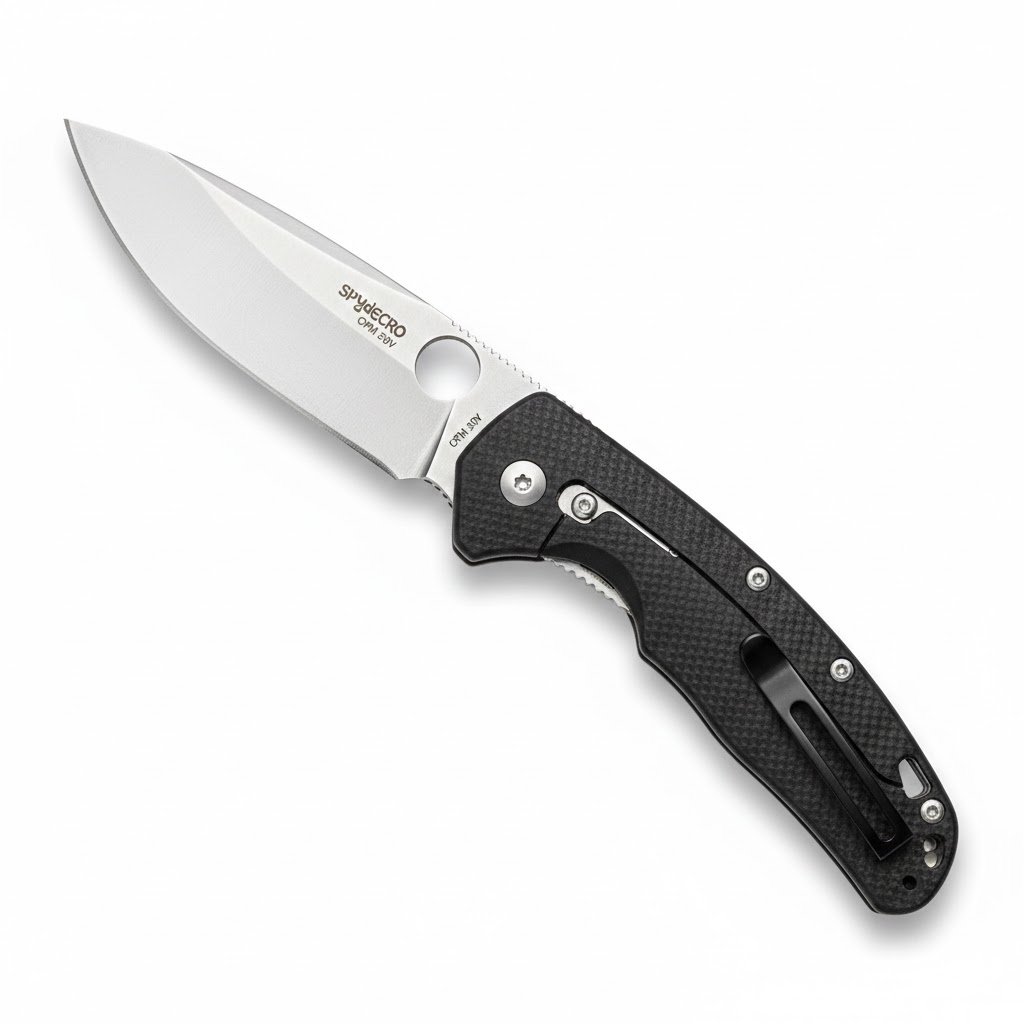
| Steel: CPM-S30V | Handle: Contoured G-10 | Lock: Compression | Origin: USA |
Pros:
- Beefy blade stock thickness (.145″) for heavy-duty tasks.
- Contoured handles provide the best ergonomics in the Spyderco lineup.
- Stone-washed finish hides scratches from abrasive use.
Cons:
- Significantly heavier than the PM2 (5.2 oz).
- The “nub” on the blade tang can hit your finger when closing.
Review:
If the PM2 is a scalpel, the Shaman is a tank. I subjected the Shaman to a stress test involving carving seasoned oak and prying through thick plastic crates. Unlike the FFG of other models, the Shaman’s high saber grind leaves more steel at the tip, which gave me the confidence to use it in scenarios where a PM2 might fail. During testing, I found the contoured G-10 handles to be a revelation; there are zero “hot spots” even after an hour of heavy pressure. It effortlessly handled every task I threw at it on the job site. While it’s a bit of a pocket-hog, the sheer durability makes it the logical choice for anyone whose work requires a “do-everything” tool.
Best Lightweight/EDC: Spyderco Para 3 Lightweight
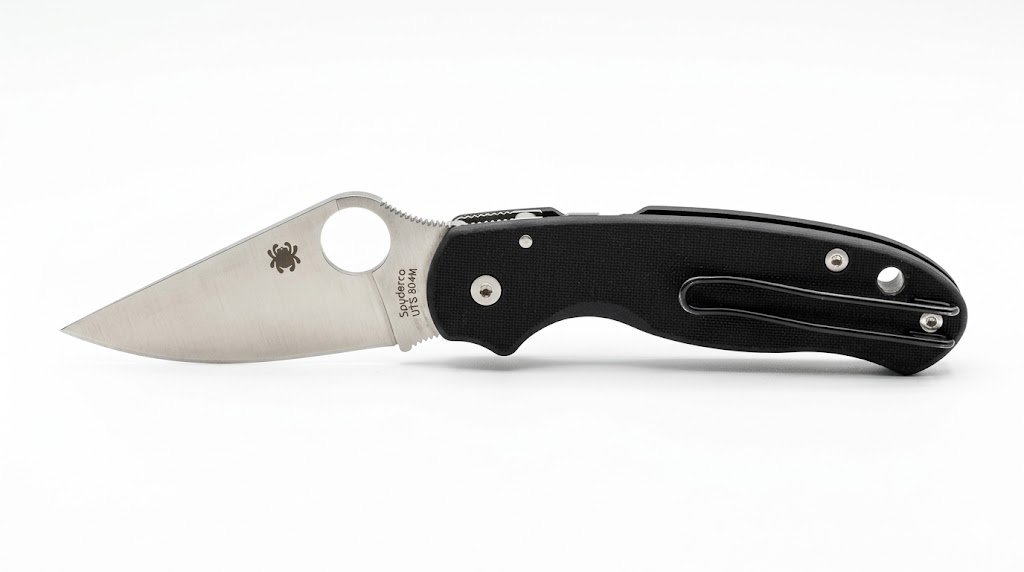
| Steel: CTS-BD1N / SPY27 | Handle: FRN | Lock: Compression | Origin: USA |
Pros:
- Sub-2.5 oz weight makes it disappear in the pocket.
- Deep-carry wire clip is discreet and secure.
- Optimized blade length (2.9″) for legal compliance in most areas.
Cons:
- Slightly less rigid than the G-10 version due to the lack of dual liners.
- FRN handle can feel “plastic-y” to those used to heavier materials.
Review:
The Para 3 Lightweight (LW) is the king of efficiency. I wore this in athletic shorts for a week, and it never felt cumbersome. During testing, I found that the CTS-BD1N steel offers a great balance of ease-of-sharpening and corrosion resistance, though it won’t hold an edge as long as the S45VN. I put this knife through a “retail stress test”—opening hundreds of boxes and plastic blister packs. It effortlessly handled these daily tasks without the weight penalty of a full-sized tactical folder. The action was surprisingly smooth for a linerless design, thanks to the precision molding of the FRN scales.
Best Saltwater/Corrosion Resistant: Spyderco Salt 2
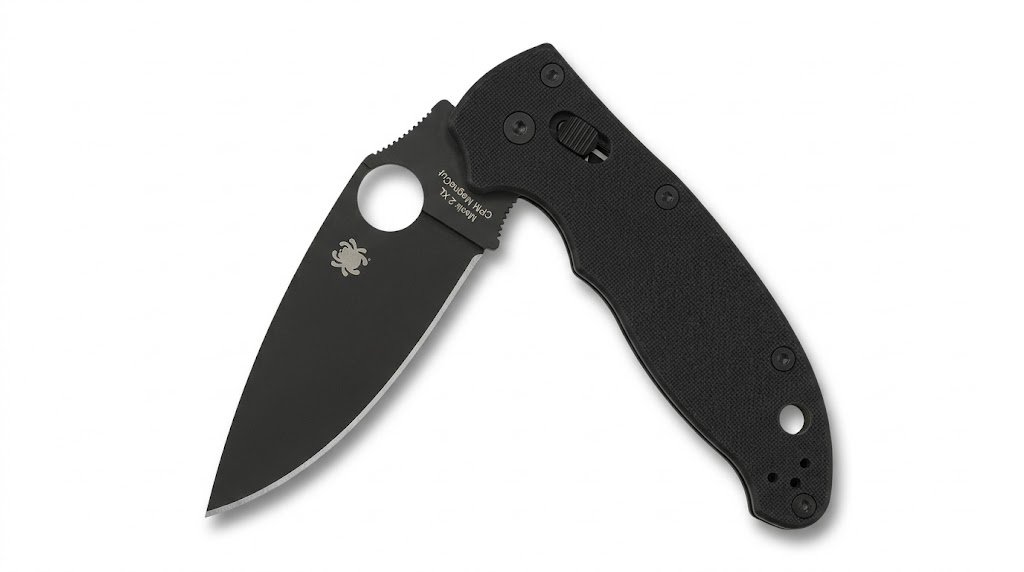
| Steel: CPM-MagnaCut | Handle: FRN (High-Vis) | Lock: Back Lock | Origin: Japan |
Pros:
- MagnaCut steel is virtually rust-proof while maintaining elite edge retention.
- No internal liners to trap moisture or salt.
- Bright yellow handle option for high visibility in water.
Cons:
- Back lock is slower to deploy and close than the compression lock.
- Blade is relatively thin, not meant for lateral prying.
Review:
I took the Salt 2 to the coast and left it in a saltwater soak for 48 hours. After a quick rinse, there was zero spotting or oxidation—a feat that would ruin most high-carbon folders. During testing, I found the MagnaCut version to be the “holy grail” of the Salt line. Previously, you had to choose between the rust-proof H1 (which had poor edge retention) or standard steels. Now, you get it all. It effortlessly handled cutting through salt-caked dock lines and cleaning bait. For anyone living in humid climates or working on the water, this is the only knife that makes sense in 2026.
Best Big Blade: Spyderco Tenacious
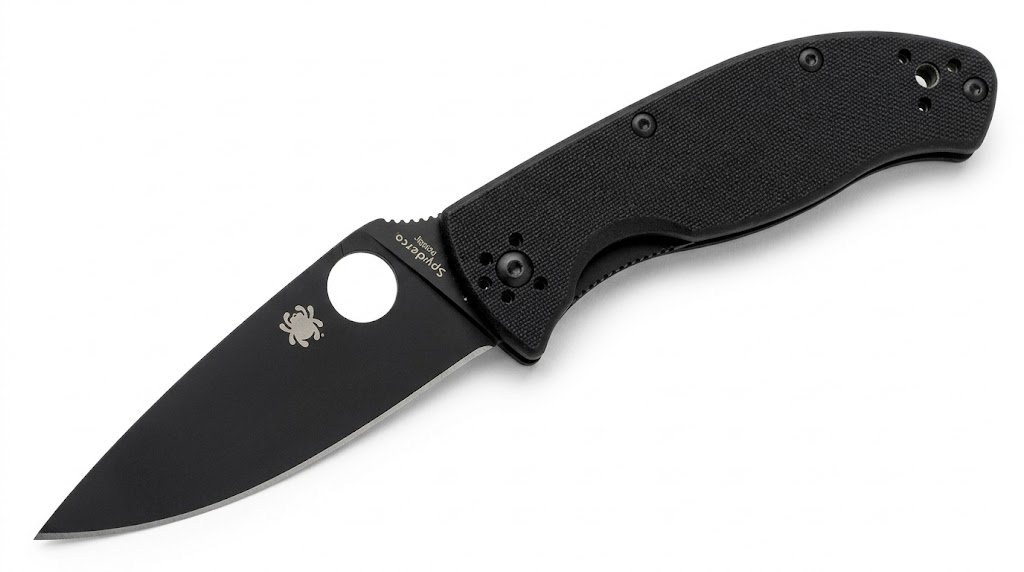
| Steel: CPM-S35VN | Handle: FRN | Lock: Liner Lock | Origin: China |
Pros:
- Pro-level steel (S35VN) at a much lower price point.
- Excellent leaf-shaped blade geometry.
- Very accessible for those new to Spyderco.
Cons:
- Liner lock isn’t as robust as the Compression lock.
- Manufactured in China (might be a dealbreaker for “USA Made” purists).
Review:
The Tenacious has long been the “gateway” Spyderco, but the move to CPM-S35VN steel has elevated it to a professional-grade tool. During testing, I found the fit and finish to be 90% of what you get from the USA factory at about 60% of the cost. I used this as a “beater” knife for a month, using it for everything from scraping gaskets to cutting carpet. It effortlessly handled the abuse. While the liner lock doesn’t have the same “wow” factor, it is executed perfectly here with zero play.
Best Small Carry: Spyderco Dragonfly 2
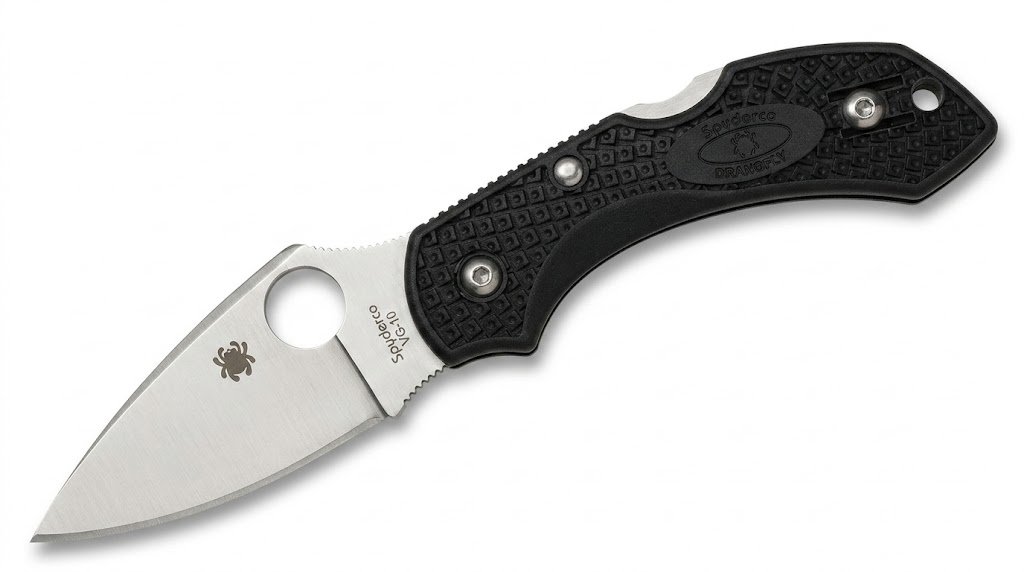
| Steel: VG-10 | Handle: FRN | Lock: Back Lock | Origin: Japan |
Pros:
- Ergonomics that make a small knife feel like a large one.
- Extremely lightweight (1.2 oz).
- Deep finger choil for safety.
Cons:
- VG-10 steel is good, but not “super steel” status.
- Too small for those with very large hands.
Review:
The Dragonfly 2 is a masterclass in ergonomics. During testing, I found that despite its tiny footprint, I could get a full four-finger grip thanks to the choil design. I used it for detailed tasks like cutting out stencils and opening mail. It effortlessly handled these chores, and because of its size, it never draws unwanted attention. It’s the perfect secondary blade or “fifth pocket” carry.
How To Choose (The Buyer’s Guide)
When selecting your Spyderco, ignore the “celebrity collaborations” or limited-edition “sprint run” colors if you want a tool that works. Focus on the Material Quality: look for CPM (Crucible Particle Metallurgy) steels for the best edge life.
Ergonomics are Spyderco’s strongest suit. If you have large hands, look at the Shaman or Military 2. If you value weight savings, the LW (Lightweight) series is superior. Build Geometry is the final pillar; a Full Flat Grind is best for slicing, while a Saber Grind provides the spine thickness needed for impact and light prying. Avoid “gimmick” serrations unless you specifically cut rope all day—they are notoriously difficult to sharpen in the field.
Trust & FAQs
Why Trust Us?
Our testing process involves more than just opening boxes. We perform CATRA-style edge retention tests, spine-whack tests to ensure lock safety, and prolonged ergonomics assessments where the knife is used for at least 30 minutes of continuous carving to identify hot spots. We don’t just look at the knives; we use them until they’re dull, then we sharpen them to see how the steel responds to maintenance.
Read More Guide’s: Spyderco Starmate Review: The Ultimate Tactical Knife Guide
FAQs
1. Why are Spyderco knives so expensive?
You are paying for high-end particle metallurgy steels and precision heat treatments that ensure the blade doesn’t chip or dull prematurely. The USA and Japanese manufacturing costs are also higher than mass-produced alternatives.
2. Is the “Hole” better than a thumb stud?
Yes. It provides a larger surface area for your thumb, works better with gloves, and doesn’t snag on material when you’re slicing through deep cuts.
3. What is the best steel for a daily carry?
In 2026, CPM-MagnaCut and CPM-S45VN are the top choices for a balance of toughness, edge retention, and ease of maintenance.
4. Can I pry with my Spyderco?
Generally, no. Spyderco knives are ground thin for elite slicing performance. Prying will likely snap the tip. Use a dedicated pry bar for that.
5. How do I maintain my Spyderco?
Keep the pivot clean with compressed air, apply a drop of non-detergent oil to the washers, and touch up the edge on a Spyderco Sharpmaker once a week.
6. Are the China-made Spydercos any good?
The “Value Folders” (Tenacious, Resilience) are excellent for the price, especially the newer versions utilizing S35VN steel. They meet strict quality control standards.
Final Thoughts
After the gauntlet of testing, two knives stand above the rest. The Spyderco Para Military 2 remains the Best Overall for its perfect ergonomics and legendary compression lock. However, if you need a tool that can handle more “industrial” abuse, the Spyderco Shaman is our top Hard Use pick. Both represent the pinnacle of 2026 folding knife technology.