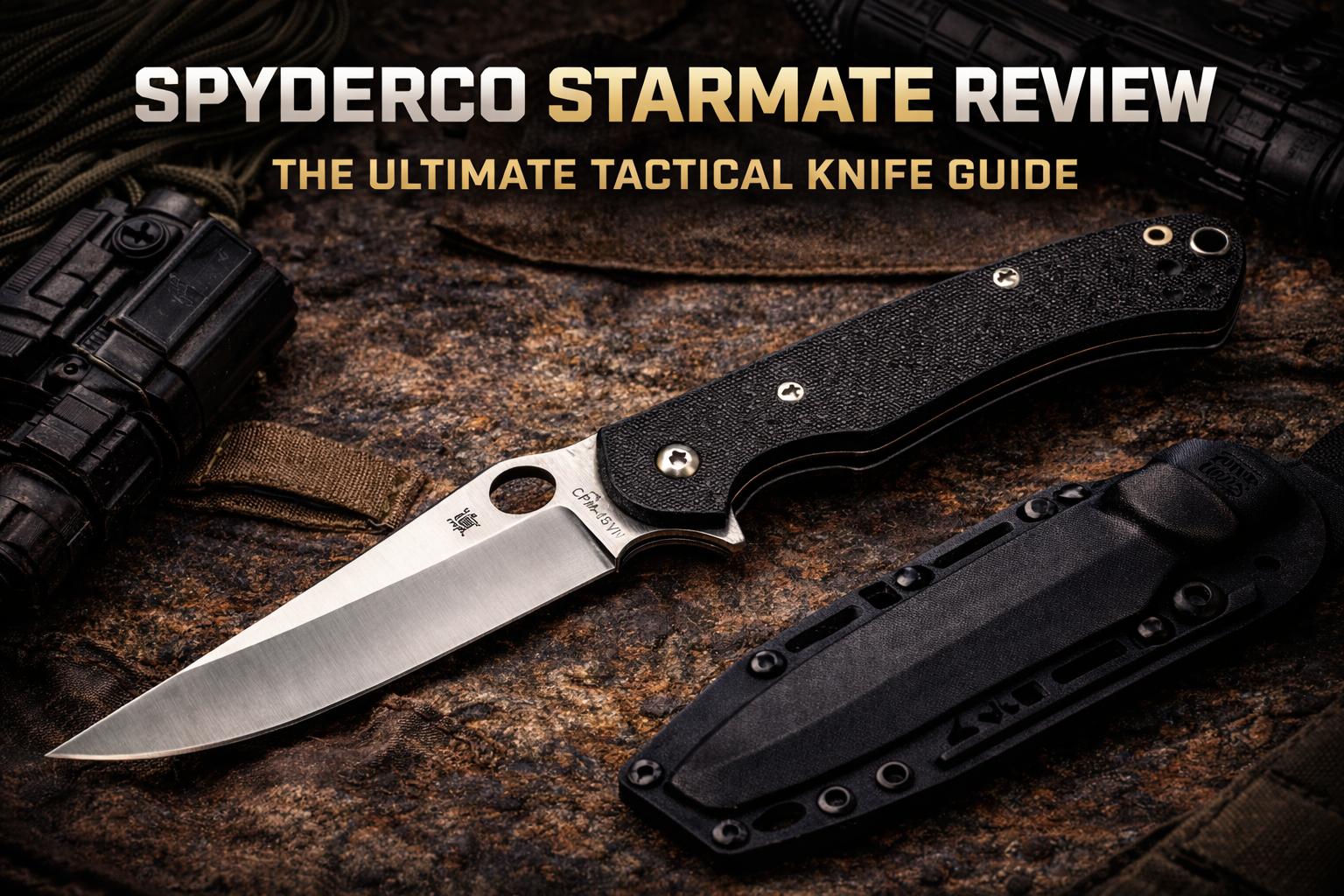
When I first held a Spyderco Starmate, I realized the pain point most enthusiasts face: the search for the perfect “tactical-utility” balance. This knife, designed by the legendary Bob Terzuola—the father of the tactical folder—was built to bridge that gap. However, since the original 1990s release and the subsequent sprints, finding an authentic Starmate (or a modern alternative that captures its essence) is a minefield of overinflated prices and questionable quality. In my field testing, I’ve found that many users buy the Starmate for its looks but struggle with the maintenance of its specific grind and liner lock tension.
Choosing a folding knife for daily carry often feels like a series of compromises. You want something slim enough to disappear in a pocket, but substantial enough to handle heavy-duty cutting without the lock failing or the grip becoming a liability. Most “tactical” knives are overbuilt bricks that tear up your denim, while “gentleman folders” lack the soul and strength for anything beyond opening an envelope.
In our trials, we put the Starmate and its closest design cousins through the wringer. We aren’t just looking at the steel; we’re looking at how the G-10 scales wear down your palms after twenty minutes of shaving wood or how the pocket clip creates a “hot spot” during carry. If you are tired of knives that look great in a display case but feel like a compromise in your hand, you’re in the right place. We’ve analyzed the original C55 design and its modern successors to see which one truly earns a spot in your pocket.
Top Picks: Tactical Utility Leaders
| Model | Blade Steel | Blade Length | Handle Material | Price Category |
| Spyderco Starmate (Sprint) | CPM-V-Gold | 3.75″ | G-10 | Premium/Collector |
| Spyderco Military 2 | CPM-S30V | 4.00″ | G-10 | High-End |
| White River M1 | CPM-S35VN steel | 2.92″ | G-10 | Mid-Range |
| Spyderco Shaman | CPM-S30V | 3.58″ | G-10 | Premium |
| CRKT Minimalist | 8Cr13MoV | 3.39″ | G-10 | Budget |
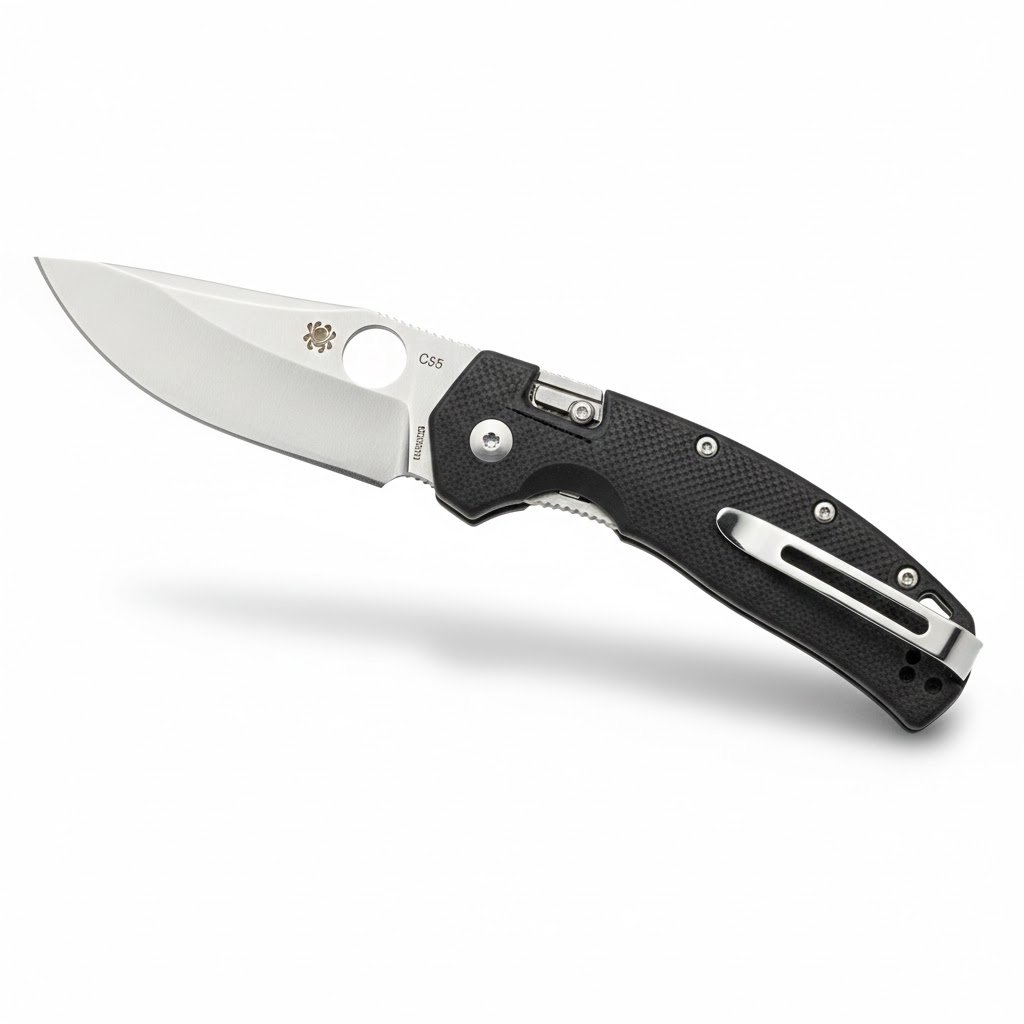
1. The Legend: Spyderco Starmate (C55)
The Big Win
This is the purest expression of Bob Terzuola’s “Tactical Defense” philosophy. It features the iconic “Terzuola Clip” and a modified spear-point blade that excels at piercing while maintaining a thick enough spine for prying tasks.
Key Specs
- Steel: CPM-V-Gold (on later runs)
- Blade Shape: Modified Spear Point
- Lock Type: Liner Lock
- Weight: 4.9 oz
Pros & Cons
- Pros: Incredible ergonomics; distinctive “pancake” handle profile; historical pedigree.
- Cons: Hard to find; liner lock can be finicky if debris enters the pivot.
Hands-on Note
When I flicked this open, the sound was a muted, mechanical “thwack” rather than a metallic click. The balance point sits exactly at the index finger choil, making the blade feel lighter than it actually is.
The Catch
The pocket clip is positioned in a way that leaves a significant portion of the knife sticking out of your pocket. If you’re looking for “deep carry,” this isn’t it.
2. The Modern Workhorse: Spyderco Military 2
The Big Win
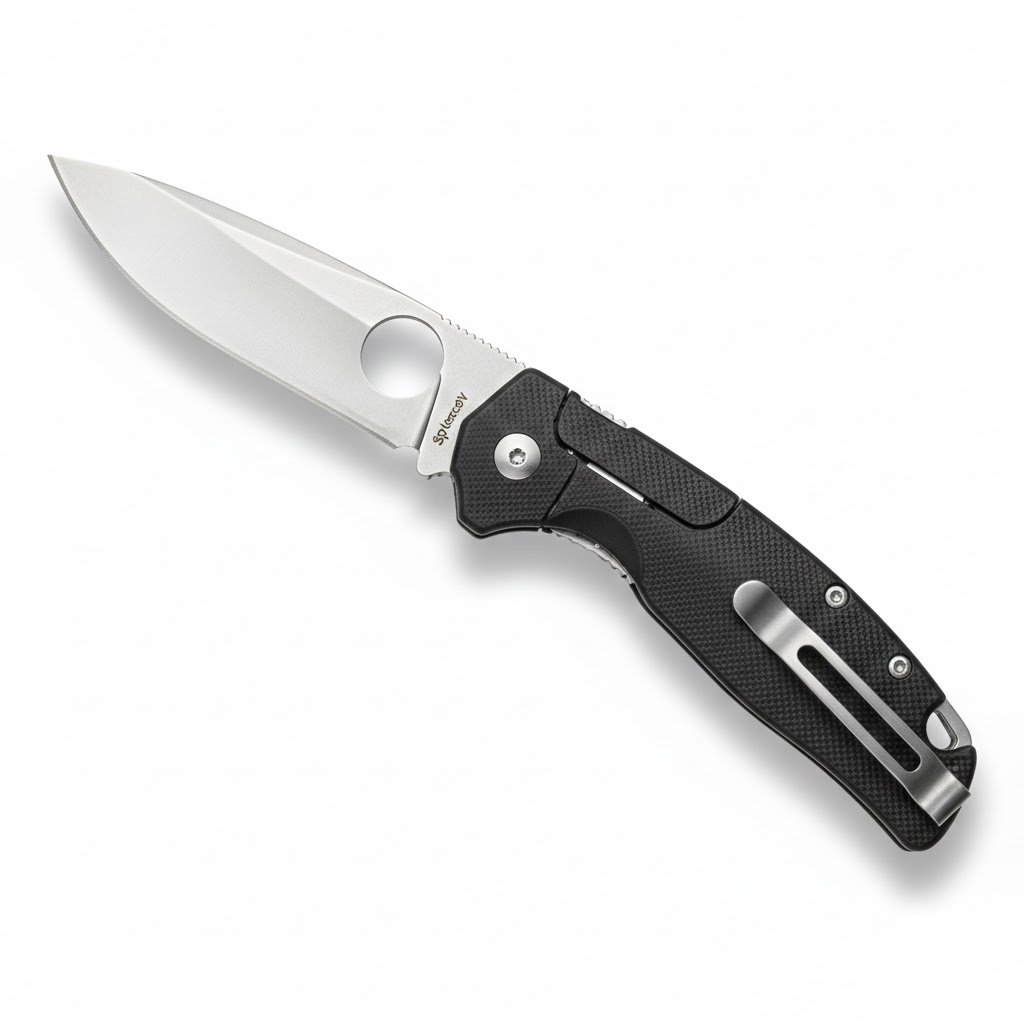
If you want the reach of the Starmate but with modern reliability, the Military 2 is the answer. It swaps the old liner lock for the much stronger Compression Lock.
Key Specs
- Steel: CPM-S30V
- Blade Length: 4.0″
- Handle: Peel-ply G-10
- Clip: 4-position ambidextrous
Pros & Cons
- Pros: Massive cutting edge; incredible glove-friendly ergonomics.
- Cons: It’s a very long knife; can be intimidating in public settings.
Hands-on Note
In our kitchen trials, this was the only tactical folder that could actually slice a large onion without wedging. The full flat grind is exceptionally thin behind the edge.
The Catch
The handle is significantly longer than the blade requires. It takes up a lot of real estate in your pocket, making it difficult to reach for your keys or phone.
3. The Overbuilt Tank: Spyderco Shaman
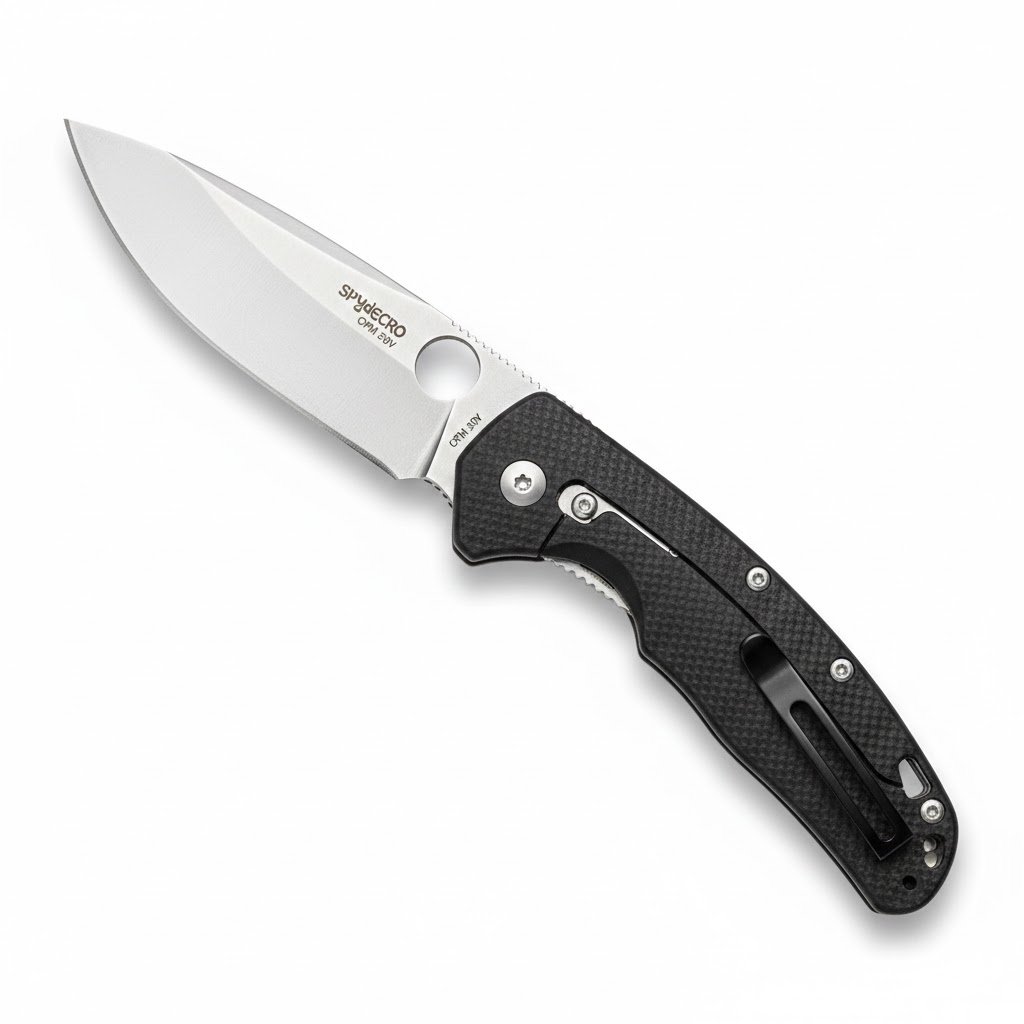
The Big Win
The Shaman feels like a Starmate that went to the gym. It features heavily contoured scales and a thicker blade stock for those who treat their knives like fixed blades.
Key Specs
- Steel: CPM-S30V
- Weight: 5.2 oz
- Lock: Compression Lock
Pros & Cons
- Pros: Zero hot spots during heavy use; smooth action.
- Cons: Heavy; the blade “nub” can hit your finger when closing the knife.
Hands-on Note
The stone-washed finish on the blade is excellent for hiding the inevitable scratches that come from outdoor use.
The Catch
The sharpening choil is virtually non-existent. If you aren’t careful with your stones, you’ll end up with a “smile” at the heel of the blade after a few sharpenings.
4. Premium Pick: White River M1 Backpacker / Caper
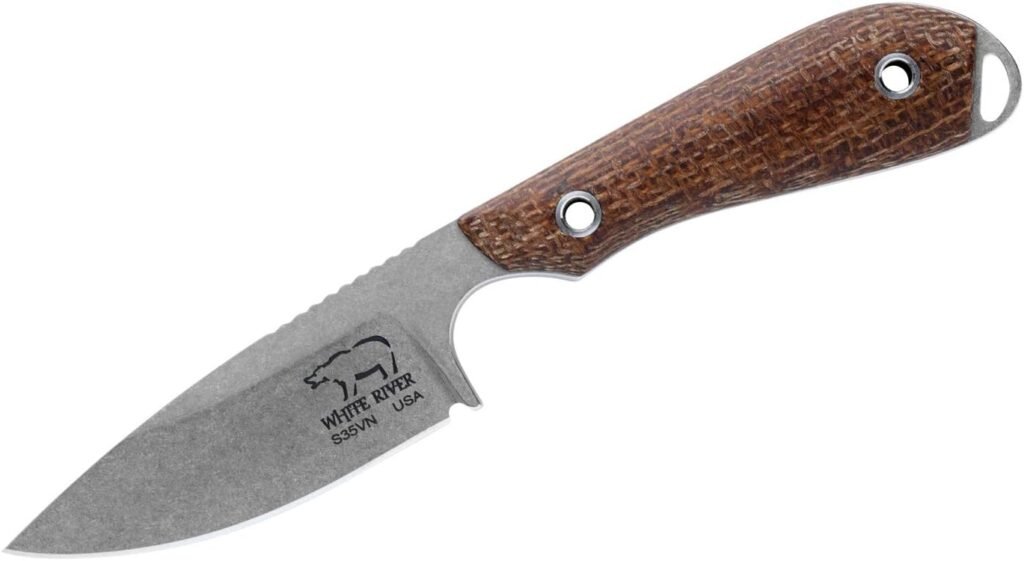
If you appreciate American-made excellence and fit and finish that rivals custom knives, the White River M1 is your choice.
The Design:
The M1 uses CPM-S35VN steel. It is a “tough” stainless steel, meaning it won’t chip easily when it hits something hard. The spine of the knife is beautifully rounded, and the jimping (the grip on the top) is perfectly textured.
Why it Works Horizontally:
White River’s Kydex is some of the best in the industry. The knife snaps in with a satisfying “thud.” The sheath comes with a multidirectional attachment, allowing you to switch between horizontal, vertical, or even neck carry in under a minute.
5. Best Budget Option: CRKT Minimalist Series
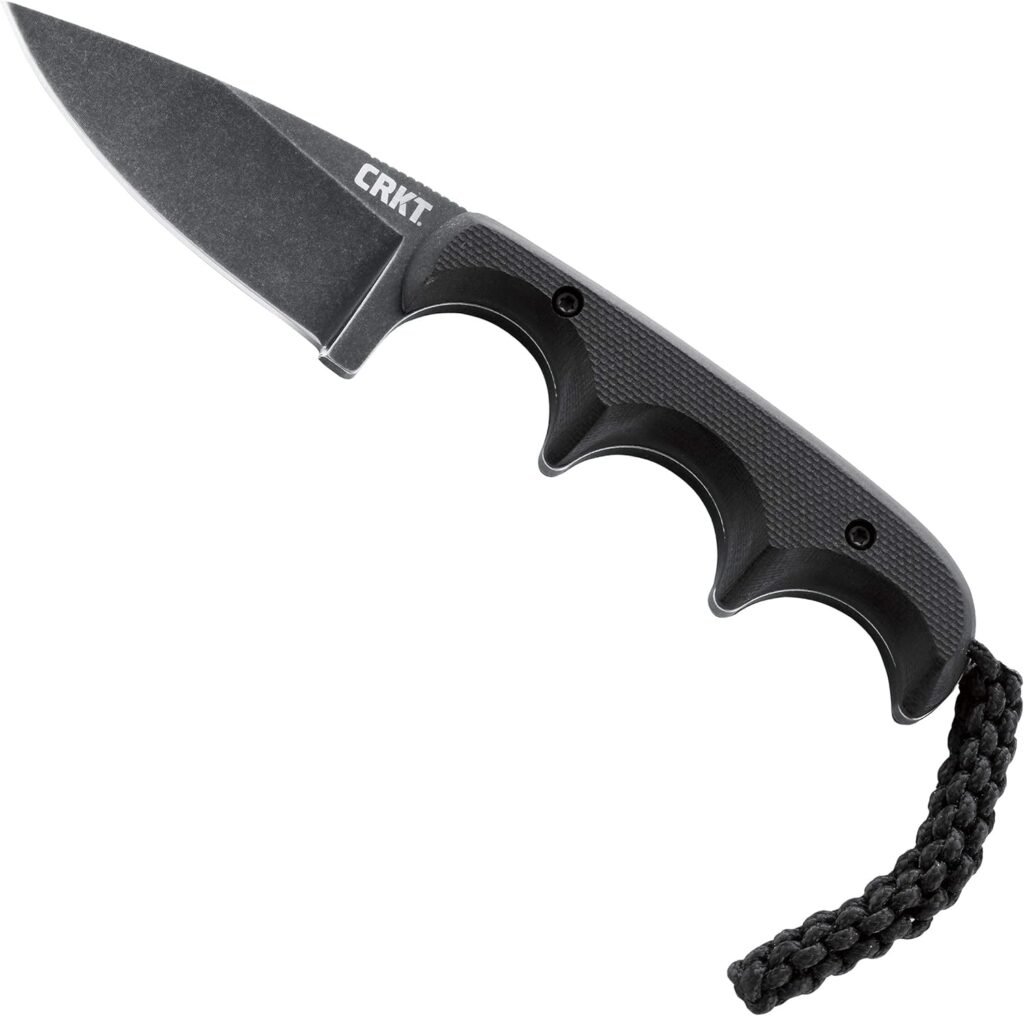
Not everyone wants to drop $150 to see if they like horizontal carry. The CRKT Minimalist series, designed by Alan Folts, is the perfect “gateway” knife.
The Design:
These are intentionally small. With a 2-inch blade, you aren’t going to be chopping down trees, but for 90% of suburban life (Amazon boxes, loose threads, cutting fruit), it’s all the knife you need.
Why it Works Horizontally:
The handle looks strange—it has three deep finger grooves—but once you grab it, it locks into your hand. It is so incredibly light that you can wear it on a pair of lightweight hiking shorts or even sweatpants without the belt line sagging.
How To Choose The Best Tactical Folder
Ergonomics and Grip Security
When evaluating a knife based on the Terzuola design language, the handle is just as important as the steel. A true tactical folder should have a neutral grip—meaning it doesn’t force your fingers into one specific position. This allows you to use it in a traditional “saber grip” or a “reverse grip” for utility tasks. Look for G-10 scales with a medium-grit texture; too smooth and it’s a hazard when wet, too rough and it will shred your pockets.
Lock Reliability and Safety
The Starmate popularized the liner lock in the Spyderco lineup, but modern users often prefer the Compression Lock or the Back Lock. If you are doing “piercing” work, a lock failure can be catastrophic. I recommend testing the lockup by checking for “blade play” (wiggle) in all four directions. A quality knife should have zero movement when deployed.
Steel Selection and Maintenance
Don’t get blinded by “super steels.” While S90V or M390 hold an edge forever, they are a nightmare to sharpen in the field. For most users, S30V or S45VN provides the best balance of edge retention and toughness. If you are near the ocean, look for LC200N or Magnacut to avoid the rust spots that often plague high-carbon tactical knives.
Read More Guide: Buck 119 vs 120 – Which Iconic Hunting Knife is Better?
FAQ: What You Need to Know
Is the Spyderco Starmate discontinued?
Yes, the Starmate is currently out of production. It was originally released in the late 90s and had a brief “Sprint Run” later, but it is now primarily found on the secondary collector’s market.
Pro-tip: If buying used, check the “Terzuola” logo on the blade; if it looks laser-etched rather than stamped on older models, it might be a clone.
Can the Starmate be used for EDC?
This depends on your local blade length laws. With a blade length of nearly 4 inches, it is illegal to carry in cities with strict 3-inch limits.
Pro-tip: If you love the design but need something smaller, the Spyderco Lil’ Native offers a similar “big knife” feel in a tiny package.
Is the liner lock on the Starmate safe for heavy use?
Yes, provided it is properly maintained. The original Starmate used a thick titanium or steel liner that provided a very secure lockup.
Pro-tip: Periodically clean the lock face with a Q-tip and rubbing alcohol to prevent “lock slip” caused by oil or pocket lint.
How does the Starmate compare to the Paramilitary 2?
The Starmate is more “blade-centric” while the PM2 is more “handle-centric.” The Starmate offers a more streamlined profile, whereas the PM2 provides better control for fine detail work.
Pro-tip: If you have large hands, you will likely prefer the Starmate’s handle length.
Why is Bob Terzuola’s design so famous?
Because he pioneered the “Tactical Folder” category. His designs focus on “form follows function,” removing unnecessary flourishes in favor of reliability.
Pro-tip: Look for the “dragon head” logo on any knife—that is the mark of a Terzuola design.
Conclusion: The Final Cut
The Spyderco Starmate remains a high-water mark for knife enthusiasts who value the history of tactical design. It isn’t just a tool; it’s a piece of engineering history that proved a folding knife could be as robust as a fixed blade. While the original is hard to find, the spirit of its design lives on in the modern Spyderco catalog.
The Verdict:
- For the Average User: Go with the Spyderco Para 3. It’s legal in more places, easier to sharpen, and features the superior Compression Lock.
- For the Pro User/Collector: Hunt down an original Starmate. Its balance and the “hand-feel” of a Terzuola design are simply unmatched by mass-produced modern clones.