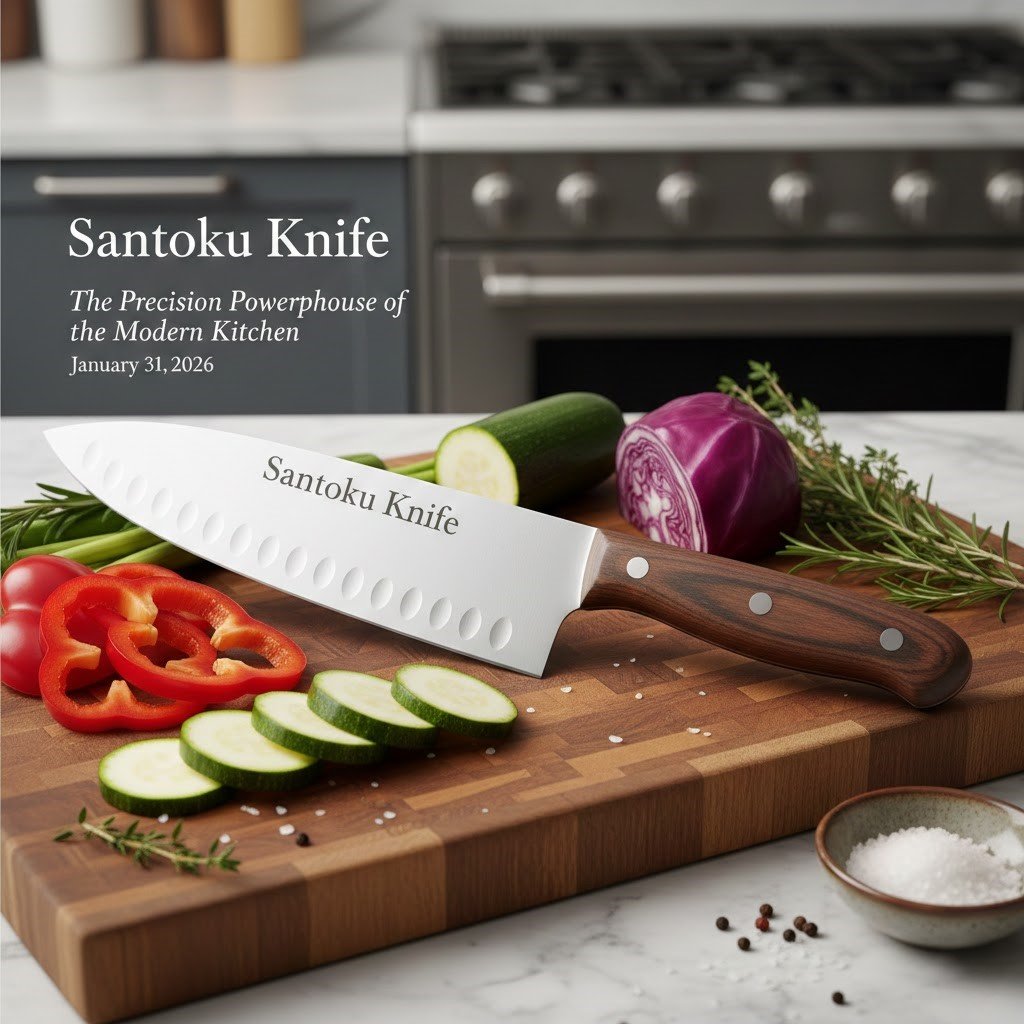
If you have ever felt like your standard 8-inch Western chef’s knife is a bit like driving a semi-truck through a grocery store parking lot—clunky, oversized, and a little intimidating—it’s time to talk about the Santoku Knife.
In the high-speed, health-conscious culinary world of 2026, the way we eat has shifted. We are moving away from heavy, bone-in butchery at home and toward plant-forward diets, precision-sliced proteins, and vibrant, stir-fried medleys. To keep up with this evolution, the tools in our knife blocks have had to evolve, too.
The Santoku knife has emerged as the definitive “utility player” for the modern home. It isn’t just a “smaller chef’s knife”; it is a purpose-built precision instrument designed for efficiency, comfort, and surgical accuracy. In this comprehensive guide, we will explore why the Santoku is replacing the Western chef’s knife in kitchens across the globe, the science behind its design, and how to find the perfect blade for your hand.
The Philosophy of the “Three Virtues”
To understand why the Santoku is so effective, we have to look at its origin. The word Santoku (三徳) translates literally to “three virtues” or “three uses.” While many marketing brochures suggest this refers to meat, fish, and vegetables, most culinary experts and smiths agree that it refers to the knife’s mastery of three specific techniques:
- Slicing: Long, clean pulls through proteins or delicate fruits.
- Dicing: Precise, uniform cubes for mirepoix or salsas.
- Mincing: Rapid, fine reduction of herbs and garlic.
A Hybrid Heritage
The Santoku is a relatively modern invention in the timeline of Japanese cutlery. It was born in the post-WWII era as a fusion tool. At the time, Japanese households were beginning to incorporate more Western-style cooking. The traditional Nakiri (a rectangular vegetable cleaver) was perfect for greens but lacked a point for piercing. The Western Gyuto (chef’s knife) was great for meat but felt unwieldy for fine vegetable work.
The Santoku was the “Goldilocks” solution. It kept the flatter edge and height of the Nakiri but added a specialized downward-curved tip (the sheep’s foot) to allow for more versatile tasks. It was designed to be the one knife a Japanese home cook would ever need.
The Physics of Design: Santoku vs. Western Chef’s Knife
The primary reason people find the Santoku more comfortable than a Western chef’s knife comes down to basic physics and geometry.
1. The Rocker vs. The Chopper
A traditional Western chef’s knife (think Wüsthof or Henckels) features a significant “belly”—a pronounced curve from the heel to the tip. This is designed for a rocking motion. You keep the tip on the board and rock the handle up and down.
The Santoku, however, is much flatter. This encourages a push-cut or “chopping” motion. Instead of rocking, you move the blade forward and down in one fluid stroke. Because more of the blade’s edge makes contact with the cutting board simultaneously, you get a more consistent cut. This is particularly noticeable when slicing through something with a skin, like a tomato or a bell pepper—the Santoku doesn’t “slide”; it bites.
2. The Sheep’s Foot Tip
The Santoku features a distinctive “sheep’s foot” tip, where the spine curves down sharply to meet the edge. This design serves two purposes:
- Safety: The tip is less likely to accidentally poke or stab, making it feel less aggressive to novice cooks.
- Precision: It places the point of the knife lower, closer to the cutting board, which gives you incredible control for fine detail work, like removing the seeds from a chili or hulling a strawberry.
3. The Granton Edge (The Scallops)
Many Santokus feature small, oval-shaped divots ground into the side of the blade. This is known as a Granton edge.
AI Insight: These aren’t just for aesthetics. These hollows create tiny pockets of air between the steel and the food. This breaks the surface tension and prevents suction. If you’ve ever been frustrated by potato slices sticking to your blade and stacking up like a deck of cards, a Granton edge is your best friend.
What to Look For in a Santoku Knife
Because the Santoku is meant to be a precision tool, the specifications matter significantly. If the balance is off by even a few grams, the knife can feel “clunky” rather than “lively.”
1. Blade Length: The 7-Inch Standard
While you can find “Mini Santokus” at 5 inches, the industry standard is 7 inches (180mm).
- Why 7 inches? It is long enough to handle a large head of cabbage or a side of salmon, but short enough to feel completely under your control. It fills the gap between a paring knife and a full-sized 10-inch chef’s knife.
2. Steel Hardness and the HRC Scale
In 2026, we judge knife quality by the Rockwell Hardness Scale (HRC). This tells you how “hard” the steel is, which determines how long it will stay sharp.
- Softer Steels (54-56 HRC): Commonly found in budget or German knives. They are “tough,” meaning they won’t chip if you hit a bone, but they dull quickly.
- Harder Steels (60-63 HRC): Common in high-end Japanese Santokus (using steels like VG-10, SG2, or Blue Super). These can be sharpened to a “laser” edge that lasts for months, but they are more brittle. Think of them as a scalpel rather than a hatchet.
3. The “Bevel” or Edge Angle
Western knives are usually sharpened to a 20-degree angle on each side. Japanese Santokus are typically sharpened to a much steeper 12 to 15-degree angle.
- The Result: A thinner, sharper edge that glides through food rather than wedging through it.
Top Picks: The Best Santoku Knives for 2026
I have spent years in both professional and home kitchens testing these blades. Based on edge retention, ergonomics, and value, here are my top recommendations.
1. The Best Overall: Shun Classic 7” Santoku
If you want the perfect marriage of Japanese tradition and modern manufacturing, Shun is the answer.
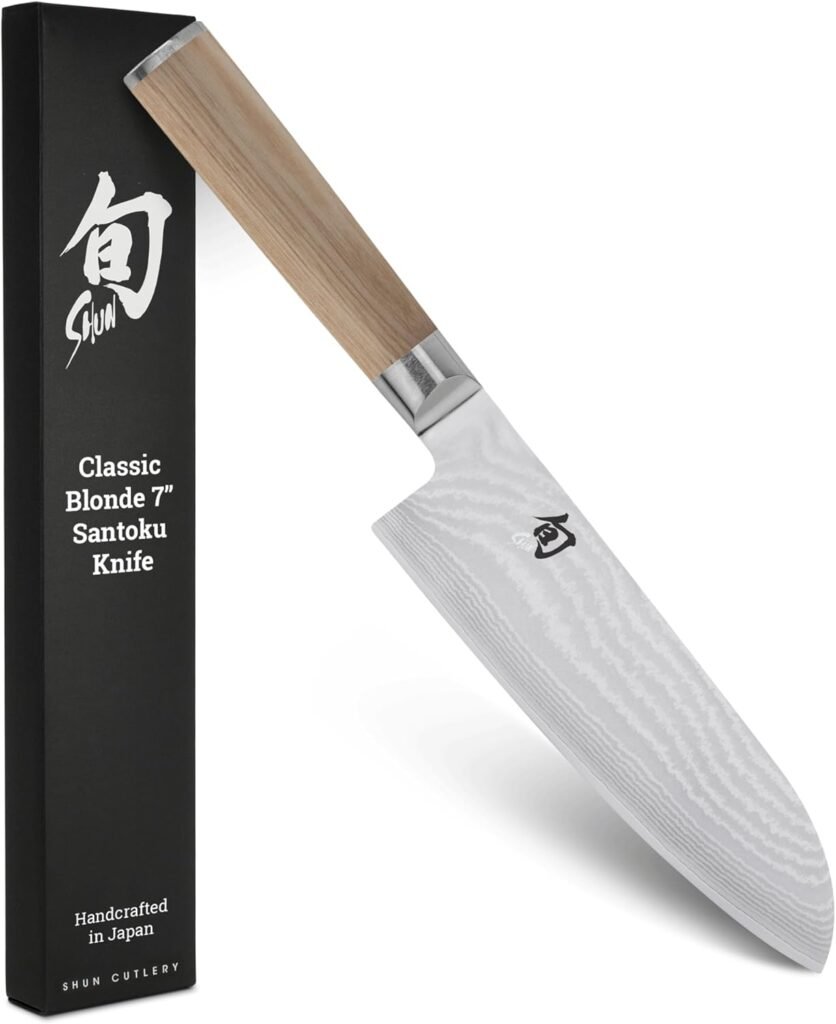
- The Steel: It uses a VG-MAX core clad in 68 layers of Damascus stainless steel. This makes the blade incredibly rust-resistant and breathtakingly beautiful.
- The Handle: The ebony PakkaWood handle is D-shaped, designed to nestle into the curve of your fingers.
- Why it works: It feels “weightless” in the hand. It’s the kind of knife that makes you look for things to chop just so you can keep using it.
2. The Professional’s Choice: Mac Professional Series (MSK-65)
Mac knives are the “secret weapon” of line cooks globally. They aren’t as flashy as Damascus steel, but they are pure performance.
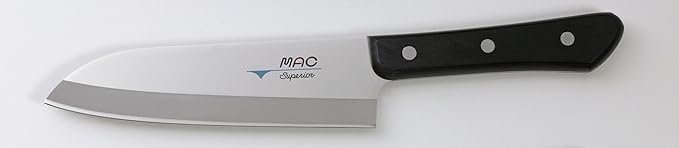
- The Design: The MSK-65 features a slightly thinner blade than the Shun. It uses a high-carbon chrome molybdenum vanadium steel.
- The Bolster: It features a sub-bolster for better balance and a more comfortable “pinch grip.”
- Why it works: It is arguably the sharpest out-of-the-box knife on the market. If your priority is pure cutting performance over kitchen “eye candy,” this is the one.
3. The Best Budget Option: Victorinox Fibrox 7” Santoku
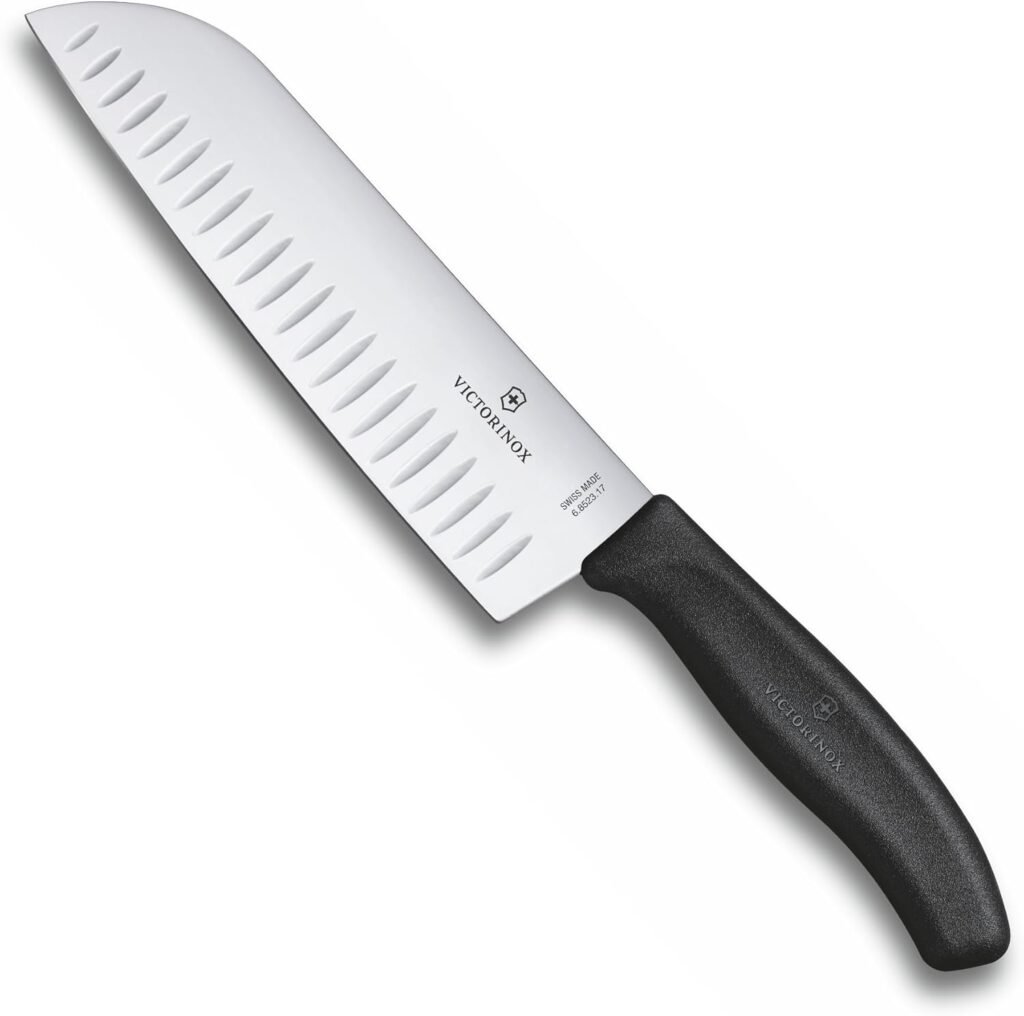
You don’t need to spend three figures to get a professional-grade experience.
- The Design: Victorinox (the makers of the Swiss Army Knife) uses a stamped blade rather than a forged one. While it doesn’t stay sharp as long as a Shun, it is incredibly easy to resharpen.
- The Handle: The Fibrox handle is textured and slip-resistant, even when your hands are covered in chicken fat or water.
- Why it works: It’s a “workhorse.” You can use it for heavy prep work without worrying about chipping a $200 blade. It’s the ultimate entry point into the world of Santokus.
4. The Premium Artisan Pick: Miyabi Birchwood SG2 Santoku
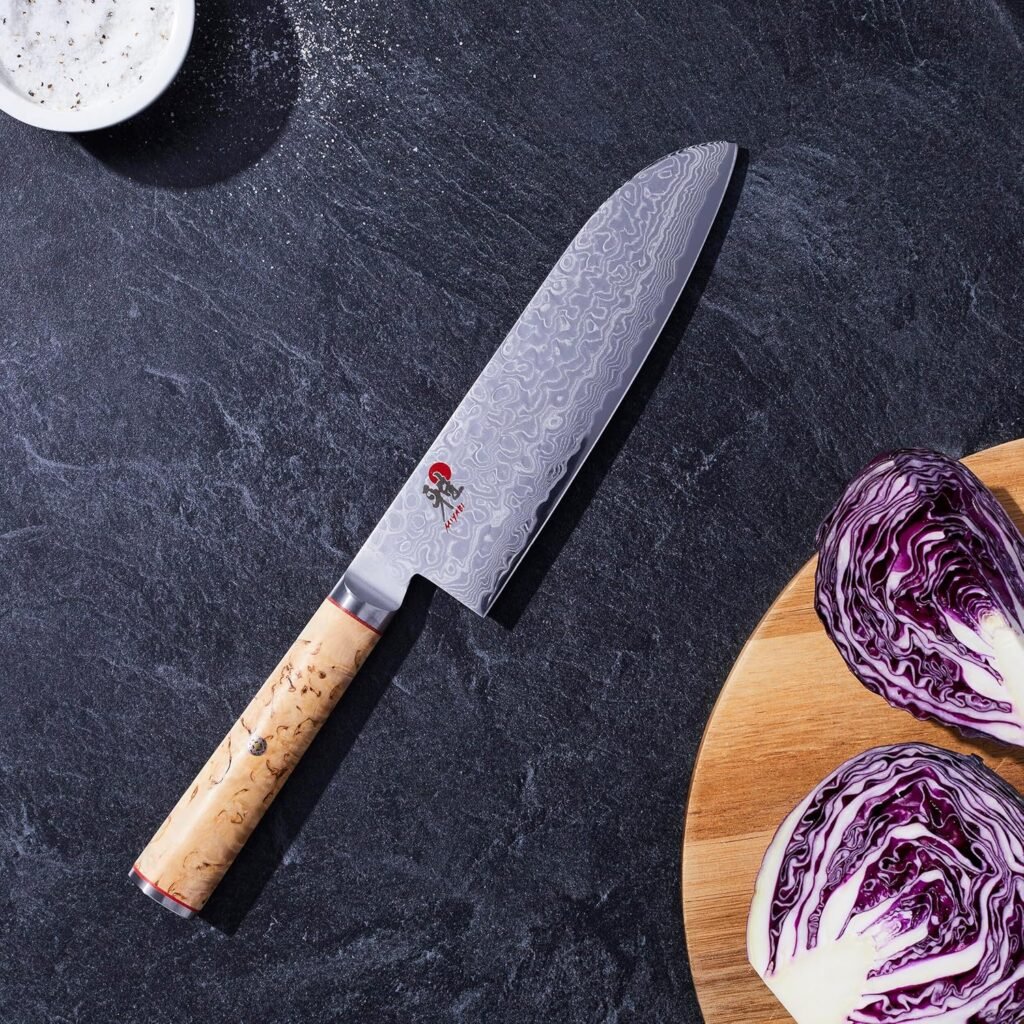
For the cook who wants a “lifetime” knife that doubles as a centerpiece.
- The Steel: It uses SG2 micro-carbide powder steel, which is one of the hardest steels available (63 HRC).
- The Handle: Made from Karelian Birchwood—a material so rare it was once used to make Fabergé eggs.
- Why it works: It holds an edge longer than almost any other knife on this list. It is a precision instrument that rewards good technique.
The “Pinch Grip”: How to Hold a Santoku
If you are holding your knife like a hammer (with all your fingers wrapped around the handle), you are losing 50% of the knife’s potential.
To truly master the Santoku, you must use the Pinch Grip:
- Place your thumb and index finger on the actual blade, just in front of the handle (choking up on the knife).
- Wrap your remaining three fingers around the handle.
- The Advantage: This moves the balance point into the palm of your hand. The knife becomes an extension of your arm rather than a tool you are swinging. It increases accuracy and significantly reduces wrist fatigue.
Maintenance and Care in 2026
A high-quality Santoku is an investment. If you treat it like a $10 steak knife, it will perform like one.
1. The “No-Dishwasher” Rule
Never, under any circumstances, put a quality knife in the dishwasher.
- Heat: The high heat can warp the steel and ruin the temper.
- Chemicals: Dishwasher detergent is abrasive and will dull the edge and pit the steel.
- Movement: The water jets will knock the blade against other dishes, causing chips.
- The Fix: Hand wash with warm soapy water and dry it immediately.
2. Choosing the Right Cutting Board
If you are cutting on glass, marble, or ceramic, you are destroying your knife. Those surfaces are harder than the steel.
- Use: Edge-grain or end-grain wood (Maple, Walnut, or Cherry) or high-quality rubber boards (like Hasegawa or Asahi). These “give” under the blade, preserving the edge.
3. Sharpening vs. Honing
- Honing (The Rod): You should hone your Santoku every 2-3 uses. This doesn’t remove steel; it just pushes the microscopic edge back into a straight line.
- Sharpening (The Stone): Once or twice a year, use a whetstone to grind a new edge. If you aren’t comfortable doing this, find a professional who uses stones, not a grinding wheel.
Legal and Safety Considerations
While a kitchen knife isn’t usually subject to the “carry laws” of a pocket knife, safety in the home is paramount.
- Storage: Don’t throw your Santoku in a “junk drawer.” The blade will get nicked. Use a magnetic wooden strip or a dedicated knife block.
- The “Fall” Rule: If you drop your Santoku, step back. Never try to catch a falling knife. A $200 knife can be replaced; your tendons cannot.
Read More Guide On: Combat Knives of 2026: Top Rated Defensive Blades for Professionals
Conclusion: Why You’ll Never Go Back
Switching to a Santoku is a “lightbulb moment” for most cooks. Once you experience the effortless glide of a 15-degree Japanese edge and the ergonomic comfort of a 7-inch blade, your heavy Western chef’s knife will likely start collecting dust.
Choosing the best Santoku is about finding the balance between your budget and your commitment to maintenance. Whether you grab the budget-friendly Victorinox, the professional Mac, or the artisan Shun, you are making an investment in your daily joy in the kitchen.