
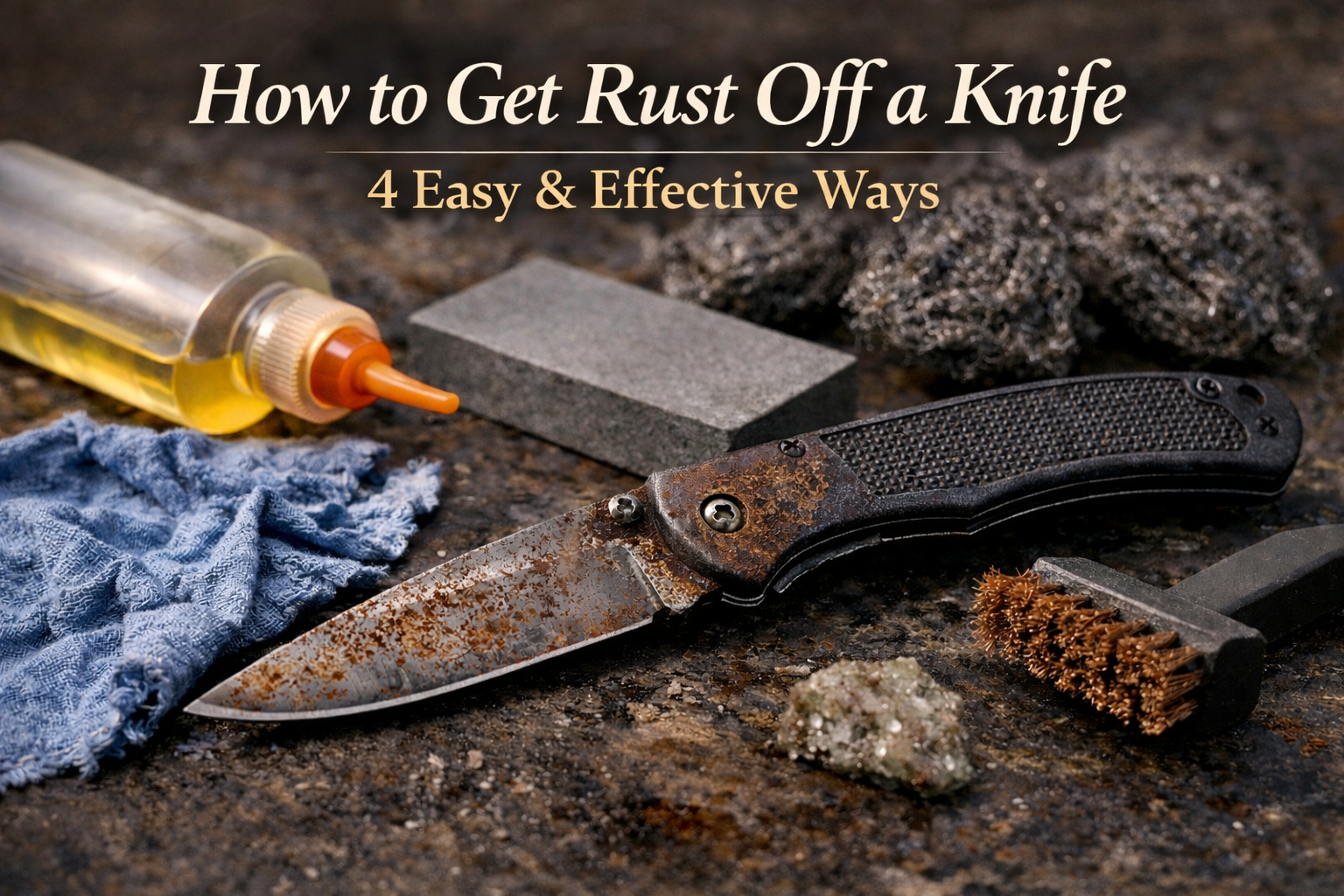
Finding a patch of orange-red oxidation on your favorite kitchen or pocket knife is a heartbreaking moment for any enthusiast. Whether it happened because a high-carbon blade was left in the sink or a pocket knife was tucked away damp after a rainy hike, rust is a progressive disease for steel. If left untreated, it can lead to deep “pitting” that permanently compromises the blade’s integrity.
Knowing how to get rust off a knife is an essential maintenance skill that can save you hundreds of dollars in replacement costs. In this guide, we’ll explore the safest, most effective methods—from gentle household pantry hacks to heavy-duty mechanical restoration—to bring your steel back to life.
Why Do Knives Rust? Understanding the Enemy
Rust is the result of a chemical reaction called iron oxidation. When the iron in your steel is exposed to oxygen and moisture, it creates iron oxide.
Stainless Steel vs. High Carbon Steel
- Stainless Steel: Contains chromium, which forms a thin “passive” layer that resists rust. However, “stainless” does not mean “rust-proof.” It can still corrode if exposed to salt or harsh chemicals.
- High Carbon Steel: Prized for its edge retention, but lacks chromium. It will rust within minutes if left wet.
[IMAGE 1: A side-by-side shot of light surface rust vs. deep pitting on a blade.]
Caption: Surface rust is a cosmetic issue you can fix at home; deep pitting (small holes in the metal) requires more aggressive grinding.
Method 1: The Baking Soda Paste (Best for Light Rust)
For light surface rust or “speckling,” the baking soda method is the safest approach because it is non-toxic and minimally abrasive.
- Create the Paste: Mix baking soda with a small amount of water until it reaches the consistency of toothpaste.
- Apply: Spread the paste thick over the rusted areas.
- Wait: Let it sit for 5–10 minutes.
- Scrub: Use a soft-bristled toothbrush or the “blue” (non-scratch) side of a kitchen sponge. Scrub in circular motions.
- Rinse and Dry: Rinse with water and immediately dry with a microfiber cloth.
Method 2: The White Vinegar Soak (Best for Moderate Rust)
Vinegar contains acetic acid, which reacts with rust and dissolves it. This is highly effective but should be used with caution on high-carbon knives, as it will also create a “patina” (darkening of the steel).
- Submerge: Place the blade in a shallow dish of white vinegar. Do not submerge the handle, especially if it is made of wood or bone.
- Soak: Leave it for 5–15 minutes. Watch the rust carefully; you will see it begin to flake off.
- Wipe: Use a cloth or a piece of crumpled aluminum foil to gently scrub the loosened rust away.
- Neutralize: Vinegar is an acid. After rinsing, wash the knife with dish soap to neutralize the acid and stop the reaction.
Method 3: The Rust Eraser (Best for Maintenance)
If you own high-carbon knives, a “Rust Eraser” (like those made by Sabitoru) is a mandatory tool. These look like large rubber erasers but are impregnated with fine abrasive grit.
- How to Use: Wet the eraser and rub it along the grain of the steel. It functions like high-grit sandpaper but is much easier to control.
- The Benefit: It is excellent for removing the dark “patina” that builds up over time, keeping the blade looking bright.
The Pro’s Secret: The Rust Eraser
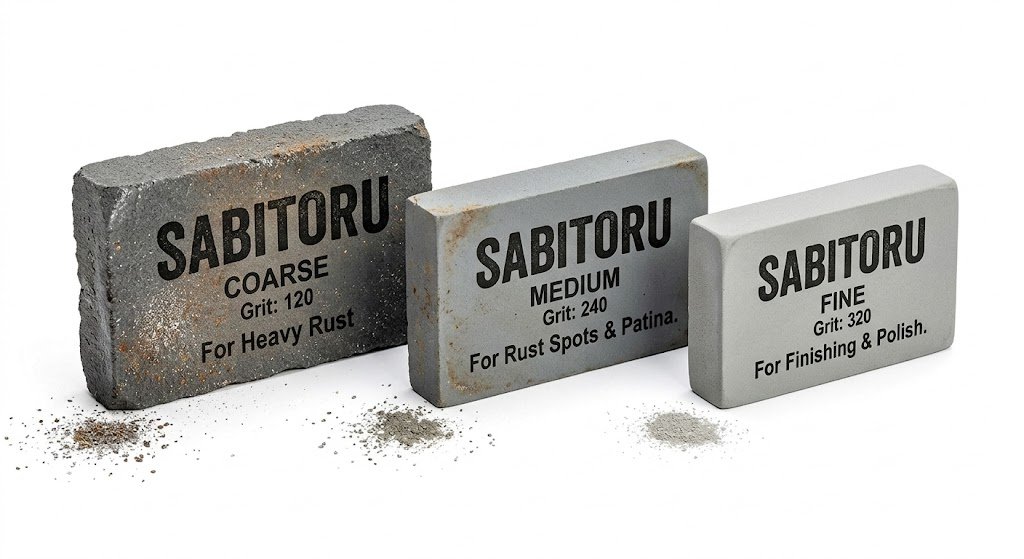
As mentioned in our guide, a Rust Eraser is the single most effective tool for removing “patina” and stubborn oxidation without the mess of vinegar or pastes. It works like a magic eraser for steel, stripping away rust while leaving a clean, brushed finish.
- Best for: High-carbon kitchen knives and pocket knives.
- Why it works: It reaches into the “pores” of the steel where sponges can’t.
Our Top Pick: > For a versatile restoration tool, we recommend the Sabitoru Rust Eraser Set. It comes in medium and fine grits, allowing you to move from heavy rust removal to a polished final finish.
Method 4: The Potato Trick (The Natural Fix)
It sounds like an old wives’ tale, but it works. Potatoes contain oxalic acid, which is a mild rust-dissolving agent.
- The Stab: Insert your knife into a whole potato.
- The Wait: Let it sit for several hours or overnight.
- The Result: Pull it out, wipe it down, and you’ll find light rust has vanished.
Comparison of Rust Removal Methods
| Method | Intensity | Best For | Risk Level |
| Baking Soda | Mild | Light surface spots | Very Low |
| White Vinegar | Moderate | Stubborn, flaky rust | Moderate (can darken steel) |
| Rust Eraser | Moderate/High | Frequent users, carbon steel | Low |
| Sandpaper (High Grit) | High | Deeply rusted or pitted blades | High (will scratch finish) |
How to Prevent Rust from Returning
Once you’ve learned how to get rust off a knife, you’ll want to make sure you never have to do it again. Prevention is much easier than restoration.
- The “Never” List: Never put your knives in the dishwasher. Never leave them soaking in the sink. Never store them in a damp leather sheath for long periods.
- Dry Immediately: After washing by hand, dry the knife with a towel. Do not let it air dry.
- The Oil Barrier: For high-carbon or heirloom knives, apply a food-safe mineral oil (or Tsubaki oil) to the blade before storing. This creates a microscopic barrier that prevents oxygen from reaching the steel.
The Invisible Shield: Food-Safe Knife Oil
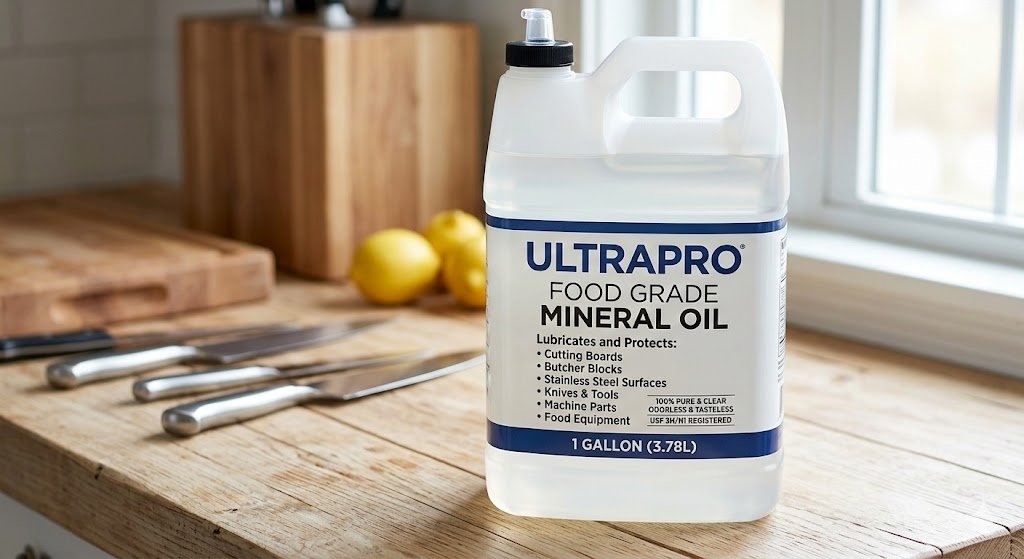
Once you’ve done the hard work of getting rust off a knife, you must seal the steel. Without an oil barrier, microscopic moisture in the air will restart the oxidation process within hours. Using a 100% Food-Safe Mineral Oil is non-negotiable for kitchen cutlery.
- Pro Tip: Apply a single drop after every sharpening session or before storing a knife for more than a week.
Recommended for Longevity: Protect your blades with Ultra-Pure Food Grade Mineral Oil. It is tasteless, odorless, and creates a professional-grade moisture barrier that humidity can’t penetrate.
Deep Pitting: When to See a Professional
If you’ve removed the rust but the blade is covered in small “craters” or holes, you have pitting. Pitting cannot be “cleaned” away; the metal is physically gone. To fix this, the blade must be professionally ground down to a new layer of steel. If the pitting is near the edge, it can make the knife brittle and prone to chipping.
Staying prepared is about more than just having the right tools; it’s about knowing how to use them effectively when it matters most. From your kitchen to your outdoor gear, keeping your equipment in top shape is a hallmark of true craftsmanship.
Read More Guide On: What Makes a Knife Black Pearl? (Genuine MOP Guide)
Frequently Asked Questions
Is a rusted knife safe to use?
Surface rust can harbor bacteria and impart a metallic taste to food. It is best to remove even light rust before using the knife for food preparation.
Can I use WD-40 to remove rust?
WD-40 is an excellent rust remover, but it is not food-safe. If you use it on a kitchen knife, you must wash the blade thoroughly with hot, soapy water multiple times before it touches food.
Will steel wool remove rust?
Yes, but use only “0000” (extra-fine) steel wool. Standard steel wool is too abrasive and will leave deep scratches on the finish of your blade.
Why did my knife turn black after a vinegar soak?
This is a “patina,” a form of controlled oxidation. It actually helps protect high-carbon steel from future red rust, but if you prefer a shiny finish, you’ll need to polish it off with a rust eraser or metal polish.
Does lemon juice work like vinegar?
Yes. The citric acid in lemon juice works similarly to the acetic acid in vinegar. It is great for light spots and leaves a pleasant scent!
Complete Knife Restoration & Care Kit
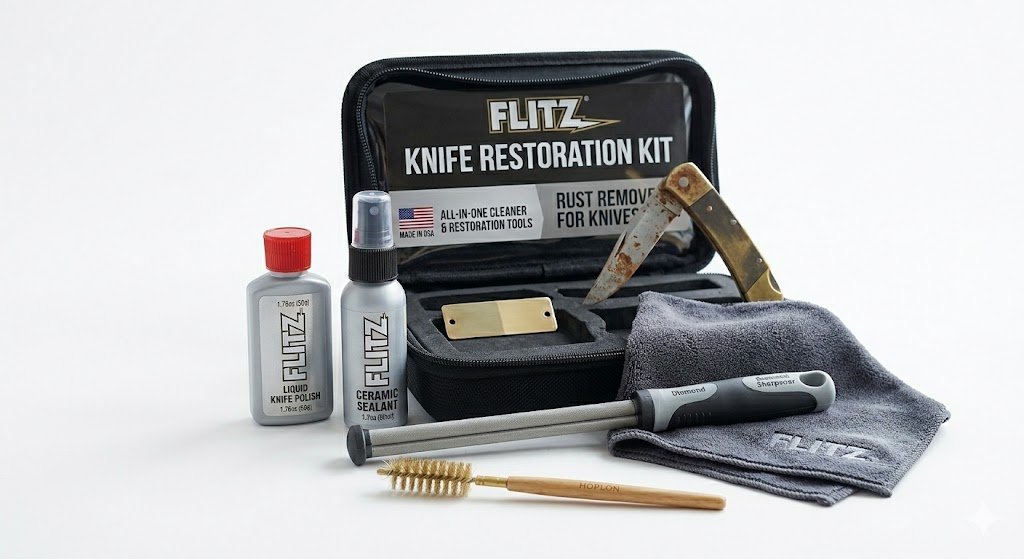
If your collection has seen better days, don’t just buy one tool—invest in a complete care system. A proper kit ensures you have the abrasives to clean, the stones to sharpen, and the oil to protect.
- Includes: Rust erasers, microfiber cloths, and honing oil.
- The Benefit: Buying as a bundle is significantly cheaper than sourcing individual items when a rust “emergency” happens.
Featured Maintenance Kit: For the serious enthusiast, the Flitz Knife Restoration Kit provides everything you need to take a blade from “junk drawer” status to razor-sharp and rust-free.
Conclusion: Respect the Steel
Learning how to get rust off a knife is more than just a cleaning chore; it’s an act of restoration. Steel is a resilient material, and in most cases, a little bit of orange oxidation doesn’t mean the end of your favorite tool.
By starting with the gentlest method (baking soda) and working your way up to acids or abrasives only when necessary, you can maintain your collection for a lifetime. Keep your blades dry, keep them oiled, and they will serve you for generations.