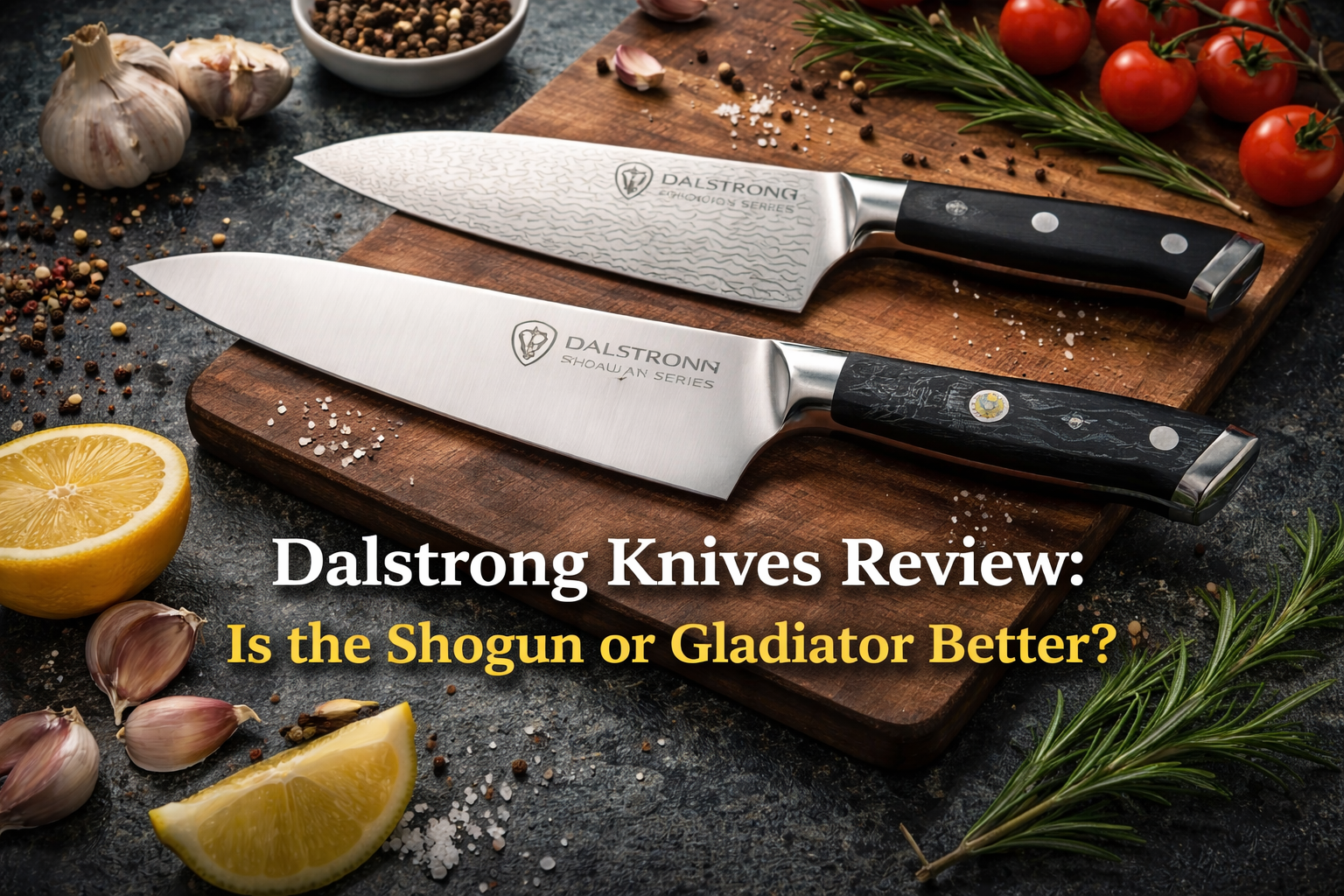
You’ve seen them all over Instagram and professional cooking shows—those aggressive, pitch-black blades and shimmering Damascus patterns that look more like movie props than kitchen tools. If you’re like most high-intent buyers, you’re skeptical. You’ve probably asked yourself: “Am I paying for a high-quality instrument or just a massive marketing budget?” This dalstrong knives review is born out of that exact frustration. I’ve spent a decade in the Knifepicks world, and I know that a pretty handle doesn’t mean squat when you’re trying to thin-slice a brisket or dice five pounds of onions without developing a blister.
In our kitchen trials, we didn’t just look at these knives; we abused them. We tested the edge retention of the Shogun series against fibrous celery and checked the “non-stick” claims of the Shadow Black coating by slicing through wet sushi rice and raw proteins. Most reviews tell you about the Rockwell hardness or the “military-grade” handles. What they don’t tell you is how the aggressive texture on some of these handles feels after an hour of prep, or how the balance point shifts when you move from a traditional grip to a professional pinch grip.
This dalstrong knives focuses on the “small things.” We’re looking at the grind taper, the smoothness of the bolster transition, and the reality of maintenance. Dalstrong is a polarizing brand; they are the “disruptors” who lean heavily into “mall-ninja” aesthetics, but behind the flash, there is often serious German and Japanese steel. However, not every series is a winner. Some prioritize “the look” so much that they sacrifice the very ergonomics a busy line cook needs.
In this dalstrong knives, I’m going to break down the top five series to help you identify which one matches your specific cooking style. We’ll look at the Gladiator, Shogun, Shadow Black, Phantom, and Valhalla lines. If you are looking for a genuine dalstrong knives that calls out the hype while respecting the metallurgy, you’re in the right place. Let’s see if these blades deserve a spot in your magnetic rack or if they should stay on the shelf.
Top Picks: Dalstrong Series Comparison
| Series | Steel Type | HRC | Handle Material | Price Category |
| Shogun Series | AUS-10V (Japanese) | 62+ | G10 Garolite | Premium |
| Gladiator Series | X50CrMoV15 (German) | 56+ | G10 / Pakkawood | Budget-Friendly |
| Shadow Black | 7CR17MOV (Vacuum Treated) | 58+ | G10 Resin | Mid-Range |
| Phantom Series | AUS-8 (Japanese) | 58 | Pakkawood | Mid-Range |
| Valhalla Series | 9CR18MOV | 60+ | Resin & Wood | Premium Art |
In-Depth Reviews: The Top 5 Dalstrong Blades
1. Shogun Series 8-Inch Chef’s Knife
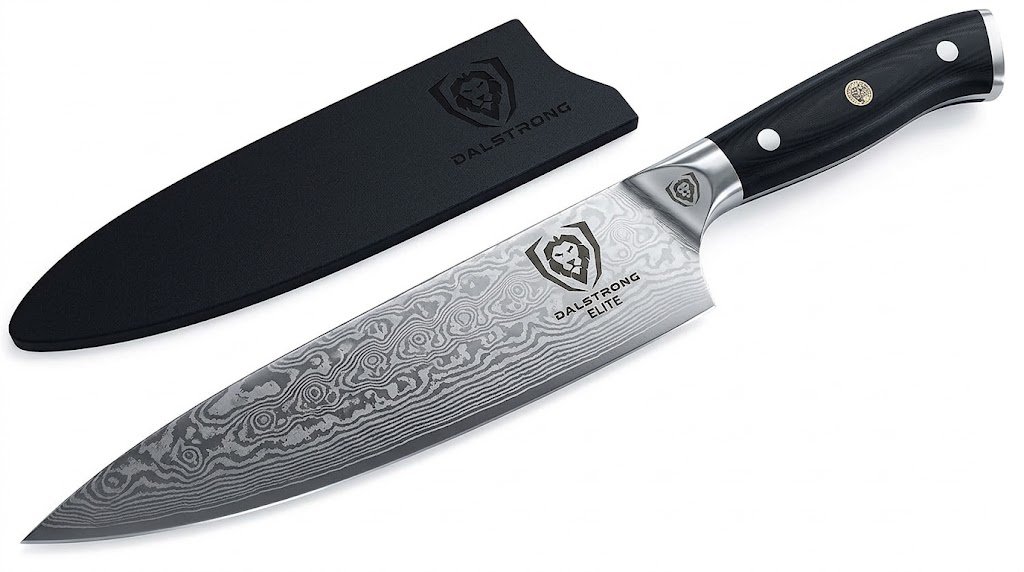
The Shogun is the flagship. It’s meant to compete with high-end Japanese brands like Shun, featuring 66 layers of high-carbon stainless steel and a beautiful Tsunami Rose Damascus pattern.
- Key Specs: AUS-10V Super Steel core, 8–12° edge angle, nitrogen cooled, triple-riveted.
- Pros: The edge out of the box is genuinely “scalpel-sharp.” The G10 handle is impervious to heat and moisture, making it a tank in a professional kitchen.
- Cons: The blade is quite heavy for a Japanese-style knife, which can lead to wrist fatigue during long sessions.
- Hands-on Note: The “Tsunami Rose” pattern is etched, not just printed, which helps slightly with food release. However, the bolster is a bit thick, which makes a deep pinch grip feel crowded if you have large fingers.
- Who it’s best for: The enthusiast who wants a showpiece that can actually perform. Real-World Drawback: The “Dalstrong” lion logo on the blade is quite large and can be a bit of an eyesore for those who prefer a minimalist aesthetic.
2. Gladiator Series 8-Inch “The Defiant” Chef’s Knife
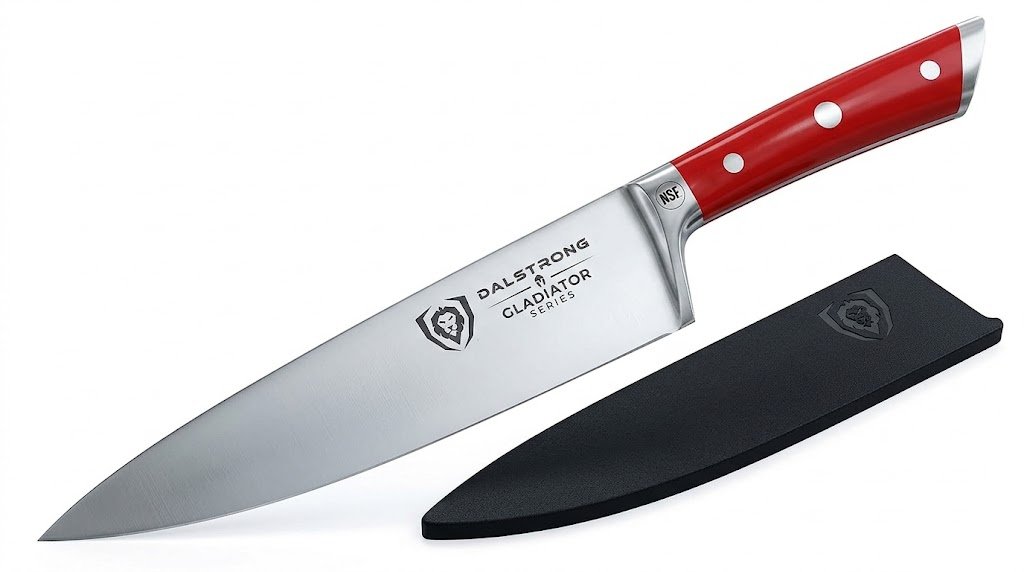
If the Shogun is a sports car, the Gladiator is a pickup truck. It uses classic German steel, making it tougher and less prone to chipping than its Japanese counterparts.
- Key Specs: Forged German ThyssenKrupp steel, 56+ Rockwell, hand-polished spine.
- Pros: It’s incredibly durable. You can use this for heavier tasks like splitting squash or disjointing a chicken without fear of the edge rolling.
- Cons: It loses its “razor” edge faster than the Shogun and requires more frequent honing.
- Hands-on Note: The handle has a classic Western feel. It’s well-balanced at the bolster, giving you excellent control for rocking-motion chops.
- Who it’s best for: The “Average User” who wants a low-maintenance workhorse. Real-World Drawback: The sheath (Sayas) provided is plastic and feels a bit cheap compared to the knife’s build quality.
3. Shadow Black Series 7-Inch Santoku
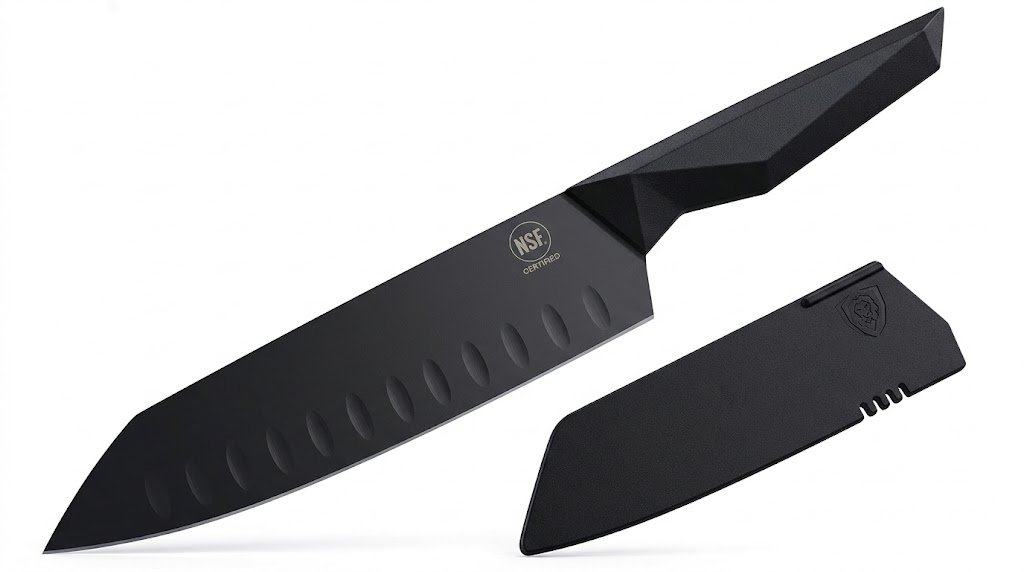
This is the knife that looks like a stealth bomber. It features a non-reflective Titanium Nitride coating and a unique, geometric handle.
- Key Specs: High-carbon 7CR17MOV steel, black non-stick coating, geometric G10 handle.
- Pros: The aesthetics are unbeatable if you like the “tactical” look. The coating does help a bit with acidic foods not sticking to the blade.
- Cons: The handle’s geometric edges can create “hot spots” on your palm if you use it for more than 20 minutes of heavy prep.
- Hands-on Note: The coating will eventually scratch. After three months of use, we noticed silver lines appearing near the edge where the sharpener makes contact.
- Who it’s best for: Younger cooks or those who want a “modern” kitchen. Real-World Drawback: The black coating makes it difficult to see where the blade ends and the food begins in low-light environments.
4. Phantom Series 9.5-Inch “The Reaper” Kiritsuke
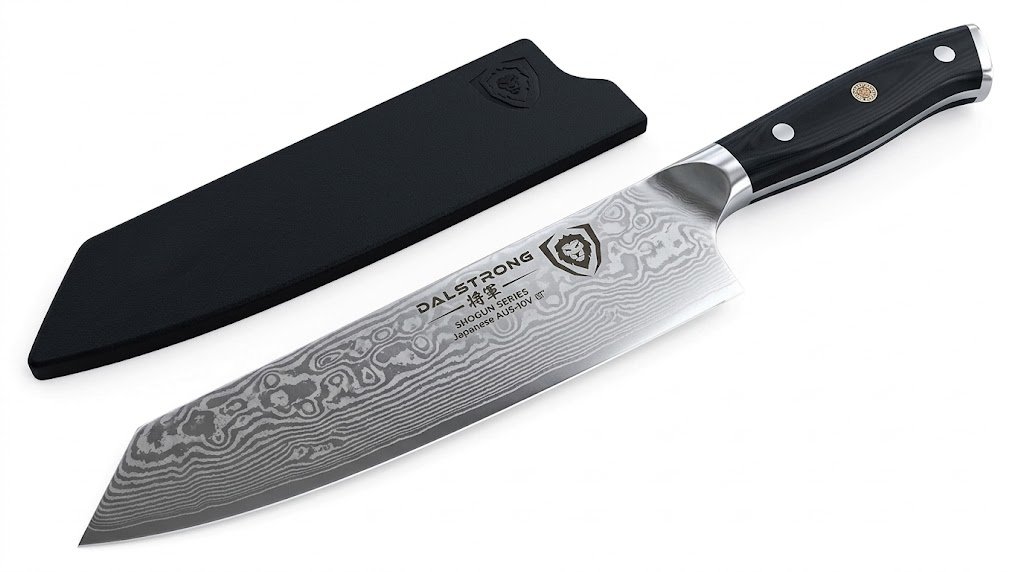
A hybrid between a chef’s knife and a vegetable cleaver, this blade is designed for precision and long, clean strokes.
- Key Specs: AUS-8 Japanese steel, D-shaped Pakkawood handle, traditional Japanese engraving.
- Pros: The D-shaped handle fits into the “crook” of your fingers perfectly, providing superior rotational control.
- Cons: It is single-series, meaning it’s specifically designed for right-handed users. Lefties should stay away.
- Hands-on Note: The blade is narrower than the Shogun, making it excellent for slicing raw fish or meat without the “drag” associated with thicker spines.
- Who it’s best for: Serious home cooks who enjoy the Japanese aesthetic but want a slightly more durable steel. Real-World Drawback: The Pakkawood handle can feel a bit slippery if your hands are covered in chicken fat or oil.
5. Valhalla Series 8-Inch Chef’s Knife
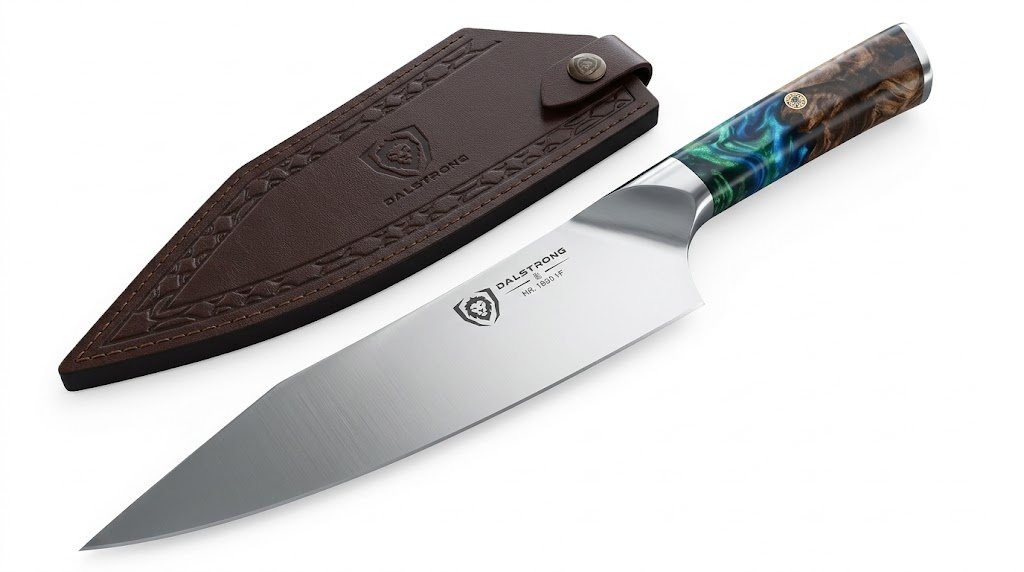
The Valhalla series is for the “Viking” at heart. It features a sandblasted finish and a handle made of celestial resin and stabilized wood.
- Key Specs: 9CR18MOV steel, 60+ HRC, unique resin handle.
- Pros: Each handle is unique due to the resin-pour process. It’s a massive conversation starter.
- Cons: The sandblasted finish is beautiful but can be a nightmare to clean if you let starch or proteins dry on the blade.
- Hands-on Note: This knife is surprisingly light for its size. The balance is slightly blade-forward, which helps with gravity-assisted chopping.
- Who it’s best for: The collector. Real-World Drawback: The handle is quite long, which can make it feel unbalanced if you have smaller hands.
How To Choose The Best Boot Knife
While kitchen knives are my primary focus, my decade at Knifepicks has taught me that high-intent buyers often look for the same “fail-proof” qualities in tactical gear as they do in the kitchen: retention, accessibility, and steel integrity. Selecting the best boot knife isn’t just about picking a sharp piece of metal; it’s about the “carry system.” If the knife is uncomfortable to wear, you’ll leave it at home, rendering it useless.
Discreet Carry and Comfort
A boot knife must be slim. Any bulge against your ankle will result in a “hot spot” within thirty minutes of walking. Look for a knife with a total thickness (including sheath) of less than 0.5 inches. I always check the “clip tension”—if it’s too loose, the knife will slide into your boot; if it’s too tight, you’ll struggle to draw it in an emergency.
Single-Edge vs. Double-Edge (Dagger)
In the tactical world, many people gravitate toward double-edged daggers. However, for most utility tasks, a single-edged blade is superior. It allows you to place your thumb on the spine for “choked-up” precision work. If you are buying strictly for self-defense, the dagger profile is king for piercing, but check your local laws first, as double-edged blades are restricted in many jurisdictions.
The Material Reality
For a boot knife, I prioritize corrosion resistance over extreme hardness. Your boot is a high-moisture environment (sweat). Steels like 440C or Aus-8 are excellent because they won’t rust overnight if you forget to wipe them down. The “small thing” I always look for is a textured handle. G10 or rubberized grips are mandatory; a polished handle in a wet boot is a recipe for a dropped blade.
Read More Guide On: Best Benchmade Knives 2026: Expert Reviews & Buying Guide
FAQ Section
Are Dalstrong knives made in China?
Yes, they are. While Dalstrong uses high-quality Japanese and German steels, the assembly and manufacturing take place in Yangjiang, China. This allows them to offer premium features like Damascus cladding at a lower price point than Japanese-made brands.
Do Dalstrong knives stay sharp?
This depends on the series. The Shogun and Valhalla series use harder steels (60+ HRC) that hold an edge for a very long time. The Gladiator series uses softer German steel, which is tougher but requires honing with a steel rod every few uses to stay “scary” sharp.
Is the black coating on the Shadow Black series safe?
Yes, it is. The Titanium Nitride coating is food-safe and non-toxic. However, it is not permanent. Over years of use and sharpening, the coating will wear down at the friction points, which is a common complaint in many a dalstrong knives review.
Which Dalstrong series is best for beginners?
The Gladiator Series is the best starting point. It is the most “forgiving” steel, meaning it won’t chip if you accidentally hit a bone or drop it on the floor. It’s also the easiest to sharpen for those new to whetstones.
Are Dalstrong knives dishwasher safe?
Absolutely not. No high-quality knife should ever go in the dishwasher. The heat expands the rivets, and the abrasive detergent will ruin the edge and the finish. Hand-wash and dry them immediately to avoid “pitting” or rust.
Conclusion
After putting these tools through the ringer for this dalstrong knives, my conclusion is that Dalstrong is a legitimate contender if you know what you’re buying. They aren’t “traditional” knives, and they don’t pretend to be. They are bold, aggressive, and highly functional tools that prioritize a specific “feel” in the hand.
For the Average User, I recommend the Gladiator Series. It’s the most practical, durable, and cost-effective entry into the brand. You won’t be afraid to actually use it, and it can handle the chaos of a busy family kitchen without needing a professional sharpener every month.
For the Pro User or the knife nerd, the Shogun Series is the clear winner. The AUS-10V steel is a joy to work with, and the edge retention puts it on par with much more expensive boutique brands. It’s a “laser” that looks like a masterpiece.
Dalstrong has proven that they are more than just a “marketing brand.” While they have some quirks—like heavy bolsters and “loud” aesthetics—the core performance is there. Just make sure you pick the handle that fits your hand, not just the one that looks coolest on your screen.