If you’ve ever snapped the tip off a beautiful drop-point knife while trying to pry open a stubborn crate or pierce a thick plastic drum, you’ve experienced the exact moment a Tanto becomes necessary. Most people buy a Tanto because it looks “cool” or “tactical,” but in a decade of testing these blades in both urban and field environments, I’ve learned that the true value of the Tanto isn’t in its aesthetics—it’s in its structural geometry.
The biggest pain point for most knife users is tip fragility. We’re told knives aren’t pry bars, yet in the real world, we use them like they are. A standard curved blade thins out significantly at the point, making it vulnerable. The Americanized Tanto, however, keeps the meat of the steel all the way to the tip. My goal with this guide is to move past the “Samurai” marketing and focus on how these two-edged workhorses actually perform when you’re breaking down a mountain of double-walled cardboard or prepping a campsite in a pinch. We’ve focused on the small things: how the secondary “yokote” (the corner where the edges meet) acts as a high-pressure point for detail cuts, and how the lack of a “belly” changes the way you sharpen.
Top Picks For 2026
| Product | Blade Steel | Blade Length | Price Category | Best For |
| Benchmade Bailout | CPM-M4 | 3.38″ | Premium | Ultralight EDC |
| Cold Steel Recon 1 | CPM-S35VN | 4.0″ | Mid-Range | Combat/Hard Use |
| Civivi Brazen | D2 | 3.46″ | Budget | Value Performance |
| Kershaw Blur Tanto | 14C28N | 3.4″ | Mid-Range | Speed Deployment |
| CRKT Akari | 8Cr13MoV | 3.5″ | Budget | Fixed-Blade Utility |
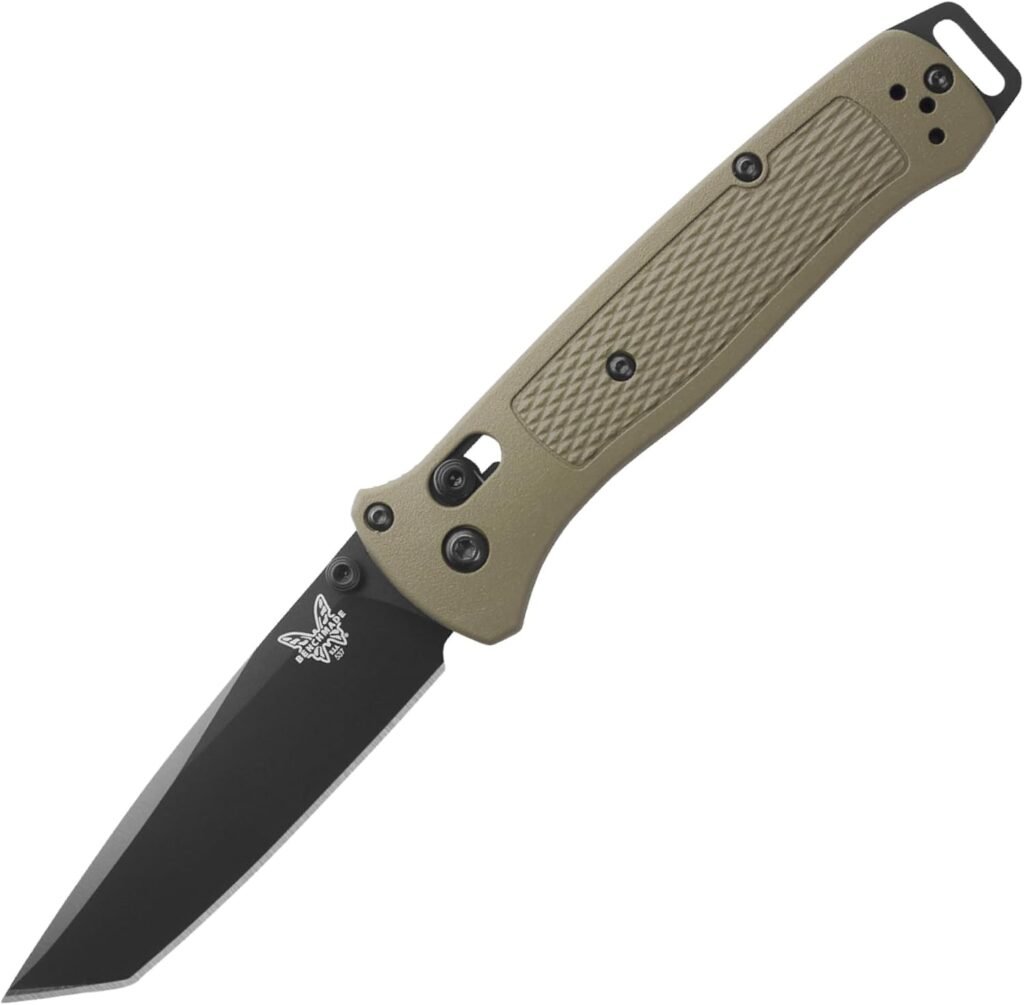
1. The Tactical Featherweight: Benchmade Bailout
The Big Win
The Bailout is the definitive answer for anyone who wants Tanto strength without the “bricks-in-your-pocket” feeling. Using premium CPM-M4 steel, it offers incredible edge retention in a package that weighs less than a set of car keys.
- Key Specs:
- Blade Steel: CPM-M4 (Super Tough)
- Weight: 2.7 oz
- Handle: Anodized 6061-T6 Aluminum
- Lock: AXIS Lock
- Pros: Extremely slim profile; includes a glass breaker pommel; lightning-fast one-handed closing.
- Cons: The aluminum scales can feel “chalky” when your hands are bone-dry.
Hands-on Note: During our field testing, I found the “secondary” tip—the angle where the two edges meet—is perfectly positioned for scoring through thick zip ties. Unlike a curved blade that might slip, this corner bites in and stays.
The Catch: CPM-M4 is a non-stainless tool steel. Even with the Cerakote finish, if you don’t wipe this blade down after a rainy day, you will see tiny pepper spots of rust on the laser-etched logo.
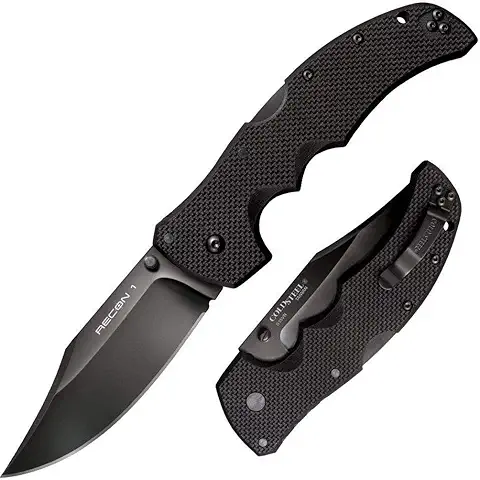
2. The Overbuilt Legend: Cold Steel Recon 1
The Big Win
If you want a folder that feels like a fixed blade, this is it. The Tri-Ad lock is arguably the strongest locking mechanism on the market. I’ve seen this knife survive spine-whack tests that would shatter a standard liner lock.
- Key Specs:
- Blade Steel: CPM-S35VN
- Weight: 5.2 oz
- Handle: G-10
- Finish: DLC (Diamond-Like Carbon)
- Pros: Virtually indestructible lock; the DLC coating is incredibly scratch-resistant.
- Cons: The pocket clip is so tight out of the box that it can actually shred your pocket hems.
Hands-on Note: The G-10 texturing on the Recon 1 is “meat-grinder” aggressive. When I wore tactical gloves, the grip was phenomenal, but for a casual Sunday carry, it can feel a bit abrasive against the skin.
The Catch: This is a massive knife. It “prints” heavily in thinner pants, so don’t expect to hide this in a pair of dress slacks without someone noticing.
3. The Budget King: Civivi Brazen
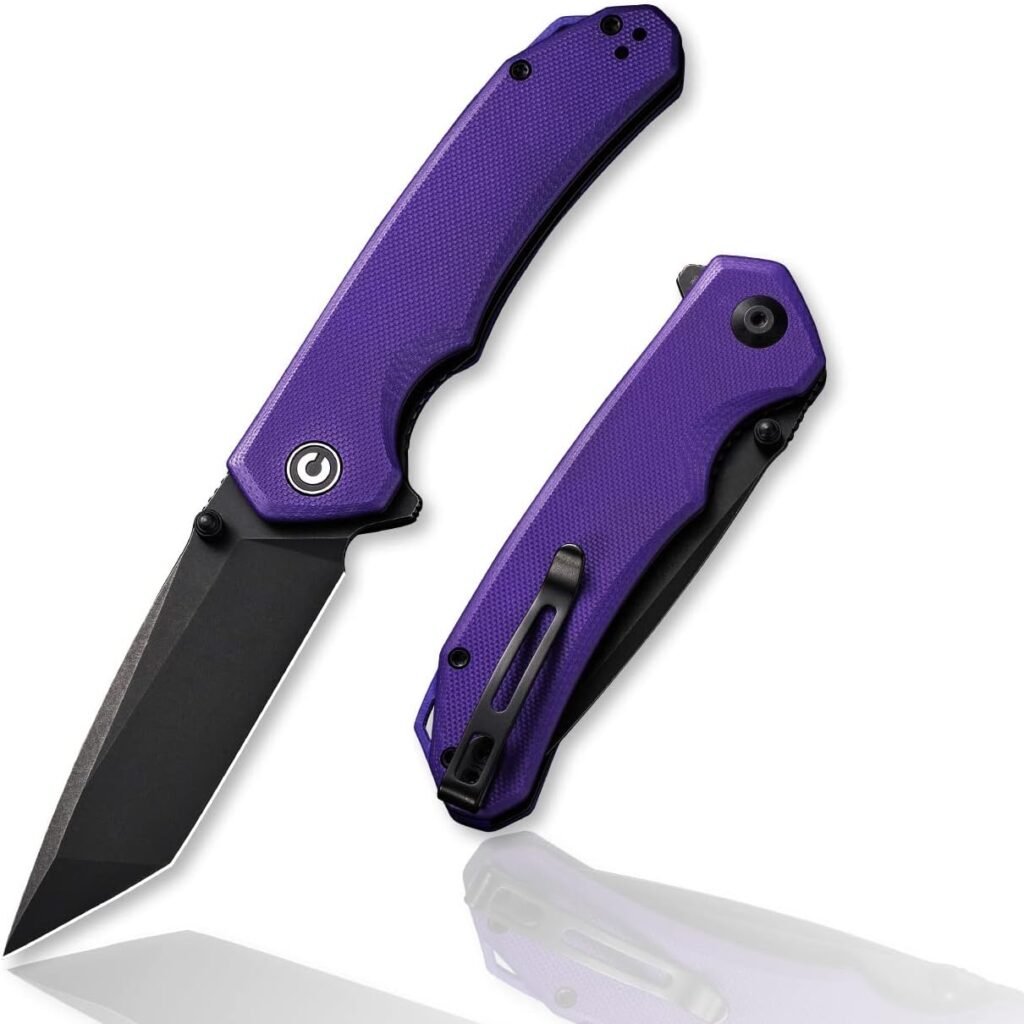
The Brazen Big Win
Civivi has mastered the “budget-premium” space. The Brazen offers a dual-deployment system (flipper tab and thumb studs) with ball-bearing action that feels like a $200 knife for a third of the price.
- Key Specs:
- Blade Steel: D2
- Weight: 3.8 oz
- Handle: G-10 or Micarta
- Pivot: Caged Ceramic Ball Bearing
- Pros: Multiple ways to open; great “tuck” into the pocket; very deep-carry clip.
- Cons: D2 steel is “semi-stainless,” so it requires a bit more maintenance than S35VN.
Hands-on Note: The hollow grind on the main edge makes this a much better slicer than the Cold Steel. It actually handles food prep—like slicing an apple—without just splitting it open like a wedge.
The Catch: The liner lock is a bit thin. While perfectly safe for EDC, I wouldn’t use this for heavy prying or “batoning” wood in a survival scenario.
4. The Speed Specialist: Kershaw Blur Tanto
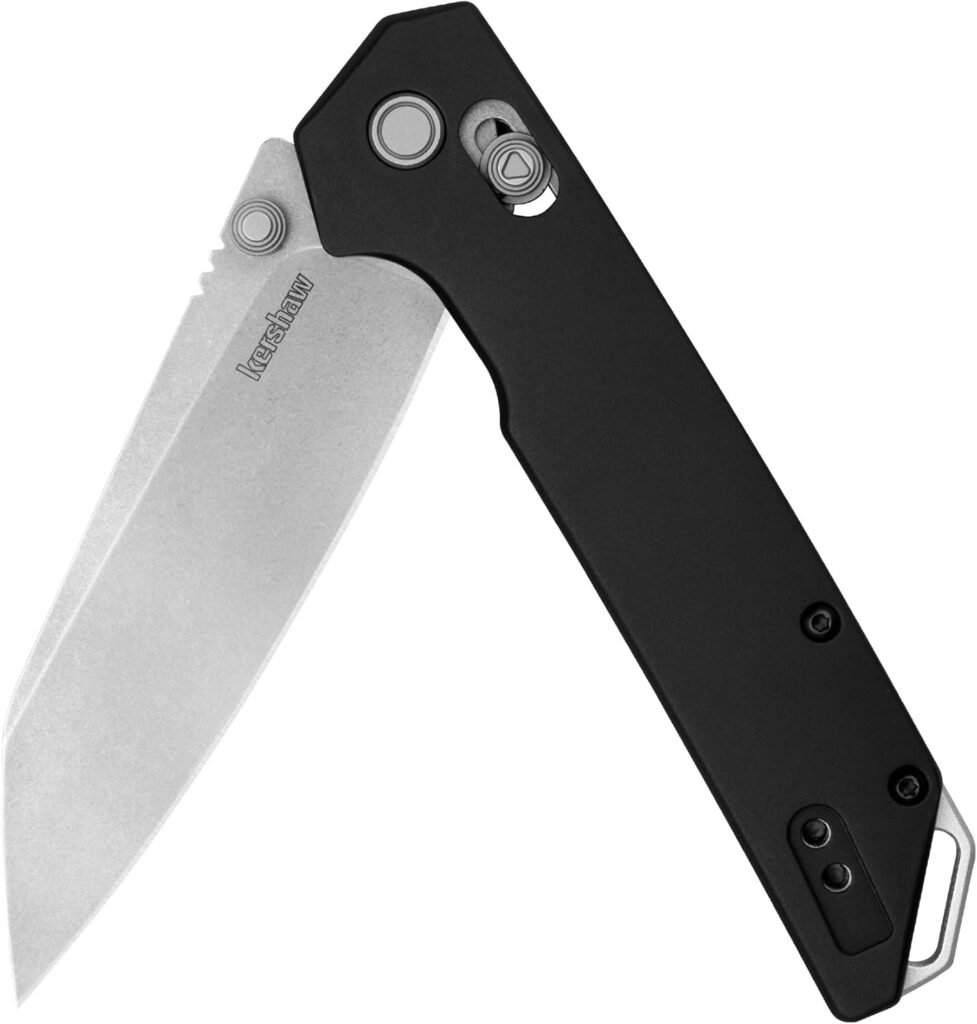
The Big Win
Designed by Ken Onion, the Blur features the SpeedSafe assisted opening. It’s for the user who needs their blade out now. The Trac-Tec inserts on the handle provide a rubberized grip that is unmatched in wet conditions.
- Key Specs:
- Blade Steel: 14C28N
- Weight: 3.9 oz
- Handle: 6061-T6 Aluminum with Trac-Tec
- Opening: SpeedSafe Assisted
- Pros: Effortless deployment; made in the USA; the 14C28N steel is exceptionally corrosion-resistant.
- Cons: The torsion bar in the assisted opening can eventually wear out after years of use (though Kershaw replaces them for free).
Hands-on Note: The recurve in the main edge of the Blur Tanto is subtle, but it helps “pull” material into the cut. This makes it excellent for cutting rope or thick nylon webbing.
The Catch: The thumb studs are angled and somewhat sharp. If you play with your knife all day, your thumb will start to feel the bite.
5. The Fixed Utility: CRKT Akari
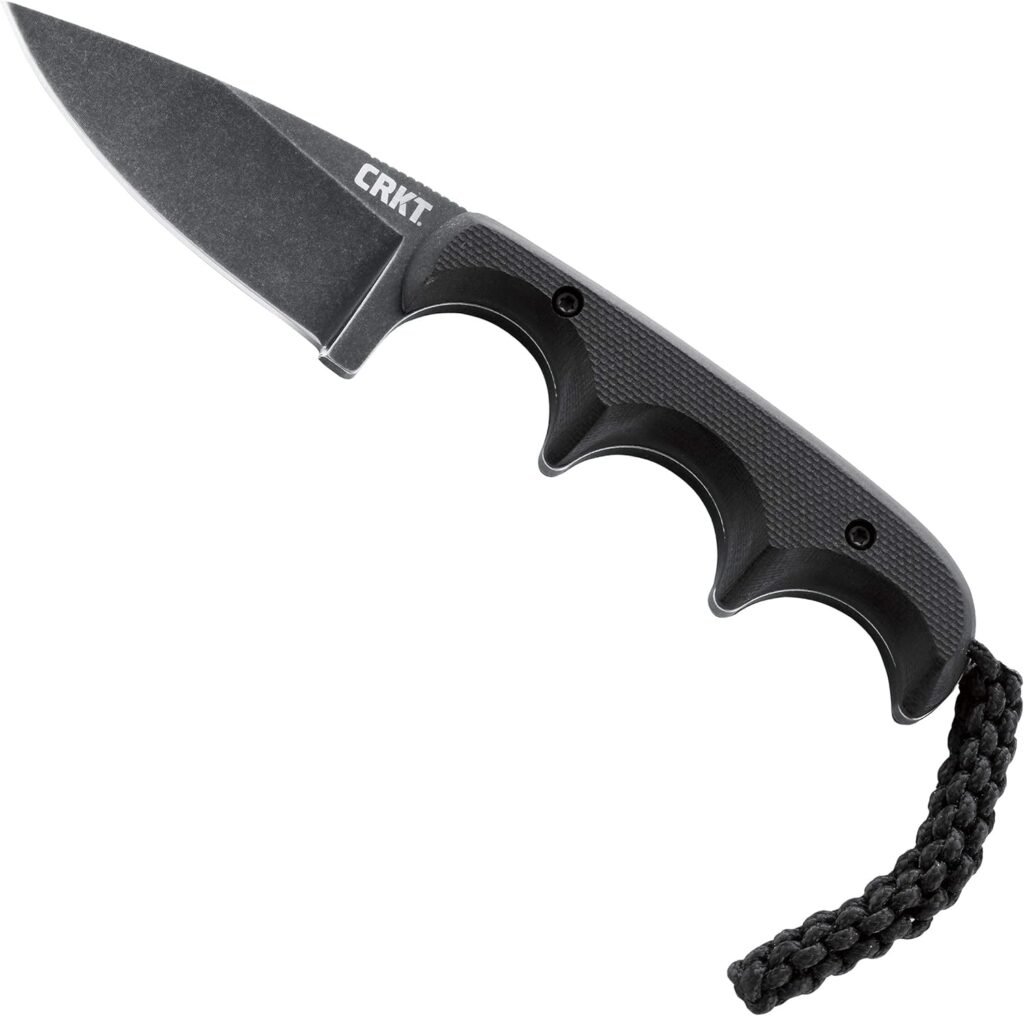
The Big Win
The Akari is a Lucas Burnley design that brings the traditional Japanese “acid-etch” look to a modern utility fixed blade. It’s compact enough for “scout carry” (horizontal on the belt) and offers a level of rigidity no folder can match.
- Key Specs:
- Blade Steel: 8Cr13MoV
- Weight: 2.7 oz
- Handle: Cord-wrapped style (molded resin)
- Sheath: Hard Shell with belt clip
- Pros: Beautiful aesthetic; very comfortable in a reverse grip; surprisingly light for a fixed blade.
- Cons: The sheath retention is very tight, requiring a significant tug to deploy.
Hands-on Note: The neon-green under-wrap on the handle isn’t just for looks; it makes the knife incredibly easy to find if you drop it in tall grass or a dark gear bag.
The Catch: The 8Cr13MoV steel is definitely on the lower end. You will find yourself touching up the edge on a ceramic rod frequently if you use it for daily chores.
How To Choose The Best Tanto Knife
Understanding the Two Edges
The most common mistake people make with a Tanto is trying to sharpen it like a standard knife. You cannot use a “sweeping” motion. A Tanto is essentially two straight knives joined at an angle. To maintain it, you must sharpen the long main edge first, then reset your angle and sharpen the short “front” edge. If you try to round the corner, you destroy the “secondary tip,” which is the Tanto’s greatest asset for scraping and scoring.
Tactical vs. Utility Intent
Are you using this for self-defense or as a work tool? For defense, the Cold Steel Recon 1 or Benchmade Bailout are superior because they prioritize “lock-up” and “reach.” For utility, look for a “Modified Tanto” like the Civivi Brazen. A modified Tanto has a slight curve (or “belly”) on the main edge, which allows for better slicing. A “Traditional” or “American” Tanto is almost perfectly straight, which is better for chisel-like tasks but worse for skinning or food prep.
Steel for the Mission
Because Tantos are often used for “rough” tasks, the steel choice matters more than usual.
- CPM-M4 or D2: These are “hard” steels. They stay sharp forever but can be brittle. Great for the “Pro” who knows not to twist the blade while prying.
- 14C28N or S35VN: These are “tough” and stainless. Better for the “Average User” who might forget to oil their knife or who uses it in wet, outdoor environments.
FAQ
Is a Tanto knife better for self-defense?
Yes, in the sense that the reinforced tip is less likely to break when hitting hard targets like buttons, zippers, or heavy clothing. Pro-tip: In a defensive scenario, the Tanto’s secondary point acts as a “secondary bite” during a slash, often causing more surface disruption than a smooth curve.
Are Tanto blades harder to sharpen?
This depends on your equipment. If you use a pull-through sharpener, yes, they are a nightmare. Pro-tip: Use a flat whetstone or a guided system (like a WorkSharp). Treat the knife as two separate blades. Stop at the “point” where the edges meet to keep that corner sharp.
Why do some Tantos have a “belly” while others are straight?
The “belly” is a Western modification designed to make the knife more useful for slicing. Pro-tip: If your primary use is opening boxes and daily EDC, a Tanto with a slight belly is much more versatile. If you need a “sharpened pry bar,” go with a straight edge.
Can I use a Tanto for hunting or skinning?
This depends, but generally no. The sharp angle of a Tanto is designed to pierce, not to slide between skin and muscle without puncturing the hide. Pro-tip: If you find yourself needing to skin with a Tanto, use the very front edge (the “chisel” part) and work slowly with short, pushing strokes.
Is the “American Tanto” different from a Japanese Tanto?
Yes, significantly. The traditional Japanese Tanto usually has a smooth, continuous curve to the tip. The “American” version (popularized in the 1980s) introduced the hard, angular transition. Pro-tip: For modern tactical use, the American angle is actually more useful because it provides that extra “corner” for detail work.
Read More Guide: The Best Boot Knives of 2026: Hidden Gems and Tactical Workhorses
Conclusion
The Tanto isn’t just a “tacticool” accessory; it’s a specialized geometry for people who need their knife to survive mistakes. Whether you’re a first responder who needs a reliable glass breaker or a warehouse worker tired of snapping tips on tape dispensers, there is a Tanto on this list for you.
- For the Average User: I highly recommend the Kershaw Blur. The assisted opening is incredibly intuitive, and the rubberized grip makes it safe for anyone to handle, even in the rain.
- For the Pro User: Go with the Benchmade Bailout. The combination of CPM-M4 steel and the ultralight aluminum build provides a level of performance that you won’t fully appreciate until you’ve carried it for a month.