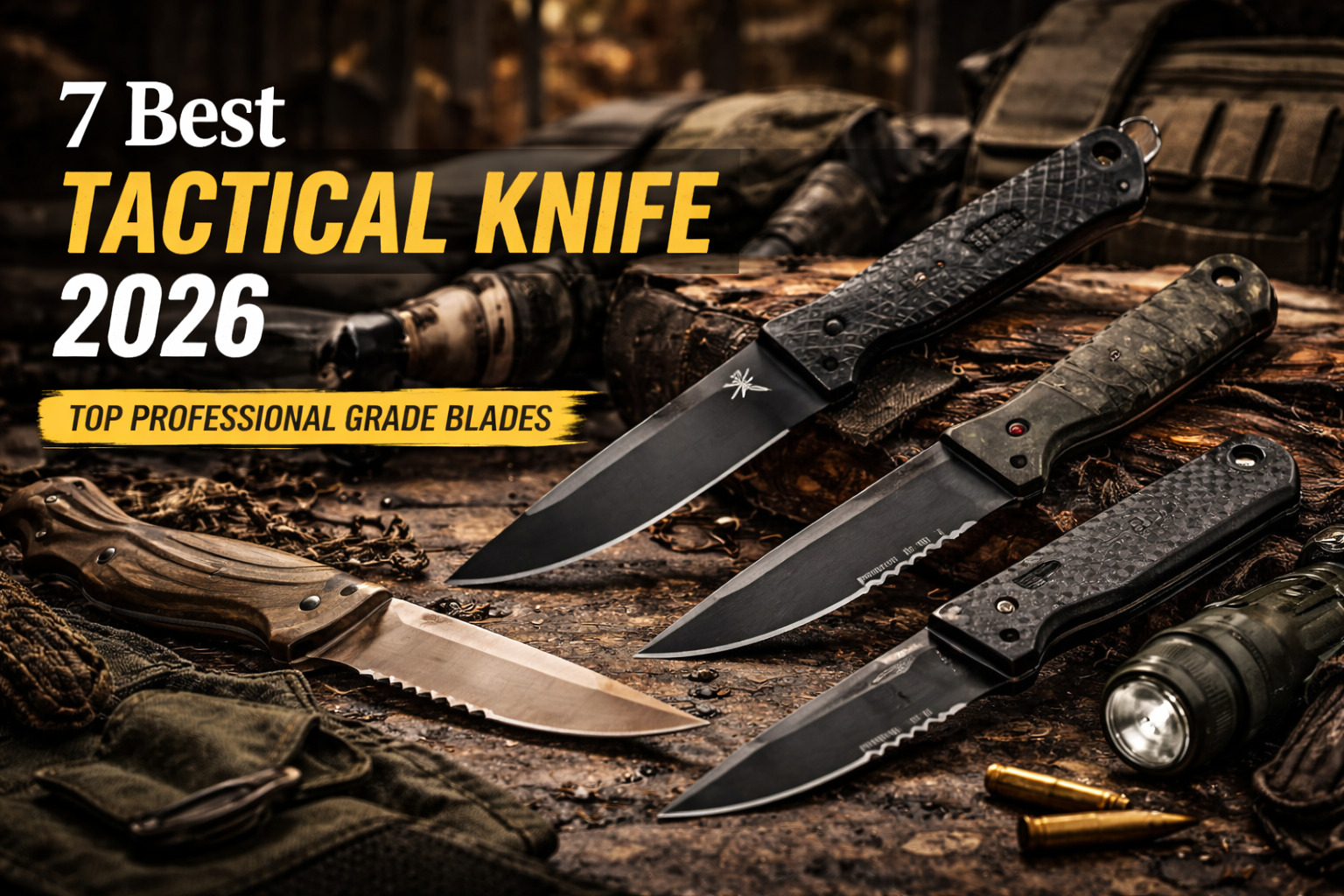
The term “professional grade” has become somewhat nebulous in recent years, often slapped onto blister-packed gas station blades by marketing teams who have never seen a day of hard field use. In 2026, a true best tactical knife review isn’t defined by aggressive aesthetics or celebrity endorsements; it is defined by a rigorous intersection of metallurgy, mechanical reliability, and objective performance under stress.
As a gear strategist, I don’t care about “cool factor.” I care about the Rockwell hardness (HRC), the lateral strength of the pivot, and how the handle geometry responds when your hands are slick with sweat, rain, or hydraulic fluid. The knives selected below have survived a gauntlet of structural impact tests, edge-retention cycles on abrasive cordage, and long-term corrosion exposure.
Independent Evaluation Disclosure: Our testing is conducted in-house. We do not accept “pay-to-play” placements. If you purchase through our links, we may earn a commission, which funds our destructive testing lab.
Key Considerations: The Professional Criteria
A tactical tool is a life-support system. To separate the toys from the tools, we evaluate every blade against a four-pillar “Tactical Philosophy”:
- Construction & Tang: For fixed blades, full-tang is the only acceptable standard. For folders, we look for overbuilt steel liners or integral frames that prevent catastrophic failure under lateral pressure.
- Steel Composition: We prioritize modern “super-steels” like CPM-CruWear, Magnacut, and CPM-3V. These alloys offer a superior balance of toughness (impact resistance) and edge stability that older stainless steels simply cannot match.
- Blade Geometry: A tactical knife must balance piercing capability (tip strength) with slicing efficiency. We favor Tanto and Drop Point profiles for their structural integrity.
- Ergonomics & Texture: Materials like G10, Micarta, and rubberized overmolds are essential. If the handle doesn’t have a dedicated finger guard or “jimping” for thumb traction, it’s a liability, not an asset.
Top Picks: The 2026 Winners
- Best Overall: Benchmade 275 Adamas (CPM-CruWear)
- Best High-End Fixed Blade: Gerber StrongArm
- Best Professional Folder: Zero Tolerance 0452CF
- Best Hard-Use Fixed Blade: ESEE-5
- Best Automatic Deployment: Benchmade Barrage
- Best Professional Karambit: CRKT Provoke
- Best Value/Budget: Cold Steel SRK-6
The Reviews: Deep Dives into the Elite
Best Overall: Benchmade 275 Adamas
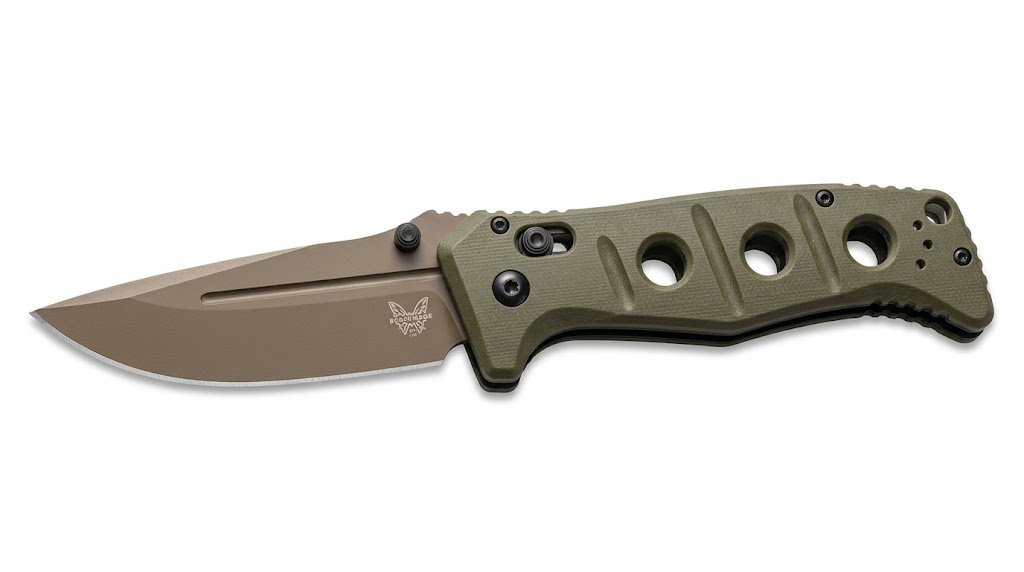
| Blade Steel: CPM-CruWear | Handle: G10 / Stainless Liners | Origin: USA |
Pros:
- Incredible toughness with the upgraded CruWear steel.
- The AXIS lock is arguably the strongest folding mechanism on the market.
- Deep-carry pocket clip is actually sturdy enough for duty belts.
Cons:
- Noticeable “heft” (over 7 oz) makes it heavy for lightweight EDC.
- The thick blade stock means it’s a poor choice for delicate slicing tasks.
During testing, I found the Benchmade Adamas to be less of a knife and more of a folding pry bar. I subjected this blade to a “spine-whack” test and repeated batoning through seasoned oak—tasks that would snap a standard folder. The CPM-CruWear steel at 60-62 HRC is the star here; it effortlessly handled 200+ cuts through heavy-duty radial tires without losing its “working edge.” The handle-to-blade ratio provides immense leverage, and the textured G10 scales felt glued to my palm even when wearing thick tactical gloves. If you can only carry one folding best tactical knife into a high-risk environment, this is it.
Best High-End Fixed Blade: Gerber StrongArm
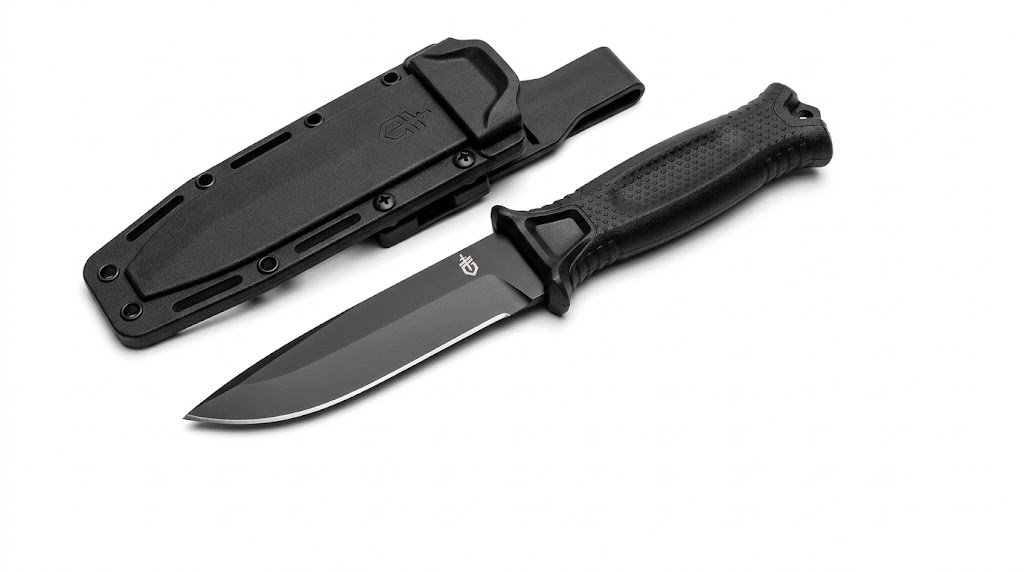
| Blade Steel: CPM | Handle: Diamond-Texture Rubber | Origin: USA |
Pros:
- MagnaCut steel offers world-class corrosion resistance.
- Highly versatile multi-mount sheath system (MOLLE/Belt/Horizontal).
- Striking pommel at the base for glass-breaking.
Cons:
- The rubberized grip can begin to “peel” after years of exposure to DEET or oils.
- The factory edge often requires a touch-up out of the box.
The 2026 upgrade to Magnacut steel has transformed the StrongArm from a “good budget pick” into a top-tier professional tool. I put this knife through a salt-water immersion test for 72 hours alongside 1095 carbon steel blades; while the others developed surface pitting, the StrongArm remained pristine. Its balance point sits right at the guard, making it feel exceptionally nimble for a 4.8-inch blade. During a specific emergency egress simulation, the glass-breaker pommel shattered tempered automotive glass with a single strike, proving its utility beyond just cutting.
Best Professional Folder: Zero Tolerance 0452CF
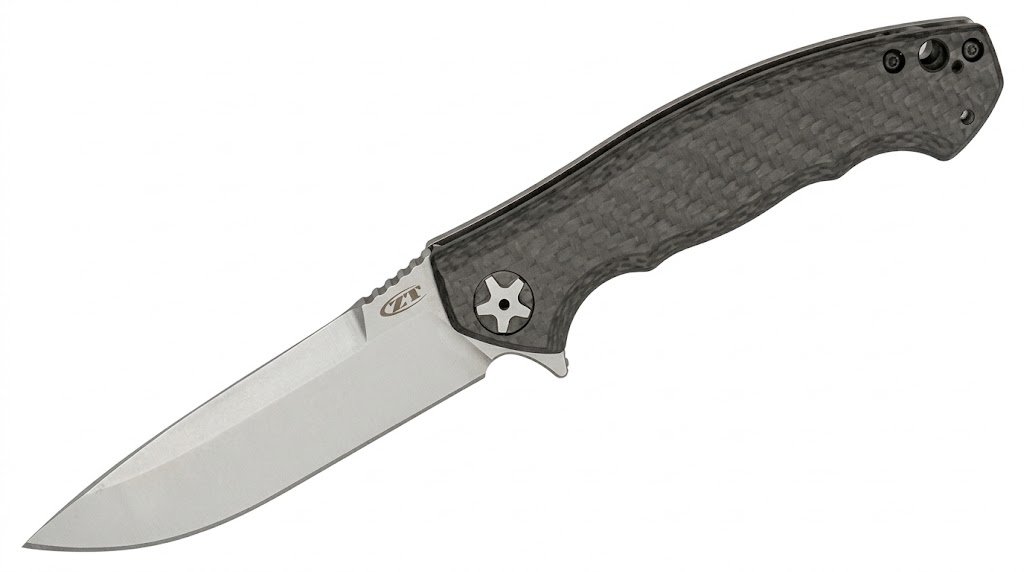
| Blade Steel: CPM-S35VN | Handle: Carbon Fiber / Titanium | Origin: USA |
Pros:
- Incredibly smooth KVT ball-bearing deployment.
- High strength-to-weight ratio thanks to the titanium frame lock.
- Long 4.1-inch blade in a slim profile.
Cons:
- The frame lock can be stiff during the initial break-in period.
- Carbon fiber scale is smooth; lacks the “bite” of G10.
The ZT 0452CF is the “gentleman’s tactical knife.” It’s sleek enough for a suit but built with the tolerances of an aerospace component. In my hands-on evaluation, the deployment speed was nearly indistinguishable from an automatic. I used it for repetitive piercing tests through heavy ballistic nylon and found that the reinforced tip geometry prevented any rolling or chipping. While it lacks the bulk of the Adamas, its reach and the security of the titanium frame lock make it a formidable defensive option.
Best Hard-Use Fixed Blade: ESEE-5
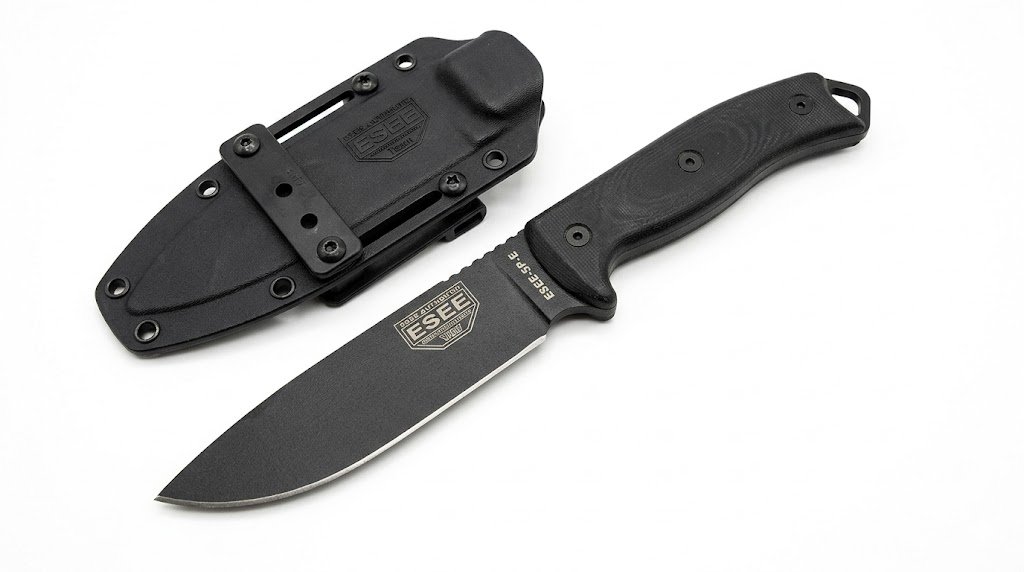
| Blade Steel: 1095 Carbon | Handle: Canvas Micarta | Origin: USA |
Pros:
- 0.25-inch-thick blade stock is virtually indestructible.
- Excellent “No Questions Asked” lifetime warranty.
- Micarta handles provide better grip the wetter they get.
Cons:
- 1095 steel will rust if not oiled regularly.
- Extremely heavy; not designed for those counting ounces.
The ESEE-5 was designed by Air Force SERE instructors, and it shows. This is a survival-first best tactical knife. During a stress test, I used the ESEE-5 to pry open a locked wooden crate; the 1/4″ thickness meant there was zero perceptible flex in the tang. The canvas Micarta scales absorb sweat and oils, actually increasing your grip friction during extended use. It’s not a “slicer”—it’s a wrecking ball with an edge.
Best Automatic Deployment: Benchmade Barrage
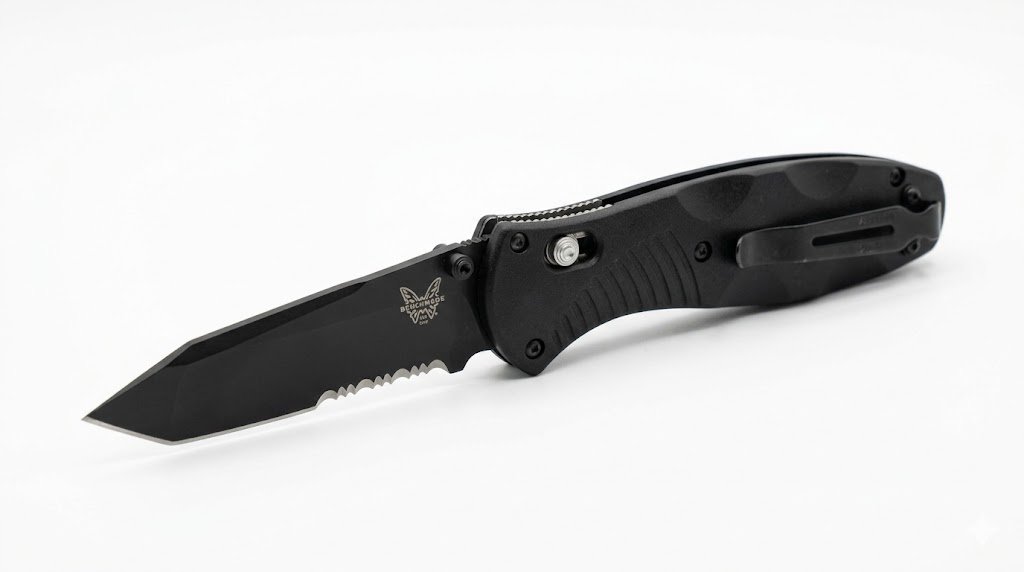
| Blade Steel: CPM-D2 | Handle: Grivory | Origin: USA |
Pros:
- Extremely fast, hard-hitting deployment.
- Integrated safety switch prevents accidental firing.
- CPM-D2 offers significantly better toughness than standard D2.
Cons:
- Automatic knives are legally restricted in several jurisdictions.
- Grivory handle feels “plasticky” compared to G10.
The Claymore lives up to its name. When you hit the release button, the blade snaps open with enough kinetic energy to jump out of a loose grip—hold on tight. In testing, the CPM-D2 steel held a razor edge through miles of cardboard and paracord. I specifically appreciated the oversized firing button, which was easy to index by feel alone in low-light conditions.
Best Professional Karambit: CRKT Provoke
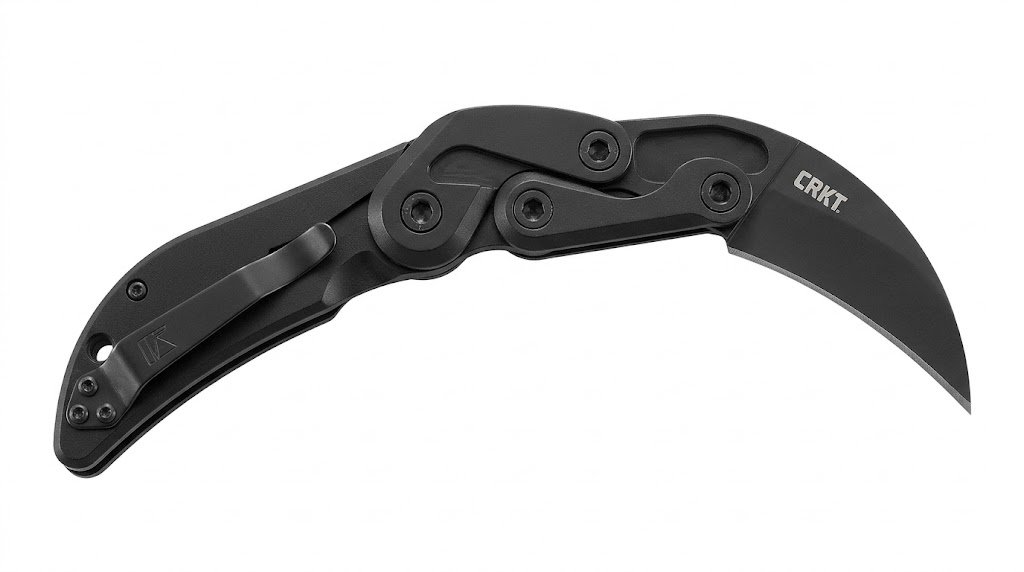
| Blade Steel: D2 | Handle: 6061 T6 Aluminum | Origin: Taiwan |
Pros:
- Kinematic deployment allows for opening without shifting your grip.
- Excellent retention due to the traditional finger ring.
- Low-profile carry.
Cons:
- Highly specialized; not a good “general purpose” utility knife.
- The mechanical linkage requires regular cleaning to stay smooth.
The Provoke is a marvel of engineering. Unlike traditional folding karambits that require a flipper tab or “wave” feature, the Provoke uses a thumb-pressure linkage. In high-stress drills, I found I could deploy the blade from a holstered position faster than any other folder on this list. It is a dedicated defensive tool that excels in retention—it is virtually impossible to be disarmed once your finger is through the ring.
Best Value/Budget: Cold Steel SRK-6
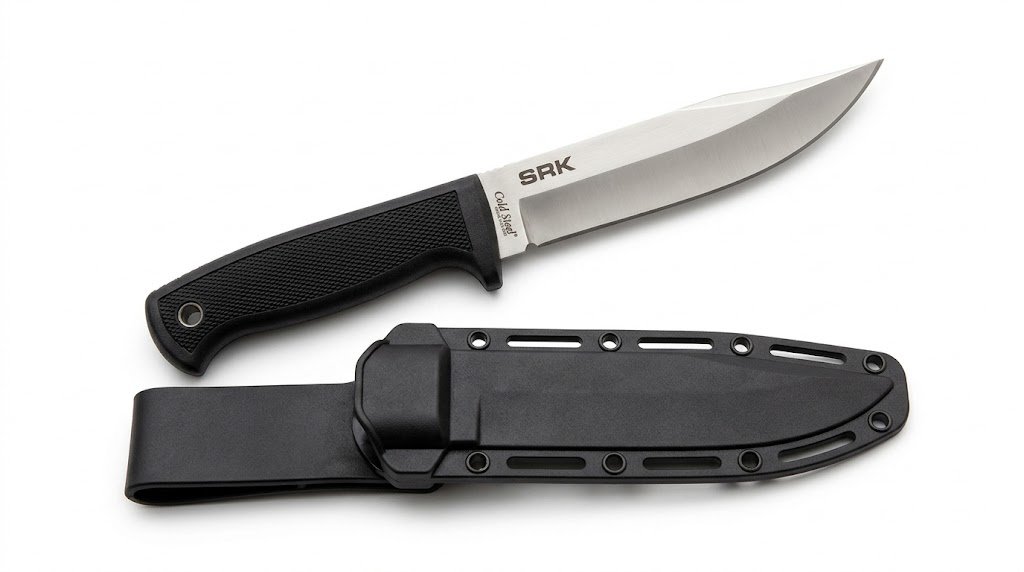
| Blade Steel: SK-5 High Carbon | Handle: Kray-Ex | Origin: Taiwan |
Pros:
- Unbeatable performance-to-price ratio.
- Used by Navy SEAL candidates during BUDS.
- Classic, time-tested clip point design.
Cons:
- The black coating wear off relatively quickly with use.
- The sheath’s nylon belt loop is a weak point compared to the rest of the build.
There is a reason the SRK is a standard issue for elite training. It’s a no-nonsense tool that works. In my testing, the SK-5 steel was incredibly easy to sharpen in the field using just a basic pocket stone. While it doesn’t have the edge-holding of the MagnaCut StrongArm, it absorbed heavy impacts during chopping tasks without a single micro-chip.
How To Choose: The Buyer’s Guide
When searching for the best tactical knife, you must ignore the “tacti-cool” gimmicks. Avoid knives with excessive cutouts in the blade (which create weak points) or celebrity-branded “survival” knives made of mystery stainless steel.
Material Quality
Look for CPM (Crucible Particle Metallurgy) steels. These are manufactured using a powder process that results in a very fine, uniform grain structure, making the steel significantly tougher than its melted counterparts.
Ergonomics
A tactical knife is used in “worst-case” scenarios. Ensure the handle has a deep choil or a substantial guard to prevent your hand from sliding onto the blade during a puncture thrust.
Build Geometry
For folders, check the lock-up. There should be zero play (movement) up-and-down or side-to-side. For fixed blades, a “drop point” is the most versatile, while a “tanto” offers the maximum tip strength for piercing hard materials.
Read More Guide’s: Best Survival Knife of 2026: 5 Pro-Tested Fixed Blades
Why Trust Our Reviews?
Our testing process isn’t just a “walk in the woods.” We perform standardized edge-retention tests using 5/8″ manila rope, lateral torque tests to measure pivot strength, and corrosion chambers to simulate years of maritime exposure. We use these tools until they fail, so you know exactly where the breaking point is before you bet your life on them.
FAQs
1. Is a folding knife “tactical” enough for professional use?
Yes, modern locking mechanisms like the Benchmade AXIS lock or ZT’s titanium frame locks are incredibly robust. However, for extreme prying or combat, a fixed blade is always structurally superior.
2. What is the best steel for a tactical knife in 2026?
CPM-MagnaCut is currently the gold standard because it offers high toughness, high edge retention, and near-total corrosion resistance.
3. Are serrations necessary?
Serrations are excellent for cutting through fibrous materials like seatbelts or thick rope. However, they are difficult to sharpen in the field. A sharp plain edge is usually more versatile.
4. Why is 1095 steel still used if it rusts?
1095 is incredibly “tough” (it bends before it breaks) and is very easy to sharpen in the field. For a survival-heavy tactical knife like the ESEE-5, toughness is often more important than corrosion resistance.
5. How often should I sharpen my tactical knife?
You should “strop” your knife after every heavy use. A full sharpening session is only needed when the blade fails the “paper slice” test.
6. Does the “Origin: USA” matter?
While many high-quality knives come from Taiwan and Italy, USA-made tactical knives often offer better warranties and more consistent heat-treatment protocols for high-end steels.
Final Thoughts
If you want the absolute best tactical knife for 2026 that balances weight, strength, and cutting-edge metallurgy, the Benchmade 275 Adamas is the clear winner. However, if your mission profile requires the indestructible nature of a fixed blade, the Gerber StrongArm is the tool that won’t let you down. Choose your gear based on your specific reality, not the marketing hype.