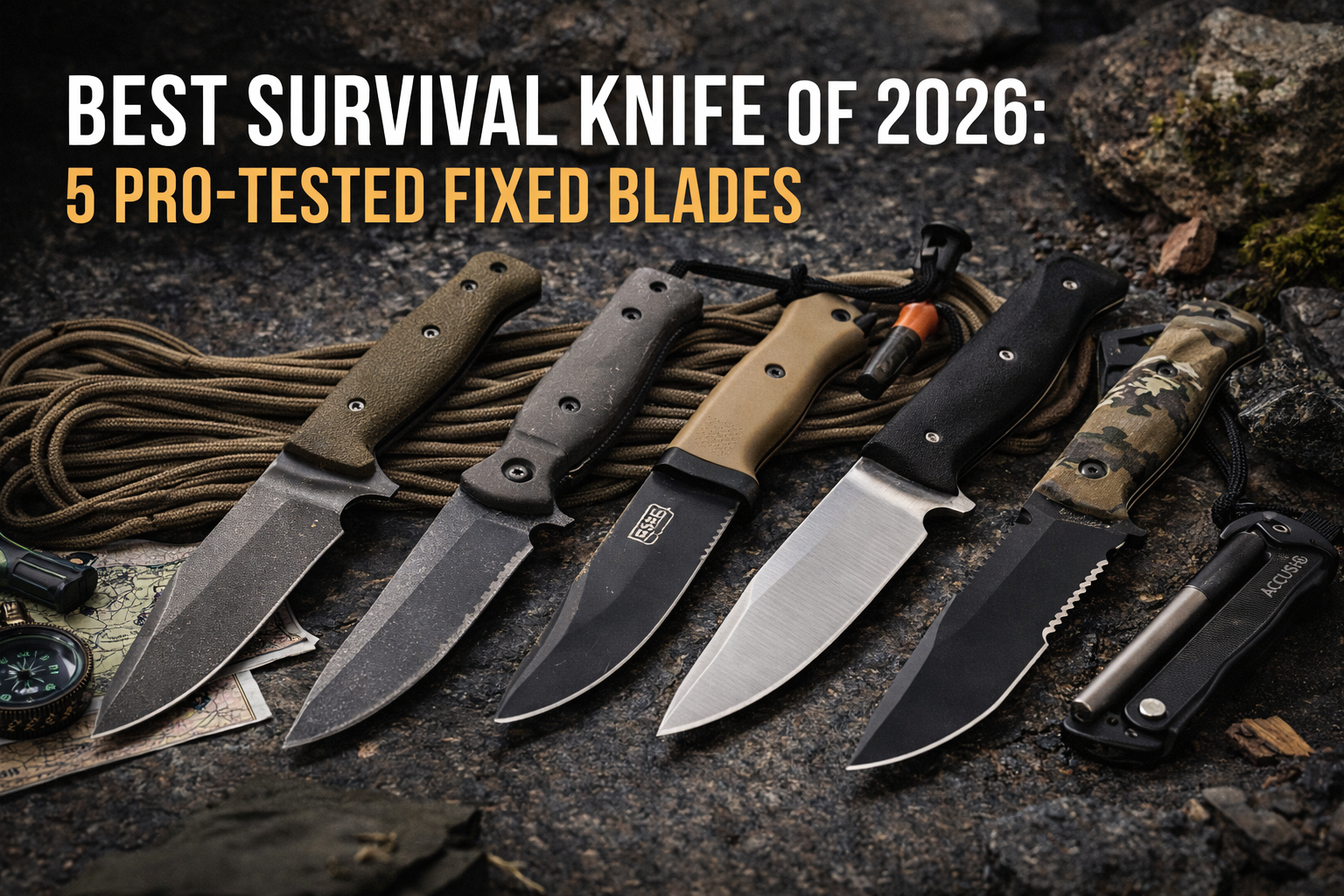
A survival knife isn’t just a tool; it’s your last insurance policy. If you’re stranded, your knife needs to do three things without failing: process wood for fire, build a shelter, and prep food. Most survival knife on the market are over-designed tactical toys that snap the moment you try to baton through a piece of oak.
We’ve spent months beating on the latest releases in the Appalachian backcountry and the high deserts. We looked for the “bombproof” build quality that separates a lifelong companion from a broken piece of steel. This guide focuses on the best survival knife options that prioritize durability, edge geometry, and field-repairability.
Quick Comparison: Top 5 Survival Knives
| Product Name | Blade Steel | Blade Length | Price Range | Best For |
| ESEE-5 | 1095 Carbon | 5.25″ | $$$ | Pure, unadulterated abuse |
| Morakniv Companion | 14C28N Stainless | 4.3″ | $$ | All-weather bushcraft |
| Fallkniven A1 | Laminate VG-10 | 6.3″ | Cold weather/Extreme duty | |
| TOPS Wilderness Guide | 1095 Carbon | 4.25″ | $$$ | Versatile woods-running |
| Cold Steel SRK | SK-5 / CPM-3V | 6.0″ | $$ | Tactical survival / SAR |
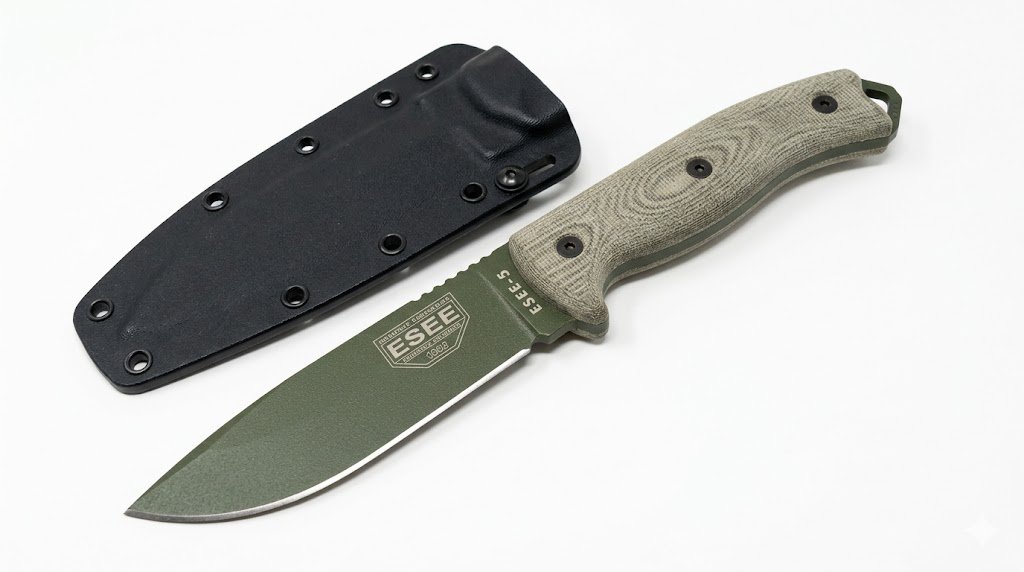
ESEE-5 — The Downed Pilot’s Tank
What makes it stand out:
Designed by military SERE instructors, the ESEE-5 is essentially a sharpened pry bar. At 0.25″ thick, it’s built to cut through the fuselage of a downed aircraft. While other knives focus on “slicey” geometry, the ESEE-5 focuses on never, ever breaking.
Key Specs:
- Steel type: 1095 High Carbon
- Weight: 16 oz
- Handle material: Micarta
- Sheath: Kydex with adjustable tension
Pros:
- Indestructible full-tang construction that can handle heavy batoning.
- Micarta handles provide a superior grip when your hands are covered in blood or oil.
- Legendary “No Questions Asked” lifetime warranty.
Cons:
- Extremely heavy; you will feel this on your belt after a few miles.
- 1095 steel will rust if you don’t keep it oiled in humid environments.
Hands-On Note:
In our testing, the ESEE-5 felt like an extension of an axe. I used it to split 4-inch logs for a signal fire, and the edge didn’t even show a micro-chip.
Best for: Users who want one tool that can handle prying, digging, and heavy chopping without a second thought.
Real-World Drawback:
The blade is so thick that it’s nearly impossible to use for delicate tasks like slicing a potato or skinning a small squirrel.
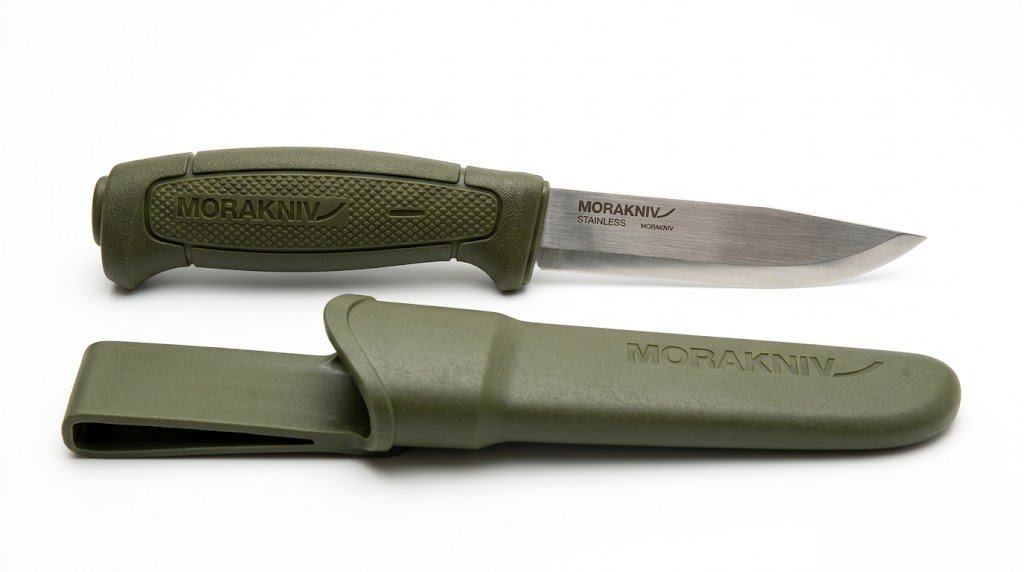
Morakniv Companion — The Swedish Powerhouse
What makes it stand out:
For years, Mora knives were known as great “budget” tools that lacked a full tang. The Garberg changed that. It is the best survival knife for those who want a Scandi-grind edge that excels at woodcraft but is tough enough for survival duty.
Key Specs:
- Steel type: 14C28N Stainless Steel
- Weight: 9.6 oz
- Handle material: Polyamide
- Sheath: Multi-mount polymer or Leather
Pros:
- 14C28N steel offers incredible corrosion resistance and is easy to sharpen on a rock.
- The 90-degree spine is the sharpest in the industry for throwing sparks from a ferro rod.
- Lightweight enough to carry every day without fatigue.
Cons:
- The handle can feel a bit small if you have extra-large hands.
- The factory polymer sheath feels a little “budget” compared to Kydex.
Hands-On Note:
The Scandi grind bites into wood unlike anything else. Making feather sticks for a fire is effortless with the Garberg compared to the thicker flat-ground knives on this list.
Best for: Bushcrafters and backpackers who need a reliable fire-starting and wood-processing tool.
Real-World Drawback:
The handle is a “closed” design, meaning you can’t easily swap out the scales if they get damaged.
TOPS Fieldcraft B.O.B. — The Bushcraft Specialist
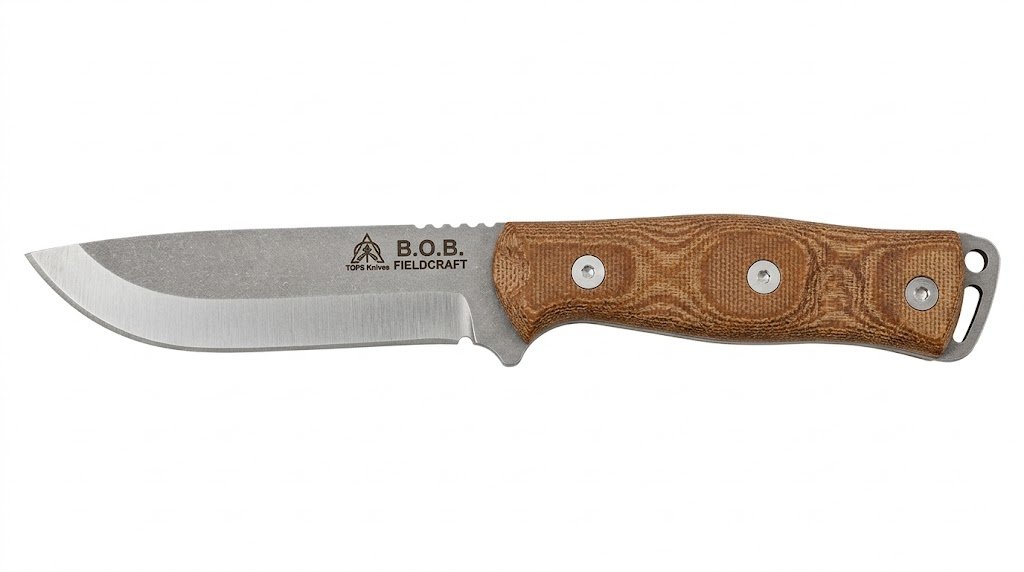
What makes it stand out: Designed by the “Brothers of Bushcraft,” this knife is a master of friction-fire. It features a dedicated “shango notch” on the spine for striking ferro rods and a bow-drill divot in the handle, making it a complete survival kit in one tool.
Key Specs:
- Blade length: 4.75 inches
- Steel type: 1095 High Carbon
- Weight: 9.6 oz
- Handle material: Canvas Micarta
- Sheath included: Kydex
Pros:
- The modified Scandi-grind offers the wood-biting power of a Mora with the strength of a thicker blade.
- Built-in bow drill divot is perfectly polished and works without adding friction to the spindle.
- Extremely comfortable handle with a deep finger choil for safety.
Cons:
- The black traction coating can create drag when slicing through deep wood.
- 1095 steel requires constant maintenance to prevent rust.
Hands-On Note: The thumb scallops on the handle are a game-changer. When I was doing fine carving for a trap trigger, those scallops gave me a level of control I usually only get from a dedicated carving knife.
Best for: Serious survivalists who prioritize fire-starting and advanced woodcraft skills.
Real-World Drawback: The whistle included with the sheath is a bit flimsy; I’d recommend replacing it with a dedicated signal whistle.
Cold Steel SRK — The Tactical Value King
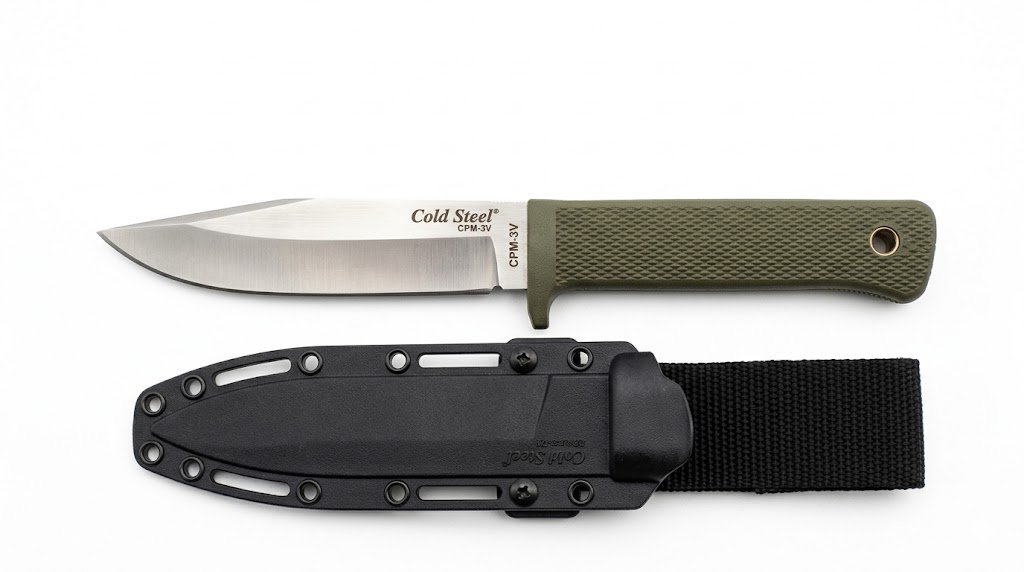
What makes it stand out: The SRK (Survival Rescue Knife) is standard issue for Navy SEAL candidates during BUDS training. It’s a no-nonsense, overbuilt blade that prioritizes reach and piercing power. For the price, it is easily the best survival knife for budget-conscious buyers.
Key Specs:
- Blade length: 6.0 inches
- Steel type: SK-5 High Carbon
- Weight: 8.2 oz
- Handle material: Kray-Ex (Rubberized)
- Sheath included: Secure-Ex
Pros:
- Excellent reach for defensive use or clearing light brush.
- The Kray-Ex handle is incredibly grippy even when soaked in water or mud.
- Very lightweight for a 6-inch blade, making it easy to strap to a pack.
Cons:
- The hollow grind is slightly weaker for heavy batoning compared to a flat or Scandi grind.
- The black Tuff-Ex finish wears off relatively quickly with use.
Hands-On Note: The balance on the SRK is neutral, which makes it feel much faster in the hand than the ESEE-5. It’s a great “jack-of-all-trades” blade.
Best for: Search and rescue personnel or those who want a military-proven blade on a budget.
Real-World Drawback: The rubberized handle can “hot spot” your hand during prolonged chopping sessions if you aren’t wearing gloves.
Fallkniven A1 — The Professional’s Choice
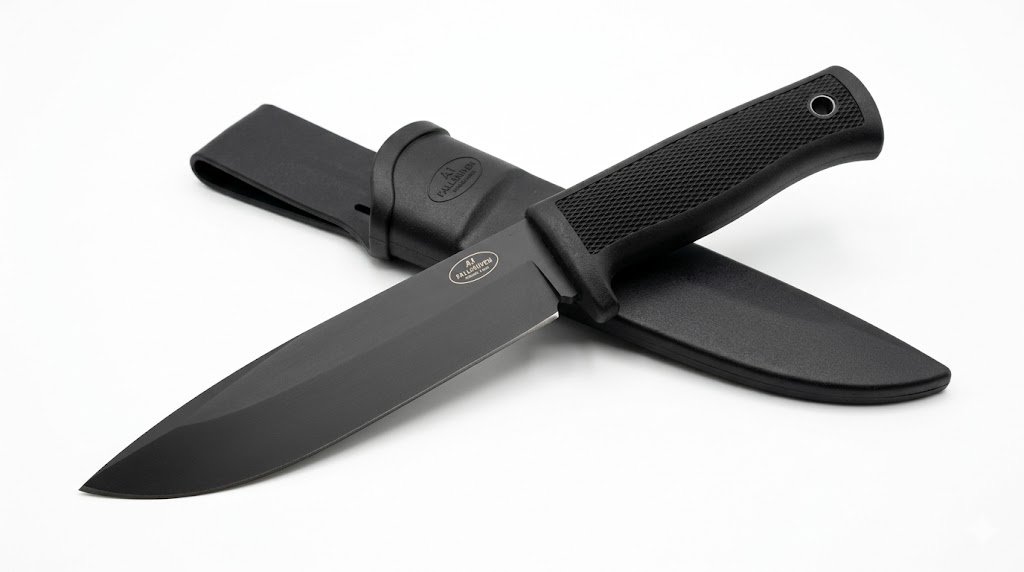
What makes it stand out:
Used by the Swedish Air Force, the A1 is a masterclass in laminate steel technology. It features a hard VG-10 core for edge retention, sandwiched between layers of softer, tougher steel to prevent snapping.
Key Specs:
- Steel type: Laminate VG-10
- Weight: 12 oz
- Handle material: Thermorun
- Sheath: Zytel
Pros:
- Exceptional performance in sub-zero temperatures; the Thermorun handle won’t sap heat from your hand.
- Convex grind provides a very strong edge that stays sharp longer than almost any other knife here.
- Incredible balance for a 6-inch blade.
Cons:
- The price is steep—this is an investment tool.
- Convex edges are harder to sharpen for beginners without specialized equipment.
Hands-On Note:
The A1 has a “premium” feel that is hard to describe until you hold it. It’s a clean, surgical tool that just happens to be able to chop through a 2×4.
Best for: Survivalists in wet, cold, or maritime environments where stainless steel is a requirement.
Real-World Drawback:
The Zytel sheath is noisy and “clacks” against your leg when walking.
Buyer’s Guide: What Makes a Survival Knife?
Full Tang: The Non-Negotiable
A “survival” knife that isn’t full tang (meaning the steel runs the entire length of the handle) is a folding knife waiting to happen. In a survival situation, you will likely need to “baton” your knife—driving it through wood using another log as a hammer. Only a full-tang knife can absorb that shock without the handle shattering.
High Carbon vs. Stainless Steel
- High Carbon (1095, SK-5): Tough as nails and easy to sharpen in the field. However, it will rust. You have to keep it dry and occasionally rub it with some fat or oil.
- Stainless (14C28N, VG-10, MagnaCut): Rust-proof and generally better for food prep. It’s harder to sharpen once it goes dull, but it stays sharp longer.
The “90-Degree Spine” Detail
Most people ignore the back (spine) of the knife. For survival, you want a “sharp” 90-degree spine. This allows you to scrape bark for tinder and strike a ferrocerium rod without using your sharpened edge. If the spine is rounded, you’re losing 50% of your fire-starting capability.
FAQ
What is the best blade length for survival?
The “sweet spot” is between 4 and 6 inches. Anything smaller struggles with wood processing; anything larger becomes a heavy, unwieldy machete that is useless for fine tasks like carving a trap trigger.
Can I use a folding knife for survival?
You can, but it’s a compromise. A folding knife has a mechanical pivot which is a major fail point. If a folder is all you have, use it carefully, but always prefer a fixed blade for your primary survival tool.
How do I maintain my survival knife in the field?
Keep it clean and dry. If you have a carbon steel blade, a bit of lip balm or bacon grease can serve as an emergency rust-preventative coating.
Should I get a serrated blade?
Generally, no. Serrations are great for cutting seatbelts or rope, but they are almost impossible to sharpen in the woods. A plain edge is more versatile for carving and wood processing.
Why are Micarta handles better than rubber?
Rubber (Kraton/Thermorun) is comfortable but can peel or “rot” over decades. Micarta is layers of fabric soaked in resin; it is virtually indestructible and actually gets grippier when it’s wet or bloody.
Read More Guide On: Best Henckels Knives: 5 Tested Sets That Won’t Fail You
Final Verdict
Choosing the best survival knife depends entirely on your environment and your willingness to maintain your gear. After punishing these blades in the field, two clear winners emerged for different types of survivors:
- For the average buyer: The Morakniv Garberg is the most practical choice. Its stainless steel construction means you don’t have to baby it in wet weather, and the Scandi grind makes fire-starting tasks like making feather sticks nearly effortless.
- For the serious/pro user: The ESEE-5 is the choice if you prioritize absolute mechanical reliability above all else. It is a heavy, overbuilt “tank” of a knife that can pry, chop, and split wood that would shatter lesser blades.
What’s the one knife you’d want if you were stranded on a deserted island? Let us know in the comments!