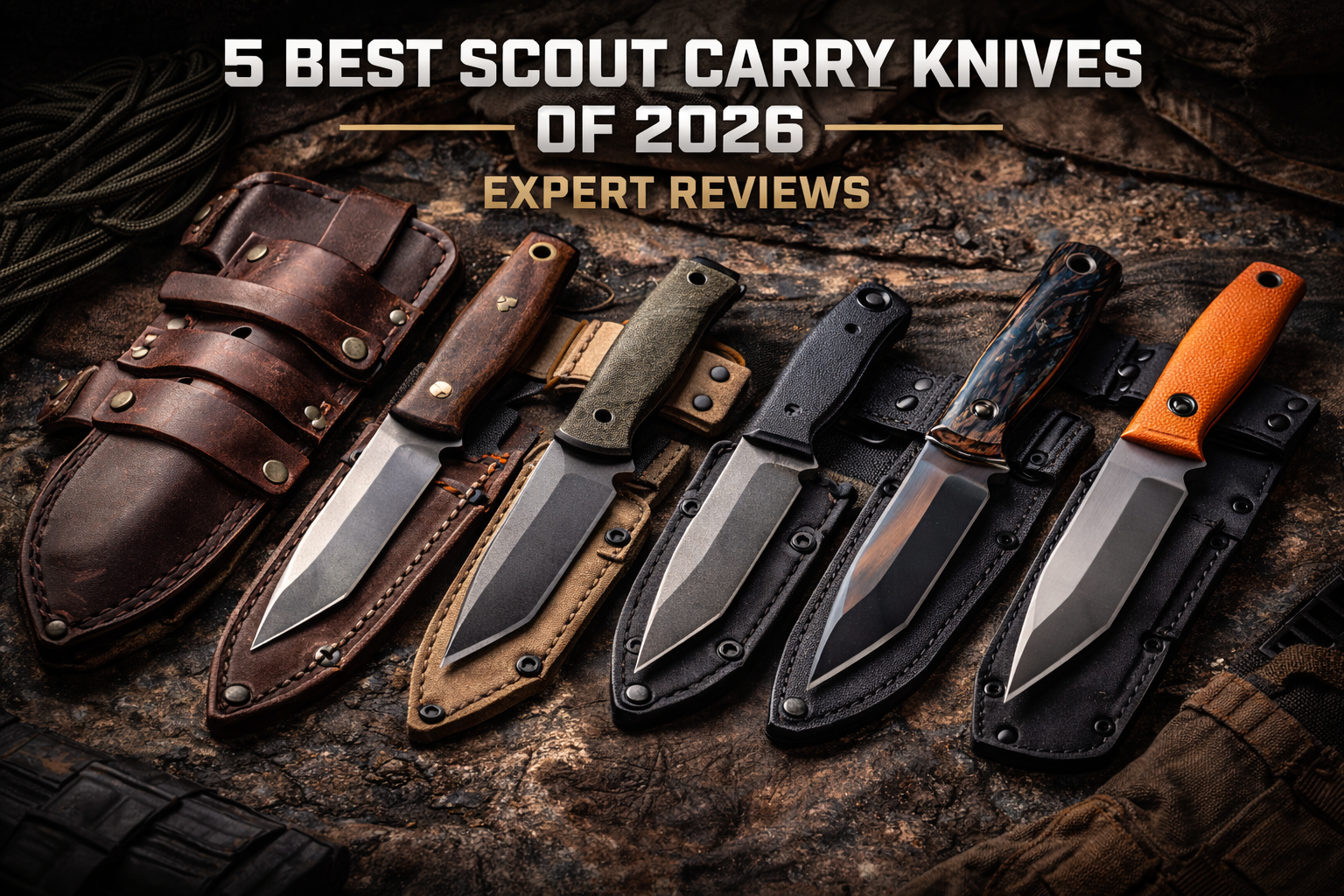
If you’ve ever hiked five miles with a fixed blade slapping against your thigh or tried to sit in a truck with a vertical sheath poking you in the ribs, you know why scout carry knife exists. Most knife reviewers focus on the steel, but for horizontal carry at the small of your back, the real battle is deployment and “printing.” In a decade of testing, I’ve found that a poorly designed scout carry setup is either impossible to re-sheath without looking like you’re trying to scratch an unreachable itch, or it sags so badly that it looks like you’re carrying a hidden barbell.
The biggest pain point I hear from readers is “gravity sag.” You mount a heavy knife horizontally on a standard leather belt, and within an hour, the weight pulls the belt down, exposing the handle. Or worse, the sheath clips are so wide they don’t lock onto a 1.5-inch belt, leaving the knife sliding around while you walk. We’ve spent months testing these blades in the field, focusing on the “small things”—the “click” of the Kydex, the reachability of the handle while wearing a backpack, and how the handle scales feel against your spine when you’re sitting down.
A scout carry knife should be a ghost. It shouldn’t interfere with your pack’s hip belt, and it shouldn’t dig into your lower back when you’re driving. We’ve filtered the market down to five blades that actually solve these mechanical problems, rather than just looking good in a tactical catalog.
Top Picks For 2026
| Product | Blade Steel | Blade Length | Price Category | Best For |
| White River Backpacker | CPM-S35VN | 3.0″ | Premium | Ultralight / Hiking |
| ESEE Izula-II | 1095 Carbon | 2.63″ | Mid-Range | Survival / Reliability |
| Gerber Principle | 420HC | 3.1″ | Budget | Bushcraft / General Use |
| Boker Arbolito Hunter | N695 | 3.75″ | Mid-Range | Traditional / Hunting |
| Bradford Guardian 3 | M390 | 3.0″ | Premium | High-End EDC |
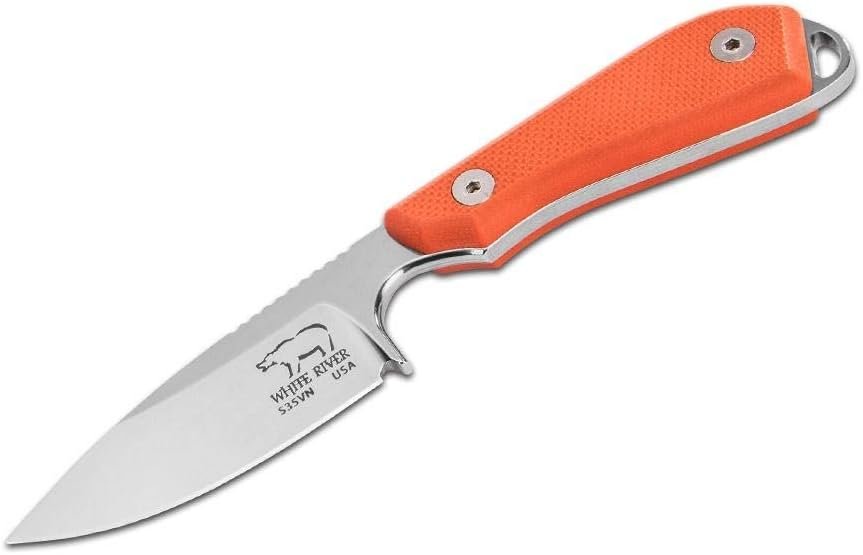
1. The Precision Tool: White River
The Big Win
The Backpacker is the most refined horizontal carry knife on the market. It’s light enough that it doesn’t cause belt-sag, and the Kydex sheath is the tightest, most secure design I’ve ever tested. It stays exactly where you put it.
- Key Specs:
- Blade Steel: CPM-S35VN
- Weight: 2.5 oz
- Handle: Paracord Wrap (or G10)
- Sheath: Kydex with multi-position link
- Pros: Incredible edge retention; small enough to not “print” under a t-shirt; includes a fire starter notch.
- Cons: The paracord wrap can get “grimy” after heavy use in the mud.
Hands-on Note: The finger choil is deep. When I was doing detail work—like making feather sticks—my hand felt totally locked in. It gives you the control of a surgical scalpel with the strength of a fixed blade.
The Catch: The sheath’s belt loop is a “soft” loop. While it’s secure, it can be a bit fiddly to snap shut if you’re trying to put it on while already wearing your pants.
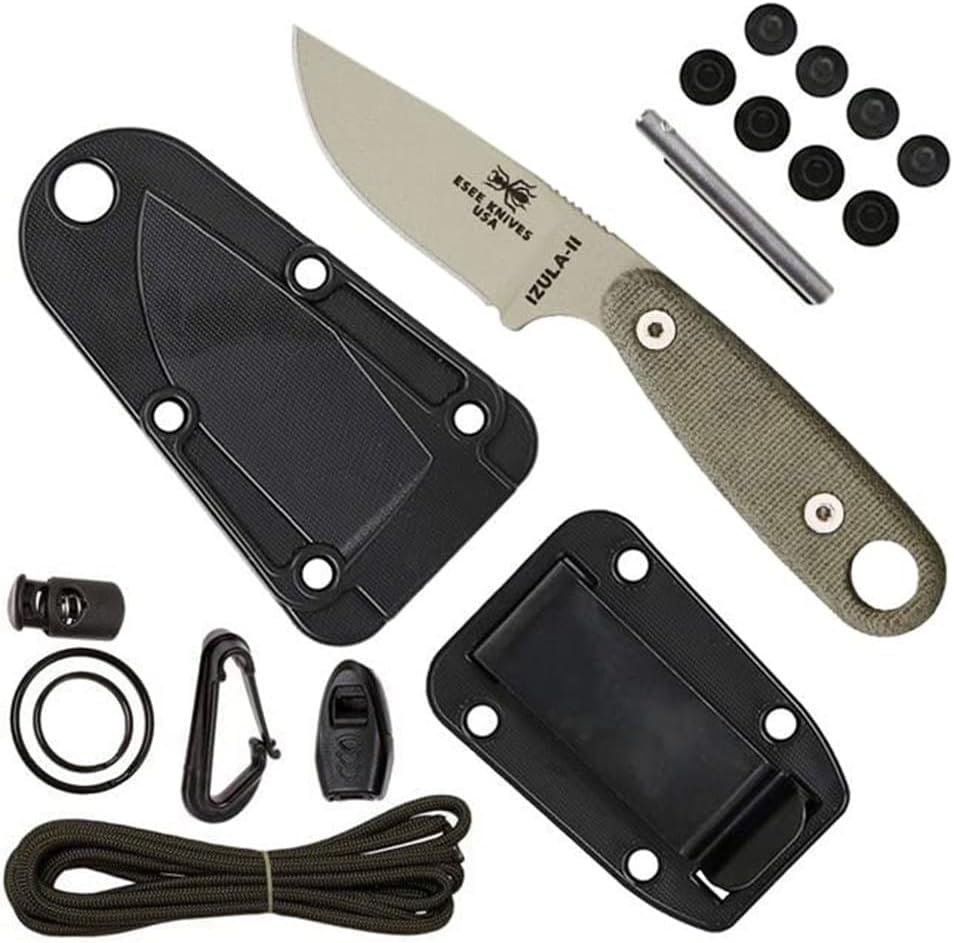
2. The Survivalist’s Choice: ESEE Izula-II
The Big Win
The Izula-II is the industry standard for a reason. The handle is 1/2-inch longer than the original Izula, giving you a full four-finger grip. ESEE’s 1095 heat treat is legendary for its toughness; you can beat on this knife without fear of it snapping.
- Key Specs:
- Blade Steel: 1095 Carbon Steel
- Weight: 3.2 oz
- Handle: Micarta Scales
- Finish: Textured Powder Coat
- Pros: Unbeatable warranty (break it, they replace it); very easy to sharpen in the field.
- Cons: Carbon steel will rust if you don’t oil it, especially at the small of your back where sweat accumulates.
Hands-on Note: The Micarta handles actually get grippier when they’re wet. In our “kitchen trials” where we used it with oily hands, it stayed perfectly seated.
The Catch: The powder coating is quite thick and “rough.” It creates a lot of drag when you’re trying to slice through something like cardboard or dense foam.
3. The Bushcraft Entry: Gerber Principle
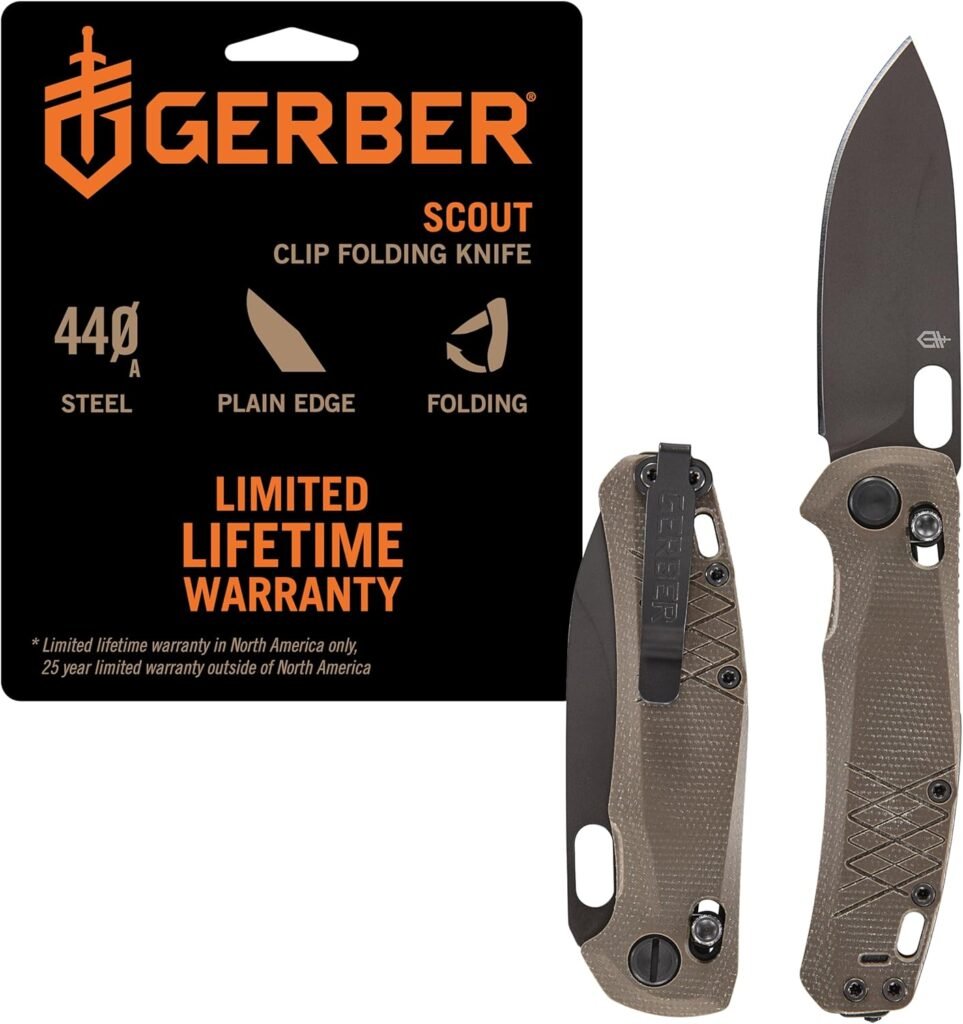
The Big Win
The Principle uses a Scandinavian (Scandi) grind, which is the gold standard for woodcarving. Unlike many scout carry knives that are “tactical,” this is a pure working tool designed for building fires and traps.
- Key Specs:
- Blade Steel: 420HC
- Weight: 3.7 oz
- Handle: Rubberized Overmold
- Sheath: Triple-mounting system
- Pros: Extremely comfortable “90-degree” spine for striking ferro rods; very affordable.
- Cons: 420HC steel is soft and will need sharpening after a long day of woodcraft.
Hands-on Note: The sheath is the real star here. It’s modular and specifically designed for horizontal carry with a “locking” mechanism that prevents the knife from being bumped out by a backpack.
The Catch: The handle is relatively thin. If you have massive hands, you might find it difficult to get enough leverage for heavy “power cuts.”
4. The Classic Hunter: Boker Arbolito Hunter
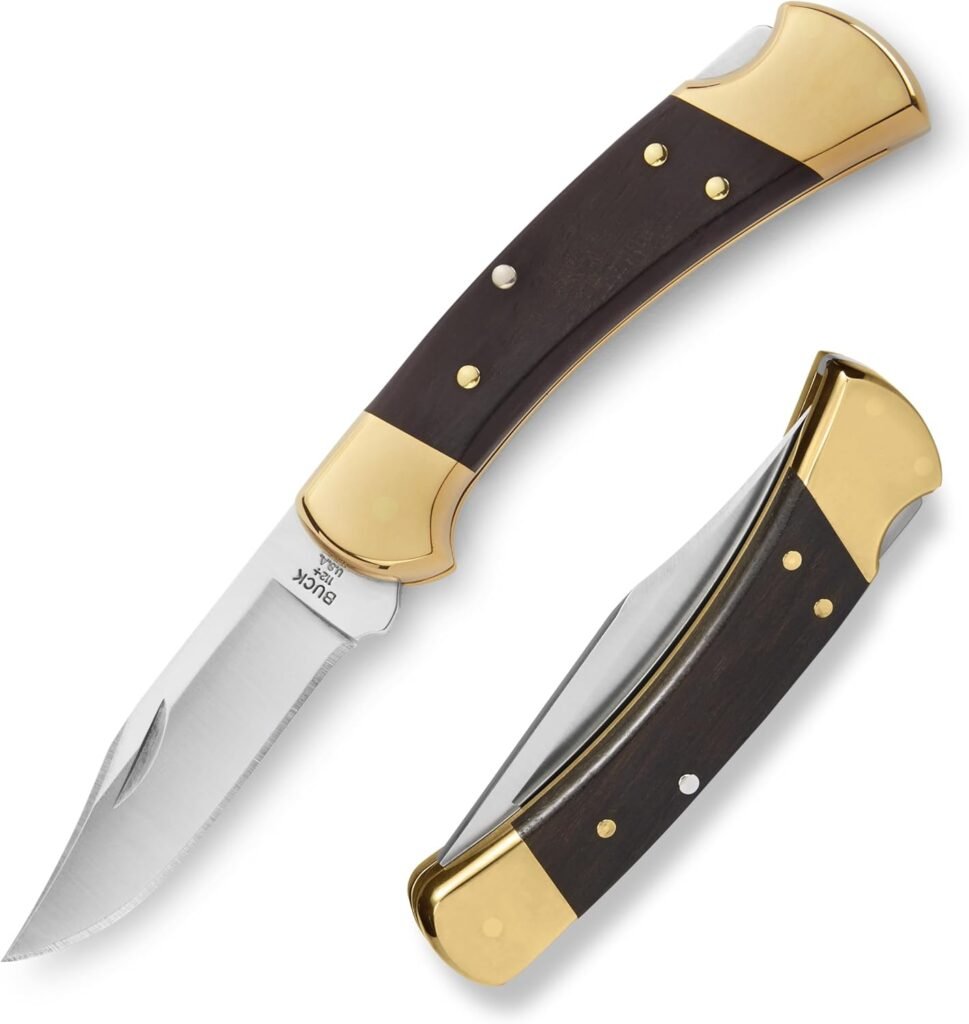
The Big Win
If you prefer leather over Kydex, the Arbolito is the one. It’s a traditional hunter that looks sophisticated but is built for the rugged conditions of the Argentinian outback.
- Key Specs:
- Blade Steel: N695 (similar to 440C)
- Weight: 5.4 oz
- Handle: Guayacan Ebony Wood
- Sheath: Premium Leather (Horizontal)
- Pros: Beautiful aesthetic; N695 steel is highly corrosion-resistant; excellent balance.
- Cons: Leather sheaths “break in” over time and eventually lose some retention compared to Kydex.
Hands-on Note: The taper on this blade is beautiful. It’s thick at the spine for strength but thins out to a very fine edge, making it the best “slicer” on this list.
The Catch: Because it uses a leather belt loop, the knife sits slightly further away from your body than Kydex. It “prints” more through clothing than the others.
5. The Premium EDC: Bradford Guardian 3
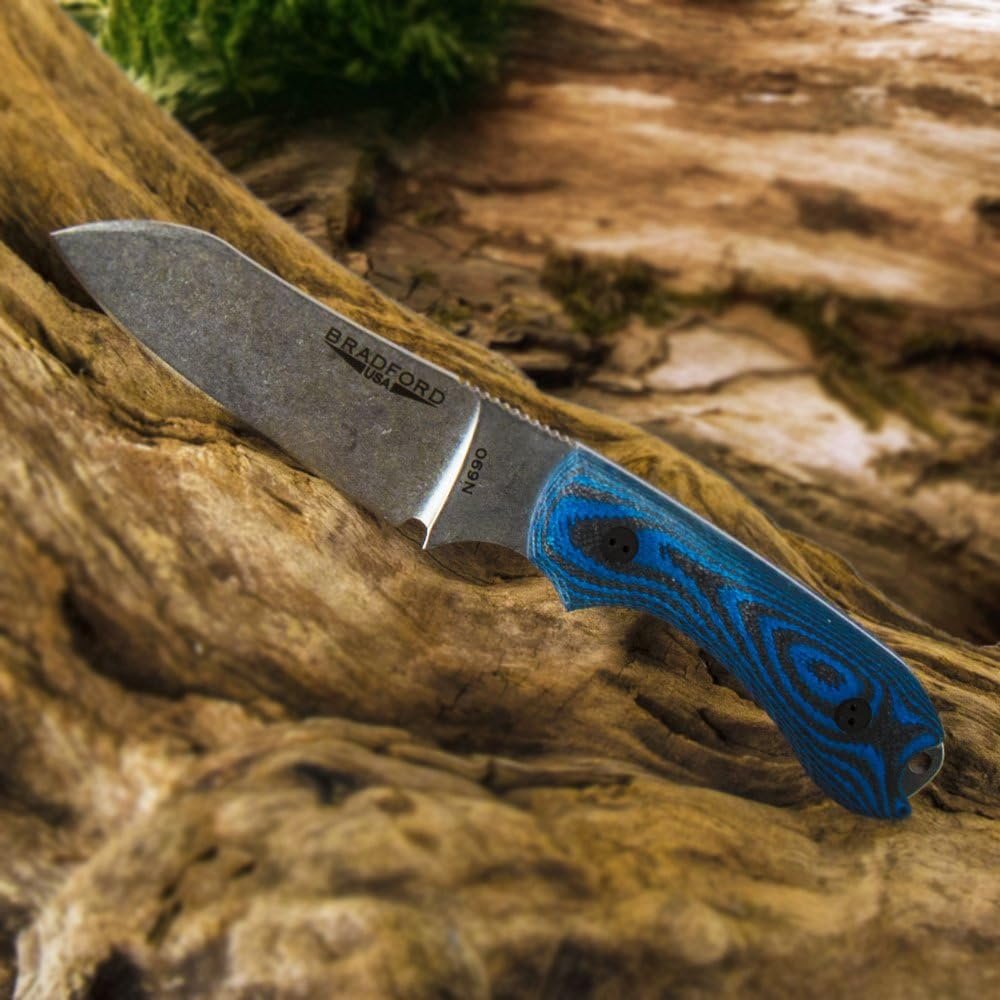
The Big Win
The Guardian 3 is designed specifically for horizontal front-carry (near the belt buckle), but it excels at the small of the back too. The M390 steel is a “super steel” that will stay sharp for months of daily use.
- Key Specs:
- Blade Steel: M390
- Weight: 3.5 oz
- Handle: 3D Contoured G10
- Sheath: Leather with plastic insert
- Pros: Top-tier steel; the 3D contoured handle is the most comfortable on the list; made in the USA.
- Cons: The sharpening choil (the little notch at the base) can snag on strings or fabric.
Hands-on Note: I noticed that the way the handle is weighted, it naturally wants to fall into your hand when you reach back for it. The ergonomics are master-class level.
The Catch: The leather sheath is “tight” for a long time. Expect a significant break-in period where you’ll need two hands to get the knife out.
How To Choose The Best Scout Carry Knife
Belt Width and Stability
Most scout carry sheaths come with clips designed for 1.5-inch or 1.75-inch belts. If your belt is a standard 1.25-inch dress belt, the knife will tilt and sag. I always recommend using a stiff “gun belt” or a dedicated hiking belt. If the sheath doesn’t fit tightly, the handle will tip downward, making it harder to draw and causing it to poke your spine.
Front vs. Back Scout Carry
You have two options for horizontal carry: “Small of the Back” (SOB) or “Front Cross-Draw.”
- Back Carry: Better for concealment and keeping the front of your waist clear for bending over. However, it’s harder to re-sheath.
- Front Carry: Much faster to access and safer to re-sheath because you can see the opening. The Bradford Guardian 3 is the king of this style.
Handle Profile and “Printing”
The thicker the handle, the more it will “print” or bulge under your shirt. If you’re carrying for self-defense or want to remain discreet, choose a skeletonized handle (like the White River) or a knife with flat G10 scales. Contoured handles (like the Boker) feel better in the hand but are much harder to hide.
Read Our More Guide: The Best Tanto Knives of 2026: Tactical Precision and Hard-Use Reality
FAQ
Is scout carry safe for your spine?
Yes, provided the knife is small and the sheath is positioned correctly. Pro-tip: Never carry a massive 10-inch “Rambo” knife horizontally over your spine; if you fall on your back, it can cause serious injury. Stick to blades under 4 inches for scout carry.
Why do people prefer horizontal carry over vertical?
This depends on your activity. People who sit in vehicles or wear backpacks with hip belts prefer horizontal because it doesn’t get in the way. Pro-tip: If you find the knife digging into your back while driving, move it slightly to the “11 o’clock” or “1 o’clock” position on your front hip.
Does scout carry work with a backpack?
It depends on where your pack’s hip belt sits. Pro-tip: If your pack has a heavy padded hip belt, you should mount your scout carry knife to the pack’s webbing rather than your own belt to prevent the two from rubbing together and causing blisters.
Can I turn any knife into a scout carry?
No, not without a compatible sheath. Pro-tip: Look for sheaths with “Pull-the-Dot” loops or “UltiClips.” If your current sheath has “Taco” style eyelets, you can usually buy a set of “Beta Loops” to convert it to horizontal carry for under $15.
Is it hard to re-sheath a knife behind your back?
This depends on the sheath material. Pro-tip: Kydex is much easier to re-sheath blindly because you can feel and “hear” the knife click into place. Leather is more difficult because the opening can compress when the knife is removed.
Conclusion
The “perfect” scout carry knife is one that you forget you’re wearing until the moment you need it. It shouldn’t sag, it shouldn’t rattle, and it shouldn’t require a mirror to put away.
- For the Average User: Get the Gerber Principle. The modular sheath system is the most “foolproof” for beginners, and the rubberized grip makes it incredibly safe for general chores.
- For the Pro User: Invest in the White River Backpacker. The S35VN steel and the precision-molded Kydex offer a level of security and performance that justifies every penny of its price tag.