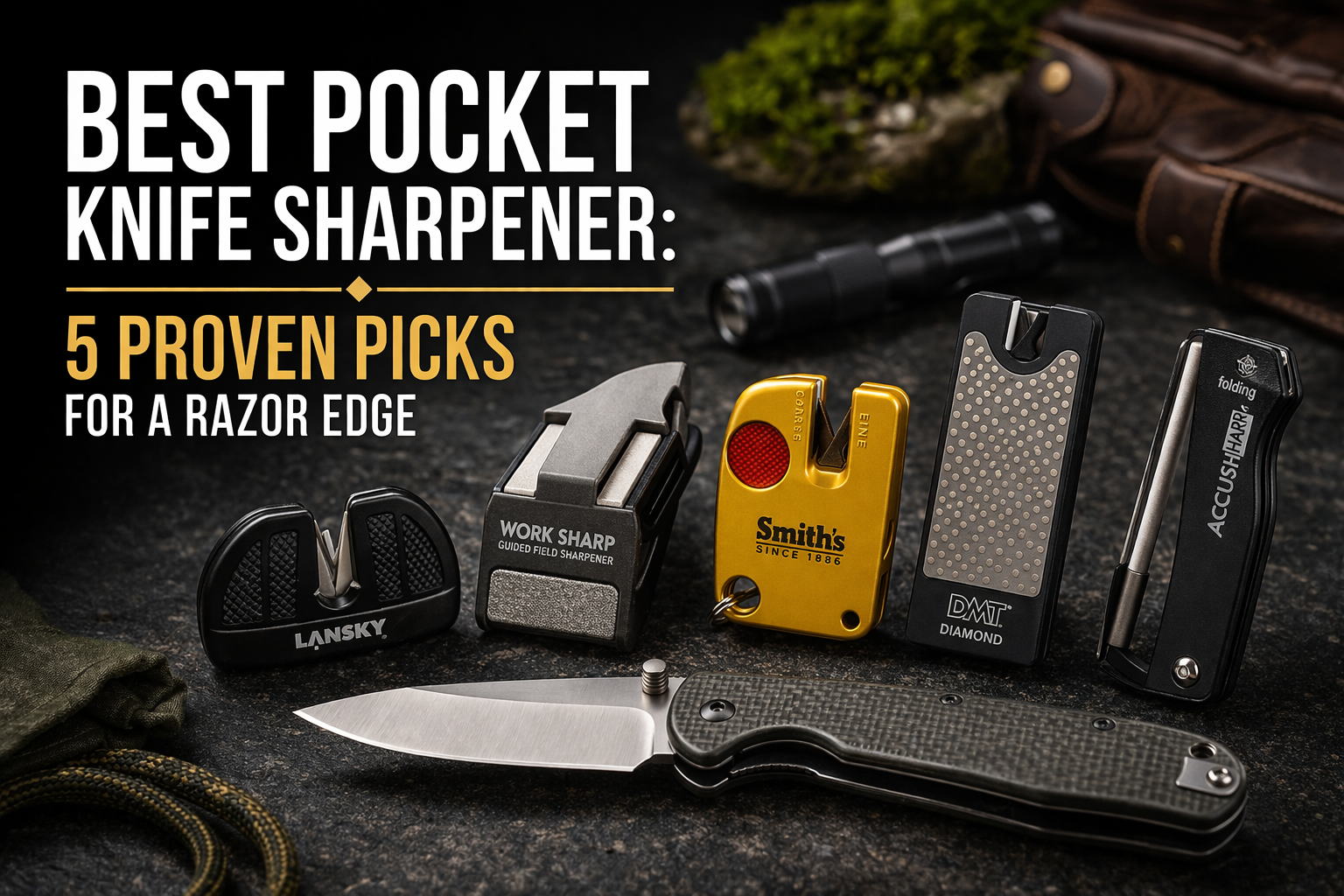
A dull blade is a dangerous tool. You’ve likely felt that frustrating “skating” sensation when a knife fails to bite into a simple piece of paracord. Most portable sharpeners are either bulky desk weights or cheap “carbide munchers” that eat your steel for breakfast. We spent weeks testing gear in the field to find the best pocket knife sharpener that actually fits in a pocket and restores a shaving-sharp edge without ruining your blade’s geometry.
In our field trials, we ignored the marketing fluff. We tested these on everything from budget 8Cr13MoV to high-end S30V super-steels. A true pocket sharpener needs to balance weight, abrasive quality, and ease of use when your hands are cold or wet. This guide focuses on tools that provide a consistent angle and a repeatable edge in real-world conditions.
Quick Comparison: Top 5 Pocket Sharpeners
| Product Name | Abrasive Types | Weight | Price Range | Best For |
| Work Sharp Guided Field Sharpener | Diamond/Ceramic/Leather | 4.6 oz | $$ | All-in-one maintenance |
| Spyderco Doublestuff 2 | Medium/Fine Ceramic | 2.4 oz | $$$ | Experienced sharpeners |
| Smith’s PP1 Pocket Pal | Carbide/Ceramic/Diamond | 0.8 oz | $ | Budget EDC/Emergency |
| DMT Diafold Magna-Guide | Double-sided Diamond | 4.1 oz | $$$ | Reprofiling damaged edges |
| Lansky QuadSharp | Carbide/Ceramic (4 Angles) | 2.4 oz | $$ | Beginners & Tactical folders |
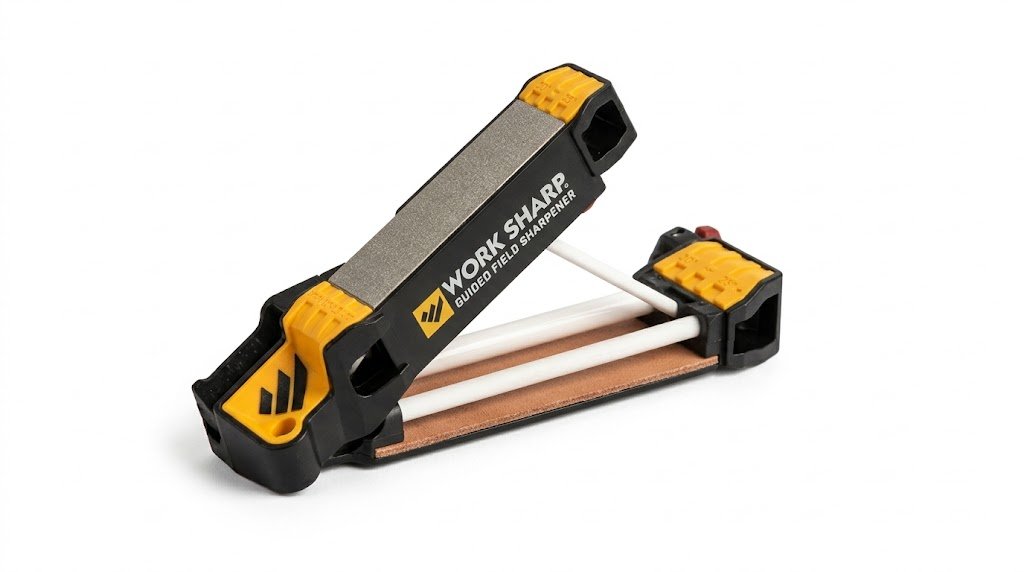
Work Sharp Guided Field Sharpener — The Gold Standard
What makes it stand out:
Most portable tools compromise on features, but this is a full sharpening station that fits in a cargo pocket. The built-in 20° and 25° angle guides take the guesswork out of the process, ensuring you don’t round off your tip.
Key Specs:
- Abrasives: Coarse Diamond, Fine Diamond, Ceramic, Leather Strop
- Angle Guides: 20° and 25°
- Weight: 4.6 oz
- Length: 6.75 inches
- Special Feature: Serration sharpener and fish hook groove
Pros:
- Integrated guides make it nearly impossible to mess up your edge angle.
- The leather strop is loaded with compound for a true mirror finish.
- Magnetized plates stay secure but swap out easily for cleaning.
Cons:
- Too heavy for a standard jeans pocket; better suited for a pack or jacket.
- The ceramic rod can be tricky to rotate with gloves on.
Hands-On Note:
The magnets holding the diamond plates are surprisingly strong. I dropped this on a gravel path during a hike, and the plates didn’t even budge.
Best for: Serious outdoorsmen who need one tool to handle everything from hatchets to fine folders.
Real-World Drawback:
The coarse diamond plate is very aggressive and will remove a lot of steel if you aren’t careful with your pressure.
Spyderco Doublestuff 2 — The Precision Specialist
What makes it stand out:
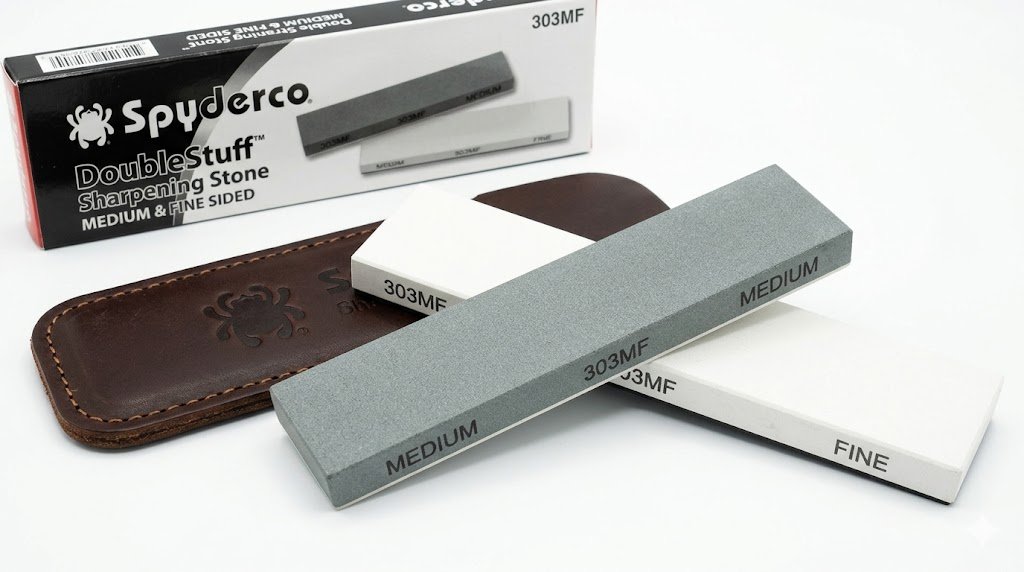
This is for the person who treats their knife like a surgical instrument. Unlike diamond plates that wear down, these high-alumina ceramic stones stay flat forever and provide an incredibly refined edge.
Key Specs:
- Abrasives: Medium (Brown) and Fine (White) Ceramic
- Casing: Leather pouch included
- Weight: 2.4 oz
- Length: 5 inches
- Special Feature: Grooved side for pointed objects
Pros:
- Provides a much finer finish than any diamond plate on this list.
- Slim profile disappears in a pocket or an organizer pouch.
- No oil or water required; just use it dry and wipe it clean.
Cons:
- No built-in angle guides; requires a steady hand.
- Ceramic can shatter if dropped on concrete.
Hands-On Note:
The transition between the medium and fine sides is seamless. When I used this to touch up my Paramilitary 2, the ceramic felt “creamy” rather than gritty, indicating high-quality grit consistency.
Best for: EDC enthusiasts who already have good muscle memory for maintaining a consistent sharpening angle.
Real-World Drawback:
It is slow at removing chips; if your blade is truly hammered, you’ll be scrubbing for an hour.
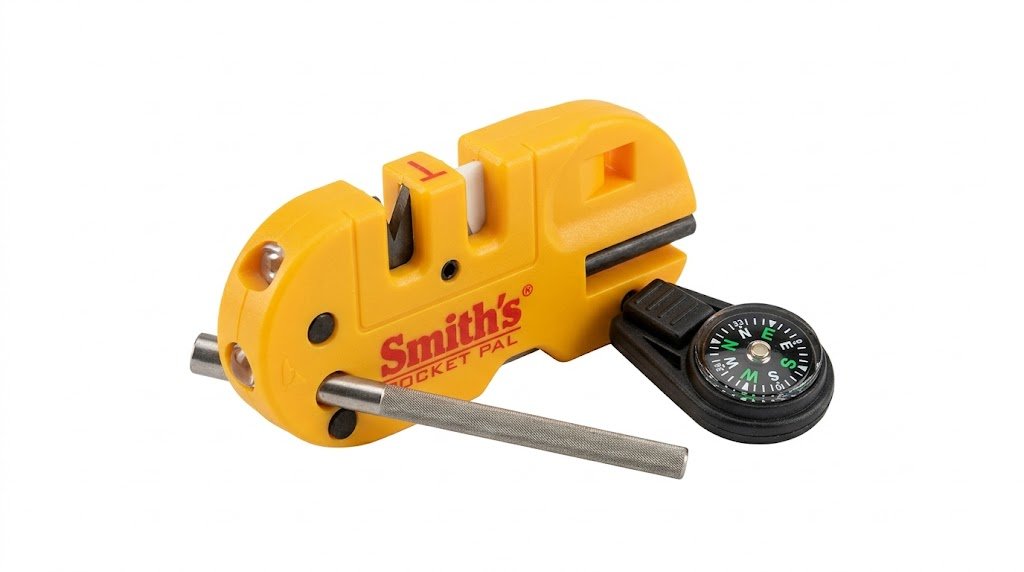
Smith’s Pal X2 — The Budget Lifesaver
What makes it stand out:
At roughly the size of a Ford key fob, this is the best pocket knife sharpener for people who forget they’re carrying a sharpener until they need it. It’s a “pull-through” style, which we usually dislike, but the addition of a tapered diamond rod makes it surprisingly versatile.
Key Specs:
- Abrasives: Carbide (Coarse), Ceramic (Fine), Diamond Rod
- Body: Plastic with lanyard hole
- Weight: 0.8 oz
- Length: 3.5 inches
- Special Feature: Fold-out tapered rod for serrations
Pros:
- Weighs less than an ounce, making it the king of portability.
- The tapered rod is excellent for fixing “recurave” blades that flat stones can’t touch.
- Extremely affordable for a backup tool.
Cons:
- Pull-through carbide inserts can leave a “toothier,” less refined edge.
- Not designed for long-term use on high-end tool steels.
Hands-On Note:
The fold-out rod has a bit of play in the hinge. It doesn’t affect the sharpening, but it makes the tool feel a bit less premium than the Work Sharp.
Best for: Casual users or as a secondary sharpener tucked into an emergency kit.
Real-World Drawback:
The carbide “V” slot creates a lot of metal shavings, which can get messy if you’re sharpening indoors.
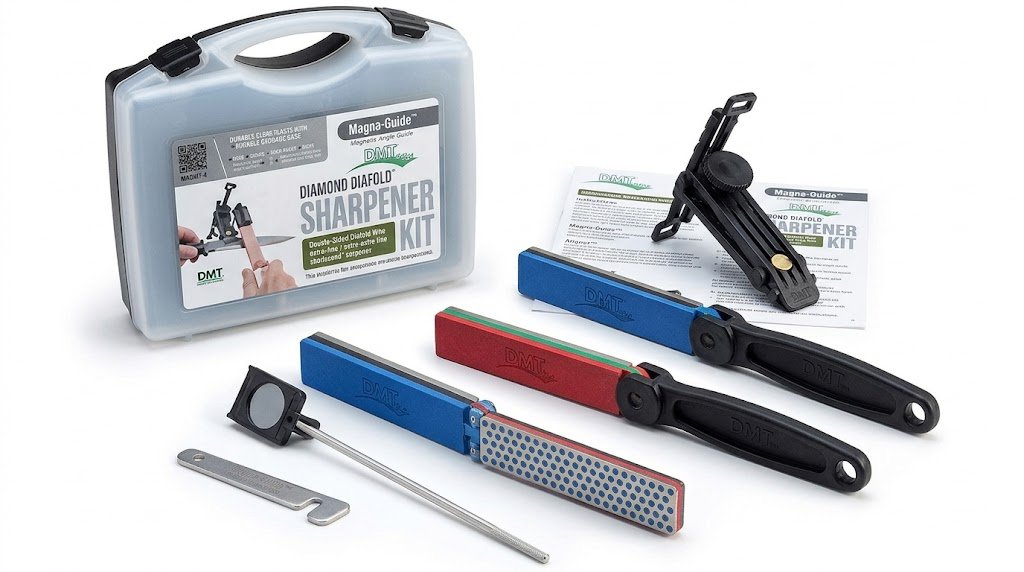
DMT Diafold Magna-Guide — The Repair Tool
What makes it stand out:
DMT is the king of monocrystalline diamonds. This tool features a folding handle that protects the sharpening surface and a magnetic guide system that allows you to set a precise angle every time.
Key Specs:
- Abrasives: Two-sided Diamond (Coarse/Fine)
- Handle: Butterfly-style folding
- Weight: 4.1 oz
- Length: 9.5 inches (Open)
- Special Feature: Aligner guide for fixed-angle sharpening
Pros:
- Diamond surface stays perfectly flat, unlike whetstones.
- The folding handles provide a large, safe grip area for your hands.
- Fast metal removal for repairing rolled edges or minor chips.
Cons:
- The guide system is a bit fiddly to set up in the dark.
- The clear plastic guide feels brittle compared to the rest of the tool.
Hands-On Note:
The “polka-dot” pattern on the plates is designed to catch metal swarf. It works perfectly; I didn’t have to stop once to wipe the plate during a full reprofiling session.
Best for: Users who need to fix damaged blades in the field or at a campsite.
Real-World Drawback:
The magnetic guide can attract metal dust, which may scratch the primary grind of your knife if you don’t wipe it frequently.
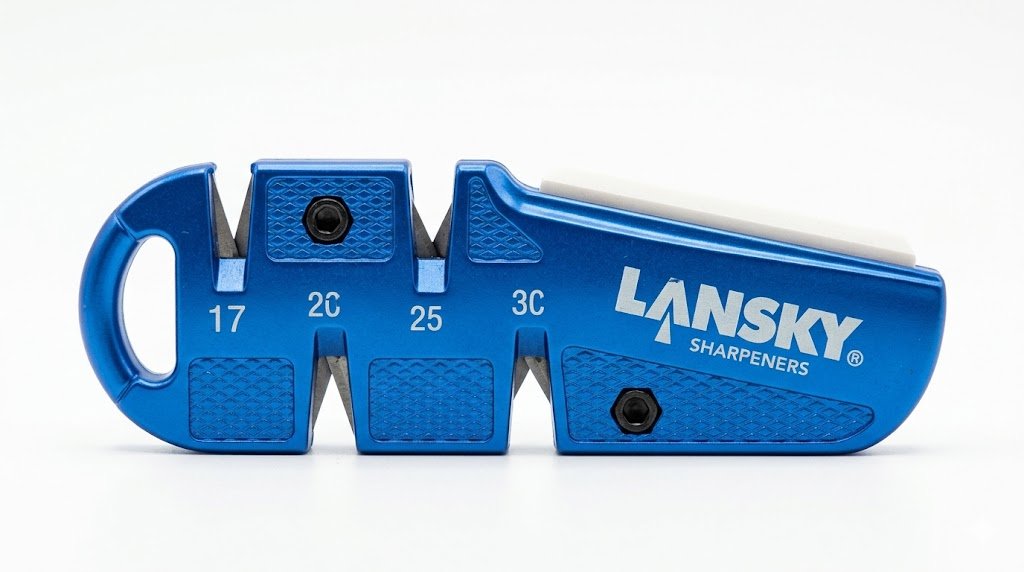
Lansky QuadSharp — The Tactical Choice
What makes it stand out:
If you own multiple knives with different edge angles, this is your solution. It features four different “V” slots (17°, 20°, 25°, and 30°) in a rugged, full-metal housing. It’s essentially a portable version of the famous Lansky Controlled Angle System.
Key Specs:
- Abrasives: 4 Carbide slots, 1 Ceramic benchstone
- Body: Heavy-duty metal
- Weight: 2.4 oz
- Length: 4.3 inches
- Special Feature: Preset angles for various knife styles
Pros:
- Metal construction feels indestructible in the hand.
- Covers almost every standard factory edge angle.
- Ceramic strip on the side allows for freehand finishing.
Cons:
- Harder to get into the “belly” of deeply curved blades.
- The carbide slots are aggressive and can leave a rough edge.
Hands-On Note:
The weight-to-size ratio is impressive. It feels like a solid bar of steel, which gives you a lot of confidence when applying pressure.
Best for: Professionals or hobbyists who carry different styles of knives and need a “one size fits all” angle solution.
Real-World Drawback:
The ceramic polishing strip is quite narrow, making it difficult to use on larger fixed-blade knives.
How to Choose the Best Pocket Knife Sharpener
Abrasive Material: Diamond vs. Ceramic
Most people assume diamond is always better because it’s harder. While diamond plates are excellent for fast metal removal and modern super-steels (like S90V or M390), they leave a “toothy” edge. Ceramic is better for daily maintenance and honing. I recommend a tool that offers both: diamond to bring the edge back to life and ceramic to polish it to a razor finish.
Angle Consistency: The Secret to Sharpness
The biggest mistake beginners make is “wobbling” the blade. If you can’t hold a perfect 20° angle by feel, you need a sharpener with built-in guides. Tools like the Work Sharp Guided Field Sharpener use ramped edges to teach your muscle memory. Without a guide, you risk rounding the edge, which actually makes the knife feel duller even if it looks shiny.
Portability vs. Surface Area
A tiny sharpener is easy to carry but harder to use safely. If the sharpening surface is too small, your hand ends up dangerously close to the edge. Look for “butterfly” style handles or tools with ergonomic grips. A 4-inch sharpening surface is the “sweet spot” for most EDC folders; anything smaller becomes a chore to use on a standard 3.5-inch blade.
Read More Guide On: Best Matsato Knives Review: Are They Legit? (2026 Guide)
FAQ
Which pocket sharpener is best for serrated knives?
The Work Sharp Guided Field Sharpener is the clear winner here. It features a dedicated small-diameter ceramic rod designed specifically to fit into the individual scallops of a serrated blade.
Can a pocket sharpener ruin my knife?
Yes, if you use carbide “pull-through” sharpeners too aggressively. Carbide blades literally shave off curls of steel, which can create a ragged edge and shorten the lifespan of your knife if overused.
Do I need to use oil with these sharpeners?
No, almost all modern best pocket knife sharpener options are designed for dry use. Using oil in the field just creates a sticky mess that attracts pocket lint and dirt.
How often should I sharpen my pocket knife?
It depends on your steel, but you should “strop” or hone your edge after every heavy use. If you wait until the knife is completely dull, you’ll have to remove much more metal to fix it.
Is a 20-degree angle standard for most knives?
Yes, 20 degrees per side is the standard for most EDC and folding knives. Thinner “slicers” might use 15 or 17 degrees, while heavy-duty survival knives often use 25 degrees for a tougher edge.
Final Verdict
Choosing the right tool depends on your skill level and how much weight you’re willing to carry. After hundreds of strokes across dozens of blades, these are our top two recommendations:
- For the average buyer: The Work Sharp Guided Field Sharpener is the most foolproof option. It guides you through every step and includes a leather strop for a professional finish.
- For the serious user: The Spyderco Doublestuff 2 offers unmatched precision. If you have the patience to learn the angles, it provides an edge that diamond plates simply cannot match.
Which sharpener do you trust in the field? Let us know in the comments below!