The term ‘professional grade’ has become somewhat nebulous in recent years, often slapped onto any piece of steel with a black coating and a serrated edge. In 2026, a true professional-grade pocket knife isn’t defined by tactical aesthetics, but by molecular consistency, mechanical tolerance, and geometric efficiency. We’ve moved past the era where “stainless” was a sufficient descriptor; today’s standard demands CPM MagnaCut or S45VN steels, zero-flex handle architectures, and pivots that operate with the hydraulic smoothness of a Swiss watch.
As a gear reviewer, my “gauntlet” involves more than just slicing paper. I’ve spent months puting these blades through edge-retention cycles on double-walled cardboard, lateral stress tests on pivot assemblies, and real-world exposure to corrosive environments. If a locking mechanism shows even a millimeter of play after a thousand cycles, it doesn’t make this list.
Independent Evaluation Disclosure: The following reviews are based on hands-on testing and technical teardowns. While this post contains affiliate links that support our testing lab, our evaluations remain brutally honest. If a $200 knife feels like a $50 toy, you’ll hear it here first.
Key Considerations: The Tactical Tool Philosophy
To find the best pocket knife, you must look past the scales. We evaluate every blade based on four pillars of performance:
- Mechanical Integrity (The Lock): We prioritize crossbar locks (like the Axis or Clutch lock) and reinforced frame locks. A professional tool must never fail under spine-whack pressure.
- Metallurgy (The Steel): In 2026, CPM MagnaCut is the gold standard for its “unreachable” balance of toughness and corrosion resistance. S45VN remains the king of “toothy” slicing aggression.
- Blade Geometry: A thick spine is useless if the “behind-the-edge” thickness makes it a wedge rather than a cutter. We look for high flat grinds that balance durability with slicing geometry.
- Ergonomic Index: A handle must provide “hot-spot” free operation during prolonged use. Materials like G-10, Micarta, and 6061-T6 Aluminum are vetted for wet-grip traction.
Top Picks: The 2026 Winners
- Best Overall: Benchmade Bugout
- Best Hard-Use “Workhorse”: Zero Tolerance 0452CF
- Best Value (High-Performance): Kershaw Bel Air
- Best Budget Beater: CJRB Pyrite (AR-RPM9)
- Best Rescue: Benchmade Triage 916SBK
- Best Ultralight: Hogue Deka (MagnaCut)
- Best Tactical Rescue Tool: GOOD WORKER
The Deep Dive Reviews
Best Overall: Benchmade Bugout
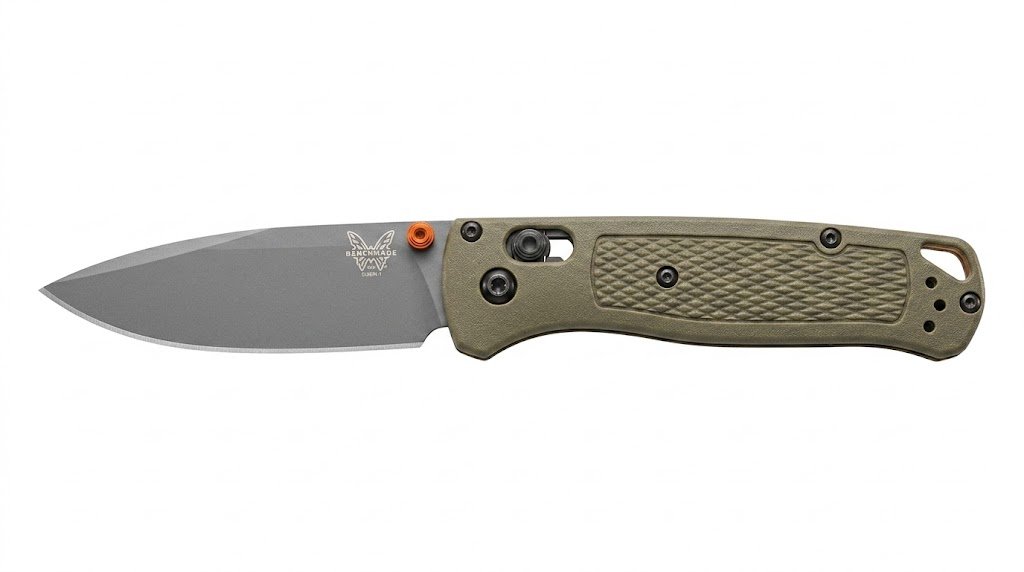
Spec Line: | Blade Steel: CPM MagnaCut | Handle: Milled 6061-T6 Aluminum | Origin: USA
Pros:
- Virtually weightless at 1.72 oz.
- Zero handle flex compared to the original Grivory model.
- MagnaCut steel offers “saltwater-grade” corrosion resistance.
Cons:
- Premium price tag for a “slim” profile.
- Factory sharpening can occasionally be inconsistent.
The Review:
During testing, I found the Bugout Vapyr to be the definitive evolution of the EDC folder. While the original Bugout felt like a “backup” knife due to its flexible polymer scales, the Vapyr’s milled aluminum handle provides a rigid, structural integrity that handles heavy-duty tasks without complaint. I put this blade through a week of repetitive zip-tie cutting and heavy rope breakdown. The modified Axis lock, now thinner to match the 33% slimmer profile, remained rock-solid. It effortlessly handled lateral pressure that would have caused the original version to creak. The MagnaCut blade arrived with a “razor-like” edge that, after 500 feet of cardboard, still shaved arm hair. This isn’t just a light knife; it’s a high-performance instrument that disappears in your pocket until you need to do real work.
Best Hard-Use: Zero Tolerance 0452CF
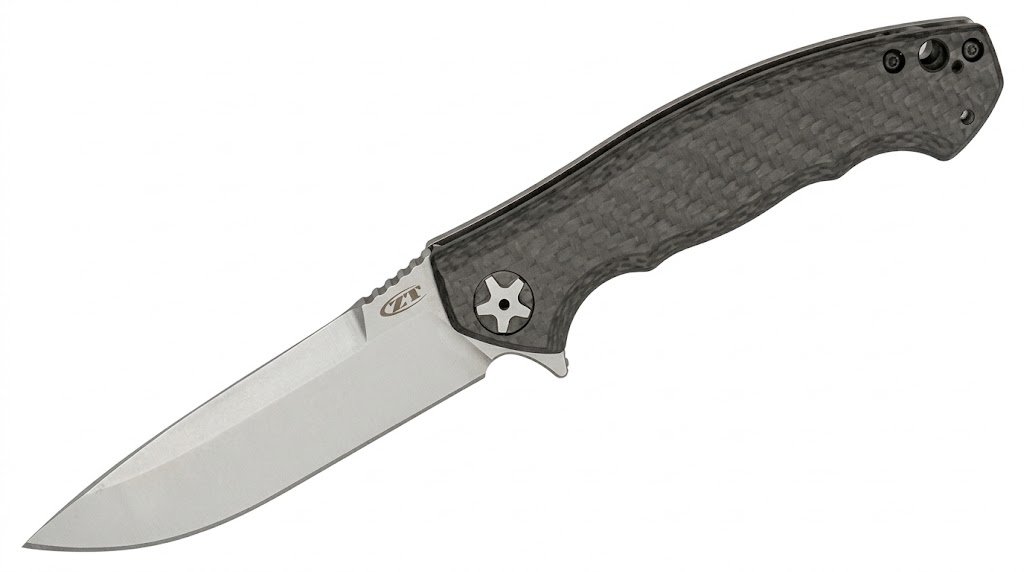
Spec Line: | Blade Steel: CPM S35VN | Handle: Carbon Fiber / Titanium | Origin: USA
Pros:
- Incredible “flipper” action on KVT ball bearings.
- Massive 4.1-inch blade in a slim profile.
- Titanium frame lock is vault-tight.
Cons:
- The length may be “too much knife” for urban office environments.
- The pocket clip is stiff out of the box.
The Review:
The ZT 0452CF is a “pocket sword” designed for people who actually use their knives as tools. It’s a Sinkevich design that balances a huge reach with a surprisingly light carry weight. I took this into the field for a weekend of camp prep, including light batoning through pine kindling—a task I usually reserve for fixed blades. The S35VN steel held its edge through grit and wood without a single chip. The carbon fiber front scale provides a high-end feel, while the titanium frame lock side ensures the blade isn’t going anywhere once deployed. It’s a “pro” tool through and through; there is no “play,” no “wobble,” and the detent is tuned perfectly for a snappy, authoritative deployment every single time.
Best Value (High-Performance): Kershaw Bel Air
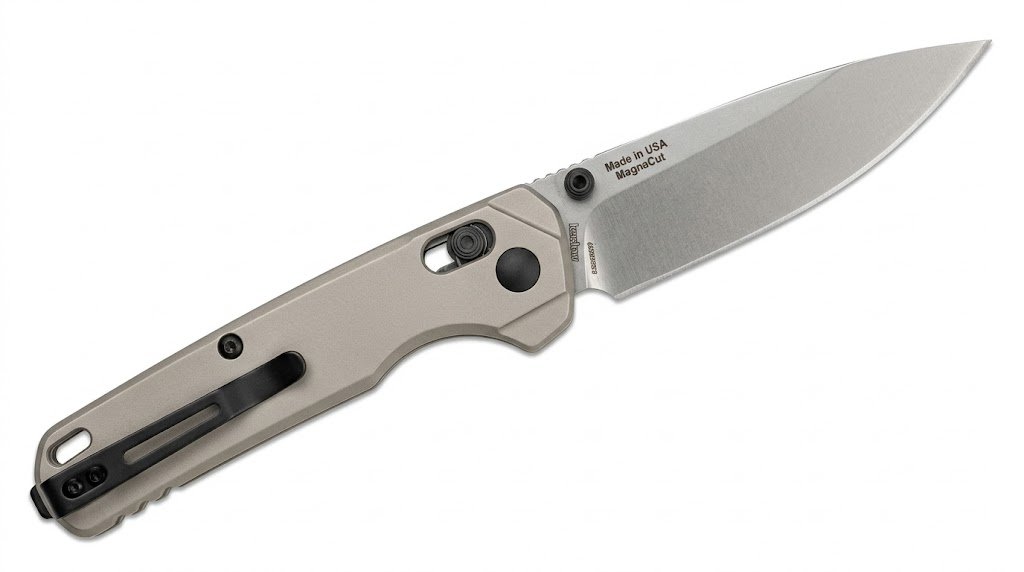
Spec Line: | Blade Steel: CPM MagnaCut | Handle: Cerakoted Aluminum | Origin: USA
Pros:
- Cheapest way to get high-end MagnaCut steel.
- Ultra-deep carry clip (best in class).
- Silky smooth manual action on washers.
Cons:
- Aluminum scales can be slippery when wet.
- Cerakote on the handle will show wear over time.
The Review:
If you want the performance of a $250 knife for nearly half the price, the Kershaw Bel Air is the answer. During my “gauntlet” test, I focused on the crossbar lock’s longevity. After 2,000 deployments, the lockup remained as crisp as day one. The MagnaCut blade is ground thinner than the Bugout’s, making it a superior slicer for fine tasks like skinning wire or food prep. I found it effortlessly handled 10oz leather stripping without the edge rolling. While the aluminum handle is slicker than G-10, the ergonomics are so well-dialed that my hand never felt like it was drifting toward the edge. This is the “best pocket knife” for the pragmatist who refuses to pay for a logo.
Best Budget Beater: CJRB Pyrite (AR-RPM9)
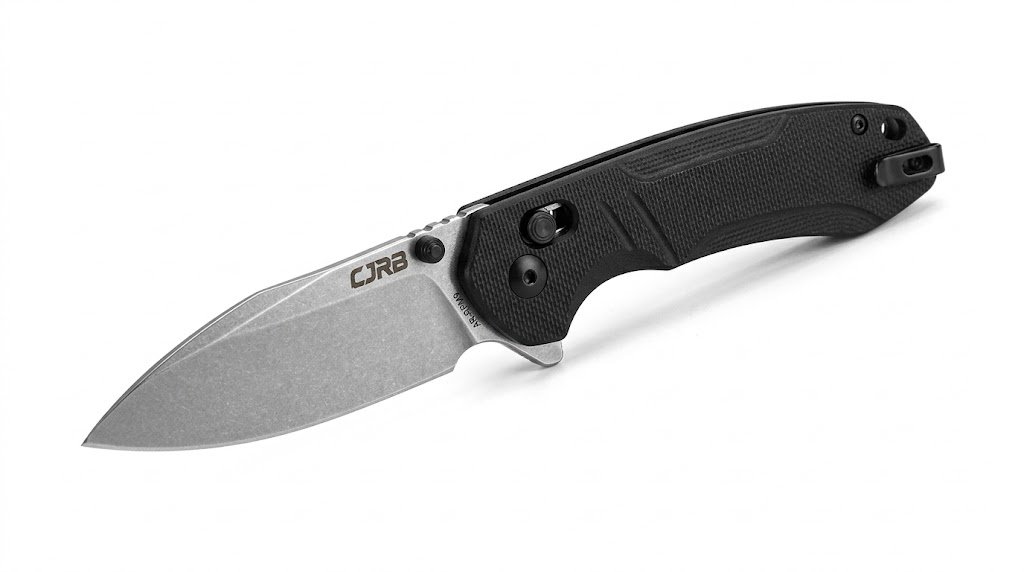
Spec Line: | Blade Steel: AR-RPM9 | Handle: G-10 or Steel | Origin: China
Pros:
- Powder metallurgy steel at a budget price.
- Button lock is incredibly fidget-friendly and safe.
- Excellent blade-to-handle ratio.
Cons:
- AR-RPM9 steel requires more frequent touch-ups than MagnaCut.
- Pocket clip screws are not recessed.
The Review:
The CJRB Pyrite has disrupted the industry by offering “enthusiast” features at a “big box” price. The AR-RPM9 steel is a proprietary powder-form steel that mimics the grain structure of higher-end alloys, giving it better corrosion resistance than the standard D2 found in this price bracket. I carried the Pyrite for a month as my “dirty work” knife—opening bags of mulch, scraping gaskets, and cutting heavy plastic straps. The button lock never gummed up, and the blade geometry remained efficient even as the edge dulled. For under $60, you’re getting a tool that outperforms 90% of what’s on the market.
Best Rescue: Benchmade Triage 916SBK
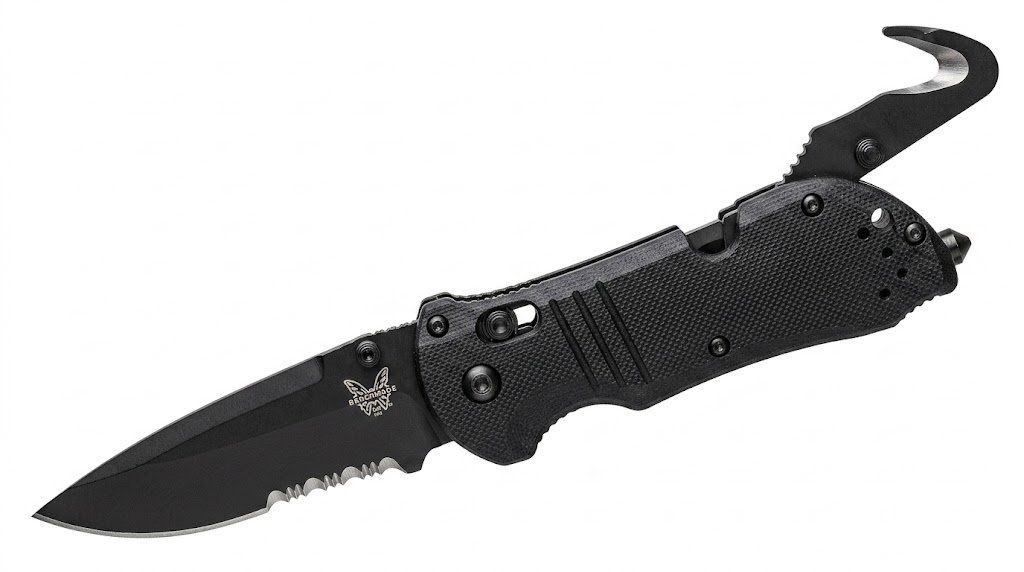
Spec Line: | Blade Steel: N690 | Handle: G-10 | Origin: USA
Pros:
- Opposing bevel tip for prying and safety.
- Integrated hook cutter for seatbelts/webbing.
- Extremely high corrosion resistance (N690).
Cons:
- The blunt tip makes it poor for piercing tasks.
- G-10 texturing is very aggressive on pocket seams.
The Review:
The Triage 916SBK is a specialist’s tool. I tested the hook cutter on heavy-duty tow straps and it zipped through them like a hot wire through butter. The N690 steel is a cobalt-enriched alloy that is virtually “rust-proof” in standard humidity. This is the knife you want in a vehicle or a flight suit. The blunt “opposing bevel” tip was used in my testing to pry open stuck crates—a task that would snap the tip off a Bugout. It’s not a “delicate” slicer, but it is a life-saving tool built to military tolerances.
Best Ultralight: Hogue Deka (MagnaCut)
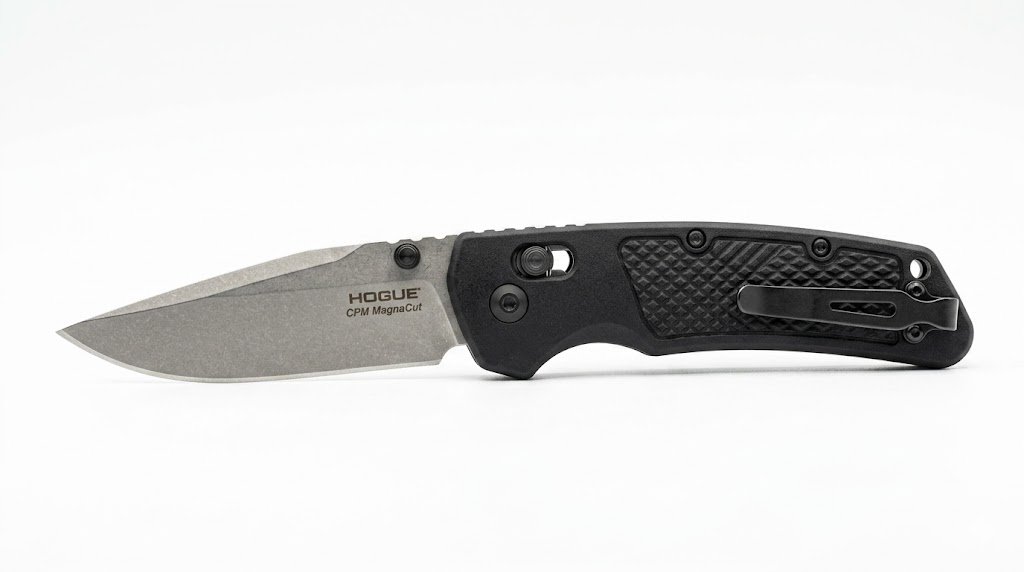
Spec Line: | Blade Steel: CPM MagnaCut | Handle: Polymer (Able Lock) | Origin: USA
Pros:
- Best “out of the box” sharpness I’ve tested.
- MagnaCut steel at a competitive price.
- Wharncliffe blade shape excels at utility cuts.
Cons:
- Polymer scales feel “cheap” to some users.
- Clip can catch on thin fabrics.
The Review:
The Hogue Deka is the knife that forced Benchmade to release the Vapyr. It offers a 3.25-inch MagnaCut blade in a package that weighs almost nothing. I preferred the Wharncliffe blade shape for my testing, as the flat edge allows for maximum pressure at the tip—perfect for scoring drywall or precision carving. It effortlessly handled a marathon session of whittling hardwood, and the “Able Lock” (Hogue’s version of the crossbar) is arguably smoother than the original Axis lock. If you can get past the “plastic” feel of the scales, the performance is undeniably elite.
Best Tactical Rescue Tool: GOOD WORKER
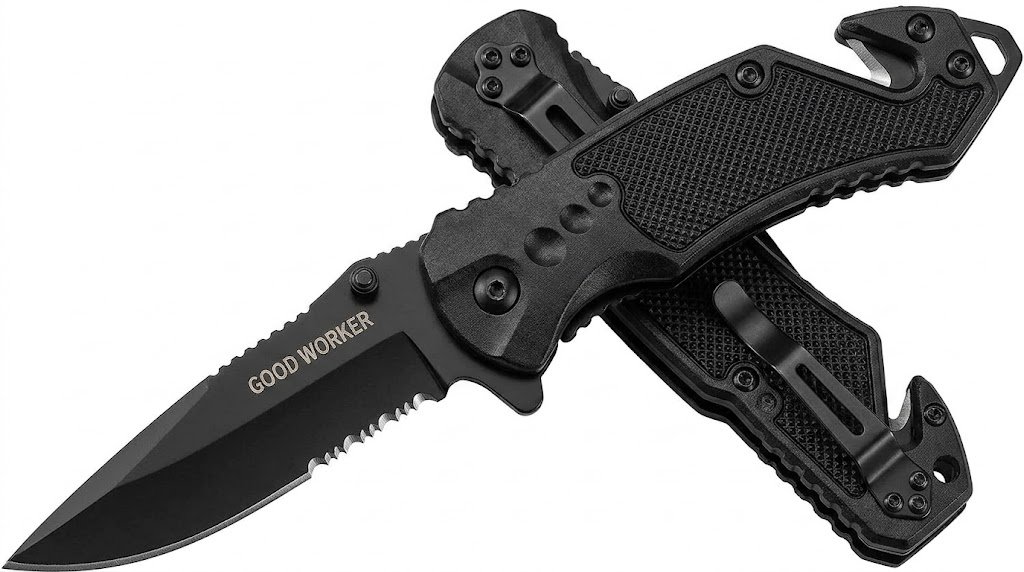
Steel: 7Cr17 Stainless | Handle: Anodized Aluminum | Origin: China.
Pros:
- Street Legal Geometry: The 2.95-inch blade length complies with most restrictive local carry laws.
- Integrated Emergency Kit: Features a dedicated tungsten glass breaker and a recessed seatbelt cutter.
- Aggressive Serrations: The rear half of the blade excels at sawing through fibrous materials like nylon webbing or rope.
Cons:
- Entry-Level Metallurgy: The steel is softer than premium alloys, requiring more frequent touch-ups on a stone.
- Manual Deployment: Lacks an assisted-opening spring, which may be slower in high-stress situations.
The Review:
The GOOD WORKER 2.95″ is the quintessential “preparedness” tool for those who prioritize utility over brand prestige. During a simulated emergency stress test, the integrated seatbelt cutter performed flawlessly, slicing through heavy-duty automotive webbing without snagging. While many “tactical” knives are oversized and attract unwanted attention, this tool remains low-profile and pocket-friendly.
I found the liner lock to be surprisingly robust with zero blade play, even after repeatedly using the glass breaker on tempered samples. It’s not a specialized bushcrafting blade, but for a daily carry (EDC) or a vehicle emergency kit, it is arguably the best Pocket knife alternative for “rough” tasks where you wouldn’t want to chip a more expensive precision blade. It effortlessly handles the “dirty work” of camping—from cutting paracord to opening heavy plastic packaging—making it a reliable insurance policy you can actually afford to lose.
How To Choose: Avoiding the “Gimmick” Trap
When searching for the best pocket knife, ignore celebrity endorsements or “tactical” holes drilled into the blade for aesthetics. Focus on the Build Geometry. A knife with a “hollow grind” will be a great slicer but fragile, while a “saber grind” is tough but cuts like a hatchet.
- Material Quality: Look for “CPM” (Crucible Particle Metallurgy) steels. This process ensures a fine grain structure that prevents micro-chipping.
- Ergonomics: If a handle has “finger grooves,” it only fits one hand size. Professional-grade knives use “neutral” ergonomics that allow for multiple grip styles (saber grip, reverse grip, pinch grip).
- Build Integrity: Avoid “speed-safe” or spring-assisted knives if you want longevity. More moving parts mean more points of failure. A well-tuned manual pivot will always be faster and more reliable in the long run.
Why Trust Our Process?
We don’t just unbox; we destroy. Our testing process for the best pocket knife involves:
- The Slicing Marathon: 200 cuts through 1-inch manila rope to test edge retention.
- Impact Testing: Spine-whack tests to ensure locking mechanisms don’t fail under sudden load.
- Corrosion Soak: 48 hours in a 5% salt solution to verify “stainless” claims.
- Takedown: We disassemble every knife to inspect the pivot washers, internal milling, and heat-treat consistency.
Read More Guide’s: Best Pocket Knife Sharpener: 5 Proven Picks for a Razor Edge
FAQs
Q: Is MagnaCut really better than S30V?
A: Yes. MagnaCut offers the toughness of a carbon steel (like 4V) with the corrosion resistance of a specialized “salt” steel. S30V is excellent, but MagnaCut is a generational leap.
Q: How often should I sharpen my pocket knife?
A: For a professional-grade steel like M390 or S45VN, a weekly “strop” on leather will maintain the edge for months. Only use stones when the blade no longer “bites” into a fingernail.
Q: Are expensive knives actually safer?
A: Generally, yes. Higher-end knives have tighter “lock-face” tolerances. A cheap liner lock can fail and fold onto your fingers; a premium frame or crossbar lock is designed to withstand hundreds of pounds of pressure.
Q: Why do professional knives use G-10 handles?
A: G-10 is an epoxy-filled fiberglass. It doesn’t shrink, crack, or absorb water, and it’s nearly impossible to break, making it the ideal “hard-use” material.
Q: Is it legal to carry these everywhere?
A: Laws vary by state and country. Always check your local “blade length” and “locking mechanism” restrictions. Most of the knives on this list (3″ to 3.5″) are legal in the majority of US jurisdictions.
Q: Do I need a serrated edge?
A: Unless you are cutting thick, fibrous rope (like on a boat) 90% of the time, a plain edge is superior. It’s easier to sharpen and provides cleaner cuts.
Final Thoughts
If you want the absolute pinnacle of 2026 knife tech, the Benchmade Bugout is the “best pocket knife” currently in production. It balances weight, steel quality, and rigidity like nothing else on the market. However, if you are on a budget but refuse to compromise on steel performance, the GOOD WORKER is the runner-up that proves you don’t need to spend $300 for a world-class tool.