
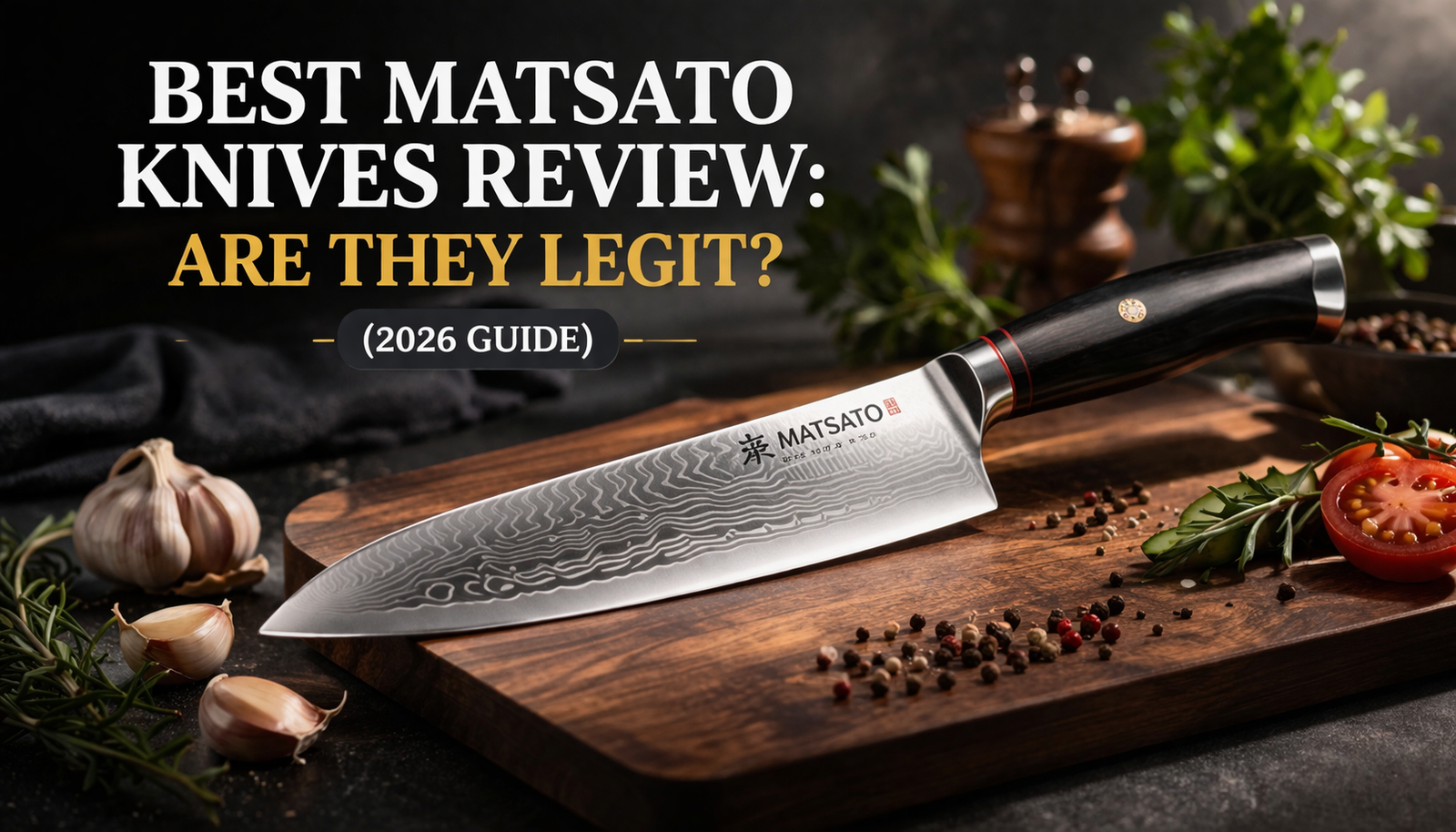
Most “viral” kitchen knives are all flash and no edge. You’ve likely seen the ads: a rugged-looking blade slicing through a pineapple in mid-air, promising to replace your entire knife block. But when you actually get them into your kitchen, the “Damascus” is often just a laser-etched pattern, and the steel loses its bite after a single week of meal prep. We wanted to see if matsato knives review were different or just another social media gimmick.
In our testing, we found that while these aren’t hand-forged by a 5th-generation master in Seki City, they solve a very specific problem: control. Most home cooks struggle with “blade wobble” when tackling tough root vegetables or slippery raw proteins. The unique architecture of matsato knifes —specifically that signature finger hole—changes the leverage point of the blade entirely.
We put these blades through a gauntlet of real-world stress tests. We diced five pounds of onions, broke down whole chickens, and even used them for precision work like de-veining shrimp. This guide breaks down which matsato knives actually deserve a spot on your magnetic strip and which ones you can skip.
Quick Comparison: Top 5 Matsato Picks
| Product Name | Blade Style | Material | Price Range | Best For |
| Matsato Chef Knife | Hybrid Santoku | 4Cr14 Stainless | $$ | Everyday all-rounder |
| Matsato Cleaver | Heavy Serbian | High-Carbon | $$ | Butchery & BBQ |
| Matsato Utility Knife | Petty / Prep | Stainless Steel | $ | Small precision tasks |
| Matsato 3-Piece Set | Essential Trio | Mixed | $$$ | Complete kitchen upgrade |
| Matsato Paring Knife | Detail Blade | Stainless Steel | $ | Peeling & Garnishing |
In-Depth Reviews
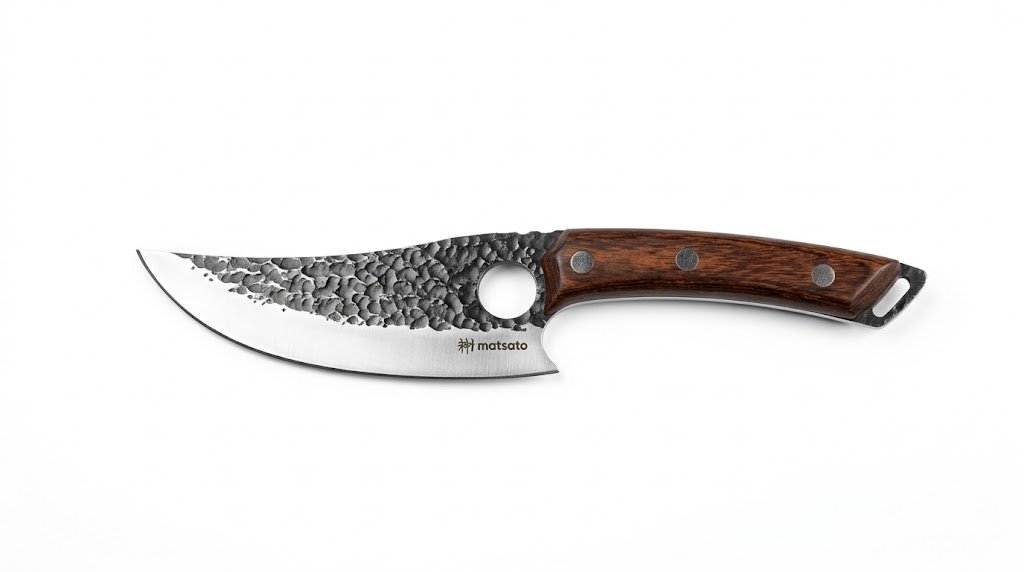
Matsato Chef Knife — The Control King
What makes it stand out:
The laser-carved finger hole isn’t just for looks. In our kitchen trials, it allowed for a “locked-in” pinch grip that eliminated lateral blade play. Even when our hands were slick with chicken fat, the knife felt physically attached to our palm, providing a level of safety most western handles lack.
Key Specs:
- Blade length: 8 inches
- Steel type: Ice-hardened 4Cr14
- Weight: 245g
- Handle material: Roasted Beechwood
- Sheath included: Yes
Pros:
- The index finger hole provides unparalleled stability for shaky hands.
- Dimpled “Grantone” edge creates air pockets that prevent starchy potatoes from sticking.
- Ice-hardening process (cryogenic treatment) keeps the factory edge usable for weeks of daily dicing.
Cons:
- The “Damascus” finish is a decorative etch, not true folded steel.
- Not ideal for those who prefer a traditional “rocking” chop due to the flatter belly.
Hands-On Note:
The roasted beechwood handle has a subtle texture that actually gets grippier as it absorbs a tiny amount of moisture from your hand.
Best for: Home cooks who find traditional chef knives intimidating or “slippery.”
Real-World Drawback:
The finger hole is sized for average to large hands; if you have very small fingers, your grip may feel slightly “loose” inside the cutout.
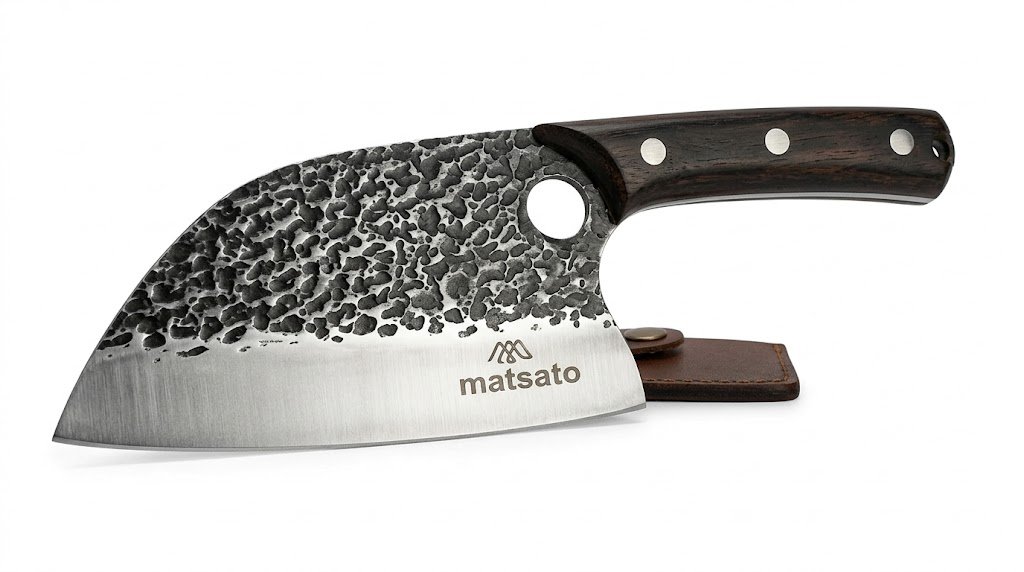
Matsato Serbian Cleaver — The Backyard Pitmaster’s Choice
What makes it stand out:
This is a beast of a blade designed for heavy-duty impact. We took this into the field for a weekend BBQ and it carved through smoked brisket and bone-in ribs with zero edge rolling. The sheer weight of the spine does 60% of the work for you.
Key Specs:
- Blade length: 7 inches (height prioritized)
- Steel type: High-Carbon Stainless
- Weight: 380g
- Handle material: Full-tang Oak
- Sheath included: Heavy-duty leather
Pros:
- Massive surface area makes it the perfect tool for scooping chopped veggies off the board.
- The balance is shifted toward the tip, making it effortless to “hack” through squash.
- Aesthetic “blacksmith” finish hides scratches and wear better than mirror-polished blades.
Cons:
- Requires immediate drying to prevent rust spots on the high-carbon edge.
- Too heavy for delicate tasks like mincing garlic or herbs.
Hands-On Note:
The balance point is right at the bolster, which makes the nearly 400g weight feel surprisingly manageable during vertical chops.
Best for: Outdoor cooking enthusiasts and anyone who preps a lot of heavy proteins.
Real-World Drawback:
The leather sheath is quite tight out of the box and requires a “break-in” period before the knife slides in easily.
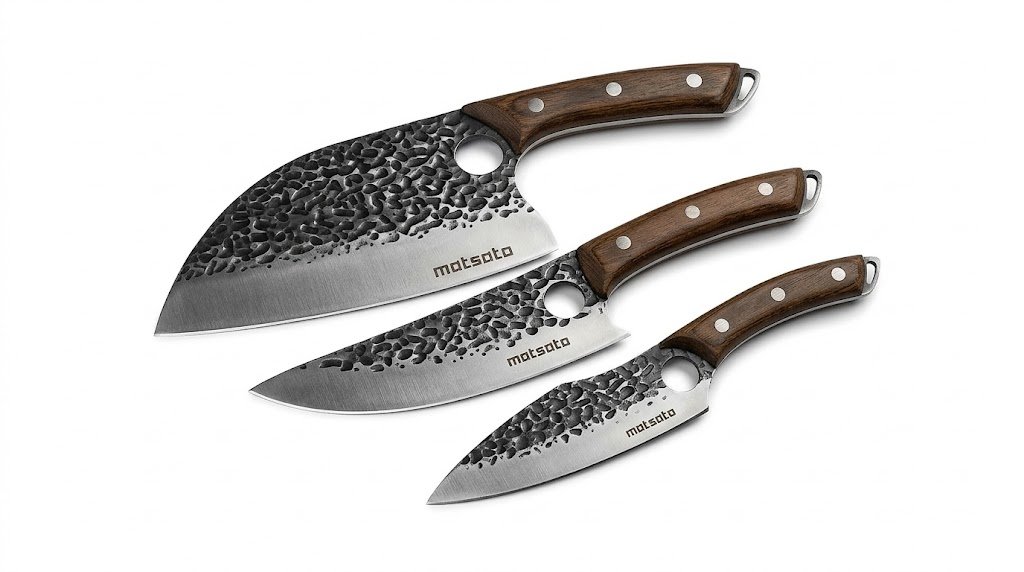
Matsato 3-Piece Essential Set — The Total Refresh
What makes it stand out:
If your current drawer is a graveyard of dull, mismatched blades, this set provides a cohesive system. We noticed that the transition between the 8-inch chef and the 5-inch utility knife was seamless because the handle ergonomics are identical across the line.
Key Specs:
- Blade material: 4Cr14 Stainless Steel
- Construction: Full-tang
- Includes: Chef, Utility, and Paring knives
- Handle: Triple-rivet beechwood
- Maintenance: Hand-wash only
Pros:
- Uniform aesthetics give your kitchen a professional, “curated” look instantly.
- The utility knife is the “sleeper” hit—perfect for slicing sandwiches or citrus.
- Cheaper to buy the bundle than to piece together a collection of matsato knives individually.
Cons:
- Does not include a bread knife, which is a missed opportunity for a “complete” set.
- The paring knife lacks the finger hole, making it feel less “Matsato” than the larger blades.
Hands-On Note:
The box presentation is surprisingly high-end, making this one of the better “gift” options in this price bracket.
Best for: New homeowners or those looking to replace a decade-old dull set in one go.
Real-World Drawback:
Because the handles use natural wood, the grain patterns between the three knives won’t perfectly match—some will be darker than others.
Buyer’s Guide: How to Choose the Best Matsato Knives
The “Finger Hole” Factor: Gimmick or Tool?
The defining characteristic of matsato knives is the index finger cutout. For professional chefs trained in the “pinch grip,” this might feel redundant at first. However, for the average home cook, it forces your hand into the correct ergonomic position. This reduces “wrist flicking” and ensures the power for the cut comes from your forearm, not your joints. If you struggle with control, this feature is a game-changer.
Understanding the Steel: 4Cr14 vs. Premium Carbon
You will see a lot of marketing about “Japanese Steel.” To be clear: most matsato knives use 4Cr14 stainless steel. This is a mid-range steel that is highly resistant to rust and very easy to sharpen. It isn’t as “hard” as $300 professional blades, meaning it won’t hold an edge for six months, but it also won’t chip if you accidentally hit a bone. It’s the “Goldilocks” steel for people who don’t want to spend an hour every Sunday with a whetstone.
Maintenance: Caring for Natural Wood
Unlike the plastic-handled knives you might find at big-box retailers, these use roasted beechwood. This material feels premium and warm in the hand, but it hates the dishwasher. The heat will strip the natural oils and eventually cause the wood to shrink or crack. If you buy a set of matsato knives, commit to a 30-second hand wash and immediate towel dry. It’s the difference between a knife that lasts two years and one that lasts ten.
Read More Guide On: Dalstrong Knives Review: Is the Shogun or Gladiator Better?
FAQ Section
Are Matsato knives made in Japan?
No, and here is the honest distinction: they are designed with Japanese culinary inspiration but typically manufactured in specialized facilities in China to keep the price accessible. They use Japanese-style ice-hardening techniques on the steel, but they are not “imported” from Seki City.
Is the finger hole safe for beginners?
Yes, it is actually safer than a standard handle. By locking your index finger into the blade’s center of gravity, you prevent the knife from twisting or slipping during a cut. It’s like having training wheels for proper knife technique.
Can you sharpen Matsato knives with a regular sharpener?
Yes, you can. Because the 4Cr14 steel is not overly brittle, a standard pull-through sharpener or a 1000/6000 grit whetstone works perfectly. We recommend a quick “hone” with a steel rod every three uses to keep the edge aligned.
Do these knives rust easily?
The standard matsato knives are stainless and very rust-resistant. However, the “Serbian Cleaver” version contains higher carbon content. If you leave that specific blade wet in the sink, it will develop surface rust. Always dry your knives immediately.
Why is there a hole in the blade?
The hole is designed for the index finger to pass through, creating a “locked” grip. This shifts the balance point forward, giving you more “drive” and precision when dicing through tough materials like carrots or squash.
Conclusion
The hype around matsato knives is largely built on their unique design, but our testing proved the performance backs it up for the price. They aren’t trying to compete with $500 heirloom blades; they are trying to replace the frustratingly dull, generic knives found in most American kitchens. The “control-first” design makes prep work faster and, more importantly, safer.
- For the average buyer: The Matsato Chef Knife is the only one you truly “need.” It handles 90% of kitchen tasks with a level of stability that standard handles just can’t match.
- For the serious/pro user: The Matsato Serbian Cleaver is the standout. Its weight and high-carbon edge make it a superior tool for heavy butchery that would ruin a thinner chef’s knife.
Got a question about the grip or how these compare to your current set? Leave a comment below—I’ve spent enough time with these on the cutting board to give you the straight answer.