Most “best fishing knife” guides are written by people who have never actually touched a fish, let alone tried to fillet a slab of king salmon on a rocking boat with wet hands. I’ve spent the last decade in the Knife Picks testing labs and on the water, and I can tell you this: a knife that looks great in a studio photo can be a total liability when you’re waist-deep in a river.
The biggest pain point I see? The “Great Edge” Fallacy. Most manufacturers brag about how sharp their steel is out of the box. But in the real world of saltwater spray and scales, out-of-the-box sharpness is cheap. What matters is how that edge holds up after the twentieth fish, how the handle reacts when covered in fish slime, and whether the sheath will actually stay on your belt when you’re climbing over riprap.
I’ve seen $200 boutique blades chip because the steel was too brittle for bone contact, and I’ve seen $15 plastic-handled knives outwork them because the ergonomics were just right. We aren’t looking for a “game-changer” here; we’re looking for a tool that doesn’t fail when the sun is setting, and you still have a cooler full of work to do. This guide focuses on the grit, the grip, and the grind.
Top 5 Fishing Knives Comparison
| Product | Blade Material | Handle Grip | Price | Best For |
| Bubba 7-Inch Tapered | Ti-Bonded SS | Non-Slip Red | $$ | Filleting Medium Fish |
| Morakniv Fishing Comfort | Sandvik 12C27 | Rubberized | $ | General Utility/Safety |
| Spyderco Pacific Salt 2 | H-1 (Rust-proof) | FRN Textured | $$$ | Saltwater/Pocket Carry |
| Rapala Fish ‘N Fillet | European SS | Birch Wood | $ | Traditionalists |
| Benchmade Adira | CPM-Magnacut | Grivory | $ | Heavy-Duty/High-End |
The Top 5 Fishing Knives: In-Depth Reviews
1. Bubba 7-Inch Tapered Flex Fillet
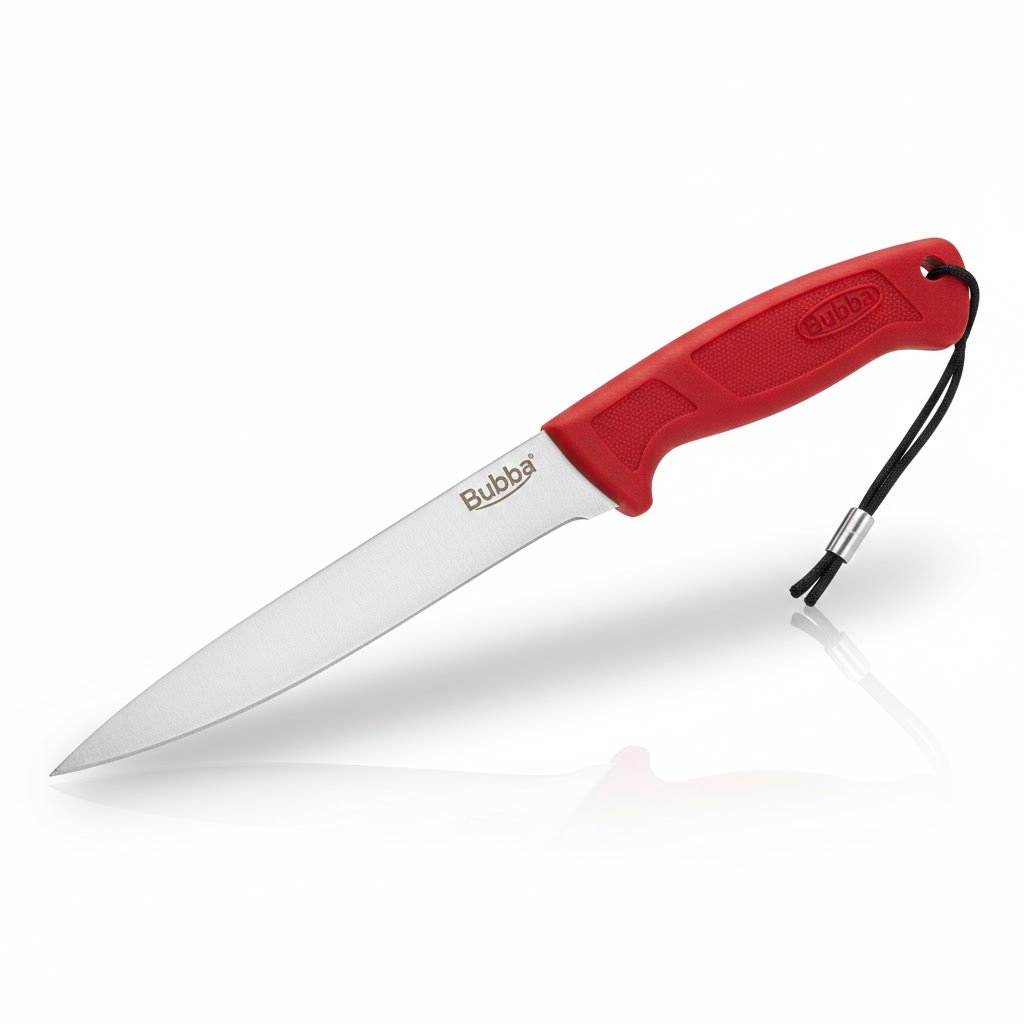
The Bubba has become the industry standard for a reason: that iconic red handle. When your hands are covered in scales and slime, this is the only knife that feels like it’s glued to your palm.
- Key Specs:
- Blade: 7-inch Titanium-bonded Stainless Steel
- Handle: Non-slip trigger grip
- Flex: High (Tapered)
- Pros: Incredible grip even when soaked; high visibility on a dark deck.
- Cons: The blade is thick; it lacks the surgical precision of thinner blades.
Hands-on Note: The trigger guard isn’t just for show; it genuinely prevents your finger from sliding onto the blade during heavy pressure.
Who it’s best for: The offshore angler dealing with large, slippery catches.
Real-World Drawback: The sheath is bulky and the velcro strap tends to lose its “stick” after a season of salt exposure.
2. Morakniv Fishing Comfort
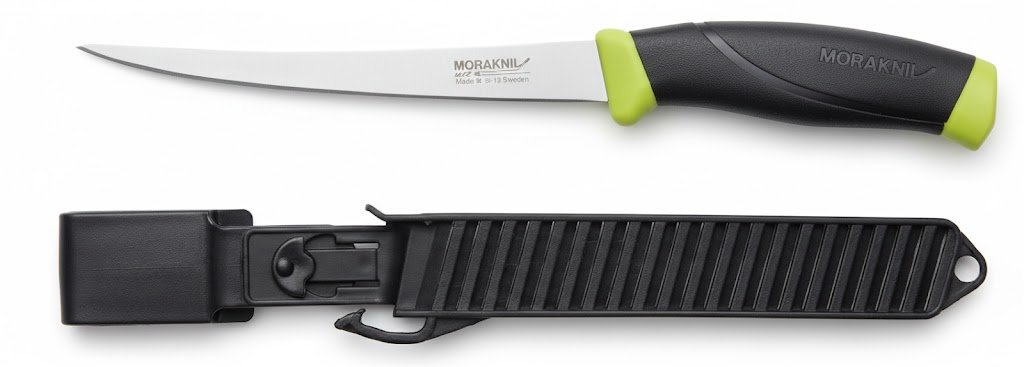
This isn’t a fillet knife, but if you’re on a boat, you need a fixed-blade utility knife. Mora’s Swedish steel is legendary for holding an edge, and the orange color is a lifesaver when you drop it in the tall grass or on a cluttered deck.
- Key Specs:
- Blade: 4.3-inch Sandvik Steel
- Handle: High-friction rubber
- Thickness: 3.2mm
- Pros: Virtually indestructible; easy to sharpen in the field.
- Cons: Not meant for delicate filleting; no finger guard.
Hands-on Note: The spine of the blade is ground at a sharp 90-degree angle, making it perfect for scraping scales or striking a fire starter if you’re camping.
Who it’s best for: The kayak fisherman who needs a “do-everything” tool.
Real-World Drawback: The plastic sheath feels “cheap” and rattles slightly when you walk.
3. Spyderco Pacific Salt 2
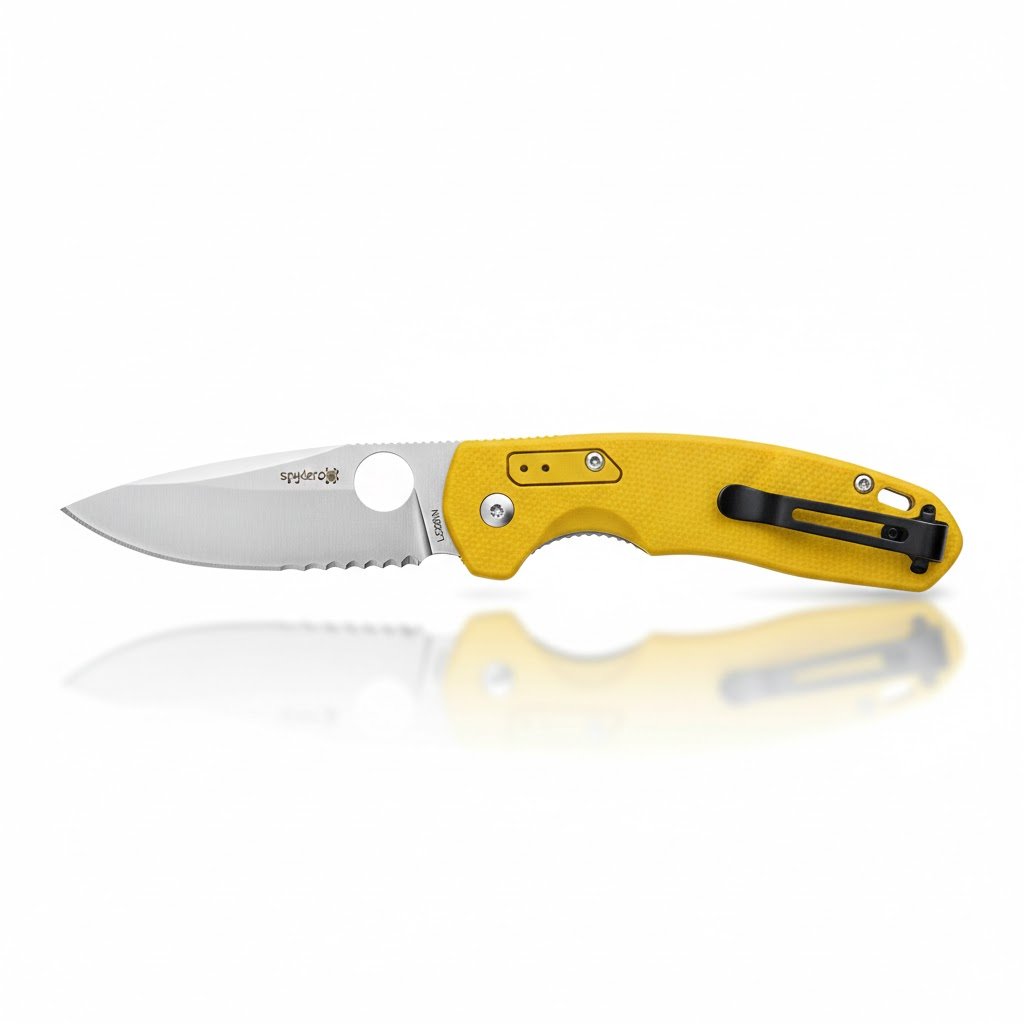
If you fish in saltwater, rust is your primary enemy. The Pacific Salt 2 uses H-1 steel, which replaces carbon with nitrogen. It literally cannot rust.
- Key Specs:
- Blade: 3.78-inch H-1 Steel
- Handle: Fiberglass Reinforced Nylon (FRN)
- Weight: 2.9 oz
- Pros: Total immunity to corrosion; lightweight for pocket carry.
- Cons: H-1 steel doesn’t hold an edge as long as high-carbon steels.
Hands-on Note: The texture on the handle (Bi-Directional Texturing) is surprisingly aggressive; it will tear up your pockets over time, but it won’t slip.
Who it’s best for: The surf fisherman or wade fisher.
Real-World Drawback: The pocket clip screws can actually loosen over time if you don’t use a bit of Loctite.
4. Rapala Fish ‘N Fillet (The Classic)
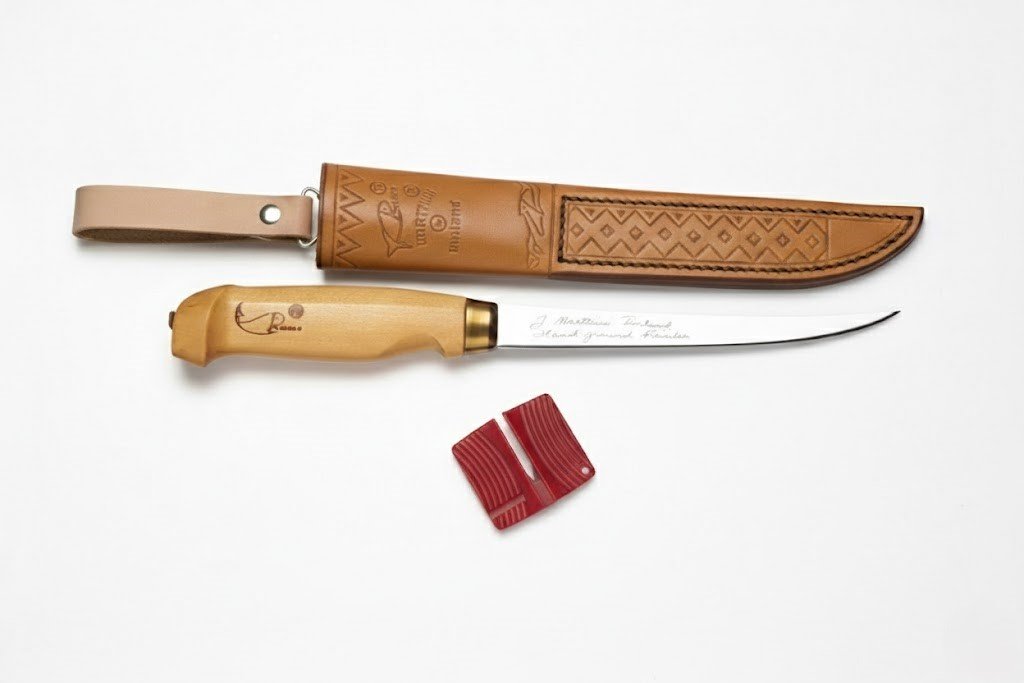
This is the knife your grandfather used. It has a thin, flexible Swedish stainless steel blade and a reinforced birch handle.
- Key Specs:
- Blade: 6-inch Progressive Tapered Steel
- Handle: Varnished Birch
- Included: Leather Sheath & Sharpener
- Pros: Unmatched flexibility for getting around rib bones; very affordable.
- Cons: The wood handle becomes incredibly slippery when wet.
Hands-on Note: The blade is so thin you can feel the vibrations of the fish’s spine as you cut—this feedback is vital for a clean yield.
Who it’s best for: Shore anglers processing panfish or trout.
Real-World Drawback: The leather sheath will mold if you put the knife away damp.
5. Benchmade Adira (Water Class)
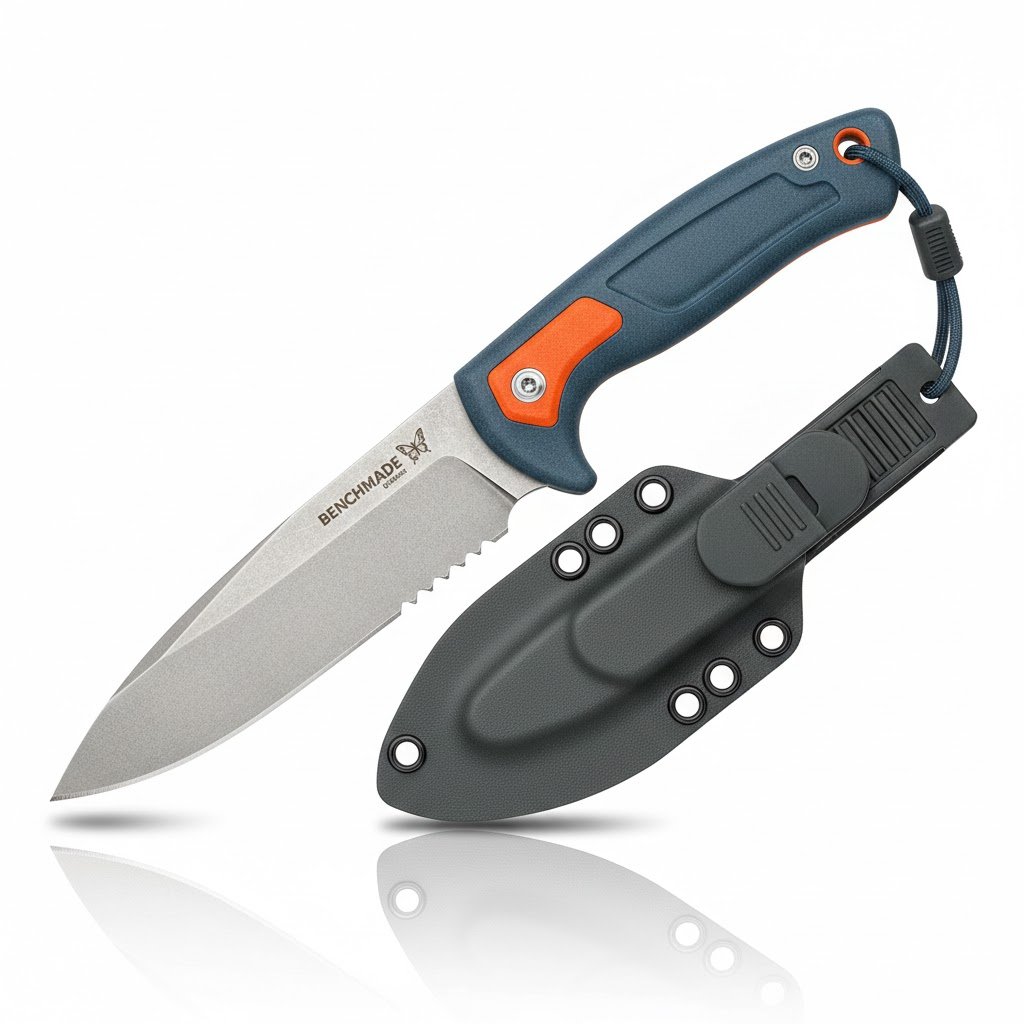
This is the premium choice. It uses Magnacut steel, which is the current “holy grail” of metallurgy—it offers high-end edge retention with the corrosion resistance of a diving knife.
- Key Specs:
- Blade: 3.88-inch CPM-Magnacut
- Handle: Grivory with Grivex texture
- Lock: AXIS Lock (Folding)
- Pros: Stays sharp 3x longer than standard stainless; premium build quality.
- Cons: Very expensive; the folding mechanism is another part to clean.
Hands-on Note: The AXIS lock is smooth enough to open with one hand, which is vital when the other hand is holding a fish.
Who it’s best for: The professional guide or gear enthusiast.
Real-World Drawback: The blue “lanyard” included is just a cheap piece of paracord that gets in the way of the blade.
How To Choose The Best Fishing Knife
Choosing a knife based on a “cool” design is the fastest way to end up with a dull, rusty piece of junk in your tackle box. When you’re out there, your knife is an extension of your hand. If the geometry is wrong, you’re going to waste meat and risk a trip to the ER. You need to consider the specific species you target and the environment you fish in. A knife for a 2-pound trout is a different beast than a knife for a 50-pound tuna.
Blade Geometry and Flex
This depends on the task. A fillet knife needs “flex”—the ability of the blade to bend against the bone without snapping. For smaller fish like perch, you want a high-flex, thin blade. For larger species with thick rib cages, you need a “stiff” fillet knife. If you try to use a flexible blade on a large grouper, the blade will wander, and you’ll ruin the fillet. Always check the “taper” of the blade; it should get thinner toward the tip for precision work.
Metallurgy for the Modern Angler
Don’t get bogged down in technical jargon. If you fish in saltwater, prioritize “Salt-Series” steels like H-1 or Magnacut. If you fish in freshwater and take care of your gear, high-carbon stainless (like 4116 or Sandvik) offers a better “bite” when cutting through scales. Remember: the harder the steel, the longer it stays sharp, but the harder it is to sharpen once it goes dull. I prefer a slightly softer steel for filleting because I can touch it up with two swipes of a ceramic rod.
Ergonomics and Handle Safety
A beautiful wooden handle is great for a kitchen, but on a boat, it’s a hazard. Look for rubberized or “thermoplastic” handles. My rule is the “Slime Test”: if I can’t hold the knife securely while my hand is covered in dish soap, I won’t use it on a boat. Finger guards are non-negotiable for beginners. One slip on a wet handle can result in a severed tendon.
Read More Guide: Best EDC Knives of 2026: Top 5 Tested & Reviewed
FAQ: Questions From the Dock
Is a folding knife better than a fixed blade for fishing?
This depends on your storage space. Fixed blades are safer and easier to clean because there is no hinge to trap salt and fish scales, which eventually cause “grittiness.” However, a high-quality folder like the Spyderco Pacific Salt is superior for shore anglers who need to carry a knife in their pocket.
Pro-Tip: If you use a folder, rinse it in fresh water and use a compressed air can to blow out the hinge after every trip.
How often should I sharpen my fishing knife?
This depends on the fish, but generally, you should “hone” your knife after every 5–10 fish. A fillet knife works best when it’s “scary sharp,” as a dull blade requires more pressure, which leads to slips.
Pro-Tip: Don’t wait until it’s dull; use a ceramic honing rod to maintain the edge during the cleaning process itself.
Does “rust-proof” really mean it won’t rust?
Yes, but only for specific steels like H-1 or Vanax. Most “stainless” knives are actually “stain-resistant,” meaning they will eventually pit and rust if left in a damp tackle box.
Pro-Tip: Wipe your blade with a silicone-treated cloth or a drop of mineral oil before long-term storage.
Can I use a regular pocket knife to fillet a fish?
No, it is highly inefficient. Standard pocket knives have blades that are too thick and lack the necessary flex to contour around a fish’s skeleton, leading to significant meat waste.
Pro-Tip: If you must use a utility knife, use it only for bleeding the fish or cutting line, not for the actual filleting.
Why do some fillet knives have “dimples” on the blade?
These are called Granton edges. They create small air pockets between the blade and the fish, which prevents the wet meat from suctioning to the steel, allowing for smoother slices.
Pro-Tip: If your knife doesn’t have these, dipping the blade in water between cuts can achieve a similar effect.
Final Verdict: Which One Should You Buy?
At the end of the day, a knife is a personal tool. If you are the Average User who goes out a few times a month for bass or trout, go with the Mora Bushcraft Orange. It is cheap, indestructible, and the safety-orange color means you won’t lose it. It’s the best “bang for your buck” on the market.
However, if you are a Pro User or a serious offshore angler who processes a lot of meat, the Bubba 7-Inch Tapered Flex is the clear winner. The grip is simply unmatched in wet conditions, and the blade geometry is optimized for the widest range of fish sizes. It’s the tool I reach for when I have 40 pounds of mahi-mahi waiting on the cleaning table.