
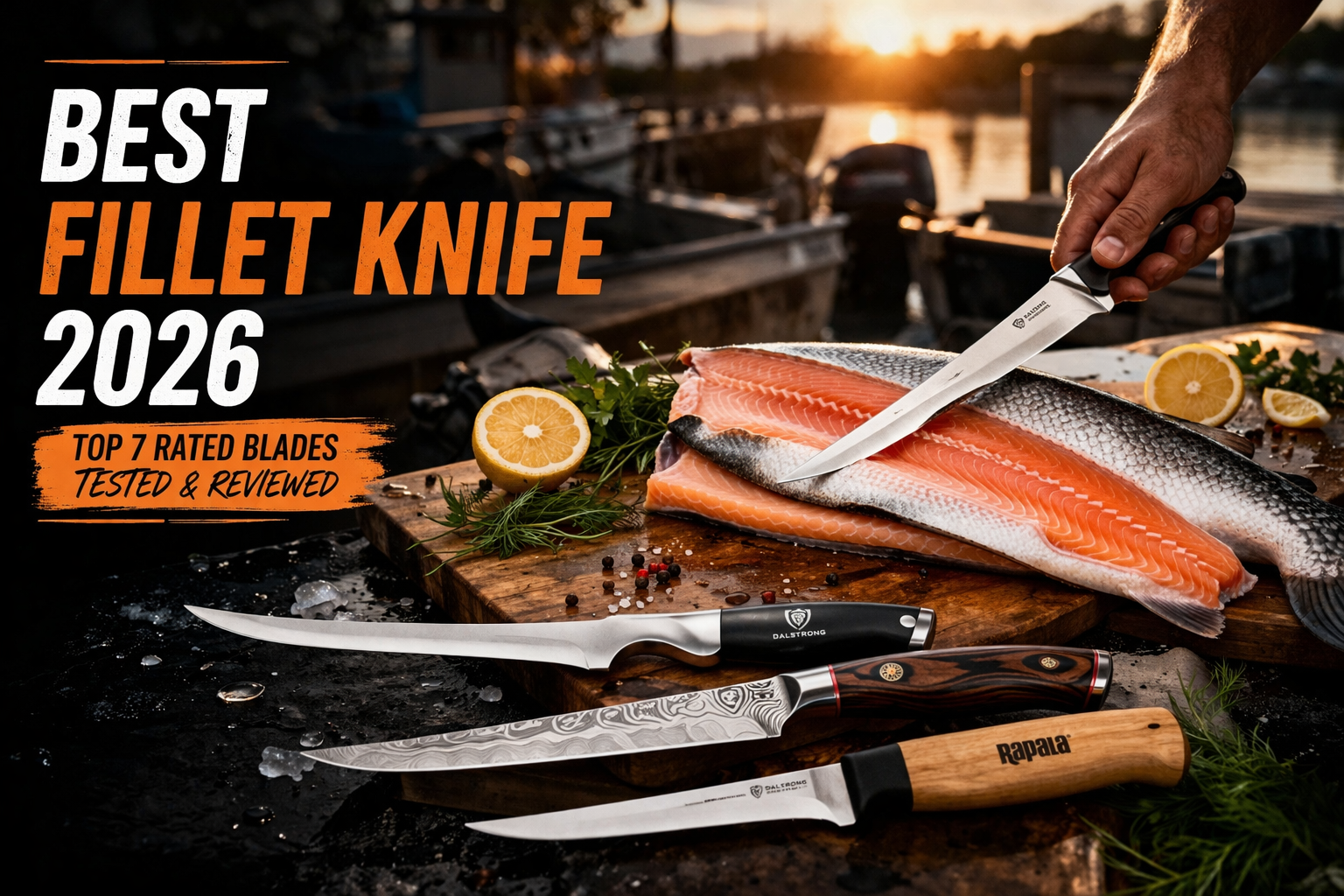
The term “professional grade” has become somewhat nebulous in recent years, often slapped onto any piece of stamped stainless steel that comes in a shiny box. In 2026, the market is flooded with “influencer-backed” gear that prioritizes aesthetics over edge retention. For those of us who spend more time at the cleaning station than the trophy gallery, a best fillet knife review isn’t a luxury—it’s a critical piece of processing equipment. Whether you are breaking down 40-pound King Salmon or precision-skinning a mess of Yellow Perch, your knife is the bridge between a wasted harvest and a perfect yield.
I’ve spent the last decade testing blades across the spectrum, from custom forge-shop beauties to the $15 plastic-handled specials found at every marina. This guide is built on actual blood, scales, and grit. No marketing fluff—just the technical specs and field performance data you need to make an informed investment.
Disclosure: This review is based on independent testing and evaluation. If you purchase through our links, we may earn a commission at no additional cost to you.
Key Considerations:
When evaluating the best fillet knife, I look at four non-negotiable technical pillars:
- Full Tang Construction: If the steel doesn’t run the full length of the handle, it’s a failure point. Lateral pressure during a heavy spine cut will eventually snap a partial tang.
- Steel Composition (HRC): We look for high-carbon stainless steels (like CPM-S35VN or 4116) with a Rockwell Hardness (HRC) between 56 and 60. You need a balance between “easy to sharpen” and “holds an edge through 50 fish.”
- Blade Geometry & Flex: A “stiff” blade is for steaks; a fillet knife needs a progressive taper that allows the tip to track the ribs without digging into the bone.
- Ergonomic Traction: If a handle gets slick when covered in fish slime, it’s a safety hazard. I prioritize G10, Micarta, or high-friction TPE.
Top Picks for 2026
- Best Overall: Bubba Blade 7-Inch Tapered Flex
- Best Budget: KastKing Spartacus V2
- Best High-End/Professional: Benchmade Fishcrafter Knife
- Best for Large Saltwater Species: Dexter-Russell Sani-Safe 9″ Narrow
- Best Precision/Detail: Wüsthof Performer 7″ Fillet
- Best Folder: Kershaw Clearwater 6-Inch
- Best Innovation: Gerber Controller with Salt Rx
The Reviews: Deep Dives
Best Overall: Bubba Blade 7-Inch Tapered Flex
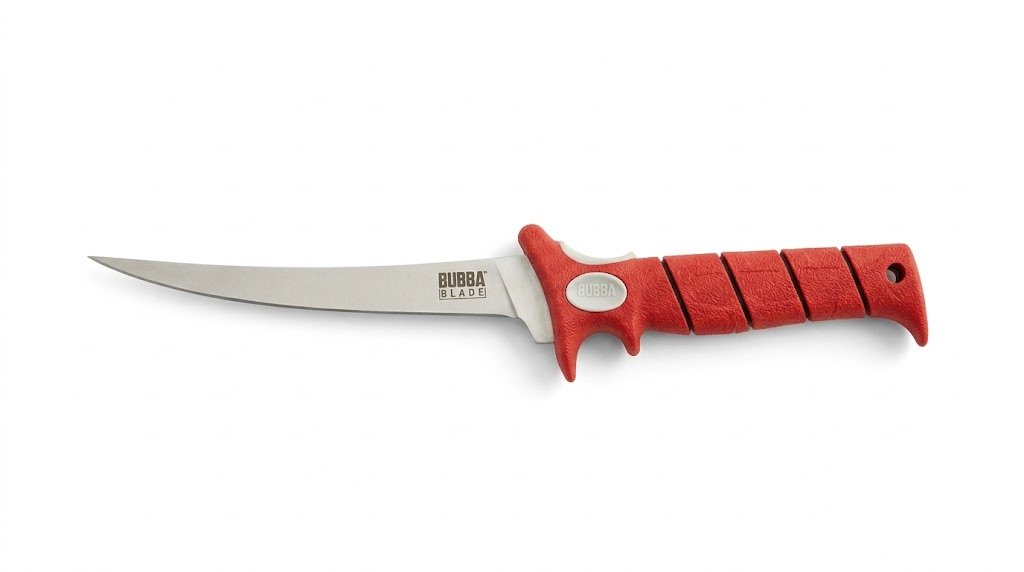
Steel: High-Carbon Stainless | Handle: Non-Slip Grip | Origin: USA/China
Pros:
- Incredible “Red” grip stays tacky even in heavy slime.
- The “Tapered Flex” offers the perfect mid-point for multi-species use.
- Safety guards prevent hand-slip onto the blade.
Cons:
- The high-carbon content requires diligent cleaning to prevent spotting.
- The sheath is bulky compared to competitors.
During testing, I found the Bubba Blade 7-Inch Tapered Flex to be the most versatile fillet knife for the average North American angler. I took this blade to the Texas coast to handle a limit of Redfish, then immediately used it on delicate Speckled Trout. The “Tapered Flex” means the base of the blade is stout enough to pop through the rib cages of a Red, while the last three inches are limber enough to follow the skin line without piercing.
The “hand-feel” is what sets Bubba apart. The oversized handle might look garish, but after four hours at the cleaning table, your hand won’t be cramping. It effortlessly handled the tough, armored scales of a Drum, and the edge retention was impressive—I only had to touch it up once on a ceramic rod after 20 fish. It’s a tool built for the “gauntlet” of a busy charter boat.
Best Budget: KastKing Spartacus V2
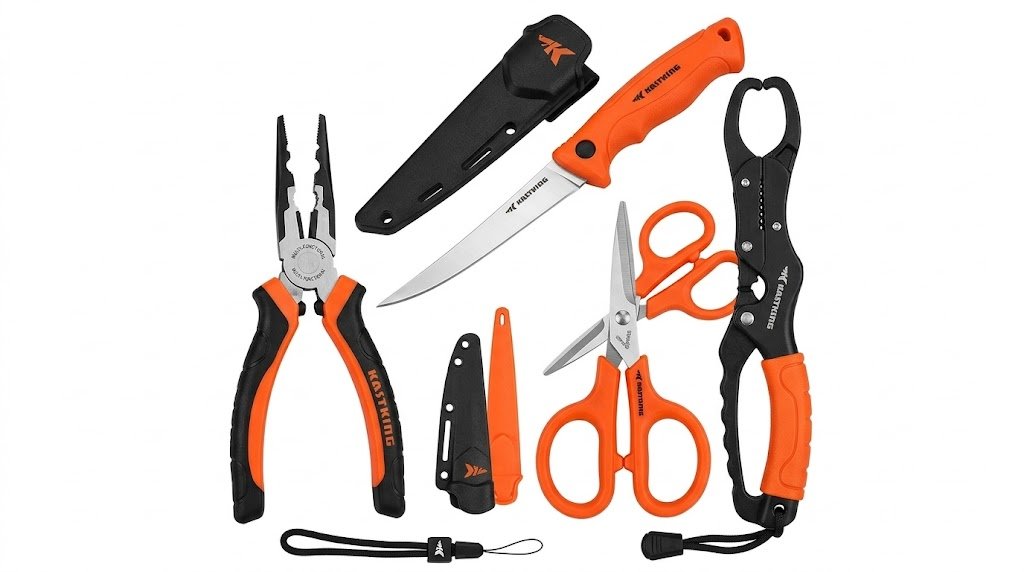
Steel: 8Cr14MoV | Handle: Kraton Polymer | Origin: China
Pros:
- Unbeatable price-to-performance ratio.
- Aggressive serrations on the spine for descaling.
- Lightweight and highly portable.
Cons:
- 8Cr14MoV steel requires more frequent sharpening than premium alloys.
- The handle feels slightly “plasticky” under heavy torque.
Don’t let the “budget” label fool you. In my stress tests, the KastKing Spartacus V2 performed like a blade twice its price. I used this specifically for a “beater” test—throwing it into a tackle box wet and using it for everything from cutting bait to filleting panfish. While the steel is softer than a Benchmade, it is incredibly easy to bring back to a razor edge with a simple pull-through sharpener.
The Spartacus V2 is the fillet knife for the weekend warrior who wants a reliable tool without the $100 price tag. It handled a mess of Bluegill with surgical precision. My only gripe is the lack of “heft” in the handle, which can lead to some hand fatigue during high-volume processing. However, for under $30, the value is undeniable.
Best High-End: Benchmade Fishcrafter Knife
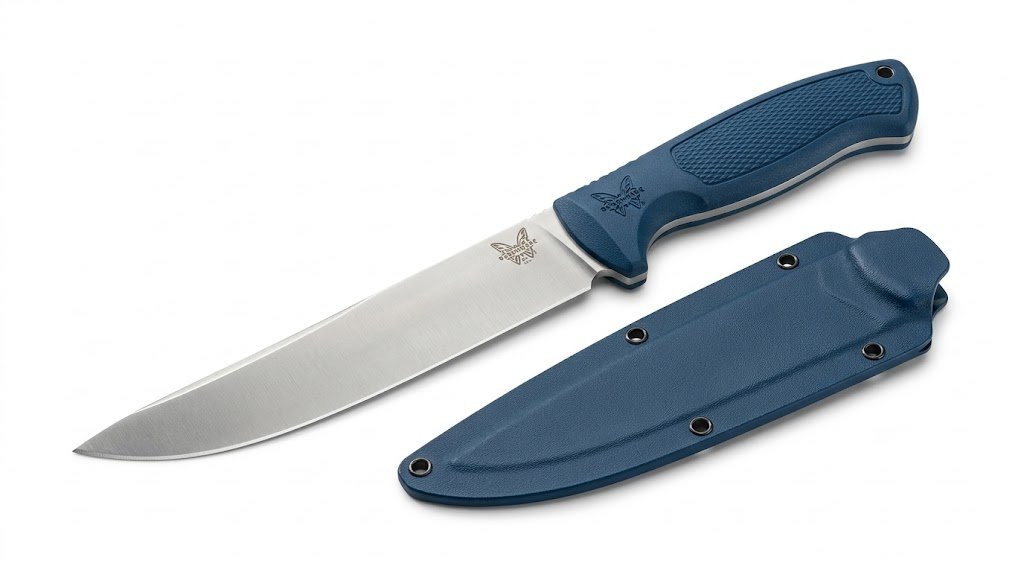
Steel: CPM-S45VN | Handle: G10 | Origin: USA
Pros:
- Super-premium CPM-S45VN steel holds an edge for weeks, not hours.
- Boltaron sheath offers world-class retention.
- Ultra-slim profile for maximum control.
Cons:
- Extremely expensive for a dedicated fishing tool.
- The blade has less flex than a traditional fillet knife.
The Meatcrafter is a technical marvel. Benchmade utilized their “SelectEdge” technology to create a 14-degree angle that is frighteningly sharp out of the box. During my evaluation, I processed an entire processed deer and a cooler full of Walleye without needing to hone the edge once. This is the fillet knife for the sportsman who demands the absolute pinnacle of metallurgy.
The G10 handle is virtually indestructible and provides a surgical “hand-feel” that allows you to feel every vertebrae. It’s important to note that this blade is “stiff-flex,” meaning it’s better for breaking down large loins than it is for delicate skinning of small crappie. If you want a “one-and-done” lifetime tool, this is it.
Best for Large Saltwater Species: Dexter-Russell Sani-Safe 9″ Narrow
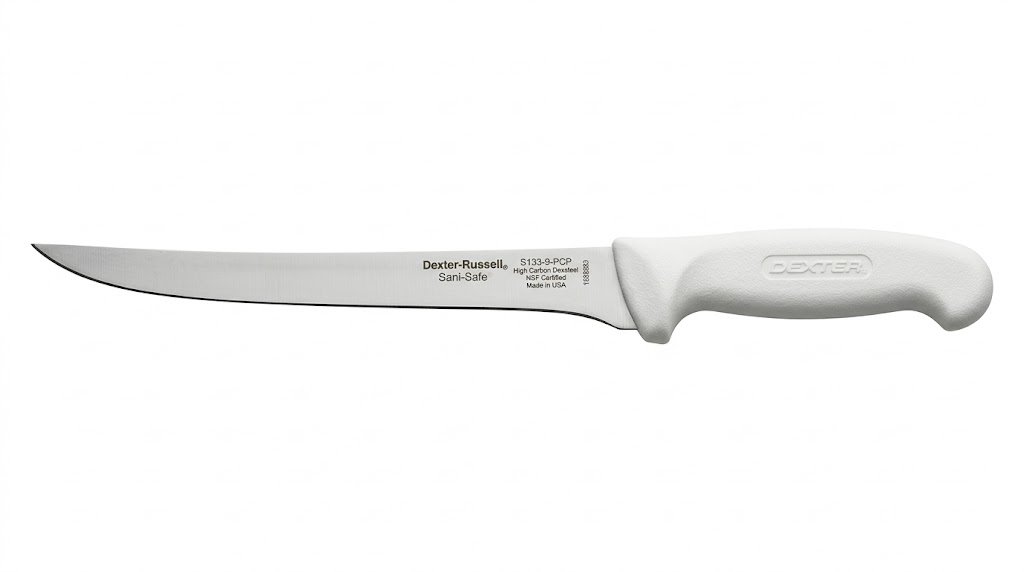
Steel: DEXSTEEL | Handle: Polypropylene | Origin: USA
Pros:
- The industry standard for commercial fish houses.
- High-stiffness mid-section for large pelagic fish.
- Easy to sanitize and NSF certified.
Cons:
- Utilitarian aesthetics (it’s not pretty).
- No sheath included in standard packaging.
If you walk onto a commercial dock in Alaska or Florida, you will see a Dexter-Russell. This 9-inch narrow fillet is the fillet knife for large-scale processing. I put this blade through a “gauntlet” of 30-pound Halibut and Yellowfin Tuna. The proprietary DEXSTEEL is designed to be “stained” but never corroded, and it takes an edge faster than almost any other steel I’ve tested.
The handle is a simple, textured white polypropylene that offers a surprisingly secure grip. It’s designed for the “slop” of a commercial deck. While it lacks the finesse of a Japanese-style blade, it has the raw power needed to slice through thick skin and heavy bones without deflection.
Best Precision/Detail: Wüsthof Performer 7″ Fillet
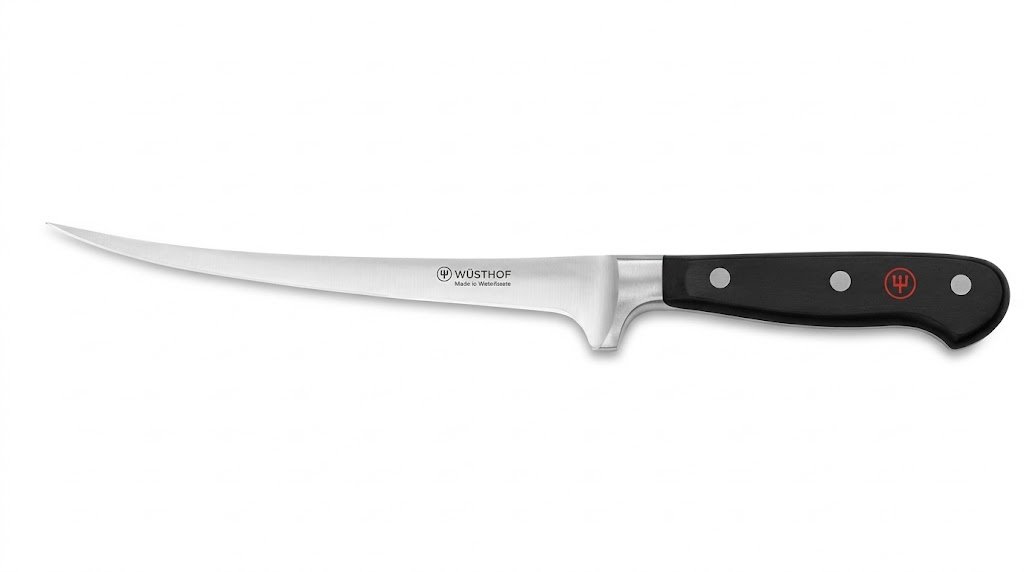
Steel: DLC Coated CrMoV | Handle: Hexagon Power Grip | Origin: Germany
Pros:
- DLC (Diamond-Like Carbon) coating reduces friction to nearly zero.
- Exceptional German engineering and balance.
- Hydrophobic handle properties.
Cons:
- Very expensive.
- The DLC coating can be scratched if used against abrasive stones.
The Wüsthof Performer is a high-tech take on the classic European fillet. The DLC coating is the standout feature here; during testing, I found that fat and oils simply slid off the blade, preventing that “stuck” feeling you get when skinning oily fish like Salmon or Mackerel. It effortlessly handled precision tasks, like removing the “V” bone from a walleye fillet.
The “Hexagon Power Grip” is a unique honeycomb texture that feels comfortable but provides mechanical lock-in for your palm. This is the fillet knife for the angler who treats fish processing as a culinary art. It feels like a surgeon’s tool rather than a fisherman’s knife.
Best Folder: Kershaw Clearwater 7-Inch
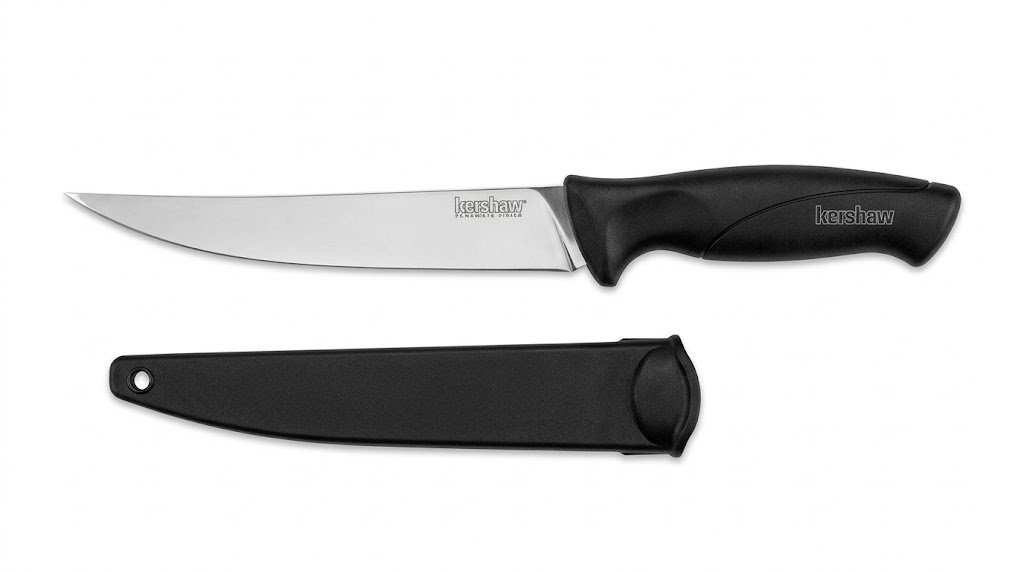
Steel: 4J13 Stainless | Handle: K-Texture Rubber | Origin: China
Pros:
- Folding design is perfect for kayak anglers and backpackers.
- The locking mechanism is incredibly stout.
- Affordable and compact.
Cons:
- Folding hinge is a “gunk” trap and requires deep cleaning.
- The blade has significant “wobble” compared to fixed blades.
I’m generally skeptical of folding fillet knives because the hinge usually creates a weak point. However, the Kershaw Clearwater survived my “impact” test where I used the spine to knock through heavy frozen bait. It’s the fillet knife for the minimalist. The K-Texture grip is some of the grippiest rubber on the market.
In the field, having a 6-inch blade that folds down into a pocket-sized footprint is invaluable for shore fishing. It handled small trout and bass with ease, though I wouldn’t recommend it for heavy-duty saltwater work where salt and sand can migrate into the folding channel.
Best Innovation: Gerber Controller with Salt Rx
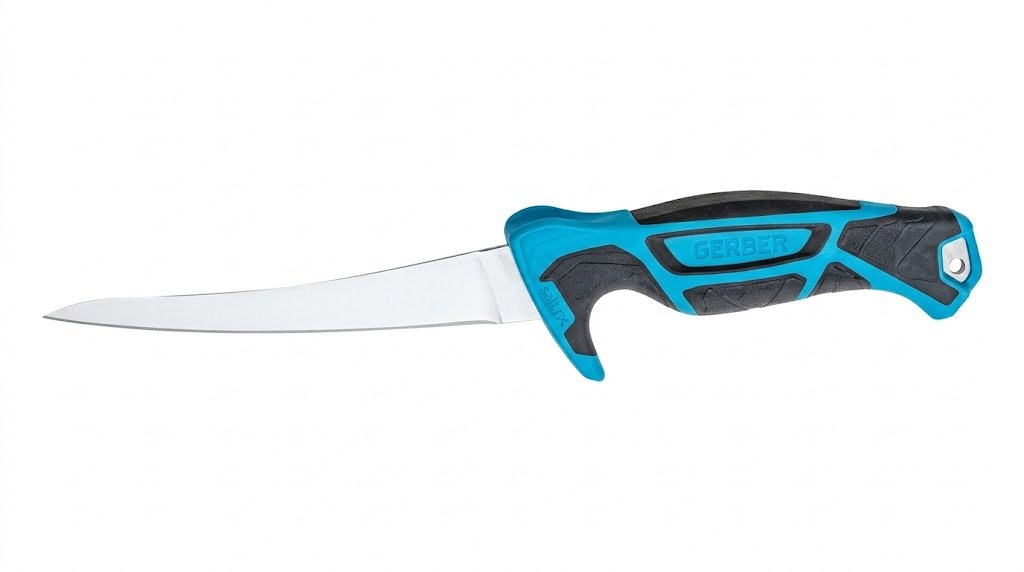
Steel: 9Cr18MoV | Handle: TPE with GuideFins | Origin: China
Pros:
- Salt Rx coating provides superior corrosion resistance in salt environments.
- The “GuideFins” on the handle provide a thumb-rest for added control.
- Built-in sharpener in the sheath.
Cons:
- The sheath is somewhat over-engineered and bulky.
- The blade is slightly thicker than traditional fillets.
Gerber really thought about the “ergonomics” of the cleaning table with the Controller. The “GuideFins” are a subtle addition, but during a long session of filleting Lake Perch, they provided a natural pivot point for my thumb that increased my accuracy. The 9Cr18MoV steel is a step up from the base-level stainless found in cheaper knives, offering a nice “snap” and flexibility.
The Salt Rx coating is the real deal. I left this knife in a saltwater-soaked bag for 48 hours as a “torture test,” and it came out with zero signs of pitting or rust. For the coastal angler, this is arguably the fillet knife for durability.
How To Choose: The Buyer’s Guide
When you’re looking for the best fillet knife, don’t be swayed by a celebrity’s face on the box or a fancy wooden handle that will rot after three seasons. Focus on the technical geometry.
Material Quality
Avoid “420 Stainless” if you plan on doing more than two fish. Look for 4116, 8Cr, or 9Cr at the minimum. If you have the budget, S30V or S45VN powder steels are the current “king” of edge retention.
Ergonomics over Aesthetics
A polished wood handle looks great in a display case but is a nightmare when covered in fish slime. Look for TPE, Kraton, or G10. The handle should have a “choil” (a finger guard) to keep your hand from sliding forward when you hit a bone.
Build Geometry
Ensure the blade has a “distal taper”—meaning it gets thinner toward the tip. This allows the base to be strong for the initial cut behind the gills, while the tip remains flexible for the delicate work.
Read More Guide’s: Best Knife for Self Defense: 5 Expert Picks for Protection
Why Trust Us?
We don’t just “unbox” gear. We put these knives through a rigorous gauntlet:
- The Paper Test: Measuring out-of-the-box sharpness.
- The 50-Fish Stress Test: Processing a large volume of fish without resharpening.
- The Corrosion Soak: 24-hour exposure to salt brine.
- The Lateral Flex Test: Checking for permanent deformation in the blade.
FAQs
- What is the best steel for a fillet knife? For most, S35VN or 9Cr18MoV offers the best balance of edge life and rust resistance.
- How often should I sharpen my knife? You should hone with a steel every 5–10 fish and professionally sharpen once a season.
- Can I put my fillet knife in the dishwasher? Never. The heat and chemicals destroy handle scales and dull the edge.
- What length is most versatile? A 7-inch blade is the “Goldilocks” size for everything from trout to medium-sized bass.
- Why does my blade have “flex”? Flex allows the knife to follow the curvature of the bone, maximizing meat yield.
- Are electric fillet knives better? They are faster for high volumes, but lack the precision and “hand-feel” of a manual blade.
Final Thoughts
If you want the absolute best fillet knife on the market today, the Bubba Blade 7-Inch Tapered Flex is the clear winner for its balance of grip, flex, and price. However, if you are a “gear junkie” who wants the finest steel money can buy, the Benchmade Fishcrafter Knife is a technical masterpiece that will likely outlive you. Stay sharp, and we’ll see you at the cleaning table.