There is a massive difference between a knife that looks “tactical” and a true combat knife. One is designed to look good in a display case; the other is designed to save your life when everything else has gone wrong.
In the world of professional tools, a combat knife is the ultimate “insurance policy.” Whether you are a member of the armed forces, a first responder, or a dedicated student of self-defense, your blade is a tool of last resort. It needs to be unbreakable, reliable, and perfectly balanced for high-stress use.
We are going to dive deep into the world of combat blades. We’ll cover the history that shaped these tools, the metallurgy that keeps them sharp, and the best combat knives you can buy on Amazon right now.
My Top Recommendations for 2026
If you’re looking for a quick answer, here are my three “must-have” combat blades:
- Best Overall: Benchmade Nimravus — The choice of modern special ops.
- Most Rugged: ESEE 4 — An unbreakable slab of 1095 carbon steel.
- Best Budget: Gerber StrongArm — Incredible value and a world-class sheath system.
A History of Blood and Steel
To understand the combat knives of 2026, we have to look back at the designs that survived the world’s most brutal conflicts.
The Fairbairn-Sykes (The Commando Dagger)
Developed in the early 1940s by William Fairbairn and Eric Sykes, this knife was designed for one purpose: clandestine elimination. Based on their experience with the Shanghai Municipal Police, they created a double-edged stiletto optimized for thrusting. It remains the symbol of the British Commandos to this day.
The Ka-Bar (The USMC Legend)
While the Fairbairn-Sykes was a “gentleman’s” fighting tool, the Ka-Bar was a workhorse. Adopted by the Marine Corps in 1942, it was designed as a dual-purpose fighting and utility knife. It could open a crate of rations just as easily as it could defend a trench. That DNA still exists in almost every modern tactical knife.
The Anatomy of a Combat Knife
When you’re looking to buy, don’t get distracted by “ninja” spikes or saw-teeth on the spine. Focus on these four pillars of quality.
1. Full Tang Construction
A combat knife must be one solid piece of steel from the tip of the blade to the end of the handle. If a knife has a “rat-tail” tang or a handle that is just glued on, it will fail under the pressure of prying or heavy impact.
2. Blade Geometry: Tanto vs. Drop Point
- Tanto: Inspired by Japanese swords, the “American Tanto” has a reinforced tip. It is the king of penetration. If you need to punch through a car door or thick tactical gear, get a Tanto.
- Drop Point: The most versatile. It has a “belly” for slicing and a strong tip for utility. If your combat knife also needs to be a survival tool, the drop point is superior.
3. Steel Choice
In 2026, we have “super steels” that soldiers in WWII could only dream of.
- Magnacut: The current gold standard. It’s nearly rust-proof and incredibly tough.
- 1095 Carbon: Old school but effective. It’s easy to sharpen on a rock in the field, though it requires oil to prevent rust.
- CPM-3V: High-end tool steel that is virtually impossible to break.
Reviews of the Best Combat Knives on Amazon
1. Benchmade Nimravus
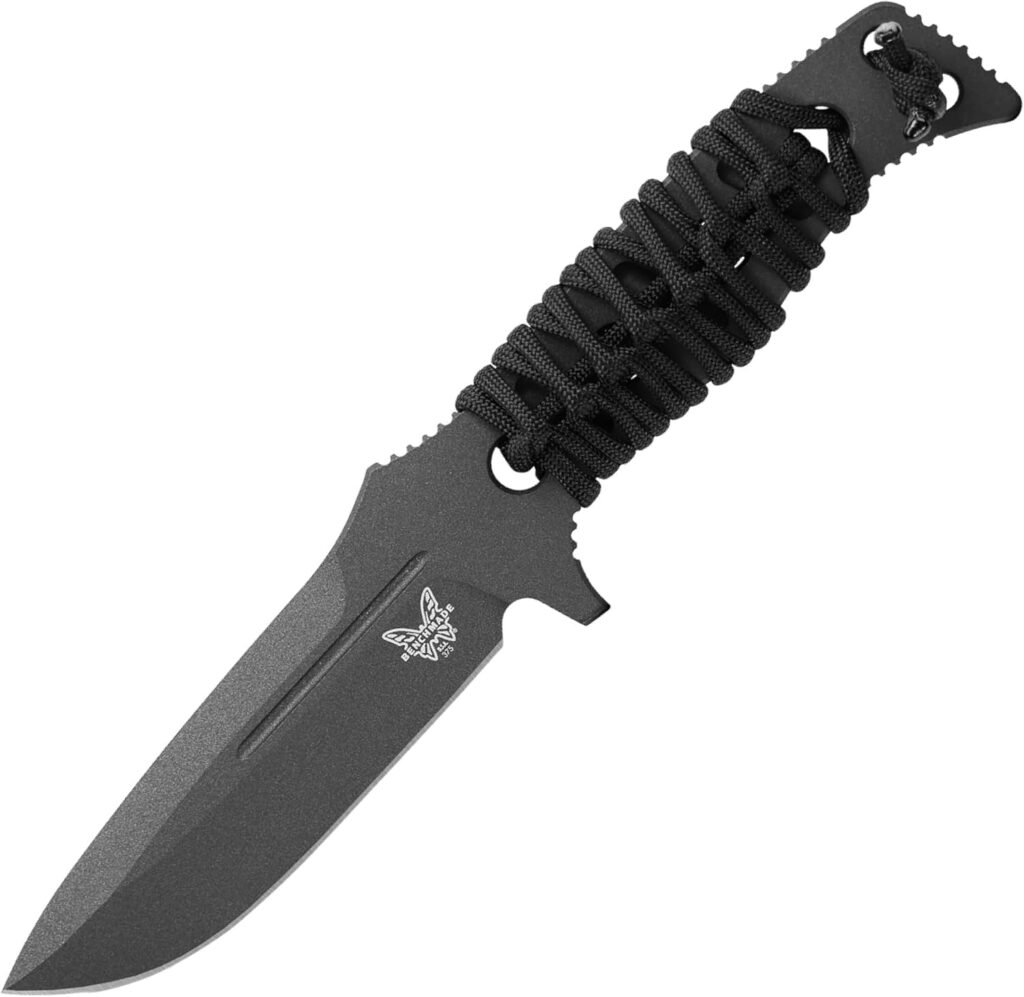
The Nimravus has been Benchmade’s best-selling fixed blade for years, and for good reason. It is slim, fast, and uses 154CM stainless steel that holds an edge through grueling use.
Why it wins:
The aluminum handle is textured for a rock-solid grip even with gloves. It’s light enough to mount on a plate carrier without causing a “sag,” yet it’s strong enough for serious tactical work.
2. Ka-Bar USMC Fighting Knife
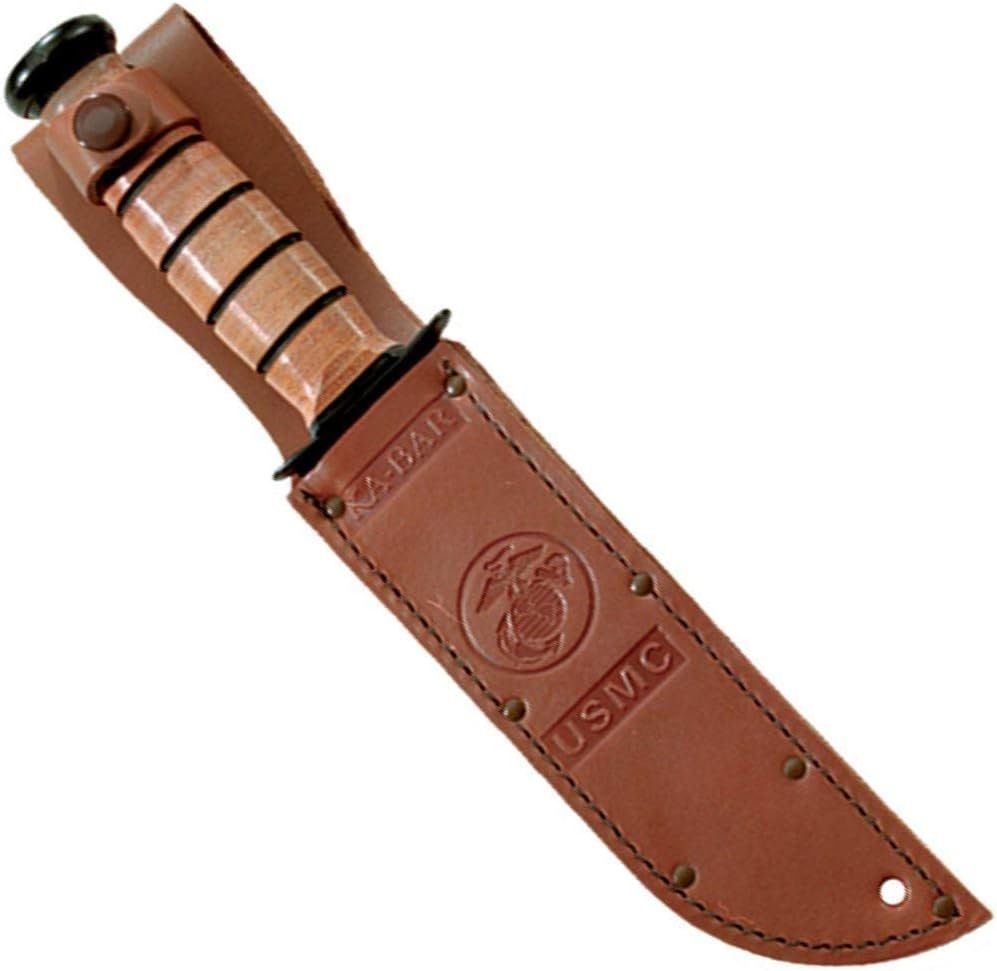
If it ain’t broke, don’t fix it. The classic Ka-Bar is still one of the most intimidating and functional combat knives you can own.
Why it wins:
The 7-inch blade gives you a significant reach advantage. The 1095 Cro-Van steel is easy to maintain, and the stacked leather handle provides a classic feel that molds to your hand over time.
3. Gerber StrongArm

Gerber has reclaimed its reputation with the StrongArm. Built in Portland, Oregon, this is the best “bang for your buck” in the tactical world.
Why it wins:
The rubberized diamond-texture grip is the most secure handle I’ve ever felt. It also comes with a modular sheath system that allows for vertical, horizontal, or MOLLE mounting right out of the box.
4. ESEE 4
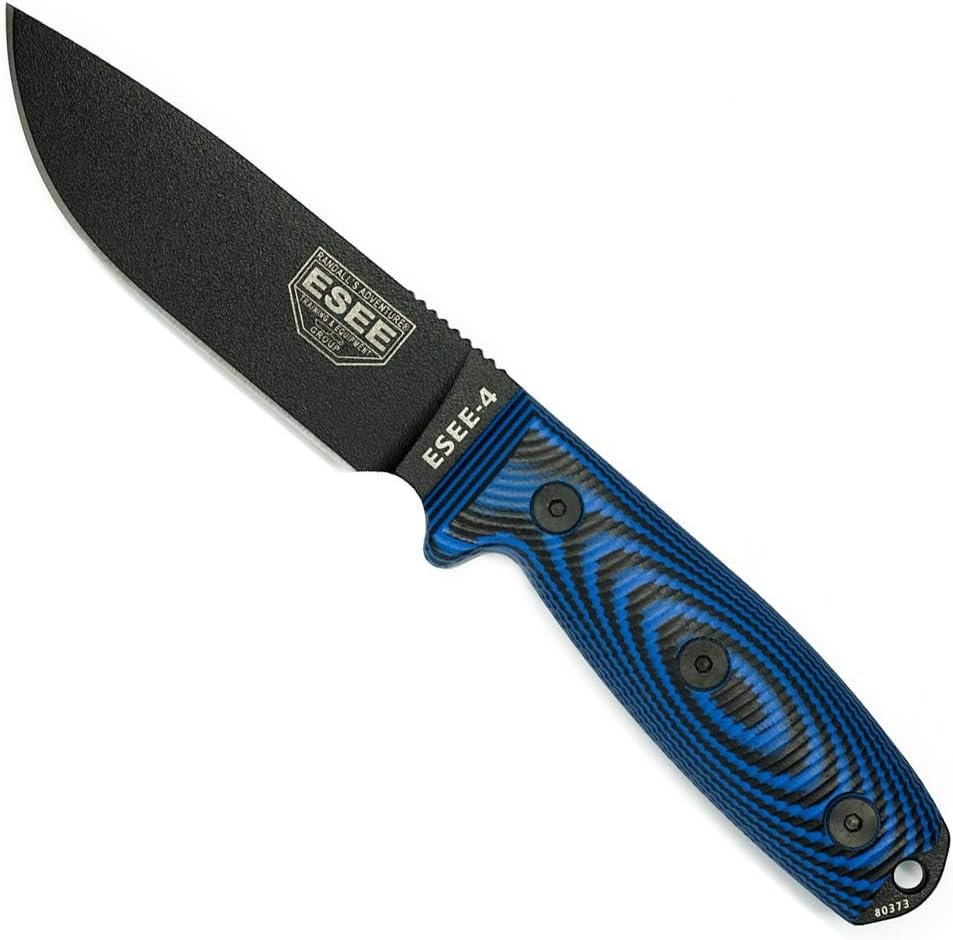
ESEE knives are designed by survival instructors who have spent decades in the jungle. The ESEE 4 is a “no-excuses” combat tool.
Why it wins:
The Micarta handles actually get grippier when they are wet. This is the knife you want if you’re operating in mud, rain, or snow. Plus, ESEE’s lifetime warranty is the best in the industry—if you break it, they replace it. Period.
Combat Knife vs. Survival Knife
Many people use these terms interchangeably, but they are different tools.
| Feature | Combat Knife | Survival Knife |
| Primary Goal | Self-defense / Tactical use | Shelter building / Food prep |
| Blade Thickness | Slimmer for faster movement | Thicker for prying/batoning |
| Handle Grip | High-traction (G10/Rubber) | Comfort for long use (Wood/Micarta) |
| Guard | Large guard to protect fingers | Smaller guard to allow fine work |
Maintenance for Your Life-Saving Tool
A combat knife is an investment. If you treat it like a $10 gas station knife, it will fail you when you need it most.
- Cleaning: After every use, wipe the blade down. If you’ve been in saltwater, rinse it with fresh water immediately.
- Oiling: If you have a carbon steel blade (like an ESEE or Ka-Bar), apply a thin layer of mineral oil once a week to prevent pitting.
- The Sheath: Check your sheath for debris. A small pebble inside a Kydex sheath can act like sandpaper, ruining your edge every time you draw the knife.
The Legality of Combat Knives
This is where things get tricky. In 2026, knife laws are stricter than ever in certain areas.
- Daggers: Any knife with two sharp edges is often legally classified as a “dagger.” In many states, these are illegal to carry concealed.
- Blade Length: Be aware of the “4-inch rule.” Many cities ban anything with a blade longer than 4 inches for EDC.
- Intent: In the eyes of the law, carrying a knife “for combat” is different from carrying a knife “as a tool.” Always refer to your knife as a utility tool when speaking with authorities.
FAQs: About Combat Knives
Q: Is a serrated edge better for combat?
A: Generally, no. While serrations are great for cutting through rope or webbing, they are difficult to sharpen in the field. A plain edge is more versatile and easier to maintain.
Q: Can I use a combat knife for camping?
A: Absolutely. Most combat knives, like the ESEE 4 or the StrongArm, are excellent for camping and bushcraft tasks because they are built to such high durability standards.
Q: Should I choose stainless or carbon steel?
A: If you live near the ocean or in a humid climate, go with Stainless (like 154CM or Magnacut). If you want a knife that is easy to sharpen yourself and can handle brutal impacts, go with Carbon (like 1095).
Q: How do I sharpen a combat knife?
A: I recommend a Work Sharp Field Sharpener. It’s compact, fits in a bag, and has built-in guides to help you maintain a perfect 20-degree edge even when you’re in the woods.
Read More Guide: The Best Horizontal Carry Knives for Real World Comfort
Final Thoughts: Choosing Your Blade
Choosing a combat knife is about more than just picking a cool-looking piece of steel; it’s about selecting a lifeline. This tool serves as a symbol of your commitment to your own safety and the preparedness of those around you. In a high-stakes environment, you don’t want to be second-guessing your gear.
Whether you lean toward the battle-proven heritage of the Ka-Bar USMC, the precision-engineered speed of the Benchmade Nimravus, or the indestructible nature of the ESEE 4, remember that the tool is only half of the equation. A knife is an extension of the person holding it.
Owning the best blade in the world means very little if you haven’t built the muscle memory to use it under pressure. Invest the time in training, learn how to maintain your edge, and understand the legalities of your carry. When you find that perfect balance between a high-quality blade and a prepared mindset, you aren’t just carrying a knife—you’re carrying confidence.