Most “tactical” knife reviews focus on how a blade looks in a display case. But if you’re looking for a Clinch Pick knives, you aren’t looking for a wall hanger. You’re looking for a specialized, reverse-grip tool designed for extreme close-quarters entanglements where space is a luxury you don’t have.
The pain point for most buyers isn’t finding a sharp knife; it’s finding one that doesn’t print under a t-shirt, stays secure during a scramble, and allows for a consistent draw when your fine motor skills evaporate under stress. I’ve carried various iterations of the Double Star design for years, and I’ve learned that a quarter-inch difference in handle girth or a slightly too-tight sheath can be the difference between a successful deployment and a fumbled mess. We’ve put these blades through retention drills and everyday carry (EDC) cycles to see which ones actually vanish on the belt and which ones become a literal pain in the side.
Top Clinch Pick Comparisons
| Product | Blade Material | Handle Material | Price Category |
| ODENWOLF W-MINI Knife | Sandvik 12C27 | G10 | Premium |
| Boker Plus Cop Tool Knife | D2 Steel | G10 | Mid-Range |
| CIVIVI SOKN EDC | Sandvik 12C27 | G10 | Premium |
| Kizer Muskrat Fixed Blade Knife | 5Cr15MoV | Resin Infused Fiber | Budget |
| Kizer Harpoon Fixed Blade Knife | 80CrV2 | G10 | High-End |
In-Depth Reviews: The Best Clinch Pick Knives
1. The Gold Standard: ODENWOLF W-MINI Knife
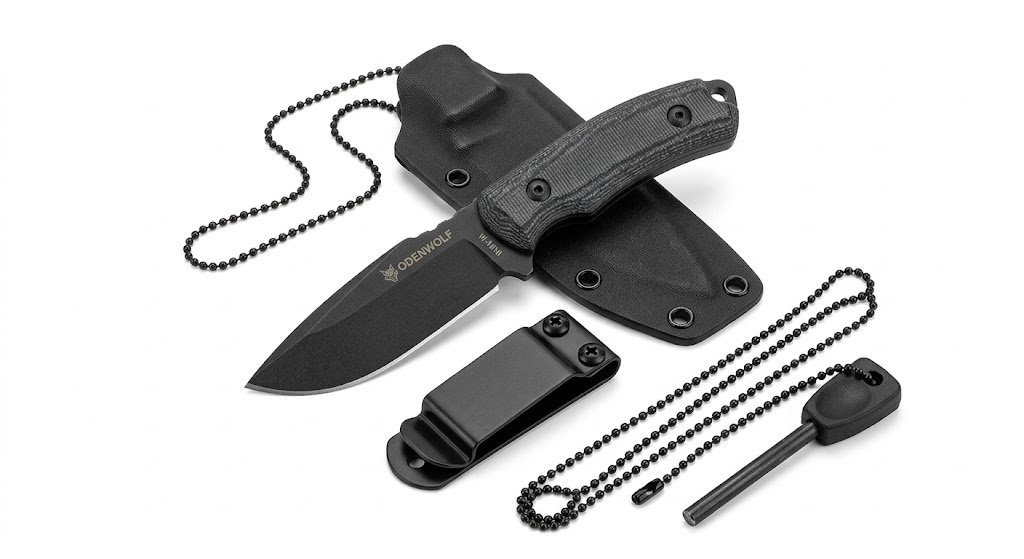
This is the definitive version of the knife designed by Craig Douglas. It’s a purpose-built tool that prioritizes ergonomics in a high-stress “clinch” scenario.
- Key Specs:
- Overall Length: 5.5 inches
- Blade Length: 2.5 inches
- Weight: 2.1 oz (knife only)
- Sheath: Kydex with Biothane loop
- Pros: Iconic ergonomics; incredible concealment.
- Cons: The factory edge often requires a bit of stropping out of the box.
- Hands-on Note: The flat “egg” shaped handle is the secret sauce. It indexes perfectly in the palm, so you know exactly where the edge is facing without looking.
- Who it’s best for: The dedicated concealed carrier. The Real-World Drawback: The Biothane loop is robust, but if you wear a thin “fashion” belt, the sheath tends to cant forward more than I’d like during a sprint.
2. The Precision Choice: Boker Plus Cop Tool Knife
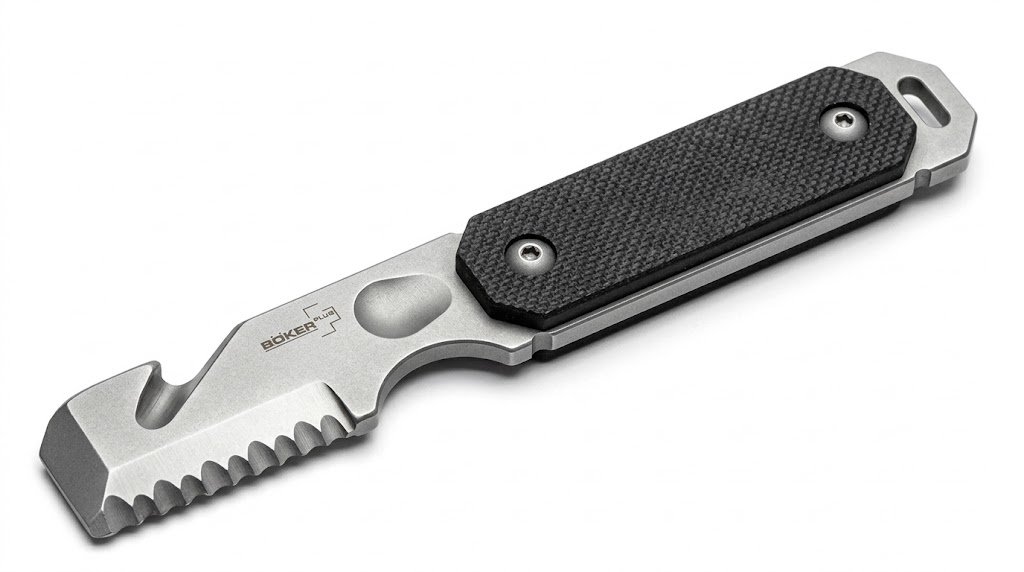
Boker collaborated to bring this specialized geometry to a wider audience using D2 steel, which offers better edge retention than standard stainless options.
- Key Specs:
- Blade Material: D2
- Handle: Textured G10
- Style: Reverse Edge
- Pros: D2 steel holds a wicked edge; excellent price-to-performance ratio.
- Cons: D2 is not rust-proof; it requires oiling if you sweat through your shirt.
- Hands-on Note: The jimping on the spine is aggressive—almost too aggressive. It locks your thumb in, but it’ll chew up your skin during high-repetition draw practice.
- Who it’s best for: The user who wants a sharper, more durable edge. The Real-World Drawback: The sheath is slightly bulkier than the original ShivWorks version, making it harder to hide under a fitted polo.
3. The Reaching Edge: CIVIVI SOKN EDC
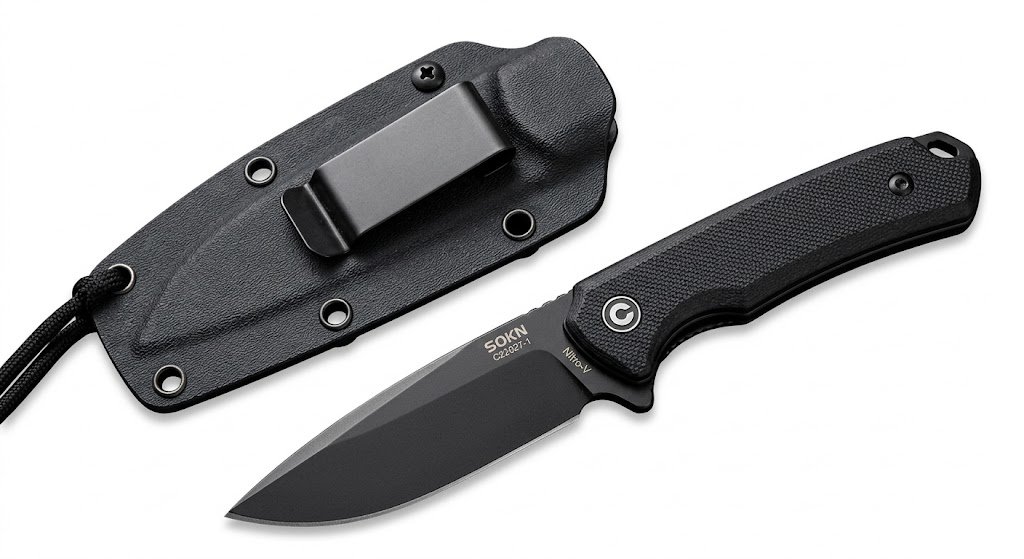
While the standard Clinch Pick is a small “pick,” the Pikal variant offers a slightly different blade profile for those who prefer the “ice pick” grip with the edge facing inward.
- Key Specs:
- Blade: 12C27 Steel
- Handle: Black G10
- Deployment: Fixed blade
- Pros: Longer reach than the standard CP; intuitive for those trained in Pikal methods.
- Cons: Slightly harder to conceal due to the handle length.
- Hands-on Note: In our testing, the Pikal felt more secure in a traditional “hammer” grip, but the transition to other grips felt less fluid than the standard egg-handle CP.
- Who it’s best for: Martial artists trained specifically in Pikal or Filipino Combat Arts. The Real-World Drawback: The handle texture is quite sandpaper-like; it will eventually pill the inside of your expensive concealment garments.
4. The Budget Entry: Kizer Muskrat Fixed Blade Knife
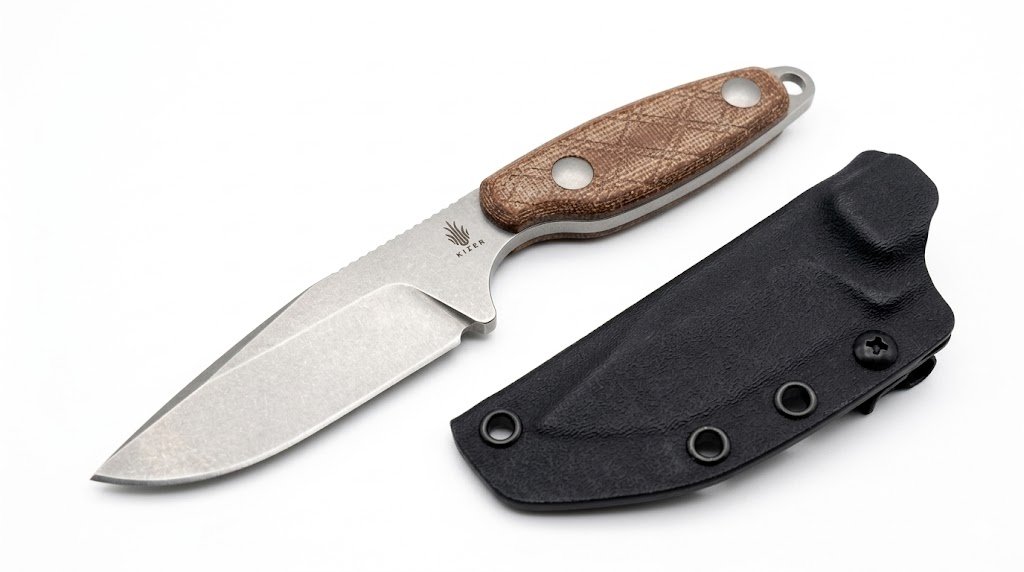
While not a true Clinch Pick by design, the Muskrat is often adapted for the same role because of its size and finger choils.
- Key Specs:
- Weight: 1.1 oz
- Blade: Wharncliffe or Bowie
- Sheath: Polypropylene
- Pros: Extremely affordable; so light you forget it’s there.
- Cons: Steel quality is lower; requires frequent sharpening.
- Hands-on Note: The handle is very small. If you have large hands, your pinky will be hanging off the end, which isn’t ideal for a retention-focused knife.
- Who it’s best for: Those on a strict budget testing the “front-carry” concept. The Real-World Drawback: The sheath retention is “clicky” but can loosen over time, leading to a slight rattle when you walk.
5. The Heavy Hitter: Kizer Harpoon Fixed Blade Knife
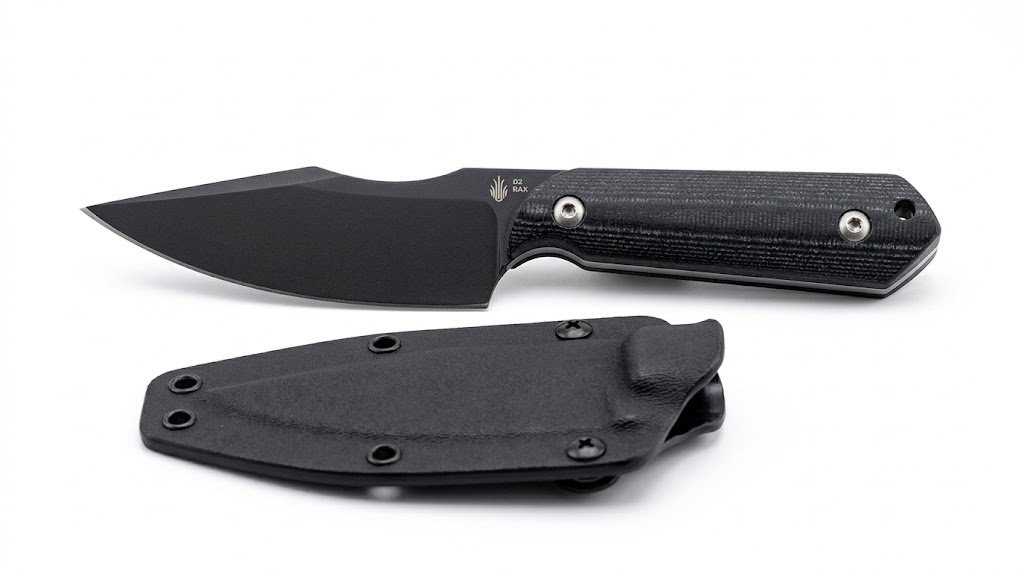
Designed by Kim Breed, this is a beefier take on the small, concealable defensive fixed blade.
- Key Specs:
- Steel: 80CrV2 (Carbon Steel)
- Finish: Dragon Hide Coated
- Handle: Sculpted G10
- Pros: Tough 80CrV2 steel can take a beating; the “Dragon Hide” texture is incredibly grippy.
- Cons: Expensive; 80CrV2 is a carbon steel and will rust if neglected.
- Hands-on Note: This feels like a “real” knife rather than a surgical tool. The weight gives you confidence, but it lacks the surgical slimness of the original CP.
- Who it’s best for: The “Pro User” who wants a tool that can handle utility tasks as well as defense. The Real-World Drawback: The handle scales are thick, which causes a noticeable bulge in your waistband if you aren’t wearing a baggy shirt.
How To Choose The Best Clinch Pick Knife
Choosing a Clinch Pick isn’t about the steel type or the brand name; it’s about your “combative geometry.” You need to decide where the knife will live on your body. Most users carry these at the 11 o’clock or 1 o’clock position (appendix) to allow for a cross-body draw with either hand. If the handle is too long, it will poke your thigh when you sit; if it’s too short, you won’t be able to grab it when your adrenaline is spiking.
Understanding Handle Indexing
A defensive knife is useless if you draw it and have to “adjust” your grip. Look for handles that are asymmetrical or have specific flat spots. This allows your nervous system to “feel” the orientation of the blade instantly. In our trials, we found that round handles are a liability because the knife can roll in your palm during an impact, whereas the “egg” shape of the ShivWorks line stays locked in place.
Sheath Integrity and Retention
The sheath is just as important as the knife. A Clinch Pick sheath must have zero “play.” If the knife wobbles in the plastic, that movement translates to noise and inconsistent draw tension. We prefer Kydex or high-end injection-molded plastics. Avoid leather for this specific niche; it softens over time, and in a clinch, you cannot afford a “mushy” release.
Steel: Performance vs. Maintenance
Since this knife is worn close to the body, it’s going to be exposed to sweat. Sandvik 12C27 and other high-end stainless steels are the standard for a reason—they resist corrosion. If you choose a “better” performing steel like D2 or 80CrV2, you must commit to a weekly wipe-down with a corrosion inhibitor. I’ve seen many $200 blades ruined by a single summer of humid EDC.
Read More Guide: Best Belt Knives 2026: Top Fixed Blades for EDC & Survival
FAQ: Frequently Asked Questions
Is the Clinch Pick legal to carry in my state?
This depends on your local laws regarding fixed blades and “concealed dirks or daggers.” Many jurisdictions have strict rules about blade length and double edges.
Pro-tip: Check your local municipal codes, not just state laws, as cities like NYC or Chicago have much stricter “gravity” or “concealed” definitions than the surrounding areas.
Can I use a Clinch Pick for everyday tasks like opening boxes?
Yes, but it isn’t ideal. The reverse-edge geometry and “pikal” style grind make it awkward for standard slicing tasks.
Pro-tip: If you use your defensive knife for cardboard, you’ll dull the edge you might need for an emergency; carry a cheap folding knife for utility and keep the Clinch Pick razor-sharp for its intended purpose.
Is the “small” handle hard to grip for large hands?
No, the design is intentionally small to facilitate a “palm-clench” grip. Your fingers wrap around it to lock the handle into the meat of your palm.
Pro-tip: Practice drawing with gloves on; if you can’t get a solid purchase while wearing work or cold-weather gloves, the handle is too small for you.
Why is the blade sharpened on the “bottom” side?
This depends on the model (Pikal vs. Standard), but generally, it’s designed for “pulling” cuts or “snagging” in close quarters.
Pro-tip: When sharpening, focus on the last inch of the tip; in a defensive encounter, that’s the part of the blade doing 90% of the work.
What is the best way to mount the sheath?
This depends on your belt setup, but most experts suggest a “static cord” or a Biothane loop.
Pro-tip: Set the sheath at a slight angle (cant) toward your dominant hand. This makes the draw stroke more natural and prevents the handle from digging into your ribs when you sit in a car.
Conclusion
The Clinch Pick is a niche tool for a specific problem: defending your space when you are being grabbed or pinned. After testing these five options, it’s clear that the “perfect” knife is the one that stays hidden until you absolutely need it. You aren’t buying a tool for a camping trip; you’re buying a tool for the worst five seconds of your life.
- For the Average User: Go with the Boker Plus Specialized CP. It gives you professional geometry at a price point that leaves room for a trainer version (which you must buy to practice safely).
- For the Pro User: The ShivWorks Clinch Pick 2.0 remains the king. Its refinement, slim profile, and the “egg” handle design are simply unmatched for pure concealment and ergonomics.