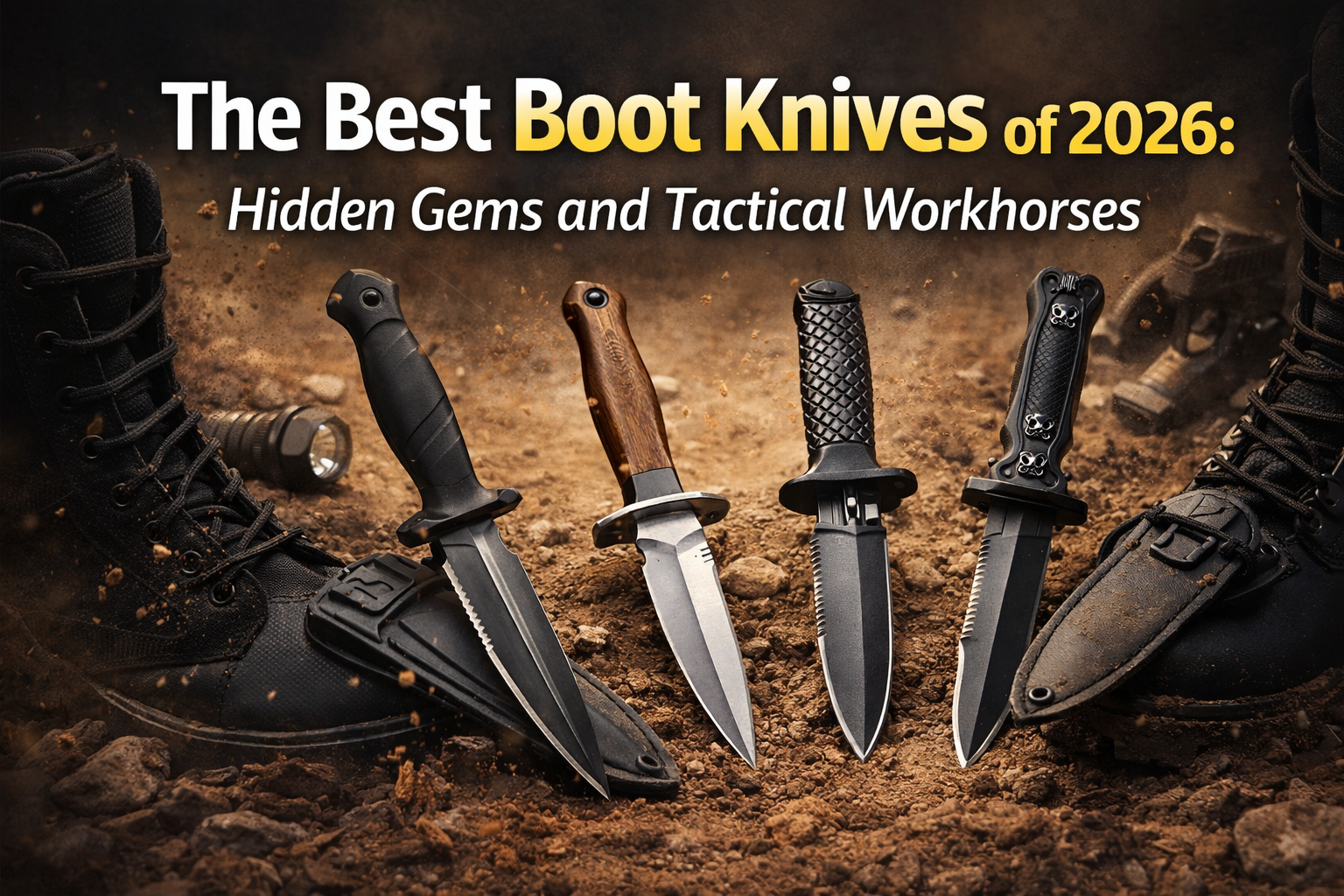
Most boot knives look great in a professional studio photo but fail the moment you actually try to walk a mile with one strapped to your shin. I’ve spent the last decade testing blades in the field, and the biggest pain point isn’t the steel quality—it’s the deployment and discomfort. You buy a knife for peace of mind, but if the sheath clips dig into your fibula or the handle prints through your jeans like a beacon, you’ll eventually leave it on the nightstand. That defeats the entire purpose of a backup blade.
A boot knife is a tool of last resort. It needs to be invisible until the exact millisecond you need it. In my testing, I found that many “tactical” options are too bulky for standard 6-inch work boots, while others have clips so weak they stay attached to your hand instead of your boot during a draw. We’ve filtered through the hype to find the blades that actually disappear into your footwear while remaining accessible under pressure.
Top Picks For 2026
| Product | Blade Material | Overall Length | Price Category | Best For |
| SOG Instinct NB | 5Cr15MoV | 5.9″ | Budget-Friendly | Deep Concealment |
| CRKT Sting | 1050 Carbon | 6.85″ | Mid-Range | Durability/Balance |
| Cold Steel Counter Tac II | AUS 8A | 6.75″ | Mid-Range | Piercing Power |
| Gerber Ghoststrike | 420HC | 6.9″ | Mid-Range | Low Profile |
| Smith & Wesson SWHRT9B | 7Cr17MoV | 9.0″ | Value | Reach/Self-Defense |
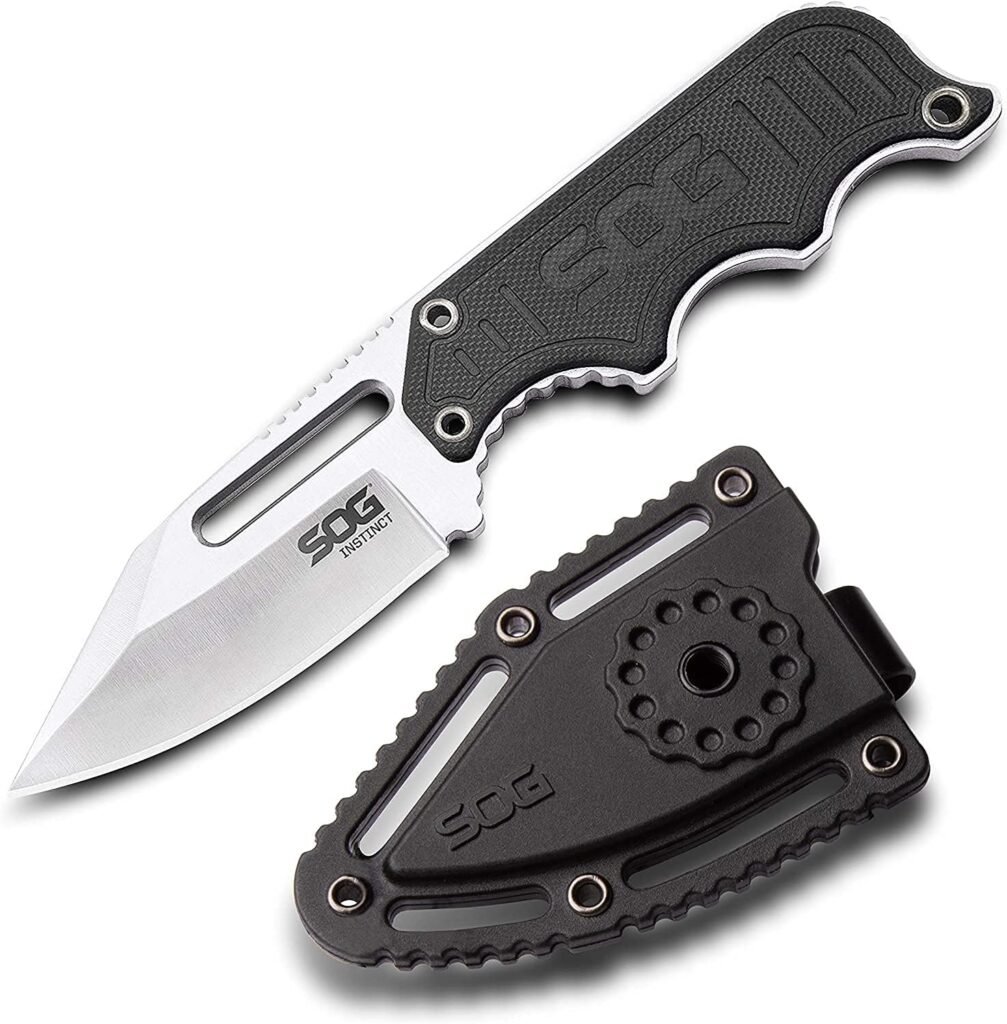
1. The Low-Profile Specialist: SOG Instinct NB
The Big Win
This is the ultimate “forget you’re wearing it” knife. Its skeletonized design and compact footprint make it the best option for people who wear smaller boots or even tactical sneakers.
- Key Specs:
- Blade Length: 2.3″
- Weight: 2.3 oz
- Handle: G10 overlays
- Sheath: Hard molded nylon with 360-degree clip
- Pros: Incredible ergonomics for a small blade; multiple carry options.
- Cons: Finger choils are tight for those with XL glove-sized hands.
Hands-on Note: I noticed the jimping (the notches on the spine) is surprisingly aggressive. It locks your thumb in perfectly, even if your hands are sweaty or cold, providing much more leverage than the small size suggests.
The Catch: The 5Cr15MoV steel is easy to sharpen, but it won’t hold an edge through heavy utility work. Treat this strictly as a backup tool, not a daily box cutter.
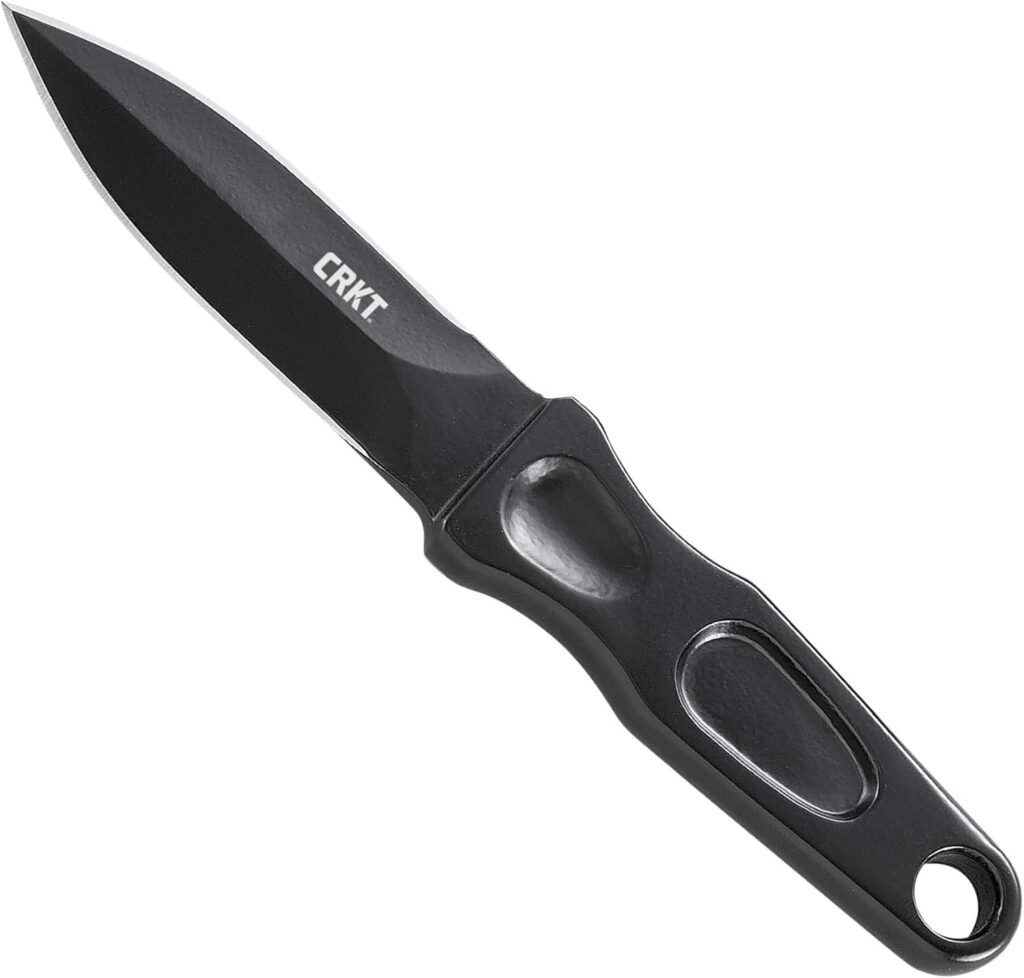
2. The Classic Tank: CRKT Sting
The Big Win
Forged from a single piece of 1050 carbon steel, this knife is virtually indestructible. It’s a modern take on a classic A.G. Russell design that prioritizes structural integrity over everything else.
- Key Specs:
- Blade Length: 3.2″
- Weight: 3.9 oz
- Finish: Black non-reflective E-coat
- Edge: Dual-edged spear point
- Pros: Perfectly balanced; no handles to crack or lose; excellent weight for its size.
- Cons: Carbon steel requires a light coat of oil to prevent surface rust in humid climates.
Hands-on Note: The weight distribution on the Sting is centered right at the bolster. When you pull this from a boot, it feels like an extension of your pointer finger.
The Catch: The sheath is a bit “loud.” The nylon strap and hook-and-loop closure make a distinct ripping sound that ruins any chance of a stealthy deployment.
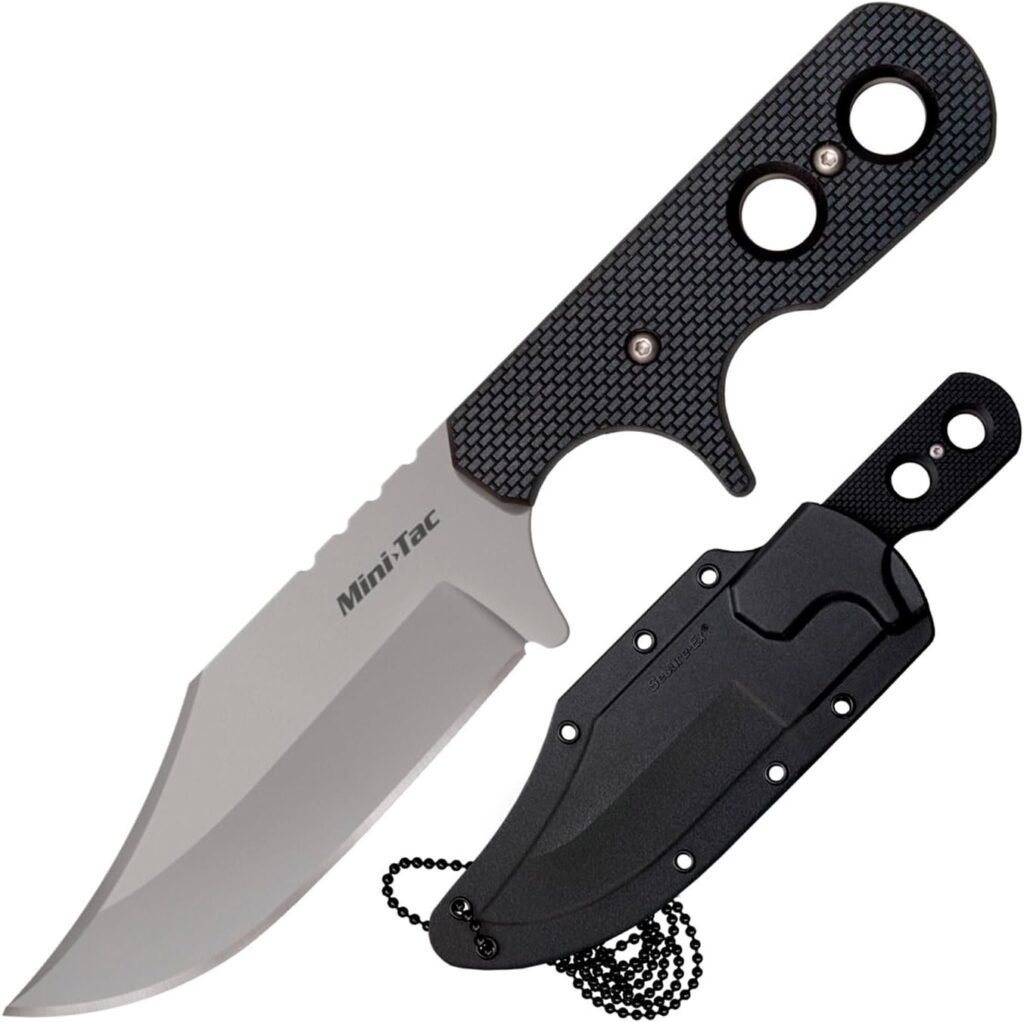
3. The Professional Choice: Cold Steel Counter Tac II
The Big Win
The “Zero Grind” on this blade makes it one of the most effective piercing tools on the market. If your primary concern is defensive capability, the needle-sharp tip of the Counter Tac II is hard to beat.
- Key Specs:
- Blade Length: 3.35″
- Handle: Kray-Ex (Rubberized)
- Steel: AUS 8A
- Sheath: Secure-Ex
- Pros: The grip is extremely “sticky” even when wet; the deep blood grooves reduce weight.
- Cons: The sub-hilt design can snag on loose pant liners if not positioned correctly.
Hands-on Note: Cold Steel’s Kray-Ex handle material feels a bit “cheap” or rubbery at first touch, but after five minutes of use, you realize why they use it. It absorbs vibration and stays glued to your palm.
The Catch: Because the blade is hollow ground on one side, it’s a nightmare to sharpen if you aren’t experienced with varied bevels.
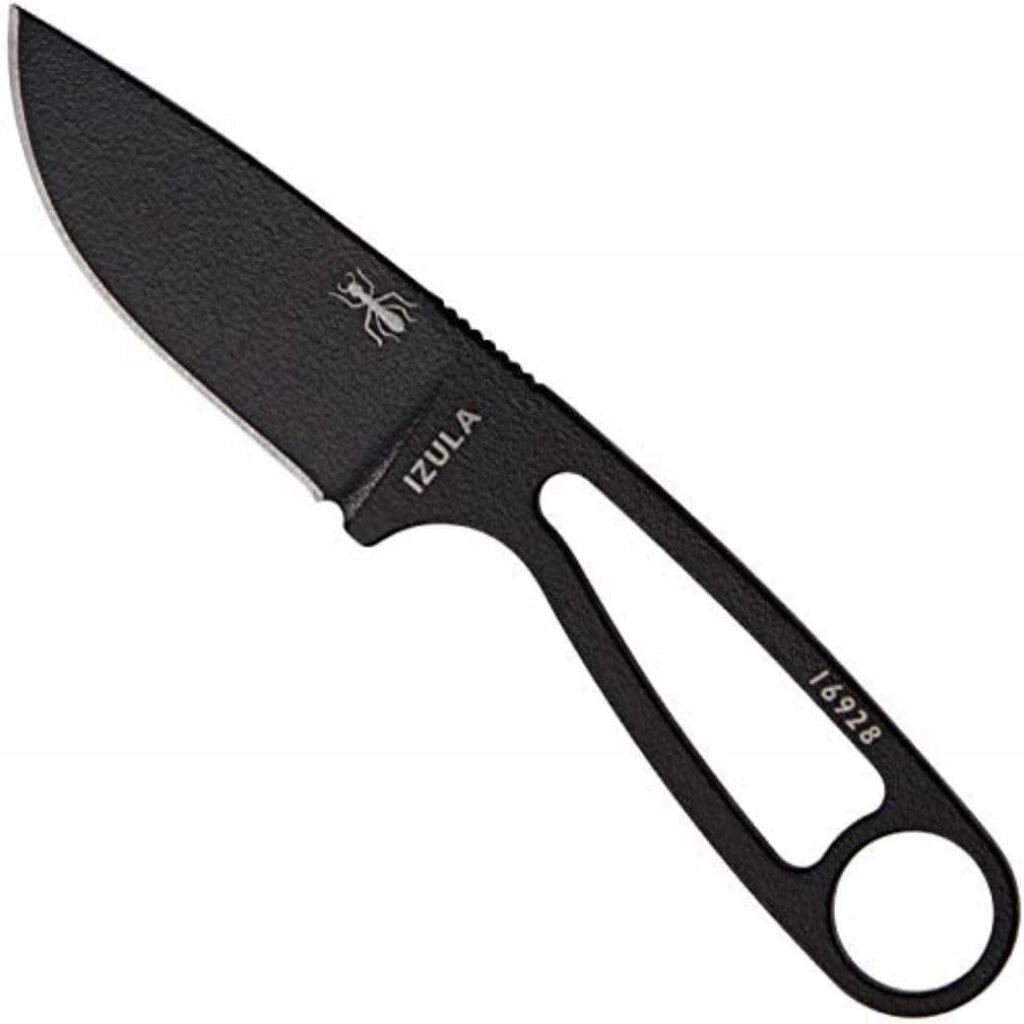
4. The Stealth King: Gerber Ghoststrike
The Big Win
The Ghoststrike features an ultra-slim profile and a modular sheath system that is the thinnest in this category. It sits incredibly flush against the ankle, making it nearly impossible to detect.
- Key Specs:
- Blade Length: 3.3″
- Weight: 3.6 oz
- Handle: Rubberized overmold
- Steel: 420HC
- Pros: Minimalist footprint; the skeletal handle is surprisingly comfortable.
- Cons: The factory edge is often “toothy” and requires a bit of stropping out of the box.
Hands-on Note: I wore this for a 12-hour shift in 8-inch duty boots. Unlike heavier knives, it didn’t cause my boot to sag on one side or create a hot spot on my ankle bone.
The Catch: The rubber grip is a dust and lint magnet. If you carry this inside your boot, expect to be cleaning fuzz off the handle every few days.
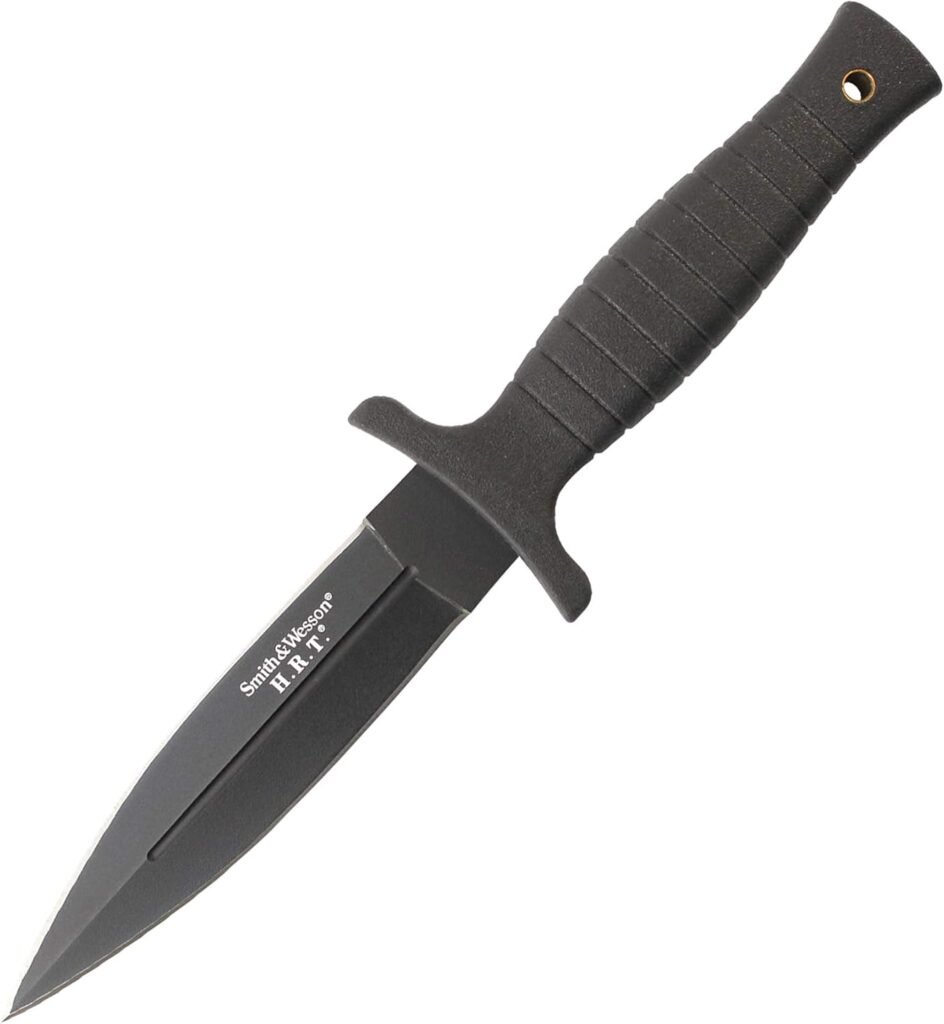
5. The Value Heavyweight: Smith & Wesson SWHRT9B
The Big Win
If you want the most “reach” for the least amount of money, the HRT (Hostage Rescue Team) series is the gold standard. It’s a full-sized dagger that fits into a boot.
- Key Specs:
- Blade Length: 4.7″
- Weight: 7.7 oz
- Handle: Aluminum with rubber coating
- Steel: 7Cr17MoV
- Pros: Long reach; very affordable; includes a lanyard hole.
- Cons: It’s quite heavy; you definitely feel the weight on your leg after a few hours.
Hands-on Note: The black powder coating on the blade is thick. While it protects against corrosion, it adds a bit of drag when cutting through thick materials like cardboard or leather.
The Catch: The metal clip on the leather sheath is very stiff. It takes significant effort to slide it over a thick leather boot, and it can actually scratch the leather if you aren’t careful.
How To Choose The Best Boot Knife
Understanding Your Boot Geometry
Not all boots are created equal. If you wear 6-inch “hiker” style boots, you are limited to knives with a total length of under 7 inches. Anything longer will poke out of the top or require an awkward mounting angle. For those in 8 or 9-inch duty boots, you have the real estate for a full-sized dagger like the Smith & Wesson HRT. Before buying, measure the “flat” area of your boot’s shaft to ensure the sheath won’t overlap with your ankle bone or the top of the collar.
Retention vs. Accessibility
A boot knife that falls out during a run is a liability, but one that’s stuck in the sheath is useless. Look for sheaths made of Kydex or Secure-Ex that offer a “click” retention. This mechanical lock ensures the blade stays put during high activity. Avoid “gravity fit” leather sheaths unless they have a secondary snap strap. I always recommend testing your draw while sitting down, as this is when most people realize their pants are too tight to actually reach their boot.
Steel Selection for the Ankle
Environment matters more for boot knives than pocket knives. Your boots are close to the ground, exposed to puddles, snow, and salt. Furthermore, the heat from your leg can cause “micro-sweating” inside the boot. I prioritize corrosion resistance (like AUS 8A or 420HC) over edge retention. A slightly dull knife that isn’t rusted shut is always better than a high-carbon blade that has seized into its sheath due to moisture.
Read More Guide: Balisong Butterfly Knife: Mastery, Mechanics, and Modern Utility
FAQ
Is a boot knife legal to carry in my state?
This depends entirely on your local jurisdiction, specifically regarding “concealed fixed blades” and “double-edged” knives. Many states allow pocket knives but have strict prohibitions on daggers or knives hidden in footwear.
Pro-tip: Always check your local city ordinances, not just state laws, as places like NYC or Chicago have much stricter rules than the surrounding areas.
Can I wear a boot knife with cowboy boots?
Yes, and many people find this to be the most comfortable way to carry. Cowboy boots provide a wide, stiff shaft that prevents the knife from pressing against your leg.
Pro-tip: Use a clip-on sheath and attach it to the “pull strap” on the inside of the boot for maximum stability and concealment.
Does the knife rub against your skin?
This depends on your sock choice. If you wear “no-show” socks, the sheath will likely cause irritation or chafing within an hour.
Pro-tip: Always wear over-the-calf or mid-calf socks when carrying a boot knife. The fabric acts as a barrier and helps wick away the moisture that can cause the sheath to slip.
How do I prevent the knife from “printing” through my pants?
This is usually caused by a handle that is too thick. Look for knives with “skeletonized” handles or thin G10 scales.
Pro-tip: Mount the knife on the inside of your non-dominant leg. This keeps the bulge hidden between your legs while walking rather than sticking out on the side of your calf.
Are double-edged blades better for boot carry?
Yes, for defensive purposes, as you don’t have to worry about the orientation of the blade when drawing in the dark. However, they are less useful for utility tasks.
Pro-tip: If you choose a double-edged blade, practice your draw with a trainer or a taped edge; it’s very easy to nick your own thumb when pulling from a cramped boot position.
Conclusion
Choosing a boot knife is a balance between comfort and capability. If you choose a blade that is too heavy, you’ll stop wearing it. If you choose one that is too small, it won’t be there for you in a crisis. After years of testing, it’s clear that the “perfect” knife is the one that fits your specific footwear and daily activity level.
- For the Average User: Go with the Gerber Ghoststrike. It is thin, light, and the rubberized grip makes it safe to handle even for those who don’t train with blades daily.
- For the Pro User: Choose the CRKT Sting. Its one-piece construction and carbon steel build are designed for extreme use cases where equipment failure is not an option.