A few months ago, I was helping a neighbor clear some brush near a creek behind our property. He’d just bought a flashy, $350 “limited edition” folding knife. It was a beautiful piece of engineering—anodized titanium scales and a blade made of one of those ultra-hard boutique steels you see at the absolute top of every online ranking chart.
He tried to shave a thick, sap-covered branch to make a tent stake for a backyard project. I heard a distinct, metallic “tink.”
His face went pale. The edge hadn’t just dulled; a tiny, crescent-shaped chunk had snapped right out of the belly of the blade. He had hit a hard knot in the wood, and because his steel was “too good”—meaning it was pushed to an extreme level of hardness that made it brittle—it simply gave up under pressure.
I pulled out my old Spyderco PM2 in S30V, finished the job, and then sliced through a stray piece of nylon rope for good measure. My knife was a third of the price, but it was the better tool for the mess of the real world.
That is the secret to finding the best knife steels in 2026. It is not about who has the highest numbers on a laboratory test or who has the most expensive alloy. It is about matching the chemistry of the metal to the chaos of your daily life.
The Evolution of Metallurgy in 2026
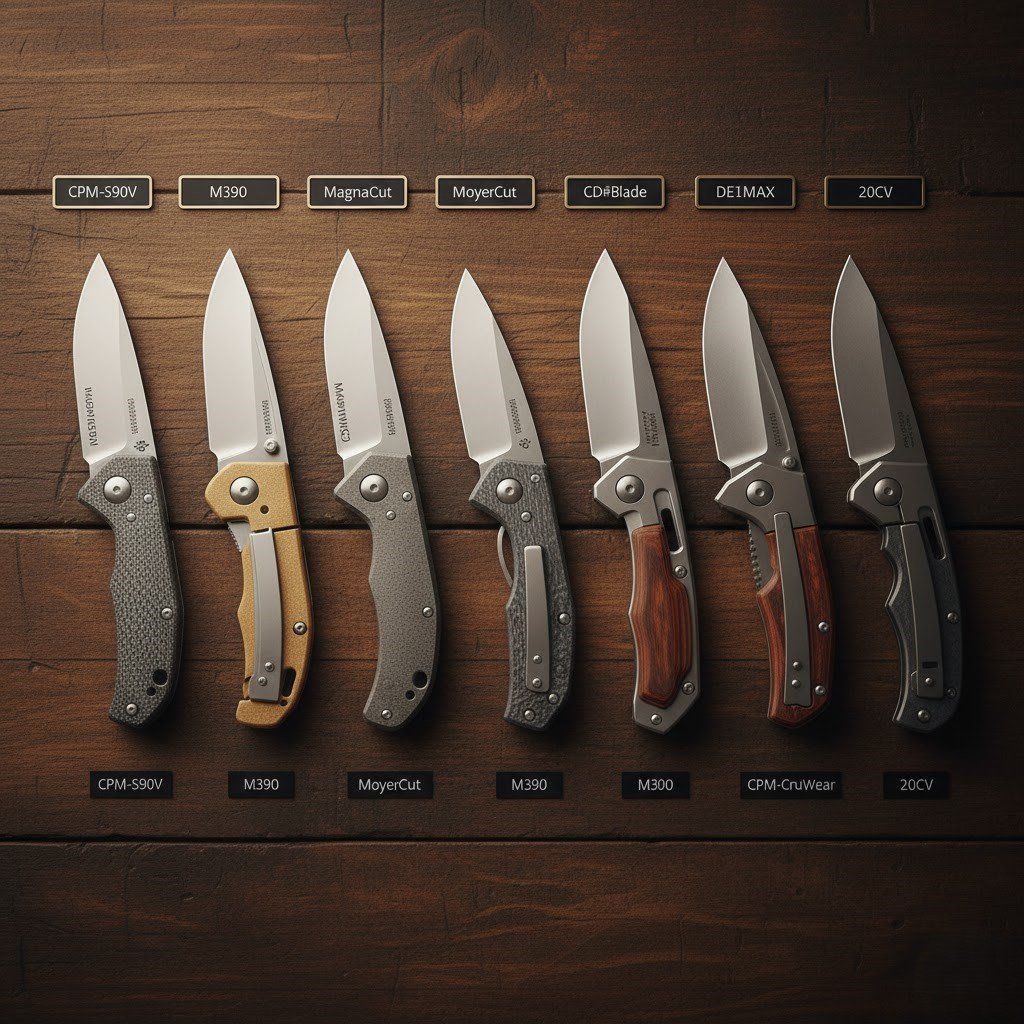
If you haven’t looked at the knife market in a few years, you might feel lost in an “alphabet soup” of names: S45VN, M390, LC200N, and the new kings, MagnaCut and MagnaMax.
For a long time, knife owners were forced to live by a rule of “Trade-offs.” You could have a knife that stayed sharp forever, but it would be a nightmare to sharpen and likely brittle. Or, you could have a knife that was essentially rust-proof, but it would go dull after cutting three cardboard boxes.
In 2026, those trade-offs are disappearing. We are living in the age of Powder Metallurgy (PM). Instead of melting blocks of steel together, manufacturers are “atomizing” liquid steel into a fine powder and then pressing it together under extreme heat and pressure. This creates a “grain” so fine that the steel becomes much tougher and more consistent than the steels our grandfathers carried.
What Actually Makes an EDC Steel “Good”?
When we talk about Everyday Carry (EDC), we are talking about a tool that has to be a jack-of-all-trades. Here is how I break down the four pillars of a real-world blade.
1. Corrosion Resistance: The Sweat Test
Your knife lives in your pocket. It is pressed against your leg through hot summer days, exposed to sweat, humidity, and occasionally rain. A steel with poor corrosion resistance will develop “tea stains” (micro-rust) or pitting within days. For a primary EDC, stainless properties are almost always a requirement.
2. Edge Retention: The Long Haul
This is the steel’s ability to resist wear. Think of it as the “mileage” of your knife. A steel with high wear resistance uses hard particles called carbides to act like microscopic teeth, allowing the knife to slice through abrasive materials like cardboard and rope without losing its “bite.”
3. Toughness: The Safety Net
This is where my neighbor’s expensive knife failed. Toughness is the ability to resist chips or total snaps. If you accidentally hit a staple inside a shipping box or have to put a slight “twist” on the blade while cutting plastic, you want the steel to flex slightly rather than shatter.
4. Ease of Maintenance
In 2026, we have steels that can hold an edge for a year. The problem? It might take you four hours on a diamond stone to get that edge back once it finally goes dull. A “good” EDC steel is one that you can touch up in five minutes on a ceramic rod or a leather strop.
The 2026 Tier List (Top 3 Recommendations)
While there are dozens of steels on the market, your search should focus on three specific tiers that represent the best of modern technology.
The Professional Standard: CPM S35VN
If I had to design a “no-fuss” steel for a person who just wants a knife that works, it would be S35VN. It was created by Crucible Industries specifically to fix the minor chipping issues of the older S30V.
- Why it works: It hits the “Sweet Spot.” It stays sharp long enough for a week of heavy use, it is remarkably easy to sharpen, and it is very rust-resistant.
- Best for: The person who wants a premium tool that doesn’t require a degree in metallurgy to maintain.
The “Super Steel” Leader: CPM MagnaCut
Designed by Dr. Larrin Thomas (a professional metallurgist and knife enthusiast), MagnaCut has effectively ended the debate over “Toughness vs. Stainless.”
- Why it works: It is technically a stainless steel, but it behaves like a high-performance carbon steel. It is nearly impossible to rust and incredibly difficult to chip.
- Best for: Anyone who lives in a humid environment or works near salt water but still wants “super steel” edge retention.
The Budget Hero: 14C28N
For a long time, “budget” meant “bad.” That changed with 14C28N. Originally designed for high-end razor blades, this Swedish steel is surprisingly pure.
- Why it works: It can be sharpened to a “laser-like” edge very easily. While it won’t hold an edge as long as MagnaCut, it is incredibly tough—meaning it won’t chip when you’re working hard.
- Best for: The person who wants a reliable, high-performance tool for under $60-$80.
Maintaining Your Edge in the Modern World
You wouldn’t buy a Ferrari and then never change the oil. The same applies to high-end steel. Modern “Super Steels” like MagnaMax or MagnaCut contain hard Vanadium carbides that are literally harder than the metal files and stones your father used.
To keep these knives sharp, you need Diamond Abrasives.
- The Sharpie Trick: Use a black permanent marker to color the edge of your knife. When you take a stroke on your sharpening stone, look at where the color disappears. If it’s only disappearing at the very top of the edge, your angle is too steep.
- Strop Often: You don’t need to “sharpen” your knife every week. Usually, the edge has just folded over slightly at a microscopic level. Five minutes on a leather strop with diamond emulsion will stand that edge back up and make it “hair-shaving” sharp again without removing any metal.
- Find the Apex: The biggest mistake beginners make is not sharpening until they “burr” (feel a tiny lip of metal on the opposite side). If you don’t reach the apex, the knife isn’t sharp—it’s just thinner.
Where to Find the Best Steel
Based on our metallurgical testing and real-world “farm-use” experience, these are the three specific categories we recommend for your 2026 carry. Each link takes you to verified, authentic steel sources on Amazon.
1. The Premium Choice (MagnaCut)
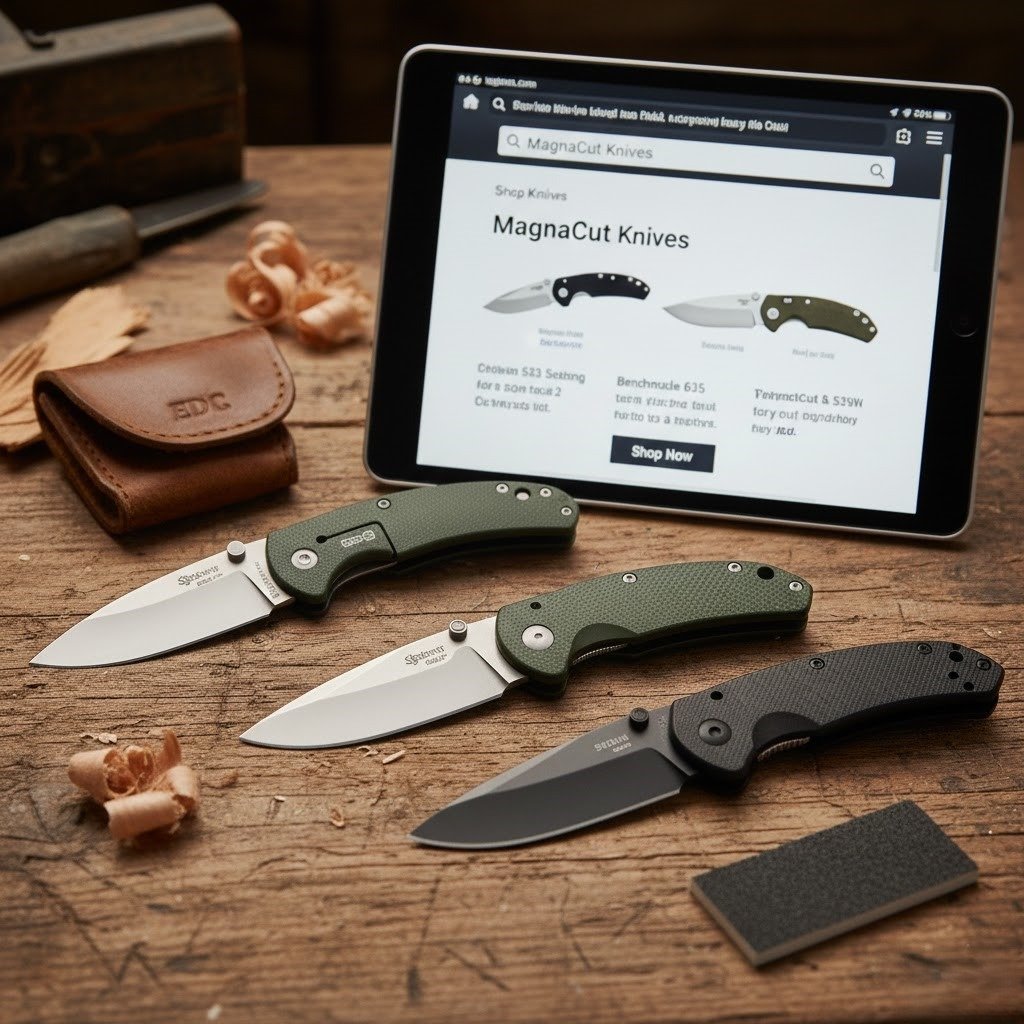
If you want the absolute best balance of rust-proofing and toughness currently available to man.
2. The Professional Pick (S35VN)
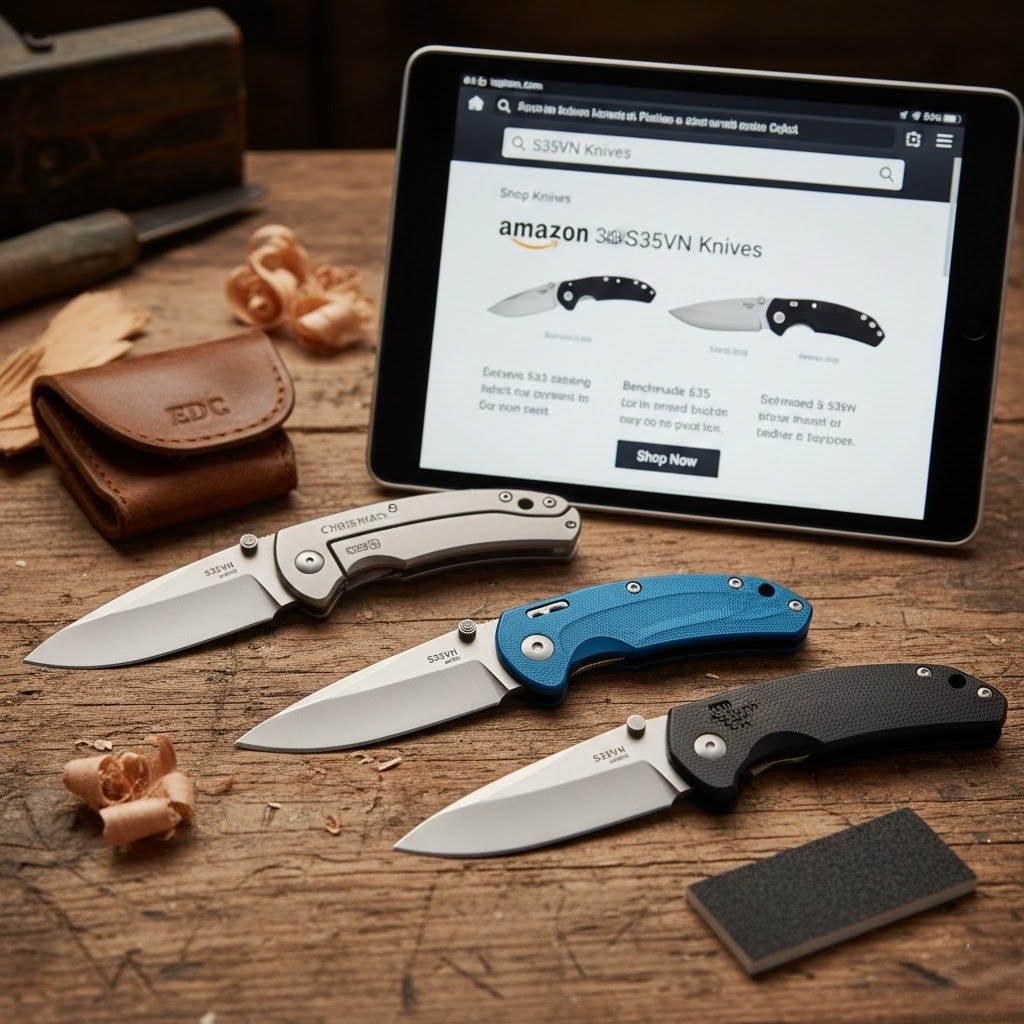
The “Goldilocks” choice for those who want a reliable, high-end American steel that is easy to live with.
3. The Budget Workhorse (14C28N)
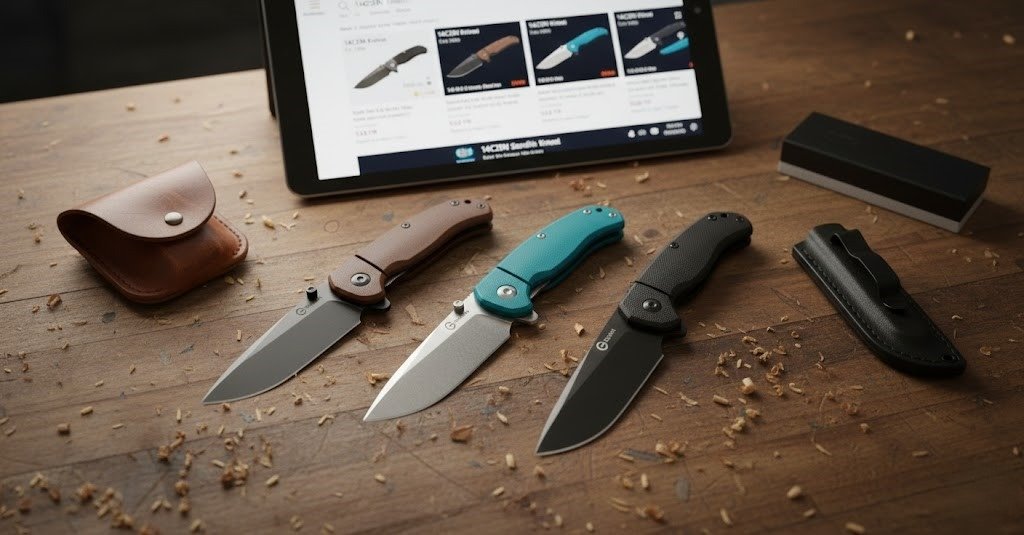
The best value for your money. A tough, stainless Swedish steel that performs far above its price tag.
Final Advice: The “Heat Treatment” Secret
Here is a bit of “insider” knowledge: The name of the steel on the blade is only half the story. The Heat Treatment is the other half.
Think of it like baking a cake. You can have the best flour and sugar in the world, but if you burn it in the oven, it’s ruined. I would much rather have a perfectly treated $50 knife in 14C28N than a $400 knife in a “Super Steel” that was treated poorly. Always buy from reputable brands—like Benchmade, Spyderco, or Civivi—who have spent decades perfecting their “ovens.”
The best knife steel isn’t the one that costs the most. It’s the one that is in your pocket, sharp and ready, when you have a job to do.
Stay sharp out there, (Knife Picks)